
On The Other Hand -
Book Reviews
Lifestyle, Cigars & More
Musings
About
On The Other Hand -
  • Book Reviews
  • Lifestyle, Cigars & More
  • Musings
  • About
Book Reviews, Government

Swindlers; Cons & Cheats and How to Protect Your Investments from Them by Al and Mark Rosen

October 20, 2022 by Barry J. Klazura No Comments

Canada, the land of happiness, a land where its citizens are loved worldwide (for not being American) and a land where the government on the side of every citizen. Except if you are an investor.

In this book the Rosen’s (the father, Al, is a forensic accountant) point out how Canadas lax laws and weak enforcement of basic accounting principles have left the average Canadian exposed to the ravages of swindlers both inside and outside of corporations. How is this possible?

  • Firstly, Canada does not have the equivalent of the SEC; there are provincial securities regulators, but they try to balance the needs of the investors with those of the corporations who bring business to the provinces
  • Secondly, the accountants and auditors in Canada regulate themselves; in fact, “Canada is the only major country in the world that allows the same people who audit public companies to financially control the process that sets the auditing rules.”
  • Thirdly, according to the Canadian Supreme Court ruled that audited reports are prepared for the guidance of current shareholders and that those reports and the auditors who prepare them have no responsibility to perspective shareholders nor creditors
  • Fourthly, Canada has moved to the Financial Reporting Standards (IFRS) which standard throughout most of the world, as opposed to the GATT standard used in the U.S. In the opinion of the authors, the IFRS standard “…perpetuates toothless financial reporting and costly, but valueless, auditing in Canada.” where investors will have to do their own investigations to determine the value of the numbers.

All of this may sound a bit boring and mechanical, but Canada suffers from repeated financial disaster which have cost retirement funds and individual Canadians hundreds of billions of dollars of losses. Under the Canadian system, liabilities can be kept off the books to inflate the value of stocks which allows corporate executives to claim large bonuses, artificially drive up the price of stocks and provide insiders with major windfalls on stock options. In fact, under the Canadian system, the auditors can knowingly misstate the numbers and they have no financial liability. When corporations are caught, their punishments usually consist of a slap on the hand for the top securities regulator says that Canada believes in rehabilitation as opposed to punishment.

An example of outcome of Canadian practices is the closing of Nortel, Canada’s largest corporation. While Enron was a $50 billion-dollar disaster, the cost of Nortel was seven times larger (over $350,000,000,000). Given the difference in size of the U.S. and Canada, it would be as if Enron crashed and destroyed $5 Trillion of shareholders money.

This book has become more timely given the accounting practices that are being uncovered regarding companies out of China and the failure of regulators in Germany regarding the scandal with Wire card. Investing outside of the U.S. requires the average person to be much more circumspect and knowledgeable about the laws and accounting practices of any individual country. The difference in laws, procedures, enforcement and yes, accounting practices can expose the unwary to huge risks. There is a long record of disasters due to practices which would not be allowed in the U.S.; the crash of the Mexican Peso, the banking crisis of Japan, corruption in Brazil and most certainly the whims of the Party in China should make any investor concerned about any opportunity. When financial times get tough, no one stashes their money in China, Japan, Russia, France or, yes, Canada, and there are good reasons.

Although it deals with a topic that should be dry to the average reader, the authors writing will make the reader put the book down and laugh that such lax regulation and disregard for citizens can permitted in Canada.

Share:
Reading time: 3 min
Book Reviews

Colonel von Lettow-Vorbeck and Germany’s East Africe Empire by Edwin P. Hoyt

October 16, 2022 by Barry J. Klazura No Comments

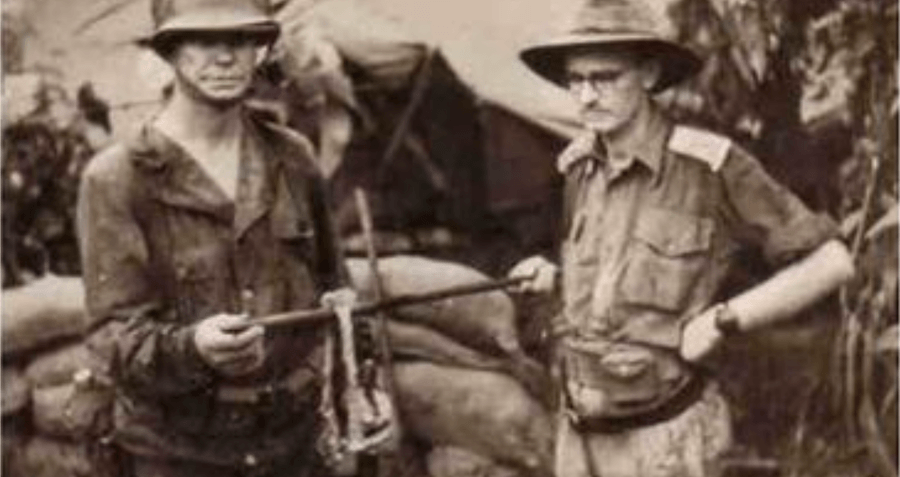
From the outbreak of the war in August 1914 until the end, November 1918, Major Paul von Lettow-Vorbeck led a small group of German troops and militia and 10,000 native Black Askaris in a campaign across much of central Africa. Cut off from his homeland, he and his troops lived off the land and the supplies they were able to capture from the British who were charged with capturing or destroying his force. What should have been an easy campaign against the small German force turned out to tied up 300,000 British Empire troops commanded by 130 generals which were needed in the European theater.

Always staying one step ahead of the British and often taking the fight, successfully to the British, the Germans had to not only survive the battles, but live in a climate of extreme heat, lack of water, diseases and insects which could infect a man with a disease that could cause death in a single day. Without a source of steady supply, the Germans resorted to sneak attacks on supply depots for food, shoes, medicines, and clothing. Slowly the two thousand Germans were whittled away through battle and disease, yet they survived in part because they learned to move like the natives in small, fast groups with a minimal of supplies while the British relied on slow moving columns followed and hindered by thousands of camp followers.

When the war ended, von Lettow-Vorbeck thought that the news might be a British trick, but he was finally convinced. The biggest problem came from his Askaris who could not understand why they had to surrender as they felt they were winning! In the end, the native troops almost started a rebellion but were finally convinced that they had to go home. Unfortunately, they were treated poorly by the British who exhibited a

 very racist attitude which they carried over from their treatment of the natives in India.

This is an excellent history of a campaign which has been largely overlooked by historians. It is a shame that the author did not cover the history of the German rule in Africa as it was both better and worse than that of the French and British. Better in that they created more schools and hospitals for the natives than the other Europeans but worse in that the Germans put down a revolt in 1905 that cost the lives of 300,000 natives. Despite the brutality of the German response, there was never any problem with the natives who served with the Germans during World War I.

A small book that demonstrates the human spirit and ability to survive against great odds.

Share:
Reading time: 2 min
Book Reviews, Society

Boys to Men

October 10, 2022 by Barry J. Klazura No Comments

“Talking about ‘healthy masculinity’ is like talking about ‘healthy cancer” and “Traditional masculinity has oppressed girls and women and limited the identity construction of all boys and men.”  But let us not forget, “we need to call masculinity out as a hazardous ideology and denounce anyone who chooses to identify with it.”  Thus begins a review of No Apologies: Why Civilization Depends on the Strength of Men by Anthony Esolen (the review is by Noah M Peterson.

Mr. Esolen has written a rebuttal to statements like those and others that attack the concept of masculinity that has evolved for thousands of years. His rebuttals include examples of how civilization was built by the very forces that are condemned so readily today; men’s drive to create and conquer (which motivated technological development), men’s willingness to fight (not only physically but mentally) and other traits that have moved humans forward from the darkest caves.

Peterson, points out that while the author is only half right in some areas, such as his assertion that “Every typical difference between the behaviors of boys and girls can be seen as the natural expression of the forms of their bodies”, he is consistent in following his views to their logical if controversial conclusions.  For example, are women incapable of “dispassionate analysis”? Was government created by men to protect women and children?

 Esolen fails in his discussion of virtue in that he does not “provide a standard of virtuous masculinity that men can strive for….”  If virtue is a means of restraint, how is a boy growing into manhood be taught when to use his strength and drive and when to temper it? This is a question that cannot be answered by a secularist for what is the higher universal standard of a secularist? Perhaps the answer regarding virtue can be more easily answered by those who believe in a higher purpose and being? This is not covered in this discussion.

The questions and conclusions Esolen cover may infuriate some, but all we need to do is recall the quotes at the start of this review and then remember that we are also told that no one is attacking masculinity.

https://claremontreviewofbooks.com/boys-to-men-2/

Share:
Reading time: 1 min
Book Reviews

There’s a War to be Won: The United States Army in WWII by Geoffrey Perret

October 7, 2022 by Barry J. Klazura No Comments

How was it possible for the United States Army, which numbered less than 200,000 men and which was smaller than the army of Portugal, would go on to defeat Nazi Germany, Fascist Italy, and Imperial Japan, while only losing one battle during the Second World War? How was it able to put into the field, armies which managed to beat the hardened professional armies of its enemies? The answer can be found to a large degree in this outstanding book by Geoffrey Perret.

One leader does stand out above all the rest, and it is not the President, Franklin Delanor Roosevelt; it is the man he picked out for the job of creating the U.S. fighting force, George C. Marshall. Marshall was a man who knew how to surround himself with the best of the best, both in the administration of the army and in the field. A tireless worker, he expected the same of those around him and he did not hesitate to demote or retire high ranking officers who failed in their jobs. That type of ruthlessness saved lives and was expected of every officer no matter what his rank. He also realized that the old style of thinking in the military, that of matching the enemies’ weapons, one to one was outdated. Marshall managed to skip a generation of military thought in creating a fighting force that simply was better trained, better educated, more creative and better supplied than any other military of its day. Since the focus of this volume is on the army per se, the author does not delve into the genius of the American industry who overcame so many hurtles to deliver the tanks, ships and planes needed by the military, but he does give many examples of the excellence of what was provided.

Continue reading
Share:
Reading time: 3 min
Book Reviews, Uncategorized

Bayonets before Bullets, the Imperial Russian Army, 1861-1914 by Bruce W. Menning

September 20, 2022 by Barry J. Klazura No Comments

The Russian army has had moments of brilliance, such as the defeat of Napoleon and the logistical miracle of following him from Moscow to Paris. There is no doubt that the army which was responsible for ninety percent of German losses in WWII (thanks in large part to the supplies provided by the U.S. and the U.K. at no charge) played a key part in the defeat of Hitler.

Today however, we see a Russian army that sadly fits the stereotype in many people’s minds; poorly trained, led and equipped. Once again, without total mobilization, the Russian army is simply too small and poorly led for the job of defending its immense country.

Is the stereotype accurate when looking at the Russian army currently in the field? This book helps to put the challenges of that army in an historical context.

With the defeat during the Crimean War, the new Czar realized that his army while large, could not compete with those of other European nations.  Thus began, over the next 50 years, attempts to update the military skills of the officer corp., the weapons, training, etc. of the entire Imperial Army.  But serious questions arose and continued to rise as rapid changes in military technology raised doubts about long held beliefs and new theories of the military art.  Those same questions would worry the military minds of other European powers.  To give a couple of examples:

  • The old theory was that the troops would line up for attack at 250 paces from the enemy, but with smokeless powder (hence a longer range), that distance began to expand to 500 paces, then 1000 and eventually over a kilometer and a half from the enemy forces.  This meant that the killing ground was expanded and what steps could be taken to minimize lives?
  • Along with the infantry, direct fire artillery since the time of Napoleon had played a major part in any attack or defense.  But with the longer range of infantry weapons, the artillerist was more open to withering fire so new tactics such as indirect fire had to be worked out.

Many officers had theories to answer these and other questions, but at the same time there were vested interests which refused to acknowledge these and many other problems.  Top generals, who fought during the Napoleonic wars still believed in the shock value of cavalry, and their influence ate up huge sums of the military budget.

Financial concerns were also a top priority.  Training was often poor, especially further away from St. Petersburg and due to tight budgets, for example, the artillery was limited to only two rounds of certain types of ammunitions per gun per year!  Bullets were expensive so large rattles were used to imitate the sound of machine guns firing. 

And yet, despite the stereotype of the dark plodding masses, gradually the army learned and moved on; allowances for more initiative at the lower levels was encouraged and a Staff school was set up to create a more professional officer class.  A major problem however, was that seniority still ruled and the more professional staff officers were cut off from reaching the highest levels.

The book covers not only the areas above, but a basic description of the war with Turkey (1877-78) and Japan (1904-05) to the eve of WWI.  It does not go into the financial arrangements with France which lead to much of Russia’s fail development prior to the war (all of which was aimed at moving the Russian army faster against Germany), but does give some detail on the under estimation of the Russian army as to the amount of munitions needed for modern war (despite the experience of the war with Japan), but then so did most of the other European nations.

An interesting book for the military historian, but it can be dry and academic.  I would like to see similar books on the German and French armies during the same time.op

iance, such as the defeat of Napoleon including it logistical excellence in its ability to follow him all the way to Paris. There is no doubt that it won the Second World War by inflicting ninety percent of the German casualities (helped in large part by the supplies provided at no cost by the U.S. Yet currently, we see a Russian army that fits the

With the defeat during the Crimean War, the new Czar realized that his army while large, could not compete with those of other European nations.  Thus began, over the next 50 years, attempts to update the military skills of the officer corp., the weapons, training, etc. of the entire Imperial Army.  But serious questions arose and continued to rise as rapid changes in military technology raised doubts about long held beliefs and new theories of the military art.  Those same questions would worry the military minds of other European powers.  To give a couple of examples:

  • The old theory was that the troops would line up for attack at 250 paces from the enemy, but with smokeless powder (hence a longer range), that distance began to expand to 500 paces, then 1000 and eventually over a kilometer and a half from the enemy forces.  This meant that the killing ground was expanded and what steps could be taken to minimize lives?
  • Along with the infantry, direct fire artillery since the time of Napoleon had played a major part in any attack or defense.  But with the longer range of infantry weapons, the artillerist was more open to withering fire so new tactics such as indirect fire had to be worked out.

Many officers had theories to answer these and other questions, but at the same time there were vested interests which refused to acknowledge these and many other problems.  Top generals, who fought during the Napoleonic wars still believed in the shock value of cavalry, and their influence ate up huge sums of the military budget.

Financial concerns were also a top priority.  Training was often poor, especially further away from St. Petersburg and due to tight budgets, for example, the artillery was limited to only two rounds of certain types of ammunitions per gun per year!  Bullets were expensive so large rattles were used to imitate the sound of machine guns firing. 

And yet, despite the stereotype of the dark plodding masses, gradually the army learned and moved on; allowances for more initiative at the lower levels was encouraged and a Staff school was set up to create a more professional officer class.  A major problem however, was that seniority still ruled and the more professional staff officers were cut off from reaching the highest levels.

The book covers not only the areas above, but a basic description of the war with Turkey (1877-78) and Japan (1904-05) to the eve of WWI.  It does not go into the financial arrangements with France which lead to much of Russia’s fail development prior to the war (all of which was aimed at moving the Russian army faster against Germany), but does give some detail on the under estimation of the Russian army as to the amount of munitions needed for modern war (despite the experience of the war with Japan), but then so did most of the other European nations.

An interesting book for the military historian, but it can be dry and academic.  I would like to see similar books on the German and French armies during the same time.

Share:
Reading time: 6 min
Book Reviews

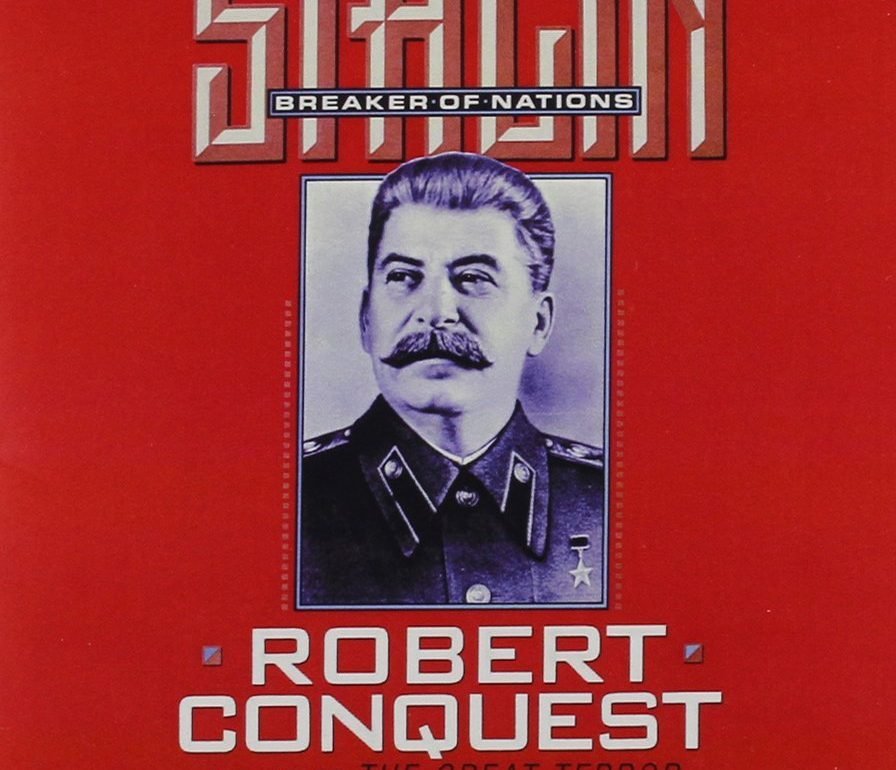
Stalin: Breaker of Nations by Robert Conquest

September 6, 2022 by Barry J. Klazura No Comments

There is certainly no shortages of histories and biographies of Stalin, one of the greatest mass murderers in history. His crimes, his murders were taken unlike his contemporary, Hitler, against for the most part, his own people. He did not have a policy of racial superiority or any underlying moral rationale for his crimes; his sole purpose was to achieve and maintain his power and in this, he is unique among the “big three” of mass murderers: Mao, Hitler, and Stalin.

Robert Conquest, perhaps the top historian of the Soviet Union has in this short book (just over three hundred pages), an excellent overview of Stalin’s drive, achievement, and maintenance of power. Although not as detailed as his other excellent histories which go deeper into the Stalin regime (The Harvest of Sorrow, The Great Terror: A Reassessment, Inside Stalin’s Secret Police: NKVD Politics 1936-39, etc.), Conquest along with Robert C. Tucker and Orlando Figes (and others) has provided a comprehensive analysis of the man and his times.

Conquest as always, manages to provide a certain analytical approach that can bring the reader up short: in this case, it is his comparison of the followers of Nazism and Communism. He quotes Hugh Seton-Watson’s comments that:

“Hitler’s Nazis were ‘fanatics with an ersatz religion,’ who rejected not only Christianity but also traditional morality as such. Nazism’s central feature was ‘moral nihilism’…. (it) is not only the central feature of National Socialism, but also the common factor between it and Bolshevism.” 

This statement is backed up by a review of leading Nazis, including Hitler, Goebbels, Mussolini, the dreaded Gauleiter of the Ukraine, Koch, and others who all started out as Socialist and ended up as either Fascists or Nazis. And it was not unusual after the war for die hard Nazi’s to reverse their coat and be taken into the Soviet camp. On one hand, the Nazis use race, the Communist used social origin as the determining factor for life or death; both were (are) based on “moral nihilism.”

Conquest is an outstanding historian, but for the amateur historian, his writing may be a bit too intellectual. He has a firm grounding in the Russian mindset and his analysis of Stalin’s legacy on modern day Russians is excellent. His works not only encompass history, as he has had published a collection of poetry, verse translation, fiction, and criticism so to read Conquest is to be exposed to a man of great intellect. A faster read but no less excellent Soviet historian is Orlando Figes brings a more human touch to his histories.

As one learns Conquest’s style, one is drawn increasingly to it and like a favorite composer, one eagerly looks forward to the next work of his that one shall read.
Share:
Reading time: 2 min
Book Reviews

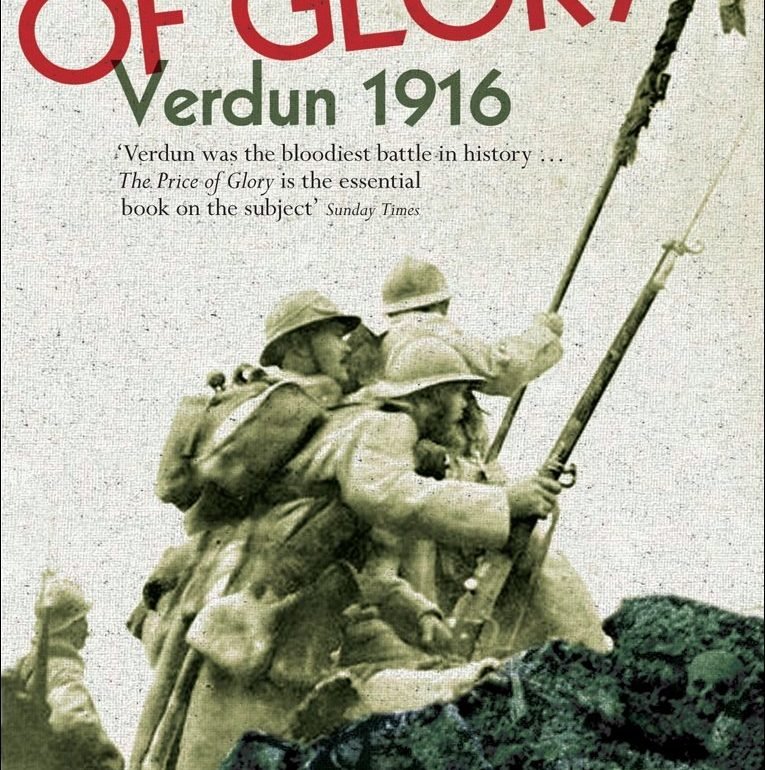
The Price of Glory, Verdun 1916 by Alistair Horne

August 30, 2022 by Barry J. Klazura No Comments

There are many beautiful locations in France and during a month-long driving trip across the country, one can find many of the wonderful locations shelter cemeteries commemorating the many battles that have been fought on French soil for centuries. One of the most peaceful is at the Verdun battlefield, that ten-month battle (twice as long as Stalingrad in WWII) where three-quarters of a million men were killed, wounded, or listed as missing. But the missing are not really all missing, for at the battlefield stands the Ossuary, a building of unique design. The cloister itself is 450 feet long and in the center is the tower, some 151 feet high which houses the great bronze bell. In front of the Ossuary are the graves of over sixteen-thousand French troops. As one walks around the great monument, one notices small windows set just above ground level and peering in, one sees stacks of skulls, or the various bones that make up the human body. These bones, the remains of over one hundred-thirty thousand French and German soldiers are some of those missing. Their bodies were simply blown apart, entirely or partially vaporized in the hail of artillery fire that stripped the surrounding hills of trees, animal life and even the topsoil.

I first read this book in the late 1970’s and I return to it every few years, each time learning more about the battle and being amazed at the ability of men to endure months of slaughter, in the snow and rain, often without food for days, covered in mud, trying to dig themselves deeper in the deep sucking mud in a vain attempt to escape some of the 37,000,000 artillery shells which were fired during the battle. The author puts a face on many of the combatants, using letters and diaries written at the time and long forgotten when their authors were destroyed later in the war. He was also able to interview veterans of both nations as well as widows and children which he mixes in to keep us focused on the humanity of the combatants.

Going further, the author portrays the key military leaders involved in the battle and how some jockeyed for advancement and how a few, such as General Petain, did what he could to save the army while at the same time showing a rare compassion for the lowly Poilu. While German general Erich von Falkenhayn designed the battle to bleed the French army dry using overwhelming fire power, in two instances he hesitated to act which could very well have brought not only victory at Verdun, but also for Germany in the war. In the end, both armies were bled dry but with a war on two fronts for the Germans with a poor ally (like being tethered to a corpse according to the German high command), command failures such as exhibited by von Falkenhayn were simply unacceptable.

Wars are always terrible, unimaginable for most people, but this history brings out not only the tragedy, but the sheer determination of men in war to survive and achieve. Reading this book will always make the reader thank any veteran they meet for what they were willing to do to keep the walls of society safe.

Share:
Reading time: 2 min
Book Reviews

The Party: the Secret World of China’s Communist Rulers by Richard McGregor

August 18, 2022 by Barry J. Klazura No Comments

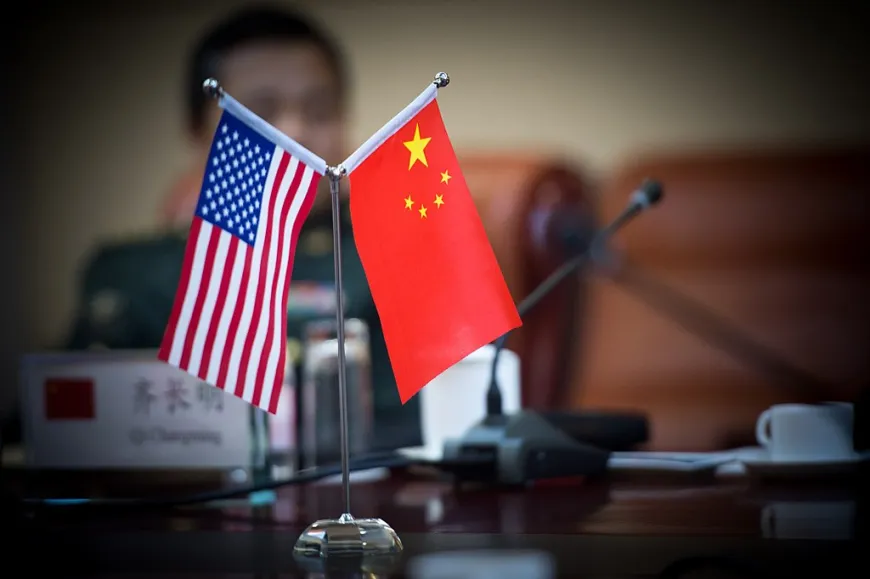
This is a re-read for me and although it was published in 2010, during the tenure of China’s previous leader, it is a book that is more important than ever. Why? Because Xi Jinping has successfully set himself up, for the first time since the death of Mao, as the equal in thought and leadership to Mao.

As with all leaders of China who serve two five-year terms, the second term, unlike a re-elected President in the United States, is not seen as a lame duck, but is entering a time of greater power. The ability during the first five-year term to place hand chosen personnel in key positions of authority (and limited power) is a tactic harkening back to the earlies days of Communism, and is in fact, practiced in business, the academic world, etc. But unlike the other disciplines, in China key policies can be implemented due to the centralized power in the hands of a leader like Xi Jinping. And, by aligning himself with the image of Mao, after purging numerous centers of power (the leadership of Shanghai, numerous military officers, and financial leaders,), he has consolidated his power and authority at a key time.

There is no doubt that China has become a major regional power (militarily and economically) and a major economic power on a worldwide basis. And, as with other powers, there is a time of ascent which provides that power with a unique ability to re-write its place in the world. China has a world view that is based on its long history, it views of its inherent cultural superiority and its desire to right old wrongs from the days of the colonial empires. To fulfill its destiny, other nations in the Pacific area will need to acknowledge China’s superiority and brought to heed one way of the other.

What is plainly pointed out in this excellent book, is that the driving force behind the rise of China is the Communist Party. The centralized control of the party allows it to direct resources and unity of command to sectors which further advantage the main goals of the Party. At the same time, as with all other totalitarian (and Communist China is a totalitarian regime) examples, there is tremendous competition for primacy in the various sectors. This struggle which leads to strong leaders also means that periodic purges must be held when the local factions become too strong or corrupt. These purges allow the Party to show that it is looking out for the average man and allows wrongs to be put upon not the Party, but errant bureaucrats.

One key feature of the Party is that it is above the government, above industry, above the masses. From this height, the Party extends its reach into every key industry, becoming in fact, owners of the industries. When we see security concerns about telecommunications deal with a major Chinese supplier or wonder if the chips which are produced in China and are in our most advanced fighters will function at capacity, it is because the companies themselves are owned and are extensions of the Chinese Communist Party. The control of “key” industries means that all top management serves at the whim of the Party and thus all good things flow from the Party. The Party is willing to allow much of the consumer segment of the economy function in an open manner (unlike the old Soviet system), but the “key” industries are tightly controlled and direct by the Party.

I would recommend this slim book to anyone who is interested in beginning to understand how a modern totalitarian system can operate. The Party has been able to walk the fine line of providing an increasingly better standard of living for hundreds of millions while maintaining its primary place in society. The question remains however, if as with all totalitarian systems, if they can control their natural inclination to find both internal and external enemies on which to focus to divert popular discontent. The purge of “corrupt” officials is one example of how the Party can focus and direct attention. But the attempt by Xi Jinping to equate himself with Mao points to a much more dangerous and challenging future course.

Share:
Reading time: 3 min
Book Reviews, Government

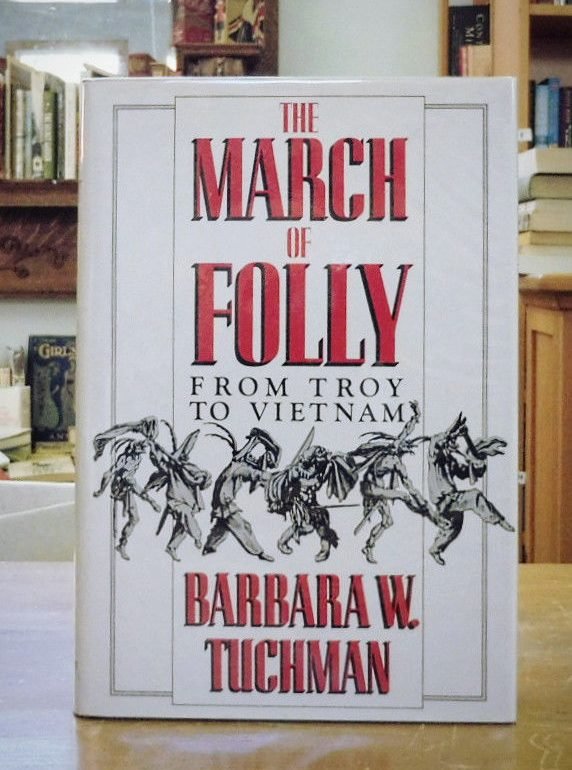
The March of Folly from Troy to Viet Nam by Barbara H. Tuchman

August 16, 2022 by Barry J. Klazura No Comments

Re-reading Barbara Tuchman’s The March of Folly from Troy to Vietnam (originally published in 1984) and reviewing the foolish foreign policy decisions around the world since then, seems to give proof to the statement by John Adams that government, “is little better practiced now than three or four thousand years ago.”  Policy makers seem to delight in flying in the face of common sense, logic, and facts in pursuit of their policies. A wiser man than most, Jordan Peterson once said that when he makes a major decision, he does not look at the best possible outcome, but the downside cost if he is wrong. Too bad that statement is not hammered onto the desktop of every government policy wonk as a warning against their hopes and dreams.

In her book, Tuchman studies the times, forces and choices made by the Greeks who were given a horse, the Renaissance Popes, the British lost of the colonies and American leaders regarding our experience in Viet Nam. Of course, trying to separate fact from fable in the story of Troy is the most difficult, in part because the very ideas that a hollow wooden horse filled with one’s enemies willingly being brought into the city of Troy defies logic. Yet Tuchman does an excellent job of examining the tales from several sides and trying to understand how the leaders of Troy ignored legends, omens, and warnings. The result is well known and should serve as a warning against acting on the basis on ego and hubris.

Continue reading
Share:
Reading time: 3 min
Book Reviews

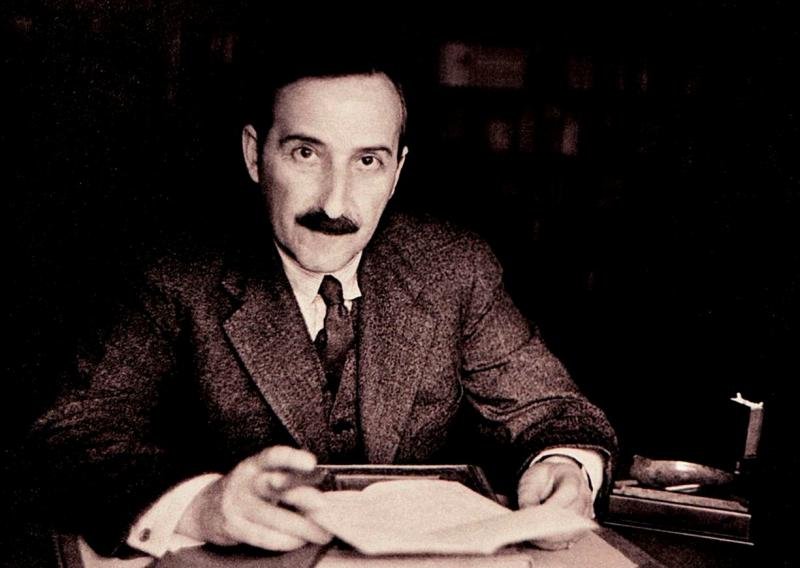
The World of Yesterday by Stefan Zweig

August 5, 2022 by Barry J. Klazura No Comments

In the period from just before the First World War until the early 1940s, Stefan Zweig, an Austrian born in the Hapsburg Empire, was one of Europe’s leading authors. His books cover biographies, poems set to music, novels, hundreds of articles, reviews, and more. Yet, in 1942 he and his wife committed suicide in South America over their distress of the state of the world and their view of the future.

Zweig believed that each generation would experience one trying movement, be it war, plague, inflation, or social disruption. But he believed that his generation which was raised in the structured, secure world of the late Hapsburg Empire was doomed to experience each of those trials, one after another which put it to a test seldom seen in history. That does not mean that he viewed all change as negative, for he saw the emancipation of women from their corsets and their entry into politics as positive; so too was the easy mingling of the sexes in sports, social events without chaperones, and the greater freedom of people to choose the direction of their lives. Yet he did not see or connect that that same freedom blended with youthful idealism and ignorance of the world could lead to dangerous movements such as Communism, Fascism and Nazism.

Continue reading
Share:
Reading time: 2 min
Page 13 of 29« First...10«12131415»20...Last »

Barry J. Klazura

Barry Klazura sipping grappa

With a Masters Degree in Guerrilla Warfare and Totalitarianism, Mr. Klazura was well prepped for a career in Sales and General Management, consulting on corporate startups and turnarounds as well as lecturing on history and politics.  For the past twenty years he has focused on being a financial advisor and consulting.

Delivered To Your Inbox

Sign up to get an email when a new article is published.

Topics

  • American Civil War
  • Biography
  • Book Reviews
  • Cigar Reviews
  • Coronavirus
  • Current Affairs
  • Education
  • Environment
  • Factoids
  • Government
  • Lifestyle, Cigars & More
  • Liquid Refreshments
  • Musings
  • Quips and Historical Facts
  • Society
  • Travel
  • Uncategorized
  • World War I

Subjects

book Books-Russia/Soviet Union Books 21st Century Books 1919-2000 Books Ancient to 1900 Books Asia Books Biography Books Fiction Books Germany 1919-1945 Books Pre-WWI books Viet Nam books world war I Books WW1 Books WWI Books WWII Cigar Friendly Location Amsterdam Cigar Friendly Locations-London Cigar Friendly Locations-New Orleans Cigar Friendly Locations-New York Civil War Coronavirus Environment Korean War World War I World War One

Recent Articles

At Stalin’s Side by Valentin Berezhkov

July 15, 2026
The Price of Victory by N.A.M. Rodger

The Price of Victory by N.A.M. Rodger

June 26, 2026
Frontsoldaten: The German Soldier in World War II by Stephen G. Fritz

Frontsoldaten: The German Soldier in World War II by Stephen G. Fritz

June 5, 2026
Organizer of Victory, 1943-1945, George C. Marshall by Forrest C. Pogue

Organizer of Victory, 1943-1945, George C. Marshall by Forrest C. Pogue

May 26, 2026
Illegals Released & Our Leaders

Illegals Released & Our Leaders

May 10, 2026

Inquiries and Comments

For general inquiries and comments, email AOTOHcomments@gmail.com.

Facebook
© 2020 And On The Other Hand. All rights reserved.