
On The Other Hand -
Book Reviews
Lifestyle, Cigars & More
Musings
About
On The Other Hand -
  • Book Reviews
  • Lifestyle, Cigars & More
  • Musings
  • About
Book Reviews

Poilu: The World War One Notebooks of Corporal Louis Barthas, Barrel Maker, 1914-1918

July 25, 2024 by Barry J. Klazura No Comments

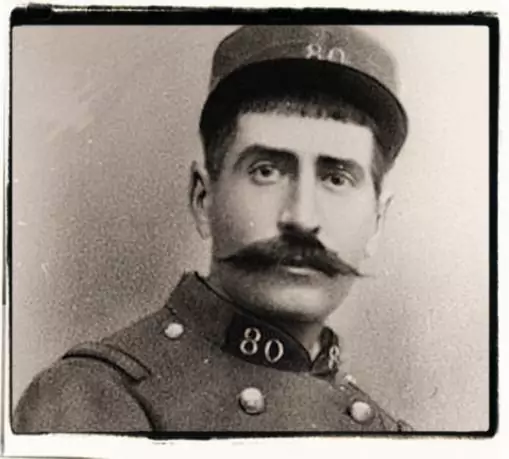
During the first world war, Corporal Barthas kept a diary, totaling some nineteen notebooks; in those books, he recorded his thoughts and actions while serving in the French Army.  A simple but educated man, he hailed from what is known as the Midi, which is Southern France, bordered by the Atlantic and the Mediterranean.  He was a barrel maker, a respected craftsman, a socialist and anti-militarist, none the less, he was called up in his late 30’s to serve in what was a reserve unit.  As the war went on, that reserve unit was called on to enter the front lines on a continual basis and he served in the battles for Artois, Flanders, Verdun, the Somme and the Argonne.  Fortunately for him, his unit was not involved in the bloody offensives but managed to serve in the “quieter” sectors of those famous and terrible battles. He thus managed to escape the murderous infantry attacks against barbed wire and machine guns but was still subjected to the daily filth of the trenches with its rats, bodies in shallow graves and being covered from head to toe in mud for weeks on end. After the war, Barthas set out to complete the notebooks by corresponding with surviving companions via letters and postcards, and re-writing them in new notebooks as the older ones were covered in mud, chewed by rates and subject to all of the indignities of any ordinary soldier. Having achieved that, the manuscript lay untouched until it was finally published in 1978, sixty years after the end of the war and twenty-six years after his death.

His diary is highly unusual for the great classics we have from the first world war were by and large written by officers, such as Siegfried Sassoon, Ernst Junger, Robert Graves and others.  This is one reason why this book is so important; it tells the story of the war from the sharpest end of the bayonet, from the perspective of the average infantryman.  Barthas did manage to attain the rank of corporal (although it was temporarily lost) and it is clear that there was even a noticeable distinction between a corporal and a sergeant let alone the gap with the officers. It is also important as having read literally hundreds of military books covering many nations, I personally have never read a book in which the attitude towards the lowly infantryman was so great as existed in the French army at that time.  If the locations were different, I would have assumed I was reading about the army of the Czar at the time so brutal and calloused was the mindset of the officer corps. 

The lack of care and general attitude that is shown in the pages of the diary are exhibited in so many ways; a lack of leave, poor food, cowardly and inadequate medical care, failure to plan and provide shelter and basic sanitation for troops as they rotate out of the front line, the list goes on and on.  Coupled with the sheer willingness to sacrifice troops in a war of attrition (as General Joffe would say, “nibble at the enemy until there are no more”), there is no wonder that the French army had a mutiny which, had the Germans realized it’s existence, they could have all but walked through entire sections of the French line.  Barthas does not cover the mutiny in any detail, also in his section some soldiers’ councils were set up and he was offered to be elected as the President of his.  Fortunately for him, he refused the “honor” and thus avoided the punishment when the council was dissolved (for more information, read Dare Call it Treason by Richard M. Watt).  It is a miracle that the troops did not turn their guns on their officers.

Barthas makes it clear that the soldiers fought not for glory, honor or the fatherland, but rather for their comrades, the man next to you in the firing line, your mate who would carry your pack as your feet are blistered and you cannot go on, the man who would share the precious parcels that he received from home.  Perhaps after the war, after the pain begins to go away, some of the men will remember what passed as good times, the small victories be they in a fight or in the scramble for a good place to sleep, but Barthas makes a strong argument that at least for the French, the first world war held little to look back on with anything except distain and disgust.

An outstanding book which will make every individual who has not been in the military and especially in a war, look with new respect on those who have given that precious piece of their life for others.  Barthas is in the end no flag waving patriot and he had a different vision of the future; he was against war and we shall never know if he ever came to realize that the human cycle contains that terrible seed that must bloom in order to keep safe the life all man want.

Share:
Reading time: 4 min
Book Reviews, World War I

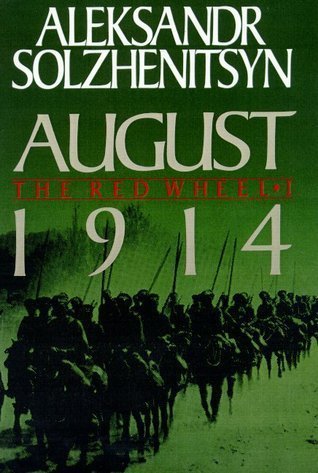
August 1914 by Alexander Solzhenitsyn

October 26, 2023 by Barry J. Klazura No Comments

In August 1914, the Imperial German Army won a total victory over the Imperial Russian Army which had invaded East Prussia.  Total losses for the Russians were about 250,000 (78,000 killed and wounded) while the Germans suffered only about 15,000.  For the Germans, it was a revenge for their defeat 500 years before at the Battle of Grunwald at the hands of the Poles and Lithuanians (a Slav is a Slav) and gave the homeland something to cheer about after the losses in France, while for the Russians, it showed the failure of the reforms within the Russian Army that had been in process for decades.  When the French Ambassador to the Tsar offered his condolences for the Russian losses, the Tsar is reported to have said that he was glad to have fulfilled his obligation to this French allies.

Solzhenitsyn provides an interesting look at the battle from the standpoint of several characters including a staff officer who is privy to various headquarters.  As such, he sees the inability of the Russian Army to have a united strategy (there were two Russian armies whose generals had not met to create a strategy and whose commander represented the worse stereotype of Russian commander who owed his rank to his favor at the Russian Court).  Moving from one HQ to another, we see the lack of maps, poor logistics, almost lack of communications and general stupidity among the officer corps (especially above the field level), condemn the mass of Russian peasant soldiers to futile attacks and brave defensive actions which only led to further confusion and the eventual defeat of the Russian armies.

As with all novels with Russian characters, the names can be confusing and the book is not an easy read, but it does provide the reader with a good feel for the fog of battle.  It offers a good overview if the reader is not familiar with the battle and will leave the reader with a feeling of wonder at how the Russian army was able to survive the First World War for so many years.

Share:
Reading time: 1 min
Book Reviews

Churchill and the Dardalnelles

May 23, 2023 by Barry J. Klazura No Comments

On a recent voyage, I had a discussion with some Brits about their history history.  The subject of Churchill came up and one elderly lady mentioned what a terrible job he had done with the Dardanelles during the First World War. I was surprised she held that view given the research, commissions, etc. that have been held since the war.  She must have gone through the school system or perhaps her parents belonged to the party which opposed Churchill for her view to be held so long after the fact.  I mentioned some counter information and she was genuinely surprised to hear the information I provided.  History is not dead, and it continues to shape our view of our world.

This brings us to this review of Churchill and the Dardanelles by Christopher M. Bell.  I was familiar with Bell as I had previously read his excellent book, Churchill and Sea Power and this book only goes to increase his reputation as an historian of note.

After the failure of the Dardanelles, there was much finger pointing as to would shoulder the blame for both the naval and army failures.  Was the campaign supported by the major players?  Did the Navy consult with the Army regarding joint action? Did the Navy go into the campaign with a full understanding of the Turkish defenses?  Who oversaw each operation?   The questions went on and on, but the initial blame landed on the desk of Churchill.  As a result, with all the politicians and military leaders running for cover, Churchill who was viewed as head-strong and much too pushy was left alone by most of his political allies.  He lost his position and was all but cast into a political wilderness.  Although the Prime Minister realized that Churchill was being sacrificed and that his skills would be helpful to the war effort, he was simply beyond the pale until tempers cooled down and a more objective analysis of the failures could be found.

Churchill immediately began to build his case for his political resurrection.  He gathered documents, spoke with is political allies and when a commission was formed to review the entire campaign, he labored hard and long for the ability to be actively involved not only to be in the commission but to also examine witnesses who were called.  Although he felt betrayed by Jackie Fisher who he had brought back to the naval board, they realized that they needed one another, and a temporary truce was called.  Numerous witnesses were called and after lengthy hearings, it was decided that Churchill came out with a much-improved position.

Churchill, however, was not one to rest and he took the entire episode to heart, becoming less naïve and careful to work to create his own image.  He used his political allies including the press to reconstruct and improve his image and the publication of his monumental work, The World Crisis in which he managed to paint his actions in the Dardanelles in a positive light while at the same time not burning any political bridges all but secured his resurrected reputation.

Although he would make political errors in the future (re: the Royal abdication, self-rule for India, etc.), he had learned that careful control of the press and public opinion could save him from his own errors.  Lord Birkenhead once commented, “When Winston is right, he is unique. When he is wrong-Oh My God!”.  Churchill knew that history would treat him well because he was determined to write it and write it, he did.  Yes, he made errors and could drive those around him to distraction, but in the end, his legend which he wrote was not that far off the mark.

Share:
Reading time: 3 min

Barry J. Klazura

Barry Klazura sipping grappa

With a Masters Degree in Guerrilla Warfare and Totalitarianism, Mr. Klazura was well prepped for a career in Sales and General Management, consulting on corporate startups and turnarounds as well as lecturing on history and politics.  For the past twenty years he has focused on being a financial advisor and consulting.

Delivered To Your Inbox

Sign up to get an email when a new article is published.

Topics

  • American Civil War
  • Biography
  • Book Reviews
  • Cigar Reviews
  • Coronavirus
  • Current Affairs
  • Education
  • Environment
  • Factoids
  • Government
  • Lifestyle, Cigars & More
  • Liquid Refreshments
  • Musings
  • Quips and Historical Facts
  • Society
  • Travel
  • Uncategorized
  • World War I

Subjects

book Books-Russia/Soviet Union Books 21st Century Books 1919-2000 Books Ancient to 1900 Books Asia Books Biography Books Fiction Books Germany 1919-1945 Books Pre-WWI books Viet Nam books world war I Books WW1 Books WWI Books WWII Cigar Friendly Location Amsterdam Cigar Friendly Locations-London Cigar Friendly Locations-New Orleans Cigar Friendly Locations-New York Civil War Coronavirus Environment Korean War World War I World War One

Recent Articles

At Stalin’s Side by Valentin Berezhkov

July 15, 2026
The Price of Victory by N.A.M. Rodger

The Price of Victory by N.A.M. Rodger

June 26, 2026
Frontsoldaten: The German Soldier in World War II by Stephen G. Fritz

Frontsoldaten: The German Soldier in World War II by Stephen G. Fritz

June 5, 2026
Organizer of Victory, 1943-1945, George C. Marshall by Forrest C. Pogue

Organizer of Victory, 1943-1945, George C. Marshall by Forrest C. Pogue

May 26, 2026
Illegals Released & Our Leaders

Illegals Released & Our Leaders

May 10, 2026

Inquiries and Comments

For general inquiries and comments, email AOTOHcomments@gmail.com.

Facebook
© 2020 And On The Other Hand. All rights reserved.