On The Other Hand -
Book Reviews
Lifestyle, Cigars & More
Musings
About
On The Other Hand -
  • Book Reviews
  • Lifestyle, Cigars & More
  • Musings
  • About
Current Affairs, Government, Society, Travel

Some Quick Thoughts on a Visit to London

December 24, 2025 by Barry J. Klazura No Comments

It has been about a year and a half since I last visited London and from the news I have seen here in the States, I wanted to see what the mood in the city regarding their politics was, economy, immigration, etc. While having breakfast I was able to read several British papers and what particularly struck me were the first pages of The Daily Mail (12/19/2025), which has the highest circulation but is not considered to be on par with the Times of London (which is further to the Left in its reporting). So let me present three stories which I believe indicate where the U.K. is at currently:

  1. Phillipson blocks safe spaces for women: Bridget Phillipson is the Women and Equalities Secretary (a position specifically aimed at protecting Women and bettering their lot).  In response to the recent decision by the High Court, she has released a statement that their recent ruling is “trans-exclusive” and refuses to release (enforce) them after the court ruling three months ago. The guideline was created after the British Supreme Court ruled that banned “transgender women-biological males-from women’s lavatories.  According to Ms. Phillipson, the court ruling would ban women from taking their infant sons into changing rooms and pools. She has already missed the deadline for presenting guidelines to Parliament. Apparently “woke” is alive and well in the U.K. and is defiance of the law of the land. Here is the woman who is charged with protecting women and she refuses to enforce the law which specifically protects women. Your government at work for your benefit?
  2. British boys don’t need misogyny lessons-migrants do: The Labour government has decided that British school boys need to be taught about misogyny in response to a dramatic increase of violence against women. The goal is to reduce sexual violence by half within a decade.  The leader of the Conservative party, Kemi Badenoch has said that “if you tell boys that they are the problem, you don’t create respect, you create resentment, you create backlash…”. The current effort by Labour seems to have been based on a BBC TV drama Adolescence which tells the story of a 13-year-old-boy who was arrested on suspicion of murdering a female classmate. Ms. Badenoch has urged the Labour government to publish data on the nationality and immigration status of sexual offenders, which the government has refused to do. It is interesting that the “sexual grooming” which has plagued the U.K. for more than ten years and resulted in tens of thousands of female victims was due to be discussed openly in Parliament, but at the last moment the Labour government cancelled the discussion as it might upset Pakistani voters. Your government at work, protecting it’s citizens?
  3. The Cost of Welfare: Projections are that one in eight Brits will be claiming disability benefits by 2030, up from the current one in ten. At the same time, new guidelines mean that by 2030, four million Brits will be on disability with absolutely no need to look for work or prove their sickness continues. The government claims that they are working on reforms which will save about two billion pounds (about $2.7 billion) in the next four years (hardly a brilliant success). This “savings” is part of the total cost of over one-hundred-ninety billion currently.

Those three stories from one day’s news show a nation with major problems. OK, every country has its’ problems and, on the whole, the attitude in Mayfair and the money sections of the city was positive.  It was great seeing and feeling the power that some of the young Brits had as they hit the pubs after work.  They were positive and you could feel their excitement.  Fantastic! On the other hand, from the taxi drivers to bar tenders to some everyday Brits, there were more cautious comments, ranging from “we are broke” to” there is no money”, to complaints of their National Health Service (need a cancer consultation? You get a lottery ticket-not kidding- and then the NHS tells you when your consultation will be; one person got a phone consultation in thirteen months’ time). Then there is the underlying problem of the migrants.  A local council was upset as a local building was being refurbished to house five-hundred immigrants, which was more than lived in the village. That same day over five hundred immigrants were caught coming over from France. The immigrants are coming faster than the government can build houses for them, when there is a housing shortage already for native Brits.

I have to admit, I love the U.K. and I am aware of how much has changed over the thirty plus years that I have been visiting.  Gone are the carts selling fruits having been replaced by falafel stands.  And East London?  It is a different country all together, and only time will tell what will happen. London is no different than any U.S. city; it is still safe unless you wander into a section that you know if trouble. Added to this is the current policy under the Labour government of thought control such as arresting an individual for silently praying in a public space, or the seventy-year-old Grandmother who was arrested for criticizing the local government on Facebook.  There is a feeling of national malaise in the air and the current government is holding on with every tool at it’s disposal.

The changes are plain to see and like the rest of Western Europe, the British government is stuck in doing the same things which have failed, hoping for a different result. Fortunately, at least the government is not locking up or shutting out rival political parties as we have seen in the EU.  If the Brits continue down their current failing road, I believe there is little hope for national renewal. It is a shame, as there is so much good to see that that wonderful land.

Share:
Reading time: 5 min
Lifestyle, Cigars & More, Travel

A Few Thoughts on a Quick Trip to New Orleans

October 21, 2025 by Barry J. Klazura No Comments

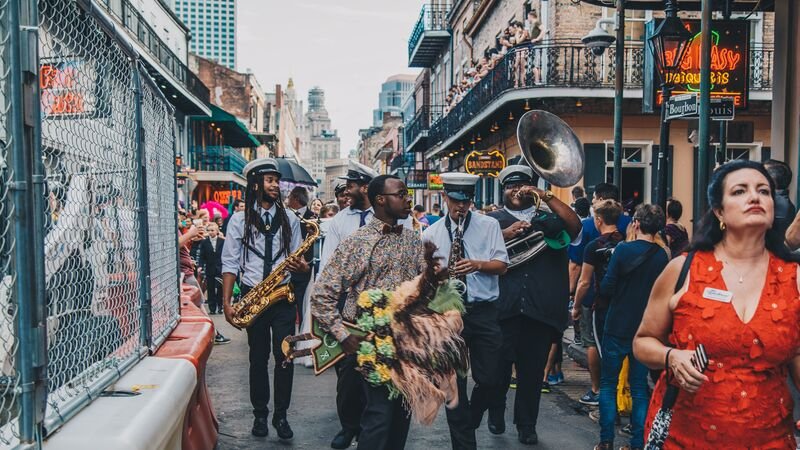
Every twelve to eighteen months, we go down to New Orleans (specifically the French Quarter) to indulge in a day of a unique lifestyle. You see the worst of what a city can be with its homeless and those who are totally lost, but you also find yourself shoulder to shoulder with Southerners who live by and represent the best of Southern manners and style. New Orleans is a place where you can spend hours at Crescent City Books or Beckham’s bookshop browsing row after row of used books which offer you the opportunity to find a treasure which will expand your mind and life. New Orleans is also a wonderful place from which to take day trips into the interior of Louisiana, where you will find small towns which seem to freeze in time, and which offer a lifestyle far removed from the craziness of their larger cousins. Quiet, neat streets, free of litter, where local civic pride is clearly evident and where the hellos and welcomes are truly meant.

With the above in mind, I thought I might share a few minor, hopefully helpful and/or interesting observations should you ever venture to New Orleans. Such points as:

  • New Orleans is well known for numerous specialty drinks such as the Hurricane, the Pimm’s Cup, and others, but not being an umbrella sort of male and preferring a more solid type of drink, I enjoy a good Sazerac made with a fine rye base. It is great fund to sit at the revolving bar at the Monteleone hotel and slowly sip a very nicely made sazerac amongst a lively crowd, or to wander over to the Roosevelt hotel bar for a quieter environment in the middle of the day for a refreshing sazerac, but there is a price to be paid; namely a drink that is about fifty percent more expensive than can be found at other fun locations. Be sure to visit the Monteleone Hotel, but do not be afraid to ask for a sazerac at the Chart House or any other place of refreshment. In reality, it is hard to screw up making a sazerac and the cost savings will help to erase any guilt over the ending bill.
  • Café du Monde has several locations where you can enjoy a cup or coffee or hot chocolate with a wonderful serving (usually three in number) of beignets, those tasty, powdered sugar-coated pasties which are a wonderful way to start the day. The original location near the old French market is interesting as if you visit the city over the course of a couple of years, you will get to know who the latest batch of immigrants is as the servers seem to come from that group. It is a place where the lean and hungry who are learning the American way can get their start and begin their climb up the opportunity ladder of our country. Other locations can be glitzier, but the original location is the most interesting. Unfortunately, they are not open 24/7 any longer, but they are open from 7:15 until 11 or 12 in the evening, depending on the day. The old hours might be at times, a bit too exciting.
  • Cigars: the Big Muddy still retains some of its old-time courtesies including smoking cigars in public. There are a number of cigar shops in and around the French Quarter so you might want to get a current list of them from the internet and scope them out. Don Leoncio Cigar Bar on Canal Street has a nice inventory as well as a selection of liquid refreshments to match the cigar of your choice (please do not be so rude and low class as to smoke your own cigar in such an establishment). The prices are fully retail (which is a drawback in my mind, but they do have to keep the doors open). If you are new to cigars, you might enjoy the Cigar Factory on Decatur St where they make their own cigars. It is interesting to watch, and they are particularly good at working with the novice smoker in picking a blend for your taste. The cigars are also less expensive (about 50%) so that is a bit easier if you are just starting out.
  • If you have an extra day, you might enjoy a ride up to the state capital, Baton Rouge, or some of the smaller towns like Lafayette. Both are between 2-3 hours north and you will pass by Lake Pontchartrain and see the natural beauty Louisiana. After the craziness of New Orleans, a visit to the rural towns in the state will be a nice contrast to the big city. The towns are neat, well-tended and reflect a much slower pace of life.

New Orleans has much to offer; a lively sports spirit, excellent museums, wonderful food and other, shall we say, types of entertainment. It is a city with it’s own flavor and pace and I am sure that after one visit, you shall be back again and again. Enjoy!

Share:
Reading time: 4 min
Travel

Cruising the South Pacific

July 24, 2025 by Barry J. Klazura No Comments

This is a recap of a twenty-five-night cruise from Bali to Tahiti onboard the Oceania cruise ship Regatta.  The South Pacific is a unique world that has developed, and which moves in a rhythm alien to most of the world.  Its cultures and histories are different and yet recognizable as there are stories and legends of people’s taking not to an empty continent, but rather to a huge ocean in search of a better life. I hope you will enjoy the commentary.

Bali: After a fifteen-hour flight from Los Angeles to Hong Kong, we had a three-hour layover and then a five-hour flight to Bali.

 One of the 7,000 or so islands that makes up the nation of Indonesia, this beautiful island is inhabited by some of the most kind and gentle people in the world. Over seventy percent of the inhabitants are employed in the hospitality industry, and they seem to have developed it into a fine art. Although the economy suffered during Covid (as the locals say, “The lights went out”, They are smiling and courteous which immediately puts one at ease, as you feel the realities of the outside world fall away from you.  I believe the secret of their lives is their faith.  Seventy-five percent of the residents are Hindu and on a single day of touring, we passed by dozens of active temples, where small offerings of fruit or flowers are laid on the entry steps. These represent thanks for each person’s favors received on that day and it is not unusual during a talk with a local to be advised that we all need to accept the good with the bad, that we need to be sure to do good so that we will receive good.  It really is charming and nice to see such a positive, active everyday bit of religion.  We hear about the very politically active Hindu of P.M. Modi, but that is not how it is practiced in Bali.

Although we only had a couple of days in Bali before our cruise, we were fortunate to hire a gentleman by the name of Manuaba with whom we spent the better part of one day plus rides to and from the port.  He is from the Brahmin class and aside from being a great driver (traffic in Bali can be quite interesting!), he showed us much more of Bali and its’ culture than expected.  If you go to Bali and would like his number, please let me know.  I believe you will be pleased.

We visited a number of interesting sites on the island, including a monkey sanctuary where the locals and visitors can be immersed in a jungle environment and where the monkeys roam freely. Although they are wild, they are used to humans and the local ground keepers make sure that the humans can enjoy the monkeys while still realizing they are wild animals. Be careful with your hats, sunglasses or water bottles are the monkeys seem to enjoy grabbing them and scurrying up the trees as the items former owners wonder what happened!  We also visited a shop making Batik which is a printing process on cloth using hot wax for the pattern.  This is an art form that is passed down from generation to generation and the patterns can be used for clothing or wall hanging as photos

Another interesting site we visited included a local coffee plantation where we were served a dozen different coffees to sample, such as Lemon Grass and Turmeric.  Of course, we were happy to purchase several flavors for enjoyment back home.  There are also woodworking shops to visit, and Batik shops, which are local fabric producers where generations of artists create wonderful shirts, skirts, and pictures which you will not find anywhere else in the world.

One thing that stands out and makes Bali so popular is the low cost of living well. The local incomes are low (a teacher makes about $300 a month!) and somehow despite the large number of tourists, prices are very reasonable. I asked Manuaba if he takes “vacations” and he said no as the economy does not allow most of the population enough to take a trip.  In fact, the cost of one of us on the cruise would be enough to support a family of four for a year.  Another example is realize what you have and be thankful.  I should have put an offering at a temple for that bit of information. Even at an excellent hotel like the Sheraton in Kuta, the prices are very reasonable, and you can have a meal with drinks for under twenty dollars. This attracts visitors from around the world but if you go, be one of the “good” visitors. This is not the case in Tahiti. Fortunately, the best visitors (as per the locals) seem to be Europeans and Americans as those two groups are courteous and respectful.

I recommend hiring a driver as the streets are crowded with motor scooters and cars and the traffic is even more crazy than Cairo! Our driver is a real pro and you will be in the best of hands!

Darwin Australia: Located on the northern shore of Australia, Darwin is a very nice city of about 240,000. As soon as we got off the ship, I felt a “On the Beach” vibe; you feel you are at the end of the world.  I believe it is due in part to the fact that although the city is built on the shores of the Pacific, you cannot go swimming in the waters, unless you want to be eaten by the local crocodiles or stung to death by the box jelly fish which native to the area.  The crocodiles were almost exterminated during the 50s-60s and were named a protected species but now the local government looks like it is going to cull the herd as the rivers and shores are simply too dangerous.  If you want to go swimming, the city has reclaimed some land and made them into protected beaches.  Another isolating factor is as you approach Darwin, on either side of the port for as far as you can see, the norther shore of Australia runs to the horizon with nothing to show any impact by humanity.

 Darwin has a very interesting history centered on two major events: the city was bombed by the Japanese over sixty times early in World War I which caused hundreds of deaths and major destruction, and cyclone Tracey destroyed 92% of all the buildings in the city.  Since then, a new city has arisen which has already withstood the challenge of another even larger cyclone.

June is an ideal month to visit as the temperatures are mild (about 65 degrees) and the humidity is low.  In fact, the locals can be seen wearing jackets during the early AM as they feel the temperature is cool.  This is because during the three wet months, they receive about a foot of rain a month and the temperatures are in the mid to high 80s, leading to a lot of humidity. Ideal weather for the crocs, but as a cabby said, “after 15 years, I am still not acclimated to the weather”. 

The next stop was to be Thursday Island but as we entered the harbor, we were advised that the visit was cancelled due to an approaching weather front.  Every island has large signs with a warning scale regarding cyclones which can suddenly appear and sweep across the islands causing massive damage.  In cities like Darwin where modern building codes have been followed, the damage is often limited to some trees knocked down, but on the smaller islands, even the smallest squall can disrupt everyday life.  It turned out that we were able to outrun the cyclone which created waves two meters higher and had strong winds.  Fortunately, there was no loss of human life.

Cairnes Australia: Cairnes is a beautiful city of about 150,000.  A clean, well-kept city, it is a popular vacation destination for Australians and the people are friendly. We enjoyed the Cairnes museum which followed the exploration and development of the city as well as the interaction with the natives.  Both the settlers and the natives were capable of violence against the other and eventually the natives were placed on reservations, the argument being that they were protected but in reality, they were placed under a controlled environment.

While the current city is beautiful, the story of how the settlers managed to wrestle with the local jungle is quite amazing.  One example is that longshore men had to carry one-hundred-fifty-pound bags of sugar on the docks.  The sugar is not like your table sugar; it is like hauling rocks and it tore at the backs of the dock workers causing cutting and bruising.  A crew had to load twenty-four tons of sugar in a single shift and with the heat and humidity, the men were always in danger of de-hydration, subject to the mosquitos and the lack of water. Pioneers, the men and women lived and created a prosperous, clean island of civilization on an island that was harsh and unforgiving.

Townsville, Australia: Another small city where at least one could swim along most of the coast.  We took a local ferry for about a hold hour to Magnetic Island which offers a bit more rustic view of local life. While all of the amenities of modern life are on the island, one feels it is just a step away from today’s world.  The houses are not as sturdy, there are many camping sites and hiking trails that you find via paths (often ill-defined) in the local jungle, and one goes from one end of the island to the other in about twenty minutes and has the same bus driver on the ride back.  Definitely a place to go if one wants to look for a very different style of life.

Cruising: due to an earthquake at Port Vila, Vanuatu, the stop at the port was cancelled.  The earthquake was so severe that the docks were destroyed, and ships could not load or unload until repairs were completed.  It is a reminder that those beautiful islands are out I the Pacific with little room for errors in everyday life.

Change of Plans: As the cruise was in the Southern Hemisphere, we were in the winter season.  This meant that there were numerous storms, some of cyclone strength in the area. One port was cancelled due to an earthquake which destroyed the port facilities.  The entire area is in the Ring of Fire, created by extinct and active volcanoes, so one has to be flexible on a cruise in the South Pacific.  In fact, we had several days of overcast weather although we missed the rain and high winds that can be quite an experience.  In the end, we had a couple of extra “sea days” which is an excellent excuse to get a bit more reading, work on that big puzzle or just enjoy the time to do little.

Handy Tip: At each stop, the cruise ship company offers various package tours which are created to fit the schedule of the ship.  They can be pricey, but they are easy to handle and you don’t have to do anything except follow the directions of each tour director.  An option is to leave the ship and talk to both the local tour companies and the taxi drivers who are waiting at the doc.  They will explain their options; you can tell them where you want to go based on the information you received from the cruise line and then haggle for a price.  If you know the tour price from the ship, you can start to work down from there.  It is a good way to save 50% or more, but many drivers only accept cash (in the local currency) so know your exchange rates. Another thing is to make sure the driver knows what time the ship leaves port as there is nothing so forlorn looking as a cruise passenger waving goodbye to the ship that they missed!

Mystery Island, Vanuatu: A small island which you can easily walk around in a couple of hours.  It has no electricity, no running water, in fact, it is as nature planned it except for an old air base from the Second World War which drove the Japanese crazy as they could not figure where the American planes which bombed them came from. The one special thing is that it has a beach; believe it or not, not all islands have beaches; instead, the foliage grows right down to the water.

Lautoka, Fiji: A true look at island life; known as the “Sugar Island”, it is the second largest city in Fiji.  It has a true rustic, almost frontier feel to it.  There is little to see in the city center aside from dozens of shops selling cell phones and sim cards but there were a couple of local tours to the surrounding hillsides.

Suva, Fiji: Suva is the largest city and is more cosmopolitan than Lautoka.  There are numbers of tours to the local forests, hiking opportunities, tours to a waterfall, etc.  These activities normally run $150-250/person.  By this time, one more forest is a bit like one more cathedral in Italy, but we managed a tour to a local beach resort where we were treated to a one-hour native dance troupe made up of college students who perform to supplement their income.  They were excellent and their dancing had delicate movements, fierce warrior dancing and a beautiful farewell song.  It was definitely the highlight of the Fiji visit.

Point of Information: Watch your itinerary as on many islands, everything is closed on Sundays. Well, not everything, as the churches are open and well attended while the rest of the day is focused on the family.  In fact, some islands call Sundays “quiet days”; the usual  traffic jams (many islands only have one road) and mopeds are suddenly gone, and you feel like you are walking through a ghost town. Plan ahead and give yourself a day of rest.

Apia and Pago Pago Samoa: Interesting in that you feel you are at the end of the world, visiting a location that is so different from your existence and experience that you would not know how to get in adapt. The main claim to fame for Apia is that it is the burial ground for Robert Lewis Stephenson who is still remembered on the island.  He was a strong advocate for the people of the area when England, the U.S. and Germany were looking for colonies.  Because he supported the local chiefs so much in their struggles, when he build his home on the island, the chiefs mobilized work crews, and they built Love Road which lead to his home.  Unfortunately he only enjoyed his house for four years before his death.

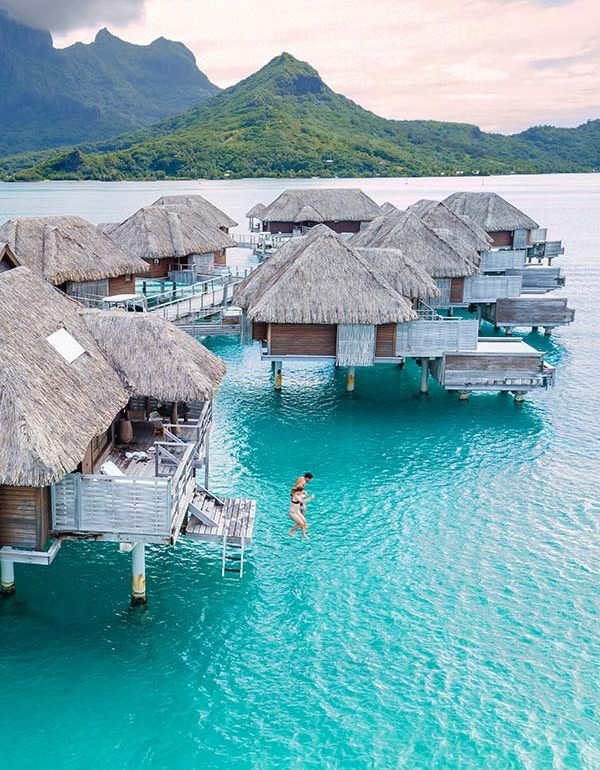
Bora Bora, French Polynesia: The beautiful white coral sands of Bora Bora are well known  and they give the surrounding waters a unique shade of light blue, almost a turquoise blue.  There is one beach on the island (again, many islands do not have beaches) and there are two over the water resorts.  Snorkeling is excellent due to the clearness and color of the water and unlike some other islands, you do not need to worry about sharks or jellyfish.  Aside from the two resorts, the main town is about two blocks in length and has several local restaurants/bars.  Bora Bora has a legendary mystique to it but after visiting it, I can say “I was there” and that is that.

Tahiti, French Polynesia: Much more built up than Bora Bora but there are really only two modern hotels on the island and the island feels more cosmopolitan. We picked the Hilton and were not disappointed. As with most of the islands (except Bali and Australia), literally everything must be imported and thus prices are high.  Champagne runs for about $150 or about twice the cost in LA and I would say that the cost of living is at least double that of LA so it can be a real sticker shock to someone from the mid-West or the South. During a discussion with a Frenchman (living in London), he found that a number of the surrounding islands’ facilities are showing their age, but then as with Bali, Covid was a disaster for the tourist industry.

General Thoughts: This was a great trip which was a real eye opener. You can try to imagine what it is like visiting or living on an island in the vastness of the Pacific, but you have to actually be there in order to fully understand how different island life vs. your world.  Everything is seen through a different prism; travel, the cost of goods, what foods are available and affordable, sense of isolation from the rest of the world, opportunities for education, employment, etc. One needs to realize that the local inhabitants are descents of brave people who challenged the open sea in a quest for a better life, or a more peaceful life or for whatever reason. I don’t know if it was bravery or desperation, but their quest was a tale for the ages. You can lose track of which island had which town or beach or waterfall, and they can run together after time, but a trip such as this may surprise you in what you discover about yourself, your history and your life.

The best part of the trip was meeting so many of the locals and interacting with them. Their openness and kindness, real smiles and strong ties to family and religion are wonderful to see.  It is easy to wish all the best for them.

Share:
Reading time: 15 min
Current Affairs, Lifestyle, Cigars & More, Travel

The Christmas Fairs and More in Budapest, Vienna and Warsaw!

December 18, 2024 by Barry J. Klazura No Comments


Living in a year-round vacation land (Southern California), my wife and I enjoy going to colder areas for December as a real change of pace. Eastern Europe (or as the Europeans prefer to say, Central Europe) offers advantages, such as fewer tourists, lower prices, a lower crime rate and world-famous Christmas fairs. Although it takes a bit longer to get there, the effort is well worth the time.


HUNGARY: Unfortunately, our connecting flight out of London was missed (for details, read the section on travel considerations) so we arrived in Budapest late in the evening, thus losing about half a day of our stay. Yet we made the best of it and walked through some of the Christmas fairs that are centered around the high-end shopping district. The weather was just above freezing but dry with no wind, so it was great to purchase a hot drink at any of the stalls which offer all sorts of traditional Hungarian foods and sweets as well as handy crafts, Christmas ornaments, etc. Take your drink, grab a sausage or a Hungarian pizza called a “Langosh,” sit at one of the tables and enjoy the sights and sounds of the holiday. You will not mind the temperature as everyone is smiling and having a wonderful time. The evening was a success, and we looked forward to the next couple of days in a beautiful city along the Danube.


The next day, to help you counter your jet lag, you might want to visit one of the thermal baths that are around Budapest. I suggest you try the Szechenyi bath which was built around 1910. All you need is a swimsuit, a towel and flip-flops and you are set to go. For a small fee you get a cubby hole locking changing room in which you can leave your valuables and you are set to go. As the temperature was about 37 degrees, we covered the distance from the changing room to the water quickly and then immersed ourselves in the wonderfully warm water. The steam coming off the water, the darkness of the day all served to welcome us to a wonderful experience. There were others already in the water including couples, two men seriously discussing either politics or business, families (children must be at least fourteen). Of course, there were those who were taking selfies and others who were just floating, enjoying the warmth as it soaked into every bit of your body. There is also a sauna and indoor pools, plus a pool just for swimming. I suggest you make a reservation as the baths are extremely popular and check to see what services are available (some have single sex days, wave machines, etc.). Do not worry about being gawked at, you will see all kinds of body shapes, but each one is concentrating on enjoying the thermal waters.


The city has a large number of museums, but we had been to Budapest before and there are sights which are not on most tourists’ radar. One is the House of Terror. No, it is not a Disney sight gone bad, but rather the old center of the Hungarian Soviet secret police. It was originally known as the House of Loyalty when it was the headquarters of the fascist Arrow-Cross party during World War II. After the war, the Soviet imposed government took over the building, execution, and torture cells and all. On display are the actual execution chambers, interrogation rooms and devices, plus the thousands of photos and stories of individuals who ran afoul of the Communist regime through thought, word, or deed. It is good to see young adults in the museum so that the reality of that brave new world can be remembered.
There are two items which are so important to understand the Hungarian psyche; the revolution of 1848 when Hungary tried to gain total independence from the Hapsburgs and the decades of Communist rule when at least 20% of the population was either arrested, tortured, investigated, spied upon or sent to Hungarian political prisons. The Hungarians have lived under Communism, so they are hardly likely to put up with any form of authoritarian rule; they want order but not order at any price, so Budapest is blessed with wonderful statues of Hungarian hero is going back hundreds of years. In fact, one of the first things the Hungarians did after the overthrow of Communism was to remove the imposing and brutal Soviet statues, busts, and plaques and deposit them in the “Memento Park” which is open 365 days a year. It is filled with Communist statues of the “heroic realism” school and well worth a visit to see the mindset of the totalitarians.


Handy Tips
• American Express is not used in Hungary: Master Card and Visa, no problem.
• Hungarians also accept cash (with a relish)! It is common if you hail a cab for the driver to ask you, “Cash or card.” You will find life easier if you say, “Cash.” And forget about getting a receipt for your taxi; writing War and Peace is easier than going through the procedure to secure a receipt.
• Tipping is fine, normally 10% will bring you a smile and a warm “Koszonom” (thank you).
• In the past several years, cigarette smoking has been largely replaced by vaping which can be done only out of doors, just as with tobacco smoking.
• The streets are clean, the people obey the walk/do not walk signs at intersections so pretend you are a native and everything will be great.
• As with most of Europe, making reservations for dinner is strongly encouraged. You do not want to scuttle restaurant to restaurant, hat in hand, trying to find a table.
• Hungarian is not an easy language, especially if you have no ear for languages like mol,
but it is always nice to try to have a couple of phrases while visiting a foreign land. Take the time to look up simple terms or words, (Koszi for “Thanks” or Koszonom for “thank you) even names of foods; English is widely understood and spoke in Budapest but even if you slaughter a word in Hungarian, a local will appreciate your bold attempt. Be the “good American” ambassador.
• If you have a connecting flight through Heathrow, make sure you allow more than 1/1/2 hour to catch your connector. Weather days and a very inefficient security system can make a simple procedure into a major British project.


Budapest has no shortage of good restaurants, from “new age organic” like Tati (From Farm to Table), to Italian, Mercatino (try their black pasta with shrimp). The real fun is the traditional Hungarian restaurants such as Punakorzo or Rez Kaakas. Hungarian food tends to be hardy so order accordingly.


VIENNA: Travel to Vienna from Budapest is easy, with a flight, train, or private car. A private car, while more expensive, is door to door, eliminates security checks and is much easier on the psyche.
What to say about Vienna that is not already known? A wonderful city full of history, excellent restaurants, and very good and proper Viennese service. Here are a couple of highlights which you might consider if you are looking for something different:
• Austrian military museum: Housed in a former military garrison, you are introduced to hundreds of years of military commanders as you enter the building. Their life size marble statues reflect the time when war still had a mystique of honor, rules, and glory. The building itself is one room after another of statues, paintings and exhibits tracing from the time of the Ottoman invasions to the end of World War I (although this was our second visit, the period from 1933-1945 does not seem to be covered for some strange reason). There is also a panzer and naval section which is worth a visit. The price is right (no charge), and you will understand a bit better the beautiful palaces and government buildings that you will see in the city center.
• Museums: There are museums enough and it is wise to plan your visit as not all museums are open on all the same days. The typical guide, available for no charge at your hotel, will not only give you an excellent overview of each museum and how long to budget for each (five hours is not unusual). Do not overextend yourself!
• Public Transportation: Inexpensive and on time (especially the trams and subway). And, easy to use even if you do not know German.
• Tipping: Most restaurants include a 14% service charge (often marked on the menu or on the listed on the bill) but do not be afraid to ask your server if it is included. Cabs appreciate a 10% tip and do not forget a little something for your concierge if they help you with bookings, etc.
• Central Cemetery: Although Vienna has over fifty cemeteries, this is the largest with over 300,000 monuments and over three million burials. Beethoven and Salari are both buried here as well as from all occupations and religion. The Jewish section is interesting for it is well preserved but I was not able to find out if it was destroyed during the war, rebuilt or what as most of the monuments are beautiful and look new. It was a cold, overcast day and the stillness of the grounds with the black crows perched on some monuments introduced many interesting thoughts.


No visit to Vienna is complete without a visit to Schonbrun which was the residence of the Hapsburg Emperor’s. Unlike Versailles, which was built by the French King’s to overawe the French nobles, Schonbrun was an actual residence for the emperors. Yes, there were balls and meetings at the palace, but they were based on invitations from the emperors themselves.
A treat is a dinner at Schonbrun followed by a Mozart concert in one of the beautiful rooms. They have a number of options (based on where you will be seated) from about 107-170 Euros per person, dinner included. I would recommend only signing up for the concert (about 1/1/2 hours long with a break) as only one entrée is provided and you might want to have a wider selection for your meal. The selection of pieces, both musical and vocal, are excellent and you are sitting close enough to really enjoy watching and matching the sounds to the various instruments. Enjoy!
Another meal treat is lunch or dinner at Figlmuller, for the best wiener schnitzel in Vienna. I have been there several times over a period of thirty years and the quality of service and food is always top notch! It is a real treasure to the locals, and they have two locations, yet I strongly recommend reservations. Do not make them at your own peril!
Finally, if you are looking for a good steak at a reasonable price, try Steak Point. We met a couple from Riverside during the Schonbrun concert, and they wanted to tell us about this place, but we already knew about it. Nice steaks, good sides and very reasonable.


Warsaw: A flight of just over one hour brings you to one of the fastest growing economies in Europe. A people who has long viewed themselves as the Christian bulwark against the Mongols, Turks, and Communists, they like other Eastern European nations (such as the Baltic nations, Hungary, etc.) can be a stubborn in the EU, but they know too well the price of collectivism.
We managed a one-bedroom suite at the beautiful Hotel Bristol, the hotel where Madam Curie accepted her Nobel Prize. It is next to the Presidential palace and a few steps from the Old Town city center. It is in that center where one of my grandfathers drove a taxi (horse and buggy in those days). If he were late coming home, his wife would worry that that he was caught up in one of the usual Cossack raids where people could be cut down in the streets (Warsaw at that time was under Imperial Russian control). It was because of that fear and the danger of being drafted into the Russian army that they left for the new world. A very personal thank you from me to them!


Although 90% of Warsaw was totally destroyed in WWII, especially after the Warsaw uprising, rather than leaving the ruins as an example of what war can do, the stubborn Poles dug out the old drawings, maps, etc. of the old town area and rebuilt it as it was in 1939. The Christmas market there is very special with stalls, lights and the wonderful warm windows of the restaurants which surround the central plaza. Then they did the same for much of the rest of Warsaw so the wonderful baroque buildings you see were all built after the war. I have not been in Warsaw for about ten years so to see so many beautiful high-rises around the “gift from Stalin” is really amazing. It is an example of the strength of the nation.
We had dinner at Fukier, a classical Polish restaurant which certainly has not changed since I was first there about twenty years ago. It looks out onto the square and is just as you would expect an old-world” restaurant to be decorated. In fact, the interior looks like an old country inn (only cleaner, with better art, etc.). Another excellent but newer restaurant is Elixer where each course offers one or two suggested vodkas to soothe your palate! I suggest asking for the cold vodka for as the Poles say, “it only hurts once.” Not all meals need to be grand events and there are plenty of pierogi shops throughout the city. Pierogis are like ravioli’s, filled with meat and onions, cheese, fruit, etc. The fun part is to order nine or so and sample different fillings. You will be set for the day and be able to brave the colder weather! The Poles love their pierogi’s; they are Poland’s hamburgers or hot dogs.
Food as in Hungary is relatively inexpensive. A dinner with two glasses of wine, three shots of vodka, a service of pierogi and two main courses, including service is about $100.00. You better be prepared to walk off those hearty meals! Around the Belvedere palace is a huge, beautiful park (Lazienki Park) which also contains several palaces. Although it is winter, the park is still beautiful and the rich furnishings and paintings of the palaces along with the flock of peacocks create a nice contrast to the bare trees.

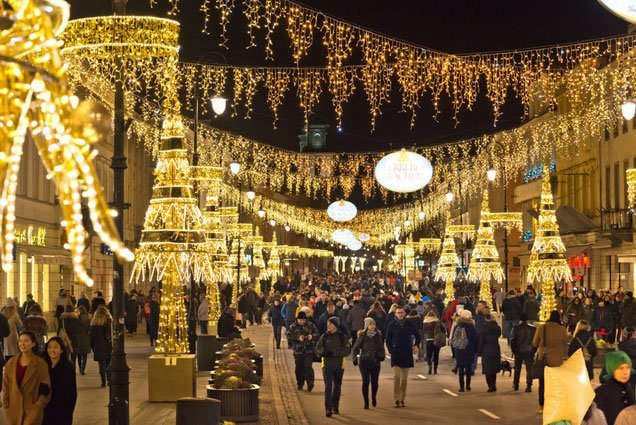
The winter fair in Warsaw is quite special. Darkness arrives about 3:30 PM and on this Saturday there were already thousands of people in the old city square, and. along the wide walkway in front of the Royal Palace. The children look in awe at the display of lights, the tall Christmas trees and it is a treat to see how they light up and laugh at the festive mood. Unlike Vienna where there are a number of festivals, the one around the old town in Warsaw is the one that you will want to see. And, during this season, the churches (all of them rebuilt) join in the festive feel and are beautifully lit. It is an amazing sight to see thousands of people, most of which are families with young children, walking in the cold, laughing, enjoying food from vendors, hot toddy drinks, shopping for those special “somethings” and enjoying the Christmas spirit. I tried to think of where we could experience that joy and experience in the U.S. but just came up short.
Although cabs are plentiful and inexpensive, we did a lot of walking (almost ten miles one day). It really is the best way to see the city and experience its special feel. There are wide boulevards lined with trees, shopping areas which are clean and devoid of graffiti, even during the winter when the temperature hovers about 32 degrees, it is a pleasure to bundle up and breathe in the fresh air.


Like all great cities, Warsaw has its share of museums. Yes, Warsaw, like Budapest and Vienna has its classical museums, but it also has unique attractions (like Budapest’s House of Terror). For example, the Katyn Museum features the murder of 20,000 Polish officers by the Soviet Union during World War II. The murder, denied for decades by the Soviet Union, was finally admitted during the reign of Gorbachev. Yet the sad episode did not end there are a special Polish delegation on its way to a special service hosted by the Russians was killed when their aircraft crashed outside of Smolensk, including the President of the Polish republic. Permanent plaques outside of the Presidential Palace commemorate the tragedy. Those plaques are part of the Polish conscious as there are plaques can be found around the city commemorating the hanging or execution of Poles during the German occupation. It helps the Poles to remember what they have suffered and why they will not go backwards.
Other excellent museums include the Polish military museum, the award-winning museum on the Warsaw uprising and the Polish museum of the history of Polish Jews.


There were numerous memorable times and sights during the trip, including the outdoor thermal bath in Hungary experienced before dawn, the concern at the Kaiser’s house, the Christmas fair in the old town of Warsaw. While we allowed four or five days in each city, it showed that one really needs more time to explore those cities as there is so much to experience. Considering we have been to each city one or more times in the past, you must simply admit that you will not “see it all” and that you will only be getting a sample of the treasures in each location. Just relax and enjoy it all!

Share:
Reading time: 14 min
Travel

A Visit to the Old South

May 7, 2024 by Barry J. Klazura No Comments

All too often we forget that we live in an incredibly diverse and beautiful nation. With the craziness that is going on around the world, I am thankful that I visited different nations that would require a second thought today. In discussing potential travel with my favorite wife (who is from Canada), expressed an interest in seeing more of the U.S. The little she has seen has impressed her and so we decided to do a small driving tour to visit some of the Old South. I had fond memories of visiting the South with my parents when I was in my early teens and so I planned a short driving tour of a section of the South.

I hope the following description of our trip will encourage you to explore our beautiful land, especially in a time when so much of the world is in turmoil.

Day 1: Fly to Memphis

I picked our starting point as an easy flight (complicated only by the ineptitude of United airlines). Why? Memphis’s Beall Street is known as a wonderful place to hear southern blues; it is a cleaner, safer version of New Orleans’ Bourbon Street and as we were only going to be in Memphis for one night, it seemed like a wonderful way to start our tour.

 Unfortunately, that evening many of the locations were only using recorded music, which was not what we sought, but to make the best of what we had, we had an excellent meal at Itta Bena which is located above B.B. King’s House of Blues. The restaurant specialized in “low country) cuisine and there is no better start to such a meal than the she-crab soup. It has a unique taste (sherry, cream, chives, and red pepper flakes) which makes clam chowder boring while the shrimp with grits (a hint of bacon) is more sophisticated than you would expect.

Driving through Memphis is interesting as the city’s population is in decline and there are many vacant buildings. It is an introduction to the South as having lived in Chicago, New York and now in L.A. I am used to a mass of traffic. Throttling down to driving at the speed limit is an indication that you are in the South.

Day 2-3: Vicksburg

During a three ½ hour drive to Vicksburg, we drove through Greenwood Mississippi. It is a town like so many in the South, a once lovely town that is slowly dying as the youth leave for better opportunities. Industries which once supported these towns have left as markets have changed and their individual products are no longer in demand. Empty stores attest to the problem, yet such towns managed to avoid the graffiti which only makes a tough situation worse, and the old municipal buildings point to better times. Yet the population is over 15,000 and like so many other small towns, they do their best to present a positive face to the traveler. Greenwood is known for two things to this day.

  1. The burial place of Robert Johnson, the legendary blues artist who, legend says, sold his soul to the devil to become a great blues performer only to die at the age of twenty-seven.
  2. The town has the largest number of traffic lights which are hung across traffic intersections. Long out of production, they are lovingly cared for and refurbished and they give a distinctive look to the town.

 Driving along well maintained and smooth roads (including the lesser travelled roads which help one get a feel for the South, we arrived in Vicksburg, a town of about 20,000. The city is on a high bluff, and it attempted to withstand a siege by General U.S. Grant. Grant was not to be denied however, and eventually the town fell.

There are a number of key points to visit in the town such as:

  • National Cemetery: We tend to think of Arlington as “the” national cemetery, but the 70,000 men who fought at Vicksburg have their own. The cemetery is in the Vicksburg Military Park, a beautiful sprawling area that is best view via a driving tour which can take 2-3 hours. Monuments remembering the various state’s regiments and the northern states themselves are numerous and impressive. An example is the Illinois monument which on bronze plaques has the names of every Illinois soldier who fought at the battle listed by their regiment, etc. Many beautiful panoramas hide the fact that thousands of men fought and died along those hills and vales.
  • Vicksburg Civil War Museum: An excellent museum, it is the work of Charles Pendleton, an individual who spent seven years and a fortune to create the best private museum I have ever visited. An amazing collection of weapons, personal artifacts, pictures, etc. will bring you into the mindset of the times. The cruelty of slavery can be measured in an exhibit of a “breeding cell” where slaves were forced to have sex (with bags over their heads to eliminate any sense of intimacy). These cells were in response to the law implemented in 1808 which outlawed the importation of slave. This is worth a tour and as Mr. Pendleton (who will greet you with a fun quiz) says, his goal “is not to educate you, our aim is to inspire you to want to become more educated.”  If you are ever in Vicksburg, do not miss this museum!

If you are driving to Natchez, you have a difficult decision; you can go down the Natchez Trace Road which is a beautiful two lane highway originally used by traders, natives and frontiersmen moving between the two cities, or, you can go down Highway 61, the fastest route.  What is the problem? If you go down the Trace, you will miss the Old Country Store in Lorman Mississippi. This treasure offers a nice and well-known chicken buffet, which includes BBQ ribs, pigs’ knuckles, meatballs, and all the fixings plus an excellent choice of cobblers. Mr. D lives for his store and feeding people, plus, if you are lucky, he will sing a song especially for you! The store is loaded with all manner of goods, I really do not know if any of them are for sale as everyone goes there for the food. Remember, if you use the Trace, this treat is only a 40-minute drive from Natchez and worth the effort.

Day 4-5: Natchez

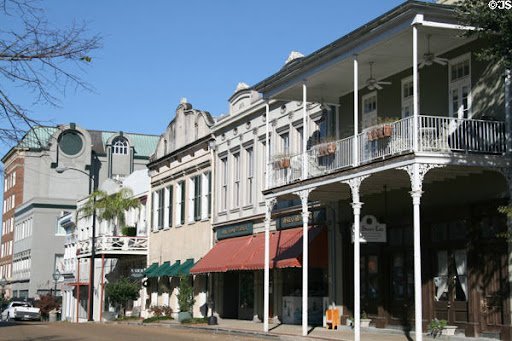
About one ½ hour drive from Vicksburg, and with a population of only about 13,000, Natchez is a more prosperous town than Vicksburg. Prior to the civil war, Natchez had more millionaires than New York City and was a popular destination for Americans and Europeans. A center for the lumber, cattle and grain trade, Natchez had large and impressive ante-bellum homes high above the Mississippi. Having a late evening libation along Silver Street which runs at the foot of the bluffs, the Mississippi is at its best: wide, strong, and irresistible.

It can get a bit of taking use to when you begin to realize that you can drive from one end of the town to the other in 6-10 minutes, but one realizes that because of that, the pace of life is much different, especially when we often spend five minutes just trying to get past two sets of stop lights within five hundred feet of each other. Throttling back becomes enjoyable.

Our first tour in Natchez was of Stanton Hall, built in 1857 and remarkably, a survivor of the Civil War. Taken over in 1938 by the Pilgrimage Garden Club (a group of fifteen women), it is a showcase of the glory that the house would have been as built. Gold leaf mirrors, Italian marble mantle pieces and furniture shipped from Europe have been reassembled to present a wonderful opportunity to step back in time. And, it even had an indoor, flush toilet! Of particular interest are the bronze gasoliers, each of which represents a unique motif. Designated as a National Historic Landmark in 1974, it is a must see in Natchez.

One thing that is fascinating about the state of Mississippi is that so much of the land near the Mississippi is basically swamp. The water table is so high that you can be driving down a road and see a cemetery where caskets are on top of the soil, encased in concrete holders. We are so used to the custom of placing the dead in the ground, that seeing rows of those concrete casket holders above ground can give quite a start. In the ground, forgotten, buried above ground and one must feel that the dead never really left.

Day 6: New Iberia

Unfortunately, the interesting attractions were closed (they seem to only be open Thursday-Sunday). This was the first time we have run across this, so we visited the sleepy old downtown section which is trying to make a comeback. The locals seem a bit more standoffish but friendly, so we used the day for catching up on long distance business.

7-11: New Orleans

What can I write about New Orleans that I have not previously written? The 11AM sazeracs at the carousel bar at the Monteleone hotel, the excellent Po’boy sandwiches at Johnnies, the excellent lunches at Mr. B’s, etc., etc. Everything is still in place although during our stay the Rolling Stones were in concert. Tickets were $1100 and up (the first time I saw the Stones the tickets were $3.50-6.50 in Chicago), so needless to say, we did not attend the concert, but folks came from surrounding states to see the act.

The one big change was our favorite bar tender (he is so much more than that), has moved from Mr. B’s to the Eliza Jane Hotel on Magazine St. Very classy! You get the feeling of NO without craziness and as usual, Brian is the master of his domain. He is still the best of the best!

As usual, we spent hours in a couple of old-time bookstores (no Barnes and Noble), complete with elderly gentlemen who knew where every book was shelved and who could compare various authors no matter what the subject, plus of course, the store cat who one must pet. The biggest problem with such explorations is the load of books one must lug back when you leave the Big Easy.

The pace of the French Quarter can be quite hectic during the late afternoon and evening and quite different from the old warehouse quarter just across Canal Street. The warehouse quarter has many new hotels, and some excellent restaurants so do not hesitate to extend your visit to NO by making a visit to that section.

Overall, it was a great trip. The old Southern traditions of a slower life, kindness and courtesy are still alive and doing well. Yes, you must put up with the humidity, but the people make up for the discomfort and you will leave with many wonderful memories.

Thank you.

Share:
Reading time: 9 min
Lifestyle, Cigars & More, Travel

A Royal Coronation and the Baltic

June 1, 2023 by Barry J. Klazura No Comments

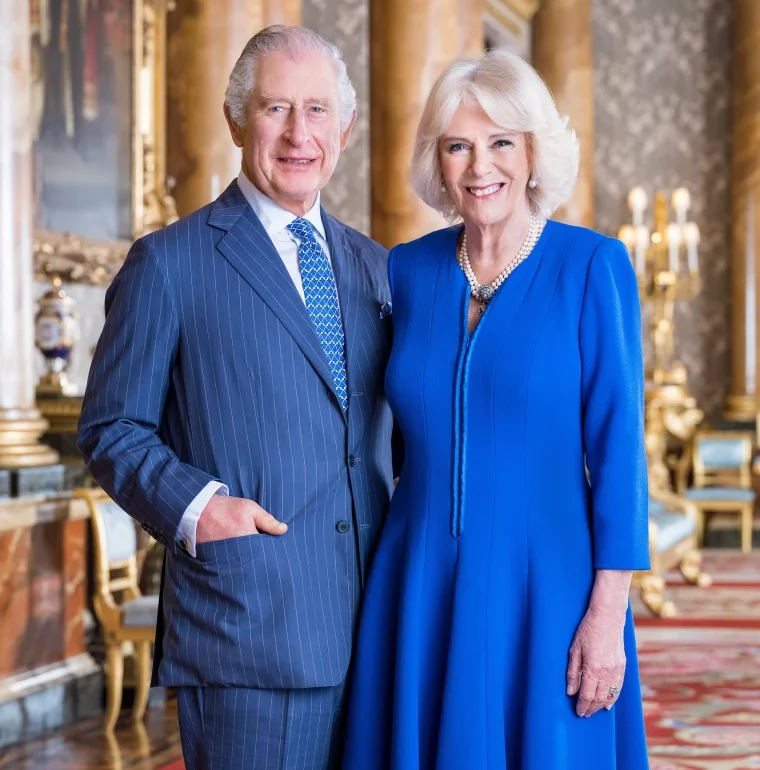
So I made the reservations a year ago, never giving it a second thought and then suddenly, out of the blue, the Palace calls to let me know that “Charlie” (he loves it when I call him that; he always says, “Mr. Klazura, I love it when you call me that, it makes me feel so unroyal), has scheduled his coronation the very week I shall be in London.  Of course, I know why he did that and it was nice (I mean he wanted me to have a good time), but I insisted that I could not join him in the Royal Coach as really, it was his special day.

    OK, maybe it did not happen exactly that way, but somehow my favorite wife and I landed in London a couple of days before the coronation and it was wonderful to see the streets alive with the Union Jack, flowers, etc.  We dared not try to get close to the route (folks were camping out two nights in advance) but watching it on TV surrounded by Brits was a lot of fun.  And, while so many Brits were sleeping along the route, it made roaming through Harrods much easier. 

     London is always special and the five nights we were there went by very quickly.  What did we do?  The first AM I always have an appointment at Trumper in Mayfair for an old fashioned shave. Then onto Fortnum & Mason for a typical British breakfast.  It lets us know we are really in London.  Actually, we spent time as if we lived there as we felt quite comfortable with the city.  No need to hurry to certain exhibits, and we ate at some of our favorite haunts (the caviar and champage bar in Harrods is great for food and people watching and the Polish restaurant Ognisko is as great as ever).  The cigar bar at the Connaught was nice (although as is the case in the U.K., the measures are a wee-bit small).  See my review of the cigar room at the blog (www.andontheotherhand.com, dated 5/19/2023).

     Leaving London is a sweet sorrow but we had to catch our ride to the port where we embarked on our sixteen-night cruise on the Cunard Queen Victoria.

 Factoids

* In some parts of the U.K., there is only one doctor per 100,000 people

* Appox. 48% of pregnant women receive inadequate or no pr-natal care

But hey, their health care is free.

THE BALTIC CRUISE

16 Nights

After an initial day at sea, we landed in Gothenberg Sweden which is the second largest city in Sweden.  As expected of Sweden, the city was clean, orderly and not terribly interesting.  Sorry.  Haga, which is the celebrated old city is sleepy with many shops not opening until noon, and one can only stop at so many shops for coffee and a roll. This is a prime example of the advantage of a cruise; I have been there, seen it and can quickly cross it off my list of places to go back too.

     From Gothenberg, one more day of cruising (lots of reading, quiet, figuring out where to have lunch, etc.) we landed in Helsinki for an overnight stay.  Helsiski is spotless, not a bit of graffiti, litter, etc.  The locals speak excellent English, are bright and welcoming while they (at the seaside market), have very nice local crafts and small booths featuring reindeer sausage, moose meatballs, etc.  It is a nice town to walk around and we were fortunate as we had two wonderful sunny days with perfect weather.  The locals laughed every time I said it was a typical Helsinki day.  Being so far north, it did not get dark until about 10PM and the sun rose early, so the time for exploring is wonderful.  Overall, Helsinki makes one want to explore more of the country as it is welcoming and so civilized.  It shows what a homogenous nation with a strong work ethic and a strong sense of national identity (Finnish flags are everywhere and they appreciate their Russian neighbor for what it really is) can create.  Very enjoyable!  

Misc Tips for Helsinki

* If you want an excellent lunch with great service, try Bardot at Kluuvikatu 1

* For cigars, try the oldest cigar shop in Finland, Havanna Atta at Pohjoinen Makasiinikatu 6 (say that quickly 6 times)

     From Helsinki we sailed to Tallinn which has a wonderful old city surrounded by a wall that dates back to the 1400s.  They have preserved the old city quite nicely and there are several shops where you can purchase Soviet and German WWII helmets, medals, magazines, etc.  It makes you realize that the country was occupied from 1939 until 1989 under two brutal regimes and that is one reason why the populace is so strongly committed to being the left flank guard of NATO.  As you would expect, the streets can be narrow and winding and being of cobblestone, comfortable walking can be a challenge.  The city has some beautiful churches, including an Orthodox church which is quite pretty.  English is widely spoken and it would be a great base to explore more of the country, which is quite nice during the summer.  During the winter, ah no thank you!

     Sailing overnight at a slow seventeen-knots, we arrived in Stockholm, the capital of Sweden. One thing that hits you as you drive into the center of the city is the wonderful architecture; the government buildings are stately, reflecting the wealth and historical culture of the nation.  A major power player in much of European history, Sweden decided after the Napeonic age to become neutral and it has benefited quite handsomely from that move.  

     Located by the King’s palace, the old city is a great warren of cobbled streets with smaller side streets that take you between buildings going back hundreds of years.  There are numerous coffee shops offering wonderful pastries and on a rainy cold day we were there, it was a joy to step into a shop and feel a warm welcome by the friendly staff.  The winters are cold, the springs are rainy and, as a local said, when the sun comes out, one feels guilty being indoors.  I would visit the city again in any of the seasons (even winter), but only if I was prepared psychologically for the protracted hours of darkness (during the winter) or sunlight (during the summer).  Just become a local!

     One of the best parts about a visit to Stockholm via ship is when you are leaving, you travel for 3-4 hours through a huge number of islands, small and large where the locals have built wonderful summer homes.  Some are inhabited all year long, but given the cold and ice of a typical winter, I wonder how those individuals survive what must be a very isolated existence.  Many of the islands are as close as fifty years off the ship and many fellow travelers are all but glued to the windows, watching the wonderful scenery and the beautiful inviting homes.

Klaipeda, Lithuania

Founded in the 13th century by the Livonian Knights, Memel as it was known by its German name was expanded by the Teutonic Knights into a major fortress stronghold.  It’s German majority was the premise for Hitler’s demand that pre-WWII Lithuania hand it over to Nazi Germany and it was mostly destroyed during the Soviet advance later in the war.  With the German population expelled by Stalin, Memel reverted to its Lithuanian name of Klaipeda.

      The town, the third largest in the country is a relatively new addition to be added by cruise lines so it is still relatively unspoiled.  For example, a heartly traditional lunch for two (two different soups, two different entries, bread and a half bottle of local wine) costs about $40 at Etno Dvaras which has been certified by the Culinary Heritage Fund.  But before you have that lunch, a hot chocolate and a couple of excellent chocolates at The Chocolate House ( Turgaus g. 2, near Theater Square) might be just the thing.  The hot chocolate is enough for two and you get to pick the special chocolates to enjoy with the drink. Wait for the prices to catch up to Tallinn!  Unlike Tallinn I did not find any WWII/occupation antique shops but then unlike Estonia, Lithuania does not have a large majority Russian population.  

     This is a pleasant stop which will take you back a few years to the period just after the fall of the Soviet Union.  It will make you want to visit more of the country.

Gdansk & Gdynia, Poland

Between 1919-1939, Gdansk was known as Danzig, an old trading city on the Baltic.  A protectorate of Poland, its mostly German citizens longed to be united with Germany.  With the rise of the Nazis in 1933, the city became a hot bed of political intrigue and, in response to the troubles, Poland started to build up Gdynia, about 20 km. away, as a rival ship construction port and shipping port.  It quickly surpassed Danzig in revenue, which infuriated the Germans even more.  At the start of WWII, after the fall of Poland, Gdynia took second place to Danzig but both cities were destroyed in the final year of the war.

     Today, Gdansk is part of Poland, the German population being expelled under orders of Stalin.  It has been beautifully rebuilt and the old Hanastic architecture is the gem of the city.  Gdynia was the home of the Solidarity movement which was a key element in the fall of, Communism in Poland.

     Gdansk is the more charming city, full of restaurants, and home of the museum of World War II, one of the best in the world.  Most museums on the war, such as the Imperial War Museum in London, deal more with the military aspect, while Gdansk deals with the human suffering of the war.  There are numerous exhibits of those who lived through the war, mostly as children or young adults.  It is a moving museum and well worth the visit.

     No visit to any Polish town or city is complete without a meal, but don’t let your eyes get you in trouble, for the servings are large and the food can be quite heavy.  We stopped at Pierogarnia u Dzika at Piwas 59/60 just off the water front.  We had four shots of vodka (outstanding), a serving of eight pirogi (four different fillings), grilled salmon, a glass of wine, then for dessert, and eight sweet pirogi (two different fruit fillings), all for $46.88!  Now that is a deal!  Forget dinner!

     My wife and I agree that Gdansk is worth a two-day visit and we shall begin to plan our trip to the Baltic area soon!  Nice people, plenty of history, great food and not as many tourists.  Enjoy!

Copenhagen

Each visit to that beautiful city reveals new treasures!  Walking around the opera house, one finds a mosaic on the ceiling of the port which welcomes autos to the theater.  The mosaic ceiling is made up of small tiles of gold, lapus, silver, etc. that show the detail the Danes have to create beautiful mouments to their culture.  Walking around the city on a sunny day one cannot help but feel uplifted; the city is orderly and clean.  Everyone obeys the rules, even the cyclists who stop at traffic lights and make way for those who walk (amazing!!). It is easy to understand why Denmark was very tough on deporting immigrants who ran afoul of Danish law, but one feels that they will not allow those who migrate to upset the harmony of their society.  In some ways, Copenhagen seems too good to be true but I have yet to find a fatal flaw in their system.  A visit to Copenhagen will make you wonder why your home town can’t (seem) to operate so smoothly.

General Thoughts on the Trip

The trip consisted of five nights in London and a sixteen night cruise on the Cunard’s Queen Victoria.  As previously mentioned, we are very comfortable in London, it can feel like home.  Enough said.

     One does need to be careful regarding a cruise to make sure it matches your goals, finances, family needs, etc. 

1) This particular cruise had mostly Brits who were in the late 70s and older, so definately not a cruise for someone with young children, teens, those who seek constant entertainment, etc.  Keep that in mind when looking for a cruise. Another thing to consider is your trying to understand what Brits are saying; more than once I would hear one Brit ask what another Brit was saying and they only lived about 40 miles apart!  It is true, we are two nations separated by a common language.

2) The food was very good, not as good as Oceania, but then Oceania charges a premium and advertises themselves as the finest food on the ocean.  Yet, I never had a bad meal and always had a great selection.    

3) The first time you go on a three week vacation you realize that two weeks simply ends just when you are going to really enjoy yourself.  I believe it is the same with a cruise.  Seven nights?  OK.  Ten or longer, now you will really get into cruising.  On this trip, many Brits I met had taken three around the world cruises and were booking other shorter cruises.  It is definately a way to leave the world behind (they were able to afford it as they are under the old UK pension plan which was more of a private retirement plan as opposed to the current plan which is much like our Social Security system).  

4) As usual, I found the most interesting individuals in the Churchill Cigar lounge; one author of two books who has interviewed numerous interesting historical figures and their families to bring to light little known historial facts, another a high manager in the British gas industry who shared some stories when he was working on a project founded by (then) Prince Charles and some of their conversations, etc.  Each evening after dinner, we headed up to the cigar lounge (I have the most accomdating and lovely wife) to talk with other passengers in a relaxed atmosphere.  Excellent!

OK, I am sure I have bored you enough but I hope you will have picked up some ideas on cruising, places to visit, etc. I hope you have a great summer and if you have any questions on cruising or even financial or insurance matters please feel free to reach out to me.  Thank you for your patience!

Share:
Reading time: 12 min
Musings, Quips and Historical Facts, Travel

India’s Uprising

April 3, 2023 by Barry J. Klazura No Comments

The Constitution of India is the world’s longest.  It consists of 145,000 words (the U.S. Constitution has 4,000), has 488 articles, 8 schedules and 22 parts.  It guarantees 1,109 castes and 775 aboriginal tribes’ representation by allotting them twenty-five percent of the seats in the national parliament as well as granting them twenty-five percent of the government jobs. It honors the various religions to the extent that Muslims may have multiple wives, but Hindus may not.  Complex but at the same time, it is “less intrusive than the American one with its litigation-fueled undermining of meritocracy in the private sector”.

While such numbers are interesting, the recent article by Christopher Caldwell in the Claremont Review of Books takes us behind the numbers and examines the political forces which have propelled India since unification and independence.  At independence India was for all practical purposes a one-party state but dynasties rise and fall and the tale of each successive dynasty is laid out in a manner that is easy to understand. Today India is led by Narendra Modi, the son of railroad tea seller.  He is a member of a “backward” caste and like Trump, despised by the nations traditional political elite.  Called a demagogue, populist or reactionary, he does not care for the rights of gays or women and is charged with fanning the emotions of the majority Hindu populations who can be compared to the white, heterosexual males of the U.S..  Yet for someone who has been in power nine years, his positive rating is about 78%.

This article is a must for anyone seeking to understand the nation of India.  Traditionally neutral, India has no problem buying fuel from Putin at a cheap rate.  At the same time, India shares a 2,100 mile border with China and a 2,065 mile border with Pakistan, both nuclear powers who see India as a potential and real enemy. Despite these challenges, India is moving in a way that seeks to maintain the best of its culture while picking and choosing from the West. 

India can become a major power, but it faces challenges on many fronts.  This article will help the reader better understand the forces that are in play in the world’s most populist nation.

https://claremontreviewofbooks.com/indias-uprising/

Share:
Reading time: 1 min
Travel

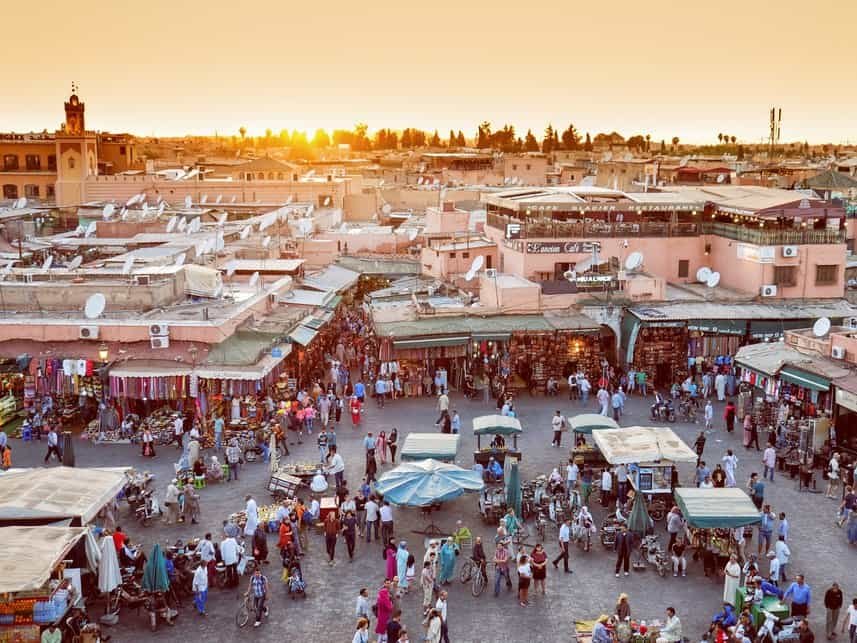
A Visit to Barcelona, Lisbon and Marrakesh

February 20, 2023 by Barry J. Klazura No Comments

Since my favorite wife had to attend a large trade show in Barcelona, I thought I would tag along and extend the trip to Lisbon and Marrakech.  This is a bit of a role reversal for most males I know bring along their wives when they have to travel to a trade show. I also viewed it as a blow for male liberation (not really but I thought it sounded good).  Actually, we have done this a number of times, combine business with pleasure and it is always nice to be together at the end of a long day.

BARCELONA:          

We had been to Barcelona several times; in fact, my first visit was over forty years ago so I had a fair familiarity with the city.  Luckily for us, some wonderful friends of ours from Belgium joined us and their experience with the city really made the trip quite memorable.

There is a major push to make the city a major location for trade shows, but they have a way to go.  While the convention center is large, the surrounding hotels and restaurants are not up to par and there is a major shortage of taxis (and few of the drivers speak passable English, let alone German, etc.).  Waits of 1 ½ hour for a taxi after a show are not unusual and Uber, etc., is not allowed in the city.  While younger people are more conversant with English, there are a large number of immigrants from Asia (many in the food industry) who are not conversant in various languages.  Barcelona is not ready for prime time as a business convention center.  Additionally, the Spanish are a bit more guarded in their approach to strangers.

     No visit is complete without a visit to the Gaudi Cathedral, aka the Sagrada Familia.  Construction started 133 years ago and the goal is for the project to be completed on the one-hundredth anniversary of the death of Gaudi in 2025.  I first saw the Cathedral some forty plus years ago when walking through the cathedral was literally walking through a construction work site. One had to be careful of the scaffolds, workmen pushing wheel-barrels of concrete, electrical wires and other possible methods of harm all while trying to figure out how six foot tall what appeared to be bunches of grapes or other fruit seemed to place helter-skelter about the place.  Today, it is much different, as the beautiful building appears to be nearly complete.  The floors shine, light comes in through magnificent multi-colored stained glass windows and all is in order.  For an extra charge (yes, it costs to enter but it is well worth the experience), you will be whisked up into one of the cathedrals’ towers to get amazing views not only of the city, but also of the details of the spires.  Those huge bunches of grapes are now at the very top of the spires and you cannot help but be amazed at the engineering skill exhibited in the building.  In fact, when the cathedral was first designed by Gaudi, the technology for its construction was in some areas lacking but it is a tribute to true progress that his design has come to fruition.  Be forewarned however, that one must walk down some four hundred steps, many of them on a narrow winding stone staircase within a tower and flanked on your right by the ability to look down the hollow center which ends hundreds of steps below.  Talk about cheap thrills!

Continue reading
Share:
Reading time: 14 min
Cigar Reviews, Lifestyle, Cigars & More, Travel

The $165 Cigar

January 4, 2023 by Barry J. Klazura 2 Comments

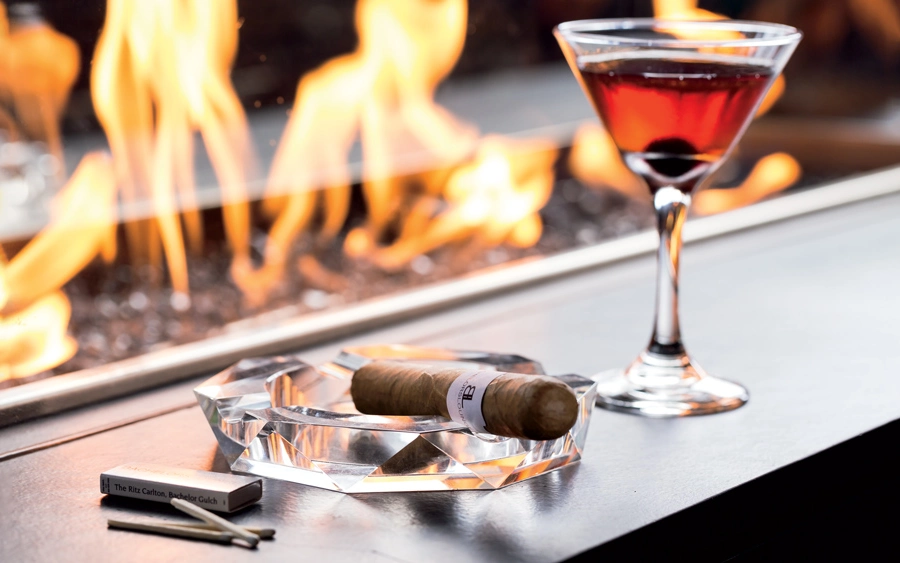
Shortly before the pandemic, while in London, I ran into one of those rare London days of unending rain.  Tired of fighting the crowds, I took shelter in the Ritz Hotel, specifically in their cigar lounge.  Ah, what a relief! The room was quiet, beautifully decorated, and barely occupied.  The room attracts a certain type of individual, one who does not even bother to look up to inspect whoever enters.  I noticed that they were all males, well dressed (as you would expect at The Ritz), not a sneaker, hoodie or backpack in sight, my type of place.

Picking a nice seat near a curtained window where I could just hear those unfortunates stuck in the crowds and rain, I picked up the bar menu to inspect the excellent listing of cognacs, wines, whiskeys, scotch, etc. One of the staff approached to take my order and asked if I would like to choose a cigar; of course!  We went over the beautiful walk-in humidor, and I found an goodly selection of cigars, including those make in the Dominican Republic for The Ritz under their label. Fortunately, I was prepared for the “premium” price that would be charged for any cigar and I was certainly not disappointed.  Being a thrifty Polish American for the south side of Chicago, I do like to watch my pennies, but this was a special occasion.

Going back to my seat, I found my very tasty cognac waiting for me and the staff member took great pains to light my cigar.  It was an experience, one that would only have been better had I been wearing one of my smoking jackets. 

After a while, the young man from the staff asked if he could bother me with some questions on bringing Cuban cigars into the U.S. Of course!  We discussed the issue of inspections, the removal of bands, using boxes from non-Cuban brands, and so on for about fifteen minutes, then that having run its course, we both went our separate ways.

After an hour or so, my cigar was finished, and I motioned that was ready to leave and waited for the bill.  The same young man came over, provided the bill, and gave me a blue labeled “Coco” Ritz cigar.  He mentioned how he appreciated our conversation and hoped that I would enjoy the cigar in the future.  It was a very nice touch and I realized that the series, in the Churchill size had a price tag of one-hundred pounds, or about one-hundred sixty-five dollars.  Quite a nice gift!

I had that cigar in my “A” humidor for years, tending to it, leading it mellow and saving it for a special day.  Several very nice business deals have been completed but it still did not seem like the right time.  Finally, this January 2, the day after my birthday, I decided to smoke it.  It was to be a day of quiet: reading all day, not touching the computer, enjoy the rare day of California rain while safely sheltered in the library.

How was the cigar?  I am not a reviewer who will claim to taste a blend of cinnamon and birch bark in each draw, or marvel at hint of molasses that is in the first draw.  But it had an excellent white ash that was firm and had an even draw. It burned smoothly, not too quickly and did not require an extra light.  It was on the mild side and did provide with excellent plums of smoke that hung lazily until they drifted to the open window.  I must admit that I have enjoyed other cigars more both in terms of flavor and gauge, but it was fun to remember back to that enjoyable afternoon at The Ritz and know that I sampled their prize product and did not have to pay for the pleasure.

Share:
Reading time: 3 min
Cigar Reviews, Liquid Refreshments, Travel

Cuban Creations Cigar Bar, New Orleans

December 21, 2022 by Barry J. Klazura No Comments

If you are a cigar smoker and do a bit of travel, finding a good cigar lounge can be a daunting task. Yes, there are shops that sell cigars, and a few may have a comfortable chair or two, but there always seems to be something missing.  So, we continue to hunt for that gem of a cigar lounge that seems to bring it all together.

One such gem is Cubana Creations Cigar Bar at 533 Toulouse St. in the French Quarter of New Orleans.  A nice selection of well cared for cigars is available and the bar features an excellent selection of liquid pleasures, including some that can be difficult to find.  Aside from the bar, there are two rooms with comfortable seating in a setting that allows one to enjoy a smoke, your drink of choice and have a pleasant conversation without having to shout as is so often the case in many bars in New Orleans.

Matthew manning the shop that day, has travelled the world and provided each new customer a nice overview of the club and its offerings.  After inquiring about my favorite cigars, he suggested a Bandolero Vanidosos 50, which was a new cigar for me.  I teamed it with A Remy Martin Tercet cognac, and it was a happy choice.  The Bandolero was mid-range in strength and the Remy very smooth, a great team.

CC is the only indoor cigar lounge in the French Quarter so there was a slow but steady influx of clients, all happy to be able to enjoy their pleasures in a location that was far enough away from the sometimes craziness on the street to be a nice place of shelter. 

I recommend Cuban Creations not because it is the only shop of its kind, but because it offers a good selection of cigars and liquors in a calm, well-tended manner.  A step above a neighbor shop, it offers good value with a personal touch.

Share:
Reading time: 1 min
Page 1 of 212»

Barry J. Klazura

Barry Klazura sipping grappa

With a Masters Degree in Guerrilla Warfare and Totalitarianism, Mr. Klazura was well prepped for a career in Sales and General Management, consulting on corporate startups and turnarounds as well as lecturing on history and politics.  For the past twenty years he has focused on being a financial advisor and consulting.

Delivered To Your Inbox

Sign up to get an email when a new article is published.

Topics

  • American Civil War
  • Biography
  • Book Reviews
  • Cigar Reviews
  • Coronavirus
  • Current Affairs
  • Education
  • Environment
  • Factoids
  • Government
  • Lifestyle, Cigars & More
  • Liquid Refreshments
  • Musings
  • Quips and Historical Facts
  • Society
  • Travel
  • Uncategorized
  • World War I

Subjects

book Books-Russia/Soviet Union Books 21st Century Books 1919-2000 Books Ancient to 1900 Books Asia Books Biography Books Fiction Books Germany 1919-1945 Books Pre-WWI books Viet Nam books world war I Books WW1 Books WWI Books WWII Cigar Friendly Location Amsterdam Cigar Friendly Locations-London Cigar Friendly Locations-New Orleans Cigar Friendly Locations-New York Civil War Coronavirus Environment Korean War World War I World War One

Recent Articles

At Stalin’s Side by Valentin Berezhkov

July 15, 2026
The Price of Victory by N.A.M. Rodger

The Price of Victory by N.A.M. Rodger

June 26, 2026
Frontsoldaten: The German Soldier in World War II by Stephen G. Fritz

Frontsoldaten: The German Soldier in World War II by Stephen G. Fritz

June 5, 2026
Organizer of Victory, 1943-1945, George C. Marshall by Forrest C. Pogue

Organizer of Victory, 1943-1945, George C. Marshall by Forrest C. Pogue

May 26, 2026
Illegals Released & Our Leaders

Illegals Released & Our Leaders

May 10, 2026

Inquiries and Comments

For general inquiries and comments, email AOTOHcomments@gmail.com.

Facebook
© 2020 And On The Other Hand. All rights reserved.