
On The Other Hand -
Book Reviews
Lifestyle, Cigars & More
Musings
About
On The Other Hand -
  • Book Reviews
  • Lifestyle, Cigars & More
  • Musings
  • About
Book Reviews

The Price of Victory by N.A.M. Rodger

June 26, 2026 by Barry J. Klazura No Comments

Professor Rodger’s two earlier volumes on the naval history of Britain began in the seventh century and carried the story through to the end of the Napoleonic Wars. This third volume opens with the Royal Navy at the height of its power and traces its decline from around 1840, taking in the difficult transition from sail to hybrid sail-and-steam ships and on into the modern era. The scope of such a work is immense, yet the author goes beyond the expected and creates a history that carries the reader into territory other British naval histories leave untouched.

At times, the work can border on eye-blurring, particularly when he details the personalities and politics of the British naval bureaucracy of the mid-nineteenth century. The individuals, with their foibles and political battles, can be hard to keep straight, and the prime movers of the Royal Navy are by now dusty figures receding into history. Yet those passages bring home a striking point: the politics and decision-making of that distant age were, in reality, no different from the political and economic battles we see today.

On the other hand, the book is a treasure trove of facts and struggles that are at once fascinating and genuinely enriching, giving the reader a wider and deeper understanding of the innovations and sacrifices that shaped the twentieth century.

The Women’s Royal Naval Service (WRNS)

One example, and a tribute, is his writing on the Women’s Royal Naval Service (WRNS). At a time when women were still primarily occupied in the home, the naval establishment not only welcomed the creation of the WRNS but placed its founding and day-to-day running entirely in the hands of women. The first director, Dame Katharine Furse, who had resigned from the Red Cross, was given a free hand, choosing her own staff and building the organization without male supervision. As the First World War wore on, the responsibilities of the WRNS continued to grow, and when the service was disbanded in 1919, its 438 officers and 5,054 ratings, all women, were reluctant to return to civilian life. Many formed the Association of Wrens, which later served as a foundation for the service’s reconstitution. Moving into the Second World War, the WRNS took up the challenge again, performing efficiently and at times heroically, freeing up much-needed manpower for other duties.

Breaking Enigma: The Government Code & Cypher School

Then there is the history of the Government Code & Cypher School (GC&CS), which, having learned much about German signals procedures from the Poles, was able to read a great deal of the traffic from captured Enigma machines. This intelligence played a decisive role in routing convoys around German submarines and in misleading the enemy about sailing routes and dates. Admiral Karl Dönitz never grasped the scale of the intelligence disaster he had suffered,

and as terrible as the losses were in the Battle of the Atlantic, the work of the GC&CS contributed mightily to the eventual victory.

The Small Facts That Change the Picture

Rodger also has a gift for dropping in those wonderful tidbits of history that make the reader stop and reread a passage. While discussing the siege of Malta in the Second World War, for instance, he notes that the total tonnage of German bombs dropped on Malta was greater than that dropped on London during the Blitz. Anyone who has visited Malta will grasp the weight of that single fact at once, and it casts the battle for the island in an entirely new light.

Is It Worth Reading?

I should say that the book is lengthy, more than 600 pages before the numerous appendices, with the footnotes alone running to ninety-one pages, and it can be heavy going in places. That, however, is bound up with its great strength: it is loaded with fascinating facts, presented in a way that keeps the reader reluctant to put it down. I would suggest that any newcomer adjust to the idea that you may read fewer pages per sitting than you expect, but you will come away knowing you have read a treasure of history, and one of the finest single volumes ever written on the naval history of Britain.

Share:
Reading time: 3 min
Book Reviews

Frontsoldaten: The German Soldier in World War II by Stephen G. Fritz

June 5, 2026 by Barry J. Klazura No Comments

It is generally acknowledged that against the Western Allies, on a man to man basis, Germans outkilled British and American troops by a factor of about fifty percent (the ratio on the Eastern Front was much higher).  How was it that an army that did not have control of the air, was outnumbered materially by large margins and was worn down by years of combat was able to not only achieve such a high kill ratio, but continue to offer effective resistance up to the closing days of the war?

In his book, Fritz begins with where it all starts; basic training and continues through dealing with how the Wehrmacht dealt with battle in all the various climates, dealing with difficulties of supply, etc.  The average German soldier was subject to the same strains (excessive combat, break down of nerves, etc.) as other soldiers, but that due to high unit cohesion, higher quality and fewer officers, and twelve years of National Socialism with its stress on the Volksgemeinschaft (national community). German youth from the age of to-14 could join the Deutsches Jungvolk (Germa Youngsters of the Hitler Youth) and then the Hitler Youth from 14-18. After that, one could go into the Labor Front or the military. Each stage was designed to inculcate the individual with their being an integral part of the national community. As a result, disobedience was seen as a hostile political act against the nation. Thus, the individual soldier believed that he was defending the nation against the aggressors of the world.  As is documented elsewhere, the average German saw themselves as the victims of the war and this helped the average German soldier to fight longer and harder to defend his community.

During basic training, bonds of comradeship were formed at the most basic level.  Hardness was stressed as “sweat saves blood” was pounded into the recruits.  And while the training was hard (and resulted in deaths), the donning of the uniform after basic training gave many soldiers a sense of esteem and self-worth which would be difficult to imagine in the British or American armies, except for elite units.  Unlike the Western allies, the top human material was not skimmed off for elite units (except for the best of the Waffen-SS units) and consequently at the very basic combat unit level, the best human material could be found to bolster the weaker members.

Constant references are made to diaries and letters from front-line soldiers and as you would expect, they are filled with the usual (and understandable) complaints about the weather or the food or the stubbornness of the enemy. They are also filled from the beginning of the war right up to the end of individuals’ inner reflections on the war and what it means to society and individuals. Many of the comments reflect an above average level of knowledge as common infantrymen examine their lives in the war from a philosophical level. Despite terrible losses in North Africa and Stalingrad, despite the merciless Allied bombing campaign and the constant retreating in the East, many soldiers continued to believe in Hitler and their National Socialistic beliefs. The interwar writings of Ernst Junger with his vision of a new society, “a new world in which the worker and soldier made one by the energy of technology and the vitalism of war” seemed to have struck a deep vein in many soldiers outlooks.

This is an excellent book for anyone interested in understanding the mindset of the average Wehrmacht soldier and will help you understand why despite six years of war and millions of casualties, the Wehrmacht was still a potent fighting force up to the end.

Share:
Reading time: 3 min
Biography, Book Reviews

Organizer of Victory, 1943-1945, George C. Marshall by Forrest C. Pogue

May 26, 2026 by Barry J. Klazura No Comments

For over two thousand years, the name of Lucius Quinctius Cincinnatus has stood for outstanding leadership in time of war, service to the State, Civic Virtue and the ability to turn and walk away from all honors of the populace and State, knowing that one has done one’s duty.  George Washington was and is often referred to as a colonial Cincinnatus for his thoughtful deliberation on setting precedents for our nation, his service and shunning of great honors and titles.  I believe after reading this third volume of Pogue’s massive biography of Marshall, that he was a modern-day Cincinnatus.  Offered foreign titles and national acclaim, a huge sum for his memoirs (in 1947 he was offered a minimum of $1,000,000 for a book which is equal to over $11,000,000 today) which he refused,  he guided the United States military through the dangerous times of the Second World War and was able to work with the President, Congress, the struggles between the armed services and the pressures from such a great man as Churchill and the not so easy to work with DeGaulle to mobilize, equip, train and pick the top officers who would take the United States from an army of less than 200,000 to a force of nearly 9,000,000 in just over two years.

Showing loyalty to the President and with a clear understanding of his duties to the Congress, Marshall stood above politics.  He could be heartless in demoting career officers who could not adjust to the stresses of modern warfare, while he had the utmost concern for the morale and well being of the average soldier.  A visionary, he grasped the key to victory as control of the air (it was not until after WWII that the Air Force became a separate service, during the war it was known as the “Army Air Force”) and pushed many officers out of the service who could not understand this direction.  When contacted by old friends and fellow officers for special favors, he would, in most cases, tell them that he could not help them unless an officer was asking for posting to a more dangerous position.  If the petitioned continued, Marshall would cut them off from all further contact.  The reason?  He had seen from prior wars the high cost of favoritism and was determined that the American soldier would not be wasted due to political or personal contacts being used to “feather one’s nest”. 

I came away with a deeper admiration for Marshall and a bit of sadness as I view the exact opposite actions by many of our politicians.  Marshall retired to a quiet life and unlike some of our former Presidents or current leaders in Congress, did not exit “public service” a millionaire many times over.  Even though he wished for a quiet life, he was called to duty again on a totally futile mission to China and he is credited with the “Marshall Plan” which resurrected a destroyed Western Europe and helped to stop the take over of Western Europe by the Soviet Union.

This can be a difficult book to read in that the detail is tremendous and may be difficult for anyone not conversant with the historical timeframe, conditions, etc.  I looked forward to the book each time I picked it up and have just started on Pogue’s prior book on Marshall which covers the time from 1939-1942.  The detail in these books is excellent, especially when one realizes that Marshall was a very private man.  I would recommend this book to anyone who wishes to seriously understand the importance of a modern day “the invisible hand” and modern Cincinnatus.

Share:
Reading time: 3 min
Book Reviews

Wages of Destruction, the Making and Breaking of the Nazi Economy by Adam Tooze

May 4, 2026 by Barry J. Klazura No Comments

I have studied many aspects of the period from 1932-1945 such as military, mobilization, campaigns, politics, etc., but this book brings a neglected aspect of national power into sharp focus.  Other histories have hinted at the fringes of the subject, but in this single volume we are able to examine how the economy, the quest for raw materials, how reserves of foreign exchange, etc. impact and drive both domestic and foreign policy.

Hitler was not a fool economically; he fully understood the long-term German economic and geo-political situation and he outlined it in Mein Kampf.  In the long run, Germany could not win a war of attrition as it had neither the population, land mass, agricultural basis, raw materials, etc. of its combined potential adversaries, such as the Soviet Union, the British Empire or the United States.  As a result, time was a crucial factor for Hitler as he sought to fulfill his goals.  While his generals were supportive of his goals, they lacked the understanding of economics which forced Germany to fight wars that would be short and brutal. 

An example of this need was Hitler’s demand that within a few weeks of the defeat of Poland, that his armed forces be able to strike in the West.  His generals were filled with doubt; the British and French were much stronger than Poland and were in fact stronger than the German military; if the weather would not be perfect, the Luftwaffe could not be used to the best purpose; would it not be better to be on the defensive and let the enemy come to the Germans; the original plan for an invasion of the West was a re-warmed Schliffen plan that did not aim at a knock out punch but rather committed Germany to a possible replay of the First World War.  Hitler understood that time was not on Germany’s side.  The British were rearming, they were buying military hardware from the U.S., his war machine ran on oil and his supply was limited and a replay of the First World War could not come out any differently.  Above all, economically, Germany could not afford to be on the defensive, nor could Germany afford to a war of attrition in the West.  Thus, the appeal of von Manstead’s Sickle Plan.

In attacking the Soviet Union, while the racial hatred was a factor, the main goal of the war was to gain access to the oil, grain and minerals needed by Germany so that it could be able to hold off the power of the British Empire and the United States.  Again, Germany needed a short, sharp, brutal war, one which could be won in six to eight weeks as after that, time, distance and economics would work against a German victory.

I recommend this excellent book to any serious student of Nazi Germany; it brings fresh information and an excellent viewpoint to any discussion of that time.  After reading this book, you may have a second opinion of your perceptions of that time period.

Share:
Reading time: 2 min
Book Reviews

The Crimean War by Orlando Figes

April 13, 2026 by Barry J. Klazura No Comments

One of the nice things about histories by Figes is that they are so readable.  Like two of this other histories I have read, (“The Whisperers” and “A People’s Tragedy”), Figes has the ability to bring the past alive and make you feel as if you are part of the action.  He does not concentrate on battle scenes (although battles are covered), but he centers on the lives of the ordinary soldiers.  In this book he gives short shift to Florence Nightingale but point out the breakthrough of a Russian surgeon, Dr. Nikolai Pirogov who used an early form of triage as well as anesthesia.

     Despite the common view of the war, it was the French who supplied most of the troops, not the British and it was the French, not the British who better supplied their men with everything, from tents, to food to warm coats for the cold Crimea winter, etc. 

     It is also interesting to note that there were very real plans for a coalition whose goals was the breakup of the Russian Empire, including invasions of Russia from the Baltic, uprisings in Poland and an invasion from the Crimea into the area of Kiev.  But as the causalities began to mount, the enthusiasm for such great plans began to wane and in the end a settlement was made.

     For all the loss of blood and lives, Russia was able to regain her position within 25 years and continue to create problems in the Balkans.  Her meddling and ambitions led to World War I thanks to a system that refused to believe that the world was changing and was all too often in the hands of a single man who could be unbelievably foolish.

     A big book (about 500 pages) but an interesting one which never goes off into tangents that do not serve to tell the main story.

Share:
Reading time: 1 min
Book Reviews

Circles of Hell; the War in Italy, 1943-45 by Eric Morris

April 1, 2026 by Barry J. Klazura No Comments

Winston Churchill thought that Italy was the “soft underbelly” of Hitler’s Europe and saw a campaign in Italy as not only an opportunity to knock Italy out of the war, but to use Italy as a springboard into the Balkans where he hoped he could insert forces in front of the advancing Soviet army.  To the Allied generals however, they saw Italy as an area unsuited for the type of fast, mobile armored that the Germans could not successfully halt.  Instead, if Italy was to be invaded, the only real advantage according to the military was a new area for Allied bombers to hit Germany from a different direction.

Then the politicians and the Generals egos stepped onto the stage.  How could Italy be invaded, and Rome and the Vatican not liberated?  How could any of the Generals be satisfied with limited objectives when on the other fronts Allied armies were surging forward?  Who wanted to be stuck in a combat theater where the opportunity for promotion was limited?  And so, step by step, the original limited set of objectives were expanded as invasions of Salerno and Anzio were thought up as opportunities to by-pass the German defenders, so Italy could be conquered via a series of leap frog maneuvers.  But no one bothered to consult the Germans who poured troops into Italy and forced the Allies to fight battles that they did not want.

Reputations were made and broken as Field Marshal Montgomery quickly exited the theater to politically capture the overall command of the invasion of France.  Generals such as Clark had tarnished their reputation as they proved to be hesitant despite a glowing academic background at West Point.  In the end, it was the common soldier who had to pay the price at botched battles, river crossings, head on assaults on mountains honeycombed with defensive positions and forgotten as glory was won elsewhere.

The Italian campaign is widely forgotten, not as much as the campaign in Burma, but one must wonder if the losses in Italy were worth the effort and diversion of effort from the main theaters.  But then, there have to enough commands for all those Generals who want to be known as the victor of this town or that city.  An interesting book, especially in the last quarter where more individual stories are provided.

Share:
Reading time: 2 min
Book Reviews

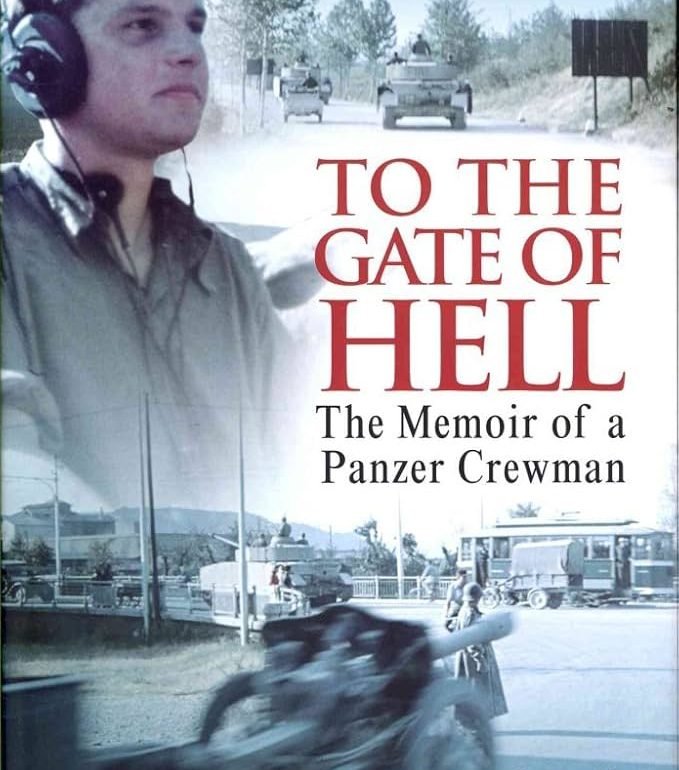
To the Gate of Hell by Armin Bottger

March 19, 2026 by Barry J. Klazura 2 Comments

I don’t believe that the author set out to create a Wehrmacht version of Catch-22, but it has come as close as any modern history of the German army to that vision of military life.  The author points out that like all militaries, the German army of WWII was full of silly rules, scams and scammers, and unfortunately, like the author, individuals who would do their best to stay out of harm’s way if someone else could pay the price. 

From the beginning, the author admits that he volunteered for the Wehrmacht so that he could achieve his Abitur without having to sit for it.  From there, he admits to becoming a radio operator in a tank as it was less work than being a driver, and lying about his health so that he could avoid being posted back to the front.

Most histories written by combat veterans stress their loyalty to their comrades, the men they served with, even their personal guilt that they survived while their friends were killed in combat while they survived.  Bottger does not come at any point close to feeling a kinship with the men in his units and that is what makes this history of interest.  No noble deeds, no comradeship, no sacrifice: nothing but his focus on himself.  In that sense he can be viewed as very contemporary, but fortunately he was not at the front enough to cost his comrades because of his focus on the self. When I finished the book I was a bit disgusted with the author and he was definately put on the list of people I would not like to have over for dinner.

Share:
Reading time: 1 min
Book Reviews

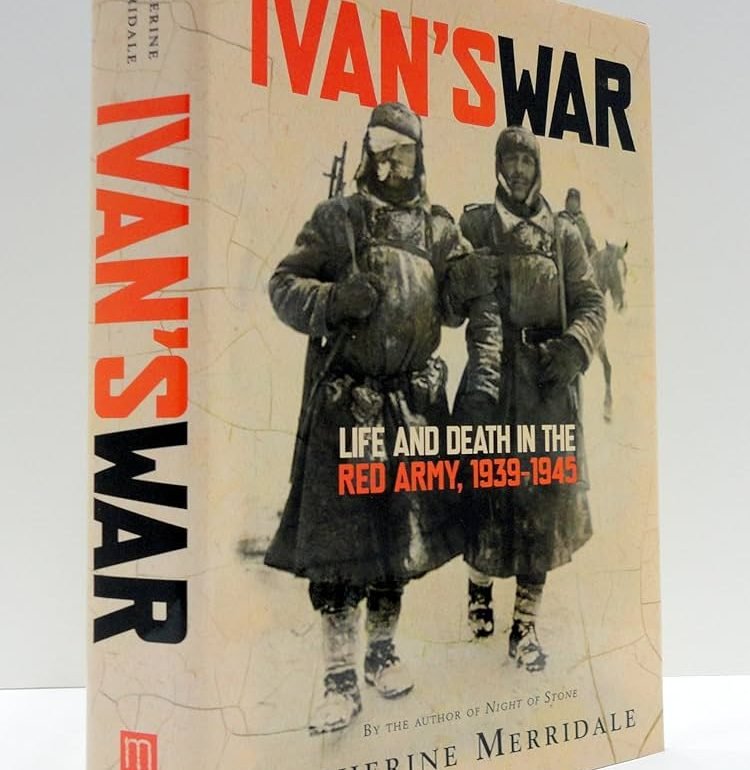
Ivan’s War, Life and Death in the Red Army, 1939-1945 by Catherine Merridale

March 10, 2026 by Barry J. Klazura No Comments

There is a popular vision of the war on the “Eastern Front” (so termed by Western historians as opposed to the “Great Patriotic War as the battle field is called by Soviet historians), that especially after the battle of Kursk, the German army was driven back by a better equipped resurgent Red Army.  The sufferings of the average Soviet soldier, especially during the first weeks after the invasion are remembered briefly but another popular image of a bedraggled German army from late 1943 through the end of the war persists.

Merridale, in this excellent book, does much to dispel the first myth (a better equipped Red Army), especially in the area of the life of the ordinary Soviet infantryman.  While it is true that once Soviet war production was brought fully on line, their ability to concentrate on one front (as opposed to the Germans who had to face battle in Western Europe, Italy, the Balkans, etc.) gave them a huge material advantage vs. the Wehrmacht.  At the sharp end of the bayonet, food shortages, worn out boots, poor medical care, an almost total lack of rotation and home leave as well as poor Generalship (charge across an undefended mine field, the losses would be the same as if there were no mine field but the Germans had protected it with machine guns) led to decreasing morale, insubordination and even a hope that once the Germans were driven off Soviet soil (as opposed to driving onto Berlin) that everyone could go home.  There was an increasing belief and hope that the sacrifices of the troops would lead to a better, easier life after the war as the people would have proven themselves capable of a better life.

She covers the subject of the general behavior of the Soviet troops, especially after leaving Soviet soil.  Wide spread rape, looting and sheer destruction, all justified as revenge for the acts of the Wehrmacht was seen even at the time as damaging to the image of the Soviet Union.  Yet, after three or more years of life at the front and the vicious propaganda  (officially approved) by writers such as Ilya Ehrenburg, the soldiers felt it was their right to degrade the Germans (and almost anyone else who fell in their clutches) with the worse punishments. Any Soviet citizens who were found in concentration camps (as prisoners) were also brutally treated as they were regarded as potential traitors (regardless of how they were captured and what they had endured).

The book also covers, to a lesser extent, the problems faced by couples who were separated for years, often within weeks after a hasty marriage. The average Soviet citizen also had a terrible war, even if they were not in German occupied territory.  Food rationing, strict security measures and the rule that any unaccounted Soviet soldier (due to death, capture, etc.) would be treated as a deserter and his family cut off from government assistance (including food coupons) left literally millions of mothers, wives and children on the verge of starvation. The readjustment to civilian life was difficult as any what we call PTSD was viewed as un-Soviet weakness and officially discounted.  That, plus the general poverty after the war, the cost of rebuilding thousands of destroyed villages and cities and a return to pre-war tight security and policing lead to the burying of bitterness and disillusionment.

Perhaps nothing puts the plight of the average Soviet soldier in perspective better than the fact that during the war, the Soviets executed over 150,000 of their own troops for desertion, cowardice, insubordination, etc.  This during a war when the U.S. executed one soldier for desertion.  There was after the war, for nearly two decades, little official recognition of the sacrifices by Soviet troops in their own land.  For decades, their sacrifices and those of their families were ignored and as the last of that generation dies out, for all their sins and foibles, they deserve a place of honor.

Share:
Reading time: 3 min
Book Reviews

The Pursuit of Power, Europe 1815-1914 by Richard Evans

February 19, 2026 by Barry J. Klazura No Comments

Penguin Books has introduced a history of Europe from Troy through the present; a massive nine volume history with each period written by a different author.  The historians aside from Evans include Ian Kershaw, Tim Banning and others of worthy note.  This volume reflects the usual attention to detail by Evans (his 3 volume history of the Third Reich is, in my opinion the definitive history of the Third Reich); it is rich in detail and almost overwhelming in providing information that makes the reader stagger under its weight.

Unlike other histories of this period, Evans spends little time rehashing the wars, but rather, creates a political, social, economic and moral history of the various forces unleashed by the wars of Napoleon.  It was Napoleon who brought to Europe the ideals of the French Revolution (although at a terrible price with over 1,000,000 French troops being killed not to mention the slaughter of Germans, Russians, Poles, Italians, etc.).  The victors attempted to create a new order in Europe which would allow them to keep a firm handle on the changes they feared and it continued through the revolutions of 1848 until the rise of nationalism.

If you ever want to learn about the impact of railroads on Europe, or the abolition of Serfdom, the Carlist Wars, the Religious divisions, the rise of Imperialism or the first genocides in Europe (naturally in the Balkans), this is the go to book.  But beyond the major movements, we find who invented words such as “socialism”, “feminism”, “communism” (no it was not Marx or Engels), or the diet of the average Englishman vs. the slave in the United States (the slave in the U.S. was inches taller than the average Englishman reflecting a superior diet!), the practical use of the bustle and countless other bits of trivia, etc. this volume will quench your thirst for the trivia.  Yet, Evans manages to pull it all together so that you have a real feeling of the times and context of Europe during that time.

At the same time, when dealing with the major events (the Carlist Wars, Unification of Germany or Italy, the problems from the revolution of 1848 for the Hapsburg Empire, etc.), you came away with a wonder of how any politicians were able to weather the political storms and demands of the time.  It helps us today as it puts our great problems into an historical context and in its own perverse way, can give the reader optimism for the future; what other leaders did with poorer communication and information were able to accomplish, should make us believe in our own ability to move into the future.

Finally, I have to say that this book is almost a curse.  How?  Because given the quality of the historians for the other volumes, I see myself tied to each volume (this one took me two weeks to read, an inordinately long time) and finding at the end, other releases on the subject will offer little that is new and certainly will not be as entertaining.

This is one of those books that if anyone ever asks, “what books would you recommend on this subject”, you could point to this one volume as the beginning and end of the quest.  Beware if you start down this path, for it shall capture you and hold you close till the end.

Share:
Reading time: 2 min
Biography, Book Reviews

Isabella, the Warrior Queen by Kirstin Downey

February 16, 2026 by Barry J. Klazura No Comments

A very fair, balanced biography of the great Queen of Spain who was responsible for driving the Muslims out of Granada and thus completing the Reconquest, of sponsoring Christopher Columbus, as well as starting the Inquisition and expelling (as an option to conversion) of the Jews and Muslims from Spain.

The author points out that Isabella’s husband, Ferdinand, is normally given first place in histories of the period, but that Isabella, the first ruling Queen in over one hundred years deferred many times to her husband’s ego in terms of allowing him to sign first and take credit for actions she began and completed. A bit of a feminist historian at times, but then Downey puts Isabella in the context of her times, especially regarding the threat and might of the Ottoman Empire which was still expanding.

Isabella was a ruler who looked beyond the days problems and thought strategically. She provided an excellent and well-rounded education for her daughters and was, while she had her health, expecting that the natives of the “New World” were to be treated kindly. As an aside, while the author points out that the natives suffered from the deadly diseases of Europe, the natives managed to get their own by spreading syphilis to the “Old World” with devastating effects. He also points out that expansion fueled the Inquisition as the newly united Spain could not be sure of its Muslim subjects who were often in rebellion against the crown and the loyalty of many of the converted Jews was suspect. Regarding Columbus, Downey does an excellent job of providing a balanced picture of him, including his pride, successes, and failures.

 It is interesting to note that Queen Victoria is often seen or remembered as the grandmother of European royalty, but Isabella’s offspring at one time controlled not only all the “New World” but also contributed to the ruling families of the U.K., Denmark, Norway, Sweden, and Monaco.

The book is easy to read; beautifully written, documented and gives a Queen the honor she deserves.

Share:
Reading time: 1 min
Page 1 of 291234»1020...Last »

Barry J. Klazura

Barry Klazura sipping grappa

With a Masters Degree in Guerrilla Warfare and Totalitarianism, Mr. Klazura was well prepped for a career in Sales and General Management, consulting on corporate startups and turnarounds as well as lecturing on history and politics.  For the past twenty years he has focused on being a financial advisor and consulting.

Delivered To Your Inbox

Sign up to get an email when a new article is published.

Topics

  • American Civil War
  • Biography
  • Book Reviews
  • Cigar Reviews
  • Coronavirus
  • Current Affairs
  • Education
  • Environment
  • Factoids
  • Government
  • Lifestyle, Cigars & More
  • Liquid Refreshments
  • Musings
  • Quips and Historical Facts
  • Society
  • Travel
  • Uncategorized
  • World War I

Subjects

book Books-Russia/Soviet Union Books 21st Century Books 1919-2000 Books Ancient to 1900 Books Asia Books Biography Books Fiction Books Germany 1919-1945 Books Pre-WWI books Viet Nam books world war I Books WW1 Books WWI Books WWII Cigar Friendly Location Amsterdam Cigar Friendly Locations-London Cigar Friendly Locations-New Orleans Cigar Friendly Locations-New York Civil War Coronavirus Environment Korean War World War I World War One

Recent Articles

At Stalin’s Side by Valentin Berezhkov

July 15, 2026
The Price of Victory by N.A.M. Rodger

The Price of Victory by N.A.M. Rodger

June 26, 2026
Frontsoldaten: The German Soldier in World War II by Stephen G. Fritz

Frontsoldaten: The German Soldier in World War II by Stephen G. Fritz

June 5, 2026
Organizer of Victory, 1943-1945, George C. Marshall by Forrest C. Pogue

Organizer of Victory, 1943-1945, George C. Marshall by Forrest C. Pogue

May 26, 2026
Illegals Released & Our Leaders

Illegals Released & Our Leaders

May 10, 2026

Inquiries and Comments

For general inquiries and comments, email AOTOHcomments@gmail.com.

Facebook
© 2020 And On The Other Hand. All rights reserved.