
On The Other Hand -
Book Reviews
Lifestyle, Cigars & More
Musings
About
On The Other Hand -
  • Book Reviews
  • Lifestyle, Cigars & More
  • Musings
  • About
Book Reviews, Current Affairs, Education

How Did We Get Here?

October 8, 2025 by Barry J. Klazura No Comments

You have probably not heard of John O’Sullivan, but since the 1990’s, he has been studying, writing about, and warning about the growing movement on the Left toward what we now call “wokeness”. His newest book, Sleepwalking into Wokeness: How We Got Here is reviewed by Steven F. Hayward in the latest issue of the Claremont Review of Books.

O’Sullivan has been observing and writing about the growing movement which is a combination of the Frankfurt School, the movements of the 1960’s and nihilism. He has pointed out that believers in the current movement have and will be unhappy and angry as they view the world through the exact opposite of rose-colored glasses. Traditional Liberals could, occasionally take pride in their victories before they found a new cause which could take some of their energy. The “woke” movement goes a step further down a dark path in that there can never be any victories to celebrate as each battle only goes to expose another sub-subgroup that seeks acknowledgement and which claims to be the martyr de jour.

The review by Steven F. Hayward is crisp and an easy read. If you want to better understand how we got to this point, click on the link below. It will be worth your time, and you will understand the negative forces that create such noise in our society.

https://claremontreviewofbooks.com/ahead-of-the-curve

Share:
Reading time: 1 min
Book Reviews

The Tide at Sunrise: A History of the Russo-Japanese War, 1904-1905 by Denis and Peggy Warner

September 29, 2025 by Barry J. Klazura No Comments

Originally published almost fifty-years ago, this book is considered a classic history of the first war in which an Asian power defeated a European power. The authors do a wonderful job of putting the war in context, firstly by providing a thorough review of the Japanese response to the “opening of Japan” by the Americans and surprisingly, the Russians. They review the various strong warrior clans in a developing Japan and how the politics between those clans colored the strategy and conduct of the war.

They also provide a good overview of Russia which was as always, seeking to absorb more lands. Holding together the vast Russian empire was the trans-Siberian railroad. A single tracked ribbon of steel stretching nearly 9300 kilometers (about 5800 miles), was built poorly and with minimum safety. Entire sections of the track would shift and fall apart every year as they were laid directly on the permafrost, which could melt just enough to make sections subject to disintegration. To make communications, travel, and supply movements more difficult, the track stopped at Lake Baikal, the world’s seventh largest lake. Everything on the trains would have to be unloaded and shipped across the lake during the warmer months of the year. Trying to supply an army using this one-track railway extended the war and led to poor discipline within the army as munitions and food were slow in arriving.

The two nations clashed over several areas, including Korea, Manchuria, and China. China, having suffered defeats by the Japanese and force infringements by Russia, lay all but helpless as Russia and Japan moved to seize and hold what land they could. Land and resources were seized, railroads built to the distress of the Chinese and Chinese officials were corrupted even more than was standard practice within the Chinese government.

The siege of Port Arthur and the great naval battle of Tsushima of course are the main parts of the history. Both opponents faced difficulties which ended up limiting the length of the war. For the Russians, the main problem was the huge distance between Moscow and Port Arthur. Communications were poor, providing munitions to the slowly transported army was daunting, along with an officer corps that had few professional skills made any moves by the field army difficult, slow, and usually always a bit late. The Japanese were like the Russians, willing to throw manpower at any problem. But manpower was not enough so Japan’s limited technological base and lack of capital meant that the Japanese had to seek a quick victory as time could favor the Russians.

Eventually Port Arthur fell to the Japanese but one great test was still ahead for the waring powers; could the Russians said a fleet from the Baltic to fight the Japanese and could the Japanese navy which had suffered telling losses to the Russians, defeat the approaching Russian ships. The fact that the Russian fleet completed the voyage is amazing as they had to put up with poor food, an revolutionary undercurrent between the officers and men, numerous mechanical failures and the fact that every extra inch was occupied by bags of coal which were not only dirty, but hindered the efficiency of the ships. In the end, although the Japanese defeated their foe, it was not a battle loaded with brilliance, but rather a battle determined by luck and poor shooting on the part of the Russians.

Wars eventually come to an end and the mediation of Theodore Roosevelt took two exhausted nations and provided them with at least a modem of national honor. But, as no good deed does not go unpunished, in the end both Japan and Russia viewed the American effort as decidedly negative, thus tainting relations between the three nations for decades to come.

This is a fine book, professionally researched and footnoted, professionally written and showing a grasp not just of the top of history, but the real forces that move events. My only regret was that it took me almost fifty-years to reread it.

Share:
Reading time: 3 min
Book Reviews

Wellington: Waterloo and the Fortunes of Peace, 1814-1852 by Roty Muir

September 23, 2025 by Barry J. Klazura No Comments

This is the second half of Muir’s biography of Wellington and despite its size (664 pages including notes), and obscure (to most) references to the politicians and policies of England at the time, it is if anything better than his first volume which was excellent.

We think of Wellington as the haughty imperious general who defeated Napoleon at Waterloo, but this volume shows that he was much more; a skilled diplomat who played a major part at the peace settlement after Waterloo, who successfully balanced the foibles of French politics and then went onto become Premier of the U.K..  Even when he was not directly in the spotlight, his work at the Horse Guards (which controlled the Army) and behind the scenes reflected a mind that was able to adjust and understand several sides of any political problem.

By nature and breeding, he sided with the landed gentry and was loyal to the King (even though a couple of the Kings at that time were weak and often foolish), yet he saw himself as a liberal conservative, willing to break out of traditional structures (such as the Catholic question, etc.) in an effort to create a more equitable and mobile society.  He disliked the radicals of the time and did his best to channel government policies into directions that would profit the nation while maintaining the standards which had created the Empire.

Criticized historically as being ultra conservative regarding the military (only Gentlemen should be officers), he none the less did open the officer ranks to members of the rising middle class, sought to upgrade and modernize tactics and weapons and sought to create an army that would be able to deal with the responsibilities of policing an Empire while facing traditional threats (it must be remembered that even after Napoleon there was a real threat of an invasion and war with France).

A complex man, given to a temper, he none the less was well respected by all sides and was often perceived as a voice of reason to the point that he could raise questions about his loyalty even from his own political allies.

An excellent book which brings many politicians and issues of the day to life in an interesting and colorful way.  I highly recommend both volumes.

Share:
Reading time: 1 min
Book Reviews, Education

Three New Treasures

September 8, 2025 by Barry J. Klazura No Comments

If you are a fan of Winston Churchill, you should enjoy some new books which were written by Churchill himself.  These books give an insight into the actions and challenges Churchill faced and which he used to create his image and world.  Churchill once wrote that, “A man’s life must be nailed to a cross either of Thought or Action.”  Yet his life was filled with both Thought and Action, from his adventures in Cuba, India, the Sudan all the way through his “years in the wilderness”  while supporting himself by documenting his life and thoughs and successfully marketing them to sustain his life of Action.

While at Sandhurst, Churchill was fascinated by an ancient Greek who was argumentative, who had a nagging wife and was such a nuisance  that he was forced to commit suicide. What did Socrates have that made his fame last for so long?  Since the secret was not found in the Queen’s regulations, this man of Thought read widely and asked his mother to send him a steady stream of books to him while he was in India.  In short, Churchill was always seeking, always learning so as to create the man he thought he should be. His ego was large, and no one can say his all of his ideas were brilliant or even correct, but he learned from each step and help to mold and save the world he had inherited.

It is unfortunate however, that the cost of the printed word continues to escalate nearly as quickly as college tuition.  Two of the three books reviewed retail for one hundred dollars, and this shall unfortunately limit their circulation. Given the moral and intellectual level of so many politicians who attempt to guide us today, ignore their self-serving multi-million-dollar book deals and invest in one of more of these three volumes and enjoy the wit, wisdom and adventures of a titan of history.

https://claremontreviewofbooks.com/reading-winston-churchill

Share:
Reading time: 1 min
Book Reviews

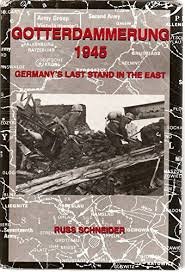
Gotterdammerung 1945: Germany’s Last Stand in the East by Russ Schneider

August 20, 2025 by Barry J. Klazura No Comments

Although in recent years, more histories of the battles on the Eastern Front during World War II have been published, it is the landings in Normandy that still hold most Western Europeans and Americans attention and interest. Indeed, even the name “Eastern Front” reflects the prejudice of Western historians, for most certainly that name was never used by either the Soviets or those Europeans who fought in that area of Europe and the then Soviet Union. The lack of general knowledge can be considered amazing as the German military suffered ninety percent of its casualties in that theater of operations. It was the Soviet military and more importantly, Stalin who was willing to accept the huge losses throughout the war to insure victory.

It can be difficult to appreciate the size of the battles in the east, but a comparison does show that no battles in western Europe after the Normandy invasion comes close to the size of the final battles in the east. The invasion of Normandy and the following ten weeks ended costing the Allies about 209,000 casualties vs 276,000 German. The Battle of the Bulge in forty-one days totaled for both sides almost 200,000 men killed, wounded or missing. Market Garden was a small business with losses totaling about 25,000 (to put it in perspective, during the battle for Stalingrad, the Soviets executed about 12,000 of their own men for desertion, cowardice, etc.)  The battles covered in this book in the period of January-May 1945 resulted in a million Germans and one and a half million Soviet losses. Two and a half million men killed, wounded or missing. Many of those men were killed when their fuel and ammunition ran out and they stood practically disarmed, often little more than a militarized mob, spent after six years of battle.

In action after action, German troops fought and delayed the Soviets in desperate battles against huge odds. Often outnumbered up to ten to one, the Germans delayed their enemy so civilians could try to reach the zones the American or British occupied. Civilians fled in freezing weather and had to camp in bare fields while being attacked by Soviet war planes. The book covers dozens of actions where officers and men sacrificed themselves in often vain attempts to save their compatriots. The Soviets, urged on by Stalin and their officers, raped, burned, and crucified tens of thousands of German civilians.

Unfortunately, the average reader will not think of the Soviet civilians who fled from the Germans in 1941 and after. Nor will they fully understand the terror of living under German occupation when hundreds of thousands were rounded up for slave labor or mass executions. It was likely that a huge proportion of the Soviet soldiers showing no mercy to the fleeing Germans had family members who had lived and suffered under the German occupation and had lost members of their families. Was the revenge meted out to the Germans fair, or justified? Unfortunately, because of the how the Soviet system worked, few common Soviet soldiers left written records as was the case with the Germans.

In the end, the battles came down to desperate Germans and Soviets, driven on by a sense of duty, fear of capture, the hunt for glory from their officers and tactics which was the only option at a time when everyone wanted the war to stop.  Battles create mountains of dead, but when at the very end, one side is out of ammunition and has no opportunity to escape, and the killing continues at an industrial rate, there is nothing but murder.

It is easy to understand how, after the war, many Germans viewed themselves as victims. They were pounded from the air, night after night. Their armies were torn apart and slaughtered at a rate which towered about the four terrible years of the First World War. Their cities were destroyed, hundreds of thousands of their women raped and hundreds of thousands of their soldiers were simply wiped off the face of the Earth. Yet, their terrible experiences were the result of one simple fact; they started the war, their intended victims finished it.
Share:
Reading time: 3 min
Book Reviews

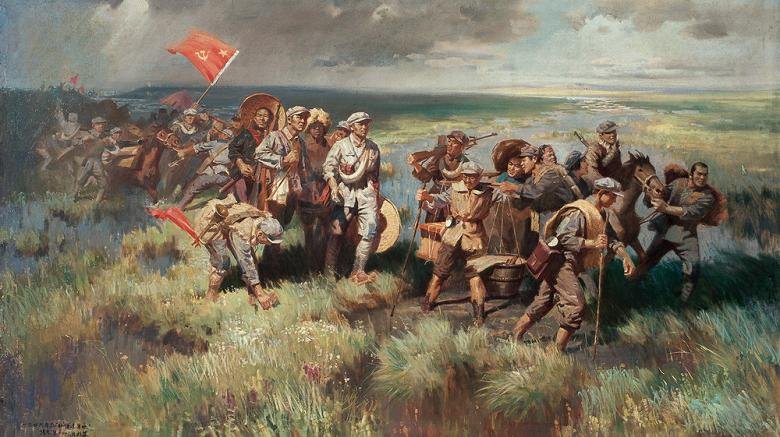
The Long March: The True History of Communist China’s Founding Myth by Sun Shuyun

August 5, 2025 by Barry J. Klazura No Comments

Recorded history is often made up of one part truth, one part perception, one part myth. One of the great human stories of the 20th century was The Long March, when hundreds of thousands of Communist soldiers with their leaders marched thousands of miles of often arid and empty land, pursued by Chiang Kai-shek and his army. In the end, after suffering eighty percent casualties, the Communist army found shelter far from the cities of China, cut off from an aid from the Soviet Union and facing another enemy, the Japanese army.

The march has been the subject of numerous plays, movies, books, and interviews with the majority of each adhering to the official party line which has become the touchstone of truth for decades. This book offers something new as the author, who was born in Communist China, actually travelled the actual route of the long march. Along the way, she manages to speak with individuals who were actually on the march and who participated in the battles and challenges of the march.

There is no doubt that the march was historic and required bravery and dedication. The survivors of the march when interviewed still show much of the youthful enthusiasm which helped them to survive the march. It was that enthusiasm which enabled them to meet their recruitment quotas for the army as it was that enthusiasm which kept them going in the harshest segments, such as through Tibet. Despite the idea that the Party would free the people from the grip of the warlords and big landowners, it was the Party and its army which descended on each location and demanded food from the locals. Of course, the Party “paid” for the food (in many instances) by giving an IOU, but in some areas, the demand for food stripped the land clean and left the locals without any grain for the next year’s crop.

The most inspiring chapter of the book was the one which focused on the role that women played during the march. Although they only made a small percentage of the total, they provided examples of bravery and stamina that shamed and drove the men to continue. They were instrumental in recruiting new recruits for the army, occasionally using their charms to achieve their quotas. Yet, they were valued and protected by the leaders of the march by keeping making sure that they were not to be molested. Yet, there were instances where certain leaders of the Party were allowed to take their pick of the women to “help” them with their duties. It was clear however, that the women who knew they were viewed as the weaker sex, set a high standard for themselves in the ability to march, handle weapons and persevere through the worse weeks of hunger while still providing the traditional soft touch to the wounded and dying.

The author, as she interviewed the survivors, found that their memories of certain actions did not line up with the official descriptions of certain battles and actions. Politics as usual plays a large part in the creation of history and this is especially true when a story is a key building block in a regime that discourages counter interpretations. She walks a fine line very carefully but her chapter on the “Legion of Death” shows the level of politics which existed even at that early stage of the Chinese Communist Party.

As the participants of any historical period pass on, we lose the ability to learn fine points of history and we are fortunate in this book that the author allows us to enter the mind set and memories of those who were on the march. Coupled with Mao, the Unknown Story by Jung Chang & Jon Halliday and The Private Life of Chairman Mao by Dr. Li Zhisui as well as The Party: the Secret World of China’s Rulers by Richard McGregor, we are able to peer behind the curtain that seeks to protect and shelter this totalitarian regime.

Share:
Reading time: 3 min
Book Reviews

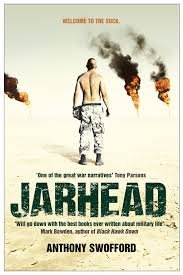
Jarhead, a Marine’s Chronicle of the Gulf War and Other Battles by Anthony Swofford

July 14, 2025 by Barry J. Klazura No Comments

This book could have been written by two different authors; the first half written and an immature, foul mouthed childish young man who might impress a thirteen-year old boy, while the second half was written by a young man who came from a family poor background, who is seeking in the Marines a home and cause and who decides to shape up as he is thrust into an actual war situation. The man who wrote the first half is as far from the ideal American soldier that one can image while the second half author is a creditable work in progress.

The book is both boring (in the first half) and interesting (in the second) as the author slowly matures and realizes that despite typical military B.S., there is a rhyme and reason to the military way of doing things. He is proud to be a Marine and his specialty (recon and sniper) and he matures much faster as he and his unit are sent out in the first phase of Operation Desert Storm. Later in life, he matures further as he runs across former members of his unit who have not matured and who live a life filled with made up fantasies fueled by alcohol and drugs.

There is no possible way that I would want to have dinner with the author of the first half of the book, but there would be an opportunity to enjoy a meal with the second-half author as he comes from a world far removed from the American ideal. As military history  it has little to offer, but as personal development it has some merit.  I would not, however, mark this as a book worth reading a second time.

Share:
Reading time: 1 min
Book Reviews

Against all Odds: A True Story of Ultimate Courage and Survival in World War II by Alex Kershaw

July 13, 2025 by Barry J. Klazura No Comments

At the end of the Second World War, German Field-Marshal Albert Kesselring whose troops fought both British and American troops in Italy and Western Europe, was asked “What was the best American division faced by troops under your command on either the Italian or Western Fronts?”. Without hesitation he said, “The Marne men.”

Who were the “Marne men?”  They were the men of the U.S. Army’s 3rd Division. They won more medals than any other infantry division in Europe and within its ranks were at least one of every U.S. medal, including the Medal of Honor; some medals were won by those two men as many as three times. Their names were Audie Murphy Maurice Britt. Both men received major wounds, and Murphy would have the more public but also more troubled private lives. Here is a list of medals won by Murphy: * Medal of Honor *2- Silver Stars * 3-Bronze Stars * Distinguished Service Cross *3-Purple Hearts. In total, the “Marne” division won more than one-fourth of all Medals of Honor won by the ground forces, an amazing accomplishment. The winning of medals helped determine when the serviceman was able to go home and at the end of the war, who could be discharged and in what order.

The book follows a number of individuals from the divisions landing in French North Africa, through the battles in Sicily and Italy, including Anzio plus the landing in the south of France through the final battles in the Colmar pocket. While Army psychologists thought that the “breaking point” of an infantryman was two-hundred days of continual combat, many of the men of the division were in continuous battles for over four-hundred days, and the survival rates was about seven percent.

Kershaw continues his excellent writing in that while he describes the overall strategic scope of the battles, focuses on the lives of the men at the most basic level. He has obviously taken great care in doing his research, in his interviews and writing to bring the men, both high and low to life. Their stories and exploits put modern day movies and stories to shame, for these were real individuals taking huge risks in order to lead their men and insure that as many of them would return home at wars end. It is a shame that young boys of today watch silly comic book heroes in movies instead of learning about real bravery as exhibited by men of their great grandfathers and grandfathers’ generations. It is hard to say anything positive about war, but to see the bravery and selflessness of the men in this book makes one realize the amazing ability of ordinary men to do extraordinary deeds.

Share:
Reading time: 2 min
Book Reviews

Alone at DawnMedal of Honor Recipient John Chapman and the Untold Story of the World’s Deadliest Special Operations Force by Dan Schilling & Lori Chapman Longfritz

July 8, 2025 by Barry J. Klazura No Comments

After 9/11, a handful of specially trained U.S. servicemen went into action in a land that was little known, filled with tribal and family hatreds and rivalries, a religion that looked down on non-believers and could switch sides if bribed with enough money. Those Americans who went into action in Afghanistan, had to quickly earn the trust and respect of the native population, and operated far beyond the normal boundaries of their individual services.

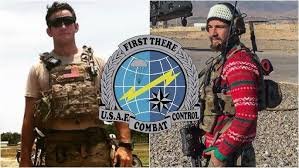
Key to the success of those brave individuals was a small group of highly trained men who had the ability to call down upon the battlefield unbelievable firepower while they were not in a distant office looking at a monitor, but while they were in the very front lines of the deadliness battles.  This elite group of individuals is known as the Combat Control Teams (CCT). Their motto is “First There” and together, they have collected “in aggregate, more combat action than their special operations counterparts in the Navy and Army-making some of them the most experienced veterans in all of America’s previous wars.”  Trained to the standards of the Seals, Delta, or Special forces, they were instrumental in breaking the back of the Taliban and Al Qaeda forces equipped with modern weaponry in battles which echoed World War II.  It was through their experience, expertise, and bravery that the power of the Taliban and Al Qaeda was broken not in months, but rather in weeks. Each member of the CCT controls more destructive power than any other individual combatant in the history of the world.

The book covers the battle of Operation Anaconda as well as the background of John Chapman, the first airman to win the Medal of Honor since the Vietnam War and the first member of CCT to win the Medal of Honor. His career and actions reflect the highest standards and professionalism of the little-known group of men who serve in the CCT. While the book may at times be overly technical for the novice military reader, it also reflects the skill set that is demanded in that service. Such a skill set is necessary given the huge destructive power that is placed in the hands of CCT members. Those skills are coupled with dedication and willingness to sacrifice oneself in the service of the nation and one’s fellow warriors.

Share:
Reading time: 1 min
Book Reviews, Current Affairs, Government, Society

Get Trump: The Threat to Civil Liberties, Due Process, and our Constitutional Rule of Law by Alan Dershowitz

July 6, 2025 by Barry J. Klazura No Comments

The author, famous liberal attorney, and author (of over fifty books on law, legal history and legal/social commentary), is no fan of Trump. As of the book’s publication (2023) he had never voted for Trump but has been ostracized by many of his life long liberal friends and associates for his commentaries on the legal gambits by the Left over the past ten years. Disinvited by schools and groups that he has spoken before over the past forty years, he lays out the dangerous tactics of the Left as well as the Media and Academia.

Stating specific actions, he discusses how they create a danger to our Constitution and the rule of law. He criticizes both the far right and left throughout the book but focuses more on the Left who he says has shown that far from being the staunch defenders of freedom as they claim, has shown themselves to be acting strictly from political motives. He attacks the ACLU which he claims has lost its’ reputation and standing due to bowing to the demands of “diversity,” as well as the Democratic party. While he praises the base goodness of Merrick Garland and Jack Smith, he believes they have bent to political pressure in creating a double standard to justice. For example, how can Hillary Clinton, Sandy Berger and even Joe Biden criticize Donald Trump when their actions in the handling of secret documents while both in and out of office be considered as lesser than the documents at Trump’s house? He criticizes the raid for documents at Trumps house which was not of national importance as the FBI waited until two days after the authorization of the warrant (which was closer to a Bill of Attainment) to make sure that Trump was a thousand miles from his home.

The interview he has in the book with Wall Street Journal editor-in-chief Gerry Baker lays out the dubious rational for the attacks on Trump according the legal and historical arguments and is a worth while read for both those legally versed and non-legally versed individuals. Unlike many attorneys, Dershowitz writes in a clear, concise manner which may very well explain his successful longevity as an author and legal commentator.

This is a short book (less than two-hundred pages) but it is clear that his defense of Trump is not based on the politics of Dershowitz but rather on his concern for the harm to the rule of law and the Constitution done by those on the Left who have made fundamental errors of judgement caused by their personal animas.  Perhaps the truth of his arguments is his personal cost caused by those who hailed him as long as he supported their views which were legally defensible.

Share:
Reading time: 2 min
Page 3 of 29« First...«2345»1020...Last »

Barry J. Klazura

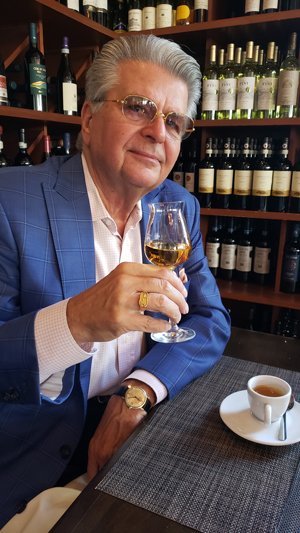
Barry Klazura sipping grappa

With a Masters Degree in Guerrilla Warfare and Totalitarianism, Mr. Klazura was well prepped for a career in Sales and General Management, consulting on corporate startups and turnarounds as well as lecturing on history and politics.  For the past twenty years he has focused on being a financial advisor and consulting.

Delivered To Your Inbox

Sign up to get an email when a new article is published.

Topics

  • American Civil War
  • Biography
  • Book Reviews
  • Cigar Reviews
  • Coronavirus
  • Current Affairs
  • Education
  • Environment
  • Factoids
  • Government
  • Lifestyle, Cigars & More
  • Liquid Refreshments
  • Musings
  • Quips and Historical Facts
  • Society
  • Travel
  • Uncategorized
  • World War I

Subjects

book Books-Russia/Soviet Union Books 21st Century Books 1919-2000 Books Ancient to 1900 Books Asia Books Biography Books Fiction Books Germany 1919-1945 Books Pre-WWI books Viet Nam books world war I Books WW1 Books WWI Books WWII Cigar Friendly Location Amsterdam Cigar Friendly Locations-London Cigar Friendly Locations-New Orleans Cigar Friendly Locations-New York Civil War Coronavirus Environment Korean War World War I World War One

Recent Articles

At Stalin’s Side by Valentin Berezhkov

July 15, 2026
The Price of Victory by N.A.M. Rodger

The Price of Victory by N.A.M. Rodger

June 26, 2026
Frontsoldaten: The German Soldier in World War II by Stephen G. Fritz

Frontsoldaten: The German Soldier in World War II by Stephen G. Fritz

June 5, 2026
Organizer of Victory, 1943-1945, George C. Marshall by Forrest C. Pogue

Organizer of Victory, 1943-1945, George C. Marshall by Forrest C. Pogue

May 26, 2026
Illegals Released & Our Leaders

Illegals Released & Our Leaders

May 10, 2026

Inquiries and Comments

For general inquiries and comments, email AOTOHcomments@gmail.com.

Facebook
© 2020 And On The Other Hand. All rights reserved.