
On The Other Hand -
Book Reviews
Lifestyle, Cigars & More
Musings
About
On The Other Hand -
  • Book Reviews
  • Lifestyle, Cigars & More
  • Musings
  • About
Book Reviews, Society

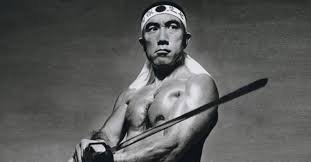
The Sailor Who Fell From Grace With the Sea by Yukio Mishima

January 25, 2026 by Barry J. Klazura No Comments

I first read this novel over forty years ago and although I did not recall the exact plot, I remembered that as I finished it, I put it aside vowing to never read another of Mishima’s’ works. My fear was that having read one more, I might have to devour his extensive list of works, a bit like an old friend who refused to purchase on Judy Collins record (that shows how long ago that was), as then he would have to purchase them all.

A very good friend presented me with a copy of this work for my birthday, and it was with a mixture of excitement and trepidation that I began to read it. The story itself seems to be simple; it centers around a widow, a sailor she meets, her young teenage son and the circle of his friends.  Filled with a subtle sensuality (as you would expect when you consider the author), it tells a story of how the son, and his friends reflect a form of nihilism that Mishima believed was part of the Japanese post-war character. The “tribe” of boys looked down on society, the family and anyone who was not in their “enlightened” circle. They were superior, above all the bourgeois values and norms and were determined to create their own world. Mashima also rejected Japan’s new materialism, democracy and flirtation with communism.

The book traces the young son’s disillusionment with the sailor who is courting his mother and the betrayal by the sailor when he decides to give up his life at sea and marry the boys’ mother. That action is a betrayal of the boys (not the sailors) sense of superiority, and the group of boys believe they must “punish” the sailor, or they will not be true to their sense of themselves.

As I finished the short novel, I felt the same sense of amazement at the power of Mishima’s writing. I slowly closed the book, put if my lap and let the last two paragraphs sink into my mind. The power that the book projected so many years ago was still there, as strong as ever. It is a book that dares to look at the dark side of disillusioned youth.

Mashima was one of Japan’s premier authors during the 1960’s. His novels were nominated five times for the Nobel Prize for literature, but he is probably best remembered for his dramatic action at Japan’s West Point in Tokyo in 1970. There, with some of his personal self-defense force, he seized a main building, captured the commandant and harangued the gathering cadets to throw off the new Japanese values of materialism, democracy, etc. and to recapture Japan’s sense of “national essence” including  Emperor worship or all of Japan would end up as a “rootless people”.  Failing to rally the cadets, he committed seppuku and had his second cut off his head as prescribed in the ceremony. He was forty-five years old.

What place did he hold in the minds of the Japanese youth of that time? In my previous lifetime I worked at Panasonics headquarters in Secaucus New Jersey.  One of the photos I kept displayed was of Mishima haranguing the cadets on that day in 1970. None of the older Japanese commented on the photo in my office, but the younger generation were more open in their comments, and I found it interesting that a simple photo could pierce the normal Japanese self-containment and lead to an openness that was so rewarding.

Read this book at your own peri or sense of excitement. The term you use after the reading may tell you something of yourself.

Share:
Reading time: 3 min
Book Reviews

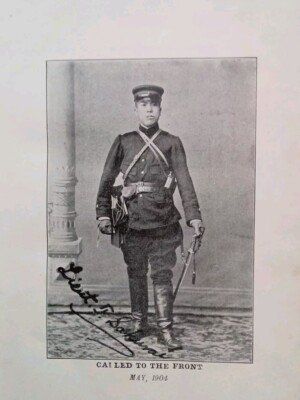
Human Bullets: A Soldier’s Story of Port Arthur by Tadayoshi Sakurai

November 18, 2025 by Barry J. Klazura No Comments

On my posting of September 29, 2025, I reviewed an excellent history of the Russian-Japanese war of 1904-1905. References were made to a tip of the bayonet history by a Japanese Lieutenant who served in that war. Originally published right after the war, it has been out of print for decades, and I have never been able to find a copy. I mentioned that I was interested in that history to a friend of mine and amazingly, he managed to find an excellent facsimile copy of that book reprinted in 2018. Thank you Christian!

The history gives a wonderful insight into the mindset of early Imperial Japan., during the Meiji era (1868-1912). Filled with pride and ego’s that could be easily bruised, Japan had made magnificent advances into a world that prior to 1868, they could little comprehend. Their advances in education, industrialization, the military, not to mention the coming together of a nation that was ruled by power Samurai clans, each having a history to warfare and political intrigue stretching back hundreds of years was amazing.

Like all industrialized nations of that time, they sought to borrow the phrase from Wilhelmian Germany, their “Place in the Sun.”  This was done via military actions in Korea and China where the Japanese military showed exactly how far they had progressed as they were easily victorious against much less Westernized nations. Yet they were also humiliated by the demands of the Western powers (Russian, Great Britain and Germany), who at the peace table, reversed most of Japan’s gains. In fact, the success of Japan caught the attention of Great Britain who suddenly found a new and dangerous player in an area where they were dominant.

Japan was forced to give back some of their gains but was to a degree mollified as a chief protagonist, Imperial Russia also agreed to honor a pull back on their part. Unfortunately, the Czar, not being the brightest of men, decided that it was important that he push the boundaries of the agreements. The Russian leasing of Port Arthur and fortification of the Liaodong Peninsula (which Japan had been forced to give up in the peace treaty), made the Japanese feel betrayed. Russia was also seeking to gain influence Korea which was seen as a direct threat to Japan. In the end, Japan felt betrayed and shown little respect and Japan declared war on Russia. And thus starts the history of this book.

Anyone who has studied history, especially the Second World War in the Pacific, understands that the Japanese soldier was a tough, brutal opponent. Drafted, trained, often abused, and indoctrinated to honor the emperor who was a god on earth, they were lead by an officer corps that had no regard for the Geneva Convention which attempted to temper the worse horrors of war. The Japanese military had an almost medieval mind set but twentieth-century weapons. Take that mind set and amplify it and you will start to realize the mindset of the author who was a field grade officer.

The pages of the book are riddled with proclamations before every action that he, or his commanding officer or his men that they will die in battle in order to fulfill the commands of the emperor. If the individual returns from battle, many have an intense sense of shame, as if their death would have made the battle even more glorious. While the Japanese military machine had progressed far, it was still a young force backed by a nation with limited resources. In spite of their limited resources, especially their manpower (as opposed to the ever-increasing manpower of the Russians), the infantry commanders including the commanding General in charge of operations, used Russian human wave tactics in their attacks. In one attack, the Japanese suffered over 6,000 casualties (which would be like the U.S. losing 45,000 in one battle). Such losses are the basis for the title of the book. Many infantry battles were fought at night, when the Russians used search lights to expose and blind the attacking Japanese who were mercilessly cut down by machine gun fire.

Mentally, each battle or probing attacked was viewed as an individual’s final attack; individuals would expose themselves to fire as they hurled insults at the Russians (who no doubt could not understand a single word) and were instantly cut down. Yet the author, was either a fanatical believer or painted a (to the Japanese of that time) picture of a glorious warrior, the modern-day image of the samurai. In fact, the patriotism, the belief in the beauty of death in battle is so loud, that it is like something a child would think of what war is like. Either a child’s mentality or that of a jihadist.

It is a fascinating book, and there are small glimpses of humanity (a shared water bottle with a dying man who has not only been shot, but run over by horse and iron wheels of their own artillery), but on whole, it is a book from a different age, one which fortunately is largely disparaged today.

Share:
Reading time: 4 min
Book Reviews

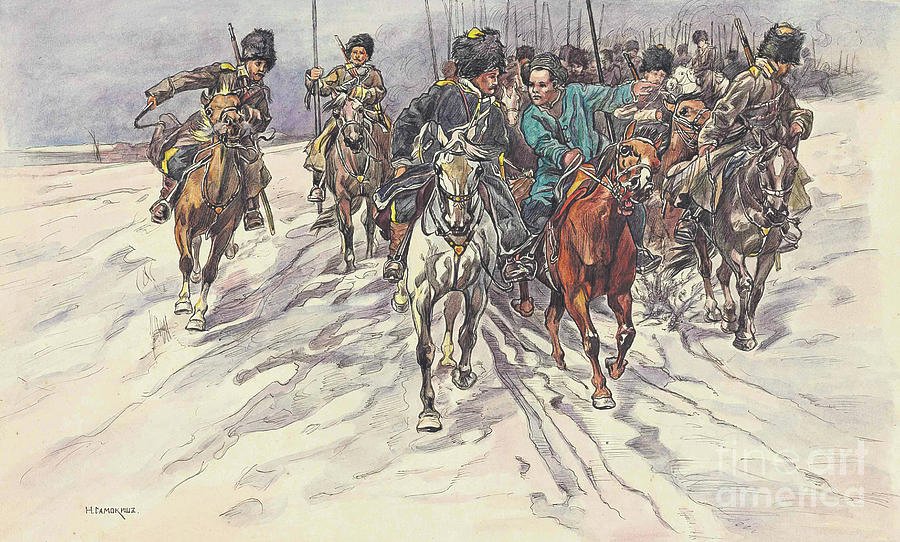
The Tide at Sunrise: A History of the Russo-Japanese War, 1904-1905 by Denis and Peggy Warner

September 29, 2025 by Barry J. Klazura No Comments

Originally published almost fifty-years ago, this book is considered a classic history of the first war in which an Asian power defeated a European power. The authors do a wonderful job of putting the war in context, firstly by providing a thorough review of the Japanese response to the “opening of Japan” by the Americans and surprisingly, the Russians. They review the various strong warrior clans in a developing Japan and how the politics between those clans colored the strategy and conduct of the war.

They also provide a good overview of Russia which was as always, seeking to absorb more lands. Holding together the vast Russian empire was the trans-Siberian railroad. A single tracked ribbon of steel stretching nearly 9300 kilometers (about 5800 miles), was built poorly and with minimum safety. Entire sections of the track would shift and fall apart every year as they were laid directly on the permafrost, which could melt just enough to make sections subject to disintegration. To make communications, travel, and supply movements more difficult, the track stopped at Lake Baikal, the world’s seventh largest lake. Everything on the trains would have to be unloaded and shipped across the lake during the warmer months of the year. Trying to supply an army using this one-track railway extended the war and led to poor discipline within the army as munitions and food were slow in arriving.

The two nations clashed over several areas, including Korea, Manchuria, and China. China, having suffered defeats by the Japanese and force infringements by Russia, lay all but helpless as Russia and Japan moved to seize and hold what land they could. Land and resources were seized, railroads built to the distress of the Chinese and Chinese officials were corrupted even more than was standard practice within the Chinese government.

The siege of Port Arthur and the great naval battle of Tsushima of course are the main parts of the history. Both opponents faced difficulties which ended up limiting the length of the war. For the Russians, the main problem was the huge distance between Moscow and Port Arthur. Communications were poor, providing munitions to the slowly transported army was daunting, along with an officer corps that had few professional skills made any moves by the field army difficult, slow, and usually always a bit late. The Japanese were like the Russians, willing to throw manpower at any problem. But manpower was not enough so Japan’s limited technological base and lack of capital meant that the Japanese had to seek a quick victory as time could favor the Russians.

Eventually Port Arthur fell to the Japanese but one great test was still ahead for the waring powers; could the Russians said a fleet from the Baltic to fight the Japanese and could the Japanese navy which had suffered telling losses to the Russians, defeat the approaching Russian ships. The fact that the Russian fleet completed the voyage is amazing as they had to put up with poor food, an revolutionary undercurrent between the officers and men, numerous mechanical failures and the fact that every extra inch was occupied by bags of coal which were not only dirty, but hindered the efficiency of the ships. In the end, although the Japanese defeated their foe, it was not a battle loaded with brilliance, but rather a battle determined by luck and poor shooting on the part of the Russians.

Wars eventually come to an end and the mediation of Theodore Roosevelt took two exhausted nations and provided them with at least a modem of national honor. But, as no good deed does not go unpunished, in the end both Japan and Russia viewed the American effort as decidedly negative, thus tainting relations between the three nations for decades to come.

This is a fine book, professionally researched and footnoted, professionally written and showing a grasp not just of the top of history, but the real forces that move events. My only regret was that it took me almost fifty-years to reread it.

Share:
Reading time: 3 min
Book Reviews

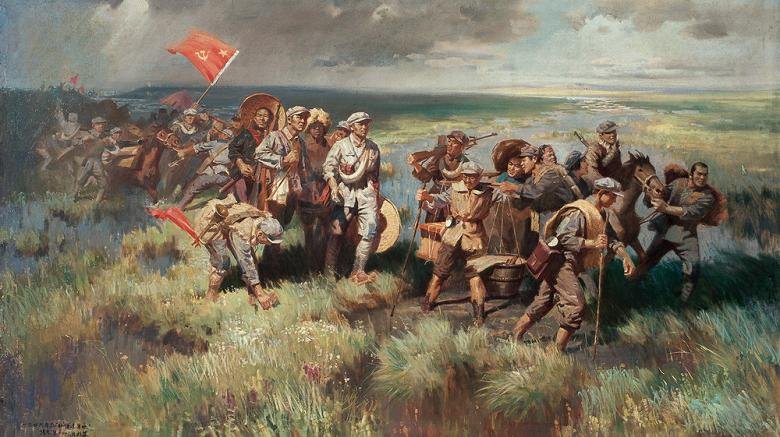
The Long March: The True History of Communist China’s Founding Myth by Sun Shuyun

August 5, 2025 by Barry J. Klazura No Comments

Recorded history is often made up of one part truth, one part perception, one part myth. One of the great human stories of the 20th century was The Long March, when hundreds of thousands of Communist soldiers with their leaders marched thousands of miles of often arid and empty land, pursued by Chiang Kai-shek and his army. In the end, after suffering eighty percent casualties, the Communist army found shelter far from the cities of China, cut off from an aid from the Soviet Union and facing another enemy, the Japanese army.

The march has been the subject of numerous plays, movies, books, and interviews with the majority of each adhering to the official party line which has become the touchstone of truth for decades. This book offers something new as the author, who was born in Communist China, actually travelled the actual route of the long march. Along the way, she manages to speak with individuals who were actually on the march and who participated in the battles and challenges of the march.

There is no doubt that the march was historic and required bravery and dedication. The survivors of the march when interviewed still show much of the youthful enthusiasm which helped them to survive the march. It was that enthusiasm which enabled them to meet their recruitment quotas for the army as it was that enthusiasm which kept them going in the harshest segments, such as through Tibet. Despite the idea that the Party would free the people from the grip of the warlords and big landowners, it was the Party and its army which descended on each location and demanded food from the locals. Of course, the Party “paid” for the food (in many instances) by giving an IOU, but in some areas, the demand for food stripped the land clean and left the locals without any grain for the next year’s crop.

The most inspiring chapter of the book was the one which focused on the role that women played during the march. Although they only made a small percentage of the total, they provided examples of bravery and stamina that shamed and drove the men to continue. They were instrumental in recruiting new recruits for the army, occasionally using their charms to achieve their quotas. Yet, they were valued and protected by the leaders of the march by keeping making sure that they were not to be molested. Yet, there were instances where certain leaders of the Party were allowed to take their pick of the women to “help” them with their duties. It was clear however, that the women who knew they were viewed as the weaker sex, set a high standard for themselves in the ability to march, handle weapons and persevere through the worse weeks of hunger while still providing the traditional soft touch to the wounded and dying.

The author, as she interviewed the survivors, found that their memories of certain actions did not line up with the official descriptions of certain battles and actions. Politics as usual plays a large part in the creation of history and this is especially true when a story is a key building block in a regime that discourages counter interpretations. She walks a fine line very carefully but her chapter on the “Legion of Death” shows the level of politics which existed even at that early stage of the Chinese Communist Party.

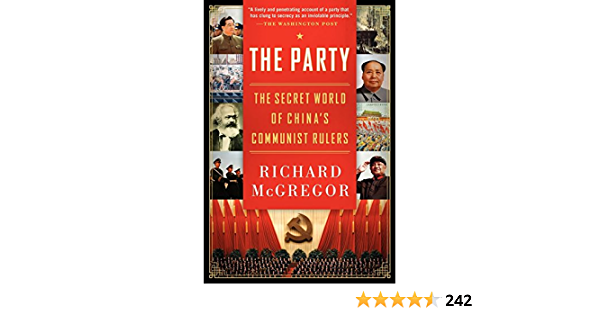
As the participants of any historical period pass on, we lose the ability to learn fine points of history and we are fortunate in this book that the author allows us to enter the mind set and memories of those who were on the march. Coupled with Mao, the Unknown Story by Jung Chang & Jon Halliday and The Private Life of Chairman Mao by Dr. Li Zhisui as well as The Party: the Secret World of China’s Rulers by Richard McGregor, we are able to peer behind the curtain that seeks to protect and shelter this totalitarian regime.

Share:
Reading time: 3 min
Book Reviews, Government, Society

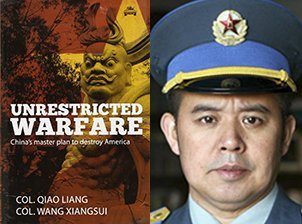
Unrestricted Warfare by Qiao Liang & Wang Xiangsui

June 10, 2025 by Barry J. Klazura No Comments

In the past week, three Chinese students some of whom had entered the U.S. illegally and even voted in the 2024 election were caught and face Federal charges of attempting to bring in the U.S. a deadly fungus that can devastate crops such as wheat, barley, maize and rice.  They have been studying at the University of Michigan, and one has an advanced degree in plant pathogens. Some of the students have received funds from an institute partially owned by the Chinese Communist Party. Elsewhere, there is a growing concern over the purchase of U.S. farmland near U.S. military bases. Although the amount of land is only about 1% of our total farmland, it still amounts to nearly four hundred-thousand acres of land. While the recent military success of the Ukrainian forces against the Russian strategic bomber fleet has begun to bring concerns about the safety of our B-1 and B-2 strategic bombers, the Governor of Arizona recently vetoed a state bill restricting the purchase of land by Chinese nationals. Finally, the discovery of unlicensed Chinese labs in the U.S. who were working on dangerous work related to Covid-19 and were found to have genetically modified mice, has raised further questions of what are the intentions of Communist China.

The intentions are not a secret if anyone has read the 1999 book, Unrestricted Warfare by Qiao Liang & Wang Xiangsui, both retired Chinese colonels. Originally published by the People’s Liberation Army Literature & Arts Publishing House, it must have been approved by the Communist Party. They argue that generals such as Colin Powell and Schwarzkopf are more “traditional” and that they do not understand today’s war options. Further, for today’s war to be won, all available tools, including cyber and economic means, the use of media influence and legal manipulation (lawfare) must be used. They argue that the traditional boundaries of warfare must be “widened.”  For example, they write:

“The existence of boundaries is a prerequisite for differentiating objects from one another. In a world where all things are interdependent, the significance of boundaries is merely relative. The expression “to exceed limits” means to go beyond things which are called or understood to be boundaries. It does not matter whether they fall into the category of physical, spiritual, or technical, or if they are called “limits,” “defined limits,” constraints,” “border,” “rules,” ….” or even taboos.”  Speaking in terms of war, this could mean the boundary between the battlefield and what is not the battlefield, between what is a weapon and what is not, between soldier and noncombatants, between state and non-state or supra-state.”  (pp158) In other words, no boundaries, a concept of warfare (with both success and failure) that the West has attempted for a thousand years to change. In their concept of war, one need not worry about “terms of engagement,” for the gloves are off.

On the next page, they attempt to dress this up by referring to “going beyond the limits,” “surpassing all boundaries and conforming with the laws of victory when conducting warfare with combinations. Thus, we obtain a complete concept, a completely new method of warfare called “modified combined warfare that goes beyond limits.”

We currently have over a quarter of a million Chinese nationals in our universities. Those students are expected to report back to the homeland on research, ideas, and individuals. Those same universities have accepted billions of dollars from Chinese foundations and think tanks funded by the Chinese party and military.

There is an old saying, “forgive me my paranoia, for I know what I fear.”  We are an open, trusting society. Traditionally we have always thought the best of our fellow man as we were founded on Judeo-Christian ideals. It has been eighty years since we faced and defeated nations which believed that the ends justify the means. Perhaps eighty years is too long a time for us to put a threat in its’ proper perspective.

Share:
Reading time: 3 min
Book Reviews

The Storm on our Shores by Mark Obmascik

May 27, 2025 by Barry J. Klazura No Comments

In June 1942, for the first time since the war of 1812, the United States was invaded.  Invaded in an area where few Americans had ever been, on an island that even fewer Americans had ever heard of, but it was an invasion which had to be faced. 

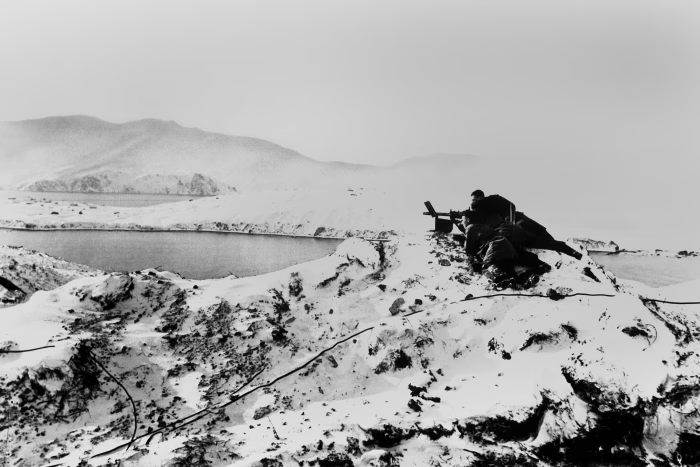
To mislead American forces from the main Japanese thrust in the Central Pacific, Japanese forces landed on the island of Attu, an island at the extreme end of the Aleutian Island chain.  The island that held no tactical or strategic value, was racked by one hundred mile and hour winds that thundered down from the mountains and had an average of ten days of sun a year.  Wet, cold and remote, tens of thousands of men would meet each other in mortal combat for not valid reason.

Beyond the battle however, this is a story about two men, one Japanese, one American.  The men met in a split second, one killed the other, but their lives were forever bound by their love of America and duty to their native land. 

Paul Nobuo Tatsuguchi was the son of Japanese Seventh Day Adventists who studied medicine in the United States and who came to love the country.  The size, freedom, opportunity all promised all that he could wish and when he met a beautiful Japanese student, he married and began a family.  Life was not to allow him to enjoy his opportunity however, as he and his little family travelled back to Japan in a successful attempt to free one of his sisters from prostitution to which she had been sold by the family’s elder brother during the worse days of the Depression.  Then, Tatsuguchi was drafted into the Imperial Japanese Army (though he was mistrusted so much that he was the only doctor in the Army who was not an officer).  Shipped to Attu with the invasion forces, Tatsuguchi was cut off from the world he loved and was subjected, as were all Japanese troops, to constant propaganda regarding the glories of Japan and his duty to the Emperor.

Dick Laird escaped the poverty of Appalachia by joining the U.S. Army where for the first time he had three meals a day, regular pay and a clean place to sleep.  He met, impregnated and left a girl but during the war, he matured, went back and married her but he still had to pay his debt and fight his battles in the Pacific.  One early morning, with a thick fog all around and in the middle of a Japanese suicide attack, Dick accidently killed a comrade and then killed Tatsuguchi.

Dick never really recovered from the battles he fought (he won the Bronze and Silver Star medals) and Tatsuguchi had left behind a diary which was circulated widely by U.S. troops even though it went against the image built up during the war which showed the Japanese are a deadly, sneaky crazy enemy who had no human feelings. 

Many years later, Dick managed to find the family of Tatsuguchi and told them how he had killed their father/husband. How both sides faced the truth and what they learned is a great story.  And, this book also brings out the sacrifices of the men of both sides who fought in one of the most hellish places on earth, in a campaign that produced the highest percentage of American to Japanese causalities until the battle of Okinawa. 

This is a fine read, both for the military historian and for more personal aspects.  Highly recommended.

Share:
Reading time: 3 min
Book Reviews, Current Affairs

The Eurasian Century: Hot Wars, Cold Wars, and the Making of the Modern World by Hal Brands

March 17, 2025 by Barry J. Klazura No Comments


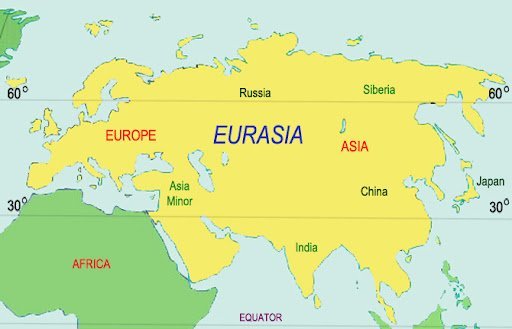
A friend of mine recently lent this book to me and it brought to mind various debates I had during graduate school many moons ago regarding the premise of the book; whomever controls the Eurasian continent controls the world.


This theory was originally formulated in 1904 by Halford MacKinder, a British geographer. It shortly followed the work by Captain Alfred Thayer Mahan’s extremely influential book, The Influence of Sea Power upon History, 1660-1783. In that book Mahan put forth the theory that as the oceans are the fastest routes for trade, control of the oceans will decide which powers will succeed and which will die. MacKinder put forth the idea because of the population, central position, and mineral wealth of the Eurasian land mass, that it will determine which nations live and die. Going further, Karl Haushofer, a German geopolitician continued MacKinder’s theory and he was influential to the Nazi view of the world as MacKinder was influential with Kaiser Wilhelm prior to the first World War.


Britain and the United States are both sea faring nations, outside of the Eurasian sphere, yet both have played vital parrs in controlling and shaping the Eurasian sphere. Brands goes through several examples of how the United States has dealt with the area, including World Wars I and II, the creation of NATO, our actions in the Middle East and so forth. In one way, this is a weakness in the book as the involvement of the U.S. was not due to an acceptance of MacKinder’s theory, but rather at least until the Cold War, a natural case of self-defense. The U.S. actions in the Middle East, plus Afghanistan are more suspect in that they went far beyond actions that were previously acceptable to the average American.


The last part of his book looks at the current players who seek to control if not all, at least sizable chunks of the Eurasian land mass, namely China. China with it ever increasing military power and sizable economic power, is the greatest player. It pushes until seriously pushed back as the nations such as Viet Nam, the Philippines, and others are finding out today. Their Belt and Road programs has reached even into Europe and has been successful in spreading China’s influence through most of Africa. Can China, with help from Russia, seize control of the Eurasian area thus locking out England and the United States out of such a vital area.? Can anyone accomplish that goal?


That has always been the key question to me, for the land mass is so great, the populations so diverse and in so many levels of development that how could any power do anything but bleed to death attempting to gain a level of control that would be worth such a great effort. In the early twentieth century, thinkers like MacKinder and Haushofer might have believed it was possible, even though there were already small struggles for independence in India and parts of Asia and Africa. Today, we must add in the religious extremism of the Middle East (and parts of Indonesia) and the task would become even harder. Finally, we have seen failures in the Belt and Road project which show the Chinese model may have feet of clay.


I would recommend this book as it is objective (I only found a couple of examples of personal political bias) and provides an excellent overview of various nations causes for action. If one or more nations cannot control the Eurasian area, is it possible to be done by a group of nations? It is doubtful, for if we think of the problems in Europe which has tried to tamper down the differences between the various members of the E.U., we find that despite hundreds of years of cross border trade and wars, the differences in languages, customs, views of history, even food make for a challenge on so many fronts.
The Eurasian area is huge and the hundreds of millions of people who live there share little in common beyond a desire to live, have enough food and at best, provide for a better life for their children. Help yes, control and direction, no.

Share:
Reading time: 3 min
Book Reviews

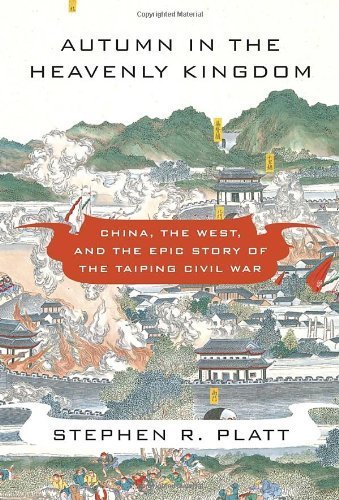
Autumn in the Heavenly Kingdom: China, the West and the Epic Story of the Taiping Civil War by Stephen R. Platt

February 26, 2025 by Barry J. Klazura No Comments


Reading Chinese history can be difficult for a Westerner due to the names, locations, time frames, etc. Dr. Platt has done an excellent job of bringing to the reader an important segment of China’s more recent history (1850s) when somewhere between 20-50,000,000 (that is million) people lost their lives in a civil war. Consider that our Civil War cost about 750,000 lives and you will get an idea of the scope of the war and the misery it caused in China.


The Taiping leadership took many Christian dogmas as their rules and felt that the Western powers would help them in their struggle to overthrow the hated Ming dynasty. The Western powers (mostly Great Britain) did not understand the politics of China however as well as they thought so they decided to back the Ming dynasty with whom they knew they were able to get valuable trading concessions and who were weak and corrupt.


The book is an excellent read and will give the reader a bit of an insight into the history that continues to shape China today. A definite well done to the author.

Share:
Reading time: 1 min
Book Reviews

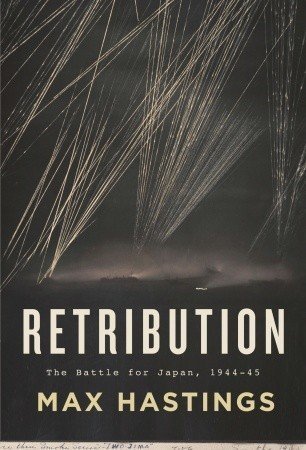
Retribution: The Battle for Japan, 1944-45 by Max Hastings

January 9, 2025 by Barry J. Klazura No Comments


One of the advantages of building a library is the luxury of being able to go back and re-read the books which are worthy of being in your library. There are certain books in my library that I have read several times over the years; why? Some are wonderful novels (such as the trilogy by Sienkiewicz) or the dissent novels by Rybakov. Others are histories filled with a myriad of facts or insights (think of Richard Evans, Richard Overy or William Manchester). I love that they can clutter my brain with obscure facts that I can pull out during a conversation or discussion on a related topic. Those books are special and fall into a special category of those which can be re-read every five years or so and be as fresh and entertaining as the first time they are opened.
Retribution by Max Hastings is one of those rare military books that falls into that special category. It has all the prerequisites of a great history book. It provides a broad overview of events, then focuses down to the strategies and tactics involved in those events. Another key element is that it is loaded with obscure facts which I find so interesting and even useful (in the right company at the right time), an example of the obscure is when he writes about the development an problems with the largest single expenditure of the war (even more costly than the Manhattan Project). Did you know that “The construction of a B-29 required 27,000 pounds of aluminum, over a thousand pounds of copper, 600,000 rivets, nine and a half miles of wiring, two miles of tubing.”. Do you care? But it is that type of detail that when you realize the U.S. produced thousands of those planes that you begin to realize the enormity of the war. Or that with the defeat of Nazi Germany, Canada announced that only those citizens who did not wish to stay in the war to defeat Germany could cease war activities.
His narrative is especially excellent when he goes down to the basic level; that of those doing the actual fighters. Some are British troops fighting in Burma, one of the worse areas of combat in the war and the least reported and celebrated. The humidity, rains, foot paths which turned into thick, boot sucking mud, poor food and an enemy who fought with determination even though many died of hunger. What about the survivors of the kamikazes? How could they survive, how many volunteered, how many were drafted into the ranks and how did it feel for those who taught the new pilots to see their poorly trained students take off knowing that they were doomed. Every nation which fought in the Pacific is highlighted as brave and pathetic stories are woven through the book.
This was my third reading of this history, and it will occupy a special place in the library; a place where timeless quality of writing and research is noted and I confess, I shall read it again in a few years and enjoy it just as much.

Share:
Reading time: 2 min
Book Reviews

The Twenty-Five Year Century by Lam Quang Thi

October 7, 2024 by Barry J. Klazura No Comments

Unfortunately, too few histories, written by Vietnamese of the First and Second Indo-China wars have been available in English.  The author, a former General in the South Vietnamese Army provides an excellent history especially of what is commonly called the Vietnam War (2nd Indo-China war).

A very good read, he covers his family history and education under the French system and then his service in the military.  He is very honest in discussing the friction in the South between the military officers who came South after the expulsion of the French, and the Southerners in the military.  The infighting and politics of the military led to waste and corruption, not to mention a lack of overall strategy.  He also is honest about the corruption of the politicians and their inability to offer the average citizen a truly viable alternative to the Communists.  Finally, he destroys the myth held by some of the benign policies of the VC; he discusses their tactics such as beheading, slaughter of families who supported the government of the South and their reign of terror to enforce their will.

He takes pride in his professionalism and gives long overdue credit to many of those in the South who fought with skill and dedication to hold back the invasion from the North. He writes about numerous battles where the troops of the South we able to defeat the VC and even the better supplied (near the end) North Vietnamese.  After Tet and the decreased American support, we see a slow downturn of the ability of the South to hold back the open invasion by the North which was lavishly supplied by the Soviet Union and China.  As time progressed the Democrats in the U.S. Congress reneged on aid; trucks and tanks were short of parts, tires, etc. while the North could move South via thousands of Soviet trucks.

The end was tragic for all parties.  A million dead, bravery squandered, families torn apart and more. 

An excellent book I can recommend to anyone interested in that long war.

Share:
Reading time: 1 min
Page 1 of 41234»

Barry J. Klazura

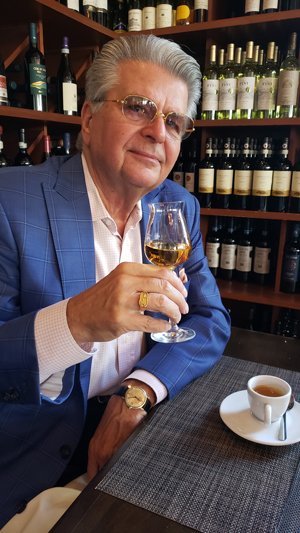
Barry Klazura sipping grappa

With a Masters Degree in Guerrilla Warfare and Totalitarianism, Mr. Klazura was well prepped for a career in Sales and General Management, consulting on corporate startups and turnarounds as well as lecturing on history and politics.  For the past twenty years he has focused on being a financial advisor and consulting.

Delivered To Your Inbox

Sign up to get an email when a new article is published.

Topics

  • American Civil War
  • Biography
  • Book Reviews
  • Cigar Reviews
  • Coronavirus
  • Current Affairs
  • Education
  • Environment
  • Factoids
  • Government
  • Lifestyle, Cigars & More
  • Liquid Refreshments
  • Musings
  • Quips and Historical Facts
  • Society
  • Travel
  • Uncategorized
  • World War I

Subjects

book Books-Russia/Soviet Union Books 21st Century Books 1919-2000 Books Ancient to 1900 Books Asia Books Biography Books Fiction Books Germany 1919-1945 Books Pre-WWI books Viet Nam books world war I Books WW1 Books WWI Books WWII Cigar Friendly Location Amsterdam Cigar Friendly Locations-London Cigar Friendly Locations-New Orleans Cigar Friendly Locations-New York Civil War Coronavirus Environment Korean War World War I World War One

Recent Articles

At Stalin’s Side by Valentin Berezhkov

July 15, 2026
The Price of Victory by N.A.M. Rodger

The Price of Victory by N.A.M. Rodger

June 26, 2026
Frontsoldaten: The German Soldier in World War II by Stephen G. Fritz

Frontsoldaten: The German Soldier in World War II by Stephen G. Fritz

June 5, 2026
Organizer of Victory, 1943-1945, George C. Marshall by Forrest C. Pogue

Organizer of Victory, 1943-1945, George C. Marshall by Forrest C. Pogue

May 26, 2026
Illegals Released & Our Leaders

Illegals Released & Our Leaders

May 10, 2026

Inquiries and Comments

For general inquiries and comments, email AOTOHcomments@gmail.com.

Facebook
© 2020 And On The Other Hand. All rights reserved.