On The Other Hand -
Book Reviews
Lifestyle, Cigars & More
Musings
About
On The Other Hand -
  • Book Reviews
  • Lifestyle, Cigars & More
  • Musings
  • About
Current Affairs, Government, Musings, Society

Illegals Released & Our Leaders

May 10, 2026 by Barry J. Klazura No Comments

I must admit that there are times when I feel like I live in an alternative universe, where my basic core beliefs are outside of the norm and that people, especially government officials seem determined to make life as miserable as possible. Here is one example:

On December 1st, 2025, New York decided to not honor ICE detainers on prisoners already in New York jails. As a result, they released 6,947 criminal illegal aliens onto the streets of New York. They were all gone by January 20. The known crimes these individuals have committed include:

  • Twenty-nine homicides
  • Two-five hundred assaults
  • One-hundred ninety-nice burglaries
  • Three-hundred five robberies
  • Three-hundred ninety-two dangerous drug offenses
  • Three hundred weapons offenses
  • Two-hundred and seven sexual predatory offenses

Another who is still in custody, is Roman Amatitla, an illegal from Mexico who is charged with arson and eight counts of second-degree murder. Four individuals were killed, including a 3-year-old girl, when he allegedly set fire to an apartment building. Despite ICE’s efforts, the New York Department of Corrections has vowed to not co-operate with ICE and will not provide updates to ICE if he is ever released.

Given that career criminals commit anywhere between 50 to 100 crimes for everyone they are charged, the total numbers are pretty scary.

As I look at that list, I am trying to understand how New York officials could believe that releasing these individuals will make life better, easier, or safer for anyone, be they resident or visitor. How exactly does releasing these criminals who prey overwhelmingly on minority communities both legal and illegal, fulfill the oaths of office which include upholding the laws of New York? Do they honestly believe that honoring the ICE detainers will harm these career criminals? And what about the lives of those who work, abide by the rules, and pay taxes? All those people try to create a good life. Do they really need the government to create barriers to their future wellness and happiness?

In the end, we must ask if such actions serve the public or only the ideology of career politicians who live in a world very different from the average citizen. Or, to put it another way, it would be nice to see our public officials put the needs and concerns of citizens before the feelings of foreign nationals who prey on U.S. citizens.

Share:
Reading time: 1 min
Current Affairs, Government, Musings, Society

Taxes and the Downward Spiral

April 19, 2026 by Barry J. Klazura No Comments

Near the end of World War 1as the war was lost, the Imperial German Naval leaders created a plan for the entire Imperial navy to said out to seek a final, apocalyptic battle with the British fleet. It was to be apocalyptic in that the German admirals knew they could not win such a battle, but the defeat of the Imperial navy would save the “honor” of the Imperial navy. Fortunately, the crew of the fleet got wind of the proposed battle and mutinied thus not only stopping the battle but also acted as the spark which ended up forcing the Kaiser to step down from his throne and go into exile.

Let’s have some fun and bring the story above up to date and replace the players. For the German admirals with the mad plan, let’s have the state assemblies of the United States who are constantly thinking up new taxes. For the crew of the fleet, we shall use the citizens of those states. In our little scenario, the assemblies of many states decide to institute a state income tax and a surtax on the “wealthy” all in the name of equity but in reality, to collect more taxes for the ever-growing largess of the states. Next, we examine the effects of higher taxes.

The results are truly amazing and glaring and include the following points which are only a sample of the changes:

  1. Eleven states have instituted income taxes since 1960.  These states are West Virginia, Indiana, Michigan, Nebraska, Illinois, Maine, Pennsylvania, Rhode Island, Ohio, New Jersy and Connecticut. While as late as 1970 these states accounted for about one third of national production, they now only provide about one fifth of national production.
  2. The taxes of those states are aimed not only at the “wealthy”, but also at the middle class. In California for example, the”9.3% income tax rate starts at an income of $72,724 which is less than the median income in the state for a single earner ($76,190)”.
  3. In a failed attempt to battle homelessness and fund universal pre-school, Portland’s Multnomah county placed surtaxes on those who are already paying the states 9.3% top tax rate (for singles, $125,000), which is the average salary of a Portland police officer. Since then, homelessness has increased and employment has declined.
  4. On the other hand, low tax states have been welcoming hundreds of thousands of new residents fleeing the high tax states. Major corporations such as Tesla, Chevron, Oracle and others have moved to these states and as a result, these states report strong growth rates, such as Texas (10%), Florida (8.5%), Alabama (4.3%, etc., while New York reports a growth rate of -1.3%, Oregon of -3%, California -1.2%.

Like the common sailors of the Imperial fleet, the average citizens of high tax states have taken themselves out of harms way. With each citizen that leaves a high tax state, that state comes perilously close to entering a death spiral. Each productive citizen takes his or her expertise and tax dollars with them, leaving behind those lower on the productivity ladder and even those who depend on the largess of the state which will refuse to learn the lessons of their actions. Most likely, rather than correcting the error of their ways, they will double down on raising taxes which will only lead to an increased scramble for the exit doors.

Sources: The Growing State Tax and Jobs Divide, WSJ, A14, 4/15/2926 and How to Hollow Out Your State’s Economy, WSJ, A13, 3/18/2026

Share:
Reading time: 2 min
Current Affairs, Education, Government, Musings

A Fascinating Interview

March 12, 2026 by Barry J. Klazura No Comments

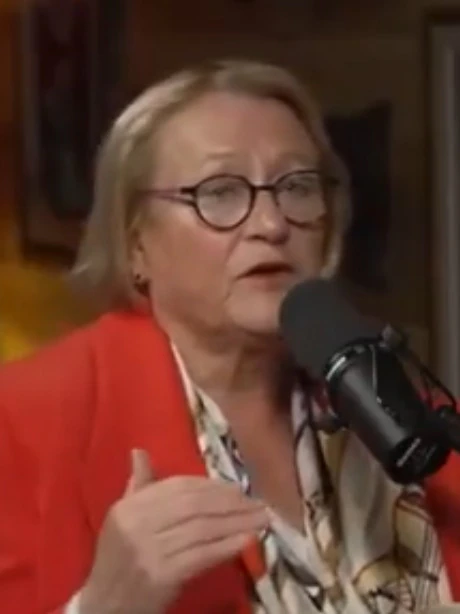
Catherine Austin Fitts has had an exceptional career. From being the Assistant Secretary of Housing and Urban Development under George H. Bush, to starting up her own investment brokerage firm and managing a five-hundred-billion-dollar investment portfolio, she is an internationally recognized investment banker.

After years of research, she has raised significant questions about the government’s handling of money, claiming that over twenty-one trillion dollars is unaccounted for and has been siphoned off by various agencies to fund international operations, both military and non-military “off the books.”  She claims these actions are detrimental to the well-being of the public.

The interview with Fitts by Tucker Carlson is amazing in the breath of topics covered and the information provided to the general public. One key area is her concern about the push by governments towards the elimination of a cash economy. Such a move will all but eliminate the mobility and freedom we have today as it will be easy for any government to simply freeze anyone out of the economy. Think back to the action by the Canadian government during the truckers strikes during Covid. By the “flip of a switch,” the Canadian government made sure the protesting truckers lost access to their funds in banks, use of credit cards: they could not get gas, purchase food, etc. That is the end result of the elimination of a cash economy.

In this case, Mr. Carlson wisely allows Fitts to do the overwhelming majority of the talking as he is clearly dealing with an individual who is his superior intellectually.

Be sure to visit www.Solari.com, Fitt’s foundation/website for weekly news that very well may change your perspective on the world.

https://tuckercarlson.com/tucker-show-catherine-fitts

Share:
Reading time: 1 min
Musings

The Introduction

February 26, 2026 by Barry J. Klazura No Comments

I mentioned a week or so ago that my historical novel, My Honor is my Loyalty: War in the East has been released. Being a novel about war, I realize it is not everyone’s “cup of tea”, but I thought some of the readers of this blog might find it of interest.

This is the introduction to the book, I hope some of you find it of interest.


I am an old man now, but I was once young. Young and strong, sure of myself, and I believed I knew all the answers. Like the youth of all ages, I was filled with vitality and idealism, and like youth throughout the ages, I followed older men who were strong. Those older men were filled with their own ideals, some of which were good and some of which were bad. I was not political, and like all youth of a similar age, I did not fully understand everything that was said, and I could not always put it in its proper context, but I loved my country and wanted to defend it. The strong man I followed was our Fuehrer.

It has been many years since the events I wrote about, and I think of the many comrades who are gone. One by one, they have fallen in the long years since the end of the war. Some died peacefully, some died terrible deaths caused by disease. Some learned something in those years, some learned nothing. I sat with them, listened to their arguments about history and the world and have, for the most part, kept my own counsel. I held my tongue and did not criticize or argue with others about morality, or politics, or just about any subject. To do so is foolish, for in the end, we are all only small cogs in a great machine that neither recognizes nor cares for us.I am a veteran of that war that is known by different names in different countries: World War II, The Great Patriotic War, The Great Crusade, and other names. But they all stand for the long, terrible six years when, if there is such a thing as the physical presence of evil, it was alive and well and walking our planet like a great bloody beast. It was a time when the world went mad, when men and women of too many nations thought what they perceived to be an easy way to gain all that they sought. They did not seek their betterment by hard work or sacrifice, but rather by stealing the goods and lives and wealth of their neighbors. They looked for and found someone who was smaller, weaker, and less brutal and believed that because of their strength, they had a right to their neighbor’s wealth.
This philosophy did not come upon the world suddenly but was born of defeat and frustration and anger and, most of all, weakness. Weakness in those who should have been strong, who should have stood for goodness and progress and human dignity. Those who should have been a bulwark for strength were weak, and that allowed others to become strong. Those new strong men seized upon the idealism of youth and turned that into destruction. The brightest, best educated generation in the history of the world committed terrible deeds of slaughter and have left their mark on the world. The youth of Germany and Italy, Russia and China and Japan marched off to cause the deaths of almost a hundred million and the destruction of the old world. All for naught.
Yet perhaps it was not for naught. Whoever says that war settles nothing has never been on a battlefield, in a camp or even in a war. War settles much; it settles who will live and who will die, who will be whole and who will be maimed, who will be wealthy and who will be poor. Stand on any battlefield and tell me that war settles nothing. It may notsettle some great questions in the Universe, but for millions and millions, it is the final arbitrator.
The great pity is that we have learned nothing, for it still goes on today as if the past had never happened. With the best of intentions, those who should know better and who have access to all knowledge choose to ignore the lessons of the past and strive not for unity but divisiveness and flexibility.
It is a strange paradox, and it is easy to see that there is a fine line between right and wrong, between personal freedom and personal irresponsibility, and between using strength for good and the abuse of that strength. It takes fine minds and common sense to make sound judgments, and somehow, we just do not have an abundance of those qualities in the world today.
Perhaps I ramble too much, but I do love to philosophize, if only to myself! So, let me get back to the beginning, or at least to a point where you may be able to make some sense of all of this. You see, when I was young, I was a warrior. I was strong and sure and deadly. I was very good at what I did, and I extracted a terrible price from my enemies. I had many enemies. When I was growing up in Germany after the seizure of power in 1933 by Hitler, we were told that there were enemies all around. We only had to look at the map, to look at the breadlines and millions of unemployed to know that we were surrounded by enemies. But Hitler had the answers, and we believed.
In 1933, I was nine years old, and like all young people, I was sure that I was immortal. The concept of death was totally alien to me as I had no experience with life or reality. With that childish belief of my immortality, suddenly came a leader who gave us a vision of the future, where we would create a new world based on strength and vitality and community, the Volksgemeinschaft. In our community, in our new Germany, everyone would work and be rewarded if each agreed to be part of the whole. We were all to sacrifice a little so that we could all gain a lot. The humiliating stain of 1918 would be erased, and in its place, the Germany of Goethe, Frederick the Great and Bismarck would be resurrected. The past glories of Germany, who had given the world music and art and great literature, would once again shine like a beacon for the world to follow and marvel at from their puny lands. All that we asked was that the world recognize the genius of the German people and allow us to achieve our natural place in the Sun. If it would not be given, we would take it.
For all our past glories to come back to us, we all had to believe. Like most youth, at the very time that I began to question the validity of religion, I was offered the chance to have faith in an earthly presence: our beloved Fuehrer. Oh, what a relief to have a clear and shining light in our lives! Our Fuehrer, a man of common origins, a man who had served in the trenches in the First War, was able to show us the way to greatness. He had all the answers: who our friends and enemies were, what our roles were to build a Greater Germany, and more. Who could doubt him, for everything that he foresaw came through, time and time again? He revitalized our economy, put us to work, brought back to us the Saar, and built up our armed forces. In a time of worldwide depression, Germany had become the shining light of progress and prosperity. Leaders from France, England, the United States, and other nations flocked to our happy land to witness the miracle firsthand. We knew that our Fuehrer was right, but to hear such words of praise from the likes of industrialists, Kings and Prime Ministers only strengthened our belief that we were on the right course.
At home, my father, who had been unemployed for so long, was sure that Germany was back on the right track. He was able to go out with his comrades from the war and relive the glories and see the shining future. My mother, being a good German housewife, was glad to see her husband working and her son applying himself with conviction to the local work of the Party and the Hitler Youth. Yes, there was purpose and belief again! We knew that some of the troublemakers had been arrested. But that was only for their own good as well as that of Germany. We knew things were not so bad, for when the arrested men came back, they were willing and able to resume a productive place in the community.
We heard the Jews were having a difficult time, but so what? We didn’t really know many, and the ones we did know were not like those shown in Der Sturmer or other papers. If our Jews had been like those, we would have wanted to get rid of them. Some of those Jews did not even speak German after living in Germany for hundreds of years! When our Jews were taken away, well, it was part of what had to be done to create a better life for everyone.
Six years later, when the war started, our Fuehrer had been proven right many, many times. For six years, we had been one community, with one will and one vision. We were happy to do our duty, eager to sacrifice for our beloved Fuehrer. No price was too great, no burden too heavy, for we were young and strong and immortal! We were happy to go on the great crusade against our traditional enemies, the French and English. We were anxious to march to the East, to destroy the cancer of Communism. And woe to any who stood in our way!
I did not think it at the time, but my youth had been sacrificed, and my blood, which was given so freely, was wasted. Wasted in a cause unworthy of my loyalty and effort. And the things that I did in the name of that cause can never be undone. The sorrow and pain, the lost opportunities can never be corrected.
But that was then, and this is now. Now, I sit in the basement of what was once a beautiful building in what was once a beautiful city. I sit and hear the shells crash nearby, listen to the single shots of snipers, listen to the groans of the wounded, and think back to that time. This city, Sarajevo, used to be a wonderfully cosmopolitan city. I came to live here several years ago, after I was released from my service in the French Foreign Legion, after I received my French citizenship, and changed my name. As you will see from my story, I was familiar with the area, and I loved the mountains and the fresh, crisp air. I could not go home to my native Bavaria, and I could not stay in France. In Germany, I might be questioned, and in France, well, in France, I would have been reminded of France’s former glories and how they had never reconciled the fact that it was all gone. I was tired of their arrogance based on those lost and tarnished glories. But by changing my name and moving somewhere else, I could start a new life.
I would have thought that the world had learned some of what I had learned in the forty years since the end of the war, but as with so many other things, I was wrong. Somehow, mankind does not learn from the past, or if we do, we only pick up the worst of the past. Somehow, no one ever stands and says, “No, we cannot do this, because if we do, this will happen. We know this because it has happened before.” Instead, we always seem to think that we will avoid the foolish mistakes of the past and be smarter, but we never are, so we blunder along as a species, making others pay the price for our collective stupidity. It is so sad to see.
Even now, Western Europeans fool themselves; they feel so superior as they have not had a war for many decades, and they have built beautiful societies that care for the old, the poor, and the dispossessed. But they only fool themselves, for they have had no great war and have built those societies because a stronger national power has stood over them and protected them. They have not become enlightened; they have only stopped killing each other for the first time in a thousand years because of that stronger power which, even combined, they could not challenge.
The proof of their impotence is what I am experiencing currently. This beautiful city in this beautiful land is being ripped apart by small fools who dream of a “greater” land when they should be happy to hold onto the peace and prosperity that had been forced upon them. They think that they are creating a better land, believing without any evidence that they are better than others. Mankind never learns.
What follows is part of my story. It is a story that I wrote when the events happened or shortly thereafter, when I could find scraps of paper on which to scribble. I think it captures how I felt then; it certainly tells a terrible story of death and destruction. I am not the same person any longer. I am not sure why. Perhaps it is because I have learned more from life and my interactions with people around the world. Perhaps it is because I am so much older and have lost the fire that consumed me in my youth. I know that I was a believer for a long time, and during that time, I did what was expected and demanded of me. Somewhere along the path of life, I changed. It was not a conscious change, and it was not a willful change, but it was change. I like to think that the change is for the better, that I am a better man, that I have done some good. Yet, sometimes, late at night, when I sit by the window and stare out at the dark street, I remember the actions of my youth, and I feel the dark beast within me stirring. That beast is my soul, and I tremble before it, for I know that not only am I capable of terrible actions but that I have committed them. I did things that most men could never do, and I did them with a clear conscious because I believed they were necessary. At those times, my soul was laid bare for the world to see and many who saw it drew back in terror. At those times, in the middle of the night, I wonder if my conversion to the kind old man that my neighbors know is true, or if it is merely the result of old age and the inability to be what I once was. Does a man’s soul ever change? I guess I shall wonder till my dying day.


Share:
Reading time: 12 min
Current Affairs, Musings, Society

The Great Divide

February 10, 2026 by Barry J. Klazura No Comments

In every personal, national, political, or corporate negotiation, there is a bottom line beyond which communication or the opportunity to successfully interact becomes impossible. That point may be one of morality, ideology, self-interest, or philosophy. Finding and understanding that point can be difficult and often clouded by one’s own prejudices, mood, etc. I believe, however, that Europe has reached a great divide in one especially important matter: immigration.

There is an ongoing struggle across much of the world caused by waves of Muslim immigrants and their impact on the European nations to which they flock. Some are drawn by the opportunity for a better life financially and educationally, others are drawn by the generous welfare programs which were set up after World War II.  There can be no doubt that there are others who see the European nations as targets for their long-term goal of conquering through the cradle. In this, they emulate the cry from Quebec decades ago when the French-Canadians envisioned change through a demographic war known as the revenge of the cradle. It sought to overturn the English power in the province and replace with a French culture orientation. Finally, there are others who see the European nations with their lack luster leaders as weak reeds who cannot stand up to Muslim power using the cradle, refusal to integrate and by sapping the financial strength of their hosts. The great question can the West reach an accommodation with the immigrants whose basic core beliefs, whose moral outlook are clearly opposed to those of the West? In fact, the question is really will Muslim immigrants accept and integrate Western values. In short, the answer is a strong no!

Why do I say there is no manner to reconcile the majority of Muslim immigrants and the natives of those European nations? There are two very simple reasons, and they serve as a great divide which cannot be bridged.

The first is fundamental and obvious: how women are viewed and treated in many of the most conservative Muslim countries, specifically the thirty-one where female genital mutilation is practiced and is practiced in those communities in Western nations. I recently read an article in the Daily Mail by Dr. Renee Hoenderkamp (12/16/2025, pp.15) in which she describes the real horrors of FMG going on even today, in Great Britain. She worked in a London hospital in a largely Muslim community, and she describes the time as “the most harrowing medical experiences of my career….”  Women regularly entered the hospital victims of FGM, unable to “urinate properly and crushed each month by period pains so excruciating they were bent double.” And childbirth brought with it even greater pains as well as a greater chance of death. How can any culture or religion mandate such horrors on women who are fifty percent of that population? Certainly not in the name of protecting them. For those women living in those populations where FGM is the norm, Islam truly does mean submission.

We also see the outward manifestations of outlandish religious laws on women when we see women walking around totally covered with only their eyes showing. The human form must be covered so as not to inflame impure thoughts and actions. The males of that same religion are not subject to the same tyranny as they wear any clothing they wish. We should not object, for least that woman was outside; she had her father, uncle, or brother to chaperone her. Those who are without a male family member are not allowed to go shopping on their own, go for a walk, drive, take a bus, etc. Must they be “protected” because the average Muslim man is unable to control himself unless a woman is in a burka. And of course, women do not need to have an education as they have a limited role in life. Thank goodness those women did not receive an education past the age of ten or they might ask why they are subjected to such a course, degrading life. No, not all women in Islam are treated in this manner, but for too many they are denied the option to be free and to create their own lives.

Secondly, conservative Islam, in particular the Shia version of Islam, is at its heart a totalitarian system. The religious leaders are divinely guided and not politically chosen. Additionally, the mullahs or religious leaders have the sole authority to interpret the rules and laws of the religion. The Sunni version sees its leaders as political figures chosen through consensus. This divide is huge and has been a matter of wars between the two camps. But the divide between the Shia vision of Islam and the basic ideals of the West are even greater. It is a fundamental chasm.

The Shia version is closer to communism than to a religion, for every action is guided by the “party line” as interpreted by a divinely chosen leader. This has been devastating to the followers of Islam; an example is the Ottoman Empire. Since the end of the seventeenth-century, Islam has been retreating. Even the Sultans in Istanbul could not change the decay of the Empire. Attempts at reforms such as with the military which was the power foundation holding up the edifice of the Ottomans were defeated time and again. The religious conservatives went so far as to massacre any troops trying to emulate the West. When you are divinely chosen and have the authority to interpret the very laws under which all must obey, what are the chances of smoothly integrating into societies which believe in ideals that are totally anathema to your own personal whims?

Is there hope that the conservative Muslim population can be integrated into Western values? Many Muslims want our conveniences, our fancy gym shoes, computers, clean water, abundant food and all the rest the West has to offer. They do not realize their very mindset blocks them from creating those items themselves. Instead, they must be like beggars, waiting for the West to give them what they desire.

 All the while, our “leaders” continue to appease the worse of the immigrants in order to avoid the violence that is a very real danger and which is spreading through our lands. No, it is better to keep quiet as churches are burned, no go zones created, gang wars over drugs explore in our cities, women raped and the assailants released because “they just don’t understand our culture.” Do not worry, the citizens are docile so they will continue to work and pay for the “freebies” given to the immigrants. Why can’t the West just admit that the gap between those who prefer a mindset from the Middle Ages and the modern West is too great to bridge? They will take what is given to them with no string and live off the generosity of those who act like fools. It appears our “leaders” will continue to appease the immigrants in the clearly mistaken belief that the majority will turn into useful citizens. How long do we wait, how long before we see any indication that there is even a bit of interest in assimilation?

The basic tenants of a religion will provide the guidelines of a society and how fifty percent of the population is treated will determine if a society will be successful or fail. The prime function of an immigration policy is that it must benefit the receiving nation. No sane immigration policy welcomes individuals who are inherently hostile to the core values of the admitting state. Dare anyone point to any of the Western nations that are better, more productive, or safer after a period of unrestricted illegal immigration?

If you feel that all societies are equal, that we just have to “understand” them, that their values are equal to ours, then go live in that society and see how long you hold onto your illusions. Experience it, embrace it. Especially if you are a woman. But remember, it is much easier to get into that society than out.

Share:
Reading time: 6 min
Book Reviews, Society

The Sailor Who Fell From Grace With the Sea by Yukio Mishima

January 25, 2026 by Barry J. Klazura No Comments

I first read this novel over forty years ago and although I did not recall the exact plot, I remembered that as I finished it, I put it aside vowing to never read another of Mishima’s’ works. My fear was that having read one more, I might have to devour his extensive list of works, a bit like an old friend who refused to purchase on Judy Collins record (that shows how long ago that was), as then he would have to purchase them all.

A very good friend presented me with a copy of this work for my birthday, and it was with a mixture of excitement and trepidation that I began to read it. The story itself seems to be simple; it centers around a widow, a sailor she meets, her young teenage son and the circle of his friends.  Filled with a subtle sensuality (as you would expect when you consider the author), it tells a story of how the son, and his friends reflect a form of nihilism that Mishima believed was part of the Japanese post-war character. The “tribe” of boys looked down on society, the family and anyone who was not in their “enlightened” circle. They were superior, above all the bourgeois values and norms and were determined to create their own world. Mashima also rejected Japan’s new materialism, democracy and flirtation with communism.

The book traces the young son’s disillusionment with the sailor who is courting his mother and the betrayal by the sailor when he decides to give up his life at sea and marry the boys’ mother. That action is a betrayal of the boys (not the sailors) sense of superiority, and the group of boys believe they must “punish” the sailor, or they will not be true to their sense of themselves.

As I finished the short novel, I felt the same sense of amazement at the power of Mishima’s writing. I slowly closed the book, put if my lap and let the last two paragraphs sink into my mind. The power that the book projected so many years ago was still there, as strong as ever. It is a book that dares to look at the dark side of disillusioned youth.

Mashima was one of Japan’s premier authors during the 1960’s. His novels were nominated five times for the Nobel Prize for literature, but he is probably best remembered for his dramatic action at Japan’s West Point in Tokyo in 1970. There, with some of his personal self-defense force, he seized a main building, captured the commandant and harangued the gathering cadets to throw off the new Japanese values of materialism, democracy, etc. and to recapture Japan’s sense of “national essence” including  Emperor worship or all of Japan would end up as a “rootless people”.  Failing to rally the cadets, he committed seppuku and had his second cut off his head as prescribed in the ceremony. He was forty-five years old.

What place did he hold in the minds of the Japanese youth of that time? In my previous lifetime I worked at Panasonics headquarters in Secaucus New Jersey.  One of the photos I kept displayed was of Mishima haranguing the cadets on that day in 1970. None of the older Japanese commented on the photo in my office, but the younger generation were more open in their comments, and I found it interesting that a simple photo could pierce the normal Japanese self-containment and lead to an openness that was so rewarding.

Read this book at your own peri or sense of excitement. The term you use after the reading may tell you something of yourself.

Share:
Reading time: 3 min
Biography, Society

Death Dealer: The Memoirs of the SS Kommandant at Auschwitz by Rudolph Hoss, Edited by Steven Paskuly

January 20, 2026 by Barry J. Klazura No Comments

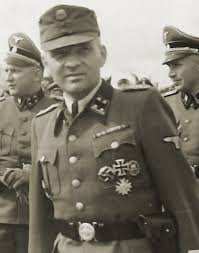
Written between October 1946 and April 1947 while awaiting trial and hanging in Poland, Hoss once again validates the proposition that the greatest mass murders were not crazy or fanatical, but rather believers in the ideology du jour. They often present very logical arguments for their actions, all the stronger because so many of them are noted Doctor of Medicine or Law. They represent the highest intellectual standards and yet are responsible for the deaths of untold millions. Knowing that we was going to die, there is nothing in his writing that would indicate his willingness or ability to commit genocide. Additionally, there is no indication of any personal dislike or distain for the Jewish people of whom were the majority of his victims. The closes he comes to any form of antisemitism not in deed but rather in a statement he makes twice just before he is hung: “Please ask the Polish people to forgive me.”  Not the Jews, the Poles. How telling; it was as if the millions murdered under his regime did not and never existed.

Hoss was a believer, a National Socialist to the end; not necessarily in every bit of that pseudo-political philosophy, but enough so that he found a moral home in which he could face the world. Each time Himmler gave him a new task, he set to it with a determination and will to do the best he could. According to Paskuly, this is due to the strict upbringing of his father who wanted Hoss to enter the priesthood. This dream of his father was shattered when Hoss believed a priest had broken the sanctity of the Confessional.

 Yet the basic values of hard work and determination to complete any job in the best manner possible remained with him. Directed by Himmler to build Auschwitz and to manage it as it grew into the largest concentration camp of the Nazi regime, followed a machine that operated according to a set of Rules and regulations for Concentration Camps which were developed by Theodore Eicke, who developed the camp system and demanded that each SS guard develop a sense of hardness that went far beyond the societal boundaries. Eicke viewed each prisoner as an ENEMY OF THE STATE and demanded that the title never be forgotten. His fanaticism was the exact opposite of the technocratic approach taken by Hoss.

The book also contains Hoss’ profiles of various high level SS leaders involved in the camps, a profile of the organization of the camps, a section on Lebensborn, minutes from the infamous Wannsee conference and other details which help to create a better understanding of the camp system.

In the end, we face banality. We find what could be a middle-aged bureaucrat who goes to work each day and comes home to his loving wife and three beautiful daughters. The is no extremely angry, no ranting, no self-image as a man on a holy image. Just the dull, non-descript man found by Hannah Arndt, Dr. Douglas Kelley, and others. That is the lesson in and of itself, for it shows how thin the veneer of civilization may be and that it can be so easy to pierce.

Share:
Reading time: 2 min
Current Affairs, Education, Government, Musings, Society

The Banality of Evil

January 18, 2026 by Barry J. Klazura No Comments

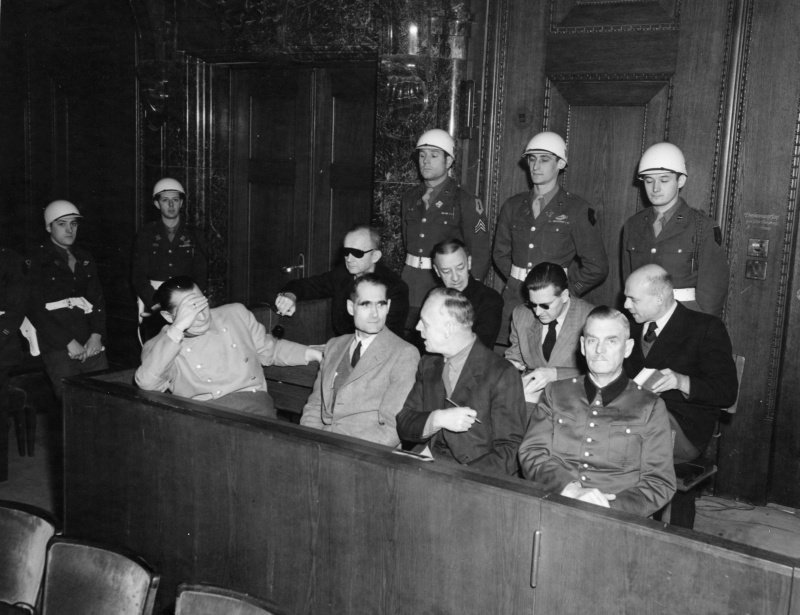
The recent movie, Nuremberg, centers around two characters; Dr. Douglas Kelley, who spent many hours interviewing and interacting with the twenty-two defendants during the first Nuremberg trial and Reichsmarschall Hermann Goring.

Dr. Kelley in 1945 was 35 years old at the time of his work at Nuremberg, upon which the movie is based. He was a U.S. Army psychiatrist with an excellent reputation. His goal was to understand the mind set of the defendants in terms of how they viewed the war crimes they faced and how they could participate in the conducting of those terrible crimes. He interacted with those individuals for only one month, but that month changed his life forever. After those interviews, he gradually became more introverted, subject to flare ups of anger, and more argumentative. His career which held so much promise became short-circuited as he disagreed with fellow doctors and administrators; he was no longer invited for interviews; his scholarly papers were ignored and not published and he became a pariah. In 1958, he died by suicide.

What was it that changed the course of Kelley’s life? It was that month when he spoke with the twenty-two defendants and found a secret that he believed was totally opposed to the image that most people had of those defendants. It is a secret that has haunted generations as they studied the horrors of the Third Reich.

Dr. Kelley concluded, contrary to popular opinion, that the defendants were ordinary individuals; some brighter than others, some more vain, but all profoundly human. They were not devils or demons, they were not mad; in most cases they could be your next store neighbors until the right conditions were created. Dr. Kelley believed that it was not madness that enabled those men to participate in such crimes, but rather from a moral decay disguised as duty. We must remember that numerous commanders of the Nazi killing squads (the Einsatzgruppen) were medical and legal doctors and others possessing the finest intellectual educations in their fields. In their minds, their “work” was noble and ridding the earth of unhealthy and deadly enemies of their race.

In this book, 22 Cells, he saw that the “gradual process of moral desensitization, in which obedience and ambition eroded empathy” enabled those men (and so many others), to commit war crimes on a scale previously unknown. His belief in that process led him to believe that in any society, if the conditions were right, those actions could be repeated and that knowing that society had to take steps to safeguard such a recurrence. Naturally, such a view was not very popular in the victor nations who saw themselves as being not only the physical but also the moral victors of the war.

Long before Hannah Arendt went public with the phrase, the banality of evil, Dr. Kelley had spoken that way of what he had learned in Nuremberg. Like Kelley, Arendt paid a price using that phrase, yet there has never been any evidence to the truth of those words. They paid the price for staring into the darkest portion of the human mind. Will we learn from what they found? Try asking the average teenager of today who fought who in World War II. Ask them who fought in our Civil War. Some may say that Nazi Germany was an aberration, a fluke of history. If that is to be believed, what about the Armenian genocide, the Ukraine famine of the 1930’s, the intentional famine in China under Mao, the muti-year war in the Congo, the slaughter in Rwanda. Need I go on? Their ignorance is not their fault, but someone will have to pay the price for that ignorance. Perhaps not in this decade, perhaps not in the next, but there is always a price to pay for such ignorance.

There can be no finer example of the banality of evil than the book written by the commandant of Auschwitz and one of the greatest mass murders in history, Rudolph Hoss. Written while awaiting trial, he does not attempt to deflect blame or plead some sort of extraordinary circumstances for his actions. Instead, he paints a picture of a very bland, ordinary man simply doing his duty as he was ordered. A good family man, loving father, his main concern was to please his superiors everyday. He was the perfect face of the banality of evil.

For further reading, please consider The Nazi Conscience by Claudia Koonz, The Nuremberg Interviews by Leon Goldensohn, The Mind Doctor of Nuremberg by Kendrick D. Erasmus, and Marriage & Fatherhood in the Nazi SS by Amy Carney, Death Dealer by Rudolph Hoss.

Share:
Reading time: 3 min
Current Affairs, Government, Musings, Society

Failure begets Failure

January 8, 2026 by Barry J. Klazura No Comments

Numerous times over the past year ( e.g., Jan.2, Jan.23, Feb. 5, March 8, June 6, Oct. 10), I have written and posted articles concerning the disaster that is befalling much of the E.U., but especially Germany in its’ quest to go green. 

Tens of thousands of jobs lost, leading technical companies relocating, soaring energy prices, expanded welfare rolls, mounting national debt and decreasing individual liberty has been the reward for a decade of pie in the sky social and energy policies. Government leaders in western Europe are acting like teenagers who refuse to believe that tomorrow will never come and the bills they are creating will never come due.

The link below will take you to an article which provides facts and figures that should shock and dismay European leaders, yet somehow those leaders continue on a path of proven failure. While those same leaders express concern about the “American First” direction of President Trump, they have no qualms about continuing their, “Our Citizens Last” policies.

The nations of eastern Europe are on growth paths as they battle the bureaucrats of the E.U. Instead of asking how those nations are able to grow their economies without the flood of immigrants from third world “nations,” the E.U. like a spoiled child continues to stamp its’ feet and demand that those nations adhere to the E.U.’s failed policies.

Is there still time for nations such as Germany to change their course, reverse their belief in fairy tale economic and energy polices and play upon their traditional strengths to build a better future?

Please copy this link to the article: https://europeanconservative.com/articles/commentary/walpurgis-night-of-madness-germany-in-the-grip-of-climate-socialism/

Share:
Reading time: 1 min
Current Affairs, Government, Society, Travel

Some Quick Thoughts on a Visit to London

December 24, 2025 by Barry J. Klazura No Comments

It has been about a year and a half since I last visited London and from the news I have seen here in the States, I wanted to see what the mood in the city regarding their politics was, economy, immigration, etc. While having breakfast I was able to read several British papers and what particularly struck me were the first pages of The Daily Mail (12/19/2025), which has the highest circulation but is not considered to be on par with the Times of London (which is further to the Left in its reporting). So let me present three stories which I believe indicate where the U.K. is at currently:

  1. Phillipson blocks safe spaces for women: Bridget Phillipson is the Women and Equalities Secretary (a position specifically aimed at protecting Women and bettering their lot).  In response to the recent decision by the High Court, she has released a statement that their recent ruling is “trans-exclusive” and refuses to release (enforce) them after the court ruling three months ago. The guideline was created after the British Supreme Court ruled that banned “transgender women-biological males-from women’s lavatories.  According to Ms. Phillipson, the court ruling would ban women from taking their infant sons into changing rooms and pools. She has already missed the deadline for presenting guidelines to Parliament. Apparently “woke” is alive and well in the U.K. and is defiance of the law of the land. Here is the woman who is charged with protecting women and she refuses to enforce the law which specifically protects women. Your government at work for your benefit?
  2. British boys don’t need misogyny lessons-migrants do: The Labour government has decided that British school boys need to be taught about misogyny in response to a dramatic increase of violence against women. The goal is to reduce sexual violence by half within a decade.  The leader of the Conservative party, Kemi Badenoch has said that “if you tell boys that they are the problem, you don’t create respect, you create resentment, you create backlash…”. The current effort by Labour seems to have been based on a BBC TV drama Adolescence which tells the story of a 13-year-old-boy who was arrested on suspicion of murdering a female classmate. Ms. Badenoch has urged the Labour government to publish data on the nationality and immigration status of sexual offenders, which the government has refused to do. It is interesting that the “sexual grooming” which has plagued the U.K. for more than ten years and resulted in tens of thousands of female victims was due to be discussed openly in Parliament, but at the last moment the Labour government cancelled the discussion as it might upset Pakistani voters. Your government at work, protecting it’s citizens?
  3. The Cost of Welfare: Projections are that one in eight Brits will be claiming disability benefits by 2030, up from the current one in ten. At the same time, new guidelines mean that by 2030, four million Brits will be on disability with absolutely no need to look for work or prove their sickness continues. The government claims that they are working on reforms which will save about two billion pounds (about $2.7 billion) in the next four years (hardly a brilliant success). This “savings” is part of the total cost of over one-hundred-ninety billion currently.

Those three stories from one day’s news show a nation with major problems. OK, every country has its’ problems and, on the whole, the attitude in Mayfair and the money sections of the city was positive.  It was great seeing and feeling the power that some of the young Brits had as they hit the pubs after work.  They were positive and you could feel their excitement.  Fantastic! On the other hand, from the taxi drivers to bar tenders to some everyday Brits, there were more cautious comments, ranging from “we are broke” to” there is no money”, to complaints of their National Health Service (need a cancer consultation? You get a lottery ticket-not kidding- and then the NHS tells you when your consultation will be; one person got a phone consultation in thirteen months’ time). Then there is the underlying problem of the migrants.  A local council was upset as a local building was being refurbished to house five-hundred immigrants, which was more than lived in the village. That same day over five hundred immigrants were caught coming over from France. The immigrants are coming faster than the government can build houses for them, when there is a housing shortage already for native Brits.

I have to admit, I love the U.K. and I am aware of how much has changed over the thirty plus years that I have been visiting.  Gone are the carts selling fruits having been replaced by falafel stands.  And East London?  It is a different country all together, and only time will tell what will happen. London is no different than any U.S. city; it is still safe unless you wander into a section that you know if trouble. Added to this is the current policy under the Labour government of thought control such as arresting an individual for silently praying in a public space, or the seventy-year-old Grandmother who was arrested for criticizing the local government on Facebook.  There is a feeling of national malaise in the air and the current government is holding on with every tool at it’s disposal.

The changes are plain to see and like the rest of Western Europe, the British government is stuck in doing the same things which have failed, hoping for a different result. Fortunately, at least the government is not locking up or shutting out rival political parties as we have seen in the EU.  If the Brits continue down their current failing road, I believe there is little hope for national renewal. It is a shame, as there is so much good to see that that wonderful land.

Share:
Reading time: 5 min
Page 1 of 351234»102030...Last »

Barry J. Klazura

Barry Klazura sipping grappa

With a Masters Degree in Guerrilla Warfare and Totalitarianism, Mr. Klazura was well prepped for a career in Sales and General Management, consulting on corporate startups and turnarounds as well as lecturing on history and politics.  For the past twenty years he has focused on being a financial advisor and consulting.

Delivered To Your Inbox

Sign up to get an email when a new article is published.

Topics

  • American Civil War
  • Biography
  • Book Reviews
  • Cigar Reviews
  • Coronavirus
  • Current Affairs
  • Education
  • Environment
  • Factoids
  • Government
  • Lifestyle, Cigars & More
  • Liquid Refreshments
  • Musings
  • Quips and Historical Facts
  • Society
  • Travel
  • Uncategorized
  • World War I

Subjects

book Books-Russia/Soviet Union Books 21st Century Books 1919-2000 Books Ancient to 1900 Books Asia Books Biography Books Fiction Books Germany 1919-1945 Books Pre-WWI books Viet Nam books world war I Books WW1 Books WWI Books WWII Cigar Friendly Location Amsterdam Cigar Friendly Locations-London Cigar Friendly Locations-New Orleans Cigar Friendly Locations-New York Civil War Coronavirus Environment Korean War World War I World War One

Recent Articles

At Stalin’s Side by Valentin Berezhkov

July 15, 2026
The Price of Victory by N.A.M. Rodger

The Price of Victory by N.A.M. Rodger

June 26, 2026
Frontsoldaten: The German Soldier in World War II by Stephen G. Fritz

Frontsoldaten: The German Soldier in World War II by Stephen G. Fritz

June 5, 2026
Organizer of Victory, 1943-1945, George C. Marshall by Forrest C. Pogue

Organizer of Victory, 1943-1945, George C. Marshall by Forrest C. Pogue

May 26, 2026
Illegals Released & Our Leaders

Illegals Released & Our Leaders

May 10, 2026

Inquiries and Comments

For general inquiries and comments, email AOTOHcomments@gmail.com.

Facebook
© 2020 And On The Other Hand. All rights reserved.