
On The Other Hand -
Book Reviews
Lifestyle, Cigars & More
Musings
About
On The Other Hand -
  • Book Reviews
  • Lifestyle, Cigars & More
  • Musings
  • About
Biography

At Stalin’s Side by Valentin Berezhkov

July 15, 2026 by Barry J. Klazura No Comments

At Stalin’s Side: His Interpreter’s Memoirs by Valentin Berezhkov

Although Valentin Berezhkov was not Stalin’s primary interpreter, he attended numerous important meetings with Stalin during the Second World War, including Yalta and the talks in Moscow. With a natural flair for languages, Berezhkov found himself chosen for important work by Molotov, the number two man in the country, and was suddenly thrust into the middle of history making events. His memoirs, which run from the October Revolution to the fall of the dictator’s empire, are valuable because they capture the mindset of suspicion, fear and ambition at the very highest levels of Soviet government. The leaders of the State were constantly looking over their shoulders and testing the ground beneath their feet while their leader, Stalin, the consummate politician and absolute ruler, watched them for any inkling of disloyalty or lack of duty.

The Need to Show Absolute Loyalty

Those same leaders had to submit to the grossest demands. Molotov’s wife, Polina, was arrested and sent to the Gulag. When Molotov went to Stalin for help, Stalin pointed out that all of his own relatives were also in prison. In fact, almost all the relatives of Stalin’s first and second wives were either in prison or had been shot. The same was true for the wife of the Soviet President, Kalinin, and for Stalin’s chief assistant, Poskrebyshev. To add salt to the wound, Beria, the feared head of the Soviet secret police, would whisper to Molotov from time to time, “Polina is still alive.”

Living in such an atmosphere was obviously stressful, and the stress increased when Beria suggested, during the Second World War, that Berezhkov’s parents might still be alive in Kiev, which had been overrun by the Nazis. Anyone living in an occupied area was automatically suspected of collaboration, and so Berezhkov, being so close to Stalin, could be seen as a threat.

Survival in Stalin’s Inner Circle

Fortunately for Berezhkov, Stalin never uttered those dreaded words, “he knows too much,” in his direction. He was spared arrest, the Gulag, and death by car accident, which was one of the favorite methods of disposing of potential threats, real or imagined. Allowed to take other work, he survived the Stalin years and ended up as a senior researcher at the Institute of USA and Canada Studies of the Russian Academy of Sciences. He later taught political science at Claremont College and at the Monterey Institute of International Studies before his death in the late 1990s.

Opinion: Is the Book Worth Reading?

This is a fine book, tracing his early life and his belief in the Communist ideal through to his awakening about the reality of the Soviet state. We see through his eyes the hopes and dreams of a better life, and the realization of the terrible cost that hundreds of millions paid for their participation in the Communist experiment. In the end the problem was not Stalin, but rather a system which claimed to be based on “science” and which allowed men like Stalin and Beria to rise to the top of the State machinery.

Share:
Reading time: 2 min
Biography

Nelson by David Walder

April 10, 2026 by Barry J. Klazura No Comments

Anyone who has ever seen the 1941 movie, “That Hamilton Woman” staring Lawrence Olivier and Vivian Leigh remembers that perfect looking couple working together to save the British Empire in the face of the ogre, Napoleon.  In some ways, the movie was historically accurate; Nelson was a brilliant, innovative naval commander who through his daring, saved the British position in the Mediterranean and of course, was responsible for the famous victory at Trafalgar.  He was also vain, stubborn and a romantic who while still loving his wife, threw her over for Lady Hamilton.  While the movie showed Lady Hamilton as a converted trollop who became well educated thanks to her husband, apparently the actual Lady Hamilton conformed more to Richard Burton’s description of his wife Elizabeth Taylor: “Her arms are too fat, her legs are too short, and she is too big in the bust”.  Yet the real Lady Hamilton captured the soul of Nelson and almost caused him to lose his position and worse still, for England to lose the services of their best Admiral as he used poor judgment in attempting to prop up the weak King of Naples.

The real Lady Hamilton loved to gamble, drink and spend money and her husband, Lord Granville was apparently happy to have Nelson love his wife; they travelled together and must have presented a strange threesome upon their return to England.  Poor Granville did lose many of his works of art while in transport but he and then Lord Nelson remained friends until Granville’s death.

Unlike other naval captains, Nelson spent most of his time destroying enemy fighting vessels rather than concentrating on trading ships.  Given the prize rules of the day, this deprived him (and his crews) of much wealth.  Despite this, his crews were dedicated to him and he appears to be a man out of his time in the way he handled his crews and was associated with them.  He certainly did not mingle with them, but they had confidence in his skills and knew that he would not use them for his own ends. The proof of this was his hard fought and very near destruction of the Danish fleet, a battle which he could and perhaps should have lost.  His men never tired and always believed in his lucky star and despite a terrible pounding and high losses, he and his men won through in the end.

Because he concentrated on enemy warships, he died in debt and Lady Hamilton managed to run through the money left to her by her husband.  She did die in poverty in Calais.

This is a well written book which makes the times and characters come alive in an easy manner.  The test for me was that I can still watch the movie and not pick it apart as being historically inaccurate.  Yes, it is the movie version of history, but aside from the depiction of Fanny, Nelson’s wife, it is within a stone’s throw of actual history.  So, enjoy the movie and the book.

Share:
Reading time: 2 min
Biography, Book Reviews

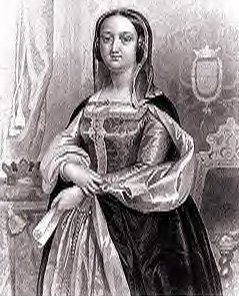
Isabella, the Warrior Queen by Kirstin Downey

February 16, 2026 by Barry J. Klazura No Comments

A very fair, balanced biography of the great Queen of Spain who was responsible for driving the Muslims out of Granada and thus completing the Reconquest, of sponsoring Christopher Columbus, as well as starting the Inquisition and expelling (as an option to conversion) of the Jews and Muslims from Spain.

The author points out that Isabella’s husband, Ferdinand, is normally given first place in histories of the period, but that Isabella, the first ruling Queen in over one hundred years deferred many times to her husband’s ego in terms of allowing him to sign first and take credit for actions she began and completed. A bit of a feminist historian at times, but then Downey puts Isabella in the context of her times, especially regarding the threat and might of the Ottoman Empire which was still expanding.

Isabella was a ruler who looked beyond the days problems and thought strategically. She provided an excellent and well-rounded education for her daughters and was, while she had her health, expecting that the natives of the “New World” were to be treated kindly. As an aside, while the author points out that the natives suffered from the deadly diseases of Europe, the natives managed to get their own by spreading syphilis to the “Old World” with devastating effects. He also points out that expansion fueled the Inquisition as the newly united Spain could not be sure of its Muslim subjects who were often in rebellion against the crown and the loyalty of many of the converted Jews was suspect. Regarding Columbus, Downey does an excellent job of providing a balanced picture of him, including his pride, successes, and failures.

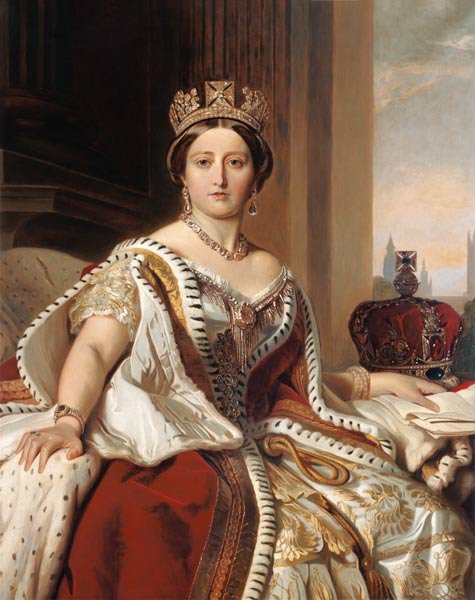
 It is interesting to note that Queen Victoria is often seen or remembered as the grandmother of European royalty, but Isabella’s offspring at one time controlled not only all the “New World” but also contributed to the ruling families of the U.K., Denmark, Norway, Sweden, and Monaco.

The book is easy to read; beautifully written, documented and gives a Queen the honor she deserves.

Share:
Reading time: 1 min
Biography, Society

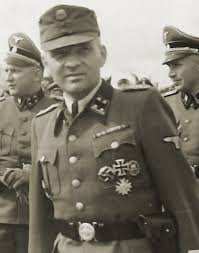
Death Dealer: The Memoirs of the SS Kommandant at Auschwitz by Rudolph Hoss, Edited by Steven Paskuly

January 20, 2026 by Barry J. Klazura No Comments

Written between October 1946 and April 1947 while awaiting trial and hanging in Poland, Hoss once again validates the proposition that the greatest mass murders were not crazy or fanatical, but rather believers in the ideology du jour. They often present very logical arguments for their actions, all the stronger because so many of them are noted Doctor of Medicine or Law. They represent the highest intellectual standards and yet are responsible for the deaths of untold millions. Knowing that we was going to die, there is nothing in his writing that would indicate his willingness or ability to commit genocide. Additionally, there is no indication of any personal dislike or distain for the Jewish people of whom were the majority of his victims. The closes he comes to any form of antisemitism not in deed but rather in a statement he makes twice just before he is hung: “Please ask the Polish people to forgive me.”  Not the Jews, the Poles. How telling; it was as if the millions murdered under his regime did not and never existed.

Hoss was a believer, a National Socialist to the end; not necessarily in every bit of that pseudo-political philosophy, but enough so that he found a moral home in which he could face the world. Each time Himmler gave him a new task, he set to it with a determination and will to do the best he could. According to Paskuly, this is due to the strict upbringing of his father who wanted Hoss to enter the priesthood. This dream of his father was shattered when Hoss believed a priest had broken the sanctity of the Confessional.

 Yet the basic values of hard work and determination to complete any job in the best manner possible remained with him. Directed by Himmler to build Auschwitz and to manage it as it grew into the largest concentration camp of the Nazi regime, followed a machine that operated according to a set of Rules and regulations for Concentration Camps which were developed by Theodore Eicke, who developed the camp system and demanded that each SS guard develop a sense of hardness that went far beyond the societal boundaries. Eicke viewed each prisoner as an ENEMY OF THE STATE and demanded that the title never be forgotten. His fanaticism was the exact opposite of the technocratic approach taken by Hoss.

The book also contains Hoss’ profiles of various high level SS leaders involved in the camps, a profile of the organization of the camps, a section on Lebensborn, minutes from the infamous Wannsee conference and other details which help to create a better understanding of the camp system.

In the end, we face banality. We find what could be a middle-aged bureaucrat who goes to work each day and comes home to his loving wife and three beautiful daughters. The is no extremely angry, no ranting, no self-image as a man on a holy image. Just the dull, non-descript man found by Hannah Arndt, Dr. Douglas Kelley, and others. That is the lesson in and of itself, for it shows how thin the veneer of civilization may be and that it can be so easy to pierce.

Share:
Reading time: 2 min
Book Reviews

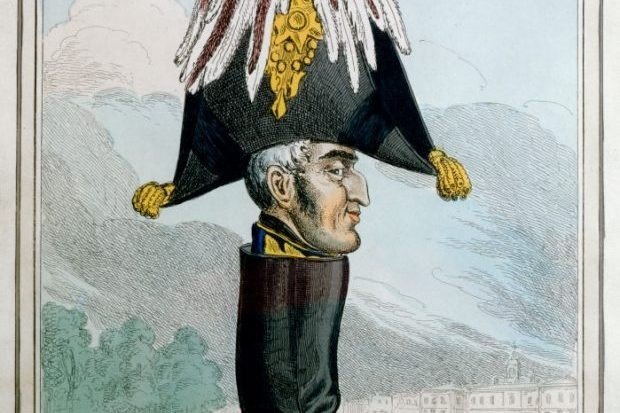
Wellington: Waterloo and the Fortunes of Peace, 1814-1852 by Roty Muir

September 23, 2025 by Barry J. Klazura No Comments

This is the second half of Muir’s biography of Wellington and despite its size (664 pages including notes), and obscure (to most) references to the politicians and policies of England at the time, it is if anything better than his first volume which was excellent.

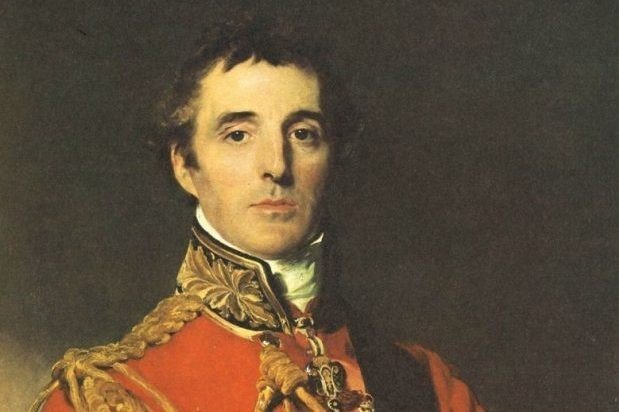
We think of Wellington as the haughty imperious general who defeated Napoleon at Waterloo, but this volume shows that he was much more; a skilled diplomat who played a major part at the peace settlement after Waterloo, who successfully balanced the foibles of French politics and then went onto become Premier of the U.K..  Even when he was not directly in the spotlight, his work at the Horse Guards (which controlled the Army) and behind the scenes reflected a mind that was able to adjust and understand several sides of any political problem.

By nature and breeding, he sided with the landed gentry and was loyal to the King (even though a couple of the Kings at that time were weak and often foolish), yet he saw himself as a liberal conservative, willing to break out of traditional structures (such as the Catholic question, etc.) in an effort to create a more equitable and mobile society.  He disliked the radicals of the time and did his best to channel government policies into directions that would profit the nation while maintaining the standards which had created the Empire.

Criticized historically as being ultra conservative regarding the military (only Gentlemen should be officers), he none the less did open the officer ranks to members of the rising middle class, sought to upgrade and modernize tactics and weapons and sought to create an army that would be able to deal with the responsibilities of policing an Empire while facing traditional threats (it must be remembered that even after Napoleon there was a real threat of an invasion and war with France).

A complex man, given to a temper, he none the less was well respected by all sides and was often perceived as a voice of reason to the point that he could raise questions about his loyalty even from his own political allies.

An excellent book which brings many politicians and issues of the day to life in an interesting and colorful way.  I highly recommend both volumes.

Share:
Reading time: 1 min
Book Reviews

Against all Odds: A True Story of Ultimate Courage and Survival in World War II by Alex Kershaw

July 13, 2025 by Barry J. Klazura No Comments

At the end of the Second World War, German Field-Marshal Albert Kesselring whose troops fought both British and American troops in Italy and Western Europe, was asked “What was the best American division faced by troops under your command on either the Italian or Western Fronts?”. Without hesitation he said, “The Marne men.”

Who were the “Marne men?”  They were the men of the U.S. Army’s 3rd Division. They won more medals than any other infantry division in Europe and within its ranks were at least one of every U.S. medal, including the Medal of Honor; some medals were won by those two men as many as three times. Their names were Audie Murphy Maurice Britt. Both men received major wounds, and Murphy would have the more public but also more troubled private lives. Here is a list of medals won by Murphy: * Medal of Honor *2- Silver Stars * 3-Bronze Stars * Distinguished Service Cross *3-Purple Hearts. In total, the “Marne” division won more than one-fourth of all Medals of Honor won by the ground forces, an amazing accomplishment. The winning of medals helped determine when the serviceman was able to go home and at the end of the war, who could be discharged and in what order.

The book follows a number of individuals from the divisions landing in French North Africa, through the battles in Sicily and Italy, including Anzio plus the landing in the south of France through the final battles in the Colmar pocket. While Army psychologists thought that the “breaking point” of an infantryman was two-hundred days of continual combat, many of the men of the division were in continuous battles for over four-hundred days, and the survival rates was about seven percent.

Kershaw continues his excellent writing in that while he describes the overall strategic scope of the battles, focuses on the lives of the men at the most basic level. He has obviously taken great care in doing his research, in his interviews and writing to bring the men, both high and low to life. Their stories and exploits put modern day movies and stories to shame, for these were real individuals taking huge risks in order to lead their men and insure that as many of them would return home at wars end. It is a shame that young boys of today watch silly comic book heroes in movies instead of learning about real bravery as exhibited by men of their great grandfathers and grandfathers’ generations. It is hard to say anything positive about war, but to see the bravery and selflessness of the men in this book makes one realize the amazing ability of ordinary men to do extraordinary deeds.

Share:
Reading time: 2 min
Book Reviews

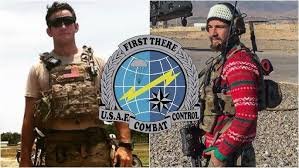
Alone at DawnMedal of Honor Recipient John Chapman and the Untold Story of the World’s Deadliest Special Operations Force by Dan Schilling & Lori Chapman Longfritz

July 8, 2025 by Barry J. Klazura No Comments

After 9/11, a handful of specially trained U.S. servicemen went into action in a land that was little known, filled with tribal and family hatreds and rivalries, a religion that looked down on non-believers and could switch sides if bribed with enough money. Those Americans who went into action in Afghanistan, had to quickly earn the trust and respect of the native population, and operated far beyond the normal boundaries of their individual services.

Key to the success of those brave individuals was a small group of highly trained men who had the ability to call down upon the battlefield unbelievable firepower while they were not in a distant office looking at a monitor, but while they were in the very front lines of the deadliness battles.  This elite group of individuals is known as the Combat Control Teams (CCT). Their motto is “First There” and together, they have collected “in aggregate, more combat action than their special operations counterparts in the Navy and Army-making some of them the most experienced veterans in all of America’s previous wars.”  Trained to the standards of the Seals, Delta, or Special forces, they were instrumental in breaking the back of the Taliban and Al Qaeda forces equipped with modern weaponry in battles which echoed World War II.  It was through their experience, expertise, and bravery that the power of the Taliban and Al Qaeda was broken not in months, but rather in weeks. Each member of the CCT controls more destructive power than any other individual combatant in the history of the world.

The book covers the battle of Operation Anaconda as well as the background of John Chapman, the first airman to win the Medal of Honor since the Vietnam War and the first member of CCT to win the Medal of Honor. His career and actions reflect the highest standards and professionalism of the little-known group of men who serve in the CCT. While the book may at times be overly technical for the novice military reader, it also reflects the skill set that is demanded in that service. Such a skill set is necessary given the huge destructive power that is placed in the hands of CCT members. Those skills are coupled with dedication and willingness to sacrifice oneself in the service of the nation and one’s fellow warriors.

Share:
Reading time: 1 min
Book Reviews

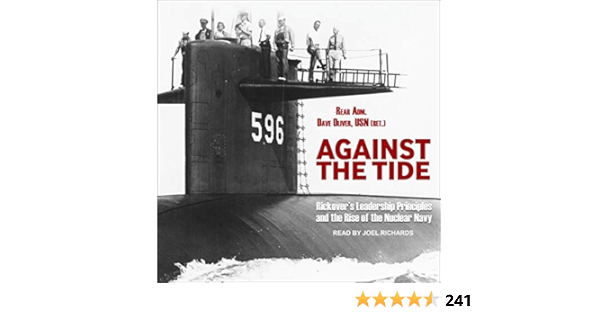
Against the Tide: Rickover’s Leadership Principles and the Rise of the Nuclear Navy by Read Admiral Dave Oliver, USN (Ret)

July 15, 2024 by Barry J. Klazura No Comments

Prior to World War II, the established bureaucracy within the U.S. navy felt that battleships would decide victory or defeat in any ocean-based war. During the war, it was realized that it was not battleships which were the deciding factor, but the aircraft carriers and hence, a new bureaucracy displaced the old.  There was another weapon which created its own set of followers and that was the submarine.  It was the submarine in the Pacific that accomplished what the U-boats could not achieve in the Atlantic; the destruction of the Japanese to transport the basic materials they needed to conduct a war.  The U.S. submarine fleet destroyed the Japanese merchant fleet which carried the oil, wood, coal, foodstuffs and all the other ingredients upon which Japan depended.

The submarine officers were a different breed apart from the officers on carriers and other surface vessels.  They were so different in fact, that officers who served in submarines knew they did not have a chance to access the highest ranks in the navy.  They were considered mavericks, risk takers and prone to striking out on their own.  They readily admitted these characteristics but then their service was entirely different from the rest of the navy.  A surface vessel can have engine problems and get towed, but if a submarine has major engine problems, it sinks.

Against this backdrop of two entrenched bureaucracies, each attempting to snare more dollars in the military budget, comes Hyman Rickover, a man of Jewish background, born in Russian occupied Poland in 1900 who has chosen to make engineering as his course in the Navy.  Talk about handicapping! As with sub officers, an engineering officer realized that getting a shot at Admiral status was small.  Not only those black marks, but he also becomes the driving force behind creating a force of nuclear submarines while disdaining the sub captains who came out of WWII with honors and medals.  Yet somehow, despite all odds, he manages to defeat much of the naval bureaucracy, convince powerful Congressional leaders and several President’s to create a nuclear submarine force that although smaller than the Soviet fleet, was technologically far ahead of the Soviets.

Continue reading
Share:
Reading time: 4 min
Book Reviews

Wellington, the Path to Victory, 1769-1814 by Rory Muir

July 3, 2024 by Barry J. Klazura No Comments

A massive biography which covers the first half of Wellington’s life. Not being the first son, he was relegated to joining the military (under British custom, the first son inherited the title, the second went to the military and the third son entered the Church of England).

As was common at the time, Wellington had an unhappy childhood and like many men of that time, he made his mark and fortune in India. His military victories and diplomatic skill in India allowed him to assume command in the Peninsula during the Napoleonic wars where he reorganized the army of Portugal and created the famous defensive lines which the French under a number of Napoleon’s generals refused to attack. In a series of brilliant maneuvers, he out generaled every force sent against him as he slowly pushed the French out of the entire peninsula. That does not mean that he had an easy time as Napoleon poured men and material into the fight, but his real struggle was with various politicians and powers in London who were jealous of his successes and who kept Wellington’s forces on a strict leash.

Unlike other Wellington biographies, Muir provides excellent insight into Wellington’s excellent political skills not only in India, but also in Europe where he moved with ease. He was recognized as skillful, even tempered, and able to bring various factions together after the defeat of Napoleon.

He was a man of his age but also a man of a different age. Unlike most commanders of that time, he took great care for his men, ensuring that they had adequate food and logistical support. He may have been arrogant and superior in his manner to his men, but unlike Napoleon, he was careful with their lives and tried to avoid the typical frontal attacks which so wasted his opponent’s armies.

This is a long read, incredibly detailed, but for a serious scholar, an excellent biography on a complex individual.

Share:
Reading time: 1 min
Book Reviews

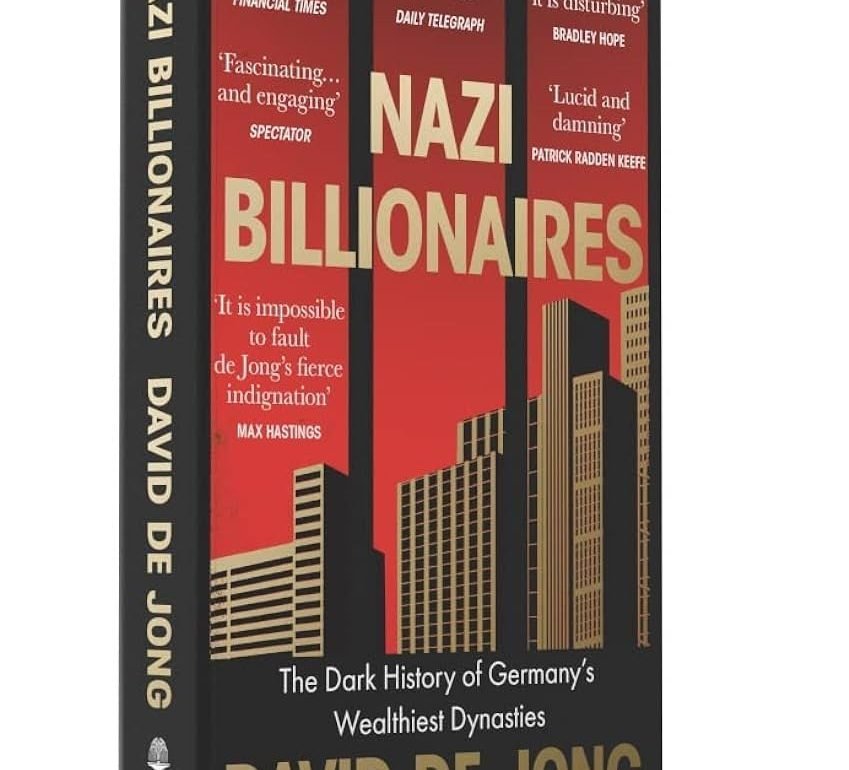
Nazi Billionaires: The Dark History of Germany’s Weathiest Dynasties by David De Jong

June 12, 2024 by Barry J. Klazura No Comments

Who were the financiers who provided the manufacturing and technical expertise which allowing Hitler and the Nazis to overrun so much of Europe and commit the Holocaust?  And, after the war, what actions if any were taken against them not only for their material support of Hitler, but also for the use of slave labor on a scale not seen since the Roman Empire?

Mr. De Jong spent four years researching this book focusing on four major German families; the Quandts, the Flicks, the von Fincks and the Porsche-Piechs.  How is it that the Krupps are so well known and yet these families contributed in so many ways to the Nazi war machine, producing tanks, guns of every caliber, ammunition, drugs, medicines and almost every other item that a nation needs for war.

Some of the named above were successful industrialists before Hitler’s rise to power, such as the Quandts while other took advantage of the “Aryanization” of Jewish businesses.  “Aryanization” was the concept that with the introduction of the Nuremberg Laws, Jews were forbidden to own factories and businesses.  In order to comply with the law, Jewish businesses were “bought out” by Germans for pennies on the dollar and then those few pennies were determined to be the cost of an exit visa from Germany as many of the Jews fled to other countries. Such theft was in itself a crime that these and other families committed but add to the list the inhuman treatment of the slave laborers and the wheels of justice should have centered on these families.  Why weren’t these families the targets of justice?

Continue reading
Share:
Reading time: 4 min
Page 1 of 81234»...Last »

Barry J. Klazura

Barry Klazura sipping grappa

With a Masters Degree in Guerrilla Warfare and Totalitarianism, Mr. Klazura was well prepped for a career in Sales and General Management, consulting on corporate startups and turnarounds as well as lecturing on history and politics.  For the past twenty years he has focused on being a financial advisor and consulting.

Delivered To Your Inbox

Sign up to get an email when a new article is published.

Topics

  • American Civil War
  • Biography
  • Book Reviews
  • Cigar Reviews
  • Coronavirus
  • Current Affairs
  • Education
  • Environment
  • Factoids
  • Government
  • Lifestyle, Cigars & More
  • Liquid Refreshments
  • Musings
  • Quips and Historical Facts
  • Society
  • Travel
  • Uncategorized
  • World War I

Subjects

book Books-Russia/Soviet Union Books 21st Century Books 1919-2000 Books Ancient to 1900 Books Asia Books Biography Books Fiction Books Germany 1919-1945 Books Pre-WWI books Viet Nam books world war I Books WW1 Books WWI Books WWII Cigar Friendly Location Amsterdam Cigar Friendly Locations-London Cigar Friendly Locations-New Orleans Cigar Friendly Locations-New York Civil War Coronavirus Environment Korean War World War I World War One

Recent Articles

At Stalin’s Side by Valentin Berezhkov

July 15, 2026
The Price of Victory by N.A.M. Rodger

The Price of Victory by N.A.M. Rodger

June 26, 2026
Frontsoldaten: The German Soldier in World War II by Stephen G. Fritz

Frontsoldaten: The German Soldier in World War II by Stephen G. Fritz

June 5, 2026
Organizer of Victory, 1943-1945, George C. Marshall by Forrest C. Pogue

Organizer of Victory, 1943-1945, George C. Marshall by Forrest C. Pogue

May 26, 2026
Illegals Released & Our Leaders

Illegals Released & Our Leaders

May 10, 2026

Inquiries and Comments

For general inquiries and comments, email AOTOHcomments@gmail.com.

Facebook
© 2020 And On The Other Hand. All rights reserved.