On The Other Hand -
Book Reviews
Lifestyle, Cigars & More
Musings
About
On The Other Hand -
  • Book Reviews
  • Lifestyle, Cigars & More
  • Musings
  • About
Book Reviews

Frontsoldaten: The German Soldier in World War II by Stephen G. Fritz

June 5, 2026 by Barry J. Klazura No Comments

It is generally acknowledged that against the Western Allies, on a man to man basis, Germans outkilled British and American troops by a factor of about fifty percent (the ratio on the Eastern Front was much higher).  How was it that an army that did not have control of the air, was outnumbered materially by large margins and was worn down by years of combat was able to not only achieve such a high kill ratio, but continue to offer effective resistance up to the closing days of the war?

In his book, Fritz begins with where it all starts; basic training and continues through dealing with how the Wehrmacht dealt with battle in all the various climates, dealing with difficulties of supply, etc.  The average German soldier was subject to the same strains (excessive combat, break down of nerves, etc.) as other soldiers, but that due to high unit cohesion, higher quality and fewer officers, and twelve years of National Socialism with its stress on the Volksgemeinschaft (national community). German youth from the age of to-14 could join the Deutsches Jungvolk (Germa Youngsters of the Hitler Youth) and then the Hitler Youth from 14-18. After that, one could go into the Labor Front or the military. Each stage was designed to inculcate the individual with their being an integral part of the national community. As a result, disobedience was seen as a hostile political act against the nation. Thus, the individual soldier believed that he was defending the nation against the aggressors of the world.  As is documented elsewhere, the average German saw themselves as the victims of the war and this helped the average German soldier to fight longer and harder to defend his community.

During basic training, bonds of comradeship were formed at the most basic level.  Hardness was stressed as “sweat saves blood” was pounded into the recruits.  And while the training was hard (and resulted in deaths), the donning of the uniform after basic training gave many soldiers a sense of esteem and self-worth which would be difficult to imagine in the British or American armies, except for elite units.  Unlike the Western allies, the top human material was not skimmed off for elite units (except for the best of the Waffen-SS units) and consequently at the very basic combat unit level, the best human material could be found to bolster the weaker members.

Constant references are made to diaries and letters from front-line soldiers and as you would expect, they are filled with the usual (and understandable) complaints about the weather or the food or the stubbornness of the enemy. They are also filled from the beginning of the war right up to the end of individuals’ inner reflections on the war and what it means to society and individuals. Many of the comments reflect an above average level of knowledge as common infantrymen examine their lives in the war from a philosophical level. Despite terrible losses in North Africa and Stalingrad, despite the merciless Allied bombing campaign and the constant retreating in the East, many soldiers continued to believe in Hitler and their National Socialistic beliefs. The interwar writings of Ernst Junger with his vision of a new society, “a new world in which the worker and soldier made one by the energy of technology and the vitalism of war” seemed to have struck a deep vein in many soldiers outlooks.

This is an excellent book for anyone interested in understanding the mindset of the average Wehrmacht soldier and will help you understand why despite six years of war and millions of casualties, the Wehrmacht was still a potent fighting force up to the end.

Share:
Reading time: 3 min
Book Reviews

Circles of Hell; the War in Italy, 1943-45 by Eric Morris

April 1, 2026 by Barry J. Klazura No Comments

Winston Churchill thought that Italy was the “soft underbelly” of Hitler’s Europe and saw a campaign in Italy as not only an opportunity to knock Italy out of the war, but to use Italy as a springboard into the Balkans where he hoped he could insert forces in front of the advancing Soviet army.  To the Allied generals however, they saw Italy as an area unsuited for the type of fast, mobile armored that the Germans could not successfully halt.  Instead, if Italy was to be invaded, the only real advantage according to the military was a new area for Allied bombers to hit Germany from a different direction.

Then the politicians and the Generals egos stepped onto the stage.  How could Italy be invaded, and Rome and the Vatican not liberated?  How could any of the Generals be satisfied with limited objectives when on the other fronts Allied armies were surging forward?  Who wanted to be stuck in a combat theater where the opportunity for promotion was limited?  And so, step by step, the original limited set of objectives were expanded as invasions of Salerno and Anzio were thought up as opportunities to by-pass the German defenders, so Italy could be conquered via a series of leap frog maneuvers.  But no one bothered to consult the Germans who poured troops into Italy and forced the Allies to fight battles that they did not want.

Reputations were made and broken as Field Marshal Montgomery quickly exited the theater to politically capture the overall command of the invasion of France.  Generals such as Clark had tarnished their reputation as they proved to be hesitant despite a glowing academic background at West Point.  In the end, it was the common soldier who had to pay the price at botched battles, river crossings, head on assaults on mountains honeycombed with defensive positions and forgotten as glory was won elsewhere.

The Italian campaign is widely forgotten, not as much as the campaign in Burma, but one must wonder if the losses in Italy were worth the effort and diversion of effort from the main theaters.  But then, there have to enough commands for all those Generals who want to be known as the victor of this town or that city.  An interesting book, especially in the last quarter where more individual stories are provided.

Share:
Reading time: 2 min
Book Reviews

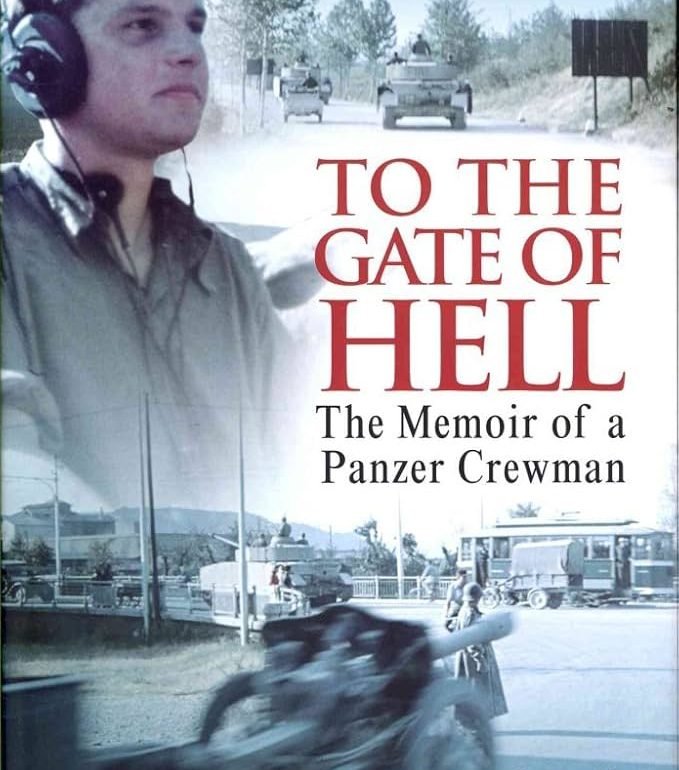
To the Gate of Hell by Armin Bottger

March 19, 2026 by Barry J. Klazura 2 Comments

I don’t believe that the author set out to create a Wehrmacht version of Catch-22, but it has come as close as any modern history of the German army to that vision of military life.  The author points out that like all militaries, the German army of WWII was full of silly rules, scams and scammers, and unfortunately, like the author, individuals who would do their best to stay out of harm’s way if someone else could pay the price. 

From the beginning, the author admits that he volunteered for the Wehrmacht so that he could achieve his Abitur without having to sit for it.  From there, he admits to becoming a radio operator in a tank as it was less work than being a driver, and lying about his health so that he could avoid being posted back to the front.

Most histories written by combat veterans stress their loyalty to their comrades, the men they served with, even their personal guilt that they survived while their friends were killed in combat while they survived.  Bottger does not come at any point close to feeling a kinship with the men in his units and that is what makes this history of interest.  No noble deeds, no comradeship, no sacrifice: nothing but his focus on himself.  In that sense he can be viewed as very contemporary, but fortunately he was not at the front enough to cost his comrades because of his focus on the self. When I finished the book I was a bit disgusted with the author and he was definately put on the list of people I would not like to have over for dinner.

Share:
Reading time: 1 min
Book Reviews

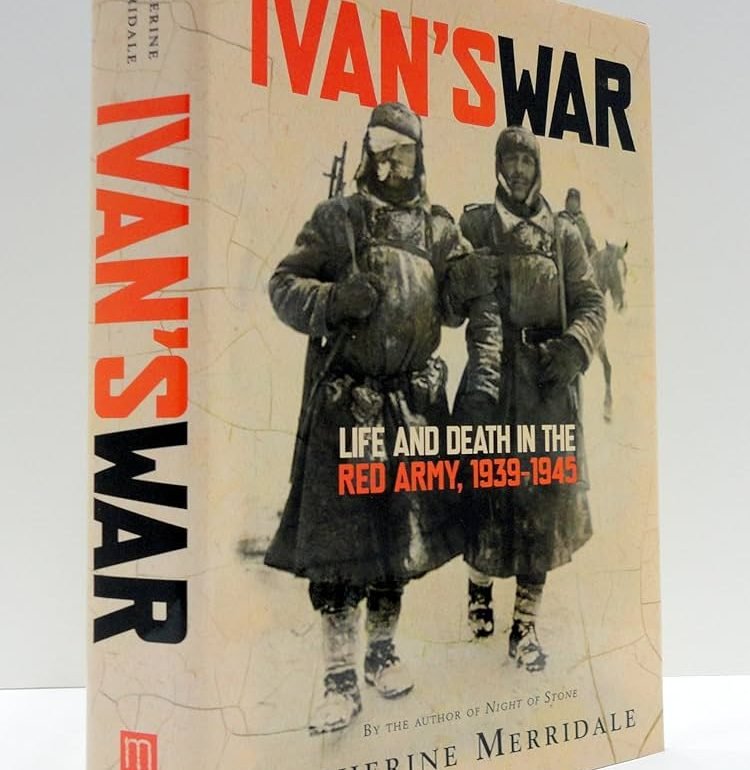
Ivan’s War, Life and Death in the Red Army, 1939-1945 by Catherine Merridale

March 10, 2026 by Barry J. Klazura No Comments

There is a popular vision of the war on the “Eastern Front” (so termed by Western historians as opposed to the “Great Patriotic War as the battle field is called by Soviet historians), that especially after the battle of Kursk, the German army was driven back by a better equipped resurgent Red Army.  The sufferings of the average Soviet soldier, especially during the first weeks after the invasion are remembered briefly but another popular image of a bedraggled German army from late 1943 through the end of the war persists.

Merridale, in this excellent book, does much to dispel the first myth (a better equipped Red Army), especially in the area of the life of the ordinary Soviet infantryman.  While it is true that once Soviet war production was brought fully on line, their ability to concentrate on one front (as opposed to the Germans who had to face battle in Western Europe, Italy, the Balkans, etc.) gave them a huge material advantage vs. the Wehrmacht.  At the sharp end of the bayonet, food shortages, worn out boots, poor medical care, an almost total lack of rotation and home leave as well as poor Generalship (charge across an undefended mine field, the losses would be the same as if there were no mine field but the Germans had protected it with machine guns) led to decreasing morale, insubordination and even a hope that once the Germans were driven off Soviet soil (as opposed to driving onto Berlin) that everyone could go home.  There was an increasing belief and hope that the sacrifices of the troops would lead to a better, easier life after the war as the people would have proven themselves capable of a better life.

She covers the subject of the general behavior of the Soviet troops, especially after leaving Soviet soil.  Wide spread rape, looting and sheer destruction, all justified as revenge for the acts of the Wehrmacht was seen even at the time as damaging to the image of the Soviet Union.  Yet, after three or more years of life at the front and the vicious propaganda  (officially approved) by writers such as Ilya Ehrenburg, the soldiers felt it was their right to degrade the Germans (and almost anyone else who fell in their clutches) with the worse punishments. Any Soviet citizens who were found in concentration camps (as prisoners) were also brutally treated as they were regarded as potential traitors (regardless of how they were captured and what they had endured).

The book also covers, to a lesser extent, the problems faced by couples who were separated for years, often within weeks after a hasty marriage. The average Soviet citizen also had a terrible war, even if they were not in German occupied territory.  Food rationing, strict security measures and the rule that any unaccounted Soviet soldier (due to death, capture, etc.) would be treated as a deserter and his family cut off from government assistance (including food coupons) left literally millions of mothers, wives and children on the verge of starvation. The readjustment to civilian life was difficult as any what we call PTSD was viewed as un-Soviet weakness and officially discounted.  That, plus the general poverty after the war, the cost of rebuilding thousands of destroyed villages and cities and a return to pre-war tight security and policing lead to the burying of bitterness and disillusionment.

Perhaps nothing puts the plight of the average Soviet soldier in perspective better than the fact that during the war, the Soviets executed over 150,000 of their own troops for desertion, cowardice, insubordination, etc.  This during a war when the U.S. executed one soldier for desertion.  There was after the war, for nearly two decades, little official recognition of the sacrifices by Soviet troops in their own land.  For decades, their sacrifices and those of their families were ignored and as the last of that generation dies out, for all their sins and foibles, they deserve a place of honor.

Share:
Reading time: 3 min
Book Reviews

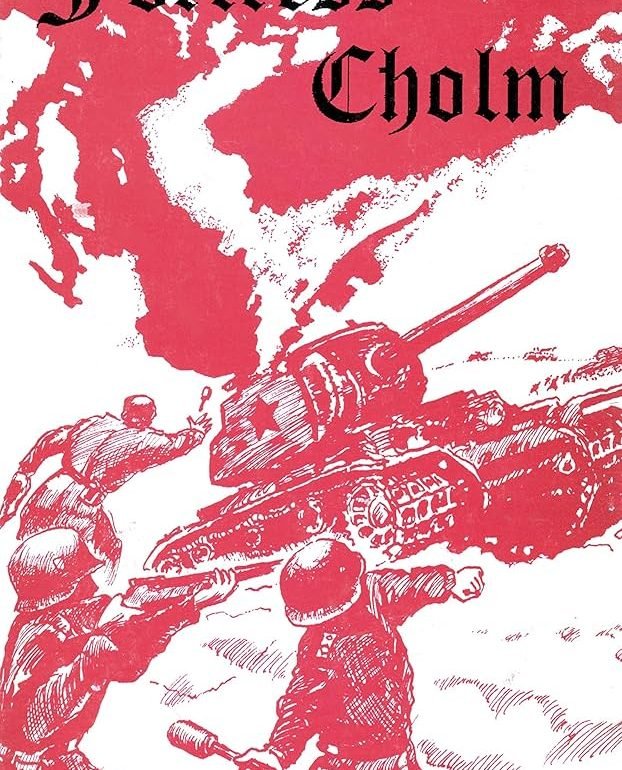
Fortress Cholm by Oskars Berro

February 2, 2026 by Barry J. Klazura No Comments

The war in Russia, from 1941-45 witnessed numerous major battles, such as Stalingrad, Kursk, Operation Bagration, etc. and even more interesting smaller battles such as the Soviet siege of German troops at Demyansk and the subject of this book, Cholm.  The author, a Latvian who fought at Cholm recounts how for 105 days (February 23 to May 5, 1942), 5500 mostly German troops were surrounded and besieged by numerous Soviet divisions.

Outnumbered, out gunned, having only 10 anti-tank guns, the garrison consisted of a mixed bag of units including non-combat units which were given guns to man the lines.  The one advantage the Germans had was that they were able to maintain contact with artillery units outside of their lines.  When the Soviets attacked, they besieged were able to call in accurate artillery fire with precision to help blunt the human wave tactics employed by the attackers.  Yet supplies were short as winter storms and fog often grounded relief supplies parachuted in by the Luftwaffe.  Ad hoc defenses were created, and the town was destroyed during the months of siege.

In the end, between (depending on the source), between 3500-4500 of the besieged were casualties (2200 were killed) while the Soviets lost an estimated 20,000 troops.

This is a short book, easy to read and will give the average reader a good idea of the battle from the level of the men on the ground.  It does not dwell on the real agonies of the battle, such as the dirt and lice, the thousands of wounded crammed into the buildings which were specifically targeted by Soviet artillery, nor the sufferings of the Soviet troops who had little if any shelter as they attacked again and again over the same ground, so well registered by the German artillery.  This battle, insignificant in the history of that campaign will fade from memory, will be a footnote in its history in another 50 years, and yet it was a time of terror, death and bravery for thousands who will forever be nameless.

Share:
Reading time: 1 min
Book Reviews, Society

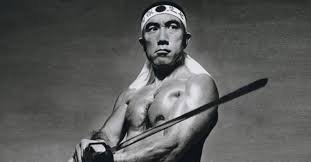
The Sailor Who Fell From Grace With the Sea by Yukio Mishima

January 25, 2026 by Barry J. Klazura No Comments

I first read this novel over forty years ago and although I did not recall the exact plot, I remembered that as I finished it, I put it aside vowing to never read another of Mishima’s’ works. My fear was that having read one more, I might have to devour his extensive list of works, a bit like an old friend who refused to purchase on Judy Collins record (that shows how long ago that was), as then he would have to purchase them all.

A very good friend presented me with a copy of this work for my birthday, and it was with a mixture of excitement and trepidation that I began to read it. The story itself seems to be simple; it centers around a widow, a sailor she meets, her young teenage son and the circle of his friends.  Filled with a subtle sensuality (as you would expect when you consider the author), it tells a story of how the son, and his friends reflect a form of nihilism that Mishima believed was part of the Japanese post-war character. The “tribe” of boys looked down on society, the family and anyone who was not in their “enlightened” circle. They were superior, above all the bourgeois values and norms and were determined to create their own world. Mashima also rejected Japan’s new materialism, democracy and flirtation with communism.

The book traces the young son’s disillusionment with the sailor who is courting his mother and the betrayal by the sailor when he decides to give up his life at sea and marry the boys’ mother. That action is a betrayal of the boys (not the sailors) sense of superiority, and the group of boys believe they must “punish” the sailor, or they will not be true to their sense of themselves.

As I finished the short novel, I felt the same sense of amazement at the power of Mishima’s writing. I slowly closed the book, put if my lap and let the last two paragraphs sink into my mind. The power that the book projected so many years ago was still there, as strong as ever. It is a book that dares to look at the dark side of disillusioned youth.

Mashima was one of Japan’s premier authors during the 1960’s. His novels were nominated five times for the Nobel Prize for literature, but he is probably best remembered for his dramatic action at Japan’s West Point in Tokyo in 1970. There, with some of his personal self-defense force, he seized a main building, captured the commandant and harangued the gathering cadets to throw off the new Japanese values of materialism, democracy, etc. and to recapture Japan’s sense of “national essence” including  Emperor worship or all of Japan would end up as a “rootless people”.  Failing to rally the cadets, he committed seppuku and had his second cut off his head as prescribed in the ceremony. He was forty-five years old.

What place did he hold in the minds of the Japanese youth of that time? In my previous lifetime I worked at Panasonics headquarters in Secaucus New Jersey.  One of the photos I kept displayed was of Mishima haranguing the cadets on that day in 1970. None of the older Japanese commented on the photo in my office, but the younger generation were more open in their comments, and I found it interesting that a simple photo could pierce the normal Japanese self-containment and lead to an openness that was so rewarding.

Read this book at your own peri or sense of excitement. The term you use after the reading may tell you something of yourself.

Share:
Reading time: 3 min
Book Reviews

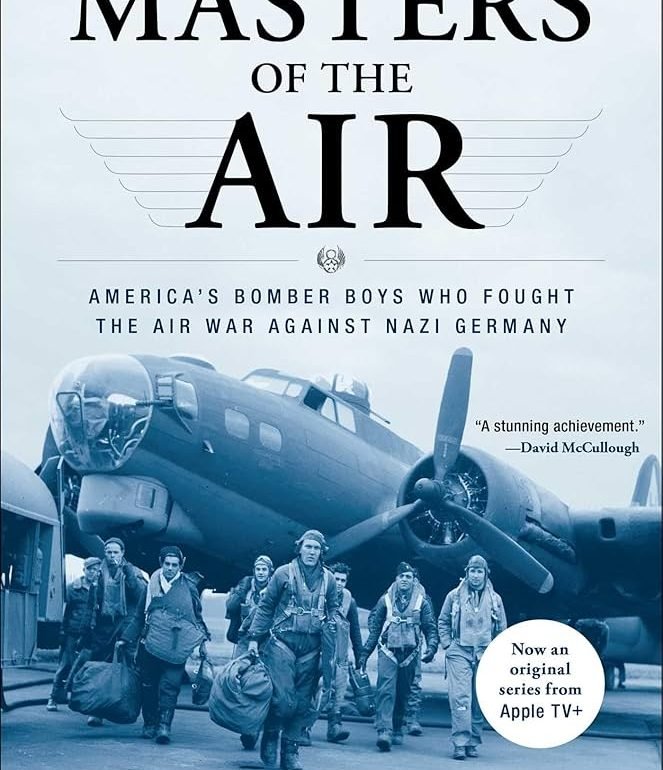
Masters of the Air: American Bomber Boys Who Fought the Air War Against Nazi Germany by Donald L. Miller

January 11, 2026 by Barry J. Klazura No Comments

I must admit that I failed (twice) to “get into” the series “Masters of the Air,” in fact I only watched two or three episodes before turning it off. The main problem was that compared to “Band of Brothers” and “The Pacific,” the characters seemed shallow and there was too much time spend on the drinking and almost childish actions between missions. After reading this book, I shall make it a point to watch the television series through to the end.

The book, “Masters of the Air” is a brilliant, gripping history of the American air effort against the Luftwaffe from 1942 though to final victory in 1945. The author takes us on a step by step path as the American air effort is slowly built up, as theories of air warfare are tested and as the initial aircrews in the struggle are sacrificed time and time again on raids that often serve no tactical or strategic purpose.

Prior to the arrival of the Americans, the British had gone through a long and painful campaign of attempting to bomb key targets in German occupied Europe. The Brits had suffered serious losses during the initial campaign against the German invasion of France and wanted to strike back at Germany as the Luftwaffe began their bombing of British cities. The Germans and the British both learned that daylight bombing was too expensive. Despite the pre-war theory of Italian air commander General Giulio Douhet that the bomber will always get through, the cost of such a policy was too heavy, and the results were too meager. The British thus moved to night bombing which produced its’ own problems, one being faulty navigation. Originally the British bombers tried to follow the lights from rail lines and highways which only got them to the British coast, then after that many bombers were fortunate to find the European continent let alone their primary military objective. Thanks to a technological breakthrough, the British were finally able to at least get to the vicinity of their target but under the direction of Arthur Harris the concept of area bombing was developed. Under this theory, Harris hoped to “un-house” German workers and civilians and break the back of German morale. Why the Germans should break when the British civilian morale did not must not have been asked.

The Americans with their heavily gunned B-17s and B-24 bombers and their precision Norden bombsight set out to confirm Douhets’ theory while at the same time destroy the key German war industries. Thus, began around the clock bombing, the British by night, the Americans by day. The only problem was that while the ten-thousand dollar bombsite worked in perfect conditions, in reality with clear days over much of the continent limited to one day out of three, flak jarring the planes, and German fighters closing on the bombers at a combined speed of five-hundred-miles-per-hour, only one bomb in ten landed within five-hundred feet of the target. Added to this was the severe loss rate of raids in which ten, twenty, even forty percent of the bombers were destroy or badly damaged.

Through trial and error for over a year the Americans took heavy casualties, and Miller provides a fascinating section on how the medial teams approached battle fatigue, shell shock and morale problems which threatened to destroy the American effort. One great problem was that with the hostile elements, the randomness of the flak and the determination of the German defenders, many crews felt an extreme sense of helplessness regarding their lives. Rest homes, special meals, more breaks in the early days helped to keep the bombing effort on track despite the dispersal of bombing effort. Miller does a wonderful job of making the reader understand the strain of flying a mission; hours in the air where the temperature can be -60 degrees, where taking off a glove for even a minute can lead to first bite, the jarring of the plane as it flies through hundreds of miles of flak, each shell capable of destroying a bomber, of being wounded during the flight and the slim chance of survival in the terrible cold and then the return to the base which so many empty beds stare at the survivors, knowing that the next day the same drama will be presented to the survivors.  In fact, during the early days until the back of the Luftwaffe was broken, the chance of surviving twenty-five missions (at which point a crew member would be rotated back to the U.S.), stood at 1 in 4. As late as the three months leading up to D-Day, the Eighth Air Force lost fifty percent of their bombers, as the Germans had concentrated over 13,000 heavy anti-aircraft guns along the bombing routes. While it took about 8,500 rounds from the newest German guns to bring down a bomber, flak still accounted to over 40 percent of the wounds suffered during the air campaign and flak took down more planes than the Luftwaffe.

The book is filled with descriptions of bravery of young men, often twenty-one years old, who stepped into manhood by feats of bravery equal to the brave young men in the infantry, armor, navy, etc. There was no glory in this war; it was a battle of attrition between two industrial powers who fed machines and bodies into its’ maw until one or the other bled to death. Fortunately for us, it was the German’s who bled faster.

Despite its’ size (over 500 pages before footnotes), it is a fast read; beautifully written and providing insight into the questions the intelligent reader will be mentally asking.  Well done and I look forward to giving another chance for the series; I hope it lives up to this excellent work.


Share:
Reading time: 4 min
Book Reviews

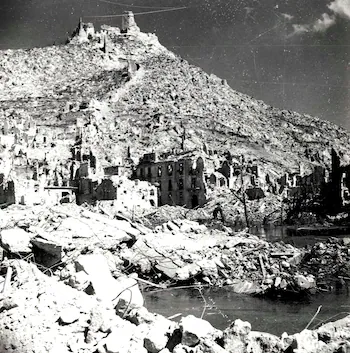
Cassino’44: Five Months of Hell in Italy by James Holland

December 12, 2025 by Barry J. Klazura No Comments

Not as well known in the U.S. as in the U.K., James Holland only became interested in World War II in 1995 when he saw a Spitfire for the first time. Since then, he has written over a dozen books about World War II (mostly about the western European Theater) as well as a good dozen fictional books. I recently saw him give a talk on one of his works and his enthusiasm for the subject was amazing, but not as amazing as his discussions with actual veterans, their diaries and letters and their families that he interviewed for his books. It is clear that he absorbs his firsthand resources and pours them into his books, making each little story an integral part of the whole.

This is the first of Mr. Holland’s books that I have read, and it is a very heavy book; heavy in the sense that the detail is dense and this can be a challenge for the deletant or novice reader. I do believe, however, that it is worth the effort as one comes to understanding the tactical and strategic side of war, not to mention the other forces that drive the commanders and those at the sharp end of the bayonet. Politics, ego, self-satisfaction revenge, anger and fear, are all found in the many personalities noted in this volume. Generals are disappointed and sacked, enlisted men suffer from lack of food, medical care, proper equipment and munitions and sorrow as they are amazed to survive when they see their best friends vaporized by artillery while just a step away. This excellent treatment of a theater of the war which is often neglected gives those who fought their moment of appreciation.

There were several armies that fought in the campaign: American, British, French, Polish and German. Each faced their own challenges, each had their own advantages. The overwhelming material strength of the Allies determined the outcome of the battles as repeatedly the Germans were a battalion short at a key place or were decimated by the Allied air superiority. As usual, the Germans managed to scrape together ad hoc battle groups made up of survivors of multiple divisions or regiments. Those ad hoc groups punched far beyond their class, and they were a tribute to the methods of the Wehrmacht, but in the end, it was the citizen soldier, the men who came from the farms, factories, small shops, etc. who won the day. Not for glory, but because the job had to be done.

One thing that the author does that puts a real seal of approval on this book for me, is his excellent Postscript. In that section, he provides a scholarly and professional analysis of some of the key commanders, pointing out key errors, assumptions, fears, and egos that impacted the battle. An excellent example is his comments on Field Marshal Albert Kesselring who managed to exit the war with a reputation that glossed over his command participation of various war crimes. Often presented as a Luftwaffe officer who managed to successfully transition to a Wehrmacht combat commander. Holland points out numerous tactical errors committed by Kesselring, his deadly adherence to Hitler’s orders to fight for every meter of ground, wrongful obsession with Allied strategic strategy and failure of any strategic strategy. His arguments are convincing and he offers similar comments on Generals Lucas, Clark, and others.

Warning! If you do enjoy this volume, you may be hooked on moving forward with some of this other dozen or so campaign books, but that is an addiction that anyone interested in good history reading will enjoy!

Share:
Reading time: 3 min
Book Reviews

The Dynamics of Military Revolution, 1300-2050 edited by Macgregor Knox (The London School of Economics and Political Science) and Williamson Murray (Institute for Defense Analyses)

November 30, 2025 by Barry J. Klazura No Comments

One of the pleasant things about New Orleans is that you can spend hours in used bookstores, shifting through volumes which reflect the mind set of the locals. I have found a number of gems over the years, and this last trip enabled me to find this excellent volume on RMA (revolutions in military affairs). I have to admit that I had never heard of the book (originally published in 2001 while the volume I found was from its seventh printing in 2008. The last printing was in 2015), but it is a find that I shall keep close. The contributors range from professors of history to the Director of Royal Artillery, British Army. This is short (less than two-hundred pages) but serious book.

According to their thesis, there have been five military revolutions in Western history:

  1. The creation of the modern nation state which brought about the discipline of military power.
  2. The French Revolution which “merged mass politics and warfare.”
  3. The Industrial Revolution which made the nation states to pay, feed, cloth, and arm masses of manpower.
  4. The First World War which merged numbers 2 and 3 while “set(ting) the pattern for twentieth-century war, and
  5. The Cold War which was cold in the “decisive European and northeast Asian theaters.”

These five RMAs are more important than any momentary tactical advantage (such as the superior use by the Germans of tanks vs. the French use in May 1940). They are more important as they completely change how war is fought across all theaters involved.

Moving into the book, there are separate studies regarding the Western army in seventeenth-century France, the impact of the French Revolution with it dramatic introduction of the mass army, the U.S. Civil war, the Prusso-German RMA of 1840-1871, the Battlefleet revolution of 1885-1914 under the direction of First Sea Lord Jackie Fisher, and of course the First and Second World War.

One might be tempted to ask about the current war in Ukraine and the impact of drones on the battlefield. I believe the authors would not say that drones are a real RMA as they would fall into the category of say, the introduction of the tank in World War I. Yes, they do make an impact, but the initial monopoly by one side was quickly lost and, in many ways, it mirrors the technological battle that was fought during the Battle of the Atlantic.

The writing is decidedly not academic: each section is sharp and well argued with a minimum of excess verbiage. The writing is tight and the average armchair military historian could easily grasp the ideas put forth in each section.

Share:
Reading time: 2 min
Book Reviews

India at War: the Subcontinent and the Second World War by Yasmin Khan

November 14, 2025 by Barry J. Klazura No Comments

A very interesting book that does not focus on the actions of the Indians who served in either the British or Free India movement of Subhas Chandra Bose, but rather on how the war impacted much of India as it was drafted into the struggle first against Germany, then against Japan.  It traces the initial reaction of both the Brits in India who managed for quite a while to maintain their colonial stature and the men from India who “volunteered” for service (some for historical reasons as they were from traditional “warrior” cultures while others enlisted for better food or to protect their families businesses from special war taxes).  As the war progressed and as more of India was mobilized for the effort and especially with the advance of Japanese forces into Burma, food shortages began to appear for a myriad of reasons and a huge migration began as individuals both on a voluntary and on an enforced basis were moved from potential invasion locations.

The book also has an excellent discussion on how the traditional leaders of Indian independence were marginalized after they were arrested and jailed by the British.  While the British thought such an action would calm India, the exact opposite occurred as the younger generation, not policed by the traditional leaders, began a campaign of strikes, marches and violence against the British.

I would have liked to have had move of the movement by Bose covered, but overall this is an excellent book for anyone unfamiliar with the subject and will provide a good basis for future reading.  A major fault lies in the lack of maps as for most people, reading about various Indian provinces and towns will be as confusing as reading about the same in the Ukraine.

Share:
Reading time: 1 min
Page 1 of 131234»10...Last »

Barry J. Klazura

Barry Klazura sipping grappa

With a Masters Degree in Guerrilla Warfare and Totalitarianism, Mr. Klazura was well prepped for a career in Sales and General Management, consulting on corporate startups and turnarounds as well as lecturing on history and politics.  For the past twenty years he has focused on being a financial advisor and consulting.

Delivered To Your Inbox

Sign up to get an email when a new article is published.

Topics

  • American Civil War
  • Biography
  • Book Reviews
  • Cigar Reviews
  • Coronavirus
  • Current Affairs
  • Education
  • Environment
  • Factoids
  • Government
  • Lifestyle, Cigars & More
  • Liquid Refreshments
  • Musings
  • Quips and Historical Facts
  • Society
  • Travel
  • Uncategorized
  • World War I

Subjects

book Books-Russia/Soviet Union Books 21st Century Books 1919-2000 Books Ancient to 1900 Books Asia Books Biography Books Fiction Books Germany 1919-1945 Books Pre-WWI books Viet Nam books world war I Books WW1 Books WWI Books WWII Cigar Friendly Location Amsterdam Cigar Friendly Locations-London Cigar Friendly Locations-New Orleans Cigar Friendly Locations-New York Civil War Coronavirus Environment Korean War World War I World War One

Recent Articles

At Stalin’s Side by Valentin Berezhkov

July 15, 2026
The Price of Victory by N.A.M. Rodger

The Price of Victory by N.A.M. Rodger

June 26, 2026
Frontsoldaten: The German Soldier in World War II by Stephen G. Fritz

Frontsoldaten: The German Soldier in World War II by Stephen G. Fritz

June 5, 2026
Organizer of Victory, 1943-1945, George C. Marshall by Forrest C. Pogue

Organizer of Victory, 1943-1945, George C. Marshall by Forrest C. Pogue

May 26, 2026
Illegals Released & Our Leaders

Illegals Released & Our Leaders

May 10, 2026

Inquiries and Comments

For general inquiries and comments, email AOTOHcomments@gmail.com.

Facebook
© 2020 And On The Other Hand. All rights reserved.