On The Other Hand -
Book Reviews
Lifestyle, Cigars & More
Musings
About
On The Other Hand -
  • Book Reviews
  • Lifestyle, Cigars & More
  • Musings
  • About
Book Reviews

Gotterdammerung 1945: Germany’s Last Stand in the East by Russ Schneider

August 20, 2025 by Barry J. Klazura No Comments

Although in recent years, more histories of the battles on the Eastern Front during World War II have been published, it is the landings in Normandy that still hold most Western Europeans and Americans attention and interest. Indeed, even the name “Eastern Front” reflects the prejudice of Western historians, for most certainly that name was never used by either the Soviets or those Europeans who fought in that area of Europe and the then Soviet Union. The lack of general knowledge can be considered amazing as the German military suffered ninety percent of its casualties in that theater of operations. It was the Soviet military and more importantly, Stalin who was willing to accept the huge losses throughout the war to insure victory.

It can be difficult to appreciate the size of the battles in the east, but a comparison does show that no battles in western Europe after the Normandy invasion comes close to the size of the final battles in the east. The invasion of Normandy and the following ten weeks ended costing the Allies about 209,000 casualties vs 276,000 German. The Battle of the Bulge in forty-one days totaled for both sides almost 200,000 men killed, wounded or missing. Market Garden was a small business with losses totaling about 25,000 (to put it in perspective, during the battle for Stalingrad, the Soviets executed about 12,000 of their own men for desertion, cowardice, etc.)  The battles covered in this book in the period of January-May 1945 resulted in a million Germans and one and a half million Soviet losses. Two and a half million men killed, wounded or missing. Many of those men were killed when their fuel and ammunition ran out and they stood practically disarmed, often little more than a militarized mob, spent after six years of battle.

In action after action, German troops fought and delayed the Soviets in desperate battles against huge odds. Often outnumbered up to ten to one, the Germans delayed their enemy so civilians could try to reach the zones the American or British occupied. Civilians fled in freezing weather and had to camp in bare fields while being attacked by Soviet war planes. The book covers dozens of actions where officers and men sacrificed themselves in often vain attempts to save their compatriots. The Soviets, urged on by Stalin and their officers, raped, burned, and crucified tens of thousands of German civilians.

Unfortunately, the average reader will not think of the Soviet civilians who fled from the Germans in 1941 and after. Nor will they fully understand the terror of living under German occupation when hundreds of thousands were rounded up for slave labor or mass executions. It was likely that a huge proportion of the Soviet soldiers showing no mercy to the fleeing Germans had family members who had lived and suffered under the German occupation and had lost members of their families. Was the revenge meted out to the Germans fair, or justified? Unfortunately, because of the how the Soviet system worked, few common Soviet soldiers left written records as was the case with the Germans.

In the end, the battles came down to desperate Germans and Soviets, driven on by a sense of duty, fear of capture, the hunt for glory from their officers and tactics which was the only option at a time when everyone wanted the war to stop.  Battles create mountains of dead, but when at the very end, one side is out of ammunition and has no opportunity to escape, and the killing continues at an industrial rate, there is nothing but murder.

It is easy to understand how, after the war, many Germans viewed themselves as victims. They were pounded from the air, night after night. Their armies were torn apart and slaughtered at a rate which towered about the four terrible years of the First World War. Their cities were destroyed, hundreds of thousands of their women raped and hundreds of thousands of their soldiers were simply wiped off the face of the Earth. Yet, their terrible experiences were the result of one simple fact; they started the war, their intended victims finished it.

Share:
Reading time: 3 min
Book Reviews

The Long March: The True History of Communist China’s Founding Myth by Sun Shuyun

August 5, 2025 by Barry J. Klazura No Comments

Recorded history is often made up of one part truth, one part perception, one part myth. One of the great human stories of the 20th century was The Long March, when hundreds of thousands of Communist soldiers with their leaders marched thousands of miles of often arid and empty land, pursued by Chiang Kai-shek and his army. In the end, after suffering eighty percent casualties, the Communist army found shelter far from the cities of China, cut off from an aid from the Soviet Union and facing another enemy, the Japanese army.

The march has been the subject of numerous plays, movies, books, and interviews with the majority of each adhering to the official party line which has become the touchstone of truth for decades. This book offers something new as the author, who was born in Communist China, actually travelled the actual route of the long march. Along the way, she manages to speak with individuals who were actually on the march and who participated in the battles and challenges of the march.

There is no doubt that the march was historic and required bravery and dedication. The survivors of the march when interviewed still show much of the youthful enthusiasm which helped them to survive the march. It was that enthusiasm which enabled them to meet their recruitment quotas for the army as it was that enthusiasm which kept them going in the harshest segments, such as through Tibet. Despite the idea that the Party would free the people from the grip of the warlords and big landowners, it was the Party and its army which descended on each location and demanded food from the locals. Of course, the Party “paid” for the food (in many instances) by giving an IOU, but in some areas, the demand for food stripped the land clean and left the locals without any grain for the next year’s crop.

The most inspiring chapter of the book was the one which focused on the role that women played during the march. Although they only made a small percentage of the total, they provided examples of bravery and stamina that shamed and drove the men to continue. They were instrumental in recruiting new recruits for the army, occasionally using their charms to achieve their quotas. Yet, they were valued and protected by the leaders of the march by keeping making sure that they were not to be molested. Yet, there were instances where certain leaders of the Party were allowed to take their pick of the women to “help” them with their duties. It was clear however, that the women who knew they were viewed as the weaker sex, set a high standard for themselves in the ability to march, handle weapons and persevere through the worse weeks of hunger while still providing the traditional soft touch to the wounded and dying.

The author, as she interviewed the survivors, found that their memories of certain actions did not line up with the official descriptions of certain battles and actions. Politics as usual plays a large part in the creation of history and this is especially true when a story is a key building block in a regime that discourages counter interpretations. She walks a fine line very carefully but her chapter on the “Legion of Death” shows the level of politics which existed even at that early stage of the Chinese Communist Party.

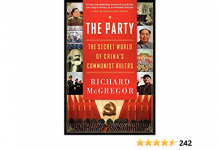
As the participants of any historical period pass on, we lose the ability to learn fine points of history and we are fortunate in this book that the author allows us to enter the mind set and memories of those who were on the march. Coupled with Mao, the Unknown Story by Jung Chang & Jon Halliday and The Private Life of Chairman Mao by Dr. Li Zhisui as well as The Party: the Secret World of China’s Rulers by Richard McGregor, we are able to peer behind the curtain that seeks to protect and shelter this totalitarian regime.

Share:
Reading time: 3 min
Book Reviews

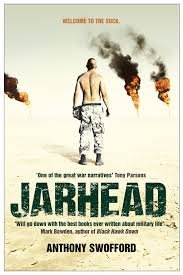
Jarhead, a Marine’s Chronicle of the Gulf War and Other Battles by Anthony Swofford

July 14, 2025 by Barry J. Klazura No Comments

This book could have been written by two different authors; the first half written and an immature, foul mouthed childish young man who might impress a thirteen-year old boy, while the second half was written by a young man who came from a family poor background, who is seeking in the Marines a home and cause and who decides to shape up as he is thrust into an actual war situation. The man who wrote the first half is as far from the ideal American soldier that one can image while the second half author is a creditable work in progress.

The book is both boring (in the first half) and interesting (in the second) as the author slowly matures and realizes that despite typical military B.S., there is a rhyme and reason to the military way of doing things. He is proud to be a Marine and his specialty (recon and sniper) and he matures much faster as he and his unit are sent out in the first phase of Operation Desert Storm. Later in life, he matures further as he runs across former members of his unit who have not matured and who live a life filled with made up fantasies fueled by alcohol and drugs.

There is no possible way that I would want to have dinner with the author of the first half of the book, but there would be an opportunity to enjoy a meal with the second-half author as he comes from a world far removed from the American ideal. As military history  it has little to offer, but as personal development it has some merit.  I would not, however, mark this as a book worth reading a second time.

Share:
Reading time: 1 min
Book Reviews

Against all Odds: A True Story of Ultimate Courage and Survival in World War II by Alex Kershaw

July 13, 2025 by Barry J. Klazura No Comments

At the end of the Second World War, German Field-Marshal Albert Kesselring whose troops fought both British and American troops in Italy and Western Europe, was asked “What was the best American division faced by troops under your command on either the Italian or Western Fronts?”. Without hesitation he said, “The Marne men.”

Who were the “Marne men?”  They were the men of the U.S. Army’s 3rd Division. They won more medals than any other infantry division in Europe and within its ranks were at least one of every U.S. medal, including the Medal of Honor; some medals were won by those two men as many as three times. Their names were Audie Murphy Maurice Britt. Both men received major wounds, and Murphy would have the more public but also more troubled private lives. Here is a list of medals won by Murphy: * Medal of Honor *2- Silver Stars * 3-Bronze Stars * Distinguished Service Cross *3-Purple Hearts. In total, the “Marne” division won more than one-fourth of all Medals of Honor won by the ground forces, an amazing accomplishment. The winning of medals helped determine when the serviceman was able to go home and at the end of the war, who could be discharged and in what order.

The book follows a number of individuals from the divisions landing in French North Africa, through the battles in Sicily and Italy, including Anzio plus the landing in the south of France through the final battles in the Colmar pocket. While Army psychologists thought that the “breaking point” of an infantryman was two-hundred days of continual combat, many of the men of the division were in continuous battles for over four-hundred days, and the survival rates was about seven percent.

Kershaw continues his excellent writing in that while he describes the overall strategic scope of the battles, focuses on the lives of the men at the most basic level. He has obviously taken great care in doing his research, in his interviews and writing to bring the men, both high and low to life. Their stories and exploits put modern day movies and stories to shame, for these were real individuals taking huge risks in order to lead their men and insure that as many of them would return home at wars end. It is a shame that young boys of today watch silly comic book heroes in movies instead of learning about real bravery as exhibited by men of their great grandfathers and grandfathers’ generations. It is hard to say anything positive about war, but to see the bravery and selflessness of the men in this book makes one realize the amazing ability of ordinary men to do extraordinary deeds.

Share:
Reading time: 2 min
Book Reviews

The Storm on our Shores by Mark Obmascik

May 27, 2025 by Barry J. Klazura No Comments

In June 1942, for the first time since the war of 1812, the United States was invaded.  Invaded in an area where few Americans had ever been, on an island that even fewer Americans had ever heard of, but it was an invasion which had to be faced. 

To mislead American forces from the main Japanese thrust in the Central Pacific, Japanese forces landed on the island of Attu, an island at the extreme end of the Aleutian Island chain.  The island that held no tactical or strategic value, was racked by one hundred mile and hour winds that thundered down from the mountains and had an average of ten days of sun a year.  Wet, cold and remote, tens of thousands of men would meet each other in mortal combat for not valid reason.

Beyond the battle however, this is a story about two men, one Japanese, one American.  The men met in a split second, one killed the other, but their lives were forever bound by their love of America and duty to their native land. 

Paul Nobuo Tatsuguchi was the son of Japanese Seventh Day Adventists who studied medicine in the United States and who came to love the country.  The size, freedom, opportunity all promised all that he could wish and when he met a beautiful Japanese student, he married and began a family.  Life was not to allow him to enjoy his opportunity however, as he and his little family travelled back to Japan in a successful attempt to free one of his sisters from prostitution to which she had been sold by the family’s elder brother during the worse days of the Depression.  Then, Tatsuguchi was drafted into the Imperial Japanese Army (though he was mistrusted so much that he was the only doctor in the Army who was not an officer).  Shipped to Attu with the invasion forces, Tatsuguchi was cut off from the world he loved and was subjected, as were all Japanese troops, to constant propaganda regarding the glories of Japan and his duty to the Emperor.

Dick Laird escaped the poverty of Appalachia by joining the U.S. Army where for the first time he had three meals a day, regular pay and a clean place to sleep.  He met, impregnated and left a girl but during the war, he matured, went back and married her but he still had to pay his debt and fight his battles in the Pacific.  One early morning, with a thick fog all around and in the middle of a Japanese suicide attack, Dick accidently killed a comrade and then killed Tatsuguchi.

Dick never really recovered from the battles he fought (he won the Bronze and Silver Star medals) and Tatsuguchi had left behind a diary which was circulated widely by U.S. troops even though it went against the image built up during the war which showed the Japanese are a deadly, sneaky crazy enemy who had no human feelings. 

Many years later, Dick managed to find the family of Tatsuguchi and told them how he had killed their father/husband. How both sides faced the truth and what they learned is a great story.  And, this book also brings out the sacrifices of the men of both sides who fought in one of the most hellish places on earth, in a campaign that produced the highest percentage of American to Japanese causalities until the battle of Okinawa. 

This is a fine read, both for the military historian and for more personal aspects.  Highly recommended.

Share:
Reading time: 3 min
Book Reviews, Government, Society

Freedom’s Forge: How American Business Produced Victory in WWII by Arthur Herman

April 28, 2025 by Barry J. Klazura No Comments

This is the story of how American business, which is the American people came together to produce the best equipped military in the history of the world.  The book has two key players; not FDR, not Eisenhower, not even Marshall, but two Americans, one a first generation American, the second, an immigrant who helped to focus and force American industry at a time of national peril. 

The first was Henry Kaiser, first generation American who through his drive and skills was the driving force behind such pre-war projects as Boulder and Grand Coulee dams, as well as thousands of miles of paved roads as the country was getting behind the wheel of their new cars.  His vision of what he could do enabled him to move into ship building, but his skill was not just in being able to successfully move from industry to industry (during the war he would build ships, airplanes, etc.) but in finding ways to mass produce them in record time.  An example is his work building the Liberty Ships which helped to defeat Germany in the Battle of the Atlantic.  When given a contract to build ships, he also had to build his own shipyards, as well as recruit workers and provide housing for them.  The workers came from every facet of American life; they were teachers, hairdressers, farmers, students, housewives, etc. and they all had to be taught how to handle tools, cut sheet metal, maintain equipment, order parts, inventory those parts, supervise production lines, etc.  All from scratch.  And he did it so successfully that a ship which use to take 200+ days to produce were coming down the waterways at one every 15-20 days.

The other main character in this excellent book is William Knudsen, a Danish immigrant (he landed in the U.S. before his teens) who not only revolutionized the production facilities of Henry Ford, but also was the driving force behind General Motors which he managed to be built to a point where it surpassed the production of his old boss, Henry Ford.  Knudsen was the type of production man who could look at a production problem and, in his mind, reconfigure the entire process to speed up production and better quality.  In recognition of his skills, he was the only civilian in the history of the U.S. to be made a Lieutenant General in the military.

But this is also the story of the average Americans who not only worked at the huge war plants but created tens of thousands of businesses to support the war effort.  An excellent example is Ma and Pa Harrington in Rockford Illinois.  Their specialty was making machine tools for turning artillery shells and tank turrets.  When they realized that a new lathe would cost four thousand dollars, they made their own out of a junked lather, an old washing machine motor, and oil pump from a 1926 Chevrolet and an old washtub that caught the oil that leaked from the bottom of the home-made tool, all in their living room!  This is an example of American ingenuity which was not found anywhere else in the world and which contributed so much to the war effort.

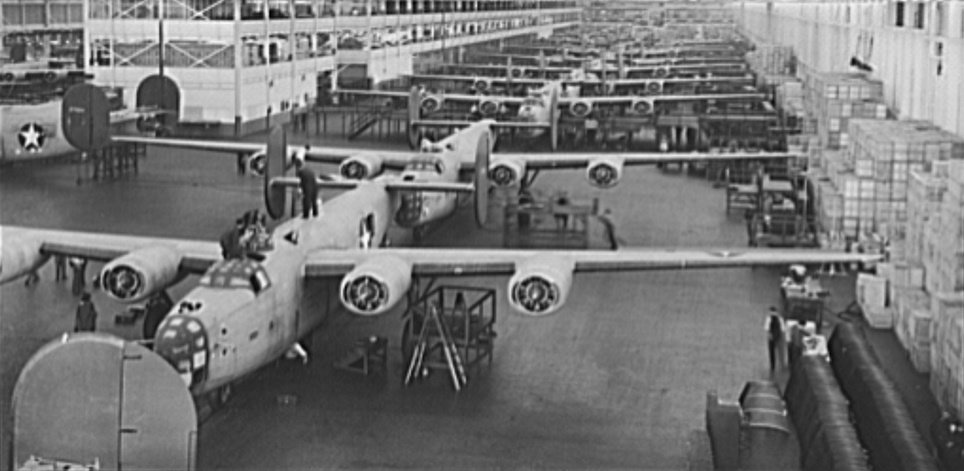
In the days before the internet, social media, faxes, computers, even a reliable nationwide telephone system, we would able to design, order, produce, ship, inventory and assemble the 55,000 parts for a bomber, all in record numbers.  That ability won the war as surely as the men on the front line, and despite the best efforts of the New Dealers in Washington who wanted to direct all production centrally, as occurred in Nazi Germany. 

This is an inspiration book, of interest to anyone interested in production, or wishing to read a book about what the country was capable of during those dark hours.  Is the country, are our people still able to pull together in such a desperate time?  That is for you to determine.

Share:
Reading time: 3 min
Book Reviews

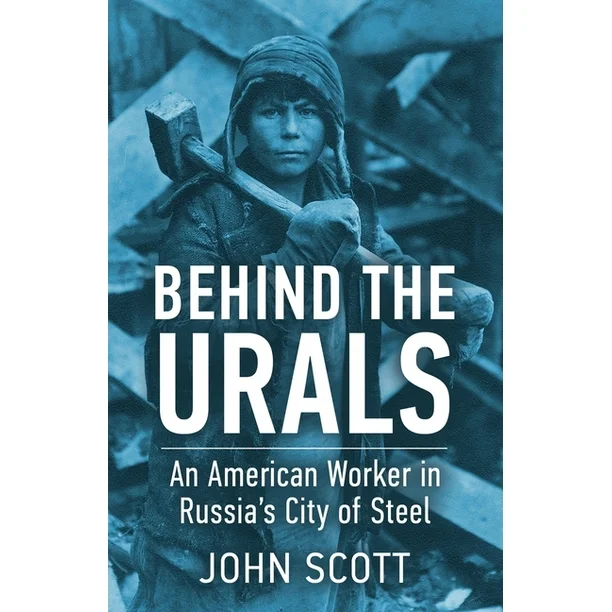
Behind the Urals: An American Worker in Russia’s City of Steel by John Scott

January 30, 2025 by Barry J. Klazura No Comments

During the Great Depression, thousands of Americans went to work in the Soviet Union which seemed to hold the answer to the failed policies of Capitalism. Stalin’s demand that electrification be brought to every corner of the Soviet Union meant that dams, railroads, in fact, all the basics of a modern industrial state be built in record time. In order to do this, Stalin made agreements with major U.S. firms, such as Ford, G.E., etc for entire factories including their key workers. U.S. citizens were promised good working conditions, housing, etc. on multi-year contracts to provide the managerial and technical expertise to complete and help manage those projects. Other thousands of Americans signed contracts to work in the Soviet Union on various projects. The history of this migration is told in an excellent book by Tim Tzovliadis, The Forsaken. In his book, he describes how they had to surrender their U.S. passports and for thousands, it meant they could not leave the Soviet Union. As Stalin’s projects were completed, or his paranoia increased, many were arrested and sent to various prisons and gulags.

Scott’s book gives us a ground level view of the living and working conditions at the steel city of Magnitogorsk. That city, built literally in the middle of nowhere, was sited there due to the proximity of the raw materials needed for the production of steel. Unpaved streets, lack of sewers, communal living with poor food, extremes in weather, lack of proper clothing, tools and no safety procedures give us an image of a wild west town which fought against nature and man’s stupidity rather than against rampaging Indians. Yet, people flocked to the area for work and because they believed they could be instrumental in building a better, freer, more equal world. Their idealism is wonderful to see, but also sad as what they are doing is helping to build a totalitarian state which would slaughter millions of their co-citizens.

This is an excellent book which gives the reader a look at history from the trenches.

Share:
Reading time: 1 min
Book Reviews

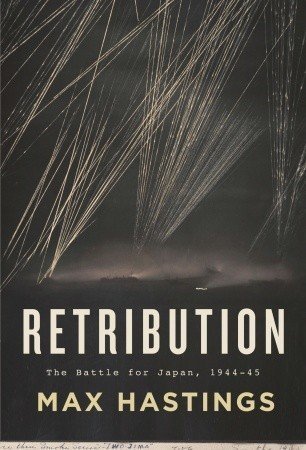
Retribution: The Battle for Japan, 1944-45 by Max Hastings

January 9, 2025 by Barry J. Klazura No Comments


One of the advantages of building a library is the luxury of being able to go back and re-read the books which are worthy of being in your library. There are certain books in my library that I have read several times over the years; why? Some are wonderful novels (such as the trilogy by Sienkiewicz) or the dissent novels by Rybakov. Others are histories filled with a myriad of facts or insights (think of Richard Evans, Richard Overy or William Manchester). I love that they can clutter my brain with obscure facts that I can pull out during a conversation or discussion on a related topic. Those books are special and fall into a special category of those which can be re-read every five years or so and be as fresh and entertaining as the first time they are opened.
Retribution by Max Hastings is one of those rare military books that falls into that special category. It has all the prerequisites of a great history book. It provides a broad overview of events, then focuses down to the strategies and tactics involved in those events. Another key element is that it is loaded with obscure facts which I find so interesting and even useful (in the right company at the right time), an example of the obscure is when he writes about the development an problems with the largest single expenditure of the war (even more costly than the Manhattan Project). Did you know that “The construction of a B-29 required 27,000 pounds of aluminum, over a thousand pounds of copper, 600,000 rivets, nine and a half miles of wiring, two miles of tubing.”. Do you care? But it is that type of detail that when you realize the U.S. produced thousands of those planes that you begin to realize the enormity of the war. Or that with the defeat of Nazi Germany, Canada announced that only those citizens who did not wish to stay in the war to defeat Germany could cease war activities.
His narrative is especially excellent when he goes down to the basic level; that of those doing the actual fighters. Some are British troops fighting in Burma, one of the worse areas of combat in the war and the least reported and celebrated. The humidity, rains, foot paths which turned into thick, boot sucking mud, poor food and an enemy who fought with determination even though many died of hunger. What about the survivors of the kamikazes? How could they survive, how many volunteered, how many were drafted into the ranks and how did it feel for those who taught the new pilots to see their poorly trained students take off knowing that they were doomed. Every nation which fought in the Pacific is highlighted as brave and pathetic stories are woven through the book.
This was my third reading of this history, and it will occupy a special place in the library; a place where timeless quality of writing and research is noted and I confess, I shall read it again in a few years and enjoy it just as much.

Share:
Reading time: 2 min
Book Reviews

The Twenty-Five Year Century by Lam Quang Thi

October 7, 2024 by Barry J. Klazura No Comments

Unfortunately, too few histories, written by Vietnamese of the First and Second Indo-China wars have been available in English.  The author, a former General in the South Vietnamese Army provides an excellent history especially of what is commonly called the Vietnam War (2nd Indo-China war).

A very good read, he covers his family history and education under the French system and then his service in the military.  He is very honest in discussing the friction in the South between the military officers who came South after the expulsion of the French, and the Southerners in the military.  The infighting and politics of the military led to waste and corruption, not to mention a lack of overall strategy.  He also is honest about the corruption of the politicians and their inability to offer the average citizen a truly viable alternative to the Communists.  Finally, he destroys the myth held by some of the benign policies of the VC; he discusses their tactics such as beheading, slaughter of families who supported the government of the South and their reign of terror to enforce their will.

He takes pride in his professionalism and gives long overdue credit to many of those in the South who fought with skill and dedication to hold back the invasion from the North. He writes about numerous battles where the troops of the South we able to defeat the VC and even the better supplied (near the end) North Vietnamese.  After Tet and the decreased American support, we see a slow downturn of the ability of the South to hold back the open invasion by the North which was lavishly supplied by the Soviet Union and China.  As time progressed the Democrats in the U.S. Congress reneged on aid; trucks and tanks were short of parts, tires, etc. while the North could move South via thousands of Soviet trucks.

The end was tragic for all parties.  A million dead, bravery squandered, families torn apart and more. 

An excellent book I can recommend to anyone interested in that long war.

Share:
Reading time: 1 min
Book Reviews

The Battle of the River Plate by Dudley Pope

September 25, 2024 by Barry J. Klazura No Comments

When we think of war, we tend to think of great campaigns, great Generals, and the struggle between nations. The countless small battle actions done by the millions of people who make up the battles are often overlooked. We know no individual combat action by any of those millions will be decisive in the war, but taken together, they create the victory or defeat in war.

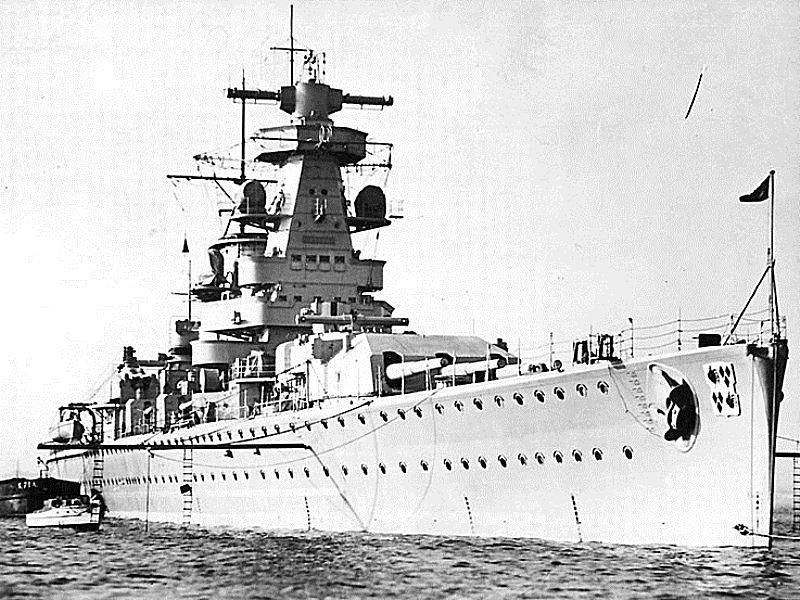
The battle of the River Plate, off the coast of Montevideo in mid-December 1939 was a single action that was not a major factor in the loss by Nazi Germany. It was a battle that was more symbolic for the British and a lesson learned by the German Navy. On the surface it was a battle between a German “pocket battleship” and the British navy; one ship against a professional navy that could call on aircraft carriers, battleships, heavy cruisers, and other ships by the dozen. Logically, there was no doubt of the outcome of the battle, yet it had to be fought for war is not a gentleman’s game.

The German ship was the Graf Spee, a lone ship whose main purpose was to seek out and destroy Allied merchant ships in both the Atlantic and even the Indian oceans. The presence of such a ship, armed with six-eleven-inch guns put every merchant ship, destroyer, and light cruiser in harm’s way. If the Graf Spee could not sink any ships, her existence and presence would disrupt the passage of merchant ships and with every ship valuable to the survival of England, she had to be hunted and destroyed.

The author does and excellent job of outlining and following how the British reacted to the realization that the Graf Spee was lose in the Atlantic. They immediately reached out to their major ports to gather ships capable of destroying the German raider and created several hunting groups. From the North Atlantic to the Med to the southern tip of Africa, heavy units of the British navy all joined the hunt for the Graf Spee.

For anyone not familiar with navy ships, the book does leave something to be desired regarding the match up between the Graf Spee and the British; speed, armor, firepower are briefly covered by the assumption seems to be that the reader at least has a glancing knowledge of these topics. Also missing are the stories of the individual sailors for both sides. Anyone who has read the excellent Last Stand of the Tin Can Sailors by James D. Hornfischer will be disappointed at the lack of personal depth in this book.

In the end, the British sank the German raider, the war moved on to the Battle of the Atlantic and one episode in a great war ended. Yet today, it is a tradition when sailing off Montevideo to sail over the graveyard of the Graf Spee and think even if only briefly, of those men who fought and died some eighty-five years ago.

Share:
Reading time: 2 min
Page 2 of 13«1234»10...Last »

Barry J. Klazura

Barry Klazura sipping grappa

With a Masters Degree in Guerrilla Warfare and Totalitarianism, Mr. Klazura was well prepped for a career in Sales and General Management, consulting on corporate startups and turnarounds as well as lecturing on history and politics.  For the past twenty years he has focused on being a financial advisor and consulting.

Delivered To Your Inbox

Sign up to get an email when a new article is published.

Topics

  • American Civil War
  • Biography
  • Book Reviews
  • Cigar Reviews
  • Coronavirus
  • Current Affairs
  • Education
  • Environment
  • Factoids
  • Government
  • Lifestyle, Cigars & More
  • Liquid Refreshments
  • Musings
  • Quips and Historical Facts
  • Society
  • Travel
  • Uncategorized
  • World War I

Subjects

book Books-Russia/Soviet Union Books 21st Century Books 1919-2000 Books Ancient to 1900 Books Asia Books Biography Books Fiction Books Germany 1919-1945 Books Pre-WWI books Viet Nam books world war I Books WW1 Books WWI Books WWII Cigar Friendly Location Amsterdam Cigar Friendly Locations-London Cigar Friendly Locations-New Orleans Cigar Friendly Locations-New York Civil War Coronavirus Environment Korean War World War I World War One

Recent Articles

At Stalin’s Side by Valentin Berezhkov

July 15, 2026
The Price of Victory by N.A.M. Rodger

The Price of Victory by N.A.M. Rodger

June 26, 2026
Frontsoldaten: The German Soldier in World War II by Stephen G. Fritz

Frontsoldaten: The German Soldier in World War II by Stephen G. Fritz

June 5, 2026
Organizer of Victory, 1943-1945, George C. Marshall by Forrest C. Pogue

Organizer of Victory, 1943-1945, George C. Marshall by Forrest C. Pogue

May 26, 2026
Illegals Released & Our Leaders

Illegals Released & Our Leaders

May 10, 2026

Inquiries and Comments

For general inquiries and comments, email AOTOHcomments@gmail.com.

Facebook
© 2020 And On The Other Hand. All rights reserved.