

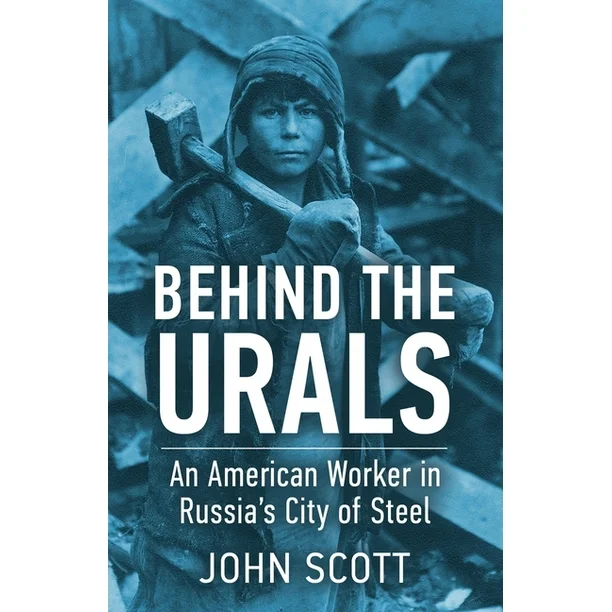
During the Great Depression, thousands of Americans went to work in the Soviet Union which seemed to hold the answer to the failed policies of Capitalism. Stalin’s demand that electrification be brought to every corner of the Soviet Union meant that dams, railroads, in fact, all the basics of a modern industrial state be built in record time. In order to do this, Stalin made agreements with major U.S. firms, such as Ford, G.E., etc for entire factories including their key workers. U.S. citizens were promised good working conditions, housing, etc. on multi-year contracts to provide the managerial and technical expertise to complete and help manage those projects. Other thousands of Americans signed contracts to work in the Soviet Union on various projects. The history of this migration is told in an excellent book by Tim Tzovliadis, The Forsaken. In his book, he describes how they had to surrender their U.S. passports and for thousands, it meant they could not leave the Soviet Union. As Stalin’s projects were completed, or his paranoia increased, many were arrested and sent to various prisons and gulags.
Scott’s book gives us a ground level view of the living and working conditions at the steel city of Magnitogorsk. That city, built literally in the middle of nowhere, was sited there due to the proximity of the raw materials needed for the production of steel. Unpaved streets, lack of sewers, communal living with poor food, extremes in weather, lack of proper clothing, tools and no safety procedures give us an image of a wild west town which fought against nature and man’s stupidity rather than against rampaging Indians. Yet, people flocked to the area for work and because they believed they could be instrumental in building a better, freer, more equal world. Their idealism is wonderful to see, but also sad as what they are doing is helping to build a totalitarian state which would slaughter millions of their co-citizens.
This is an excellent book which gives the reader a look at history from the trenches.