
On The Other Hand -
Book Reviews
Lifestyle, Cigars & More
Musings
About
On The Other Hand -
  • Book Reviews
  • Lifestyle, Cigars & More
  • Musings
  • About
Book Reviews

The Price of Victory by N.A.M. Rodger

June 26, 2026 by Barry J. Klazura No Comments

Professor Rodger’s two earlier volumes on the naval history of Britain began in the seventh century and carried the story through to the end of the Napoleonic Wars. This third volume opens with the Royal Navy at the height of its power and traces its decline from around 1840, taking in the difficult transition from sail to hybrid sail-and-steam ships and on into the modern era. The scope of such a work is immense, yet the author goes beyond the expected and creates a history that carries the reader into territory other British naval histories leave untouched.

At times, the work can border on eye-blurring, particularly when he details the personalities and politics of the British naval bureaucracy of the mid-nineteenth century. The individuals, with their foibles and political battles, can be hard to keep straight, and the prime movers of the Royal Navy are by now dusty figures receding into history. Yet those passages bring home a striking point: the politics and decision-making of that distant age were, in reality, no different from the political and economic battles we see today.

On the other hand, the book is a treasure trove of facts and struggles that are at once fascinating and genuinely enriching, giving the reader a wider and deeper understanding of the innovations and sacrifices that shaped the twentieth century.

The Women’s Royal Naval Service (WRNS)

One example, and a tribute, is his writing on the Women’s Royal Naval Service (WRNS). At a time when women were still primarily occupied in the home, the naval establishment not only welcomed the creation of the WRNS but placed its founding and day-to-day running entirely in the hands of women. The first director, Dame Katharine Furse, who had resigned from the Red Cross, was given a free hand, choosing her own staff and building the organization without male supervision. As the First World War wore on, the responsibilities of the WRNS continued to grow, and when the service was disbanded in 1919, its 438 officers and 5,054 ratings, all women, were reluctant to return to civilian life. Many formed the Association of Wrens, which later served as a foundation for the service’s reconstitution. Moving into the Second World War, the WRNS took up the challenge again, performing efficiently and at times heroically, freeing up much-needed manpower for other duties.

Breaking Enigma: The Government Code & Cypher School

Then there is the history of the Government Code & Cypher School (GC&CS), which, having learned much about German signals procedures from the Poles, was able to read a great deal of the traffic from captured Enigma machines. This intelligence played a decisive role in routing convoys around German submarines and in misleading the enemy about sailing routes and dates. Admiral Karl Dönitz never grasped the scale of the intelligence disaster he had suffered,

and as terrible as the losses were in the Battle of the Atlantic, the work of the GC&CS contributed mightily to the eventual victory.

The Small Facts That Change the Picture

Rodger also has a gift for dropping in those wonderful tidbits of history that make the reader stop and reread a passage. While discussing the siege of Malta in the Second World War, for instance, he notes that the total tonnage of German bombs dropped on Malta was greater than that dropped on London during the Blitz. Anyone who has visited Malta will grasp the weight of that single fact at once, and it casts the battle for the island in an entirely new light.

Is It Worth Reading?

I should say that the book is lengthy, more than 600 pages before the numerous appendices, with the footnotes alone running to ninety-one pages, and it can be heavy going in places. That, however, is bound up with its great strength: it is loaded with fascinating facts, presented in a way that keeps the reader reluctant to put it down. I would suggest that any newcomer adjust to the idea that you may read fewer pages per sitting than you expect, but you will come away knowing you have read a treasure of history, and one of the finest single volumes ever written on the naval history of Britain.

Share:
Reading time: 3 min
Book Reviews

The Crimean War by Orlando Figes

April 13, 2026 by Barry J. Klazura No Comments

One of the nice things about histories by Figes is that they are so readable.  Like two of this other histories I have read, (“The Whisperers” and “A People’s Tragedy”), Figes has the ability to bring the past alive and make you feel as if you are part of the action.  He does not concentrate on battle scenes (although battles are covered), but he centers on the lives of the ordinary soldiers.  In this book he gives short shift to Florence Nightingale but point out the breakthrough of a Russian surgeon, Dr. Nikolai Pirogov who used an early form of triage as well as anesthesia.

     Despite the common view of the war, it was the French who supplied most of the troops, not the British and it was the French, not the British who better supplied their men with everything, from tents, to food to warm coats for the cold Crimea winter, etc. 

     It is also interesting to note that there were very real plans for a coalition whose goals was the breakup of the Russian Empire, including invasions of Russia from the Baltic, uprisings in Poland and an invasion from the Crimea into the area of Kiev.  But as the causalities began to mount, the enthusiasm for such great plans began to wane and in the end a settlement was made.

     For all the loss of blood and lives, Russia was able to regain her position within 25 years and continue to create problems in the Balkans.  Her meddling and ambitions led to World War I thanks to a system that refused to believe that the world was changing and was all too often in the hands of a single man who could be unbelievably foolish.

     A big book (about 500 pages) but an interesting one which never goes off into tangents that do not serve to tell the main story.

Share:
Reading time: 1 min
Biography

Nelson by David Walder

April 10, 2026 by Barry J. Klazura No Comments

Anyone who has ever seen the 1941 movie, “That Hamilton Woman” staring Lawrence Olivier and Vivian Leigh remembers that perfect looking couple working together to save the British Empire in the face of the ogre, Napoleon.  In some ways, the movie was historically accurate; Nelson was a brilliant, innovative naval commander who through his daring, saved the British position in the Mediterranean and of course, was responsible for the famous victory at Trafalgar.  He was also vain, stubborn and a romantic who while still loving his wife, threw her over for Lady Hamilton.  While the movie showed Lady Hamilton as a converted trollop who became well educated thanks to her husband, apparently the actual Lady Hamilton conformed more to Richard Burton’s description of his wife Elizabeth Taylor: “Her arms are too fat, her legs are too short, and she is too big in the bust”.  Yet the real Lady Hamilton captured the soul of Nelson and almost caused him to lose his position and worse still, for England to lose the services of their best Admiral as he used poor judgment in attempting to prop up the weak King of Naples.

The real Lady Hamilton loved to gamble, drink and spend money and her husband, Lord Granville was apparently happy to have Nelson love his wife; they travelled together and must have presented a strange threesome upon their return to England.  Poor Granville did lose many of his works of art while in transport but he and then Lord Nelson remained friends until Granville’s death.

Unlike other naval captains, Nelson spent most of his time destroying enemy fighting vessels rather than concentrating on trading ships.  Given the prize rules of the day, this deprived him (and his crews) of much wealth.  Despite this, his crews were dedicated to him and he appears to be a man out of his time in the way he handled his crews and was associated with them.  He certainly did not mingle with them, but they had confidence in his skills and knew that he would not use them for his own ends. The proof of this was his hard fought and very near destruction of the Danish fleet, a battle which he could and perhaps should have lost.  His men never tired and always believed in his lucky star and despite a terrible pounding and high losses, he and his men won through in the end.

Because he concentrated on enemy warships, he died in debt and Lady Hamilton managed to run through the money left to her by her husband.  She did die in poverty in Calais.

This is a well written book which makes the times and characters come alive in an easy manner.  The test for me was that I can still watch the movie and not pick it apart as being historically inaccurate.  Yes, it is the movie version of history, but aside from the depiction of Fanny, Nelson’s wife, it is within a stone’s throw of actual history.  So, enjoy the movie and the book.

Share:
Reading time: 2 min
Book Reviews

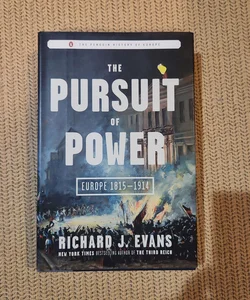
The Pursuit of Power, Europe 1815-1914 by Richard Evans

February 19, 2026 by Barry J. Klazura No Comments

Penguin Books has introduced a history of Europe from Troy through the present; a massive nine volume history with each period written by a different author.  The historians aside from Evans include Ian Kershaw, Tim Banning and others of worthy note.  This volume reflects the usual attention to detail by Evans (his 3 volume history of the Third Reich is, in my opinion the definitive history of the Third Reich); it is rich in detail and almost overwhelming in providing information that makes the reader stagger under its weight.

Unlike other histories of this period, Evans spends little time rehashing the wars, but rather, creates a political, social, economic and moral history of the various forces unleashed by the wars of Napoleon.  It was Napoleon who brought to Europe the ideals of the French Revolution (although at a terrible price with over 1,000,000 French troops being killed not to mention the slaughter of Germans, Russians, Poles, Italians, etc.).  The victors attempted to create a new order in Europe which would allow them to keep a firm handle on the changes they feared and it continued through the revolutions of 1848 until the rise of nationalism.

If you ever want to learn about the impact of railroads on Europe, or the abolition of Serfdom, the Carlist Wars, the Religious divisions, the rise of Imperialism or the first genocides in Europe (naturally in the Balkans), this is the go to book.  But beyond the major movements, we find who invented words such as “socialism”, “feminism”, “communism” (no it was not Marx or Engels), or the diet of the average Englishman vs. the slave in the United States (the slave in the U.S. was inches taller than the average Englishman reflecting a superior diet!), the practical use of the bustle and countless other bits of trivia, etc. this volume will quench your thirst for the trivia.  Yet, Evans manages to pull it all together so that you have a real feeling of the times and context of Europe during that time.

At the same time, when dealing with the major events (the Carlist Wars, Unification of Germany or Italy, the problems from the revolution of 1848 for the Hapsburg Empire, etc.), you came away with a wonder of how any politicians were able to weather the political storms and demands of the time.  It helps us today as it puts our great problems into an historical context and in its own perverse way, can give the reader optimism for the future; what other leaders did with poorer communication and information were able to accomplish, should make us believe in our own ability to move into the future.

Finally, I have to say that this book is almost a curse.  How?  Because given the quality of the historians for the other volumes, I see myself tied to each volume (this one took me two weeks to read, an inordinately long time) and finding at the end, other releases on the subject will offer little that is new and certainly will not be as entertaining.

This is one of those books that if anyone ever asks, “what books would you recommend on this subject”, you could point to this one volume as the beginning and end of the quest.  Beware if you start down this path, for it shall capture you and hold you close till the end.
Share:
Reading time: 2 min
Biography, Book Reviews

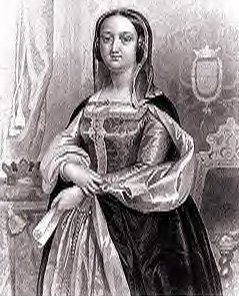
Isabella, the Warrior Queen by Kirstin Downey

February 16, 2026 by Barry J. Klazura No Comments

A very fair, balanced biography of the great Queen of Spain who was responsible for driving the Muslims out of Granada and thus completing the Reconquest, of sponsoring Christopher Columbus, as well as starting the Inquisition and expelling (as an option to conversion) of the Jews and Muslims from Spain.

The author points out that Isabella’s husband, Ferdinand, is normally given first place in histories of the period, but that Isabella, the first ruling Queen in over one hundred years deferred many times to her husband’s ego in terms of allowing him to sign first and take credit for actions she began and completed. A bit of a feminist historian at times, but then Downey puts Isabella in the context of her times, especially regarding the threat and might of the Ottoman Empire which was still expanding.

Isabella was a ruler who looked beyond the days problems and thought strategically. She provided an excellent and well-rounded education for her daughters and was, while she had her health, expecting that the natives of the “New World” were to be treated kindly. As an aside, while the author points out that the natives suffered from the deadly diseases of Europe, the natives managed to get their own by spreading syphilis to the “Old World” with devastating effects. He also points out that expansion fueled the Inquisition as the newly united Spain could not be sure of its Muslim subjects who were often in rebellion against the crown and the loyalty of many of the converted Jews was suspect. Regarding Columbus, Downey does an excellent job of providing a balanced picture of him, including his pride, successes, and failures.

 It is interesting to note that Queen Victoria is often seen or remembered as the grandmother of European royalty, but Isabella’s offspring at one time controlled not only all the “New World” but also contributed to the ruling families of the U.K., Denmark, Norway, Sweden, and Monaco.

The book is easy to read; beautifully written, documented and gives a Queen the honor she deserves.

Share:
Reading time: 1 min
Book Reviews

The Dynamics of Military Revolution, 1300-2050 edited by Macgregor Knox (The London School of Economics and Political Science) and Williamson Murray (Institute for Defense Analyses)

November 30, 2025 by Barry J. Klazura No Comments

One of the pleasant things about New Orleans is that you can spend hours in used bookstores, shifting through volumes which reflect the mind set of the locals. I have found a number of gems over the years, and this last trip enabled me to find this excellent volume on RMA (revolutions in military affairs). I have to admit that I had never heard of the book (originally published in 2001 while the volume I found was from its seventh printing in 2008. The last printing was in 2015), but it is a find that I shall keep close. The contributors range from professors of history to the Director of Royal Artillery, British Army. This is short (less than two-hundred pages) but serious book.

According to their thesis, there have been five military revolutions in Western history:

  1. The creation of the modern nation state which brought about the discipline of military power.
  2. The French Revolution which “merged mass politics and warfare.”
  3. The Industrial Revolution which made the nation states to pay, feed, cloth, and arm masses of manpower.
  4. The First World War which merged numbers 2 and 3 while “set(ting) the pattern for twentieth-century war, and
  5. The Cold War which was cold in the “decisive European and northeast Asian theaters.”

These five RMAs are more important than any momentary tactical advantage (such as the superior use by the Germans of tanks vs. the French use in May 1940). They are more important as they completely change how war is fought across all theaters involved.

Moving into the book, there are separate studies regarding the Western army in seventeenth-century France, the impact of the French Revolution with it dramatic introduction of the mass army, the U.S. Civil war, the Prusso-German RMA of 1840-1871, the Battlefleet revolution of 1885-1914 under the direction of First Sea Lord Jackie Fisher, and of course the First and Second World War.

One might be tempted to ask about the current war in Ukraine and the impact of drones on the battlefield. I believe the authors would not say that drones are a real RMA as they would fall into the category of say, the introduction of the tank in World War I. Yes, they do make an impact, but the initial monopoly by one side was quickly lost and, in many ways, it mirrors the technological battle that was fought during the Battle of the Atlantic.

The writing is decidedly not academic: each section is sharp and well argued with a minimum of excess verbiage. The writing is tight and the average armchair military historian could easily grasp the ideas put forth in each section.

Share:
Reading time: 2 min
Book Reviews

Wellington: Waterloo and the Fortunes of Peace, 1814-1852 by Roty Muir

September 23, 2025 by Barry J. Klazura No Comments

This is the second half of Muir’s biography of Wellington and despite its size (664 pages including notes), and obscure (to most) references to the politicians and policies of England at the time, it is if anything better than his first volume which was excellent.

We think of Wellington as the haughty imperious general who defeated Napoleon at Waterloo, but this volume shows that he was much more; a skilled diplomat who played a major part at the peace settlement after Waterloo, who successfully balanced the foibles of French politics and then went onto become Premier of the U.K..  Even when he was not directly in the spotlight, his work at the Horse Guards (which controlled the Army) and behind the scenes reflected a mind that was able to adjust and understand several sides of any political problem.

By nature and breeding, he sided with the landed gentry and was loyal to the King (even though a couple of the Kings at that time were weak and often foolish), yet he saw himself as a liberal conservative, willing to break out of traditional structures (such as the Catholic question, etc.) in an effort to create a more equitable and mobile society.  He disliked the radicals of the time and did his best to channel government policies into directions that would profit the nation while maintaining the standards which had created the Empire.

Criticized historically as being ultra conservative regarding the military (only Gentlemen should be officers), he none the less did open the officer ranks to members of the rising middle class, sought to upgrade and modernize tactics and weapons and sought to create an army that would be able to deal with the responsibilities of policing an Empire while facing traditional threats (it must be remembered that even after Napoleon there was a real threat of an invasion and war with France).

A complex man, given to a temper, he none the less was well respected by all sides and was often perceived as a voice of reason to the point that he could raise questions about his loyalty even from his own political allies.

An excellent book which brings many politicians and issues of the day to life in an interesting and colorful way.  I highly recommend both volumes.

Share:
Reading time: 1 min
Book Reviews

The Annals of Tacitus

May 8, 2025 by Barry J. Klazura No Comments

Tacitus was a Roman Senator and had access to the official records and books of the Empire.  His book covers the reigns of Tiberius (the period of 37-47 AD have been lost), Claudius and Nero (until 66 AD).  As Tacitus was still writing the history around 116AD, he was still relatively close enough to be blessed with a buffer of time, yet not far enough away to romanticize any of the events or individuals in the book.

The chapters (or books as they are called) are devoid of sensationalism yet manage to portray events and individuals in a light which leaves little doubt of the opinion of Tacitus.  Even the worst excesses of Tiberius and Nero are not graphically described while Claudius does not come across as the kindly, fatherly Emperor so portrayed by Derek Jacobi in his memorable role.

As is usual, for the beginner of Roman history, the names may be confusing and locations even more so as they are usually referred to in their “Roman” as opposed to their “modern” names, but it is a handy reference book and cross index against other histories, both fictional and non-fictional.  But it is not a book for speed reading as it is loaded with facts that go beyond normal history and you can believe you are actually reading a political memoir, full of twists and turns.

Share:
Reading time: 1 min
Book Reviews

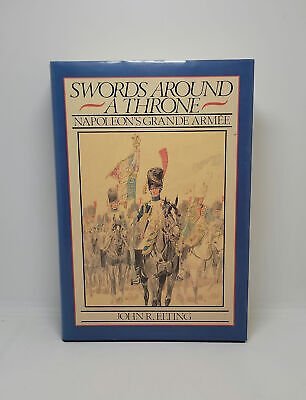
Swords Around A Throne: Napoleon’s Grand Armee by John R. Elting

April 3, 2025 by Barry J. Klazura No Comments

Elting, a noted historian and lecturer at West Point has put it all together in this 700+ page book. He starts with a discussion of the decline of the French Army after King Louis XV and its destruction during the French Revolution. He then proceeds to discuss every aspect of the Army, from the equipment, feeding, transportation, etc. of each branch of the Army, from the infantry to artillery, etc.


An outstanding one volume history which ends with the new regime of King Louis XVIII, his mistrust of the Imperial army, his lack of skilled advisors, etc., and of course, the Hundred Days of Napoleon. I would recommend that if you are going to read this book, that you keep handy “Napoleon’s Marshals” which was edited by David Chandler. This book discusses (each Marshal is covered by a different historian) the records of all of Napoleon’s Marshals (25 French, one Polish) including their skills, greed, loyalty (or lack thereof), etc.


Another wonderful reference book to settle or at least provide fodder for any discussion of the subject (Napoleon’s campaigns, his personal skills, etc.). The two books total about 1200 pages so don’t think you will finish them in a sitting, but they are well worth the effort. If nothing else, as with so much of history, you learn a great deal about human nature and management.

Share:
Reading time: 1 min
Book Reviews, World War I

For God and Kaiser: The Imperial Austrian Army by Richard Bassett

April 1, 2025 by Barry J. Klazura No Comments

This is an outstanding and very readable history of the Imperial Austrian Army which was a major player in European history from 1619 until 1918. Although often pictured as an army which was poorly led and had a terrible record, the facts are altogether different. During its existence, it won more than 350 major victories, far more than its defeats (imagine the scope of European warfare; 350 major victories meant more than one major battle for each year of existence). It was never completely destroyed (as was the Prussian army at Jena) and adapted despite several defeats at the hands of Napoleon to eventually be instrumental in the coalition that destroyed his power.

Much more sweeping in scope than “The Army of Francis Joseph” by G. Rothenberg or “History of the Hapsburg Empire” by Robert Kahn, it nevertheless presents information that will be of interest to the novice and the expert.

Overall, the Hapsburg dynasty was, in my opinion, much stronger in terms of ability to produce successful monarchs than any of the other European monarchies. They did not have their George III or Nicholas II, nor the wasteful Louis XIV.

This is the first book I have read by Bassett and based on his skill as an historian and writer, I shall be looking to read more of his books.

Share:
Reading time: 1 min
Page 1 of 91234»...Last »

Barry J. Klazura

Barry Klazura sipping grappa

With a Masters Degree in Guerrilla Warfare and Totalitarianism, Mr. Klazura was well prepped for a career in Sales and General Management, consulting on corporate startups and turnarounds as well as lecturing on history and politics.  For the past twenty years he has focused on being a financial advisor and consulting.

Delivered To Your Inbox

Sign up to get an email when a new article is published.

Topics

  • American Civil War
  • Biography
  • Book Reviews
  • Cigar Reviews
  • Coronavirus
  • Current Affairs
  • Education
  • Environment
  • Factoids
  • Government
  • Lifestyle, Cigars & More
  • Liquid Refreshments
  • Musings
  • Quips and Historical Facts
  • Society
  • Travel
  • Uncategorized
  • World War I

Subjects

book Books-Russia/Soviet Union Books 21st Century Books 1919-2000 Books Ancient to 1900 Books Asia Books Biography Books Fiction Books Germany 1919-1945 Books Pre-WWI books Viet Nam books world war I Books WW1 Books WWI Books WWII Cigar Friendly Location Amsterdam Cigar Friendly Locations-London Cigar Friendly Locations-New Orleans Cigar Friendly Locations-New York Civil War Coronavirus Environment Korean War World War I World War One

Recent Articles

At Stalin’s Side by Valentin Berezhkov

July 15, 2026
The Price of Victory by N.A.M. Rodger

The Price of Victory by N.A.M. Rodger

June 26, 2026
Frontsoldaten: The German Soldier in World War II by Stephen G. Fritz

Frontsoldaten: The German Soldier in World War II by Stephen G. Fritz

June 5, 2026
Organizer of Victory, 1943-1945, George C. Marshall by Forrest C. Pogue

Organizer of Victory, 1943-1945, George C. Marshall by Forrest C. Pogue

May 26, 2026
Illegals Released & Our Leaders

Illegals Released & Our Leaders

May 10, 2026

Inquiries and Comments

For general inquiries and comments, email AOTOHcomments@gmail.com.

Facebook
© 2020 And On The Other Hand. All rights reserved.