
On The Other Hand -
Book Reviews
Lifestyle, Cigars & More
Musings
About
On The Other Hand -
  • Book Reviews
  • Lifestyle, Cigars & More
  • Musings
  • About
Book Reviews, Society

The Sailor Who Fell From Grace With the Sea by Yukio Mishima

January 25, 2026 by Barry J. Klazura No Comments

I first read this novel over forty years ago and although I did not recall the exact plot, I remembered that as I finished it, I put it aside vowing to never read another of Mishima’s’ works. My fear was that having read one more, I might have to devour his extensive list of works, a bit like an old friend who refused to purchase on Judy Collins record (that shows how long ago that was), as then he would have to purchase them all.

A very good friend presented me with a copy of this work for my birthday, and it was with a mixture of excitement and trepidation that I began to read it. The story itself seems to be simple; it centers around a widow, a sailor she meets, her young teenage son and the circle of his friends.  Filled with a subtle sensuality (as you would expect when you consider the author), it tells a story of how the son, and his friends reflect a form of nihilism that Mishima believed was part of the Japanese post-war character. The “tribe” of boys looked down on society, the family and anyone who was not in their “enlightened” circle. They were superior, above all the bourgeois values and norms and were determined to create their own world. Mashima also rejected Japan’s new materialism, democracy and flirtation with communism.

The book traces the young son’s disillusionment with the sailor who is courting his mother and the betrayal by the sailor when he decides to give up his life at sea and marry the boys’ mother. That action is a betrayal of the boys (not the sailors) sense of superiority, and the group of boys believe they must “punish” the sailor, or they will not be true to their sense of themselves.

As I finished the short novel, I felt the same sense of amazement at the power of Mishima’s writing. I slowly closed the book, put if my lap and let the last two paragraphs sink into my mind. The power that the book projected so many years ago was still there, as strong as ever. It is a book that dares to look at the dark side of disillusioned youth.

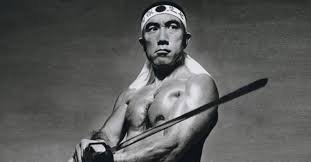
Mashima was one of Japan’s premier authors during the 1960’s. His novels were nominated five times for the Nobel Prize for literature, but he is probably best remembered for his dramatic action at Japan’s West Point in Tokyo in 1970. There, with some of his personal self-defense force, he seized a main building, captured the commandant and harangued the gathering cadets to throw off the new Japanese values of materialism, democracy, etc. and to recapture Japan’s sense of “national essence” including  Emperor worship or all of Japan would end up as a “rootless people”.  Failing to rally the cadets, he committed seppuku and had his second cut off his head as prescribed in the ceremony. He was forty-five years old.

What place did he hold in the minds of the Japanese youth of that time? In my previous lifetime I worked at Panasonics headquarters in Secaucus New Jersey.  One of the photos I kept displayed was of Mishima haranguing the cadets on that day in 1970. None of the older Japanese commented on the photo in my office, but the younger generation were more open in their comments, and I found it interesting that a simple photo could pierce the normal Japanese self-containment and lead to an openness that was so rewarding.

Read this book at your own peri or sense of excitement. The term you use after the reading may tell you something of yourself.
Share:
Reading time: 3 min
Book Reviews, Quips and Historical Facts

Impossible Histories by Hal Johnson

June 25, 2025 by Barry J. Klazura No Comments

Did you ever wonder how your life could have been different? What if you did not get that one break in your career where you were at the right place at the right time? Or you had an accident because you left the house five minutes later than normal and were in a hurry? Perhaps if you had not blown that entrance exam, you might have gotten that key grant that would have eliminated that college debt that eats at your life?

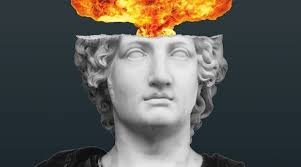
Now take those “what ifs” and look at key points in the history of humanity and think of how our lives today could have been so different. We might all be speaking Greek, or Turkish, or we might not exist as one of our grandparents died in a car accident instead of only suffering a broken leg. Few alternative histories are either beautifully written or present the reader with the “what ifs” of any particular scenario. Virtual History by Niall Ferguson is one of the few that stand out. Another is Impossible Histories by Hal Johnson. Publish in 2023, he takes us on a tour of twenty key pivots points in history and presents us with alternatives such as Alexander the Great who successful creates an empire that lasts a thousand years, the First World War which never happens because the Kaiser answered his phone before he went for a horse ride, a United States with a  President Wallace instead of Truman in which the Atomic bomb is not used and the result is a Soviet occupation of parts of Japan and most of Europe is controlled by the Soviet Union, the Third Crusade fails with the result that the Turks take Vienna in 1683 and all of Europe ends up like the Balkans, or Jimmy Carter starts a nuclear war. You cannot imagine the other alternatives.

What makes this alternative history so much better is that it does not stop with a different end to a war or siege but delves into the next step and the step after that to the point where our world is entirely different. How is that possible? It is like when you drop a stone into water and the waves continue to move out, continuing to disrupt the stillness. Exhibiting a wonderful knowledge of history and excellent insight into human nature, the author takes the reader on voyages which are both exciting and at times disturbing. Nietzsche wrote that each action we take impacts us for the rest of our lives and Johnson applies that to the entire scope of humanity.

This is a fun book that should leave you thinking not only about his subjects but also encouraging you to apply his concept to your life. Read it and enjoy!

Share:
Reading time: 2 min
Book Reviews

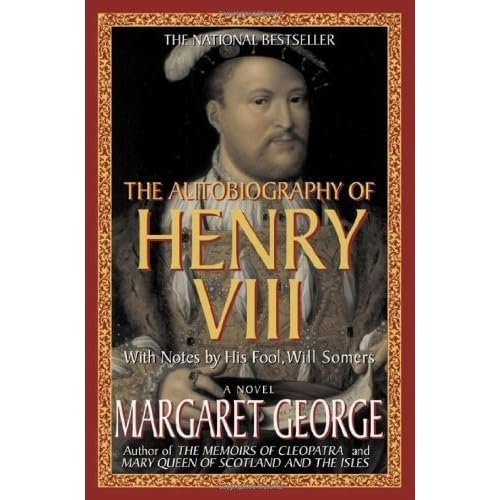
The Autobiography of Henry VIII by Margaret George

May 12, 2025 by Barry J. Klazura No Comments

Yes, an autobiography of this famous English King; obviously a work of fiction but one solidly based on historical fact.  The work goes from his time as a left behind second child, to his sudden elevation as heir apparent to his kingship with all of his hopes and dreams to reality as he moves through his life.  What is interesting about this book is that it is told from his side; painted by history as a cruel tyrant, a wife murderer and destroyer of the Catholic church in England, the book describes (from his perspective) his actions, motives, joys, fears and failures.

Too late, Henry found what any good manager or leader finds out; you are alone at the top.  Those who surround you may fawn on you, may tell you many wonderful things, but you never know their true motivations, their true feelings about you and your decisions.  Henry did not find out until so late this basic rule of life and as a consequence he lived in world that he often could not understand.  Being an absolute ruler, his lack of understanding is even more understandable.

The book describes the various factions at court; the powerful English families who vied for Henry’s favor even while scheming to place themselves in his position.  The politics as they fought for his favor by offering service, wives and more make for a view of like that we can still see today in our world.  Mankind has not progressed all that far.

The author has a fine grasp of history and male human nature.  She has written other (autobiographies) of Queen Mary, Elizabeth I, Cleopatra, Helen of Troy and other notable women.  If you have interest in Henry but find traditional history dry, try this book; it shall entertain and educate you and perhaps, cause you to look further into the life and character of a key player in Western European history.

Share:
Reading time: 1 min
Book Reviews

The Transylvanian Trilogy by Miklos Banffy

March 20, 2025 by Barry J. Klazura No Comments

This is a massive novel (about 1600 pages) written in three sections: They Were Counted. They Were Found Wanting and They Were Divided. There are a number of sub-plots, some romantic, others centering on the morals and norms of the aristocratic Hungarian society prior to World War I and quite a bit on the politics of Hungary and its relations with the Austrian part of the Austro-Hungarian Empire. Originally published in 1934 and 1940 but was banned by the Communist government until a new edition was published after the fall of Communism in 1990.


The author was an active liberal member of the Hungarian pre-war parliament and after his retirement, wrote several plays, short story books and this novel. Vainly attempting to save his properties after the end of World War II, he could not leave Transylvania and was separated from his wife until shortly before he died when we was allowed to leave Romania and live in Budapest.


There are numerous plots and mini stories within this massive work which center on the norms of the pre-war Hungarian aristocratic society. There are love stories, tales of falling from grace, political foolishness in a time of national danger and more. Since the author was an actual politician at the time of the novel, the second and third sections give the reader an insight into the actual politics of the day. In fact, if someone were interested in Hungarian politics of that time, they would enjoy large sections the novel as the political squabbles of the time is presented in a lively, interesting manner.

There is one unique opportunity in reading this book as the author, who was an active politician at the time of the story, is able to provide an insight into the actual government debates and problems leading up to World War I. Those sections would be an excellent addition to Luigi Albertini’s three-volume history of European events which led to the First World War. The petty bickering over what colors should the ribbons be on the officer’s swords while the army is starved of money shows the inability of the Hungarian politicians to confront reality due to their own self-centered ideology and prejudices. It makes for fascinating reading.


Let me say there are two drawbacks to the book. The first is that I was hoping for more of the plot to center on Transylvania and its relationship with its Hungarian overlords. While the main character of the novel has extensive land holdings in Transylvania, aside from a minor sub-plot about agrarian/forest reforms, there is little that really occurs in that area. Yes, one reads that the local residents who were mostly Romanian, were abused by the petty officials and money lenders who were Hungarian. Unfortunately, the true extent of how the Romanians were abused is not covered.


Another weakness in the first section is that there are too many pages which go over the romantic sub-plot of the main character and the woman he pursues. That section is beautifully written, but it seems to go on and on for scores of pages.


The strength of this novel is its ability to take us into a society and world that disappeared in 1918. The norms, standards and misdirection of the Hungarian kingdom are laid out and from the advantage of hindsight, we can see where the errors of that society and it political structure must lead. Being the length that it is, it is another of those novels that one would pick up to re-read once every ten years or so (in fact, I first read it in 2013).

Share:
Reading time: 2 min
Book Reviews

Her Privates We by Frederic Manning

March 5, 2025 by Barry J. Klazura No Comments

The Middle Parts of Fortune: Somme and Ancre, 1916

I found a list of the greatest military novels of all time, which offered a great opportunity although I question any such lists as the rankings can be impacted by a herd mentality. It did have one strong thing in its favor and that was a quote by Erest Hemingway that this book was, “The finest and noblest book of men in war.”. Who am I to quibble with Mr. Hemingway?
The novel takes place shortly after the disastrous battle of the Somme in 1916, the darkest day in the annals of the British Army when they managed to suffer over fifty-seven thousand casualties (nearly nineteen thousand dead and thirty-eight thousand wounded) on the first day of the joint British-French offensive. Designed to give a quick victory to the Allies, the battle turned into a four-and-a-half-month slugfest that cost a total of about one million casualties. The main outcome of the battle (aside from the slaughter) was that the German army finally realized that they were fighting a material war with human material.
There are no descriptions of the battle and how men were able to survive the battle; the entire novel centers on a small group of men who are pulled out of the line for refitting. They talk occasionally about lost comrades, pull guard duty, skip off to the local town to find a drink and are annoyed at officers who try to impose some of the discipline that was overlooked in the trenches.
The main character is known as Bourne, a bit of a loner who tries to get along with everyone. Earlier in the war he was recommended as officer material and with the huge losses in the war, the powers that be approach him on becoming an officer. The experience of war has put the shine off such prospect for Bourne but the natural forces of the military put him on a course that he accepts as he knows the force of the military. There are pages of dialog between him and men of his section, plans are made for drinking parties, and there are the usual complaints and grousing that is found in any similar situation.
I shall not provide the ending of the book or any moral if there is one, but I was disappointed that the ending was clear to see halfway through the book. Of course, in any novel about war the types of endings are rather limited, but it is so clear in this instance that it took the joy out of the reading. Why our friend Mr. Hemingway would make such a recommendation for the book is beyond me, but it proves that one can take recommendations with a grain of salt.

Share:
Reading time: 2 min
Book Reviews

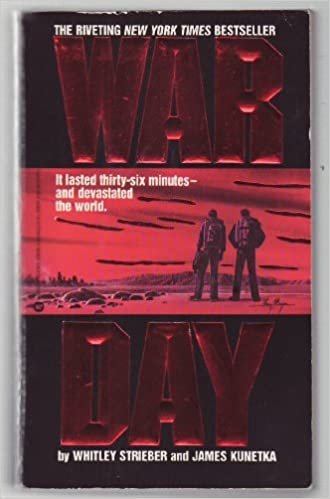
War Day by Whitley Strieber and James Kunetka

December 27, 2024 by Barry J. Klazura No Comments


What would happen if the United States was hit by a limited nuclear attack; an attack that because of the electromagnetic pulse given off by atomic weapons, all auto engines, computers, telephones, refrigerators, in fact, anything build after the mid-1970’s that ran on electricity was simply fried, incapable of working? That is the premise of this novel and no, it the attack was not carried out by terrorists but by the Soviet Union (the book was originally published in 1984. Yet, because of our concern over the possibility of terrorists getting a nuclear weapon, this book has suddenly had a second resurrection.

Aside from the obvious problems of tens of millions of Americans suddenly being forced to live as their great-great-great-great grandparents did, suddenly learning to farm, seldom being able to travel more than a few miles from their homes unless they had a horse, there could be the problems of parts of the United States going off on their own as the Federal government is either destroyed in the attack, or unable to impose its will beyond a short radius from their offices. Suddenly California, the Golden State creates heavily policed border crossings, not to keep out Hispanics, but to keep out millions of Americans who do not want to face typical winters and food shortages because coal is not available to heat their houses. Perhaps the old border between Mexico and Texas will become a no man’s land as local war lords fight both the Texas and Mexico governments as they try to create their own country. For those lucky enough to have cars or refrigerators build before they relied on computers, where will the fuel come from and how long will electricity be provided each day.

Finally, will countries like Japan, China and the Europeans see the natural resources of the United States as easy pickings to be plundered as the price paid from medicines and basic technologies will be provided on a rationed basis to the United States? Which of those countries would have a vested interest in having the U.S. become strong again when we could be kept weak and provide a willing work force.

Think it cannot happen? Think we could bounce back quickly? Then let me ask you this; if we had that type of catastrophe, if suddenly your car, your computer, your phone could not work, how long could you survive in such a brave new world?

Well written, thought provoking. Worth a read.

Share:
Reading time: 2 min
Book Reviews

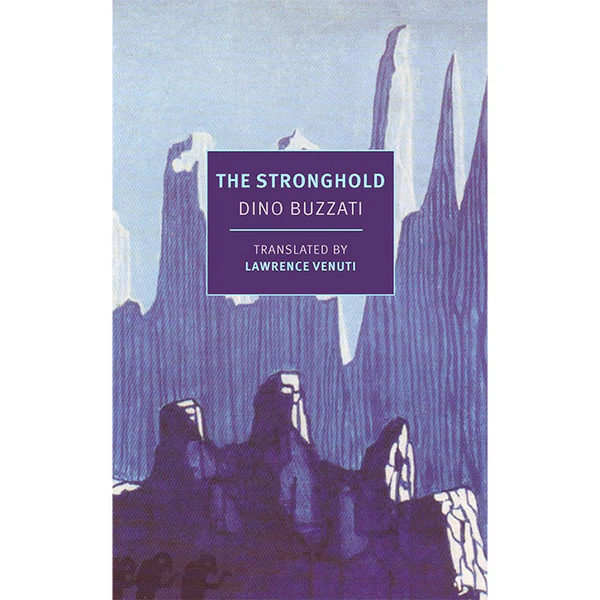
The Stronghold by Dino Buzzati

August 12, 2024 by Barry J. Klazura No Comments

The review of this book from the back cover states that, “Buzzati is one of the great Italian writers of the twentieth century, renowned for his fantastical imagination and for a touch that is as lyrical as it is light. The Stronghold, previously translated as The Tartar Steppe, is his most celebrated work, a book that has been seen as a veiled attack on Mussolini’s militarism, a prophetic allegory of the Cold War and an existentialist fable.” Considering it was originally published in 1940, claiming it is an “allegory of the Cold War” is quite a claim, but I digress.

I personally was not impressed with this novel; I found it slow moving, dull and pointless. It tells the story of a young Lieutenant who is transferred to the remote fortress of Bastiani, there to stand guard along with an aging garrison against an anticipated invasion by some terrible enemy. Aside from the normal duties of manning a garrison in a remote area, there is little to do and despite the best attempts to fulfill his duties, the Lieutenant like all the other officers and enlisted men gradually fall into a lethargic existence. Then the enemy appears, and life suddenly has meaning! On the various mountain tops two or three of the enemy are spotted so action must take place! Then a message appears, and that brief flame of action is destroyed as the “higher ups” state that the newly seen opponents are in fact on a peaceful mission and garrison life returns to normal.

That is about it. Fini! Oh, there is more as we watch our Lieutenant live out the rest of his life and those who he holds dear die or disappear. Nothing more.

Now I admit, I may expect more from a novel, I may be a bit too shallow (one reviewer wrote that the Lieutenant confronting, “the desperate need to affirm oneself as an autonomous entity against the forces of solitude and persecution”) to understand such depth. On the other hand, some reviewers may have gotten into a bit of group-think and must enjoy a bit of mental, shall I politely say, exercise. Unfortunately, this novel reminds me of Hunger by Knut Hamsum (see my review, 3/14/2020), a western European attempt at authoring a short Russian novel; one which allows a willing reader to find much more than there actually is.

Share:
Reading time: 1 min
Uncategorized

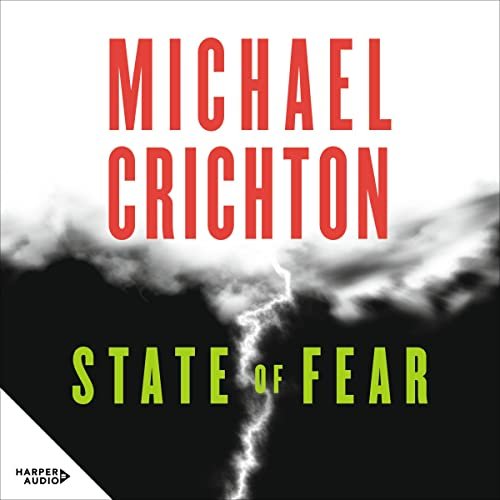
State of Fear by Michael Crichton

December 18, 2023 by Barry J. Klazura 2 Comments

A second read for me (first was in 2006) and even more timely than then. Crichton who wrote numerous excellent novels based on “science” (he was an MD) makes it clear that he was skeptical of the concept of man’s impact on climate change.  It would be nice if those who believe in man’s impact were to read this book, but that is asking far too much of those who embrace that religion, I mean theory (sorry, I do not accept it as fact either).

The novel moves quickly and has numerous charts and graphs showing both sides of the debate which makes for an interesting addition to the story. In the novel, a major environmental group works to create huge disasters to prove their point about the environment. One of the problems, however, is that they plan to cash in on each disaster and use them to increase their capitalization. The leaders of the group of lawyers (hard to believe) are merely using others to feather their own nests, manufacturing events and causes.

In the book, several interesting questions and facts are raised, such as:

  1. Why is it that when a scientist releases a study against man’s impact, and if he is paid by an oil company, etc., his study is bias, but when a counter study is released by a scientist paid by an environmental disaster group is released, it is not viewed in the same way.  Does anyone who is paid ever release a study which goes against the hand that feeds them?
  2. Are the oceans rising? Yes, and they have been for about 10,000 years, so how can it be blamed on humanity?
  3. When the UN formed the Intergovernmental Panel on Climate Change in the late 1980’s, their statement that there was “a discernable human influence” on climate was generate after the scientist went home and was contrary to the document the scientist had signed during the conference.
  4. Scientists and others make silly statements such as Paul Ehrlich’s prediction that 50% of all species would be extinct by the year 2000. Yet no one knows the exact number of species; estimates range to from 3,000,000 to 100,000,000 so how can Ehrlich be given any print space with such a silly statement.
  5. Back in 1998 a court overturned the EPAs findings on second hand smoke as the EPA violated its own guidelines in order to come up with a slanted finding; yet despite that finding which was not disputed by the EPA, laws across the country have been passed and we still hear that 50,000 people a year die from this “problem”.

The book is filled with information that should make most people question the idea that humanity has even a minor impact on global change. As the book points out, “at any moment there are 1500 electrical storms across the planet. Eleven lightning bolts strike the ground each second. A tornado tears across the surface every six hours. And every four days, a giant cyclonic storm, hundreds of miles in diameter spins over the ocean and wreaks havoc on the land.”  And, if we look at the disasters we have achieved (such as how Yellow Stone Park has still not recovered from our management during the first years we decided to “save” the area), we have far to go to understand the world we live in.

There is one other interesting theory in the book which he titles the PLM (political-legal-media) powerhouse which has supplanted Eisenhower’s military-industrial complex. The function of the PLM is to create fear; we live in the richest nation in history, with unlimited food, freedom to travel, options and choices, education, etc. and yet people are afraid for the future. If people have fears, it is an opportunity for those who manage the PLM to profit and gain more control and power. An interesting concept.

Given the recent farcial COP28 orgy of food, drink and private jets, this old book is amazingly timely. There is much in this book to get one thinking and I recommend it as a follow-up to your summer reading.

Share:
Reading time: 3 min
Book Reviews

Life and Fate by Vasily Grossman

November 22, 2023 by Barry J. Klazura No Comments

 When the manuscript for this book was first reviewed by the Soviet censor, he told Grossman that the book could be published, in about two hundred years.  Grossman, a Jew who reported on the Great Patriotic War directly from the front lines while in Stalingrad, at the battle of Kursk and all the way through to the battle of Berlin, was rapidly falling out of favor with his Soviet masters.  His book broke so many Soviet taboos; it did not portray the soldiers with Stalin’s name on their lips as they fought, he specifically mentioned the murder of Jews by the German invaders (officially, the Jews were not to be singled out as special victims of the war), a Soviet scientist is self-centered and has a huge ego, etc..  Other writers, such as Babel (executed in 1949) and Ehrenburg (who worked on the Black Book with Grossman) felt the sting of Stalin’s wrath but fortunately for Grossman, Stalin died before the final reckoning.

The novel traces the usual myriad of Russian characters through their lives during World War II.  They like millions of others are caught in the struggle between two totalitarian states who have little if any regard for the “average” man.  Unlike War and Peace, there are not dramatic battle scenes (surprising since Grossman did spend so much time at the front), and in the first reading I could not grasp the general direction of the story.  Except for the egotistical scientist, many of the characters seem to move along in a rather haphazard manner. I would suggest that one keep a pad of paper handy to make notes as there are many individual characters and the names can be confusing.

I certainly do not pretend to be an expert of Russian literature, but I have found these “great” Russian novels to be overly long and missing a clear-cut story (with the exception of the three-book trilogy by Anatoli Rybakov).  Is it indictive of the Russian or Soviet mind set where subterfuge was a means of survival or is it merely a great desire to write another War and Peace? Or, perhaps it is just to my American mind set that I seek writing that is more direct and to the point. I must admit however, that I did find this novel more direct than other Russian novels, such as Solzhenitsyn’s March 1917. 


Share:
Reading time: 1 min
Book Reviews

Independent People by Halldor Laxness

September 28, 2023 by Barry J. Klazura No Comments

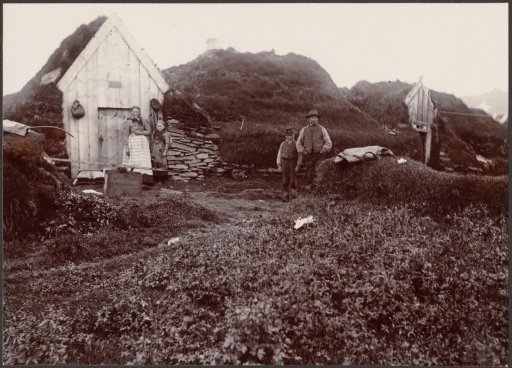
After visiting Iceland, I was eager to read this book which won the Nobel Prize in Literature in 1955.  It is an interesting novel, based on an individual farmer who is determined to create and maintain his independence.  Having been a bonded man for eighteen years, he then spent twelve years paying off a piece of land which is remote and considered a poor prospect for a successful sheep farm.

The main character is an ignorant, dull man who knows little of the world and whose entire existence is centered around raising his sheep.  He is callous towards the women and children in his life, his life is brutish and dependent upon factors over which he has no control, such as the weather, markets, etc.  For several hundred pages we follow this man, hoping that at some point his struggle for independence will allow him to interact with others in a positive manner.  Good luck!  He stumbles through life, nobly facing adversity but seemingly unable to learn from his errors and life.

Reading this book, I fulfilled my yearly venture into Nordic literature and although this book is considered an “Icelandic epic”, it is in fact another of those dark, brooding Nordic stories which reflect the geography and history of the people.  Reviewers note the main character’s “flinty determination to achieve independence” when in reality he is a slave to his lack of rational thought.  There is something dark and brooding in Nordic/Scandinavian literature which one can feel when visiting the area.  Perhaps it is the long dark winters or the lack of grand purpose to their lives, perhaps it is the realization that their time has long passed and so they attempt to assume an air of moral superiority when they realize they are but bit players in the world, but this novel captures the isolation and distance of that land.  Caution! You do not want to read this novel while listening to Leonard Cohen.

Share:
Reading time: 1 min
Page 1 of 41234»

Barry J. Klazura

Barry Klazura sipping grappa

With a Masters Degree in Guerrilla Warfare and Totalitarianism, Mr. Klazura was well prepped for a career in Sales and General Management, consulting on corporate startups and turnarounds as well as lecturing on history and politics.  For the past twenty years he has focused on being a financial advisor and consulting.

Delivered To Your Inbox

Sign up to get an email when a new article is published.

Topics

  • American Civil War
  • Biography
  • Book Reviews
  • Cigar Reviews
  • Coronavirus
  • Current Affairs
  • Education
  • Environment
  • Factoids
  • Government
  • Lifestyle, Cigars & More
  • Liquid Refreshments
  • Musings
  • Quips and Historical Facts
  • Society
  • Travel
  • Uncategorized
  • World War I

Subjects

book Books-Russia/Soviet Union Books 21st Century Books 1919-2000 Books Ancient to 1900 Books Asia Books Biography Books Fiction Books Germany 1919-1945 Books Pre-WWI books Viet Nam books world war I Books WW1 Books WWI Books WWII Cigar Friendly Location Amsterdam Cigar Friendly Locations-London Cigar Friendly Locations-New Orleans Cigar Friendly Locations-New York Civil War Coronavirus Environment Korean War World War I World War One

Recent Articles

At Stalin’s Side by Valentin Berezhkov

July 15, 2026
The Price of Victory by N.A.M. Rodger

The Price of Victory by N.A.M. Rodger

June 26, 2026
Frontsoldaten: The German Soldier in World War II by Stephen G. Fritz

Frontsoldaten: The German Soldier in World War II by Stephen G. Fritz

June 5, 2026
Organizer of Victory, 1943-1945, George C. Marshall by Forrest C. Pogue

Organizer of Victory, 1943-1945, George C. Marshall by Forrest C. Pogue

May 26, 2026
Illegals Released & Our Leaders

Illegals Released & Our Leaders

May 10, 2026

Inquiries and Comments

For general inquiries and comments, email AOTOHcomments@gmail.com.

Facebook
© 2020 And On The Other Hand. All rights reserved.