
On The Other Hand -
Book Reviews
Lifestyle, Cigars & More
Musings
About
On The Other Hand -
  • Book Reviews
  • Lifestyle, Cigars & More
  • Musings
  • About
Book Reviews

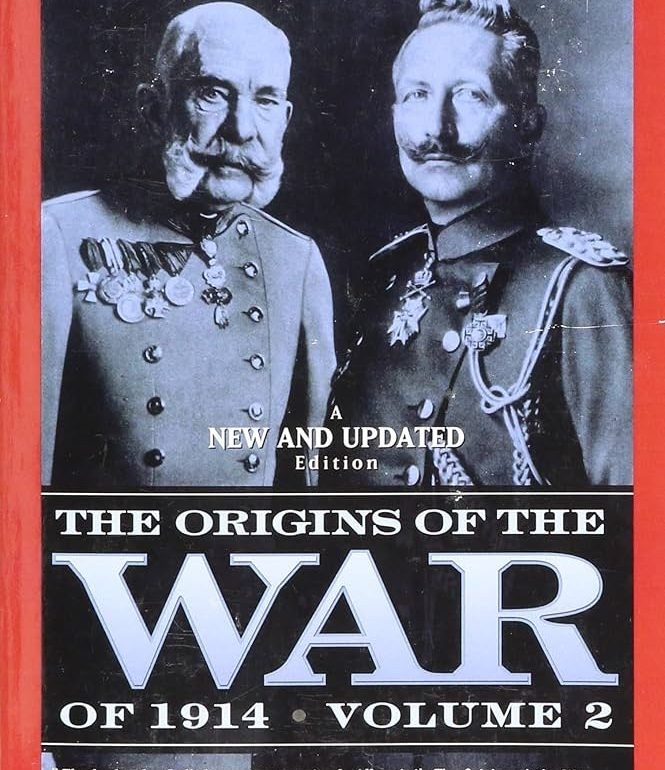
The Origins of the War of 1914 by Luigi Albertini

November 25, 2024 by Barry J. Klazura No Comments

First published in 1942 in Italy, Luigi Albertini’s The Origins of the War of 1914 (three volumes, about 2200 pages) traces the political, diplomatic, and military causes of the war, going as far back to the compromise between Austria and Hungary in 1867 and its impact which would ripple through Europe for decades. He takes the reader step by step along a path that ends in war. The way he lays out the events in Europe, one can see with the advantage of hindsight how so many European decisions naturally led to war.
The work itself is recognized as one of the two or three most important books on the subject and Albertini provides the reader military and diplomatic dispatches, notes on policy meetings held by France, Germany, Russia, and other nations. We are exposed to the lies, corruption, political back biting and conflicting interests of the leaders of nations and those who serve them. Just as today we face what is known as the “deep state,” in nineteenth and early twentieth century nations, generals, bureaucrats, industrialist, and others followed their individual interests, often at the expense of their own nations.
Humanity with all of its weaknesses and faults parades before the reader who is left shaking his or her head at the sheer number of foolish decisions. There is little nobility to be seen as:
• We see the stupidity of the Russian Czar who did not realize that he could not mobilize only a portion of his forces and the generals who lied to him.
• We see the Italian leaders who dreamt of expansion in the Balkans with the result that they sold their nation to the highest bidders.
• We see the German Kaiser, known for his bluff and bluster who pales as he realizes what is about to be unleashed thanks to his overweening ego.
• There is the Kaiser Franz Joseph, an old, tired man used by his Chief of the General Staff into issuing an ultimatum which no nation could accept.
• The assassin, Gavrilo Princip never regrets unleashing a war that would lead to millions of deaths and would open the door to a second war with tens of millions of dead, all in the name of a “Greater Serbia.”
• Britian’s Secretary of State for Foreign Affairs, Sir Edward Grey did not realize the danger Europe faced even though his nation had been in a naval race with the strongest land power in Europe.
• France fueled the rearmament of Russia in order to encircle Germany in a war of revenge using tactics that had cost them the last war with Germany.
There is no end to the players who each did their part to bring on the war. The list of long forgotten European foreign ministers, generals and officials can be daunting to keep straight precisely because none of them acted in a responsible manner, one which would slow down the slide to war.
Nations and their leaders have long memories. A quick decision by one nation can lead to a grievance of another that will last for decades. Yesterday’s allies are tomorrow’s foe for as Charles de Gaulle said decides later, “Treaties are like roses and young girls. They last while they last.” Unfortunately for Europe, the treaties of both sides were honored and paid for with the blood of millions.
Share:
Reading time: 2 min
Book Reviews

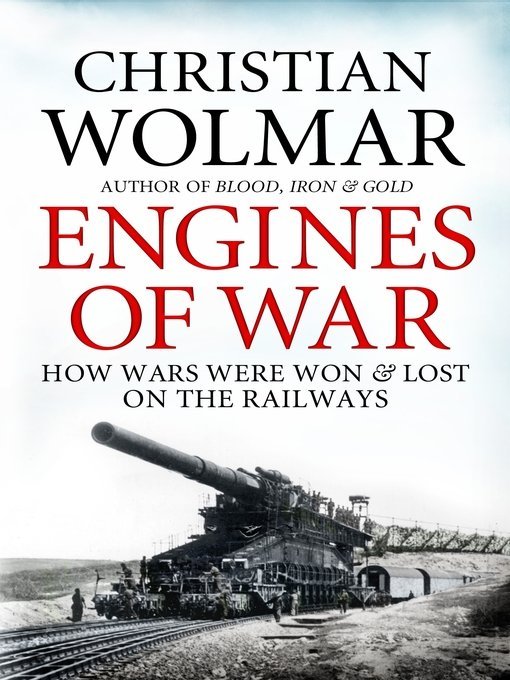
Engines of War by Christian Wolmar

February 18, 2024 by Barry J. Klazura No Comments

The logistics of war is a science often neglected.  A prime example of this was when Japan attacked the US, their soldiers went to war with 2 pounds of logistical support (supplies, shipping, etc.) while the US soldier had 4000 pounds to support him.  The result was a forgone conclusion and not even Japan’s best-case scenario (a negotiated truce where they could keep some of their gains) was possible.

     The advent of trains added new dimensions to war; suddenly campaigns could be supplied further from the homeland and war did not have to take a break during the winter when traditionally armies were broken up and dispersed widely in order to not totally plunder the land.  More men, more supplies could be moved to threatened points of conflict and the result was longer, bloodier wars.

     This book is a bit of a disappointment in that it does not fully portray the full scope of the impact of railroads.  There is an interesting discussion of A.J.P. Taylor’s thesis that railroad tables led to wars, but it is counter balanced by the strategic goals (in this case of Russia and France against Germany).  Other volumes have pointed out the huge logistical undertaking of war; while it is interesting to try to grasp that 11,000 trains were re-directed in a campaign, that number does not tell you of the freight involved.  How many meals, guns, coats, boots, etc. were moved and delivered to the right units at the right time?  Or, there is no real discussion of how the lack to railroads going in the right direction led to French armies being beaten during mobilization by the more strategically designed Prussian railway system.

     This is a good book for the novice, for someone who wants to get a very basic grasp of the impact of railways on war, but it will lead one to look for follow up volumes on the subject.

Share:
Reading time: 1 min
Book Reviews

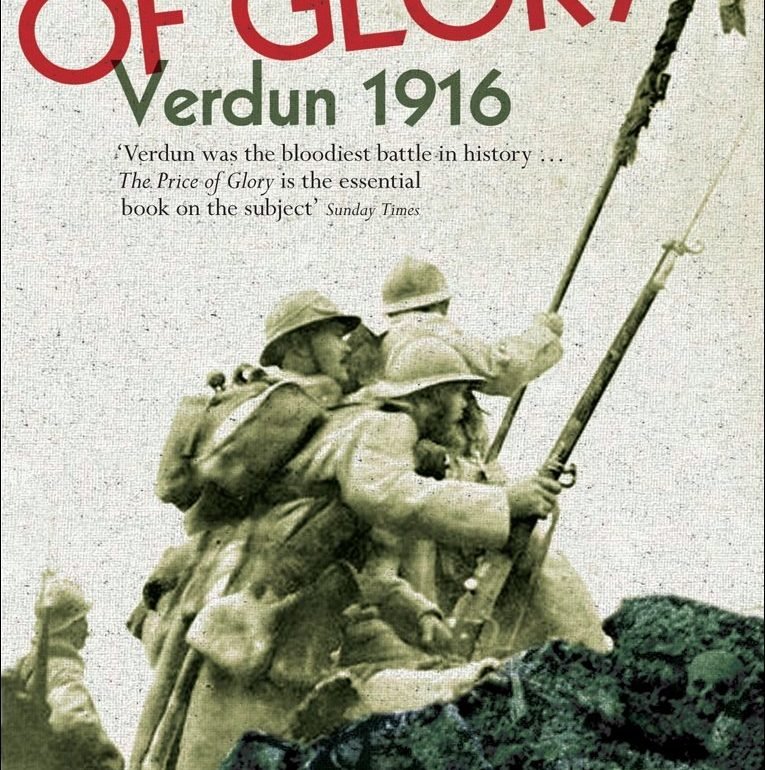
The Price of Glory, Verdun 1916 by Alistair Horne

August 30, 2022 by Barry J. Klazura No Comments

There are many beautiful locations in France and during a month-long driving trip across the country, one can find many of the wonderful locations shelter cemeteries commemorating the many battles that have been fought on French soil for centuries. One of the most peaceful is at the Verdun battlefield, that ten-month battle (twice as long as Stalingrad in WWII) where three-quarters of a million men were killed, wounded, or listed as missing. But the missing are not really all missing, for at the battlefield stands the Ossuary, a building of unique design. The cloister itself is 450 feet long and in the center is the tower, some 151 feet high which houses the great bronze bell. In front of the Ossuary are the graves of over sixteen-thousand French troops. As one walks around the great monument, one notices small windows set just above ground level and peering in, one sees stacks of skulls, or the various bones that make up the human body. These bones, the remains of over one hundred-thirty thousand French and German soldiers are some of those missing. Their bodies were simply blown apart, entirely or partially vaporized in the hail of artillery fire that stripped the surrounding hills of trees, animal life and even the topsoil.

I first read this book in the late 1970’s and I return to it every few years, each time learning more about the battle and being amazed at the ability of men to endure months of slaughter, in the snow and rain, often without food for days, covered in mud, trying to dig themselves deeper in the deep sucking mud in a vain attempt to escape some of the 37,000,000 artillery shells which were fired during the battle. The author puts a face on many of the combatants, using letters and diaries written at the time and long forgotten when their authors were destroyed later in the war. He was also able to interview veterans of both nations as well as widows and children which he mixes in to keep us focused on the humanity of the combatants.

Going further, the author portrays the key military leaders involved in the battle and how some jockeyed for advancement and how a few, such as General Petain, did what he could to save the army while at the same time showing a rare compassion for the lowly Poilu. While German general Erich von Falkenhayn designed the battle to bleed the French army dry using overwhelming fire power, in two instances he hesitated to act which could very well have brought not only victory at Verdun, but also for Germany in the war. In the end, both armies were bled dry but with a war on two fronts for the Germans with a poor ally (like being tethered to a corpse according to the German high command), command failures such as exhibited by von Falkenhayn were simply unacceptable.

Wars are always terrible, unimaginable for most people, but this history brings out not only the tragedy, but the sheer determination of men in war to survive and achieve. Reading this book will always make the reader thank any veteran they meet for what they were willing to do to keep the walls of society safe.

Share:
Reading time: 2 min

Barry J. Klazura

Barry Klazura sipping grappa

With a Masters Degree in Guerrilla Warfare and Totalitarianism, Mr. Klazura was well prepped for a career in Sales and General Management, consulting on corporate startups and turnarounds as well as lecturing on history and politics.  For the past twenty years he has focused on being a financial advisor and consulting.
Delivered To Your Inbox

Sign up to get an email when a new article is published.

Topics

  • American Civil War
  • Biography
  • Book Reviews
  • Cigar Reviews
  • Coronavirus
  • Current Affairs
  • Education
  • Environment
  • Factoids
  • Government
  • Lifestyle, Cigars & More
  • Liquid Refreshments
  • Musings
  • Quips and Historical Facts
  • Society
  • Travel
  • Uncategorized
  • World War I

Subjects

book Books-Russia/Soviet Union Books 21st Century Books 1919-2000 Books Ancient to 1900 Books Asia Books Biography Books Fiction Books Germany 1919-1945 Books Pre-WWI books Viet Nam books world war I Books WW1 Books WWI Books WWII Cigar Friendly Location Amsterdam Cigar Friendly Locations-London Cigar Friendly Locations-New Orleans Cigar Friendly Locations-New York Civil War Coronavirus Environment Korean War World War I World War One

Recent Articles

At Stalin’s Side by Valentin Berezhkov

July 15, 2026
The Price of Victory by N.A.M. Rodger

The Price of Victory by N.A.M. Rodger

June 26, 2026
Frontsoldaten: The German Soldier in World War II by Stephen G. Fritz

Frontsoldaten: The German Soldier in World War II by Stephen G. Fritz

June 5, 2026
Organizer of Victory, 1943-1945, George C. Marshall by Forrest C. Pogue

Organizer of Victory, 1943-1945, George C. Marshall by Forrest C. Pogue

May 26, 2026
Illegals Released & Our Leaders

Illegals Released & Our Leaders

May 10, 2026

Inquiries and Comments

For general inquiries and comments, email AOTOHcomments@gmail.com.

Facebook
© 2020 And On The Other Hand. All rights reserved.