
On The Other Hand -
Book Reviews
Lifestyle, Cigars & More
Musings
About
On The Other Hand -
  • Book Reviews
  • Lifestyle, Cigars & More
  • Musings
  • About
Book Reviews, Current Affairs, Government, Society

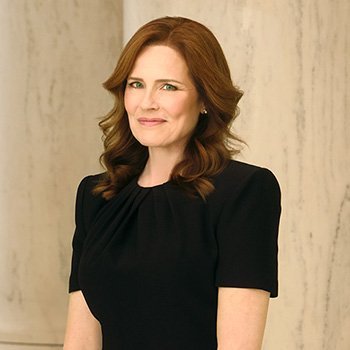
Listening to the Law: Reflection on the Court and Constitution by Justice Amy Coney Barrett

November 12, 2025 by Barry J. Klazura No Comments

Since the 1970’s, Justices for the Supreme Court have for the most part come from Ivy-League, East Coast law schools.  Justice Barrett breaks that trend ( being a native of New Orleans) and as a result, her clear writing, legal and teaching experience provides us with a clear and clean understanding of some of the key factors used in her decision making process. Her book is written in a manner that goes against the grain of the ivy league schools in that it is concise, takes on real issues and discusses the procedure, forces and philosophies which guide the decision-making process of the Court. While she provides personal background information on her life, unlike some Justices, she makes the reader understand that her rationale to reach a conclusion is not based or tainted by her personal views, but rather by understanding what the words of the Constitution mean.

It is refreshing to read her book as she clearly discusses the pros and cons of a number of issues, not only legal issues before the Court, but also the political questions facing the Court, such as the concept of Court packing, lifetime tenure, etc.  We see the actors behind the scenes such as the law clerks, the traditions of the Court that have evolved over the years, which are designed to maintain a balance of civility and professionalism even among the Justices.  Her discussions on areas such as textualism and originalism include their history and forces behind each so that everyone can understand the dynamics of each concept.

The Justice is obviously a serious scholar of the law but one which can clarify a subject in a few words where others will need much more room or confuse the issue by inserting their personal views and bias. Her love for the law and the Constitution is clear. 

During her confirmation, she withstood the slings and arrows of several Senators who attacked her over their concerns regarding health care, abortion rights, her religion and her judicial philosophy (Originalist). She withstood the fire, never once reaching or referring to any notes. The fact that she is an Originalist and would therefore not let her personal feelings impact her duties seemed to both some Senators who seem to favor an more “progressive)” attitude toward law.

 Give this read a try, especially if you wish to gain a higher regard for the Court and the Justices.

Share:
Reading time: 2 min
Book Reviews

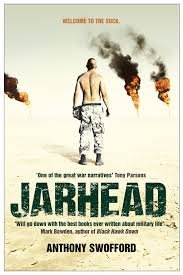
Jarhead, a Marine’s Chronicle of the Gulf War and Other Battles by Anthony Swofford

July 14, 2025 by Barry J. Klazura No Comments

This book could have been written by two different authors; the first half written and an immature, foul mouthed childish young man who might impress a thirteen-year old boy, while the second half was written by a young man who came from a family poor background, who is seeking in the Marines a home and cause and who decides to shape up as he is thrust into an actual war situation. The man who wrote the first half is as far from the ideal American soldier that one can image while the second half author is a creditable work in progress.

The book is both boring (in the first half) and interesting (in the second) as the author slowly matures and realizes that despite typical military B.S., there is a rhyme and reason to the military way of doing things. He is proud to be a Marine and his specialty (recon and sniper) and he matures much faster as he and his unit are sent out in the first phase of Operation Desert Storm. Later in life, he matures further as he runs across former members of his unit who have not matured and who live a life filled with made up fantasies fueled by alcohol and drugs.

There is no possible way that I would want to have dinner with the author of the first half of the book, but there would be an opportunity to enjoy a meal with the second-half author as he comes from a world far removed from the American ideal. As military history  it has little to offer, but as personal development it has some merit.  I would not, however, mark this as a book worth reading a second time.

Share:
Reading time: 1 min
Book Reviews

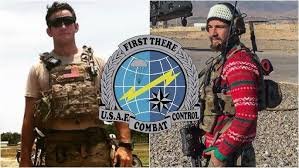
Alone at DawnMedal of Honor Recipient John Chapman and the Untold Story of the World’s Deadliest Special Operations Force by Dan Schilling & Lori Chapman Longfritz

July 8, 2025 by Barry J. Klazura No Comments

After 9/11, a handful of specially trained U.S. servicemen went into action in a land that was little known, filled with tribal and family hatreds and rivalries, a religion that looked down on non-believers and could switch sides if bribed with enough money. Those Americans who went into action in Afghanistan, had to quickly earn the trust and respect of the native population, and operated far beyond the normal boundaries of their individual services.

Key to the success of those brave individuals was a small group of highly trained men who had the ability to call down upon the battlefield unbelievable firepower while they were not in a distant office looking at a monitor, but while they were in the very front lines of the deadliness battles.  This elite group of individuals is known as the Combat Control Teams (CCT). Their motto is “First There” and together, they have collected “in aggregate, more combat action than their special operations counterparts in the Navy and Army-making some of them the most experienced veterans in all of America’s previous wars.”  Trained to the standards of the Seals, Delta, or Special forces, they were instrumental in breaking the back of the Taliban and Al Qaeda forces equipped with modern weaponry in battles which echoed World War II.  It was through their experience, expertise, and bravery that the power of the Taliban and Al Qaeda was broken not in months, but rather in weeks. Each member of the CCT controls more destructive power than any other individual combatant in the history of the world.

The book covers the battle of Operation Anaconda as well as the background of John Chapman, the first airman to win the Medal of Honor since the Vietnam War and the first member of CCT to win the Medal of Honor. His career and actions reflect the highest standards and professionalism of the little-known group of men who serve in the CCT. While the book may at times be overly technical for the novice military reader, it also reflects the skill set that is demanded in that service. Such a skill set is necessary given the huge destructive power that is placed in the hands of CCT members. Those skills are coupled with dedication and willingness to sacrifice oneself in the service of the nation and one’s fellow warriors.

Share:
Reading time: 1 min
Book Reviews, Government, Society

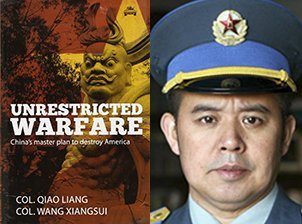
Unrestricted Warfare by Qiao Liang & Wang Xiangsui

June 10, 2025 by Barry J. Klazura No Comments

In the past week, three Chinese students some of whom had entered the U.S. illegally and even voted in the 2024 election were caught and face Federal charges of attempting to bring in the U.S. a deadly fungus that can devastate crops such as wheat, barley, maize and rice.  They have been studying at the University of Michigan, and one has an advanced degree in plant pathogens. Some of the students have received funds from an institute partially owned by the Chinese Communist Party. Elsewhere, there is a growing concern over the purchase of U.S. farmland near U.S. military bases. Although the amount of land is only about 1% of our total farmland, it still amounts to nearly four hundred-thousand acres of land. While the recent military success of the Ukrainian forces against the Russian strategic bomber fleet has begun to bring concerns about the safety of our B-1 and B-2 strategic bombers, the Governor of Arizona recently vetoed a state bill restricting the purchase of land by Chinese nationals. Finally, the discovery of unlicensed Chinese labs in the U.S. who were working on dangerous work related to Covid-19 and were found to have genetically modified mice, has raised further questions of what are the intentions of Communist China.

The intentions are not a secret if anyone has read the 1999 book, Unrestricted Warfare by Qiao Liang & Wang Xiangsui, both retired Chinese colonels. Originally published by the People’s Liberation Army Literature & Arts Publishing House, it must have been approved by the Communist Party. They argue that generals such as Colin Powell and Schwarzkopf are more “traditional” and that they do not understand today’s war options. Further, for today’s war to be won, all available tools, including cyber and economic means, the use of media influence and legal manipulation (lawfare) must be used. They argue that the traditional boundaries of warfare must be “widened.”  For example, they write:

“The existence of boundaries is a prerequisite for differentiating objects from one another. In a world where all things are interdependent, the significance of boundaries is merely relative. The expression “to exceed limits” means to go beyond things which are called or understood to be boundaries. It does not matter whether they fall into the category of physical, spiritual, or technical, or if they are called “limits,” “defined limits,” constraints,” “border,” “rules,” ….” or even taboos.”  Speaking in terms of war, this could mean the boundary between the battlefield and what is not the battlefield, between what is a weapon and what is not, between soldier and noncombatants, between state and non-state or supra-state.”  (pp158) In other words, no boundaries, a concept of warfare (with both success and failure) that the West has attempted for a thousand years to change. In their concept of war, one need not worry about “terms of engagement,” for the gloves are off.

On the next page, they attempt to dress this up by referring to “going beyond the limits,” “surpassing all boundaries and conforming with the laws of victory when conducting warfare with combinations. Thus, we obtain a complete concept, a completely new method of warfare called “modified combined warfare that goes beyond limits.”

We currently have over a quarter of a million Chinese nationals in our universities. Those students are expected to report back to the homeland on research, ideas, and individuals. Those same universities have accepted billions of dollars from Chinese foundations and think tanks funded by the Chinese party and military.

There is an old saying, “forgive me my paranoia, for I know what I fear.”  We are an open, trusting society. Traditionally we have always thought the best of our fellow man as we were founded on Judeo-Christian ideals. It has been eighty years since we faced and defeated nations which believed that the ends justify the means. Perhaps eighty years is too long a time for us to put a threat in its’ proper perspective.

Share:
Reading time: 3 min
Book Reviews, Current Affairs

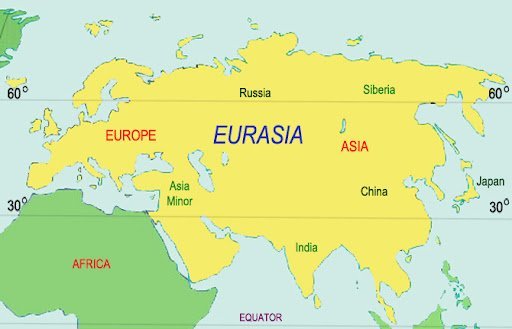
The Eurasian Century: Hot Wars, Cold Wars, and the Making of the Modern World by Hal Brands

March 17, 2025 by Barry J. Klazura No Comments


A friend of mine recently lent this book to me and it brought to mind various debates I had during graduate school many moons ago regarding the premise of the book; whomever controls the Eurasian continent controls the world.


This theory was originally formulated in 1904 by Halford MacKinder, a British geographer. It shortly followed the work by Captain Alfred Thayer Mahan’s extremely influential book, The Influence of Sea Power upon History, 1660-1783. In that book Mahan put forth the theory that as the oceans are the fastest routes for trade, control of the oceans will decide which powers will succeed and which will die. MacKinder put forth the idea because of the population, central position, and mineral wealth of the Eurasian land mass, that it will determine which nations live and die. Going further, Karl Haushofer, a German geopolitician continued MacKinder’s theory and he was influential to the Nazi view of the world as MacKinder was influential with Kaiser Wilhelm prior to the first World War.


Britain and the United States are both sea faring nations, outside of the Eurasian sphere, yet both have played vital parrs in controlling and shaping the Eurasian sphere. Brands goes through several examples of how the United States has dealt with the area, including World Wars I and II, the creation of NATO, our actions in the Middle East and so forth. In one way, this is a weakness in the book as the involvement of the U.S. was not due to an acceptance of MacKinder’s theory, but rather at least until the Cold War, a natural case of self-defense. The U.S. actions in the Middle East, plus Afghanistan are more suspect in that they went far beyond actions that were previously acceptable to the average American.


The last part of his book looks at the current players who seek to control if not all, at least sizable chunks of the Eurasian land mass, namely China. China with it ever increasing military power and sizable economic power, is the greatest player. It pushes until seriously pushed back as the nations such as Viet Nam, the Philippines, and others are finding out today. Their Belt and Road programs has reached even into Europe and has been successful in spreading China’s influence through most of Africa. Can China, with help from Russia, seize control of the Eurasian area thus locking out England and the United States out of such a vital area.? Can anyone accomplish that goal?


That has always been the key question to me, for the land mass is so great, the populations so diverse and in so many levels of development that how could any power do anything but bleed to death attempting to gain a level of control that would be worth such a great effort. In the early twentieth century, thinkers like MacKinder and Haushofer might have believed it was possible, even though there were already small struggles for independence in India and parts of Asia and Africa. Today, we must add in the religious extremism of the Middle East (and parts of Indonesia) and the task would become even harder. Finally, we have seen failures in the Belt and Road project which show the Chinese model may have feet of clay.


I would recommend this book as it is objective (I only found a couple of examples of personal political bias) and provides an excellent overview of various nations causes for action. If one or more nations cannot control the Eurasian area, is it possible to be done by a group of nations? It is doubtful, for if we think of the problems in Europe which has tried to tamper down the differences between the various members of the E.U., we find that despite hundreds of years of cross border trade and wars, the differences in languages, customs, views of history, even food make for a challenge on so many fronts.
The Eurasian area is huge and the hundreds of millions of people who live there share little in common beyond a desire to live, have enough food and at best, provide for a better life for their children. Help yes, control and direction, no.

Share:
Reading time: 3 min
Book Reviews, Current Affairs, Education, Government, Musings

Over Ruled: The Human Toll of Too Much Law by Neil Gorsuch and Janie Nitze

October 23, 2024 by Barry J. Klazura No Comments

“The worse the society, the more law there will be. In Hell there will be nothing but law”
Grant Gilmore


Recently the governor of California signed nine hundred new laws into being. Each law will carry various civil and/or criminal penalties and will be further clarified by various rules as determined by the various agencies which will enforce the new laws and rules. Do you know how these new laws will impact you, your life, your family, or business? How many of them will make your life better or easier? Yet, you will be expected to abide by these laws; ignorance of the law is no longer a defense.
In this excellent book, Justice Gorsuch gives numerous examples of how federal laws and rules can be abused by the authorities and how naked we stand before the power of the State. An example is the fisherman who was charged with violating the Sarbanes-Osley Act (instituted after the housing crash of 2007 and aimed at financial institutions) when two federal officials miscounted how many fish he had caught with the result that he lost his business, home, and retirement savings. In the end, the Supreme Court found that he was innocent, but he lived a twenty-year nightmare and received no restitution.
That ex-fisherman was fortunate for he had the nerve and outside help to fight the system, while others often charged with multiple “crimes” from multiple agencies simply plead down their “crimes” in order to try to get on with their lives. And what chance does the average person have when you take the example of new laws in California, multiply it by fifty states and then add on and average of fifty-six new federal crimes every year. In reality, no one knows exactly how many federal laws and regulations carry a criminal punishment, but it is at least three-hundred thousand and growing.


How did this type of system develop? The Founding Fathers were very fearful of a powerful centralized state for they knew from their life experiences the helplessness of the individual. Thus, they created a system of checks and balances in order to limit the power of the central government. They believed that if laws were made, it would be better to have them created at the state level where there was a better opportunity for the average citizen to see, understand and give voice to their concerns.
The system began to change under the administration of President Woodrow Wilson who believed that what was needed was a “science of administration” where “experts” could “straighten the paths of government.” What this meant was that far too much time was spent thinking about the relationship between government and the constitution, and not enough time spent looking for government “efficiency.” And what better model than the Prussian bureaucracy? The Constitution stood in the way of “efficient” government with all of those annoying checks and balances. Better to let expert bureaucrats take the reins of government so that a living, breathing constitution could be created. Despite the failure of “expert” government from the times of Plato and Aristotle, Wilson believed that this time it would be different.


The result is a system where Americans spend 9.78 billion hours to complete federal (not counting state and local) paperwork. To put it another way, “Suppose that we assembled every resident of Chicago and insisted that for the entirety of 2019, each one must work forty house a week engaged in just one task; fill out federal forms. By the end of 2019, the 2.7 million citizens of Chicago will not have come within four billion houses of the annual paperwork burden placed on Americans.”
How do we change a system where the average citizen is lost in a maze of laws and rules drawn up by bureaucrats who are not judged on their service, but rather who have a vested interest in creating new rules in order to expand the bureaucracy? The answer is not simple and must come in large measure from the average American. Justice Gorsuch points out the woefully inadequate amount of time and money spent in educating children on civics. In fact, while the federal government spends about $.54/student on education for STEM, it only spends about $0.05 on civics. The result is that only about thirty-two percent of millennials believe that it is “absolutely essential” that “civil rights protect people’s liberty.”


A more encouraging step is Proposition 315 in Arizona. Under that law, any new rule from the bureaucracy which would cost $500,000 over a five-year period would have to be examined and agreed to by the state assembly. In other words, the law makers would have to realize the impact of their laws (which unfortunately Congress gave up years ago). This proposition is strongly opposed by the League of Women Voters as it would give lawmakers a tool to block rules with which they do not agree!


In the end, we face a lopsided battle; the bureaucracy which cannot be fired nor held to account vs. the average citizen who has no idea what laws and rules they face every day. We can only thank those few strong individuals and those who support them for showing us with their struggles the leviathan we face every day.

Share:
Reading time: 4 min
Book Reviews

The House of Islam, a Global History by Ed Husain

May 2, 2024 by Barry J. Klazura No Comments

Many years ago, just out of University my parents and I travelled to Spain.  We took a side trip to Morocco and joined a group which was sheparded around by a local Muslim guide, complete with robe and soft slippers that curled upward at the toes.  As we progressed, the guide pointed out mosques, libraries, beautiful plazas, etc. always noting that when they were built during the tenth or eleventh century, Europe was in a Dark Age.  After several such episodes, my father, always the diplomat raised his hand and asked the guide if the Muslims had done anything in the last thousand years.  There was much laughter and the guide stopped making references to Europe’s Dark Age.

My story about my father’s comment strikes at the very heart of the problem around Islam today; massive hurt feelings that a once proud and conquering force is today among the most backward in the world.  Many Muslims in the Middle East resent the failures of their leaders and governments since Islam was turned back in 1683 at the gates of Vienna.  A society which, when the first printing press was introduced into Ottoman territories in 1450 banned it as a tool of the devil, simply failed to move with the world as created by the Europeans.  Piece by piece, the Islamic world was picked apart and subjugated by the West and the feeling of anger and frustration grew until it was believed by even some of the educated that radicalism and terrorism was the only answer.  Instead of looking forward, the radicals looked backwards trying to lead the Muslim world bravely backward into the 8th century.

Ed Husain, a former radical Islamist who has rejected extremism and is now a noted fellow at several excellent Western think tanks.  He has an excellent understanding not only of Islamic history, but also a solid foundation in the beliefs of the various factions that exist within Islam today.  He carefully outlines the Sunni-Shi’a schism, what is Sharia, who is a Sufi, the foundations of Wahhabism as well as in depth discussions on the various views on women, sex, education, Jews, etc.  Overall, you can feel him objective about the factions within Islam and this book is an excellent primer on Islam.

As a former radical, he knows and understands the rationale of the radicals in their view of where Islam has gone wrong and what they believe justifies their actions.  His discussion on the difference between the Quran and supposed comments and guidelines from Mohammed is very interesting.  As Muslims believe that the Quran is sacred as created by Mohammed, they are a perfect way to live life.  The supposed saying and guidelines from Mohammed are open to interpretation; were they in fact made by Mohammed or by others many years after his life.  Are these saying supported by the Quran or in violation of the Quran?  According to Husain, such injunctions as the veiling of women, not allowing women to be highly educated, and the rules by the likes of ISIS come from these supposed comments and have no basis in the Quran.  Due however, to the low level of education of many Imams, arguments against the likes of ISIS are weak or not capable of convincing Muslims to move away from such practices.

The author loves Islam, but he also has a rather distorted history of Islam.  According to his view, the warriors of Islam spared women and children as they swept across the land, but if they did, it was only to save them for the slave market.  Or, he mentions that the natives of India converted to Islam because they loved Islamic poetry and not because literally tens of millions were slaughtered by various Islamic rulers.  Yet, aside from these examples of glossing over of history (there are others), the book remains an excellent one that Westerners would do well to read.  Unlike other books on Islam, he does offer concrete suggestions on what can be done to reverse the trend towards radicalism and to move Islam forward in the real world.  He pushes hard for the Islamic world to accept Israel and to see what can be done with education, unity and hard work.  Would the Islamic world be willing to learn from Israel?  Can the Arab countries put aside their tribalism and move against (especially in Saudi Arabia) against Wahhabism?  Would the West be willing to create a Marshall Plan for the Islamic world in conjunction with the oil rich Arab world who would contribute to the development of lands outside of their own?  If not, then the path away from radicalism will be longer and harder than necessary.

Share:
Reading time: 4 min
Book Reviews, Government

Never Give an Inch, Fighting for the America I Love by Mike Pompeo

March 27, 2023 by Barry J. Klazura No Comments

I will say this for Mike Pompeo; he does not give an inch.  His book primarily deals with his time as head of the CIA and then Secretary of State during the Trump administration is probably the most direct political memoir I have read.  He states his positions very clearly and makes note of his successes and failures for all to see.  There is no doubt where he stands and what he stood for while holding those two positions. I can see that if he had been in different administrations, he would not have achieved what he did and certainly would not have lasted as long as he did.

A staunch believer in his country, he is not ashamed to admit that he gathers much of his strength from his family, especially his wife and their strong religious beliefs.  He will quote scripture to show how the Bible has helped him achieve his successes and in more than one situation, his knowledge of scripture won him high marks in the international field.

To a greater extent than normal, his freely gives credit to those who work for him praising their dedication, knowledge and patriotism.  The list is long and is referenced throughout the book; here is a man who has built businesses and has signed paychecks and who knows that a successful manager is one who surrounds himself with the best people possible.  On the other hand, he names names and gives examples of D.C. professionals who are shallow, seek to feather their own nests and are certainly not beholding or supportive of any particular occupant of the White House. Unlike other Trump officials, he always remembered that he signed onto the Trump administration and that while he may have disagreed with the President on certain matters, he was free to voice his opinion and then his job was to soldier on, as long as the job did not cross the line of his own conscience.

Continue reading
Share:
Reading time: 5 min
Book Reviews, Government, Society

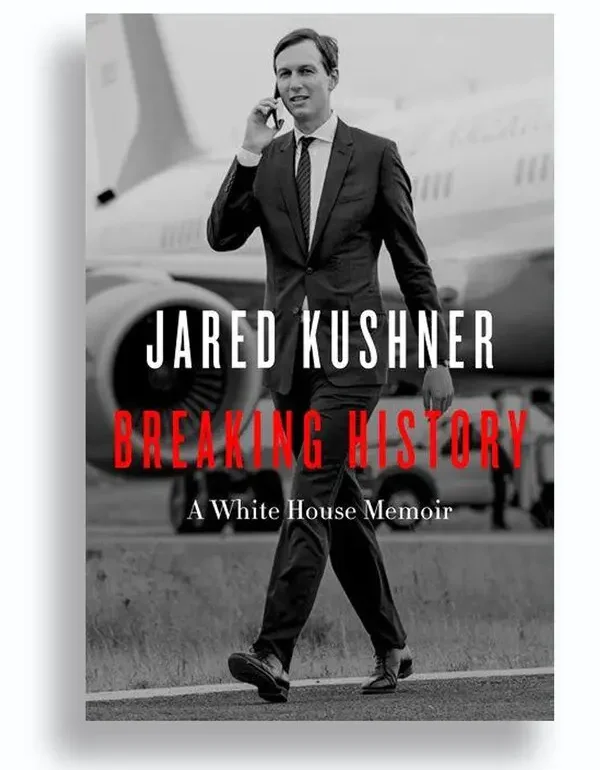
Breaking History by Jared Kushner

January 9, 2023 by Barry J. Klazura No Comments

I must admit that prior to reading this book, I had mixed thoughts about Mr. Kushner.  Was he a case of nepotism, what was his background, did he have any thoughts of his own or was he merely a puppet of the President who was his father-in-law, did he marry into the Trump family in a bid for easy wealth, and so on.  By the end of the book, admitting that it may be at times self-serving (how unusual for a political memoir), my attitude toward him turned to admiration. 

Here was an individual from outside the belt way who took on tasks which were not easy, fought against individuals with their own agendas and who did not necessarily supporting the goals of the man they worked for, the President, entered into the very real dark and self-perpetuating deep state and came out with his love of country intact, his family intact and could realize that he helped to accomplish successes where “insiders” had failed for decades. 

How was he able to accomplish anything being an outsider in the Capital.  For one, he brought a level of expertise that was missing in the Capital and the hallways of power, for rather than trying to merge into the bureaucracy and traditional power games, he brought his business sense to the table.  This means that as every businessman knows, you cannot move ahead if you do not offer a good product and work at every level to provide that product to the market.  His approach was very often one of being willing to listen.  An example is the dogma given by John Kerry that “There will be no separate peach with the Arab world without the Palestinian process and Palestinian peace.  Everybody needs to understand that.  That is a hard reality.”  Kushner realized that the same old programs with ill-defined promises had been the bedrock of Middle East discussions for decades with the same result, failure.  Instead of doing the “same old, same old”, why not do something different. It was Henry Kissinger who advised him that the foreign policy of the nation had to be run by the White House as opposed to the State Department where ideas seem to go to die. 

While Trump may have been mocked by the Germans and others when he cautioned them about relying on cheap energy from Russia, in the Middle East he was respected for his openness and willingness to be bold and speak openly.  His image played well in the area as opposed to the apology tour concept and he was willing to listen to what Arab leaders had to say in very frank discussions, including when he told them that a deal could be made but that they had to handle the terrorists in their own countries who go out and murder Israelis. No action, no deals.  The Arab leaders also liked that Kushner was the President’s son-in-law which gave creditability to his voice.  Finally, he found by listening that a major stumbling block to Middle East movement was not necessarily the Palestinians who were getting to be a burden, but rather guaranteed and safe access to the al Aqsa Mosque which was under the control of Israel.  By finding the one thing that all the Arab leaders could agree on, it enabled him, by working hard and creating a strong team, to develop and close the Abraham Accords, an action that has led to greater trade and development in the area.

The book notes some of the personalities in the administration including Tillison, Kelly, Fauci, Bolton and others in a way that allows one to read between the lines and understand his opinion without being insulting.  In each encounter, Kusher seems to better realize the difference between the government game and that of business, but he absorbs each and uses the experience to better his results.

One of the finest sections is in the episode regarding the successful strike against Soleimani.  The Iranian general had been responsible for the deaths and wounding of thousands of U.S. military personnel and Trump felt that a message needed to be sent that there was no safe ground for those who attacked Americans. The killing of Soleimani sent a strong message to the Iranian leadership and despite the threats made by that leadership, their reaction was one that was feeble at best.

Other chapters cover Operation Warp Speed, the bi-partisan passage of the First Step Act, and of course, the wasted energy over the Russian collusion investigation. 

In the end, I believe most readers will put the book down and believe that Jared Kushner, a religious and strong family man, put his best efforts into projects during that four year period.  He is proud of his accomplishments and the service he provided to the country and at the same time, it is easy to understand why he has openly stated that he would not wish to go back to such service again.  Somehow, we need to create a system where good and honest individuals can enter government service, and not face the possibility of huge legal bills created by political gamesmanship, where new ideas can be put forth after decades of failed policies.  This is one of the best post-Administration memoirs I can remember and it does provide hope for the future.

Share:
Reading time: 4 min
Book Reviews

Fiasco, the American Adventure in Iraq by Thomas E. Ricks

December 19, 2022 by Barry J. Klazura No Comments

Several years ago, I read Luigi Albertini’s massive, three volume, 1800-page work, The Origins of the War of 1914. It was a heartbreaking work as it laid out a chain of events beginning about thirty years prior to the outbreak of the war which seen from today, clearly pointed to the start of that terrible war.  Misunderstood actions, political snubs and fumbles, conflicting personalities, etc., seem to drive the Western powers toward a cliff from which none could turn.

In a sense, this book gives one the same feeling, only you reach the conclusion by about page 80; you want to put the book down and wonder how so many poor decisions could be made by so many policy makers and leaders. Anybody with even a rudimentary knowledge of asymmetrical warfare, can see the fundamental errors which turned a solid opportunity into a fiasco.

What is amazing is that many of the military leaders who had fought in Viet Nam and who had vowed never to make a mistake like that again, went along with political leaders and committed basic errors during and after the initial invasion; inadequate troop strength, ignorance of the culture, disruption of the economy which led to many military Iraqis joining the insurgents simply to put bread on the table, poor training of the infantry, disregard of the lessons of local control learned in Viet Nam, etc. managed to alienate the populace and actually feed the insurgency.

Ricks blames most of the problems on Donald Rumsfeld, Paul Wolfowitz, and L. Paul Bremer III as they ignored advice which did not agree with their preconceived ideas and amazingly enough, they had no plan for what to do with Iraq after the military victory.  There seemed to be some sort of mystical belief that our occupation would be short lived and that some sort of civilian leadership would arise that could span the Sunni-Shite-Kurdish canyon and run a government which had been an authoritarian state under a suddenly outlawed political party. Bremer managed to put out of work the entire Iraqi army, the key bureaucrats and destroy any hope for central power to run the country.  For this, he eventually was awarded the Presidential Medal of Freedom, along with George Tenet and General Tommy Franks, both of whom managed in their own way (intelligence and military) to mislead or misdirect the war and occupation. Professionally written and documented, the weakness of this book is that it ends in 2006 and the author, entirely misses the options from that point forward.  He could not see the rise of ISIS of course, but his discussion on the political options read as if he were in a hurry to finish the book.  This should be a must read at West Point and for at least the top ten percent of the “leaders” in Congress and the bureaucracy.  Just be prepared to put the book down every few pages and shake you head in wonder at the foolishness, stupidity, and ineptitude of those who wield such power.

Share:
Reading time: 2 min
Page 1 of 3123»

Barry J. Klazura

Barry Klazura sipping grappa

With a Masters Degree in Guerrilla Warfare and Totalitarianism, Mr. Klazura was well prepped for a career in Sales and General Management, consulting on corporate startups and turnarounds as well as lecturing on history and politics.  For the past twenty years he has focused on being a financial advisor and consulting.

Delivered To Your Inbox

Sign up to get an email when a new article is published.

Topics

  • American Civil War
  • Biography
  • Book Reviews
  • Cigar Reviews
  • Coronavirus
  • Current Affairs
  • Education
  • Environment
  • Factoids
  • Government
  • Lifestyle, Cigars & More
  • Liquid Refreshments
  • Musings
  • Quips and Historical Facts
  • Society
  • Travel
  • Uncategorized
  • World War I

Subjects

book Books-Russia/Soviet Union Books 21st Century Books 1919-2000 Books Ancient to 1900 Books Asia Books Biography Books Fiction Books Germany 1919-1945 Books Pre-WWI books Viet Nam books world war I Books WW1 Books WWI Books WWII Cigar Friendly Location Amsterdam Cigar Friendly Locations-London Cigar Friendly Locations-New Orleans Cigar Friendly Locations-New York Civil War Coronavirus Environment Korean War World War I World War One

Recent Articles

At Stalin’s Side by Valentin Berezhkov

July 15, 2026
The Price of Victory by N.A.M. Rodger

The Price of Victory by N.A.M. Rodger

June 26, 2026
Frontsoldaten: The German Soldier in World War II by Stephen G. Fritz

Frontsoldaten: The German Soldier in World War II by Stephen G. Fritz

June 5, 2026
Organizer of Victory, 1943-1945, George C. Marshall by Forrest C. Pogue

Organizer of Victory, 1943-1945, George C. Marshall by Forrest C. Pogue

May 26, 2026
Illegals Released & Our Leaders

Illegals Released & Our Leaders

May 10, 2026

Inquiries and Comments

For general inquiries and comments, email AOTOHcomments@gmail.com.

Facebook
© 2020 And On The Other Hand. All rights reserved.