
On The Other Hand -
Book Reviews
Lifestyle, Cigars & More
Musings
About
On The Other Hand -
  • Book Reviews
  • Lifestyle, Cigars & More
  • Musings
  • About
Book Reviews

The Price of Victory by N.A.M. Rodger

June 26, 2026 by Barry J. Klazura No Comments

Professor Rodger’s two earlier volumes on the naval history of Britain began in the seventh century and carried the story through to the end of the Napoleonic Wars. This third volume opens with the Royal Navy at the height of its power and traces its decline from around 1840, taking in the difficult transition from sail to hybrid sail-and-steam ships and on into the modern era. The scope of such a work is immense, yet the author goes beyond the expected and creates a history that carries the reader into territory other British naval histories leave untouched.

At times, the work can border on eye-blurring, particularly when he details the personalities and politics of the British naval bureaucracy of the mid-nineteenth century. The individuals, with their foibles and political battles, can be hard to keep straight, and the prime movers of the Royal Navy are by now dusty figures receding into history. Yet those passages bring home a striking point: the politics and decision-making of that distant age were, in reality, no different from the political and economic battles we see today.

On the other hand, the book is a treasure trove of facts and struggles that are at once fascinating and genuinely enriching, giving the reader a wider and deeper understanding of the innovations and sacrifices that shaped the twentieth century.

The Women’s Royal Naval Service (WRNS)

One example, and a tribute, is his writing on the Women’s Royal Naval Service (WRNS). At a time when women were still primarily occupied in the home, the naval establishment not only welcomed the creation of the WRNS but placed its founding and day-to-day running entirely in the hands of women. The first director, Dame Katharine Furse, who had resigned from the Red Cross, was given a free hand, choosing her own staff and building the organization without male supervision. As the First World War wore on, the responsibilities of the WRNS continued to grow, and when the service was disbanded in 1919, its 438 officers and 5,054 ratings, all women, were reluctant to return to civilian life. Many formed the Association of Wrens, which later served as a foundation for the service’s reconstitution. Moving into the Second World War, the WRNS took up the challenge again, performing efficiently and at times heroically, freeing up much-needed manpower for other duties.

Breaking Enigma: The Government Code & Cypher School

Then there is the history of the Government Code & Cypher School (GC&CS), which, having learned much about German signals procedures from the Poles, was able to read a great deal of the traffic from captured Enigma machines. This intelligence played a decisive role in routing convoys around German submarines and in misleading the enemy about sailing routes and dates. Admiral Karl Dönitz never grasped the scale of the intelligence disaster he had suffered,

and as terrible as the losses were in the Battle of the Atlantic, the work of the GC&CS contributed mightily to the eventual victory.

The Small Facts That Change the Picture

Rodger also has a gift for dropping in those wonderful tidbits of history that make the reader stop and reread a passage. While discussing the siege of Malta in the Second World War, for instance, he notes that the total tonnage of German bombs dropped on Malta was greater than that dropped on London during the Blitz. Anyone who has visited Malta will grasp the weight of that single fact at once, and it casts the battle for the island in an entirely new light.

Is It Worth Reading?

I should say that the book is lengthy, more than 600 pages before the numerous appendices, with the footnotes alone running to ninety-one pages, and it can be heavy going in places. That, however, is bound up with its great strength: it is loaded with fascinating facts, presented in a way that keeps the reader reluctant to put it down. I would suggest that any newcomer adjust to the idea that you may read fewer pages per sitting than you expect, but you will come away knowing you have read a treasure of history, and one of the finest single volumes ever written on the naval history of Britain.

Share:
Reading time: 3 min
Book Reviews

The Crimean War by Orlando Figes

April 13, 2026 by Barry J. Klazura No Comments

One of the nice things about histories by Figes is that they are so readable.  Like two of this other histories I have read, (“The Whisperers” and “A People’s Tragedy”), Figes has the ability to bring the past alive and make you feel as if you are part of the action.  He does not concentrate on battle scenes (although battles are covered), but he centers on the lives of the ordinary soldiers.  In this book he gives short shift to Florence Nightingale but point out the breakthrough of a Russian surgeon, Dr. Nikolai Pirogov who used an early form of triage as well as anesthesia.

     Despite the common view of the war, it was the French who supplied most of the troops, not the British and it was the French, not the British who better supplied their men with everything, from tents, to food to warm coats for the cold Crimea winter, etc. 

     It is also interesting to note that there were very real plans for a coalition whose goals was the breakup of the Russian Empire, including invasions of Russia from the Baltic, uprisings in Poland and an invasion from the Crimea into the area of Kiev.  But as the causalities began to mount, the enthusiasm for such great plans began to wane and in the end a settlement was made.

     For all the loss of blood and lives, Russia was able to regain her position within 25 years and continue to create problems in the Balkans.  Her meddling and ambitions led to World War I thanks to a system that refused to believe that the world was changing and was all too often in the hands of a single man who could be unbelievably foolish.

     A big book (about 500 pages) but an interesting one which never goes off into tangents that do not serve to tell the main story.

Share:
Reading time: 1 min
Book Reviews

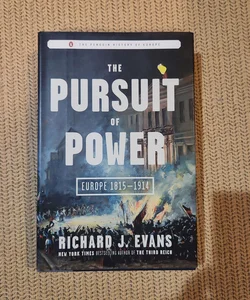
The Pursuit of Power, Europe 1815-1914 by Richard Evans

February 19, 2026 by Barry J. Klazura No Comments

Penguin Books has introduced a history of Europe from Troy through the present; a massive nine volume history with each period written by a different author.  The historians aside from Evans include Ian Kershaw, Tim Banning and others of worthy note.  This volume reflects the usual attention to detail by Evans (his 3 volume history of the Third Reich is, in my opinion the definitive history of the Third Reich); it is rich in detail and almost overwhelming in providing information that makes the reader stagger under its weight.

Unlike other histories of this period, Evans spends little time rehashing the wars, but rather, creates a political, social, economic and moral history of the various forces unleashed by the wars of Napoleon.  It was Napoleon who brought to Europe the ideals of the French Revolution (although at a terrible price with over 1,000,000 French troops being killed not to mention the slaughter of Germans, Russians, Poles, Italians, etc.).  The victors attempted to create a new order in Europe which would allow them to keep a firm handle on the changes they feared and it continued through the revolutions of 1848 until the rise of nationalism.

If you ever want to learn about the impact of railroads on Europe, or the abolition of Serfdom, the Carlist Wars, the Religious divisions, the rise of Imperialism or the first genocides in Europe (naturally in the Balkans), this is the go to book.  But beyond the major movements, we find who invented words such as “socialism”, “feminism”, “communism” (no it was not Marx or Engels), or the diet of the average Englishman vs. the slave in the United States (the slave in the U.S. was inches taller than the average Englishman reflecting a superior diet!), the practical use of the bustle and countless other bits of trivia, etc. this volume will quench your thirst for the trivia.  Yet, Evans manages to pull it all together so that you have a real feeling of the times and context of Europe during that time.

At the same time, when dealing with the major events (the Carlist Wars, Unification of Germany or Italy, the problems from the revolution of 1848 for the Hapsburg Empire, etc.), you came away with a wonder of how any politicians were able to weather the political storms and demands of the time.  It helps us today as it puts our great problems into an historical context and in its own perverse way, can give the reader optimism for the future; what other leaders did with poorer communication and information were able to accomplish, should make us believe in our own ability to move into the future.

Finally, I have to say that this book is almost a curse.  How?  Because given the quality of the historians for the other volumes, I see myself tied to each volume (this one took me two weeks to read, an inordinately long time) and finding at the end, other releases on the subject will offer little that is new and certainly will not be as entertaining.

This is one of those books that if anyone ever asks, “what books would you recommend on this subject”, you could point to this one volume as the beginning and end of the quest.  Beware if you start down this path, for it shall capture you and hold you close till the end.
Share:
Reading time: 2 min
Book Reviews

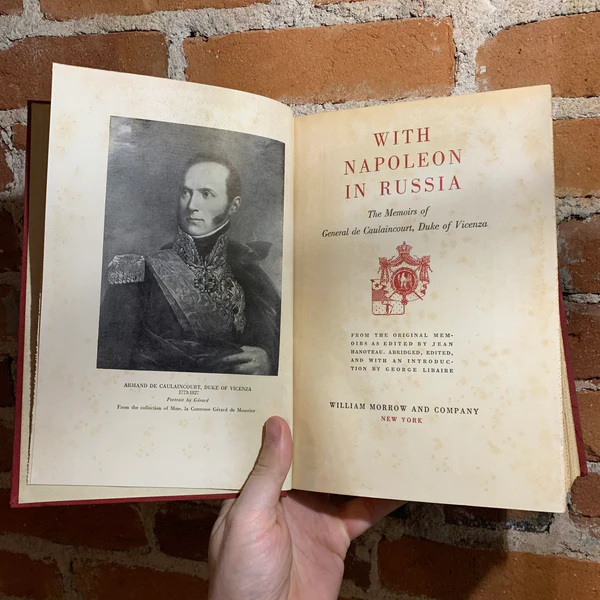
:  With Napoleon in Russia (1935 edition) by General de Caulaincourt, Duke of Vicenza

February 5, 2026 by Barry J. Klazura No Comments

The general (of a military and diplomatic career) provides an excellent intimate look at the thinking and logic of Napoleon at that critical time of the Empire.  Having served extensively at the court of the Tsar, de Caulaincourt was able to provide Napoleon with extensive information on the thinking of the Tsar, the country, etc.  The information provided however, was not to Napoleon’s liking and therefore was largely ignored, much to the agony of the Grand Army.  Yet Napoleon kept de Caulaincourt close to him (he was willing to keep those who provided excellent service close to him even if they provided information not to his liking) to the point where on the retreat from Moscow, and especially when Napoleon left the Grand Army, de Caulaincourt escorted him on that long and cold ride through Prussia, into Warsaw, and onto Paris.

 After the fall of Napoleon, he retired from public life and died of cancer in 1827.

This book is a must read for students of Napoleon as it gives an excellent view of his thinking, logic, prejudices, etc.  His views on the restoration of Poland, misreading of the Tsar, etc. are clear and fascinating. 

Share:
Reading time: 1 min
Book Reviews

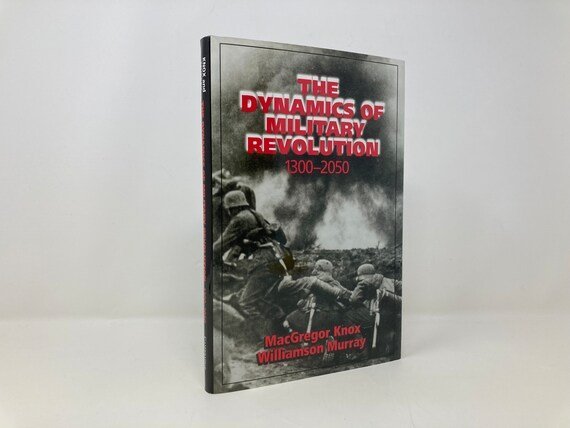
The Dynamics of Military Revolution, 1300-2050 edited by Macgregor Knox (The London School of Economics and Political Science) and Williamson Murray (Institute for Defense Analyses)

November 30, 2025 by Barry J. Klazura No Comments

One of the pleasant things about New Orleans is that you can spend hours in used bookstores, shifting through volumes which reflect the mind set of the locals. I have found a number of gems over the years, and this last trip enabled me to find this excellent volume on RMA (revolutions in military affairs). I have to admit that I had never heard of the book (originally published in 2001 while the volume I found was from its seventh printing in 2008. The last printing was in 2015), but it is a find that I shall keep close. The contributors range from professors of history to the Director of Royal Artillery, British Army. This is short (less than two-hundred pages) but serious book.

According to their thesis, there have been five military revolutions in Western history:

  1. The creation of the modern nation state which brought about the discipline of military power.
  2. The French Revolution which “merged mass politics and warfare.”
  3. The Industrial Revolution which made the nation states to pay, feed, cloth, and arm masses of manpower.
  4. The First World War which merged numbers 2 and 3 while “set(ting) the pattern for twentieth-century war, and
  5. The Cold War which was cold in the “decisive European and northeast Asian theaters.”

These five RMAs are more important than any momentary tactical advantage (such as the superior use by the Germans of tanks vs. the French use in May 1940). They are more important as they completely change how war is fought across all theaters involved.

Moving into the book, there are separate studies regarding the Western army in seventeenth-century France, the impact of the French Revolution with it dramatic introduction of the mass army, the U.S. Civil war, the Prusso-German RMA of 1840-1871, the Battlefleet revolution of 1885-1914 under the direction of First Sea Lord Jackie Fisher, and of course the First and Second World War.

One might be tempted to ask about the current war in Ukraine and the impact of drones on the battlefield. I believe the authors would not say that drones are a real RMA as they would fall into the category of say, the introduction of the tank in World War I. Yes, they do make an impact, but the initial monopoly by one side was quickly lost and, in many ways, it mirrors the technological battle that was fought during the Battle of the Atlantic.

The writing is decidedly not academic: each section is sharp and well argued with a minimum of excess verbiage. The writing is tight and the average armchair military historian could easily grasp the ideas put forth in each section.

Share:
Reading time: 2 min
Book Reviews

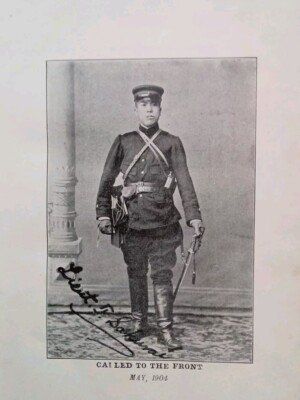
Human Bullets: A Soldier’s Story of Port Arthur by Tadayoshi Sakurai

November 18, 2025 by Barry J. Klazura No Comments

On my posting of September 29, 2025, I reviewed an excellent history of the Russian-Japanese war of 1904-1905. References were made to a tip of the bayonet history by a Japanese Lieutenant who served in that war. Originally published right after the war, it has been out of print for decades, and I have never been able to find a copy. I mentioned that I was interested in that history to a friend of mine and amazingly, he managed to find an excellent facsimile copy of that book reprinted in 2018. Thank you Christian!

The history gives a wonderful insight into the mindset of early Imperial Japan., during the Meiji era (1868-1912). Filled with pride and ego’s that could be easily bruised, Japan had made magnificent advances into a world that prior to 1868, they could little comprehend. Their advances in education, industrialization, the military, not to mention the coming together of a nation that was ruled by power Samurai clans, each having a history to warfare and political intrigue stretching back hundreds of years was amazing.

Like all industrialized nations of that time, they sought to borrow the phrase from Wilhelmian Germany, their “Place in the Sun.”  This was done via military actions in Korea and China where the Japanese military showed exactly how far they had progressed as they were easily victorious against much less Westernized nations. Yet they were also humiliated by the demands of the Western powers (Russian, Great Britain and Germany), who at the peace table, reversed most of Japan’s gains. In fact, the success of Japan caught the attention of Great Britain who suddenly found a new and dangerous player in an area where they were dominant.

Japan was forced to give back some of their gains but was to a degree mollified as a chief protagonist, Imperial Russia also agreed to honor a pull back on their part. Unfortunately, the Czar, not being the brightest of men, decided that it was important that he push the boundaries of the agreements. The Russian leasing of Port Arthur and fortification of the Liaodong Peninsula (which Japan had been forced to give up in the peace treaty), made the Japanese feel betrayed. Russia was also seeking to gain influence Korea which was seen as a direct threat to Japan. In the end, Japan felt betrayed and shown little respect and Japan declared war on Russia. And thus starts the history of this book.

Anyone who has studied history, especially the Second World War in the Pacific, understands that the Japanese soldier was a tough, brutal opponent. Drafted, trained, often abused, and indoctrinated to honor the emperor who was a god on earth, they were lead by an officer corps that had no regard for the Geneva Convention which attempted to temper the worse horrors of war. The Japanese military had an almost medieval mind set but twentieth-century weapons. Take that mind set and amplify it and you will start to realize the mindset of the author who was a field grade officer.

The pages of the book are riddled with proclamations before every action that he, or his commanding officer or his men that they will die in battle in order to fulfill the commands of the emperor. If the individual returns from battle, many have an intense sense of shame, as if their death would have made the battle even more glorious. While the Japanese military machine had progressed far, it was still a young force backed by a nation with limited resources. In spite of their limited resources, especially their manpower (as opposed to the ever-increasing manpower of the Russians), the infantry commanders including the commanding General in charge of operations, used Russian human wave tactics in their attacks. In one attack, the Japanese suffered over 6,000 casualties (which would be like the U.S. losing 45,000 in one battle). Such losses are the basis for the title of the book. Many infantry battles were fought at night, when the Russians used search lights to expose and blind the attacking Japanese who were mercilessly cut down by machine gun fire.

Mentally, each battle or probing attacked was viewed as an individual’s final attack; individuals would expose themselves to fire as they hurled insults at the Russians (who no doubt could not understand a single word) and were instantly cut down. Yet the author, was either a fanatical believer or painted a (to the Japanese of that time) picture of a glorious warrior, the modern-day image of the samurai. In fact, the patriotism, the belief in the beauty of death in battle is so loud, that it is like something a child would think of what war is like. Either a child’s mentality or that of a jihadist.

It is a fascinating book, and there are small glimpses of humanity (a shared water bottle with a dying man who has not only been shot, but run over by horse and iron wheels of their own artillery), but on whole, it is a book from a different age, one which fortunately is largely disparaged today.

Share:
Reading time: 4 min
Book Reviews

The Tide at Sunrise: A History of the Russo-Japanese War, 1904-1905 by Denis and Peggy Warner

September 29, 2025 by Barry J. Klazura No Comments

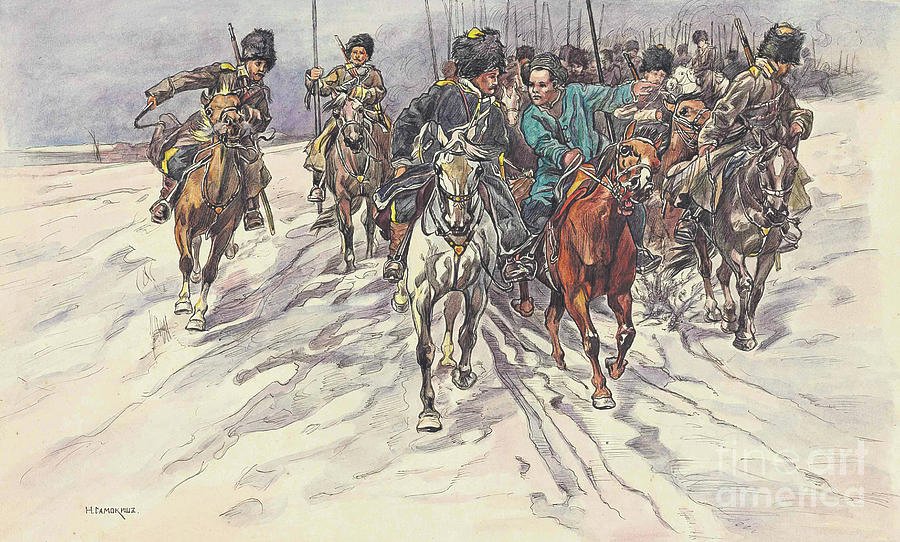
Originally published almost fifty-years ago, this book is considered a classic history of the first war in which an Asian power defeated a European power. The authors do a wonderful job of putting the war in context, firstly by providing a thorough review of the Japanese response to the “opening of Japan” by the Americans and surprisingly, the Russians. They review the various strong warrior clans in a developing Japan and how the politics between those clans colored the strategy and conduct of the war.

They also provide a good overview of Russia which was as always, seeking to absorb more lands. Holding together the vast Russian empire was the trans-Siberian railroad. A single tracked ribbon of steel stretching nearly 9300 kilometers (about 5800 miles), was built poorly and with minimum safety. Entire sections of the track would shift and fall apart every year as they were laid directly on the permafrost, which could melt just enough to make sections subject to disintegration. To make communications, travel, and supply movements more difficult, the track stopped at Lake Baikal, the world’s seventh largest lake. Everything on the trains would have to be unloaded and shipped across the lake during the warmer months of the year. Trying to supply an army using this one-track railway extended the war and led to poor discipline within the army as munitions and food were slow in arriving.

The two nations clashed over several areas, including Korea, Manchuria, and China. China, having suffered defeats by the Japanese and force infringements by Russia, lay all but helpless as Russia and Japan moved to seize and hold what land they could. Land and resources were seized, railroads built to the distress of the Chinese and Chinese officials were corrupted even more than was standard practice within the Chinese government.

The siege of Port Arthur and the great naval battle of Tsushima of course are the main parts of the history. Both opponents faced difficulties which ended up limiting the length of the war. For the Russians, the main problem was the huge distance between Moscow and Port Arthur. Communications were poor, providing munitions to the slowly transported army was daunting, along with an officer corps that had few professional skills made any moves by the field army difficult, slow, and usually always a bit late. The Japanese were like the Russians, willing to throw manpower at any problem. But manpower was not enough so Japan’s limited technological base and lack of capital meant that the Japanese had to seek a quick victory as time could favor the Russians.

Eventually Port Arthur fell to the Japanese but one great test was still ahead for the waring powers; could the Russians said a fleet from the Baltic to fight the Japanese and could the Japanese navy which had suffered telling losses to the Russians, defeat the approaching Russian ships. The fact that the Russian fleet completed the voyage is amazing as they had to put up with poor food, an revolutionary undercurrent between the officers and men, numerous mechanical failures and the fact that every extra inch was occupied by bags of coal which were not only dirty, but hindered the efficiency of the ships. In the end, although the Japanese defeated their foe, it was not a battle loaded with brilliance, but rather a battle determined by luck and poor shooting on the part of the Russians.

Wars eventually come to an end and the mediation of Theodore Roosevelt took two exhausted nations and provided them with at least a modem of national honor. But, as no good deed does not go unpunished, in the end both Japan and Russia viewed the American effort as decidedly negative, thus tainting relations between the three nations for decades to come.

This is a fine book, professionally researched and footnoted, professionally written and showing a grasp not just of the top of history, but the real forces that move events. My only regret was that it took me almost fifty-years to reread it.

Share:
Reading time: 3 min
Book Reviews, World War I

For God and Kaiser: The Imperial Austrian Army by Richard Bassett

April 1, 2025 by Barry J. Klazura No Comments

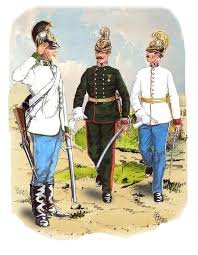
This is an outstanding and very readable history of the Imperial Austrian Army which was a major player in European history from 1619 until 1918. Although often pictured as an army which was poorly led and had a terrible record, the facts are altogether different. During its existence, it won more than 350 major victories, far more than its defeats (imagine the scope of European warfare; 350 major victories meant more than one major battle for each year of existence). It was never completely destroyed (as was the Prussian army at Jena) and adapted despite several defeats at the hands of Napoleon to eventually be instrumental in the coalition that destroyed his power.

Much more sweeping in scope than “The Army of Francis Joseph” by G. Rothenberg or “History of the Hapsburg Empire” by Robert Kahn, it nevertheless presents information that will be of interest to the novice and the expert.

Overall, the Hapsburg dynasty was, in my opinion, much stronger in terms of ability to produce successful monarchs than any of the other European monarchies. They did not have their George III or Nicholas II, nor the wasteful Louis XIV.

This is the first book I have read by Bassett and based on his skill as an historian and writer, I shall be looking to read more of his books.

Share:
Reading time: 1 min
Book Reviews

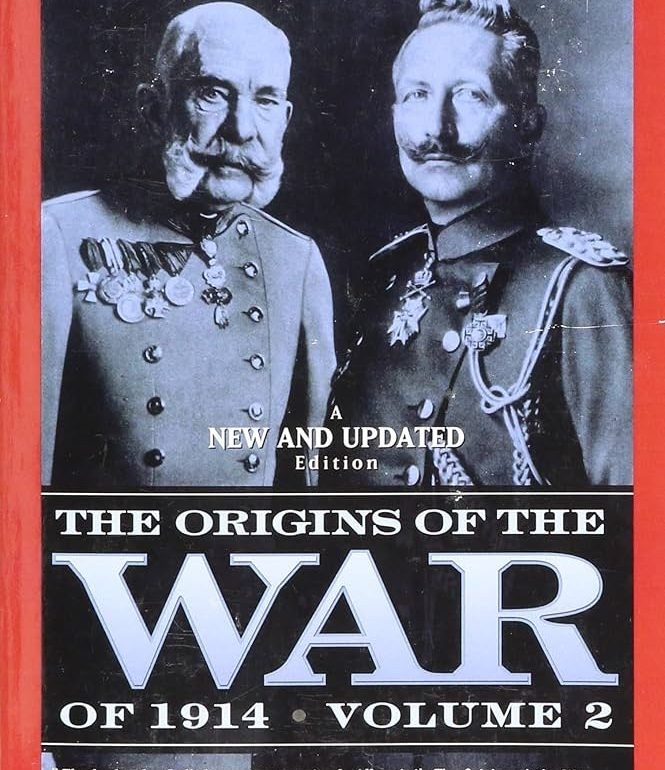
The Origins of the War of 1914 by Luigi Albertini

November 25, 2024 by Barry J. Klazura No Comments

First published in 1942 in Italy, Luigi Albertini’s The Origins of the War of 1914 (three volumes, about 2200 pages) traces the political, diplomatic, and military causes of the war, going as far back to the compromise between Austria and Hungary in 1867 and its impact which would ripple through Europe for decades. He takes the reader step by step along a path that ends in war. The way he lays out the events in Europe, one can see with the advantage of hindsight how so many European decisions naturally led to war.
The work itself is recognized as one of the two or three most important books on the subject and Albertini provides the reader military and diplomatic dispatches, notes on policy meetings held by France, Germany, Russia, and other nations. We are exposed to the lies, corruption, political back biting and conflicting interests of the leaders of nations and those who serve them. Just as today we face what is known as the “deep state,” in nineteenth and early twentieth century nations, generals, bureaucrats, industrialist, and others followed their individual interests, often at the expense of their own nations.
Humanity with all of its weaknesses and faults parades before the reader who is left shaking his or her head at the sheer number of foolish decisions. There is little nobility to be seen as:
• We see the stupidity of the Russian Czar who did not realize that he could not mobilize only a portion of his forces and the generals who lied to him.
• We see the Italian leaders who dreamt of expansion in the Balkans with the result that they sold their nation to the highest bidders.
• We see the German Kaiser, known for his bluff and bluster who pales as he realizes what is about to be unleashed thanks to his overweening ego.
• There is the Kaiser Franz Joseph, an old, tired man used by his Chief of the General Staff into issuing an ultimatum which no nation could accept.
• The assassin, Gavrilo Princip never regrets unleashing a war that would lead to millions of deaths and would open the door to a second war with tens of millions of dead, all in the name of a “Greater Serbia.”
• Britian’s Secretary of State for Foreign Affairs, Sir Edward Grey did not realize the danger Europe faced even though his nation had been in a naval race with the strongest land power in Europe.
• France fueled the rearmament of Russia in order to encircle Germany in a war of revenge using tactics that had cost them the last war with Germany.
There is no end to the players who each did their part to bring on the war. The list of long forgotten European foreign ministers, generals and officials can be daunting to keep straight precisely because none of them acted in a responsible manner, one which would slow down the slide to war.
Nations and their leaders have long memories. A quick decision by one nation can lead to a grievance of another that will last for decades. Yesterday’s allies are tomorrow’s foe for as Charles de Gaulle said decides later, “Treaties are like roses and young girls. They last while they last.” Unfortunately for Europe, the treaties of both sides were honored and paid for with the blood of millions.

Share:
Reading time: 2 min
Book Reviews

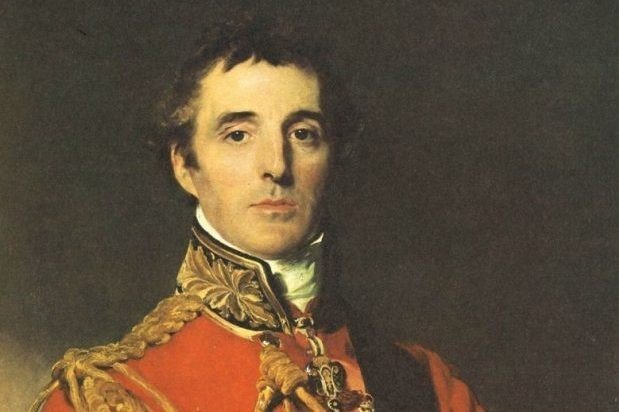
Wellington, the Path to Victory, 1769-1814 by Rory Muir

July 3, 2024 by Barry J. Klazura No Comments

A massive biography which covers the first half of Wellington’s life. Not being the first son, he was relegated to joining the military (under British custom, the first son inherited the title, the second went to the military and the third son entered the Church of England).

As was common at the time, Wellington had an unhappy childhood and like many men of that time, he made his mark and fortune in India. His military victories and diplomatic skill in India allowed him to assume command in the Peninsula during the Napoleonic wars where he reorganized the army of Portugal and created the famous defensive lines which the French under a number of Napoleon’s generals refused to attack. In a series of brilliant maneuvers, he out generaled every force sent against him as he slowly pushed the French out of the entire peninsula. That does not mean that he had an easy time as Napoleon poured men and material into the fight, but his real struggle was with various politicians and powers in London who were jealous of his successes and who kept Wellington’s forces on a strict leash.

Unlike other Wellington biographies, Muir provides excellent insight into Wellington’s excellent political skills not only in India, but also in Europe where he moved with ease. He was recognized as skillful, even tempered, and able to bring various factions together after the defeat of Napoleon.

He was a man of his age but also a man of a different age. Unlike most commanders of that time, he took great care for his men, ensuring that they had adequate food and logistical support. He may have been arrogant and superior in his manner to his men, but unlike Napoleon, he was careful with their lives and tried to avoid the typical frontal attacks which so wasted his opponent’s armies.

This is a long read, incredibly detailed, but for a serious scholar, an excellent biography on a complex individual.

Share:
Reading time: 1 min
Page 1 of 51234»...Last »

Barry J. Klazura

Barry Klazura sipping grappa

With a Masters Degree in Guerrilla Warfare and Totalitarianism, Mr. Klazura was well prepped for a career in Sales and General Management, consulting on corporate startups and turnarounds as well as lecturing on history and politics.  For the past twenty years he has focused on being a financial advisor and consulting.

Delivered To Your Inbox

Sign up to get an email when a new article is published.

Topics

  • American Civil War
  • Biography
  • Book Reviews
  • Cigar Reviews
  • Coronavirus
  • Current Affairs
  • Education
  • Environment
  • Factoids
  • Government
  • Lifestyle, Cigars & More
  • Liquid Refreshments
  • Musings
  • Quips and Historical Facts
  • Society
  • Travel
  • Uncategorized
  • World War I

Subjects

book Books-Russia/Soviet Union Books 21st Century Books 1919-2000 Books Ancient to 1900 Books Asia Books Biography Books Fiction Books Germany 1919-1945 Books Pre-WWI books Viet Nam books world war I Books WW1 Books WWI Books WWII Cigar Friendly Location Amsterdam Cigar Friendly Locations-London Cigar Friendly Locations-New Orleans Cigar Friendly Locations-New York Civil War Coronavirus Environment Korean War World War I World War One

Recent Articles

At Stalin’s Side by Valentin Berezhkov

July 15, 2026
The Price of Victory by N.A.M. Rodger

The Price of Victory by N.A.M. Rodger

June 26, 2026
Frontsoldaten: The German Soldier in World War II by Stephen G. Fritz

Frontsoldaten: The German Soldier in World War II by Stephen G. Fritz

June 5, 2026
Organizer of Victory, 1943-1945, George C. Marshall by Forrest C. Pogue

Organizer of Victory, 1943-1945, George C. Marshall by Forrest C. Pogue

May 26, 2026
Illegals Released & Our Leaders

Illegals Released & Our Leaders

May 10, 2026

Inquiries and Comments

For general inquiries and comments, email AOTOHcomments@gmail.com.

Facebook
© 2020 And On The Other Hand. All rights reserved.