
On The Other Hand -
Book Reviews
Lifestyle, Cigars & More
Musings
About
On The Other Hand -
  • Book Reviews
  • Lifestyle, Cigars & More
  • Musings
  • About
Book Reviews

The Yamato Dynasty: The Secret History of Japan’s Imperial Family by Sterling and Peggy Seagrave

March 1, 2023 by Barry J. Klazura No Comments

Much of the history of Japan lives withing a cloud of myth and legend along with a masterful manipulation of reality. This is especially true since the Meiji restoration whn the emperor was taken as the new central figure in Japan.  Suddenly the Emperor, who had traditionally had no power and was controlled by the Shogun was presented figuratively to the population as divine and the central focus of Japanese life.  Yet, the Emperor himself lived in a closed world or court etiquette and political intrigue.

This excellent history tells the story of who was the power behind the throne and of the vast scale of looting conducted by the Japanese during World War II.  Within Imperial Japan, there was a cadre of powerful families, former samurai war lords who controlled the military and the zaibatsu and thus the economy.  By controlling the military and the economy, they were able to work hand in hand with each other to gather enormous riches and unquestioned power, all while creating a cult around a compliant Emperor.

Continue reading
Share:
Reading time: 3 min
Book Reviews

The Origins of the War of 1914 by Luigi Albertini

February 16, 2023 by Barry J. Klazura 1 Comment

During World War II, an Italian Senator who was forced to resign his post by Mussolini. This was the man who in 1925 published his three-volume work on the causes of the First World War.  At 2280 pages, Senator Albertini provides the serious student of history with a detailed, inside glimpse at European power politics reaching back into the mid 19th century.  In these volumes he exposes to the light of day the most minute diplomatic dispatches as well as his own personal discussions with many of the diplomats who had key roles in the lead up to the First World War. 

Reading diplomatic dispatches, letters and notes is never fascinating in the best of times, and with the distance of time, it is often difficult to remember or place correctly the individual players.  German Foreign Ministers of the Kaiser come and go; diplomats of the Czar long forgotten are suddenly brought back to light and the internal wrangling of the Austro-Hungarian Empire between the pro-German factions and the landed Magyars who are at direct logger heads with the Austrian Foreign office can be mind numbing. Added to the pile of information are the even more obscure Italian officials who want so badly to be taken seriously by the “great” European powers and are generally scorned, mistrusted and pushed aside and you have a web of intrigue that is difficult to follow without copious notes or a mind trained to a unusually high level of boredom.

            Yet the volumes can also at times read like a great mystery tale, but one in which you know the outcome and which, at times, you want at times to reach back in time to throttle, berate and besiege the players so that the terrible bloody outcome can somehow be avoided. At times you begin to see the engine of history moving forward, picking up speed and moving in what seems to be an unstoppable manner to the conclusion which chewed up the lives, future, and fortune of so many tens of millions of individuals.  At times you must put the book down as you shake your head with the knowledge of future events which seem so clear nearly a hundred years later, but which were so shrouded at the time.  The book can be infuriating and at times you hope there is a God with a sense of Justice, with a capital “J”.  You hope there truly is a day of reckoning for so many individuals, such as:

Continue reading
Share:
Reading time: 6 min
Book Reviews, Uncategorized

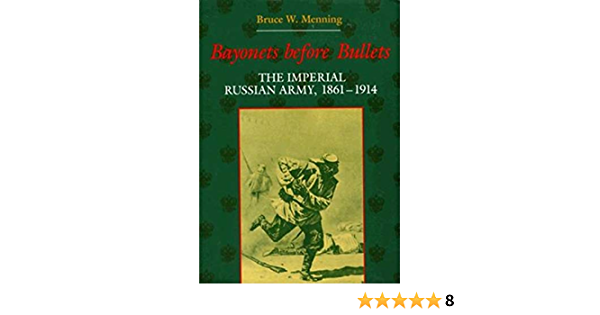
Bayonets before Bullets, the Imperial Russian Army, 1861-1914 by Bruce W. Menning

September 20, 2022 by Barry J. Klazura No Comments

The Russian army has had moments of brilliance, such as the defeat of Napoleon and the logistical miracle of following him from Moscow to Paris. There is no doubt that the army which was responsible for ninety percent of German losses in WWII (thanks in large part to the supplies provided by the U.S. and the U.K. at no charge) played a key part in the defeat of Hitler.

Today however, we see a Russian army that sadly fits the stereotype in many people’s minds; poorly trained, led and equipped. Once again, without total mobilization, the Russian army is simply too small and poorly led for the job of defending its immense country.

Is the stereotype accurate when looking at the Russian army currently in the field? This book helps to put the challenges of that army in an historical context.

With the defeat during the Crimean War, the new Czar realized that his army while large, could not compete with those of other European nations.  Thus began, over the next 50 years, attempts to update the military skills of the officer corp., the weapons, training, etc. of the entire Imperial Army.  But serious questions arose and continued to rise as rapid changes in military technology raised doubts about long held beliefs and new theories of the military art.  Those same questions would worry the military minds of other European powers.  To give a couple of examples:

  • The old theory was that the troops would line up for attack at 250 paces from the enemy, but with smokeless powder (hence a longer range), that distance began to expand to 500 paces, then 1000 and eventually over a kilometer and a half from the enemy forces.  This meant that the killing ground was expanded and what steps could be taken to minimize lives?
  • Along with the infantry, direct fire artillery since the time of Napoleon had played a major part in any attack or defense.  But with the longer range of infantry weapons, the artillerist was more open to withering fire so new tactics such as indirect fire had to be worked out.

Many officers had theories to answer these and other questions, but at the same time there were vested interests which refused to acknowledge these and many other problems.  Top generals, who fought during the Napoleonic wars still believed in the shock value of cavalry, and their influence ate up huge sums of the military budget.

Financial concerns were also a top priority.  Training was often poor, especially further away from St. Petersburg and due to tight budgets, for example, the artillery was limited to only two rounds of certain types of ammunitions per gun per year!  Bullets were expensive so large rattles were used to imitate the sound of machine guns firing. 

And yet, despite the stereotype of the dark plodding masses, gradually the army learned and moved on; allowances for more initiative at the lower levels was encouraged and a Staff school was set up to create a more professional officer class.  A major problem however, was that seniority still ruled and the more professional staff officers were cut off from reaching the highest levels.

The book covers not only the areas above, but a basic description of the war with Turkey (1877-78) and Japan (1904-05) to the eve of WWI.  It does not go into the financial arrangements with France which lead to much of Russia’s fail development prior to the war (all of which was aimed at moving the Russian army faster against Germany), but does give some detail on the under estimation of the Russian army as to the amount of munitions needed for modern war (despite the experience of the war with Japan), but then so did most of the other European nations.

An interesting book for the military historian, but it can be dry and academic.  I would like to see similar books on the German and French armies during the same time.op

iance, such as the defeat of Napoleon including it logistical excellence in its ability to follow him all the way to Paris. There is no doubt that it won the Second World War by inflicting ninety percent of the German casualities (helped in large part by the supplies provided at no cost by the U.S. Yet currently, we see a Russian army that fits the

With the defeat during the Crimean War, the new Czar realized that his army while large, could not compete with those of other European nations.  Thus began, over the next 50 years, attempts to update the military skills of the officer corp., the weapons, training, etc. of the entire Imperial Army.  But serious questions arose and continued to rise as rapid changes in military technology raised doubts about long held beliefs and new theories of the military art.  Those same questions would worry the military minds of other European powers.  To give a couple of examples:

  • The old theory was that the troops would line up for attack at 250 paces from the enemy, but with smokeless powder (hence a longer range), that distance began to expand to 500 paces, then 1000 and eventually over a kilometer and a half from the enemy forces.  This meant that the killing ground was expanded and what steps could be taken to minimize lives?
  • Along with the infantry, direct fire artillery since the time of Napoleon had played a major part in any attack or defense.  But with the longer range of infantry weapons, the artillerist was more open to withering fire so new tactics such as indirect fire had to be worked out.

Many officers had theories to answer these and other questions, but at the same time there were vested interests which refused to acknowledge these and many other problems.  Top generals, who fought during the Napoleonic wars still believed in the shock value of cavalry, and their influence ate up huge sums of the military budget.

Financial concerns were also a top priority.  Training was often poor, especially further away from St. Petersburg and due to tight budgets, for example, the artillery was limited to only two rounds of certain types of ammunitions per gun per year!  Bullets were expensive so large rattles were used to imitate the sound of machine guns firing. 

And yet, despite the stereotype of the dark plodding masses, gradually the army learned and moved on; allowances for more initiative at the lower levels was encouraged and a Staff school was set up to create a more professional officer class.  A major problem however, was that seniority still ruled and the more professional staff officers were cut off from reaching the highest levels.

The book covers not only the areas above, but a basic description of the war with Turkey (1877-78) and Japan (1904-05) to the eve of WWI.  It does not go into the financial arrangements with France which lead to much of Russia’s fail development prior to the war (all of which was aimed at moving the Russian army faster against Germany), but does give some detail on the under estimation of the Russian army as to the amount of munitions needed for modern war (despite the experience of the war with Japan), but then so did most of the other European nations.

An interesting book for the military historian, but it can be dry and academic.  I would like to see similar books on the German and French armies during the same time.
Share:
Reading time: 6 min
Book Reviews

The World of Yesterday by Stefan Zweig

August 5, 2022 by Barry J. Klazura No Comments

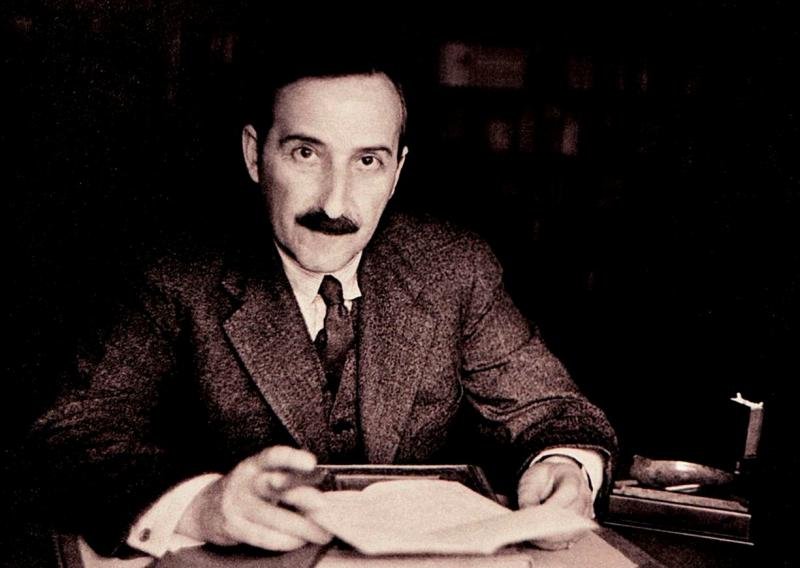
In the period from just before the First World War until the early 1940s, Stefan Zweig, an Austrian born in the Hapsburg Empire, was one of Europe’s leading authors. His books cover biographies, poems set to music, novels, hundreds of articles, reviews, and more. Yet, in 1942 he and his wife committed suicide in South America over their distress of the state of the world and their view of the future.

Zweig believed that each generation would experience one trying movement, be it war, plague, inflation, or social disruption. But he believed that his generation which was raised in the structured, secure world of the late Hapsburg Empire was doomed to experience each of those trials, one after another which put it to a test seldom seen in history. That does not mean that he viewed all change as negative, for he saw the emancipation of women from their corsets and their entry into politics as positive; so too was the easy mingling of the sexes in sports, social events without chaperones, and the greater freedom of people to choose the direction of their lives. Yet he did not see or connect that that same freedom blended with youthful idealism and ignorance of the world could lead to dangerous movements such as Communism, Fascism and Nazism.

Continue reading
Share:
Reading time: 2 min
Book Reviews

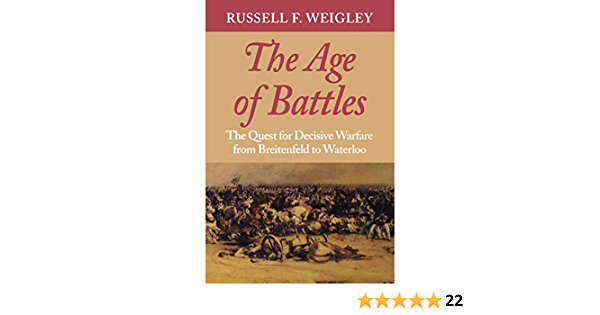
The Age of Battles: the Quest for Decisive Warfare from Breitenfeld to Waterloo by Russell F. Weigley

July 15, 2022 by Barry J. Klazura No Comments

Victor Davis Hanson in his The Father of Us All; War & History, Ancient & Modern gives due credit to The Age of Battles as one of the finest examples of military history as indeed it is. Since it was first published in 1991, Weigley gives a continual history of warfare, mostly in Western Europe, from Breitenfeld to Waterloo. Starting with the revolutionary tactics of Gustavus Adolphus and ending with the defeat of Napoleon, the author traces the continual quest for the “decisive battle” as a short cut to victory.

After the terrible bloodbath of the Thirty Years War, which left Germany devastated with millions of dead, it seemed as if Europe had made a conscious decision that warfare had to be restructured. One of the key steps to this process was Hugonis Grotius, the historical rules for the limitation of war were formalized. These rules were loosely going back to the rules of chivalry (which were never terribly effective) covered dealing with civilians, plunder, and more. Many rulers in Europe recognized that while war was not going to disappear, they could at least try to limit the overall damage. It was amazing that with the rise of nation states and greater concentration of power and wealth, those who ruled suddenly realized that they had a personal stake in limiting wars which could be dangerous to their position and existence.

Continue reading
Share:
Reading time: 4 min
Book Reviews

The Crimean War by Orlando Figes

May 30, 2022 by Barry J. Klazura No Comments

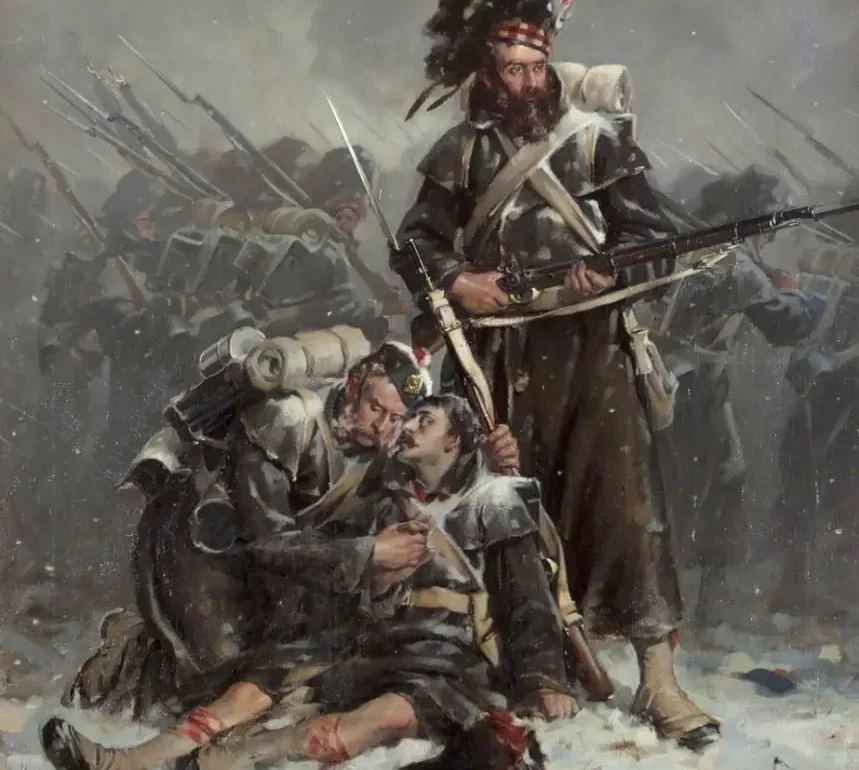
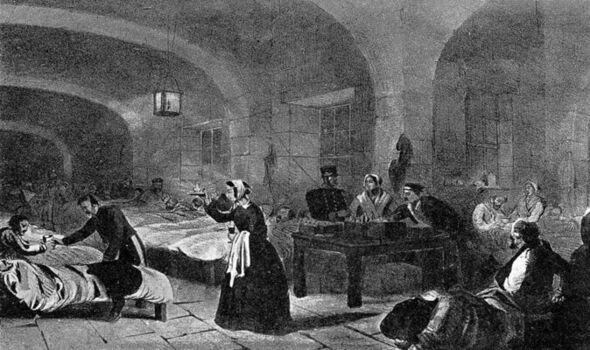
One of the pleasant things about histories by Figes is that they are so readable. Like two of other histories of his I have read, (“The Whisperers” and “A People’s Tragedy”), Figes has the ability to bring the past alive and make you feel as if you are part of the action. He does not concentrate on battle scenes (although battles are covered), but he centers on the lives of the ordinary soldiers. In this book he gives short shift to Florence Nightingale but points out the breakthrough of a Russian surgeon, Dr. Nikolai Pirogov who used an early form of triage as well as anesthesia.

Despite the common view of the war, it was the French who supplied most of the troops, not the British and it was the French, not the British who better supplied their men with everything, from tents to food to warm coats for the cold Crimea winter, etc. Among the allied armies, approximately eighty percent of the deaths were due to disease, frostbite, etc.

It is also interesting to note that there were very real plans for a coalition whose goals was the breakup of the Russian Empire, including invasions of Russia from the Baltic, uprisings in Poland and an invasion from the Crimea into the area of Kiev. But as the causalities began to mount, the enthusiasm for such great plans began to wane and in the end a settlement was made.

For all the loss of blood and lives, Russia was able to regain her position within 25 years and continue to create problems in the Balkans. Her meddling and ambitions led to World War I thanks to a system that refused to believe that the world was changing and was all too often in the hands of a single man who could be unbelievably foolish.

A big book (about five hundred pages) but an interesting one which never goes off into tangents that do not serve to tell the main story. This is my third reading of these excellent history and each time I pick up some interesting tidbit in which historians (even amateurs such as myself) delight.

Share:
Reading time: 1 min
Musings, Quips and Historical Facts

The Russian Soldier’s Only Hope

May 12, 2022 by Barry J. Klazura No Comments

I am re-reading Orlando Figes’ (for the third time) excellent The Crimean War and I was struck by the plight of all the soldiers (particularity the British, Russian and Ottoman). The daily trials of poor food, lack of medical facilities, diseases, abuse from officers including whipping enlisted men can make the horrors of actual battle seem less terrible.

In this reading, I have come to realize that alone among armies in the West, the Russian army seems to have consistently been the worse abuser of its own men. From the time of Peter the Great, through the list of Czars, into the First World War, to today, the average Russian soldier has been seen as truly expendable and faceless. With that mindset, we have seen repeatedly the failure of the Russian Empire and today, the ability to field a successful fighting force against a lengthy list of enemies. Yes, the military was effective in WWII, but in face of the brutality of the German opponents and given the total ruthlessness of Stalin and his generals, the average Russian soldier had nothing to lose by throwing himself into the cauldron of war. Throughout history, the Russian soldier has been poorly led, poorly equipped, lacking in logistical support and abused by his own officers. Indeed, such a luxury as a graves unit was virtually unknown. During Czarist times, until WWI, returning soldiers were often not allowed to return to their own villages (to disguise the human losses). When peasants were drafted for the military, their send off was an actual funeral procession while in WWII, when a high Soviet officer was asked about the lack of care for the dead, he is reported to have said that if a man does not return home, it will be assumed he was killed in the war.

The following from Figes’ book captures the pity those soldiers at the time of the Crimean War earned. As Figes writes,

Continue reading
Share:
Reading time: 3 min
Book Reviews

An Officer and a Spy by Robert Harris

March 25, 2022 by Barry J. Klazura No Comments

Robert Harris, the author of Fatherland has taken a key event in the history of France and created a novel that is a thriller and educational.  Written from the perspective of a key player in the events, the reader is drawn into a world of the “deep state” before the term was used.  It serves to remind us that those who have power seldom are ready to relinquish it, especially when they know no other life and possess no other skills that those they have acquired in the acquisition of their power.

 After their loss to Germany in the war of 1870, the French nation was torn between a paranoid fear of another German attack (a preventative war) and the French desire for revenge.  France, which had always been the predominant military land power on the continent was humiliated; it was other people’s lands which were despoiled and looted, not the sacred soil of France!

To achieve their desire for revenge, which included repossessing the key provinces of Alsace and Lorraine which the French had taken from the Germans centuries before, the French military was lavished with money and prestige.  They represented the honor of France and stood for the glory which had to be taken back from the new German empire.

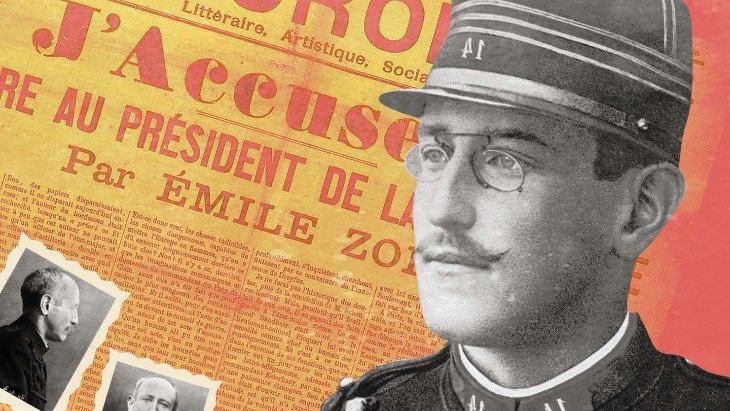
In 1895, a Jewish officer of the General Staff was convicted in a secret military trial of passing secrets to the Germans.  Sentenced to life on Devil’s Island, he was isolated from the world; his wardens were not allowed to speak to him, he was chained to his bed at night, his view restricted by high wooden fences, his mail restricted and censored, his was a living hell of a punishment, especially for a man convicted on forged evidence. 

The rest of the story is well known, how another French officer by the name of Picquart gradually comes to realize that the prisoner, Alfred Dreyfus is innocent of the charges and that Major Esterhazy was in fact the real traitor. Shocked by the injustice done to Dreyfus, Picquart reports his findings to the army powers that be only to find out that they had known of the injustice but had decided that to save the “honor” of the army, nothing was to be done.  In fact, new evidence was “discovered” which further condemned Dreyfus.  What follows is an example of a handful of brave men including Picquart who fight against powerful forces within the government who use every tool at their disposal including humiliation, intimidation, and violence to cover up their crime against Dreyfus.  What is the importance of one man against the needs of the State?

In this excellent novel, we see nobility in the acts and courage of a man willing to lose all in the pursuit of justice.  We see prejudice in the antisemitism of France at that time. We also see courage, fear, and determination, not in fictional characters, but in those who lived these trying events. I can see readers finishing the novel and wondering which of those traits they would possess in a time of trials.

Share:
Reading time: 2 min
Book Reviews

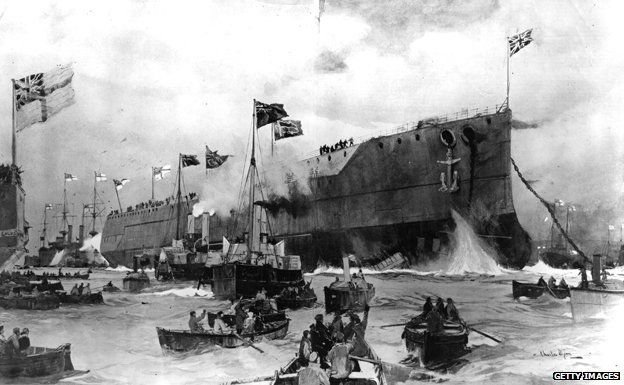
Castles of Steel and Dreadnought by Robert K. Massie

October 14, 2021 by Barry J. Klazura No Comments
Continue reading
Share:
Reading time: 3 min
American Civil War, Book Reviews

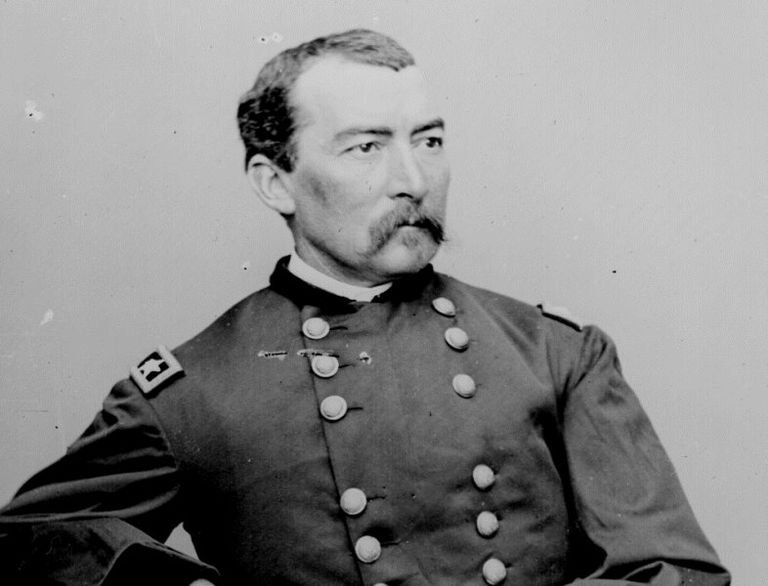
Terrible Swift Sword: the Life of General Philip H. Sheridan by Joseph Wheelan

September 13, 2021 by Barry J. Klazura No Comments

The North won the Civil War for many reasons: more manpower, greater industrial strength, tremendous capital, a better idea. They also won because they had three generals who believed in total war. It was not enough to defeat an enemy in the field; no, one had to tear the insides out of the enemy. Bring war with its flames and cruelty to the very hearths of the enemy to make them realize what war really was and is to this day. Those three generals are Ulysses S. Grant, William Tecumseh Sherman, and Philip H. Sheridan. These men knew that with the material, industrial and manpower strength of the Union, they could win and were determined to ensure that there could be no future Civil War.

Continue reading
Share:
Reading time: 3 min
Page 3 of 5« First...«2345»

Barry J. Klazura

Barry Klazura sipping grappa

With a Masters Degree in Guerrilla Warfare and Totalitarianism, Mr. Klazura was well prepped for a career in Sales and General Management, consulting on corporate startups and turnarounds as well as lecturing on history and politics.  For the past twenty years he has focused on being a financial advisor and consulting.

Delivered To Your Inbox

Sign up to get an email when a new article is published.

Topics

  • American Civil War
  • Biography
  • Book Reviews
  • Cigar Reviews
  • Coronavirus
  • Current Affairs
  • Education
  • Environment
  • Factoids
  • Government
  • Lifestyle, Cigars & More
  • Liquid Refreshments
  • Musings
  • Quips and Historical Facts
  • Society
  • Travel
  • Uncategorized
  • World War I

Subjects

book Books-Russia/Soviet Union Books 21st Century Books 1919-2000 Books Ancient to 1900 Books Asia Books Biography Books Fiction Books Germany 1919-1945 Books Pre-WWI books Viet Nam books world war I Books WW1 Books WWI Books WWII Cigar Friendly Location Amsterdam Cigar Friendly Locations-London Cigar Friendly Locations-New Orleans Cigar Friendly Locations-New York Civil War Coronavirus Environment Korean War World War I World War One

Recent Articles

At Stalin’s Side by Valentin Berezhkov

July 15, 2026
The Price of Victory by N.A.M. Rodger

The Price of Victory by N.A.M. Rodger

June 26, 2026
Frontsoldaten: The German Soldier in World War II by Stephen G. Fritz

Frontsoldaten: The German Soldier in World War II by Stephen G. Fritz

June 5, 2026
Organizer of Victory, 1943-1945, George C. Marshall by Forrest C. Pogue

Organizer of Victory, 1943-1945, George C. Marshall by Forrest C. Pogue

May 26, 2026
Illegals Released & Our Leaders

Illegals Released & Our Leaders

May 10, 2026

Inquiries and Comments

For general inquiries and comments, email AOTOHcomments@gmail.com.

Facebook
© 2020 And On The Other Hand. All rights reserved.