
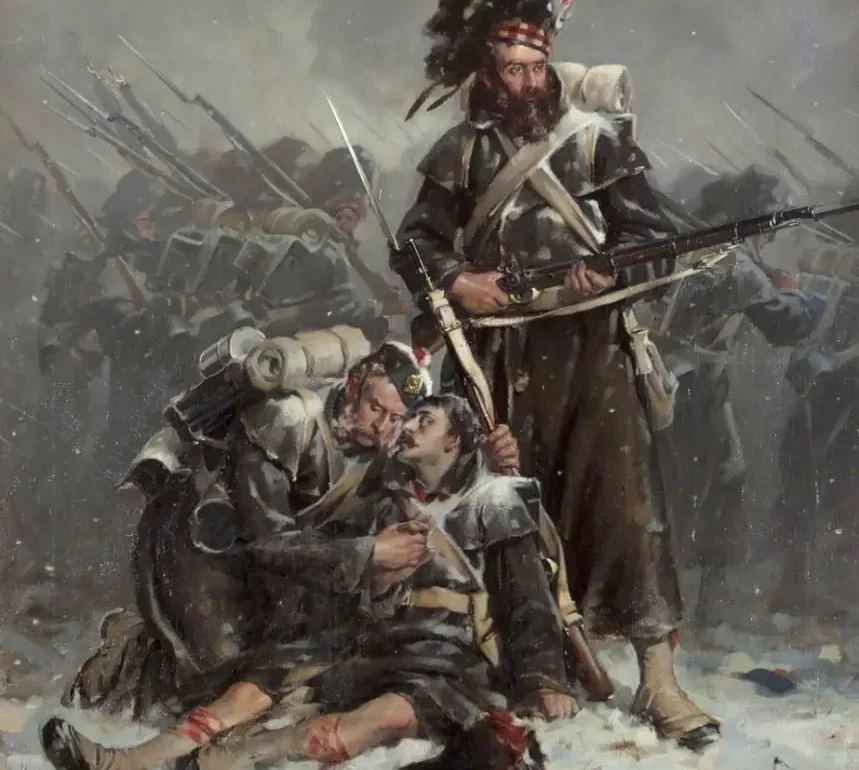
One of the pleasant things about histories by Figes is that they are so readable. Like two of other histories of his I have read, (“The Whisperers” and “A People’s Tragedy”), Figes has the ability to bring the past alive and make you feel as if you are part of the action. He does not concentrate on battle scenes (although battles are covered), but he centers on the lives of the ordinary soldiers. In this book he gives short shift to Florence Nightingale but points out the breakthrough of a Russian surgeon, Dr. Nikolai Pirogov who used an early form of triage as well as anesthesia.
Despite the common view of the war, it was the French who supplied most of the troops, not the British and it was the French, not the British who better supplied their men with everything, from tents to food to warm coats for the cold Crimea winter, etc. Among the allied armies, approximately eighty percent of the deaths were due to disease, frostbite, etc.
It is also interesting to note that there were very real plans for a coalition whose goals was the breakup of the Russian Empire, including invasions of Russia from the Baltic, uprisings in Poland and an invasion from the Crimea into the area of Kiev. But as the causalities began to mount, the enthusiasm for such great plans began to wane and in the end a settlement was made.
For all the loss of blood and lives, Russia was able to regain her position within 25 years and continue to create problems in the Balkans. Her meddling and ambitions led to World War I thanks to a system that refused to believe that the world was changing and was all too often in the hands of a single man who could be unbelievably foolish.
A big book (about five hundred pages) but an interesting one which never goes off into tangents that do not serve to tell the main story. This is my third reading of these excellent history and each time I pick up some interesting tidbit in which historians (even amateurs such as myself) delight.