
This is a massive novel (about 1600 pages) written in three sections: They Were Counted. They Were Found Wanting and They Were Divided. There are a number of sub-plots, some romantic, others centering on the morals and norms of the aristocratic Hungarian society prior to World War I and quite a bit on the politics of Hungary and its relations with the Austrian part of the Austro-Hungarian Empire. Originally published in 1934 and 1940 but was banned by the Communist government until a new edition was published after the fall of Communism in 1990.
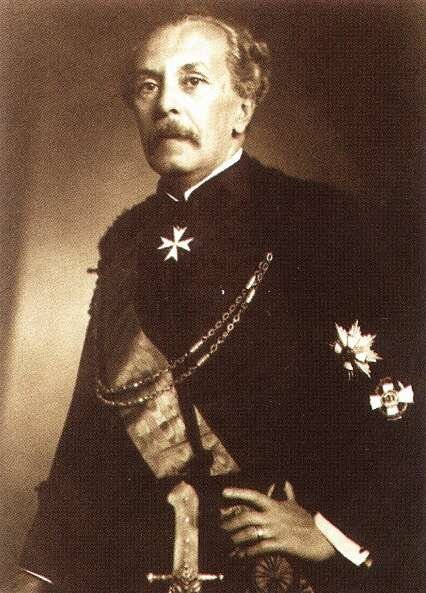
The author was an active liberal member of the Hungarian pre-war parliament and after his retirement, wrote several plays, short story books and this novel. Vainly attempting to save his properties after the end of World War II, he could not leave Transylvania and was separated from his wife until shortly before he died when we was allowed to leave Romania and live in Budapest.
There are numerous plots and mini stories within this massive work which center on the norms of the pre-war Hungarian aristocratic society. There are love stories, tales of falling from grace, political foolishness in a time of national danger and more. Since the author was an actual politician at the time of the novel, the second and third sections give the reader an insight into the actual politics of the day. In fact, if someone were interested in Hungarian politics of that time, they would enjoy large sections the novel as the political squabbles of the time is presented in a lively, interesting manner.
There is one unique opportunity in reading this book as the author, who was an active politician at the time of the story, is able to provide an insight into the actual government debates and problems leading up to World War I. Those sections would be an excellent addition to Luigi Albertini’s three-volume history of European events which led to the First World War. The petty bickering over what colors should the ribbons be on the officer’s swords while the army is starved of money shows the inability of the Hungarian politicians to confront reality due to their own self-centered ideology and prejudices. It makes for fascinating reading.
Let me say there are two drawbacks to the book. The first is that I was hoping for more of the plot to center on Transylvania and its relationship with its Hungarian overlords. While the main character of the novel has extensive land holdings in Transylvania, aside from a minor sub-plot about agrarian/forest reforms, there is little that really occurs in that area. Yes, one reads that the local residents who were mostly Romanian, were abused by the petty officials and money lenders who were Hungarian. Unfortunately, the true extent of how the Romanians were abused is not covered.
Another weakness in the first section is that there are too many pages which go over the romantic sub-plot of the main character and the woman he pursues. That section is beautifully written, but it seems to go on and on for scores of pages.
The strength of this novel is its ability to take us into a society and world that disappeared in 1918. The norms, standards and misdirection of the Hungarian kingdom are laid out and from the advantage of hindsight, we can see where the errors of that society and it political structure must lead. Being the length that it is, it is another of those novels that one would pick up to re-read once every ten years or so (in fact, I first read it in 2013).