
On The Other Hand -
Book Reviews
Lifestyle, Cigars & More
Musings
About
On The Other Hand -
  • Book Reviews
  • Lifestyle, Cigars & More
  • Musings
  • About
Book Reviews

Last Days of Glory; the Death of Queen Victoria by Tony Rennell

June 5, 2024 by Barry J. Klazura No Comments

In January 1901. Queen Victoria died at the age of 81 after being Queen for 64 years.  Her reign experienced the revolutions of 1848, the formation of the Second French Empire, Crimea War, and the unification of Germany.  A small woman, she hid herself from the public and to a certain extent, politics for decades after the death of her husband, Prince Albert.  The unintended result was a diminution of power of the Crown as strong Prime Ministers stepped into the role she abdicated. 

When she died, most citizens knew no other monarch and although her health had been slipping, many of her closest advisors were unaware of the seriousness of her illness.  This meant that her death came as a shock to the nation and the private secretaries, etc. scrambled to find the proper procedure for her internment. Fortunately, Captain (later Sir) Frederick Ponsonby took charge, often stepping on bureaucratic toes to make the arrangements.  Fate seemed to work against a smooth ceremony as the funeral cortege was too long for the route march, the casket almost fell off the caisson, the casket (there were several, each within the others), was so heavy that the troops carrying it had to be relieved after taking it off the caisson, and finally the traces broke and the caisson with the casket had to be pulled by the troops (in fact it was considered a great honor and a rival troop demanded the honor of pulling everything during the next stage).

The United States suffered shocks to its system by the death of FDR and the assassination of JFK but imagine if either of them had governed for over 60 years.  And, given the level of communications at the time, her death must have come like a bolt from the blue.  It seemed to be taken for granted that her reign would never end.  Her children ruled or were married to rulers of most of the European states which was thought to assure stability for the future but in the end, her death signaled the beginning days of the end for the old world which would be smashed in World War I.

If you are not familiar with this area, this book gives a glimpse into a simpler time, one filled with hope and dreams for a future.  A time when Europe still believed in itself and looked positively to scientific and economic advances which would benefit humanity.     

Share:
Reading time: 2 min
Book Reviews

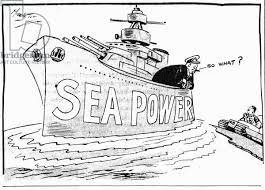
Churchill and Sea Power by Christopher M. Bell

January 28, 2024 by Barry J. Klazura No Comments

This is a well-balanced history of Churchill’s interaction with the British navy both as a Sea Lord, head of the Exchequer and war time leader.  Churchill had a real love affair with the Navy and was blamed for the disaster at the Dardanelles, the budget cuts after WWI, the fiasco in Norway as well as the loss of Force Z in the Pacific.  Yet despite these “errors”, he returned again and again to positions of power to lead his country during their darkest hours.  And, despite his love of Empire, he knew that the price for defeating Hitler would be the loss of Empire but he was willing to do what needed to be done (taking a back seat to the rising power of the United States and being humiliated by Roosevelt to Stalin) in order to attain his goals.

Each of the disasters attributed to Churchill are carefully examined and other historians’ arguments are discussed in trying to reach a meaningful conclusion.  For example, even though Churchill was looking for a different strategy from that of frontal attacks during WWI, he was initially against the Dardanelles attack but was brought around to supporting it and when he supported something, Churchill pulled out all the stops!  In the end, the timidity of the British Admirals and the poor choice of landing beaches caused in large part by poor intelligence lead to disaster and it was hung on Churchill.  Bell goes through each of the other scenarios and one comes away with a much more balanced picture of Churchill and his decision making process.

Was Churchill a genius or a meddling fool; these seem to be the two extremes offered by most historians.  In reality, he was a leader who did not shirk the responsibilities of his office and who had to make hard and difficult decisions which ran risks but had to be balanced against the enemies and limitations he faced.

A well written book not for the novice, but for the naval historian a very valuable addition to your library.
Share:
Reading time: 1 min
Book Reviews

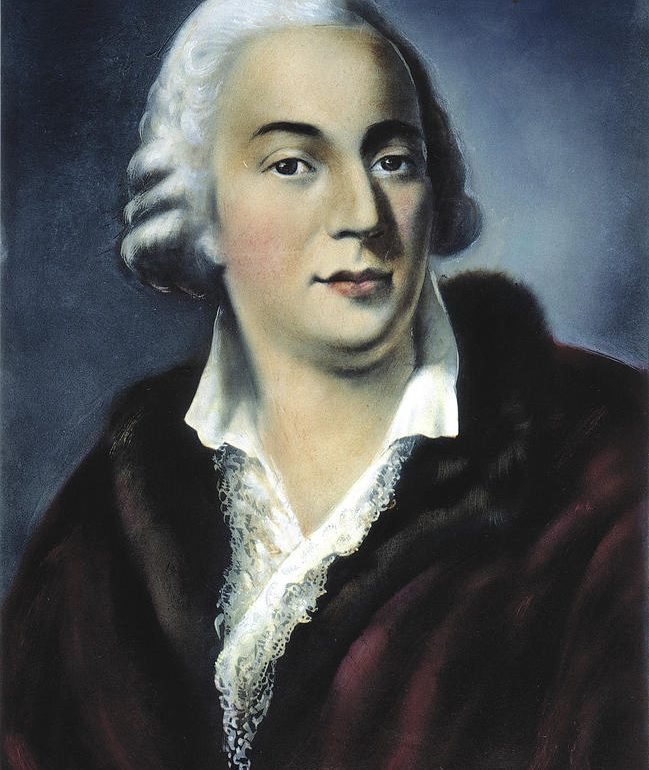
Casanova, the World of a Seductive Genius by Laurence Bergreen

January 22, 2024 by Barry J. Klazura No Comments

As depicted by Hollywood and popular culture, Casanova was a noted womanizer who had no conscience, made a habit of fleeing from irate husbands through second story bedroom windows and was always one step from receiving his just desserts.  Casanova was a major womanizer (although the number of his “conquests” pale in comparison with today’s rock, sport and Hollywood celebrities) but he was also much more, having successfully lived in the courts of Spain, France and even Russia; he conversed with Voltaire and assisted Mozart and his librettist Lorenzo Da Ponte on the composition of Don Giovanni.  Moving from country to country (he had been exiled from his native Venice), he lived by his wits, by gambling and late in life, by his writing. 

Some of his most amazing adventures (with and without women) occurred in Venice before his exile.  Venice at the time was still ruled by a clique of powerful families who were slowly dying out.  They controlled the morals, politics and fortunes of the city and despite their lessening physical strength, kept the Republic under a tight control by means of spies and strict moral guidelines.  The nobility, both men and women, when in public wore rigid white masks (often too in private) and Venetian laws specified severe punishments for those who violated the code.  Women’s masks were held in place with a button held between the front teeth (it was therefore called the “silent mask”).  In order to protect the “honor” of the younger women, they were placed in convents, but the girls found ways to slip away from the convents and cavort with their lovers such as Casanova even in the city.  They were able to do this as the guild which controlled the gondolas insured that all members were sworn to secrecy; that secrecy provided them a sure stream of passengers who had their trysts in the enclosed areas of the gondolas.  In fact, according to a French visitor, the “nuns (in the convents) are the most attractive among all the women in Venice…(and) their costume enhanced their good looks”.

Viewing the French Revolution, he realized that his world was being destroyed and in the last few years of his life he worked for eighteen hours a day on his biography which consisted of millions of words.  He wanted to be remembered but he provided an outstanding view of his world and the circles in which he moved.  While living on the good graces of the Prince de Ligne, he died in 1798.  Yet his biography and writings lived on, first being published in 1822 in German, then in 1826 in French although those were poor versions.  In 1943 his manuscript survived a direct bomb hit by an Allied bomb and in 1945 was saved by Allied forces.  In 2010, the Bibliotheque national de France purchased the manuscript for over $9,000,000, the institution’s most expensive acquisition to date.  In death, Casanova gained the fame and honor he sought all his life.

Share:
Reading time: 2 min
Book Reviews

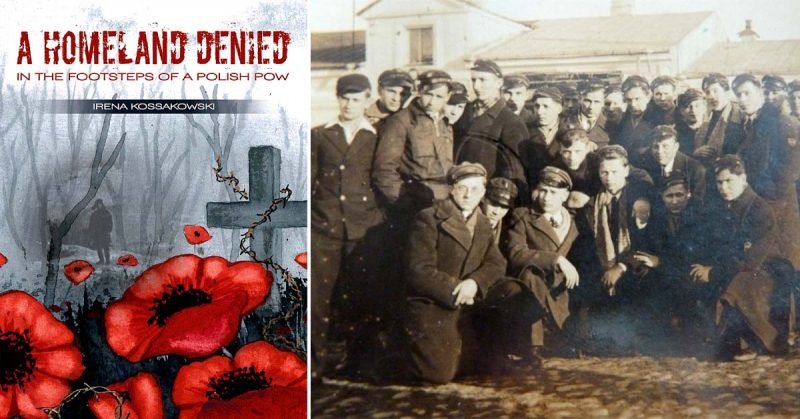
A Homeland Denied by Irena Kossakowski

November 8, 2023 by Barry J. Klazura No Comments

As we are growing up, we have a tendency to either ignore or tune out the stories and experiences of our parents.  We think their ideas are so old fashioned, or that their experiences do not impact on our lives, little realizing that their stories and memories are in reality subtle learning tools for us to lead better lives.  Later, when they are old and we have families and real lives of our own, we sometimes ask them about some memory or story they mentioned years ago, but with failing memories or sadness caused by those stories, they may be reluctant to dredge them up.  We then are sad and realize that experiences in their lives will be lost forever and that someday, we shall be like them, trying to remember the good and trying to keep their sorrows and mistakes buried.

This book was written by a woman whose father (Waclaw=Walter) was 19 when Poland was invaded by the Nazis and Communists.  Barely two weeks into cadet school, he was captured by the Soviets and like 3,000,000 other Poles, was shipped off to a gulag camp in Siberia.  Along the way, tens of thousands died from malnutrition, disease, beatings or simply giving up.  But he was lucky, for unlike tens of thousands of Polish officers, he was executed in the forests of Katyn, hands tied by a bullet to the back of the head and thrown into mass graves (over 10,000 were executed by two executioners!).

When Germany invaded the Soviet Union, the Soviets offered to release some of the Poles so they could fight for Stalin against the invaders.  Another young man, standing next to Irena’s father, after surviving years of cold, hard labor and beatings said that he would not fight for Stalin and was immediately executed with a shot to the head, splattering brains and blood on everyone around.

Finding his way to Iran over several months (no money or food was provided to the men on their journey), he was nursed back to health by the British army and enlisted in the Polish Corps which was to fight in Italy.  He fought in the battles at Monte Cassino, Ancona and Bologna and at the wars end managed to emigrate to England as going back to Poland would have been a sure way to be executed as a spy.

He was not able until about 1966, and still at risk, to go back to Poland for a visit, to see his mother (his father had died), the girl he had dreamed of throughout the war, to see the farm on which he had grown up on, etc.  All the while, despite the continued nightmares of the gulag experiences, he never really spoke of his earlier life and it was only when Irena was a grown woman did you begin to gradually pull the story of his life from him, bit by bit.

This little book is a sobering look at the mostly unknown brutality that millions endured at the hands of the Soviet Union as they attempted to destroy the will of a nation instill a system of government in which the individuals only purpose was to serve the all powerful state.  The idealism of the early 1920’s had been long crushed by the slaughter of the kulaks, the collectivization of the farms and the bloody purges of the Party and military.  Poland, like the other countries of Eastern Europe were given to the Soviets by Churchill and Roosevelt (one did it from practicality, one from personal indifference).

If nothing else, after reading this book, you may sit down with your parents and gently listen to some of the stories and lessons their offered when they went in one ear and out the other during your youth.

Share:
Reading time: 3 min
Book Reviews

The Man in the Red Coat by Julian Barnes

July 27, 2023 by Barry J. Klazura No Comments

It is the time of the Belle Epoque in France and during the summer of 1885, Samuel Pozzi, the Comte De Montesquiou and Edmond de Polignac decided to visit London for a few days of intellectual shopping.  These three men represent the best and the worse of that time in France; they moved in the same circles; they were very friends but not rivals.

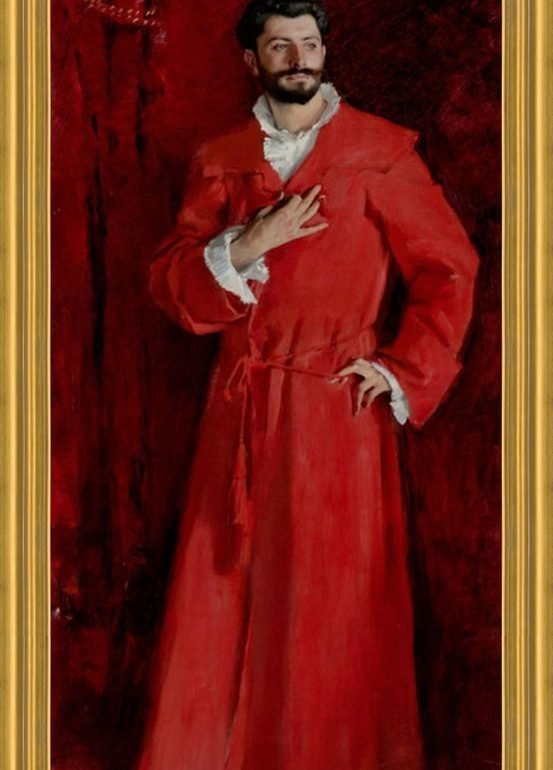
Of the three, Pozzi, Dr. Samuel Pozzi is the lead character in this book and is the man in the red coat.  In that famous painting by John Singer Sargent, he captures the mindset and Pozzi’s vision of his place in the world.  Pozzi unlike the other two individuals central to the book was a “productive” man, known for being a society doctor, a man of science, the doctor who brought French medicine into the nineteenth century. Brilliant, handsome, and cultured, he moved effortlessly through French and English society.  Married but a lover of women who found him all but irresistible, he was welcomed at the finest houses. Pozzi introduced modern gynecology to France and was feted in England for his break throughs in medical hygiene and surgery which led to shorter and higher recovery rates.  When he took over the Lourcine-Pascal Hospital in 1883, it was almost entirely occupied by those infected with venereal disease which was very common in the poor population.  He restructured the hospital, added wings, and went on to create the first gynecological clinic and chair at a university in France.

As we move through the book, we are brought into the society and world of the upper class, mostly in France, somewhat in England.  If one is broke but with a great name, such as Montesquiou and Polignac, one will move smoothly though the houses of the rich and those who play the part.  The parties, affairs, marriages made for financial and name considerations allow men and women to live a life far beyond the lives of the average.  Snobbery is taken to be a fine art, and it continues until the Great War of 1914.

I believe the author enjoyed writing this book as he has felt free to insert his own witticisms and caustic remarks from time to time; they help to keep the reader engaged and draw attention to a detail that might have otherwise been overlooked.  Although not for everyone, the book gives an excellent glance into a world that is long gone, taking its abuses, but also unfortunately, its finest moments with it. It was a time when a man (or woman) could make their mark in the world by combining their talents and interests to create their own unique image.

Share:
Reading time: 2 min
Book Reviews

All the Way to Berlin by James Megellas

June 9, 2023 by Barry J. Klazura No Comments

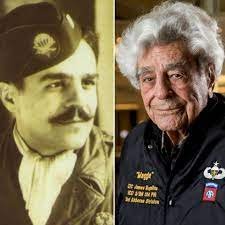
James Megellas was the most decorated officer in the 82nd Airborne division in World War II.  He fought in Italy including at Anzio, took place in the invasion of Normandy, parachuted into Holland as part of the disaster of Market Garden and following the Battle of the Bulge took the long road through Germany all the way to Berlin.

Using letters, he had written during the war, interviews with former comrades, and excerpts from memoirs of men he served with from the ranks through to Generals he takes us on almost a day-by-day description of hundreds of days of combat.  He gives credit to those who served with him, writing of how being on the front lines for sixty days and longer, through all different types of weather, never bathing or shaving, the average American soldier fought and won against a long serving German army.

The citation for his Distinguished Service Cross (one step below the Congressional Medal of Honor) is as follows:

“First Lieutenant Megellas led his platoon on a combat patrol to secure information and prisoners.  Arriving at the enemy observation pose, he crawled forward alone and killed two outpost guards and the crew of a machine gun nest. He brought forward his patrol, attacked the mail enemy defenses and singlehandedly secured three prisoners and killed two more.  Two blockhouses were then attached and destroyed.  The aggressiveness of this patrol action thoroughly demoralized the enemy in the sector.  His mission completed, first Lieutenant Megellas withdrew his platoon through the enemy lines and under mortar fire.  He personally carried a wounded man while firing his Thompson submachine gun with one hand.  The extraordinary heroism and brilliant leadership displayed by First Lieutenant Megellas enabled his patrol to inflict disproportionate causalities on the enemy, secure vital information and force the Germans to abandon their planned offensive in the area.  His conduct was an inspiration to his men and a credit to the United States Airborne Forces.”

Aside from the DSC, he won two Silver Stars, two Bronze Stars with “V” and 2 Purple Hearts.  Forty years later a bill was introduced to upgrade one of his Silver Stars to the Congressional Medal of Honor based on the recommendation of his commanding officer, but the bill died in Congress. 

One of the highlights of the book is his description of the crossing of the Waal River during Operation Market Garden.  This dramatic and heroic assault against and entrenched and numerically superior enemy was one of the major battle scenes in the television series Band of Brothers.  Reading his description, one will feel as if they are not only in the assault boats, but you will also catch the feelings of the men before the assault.

I had a phone conversation with Mr. Megellas in 2006 (he died in 2020) after I read his book the first time.  His matter-of-fact descriptions reminded me of some of the writings of Ernst Junger in his classic Storm of Steel.  Unlike Junger, and despite his well-earned pride in his actions during the war, he did not see or feel a higher mystic feeling in the war.  As he said, “We realized the more Germans we killed, the faster we would get home.”

Share:
Reading time: 2 min
Book Reviews

Churchill and the Dardalnelles

May 23, 2023 by Barry J. Klazura No Comments

On a recent voyage, I had a discussion with some Brits about their history history.  The subject of Churchill came up and one elderly lady mentioned what a terrible job he had done with the Dardanelles during the First World War. I was surprised she held that view given the research, commissions, etc. that have been held since the war.  She must have gone through the school system or perhaps her parents belonged to the party which opposed Churchill for her view to be held so long after the fact.  I mentioned some counter information and she was genuinely surprised to hear the information I provided.  History is not dead, and it continues to shape our view of our world.

This brings us to this review of Churchill and the Dardanelles by Christopher M. Bell.  I was familiar with Bell as I had previously read his excellent book, Churchill and Sea Power and this book only goes to increase his reputation as an historian of note.

After the failure of the Dardanelles, there was much finger pointing as to would shoulder the blame for both the naval and army failures.  Was the campaign supported by the major players?  Did the Navy consult with the Army regarding joint action? Did the Navy go into the campaign with a full understanding of the Turkish defenses?  Who oversaw each operation?   The questions went on and on, but the initial blame landed on the desk of Churchill.  As a result, with all the politicians and military leaders running for cover, Churchill who was viewed as head-strong and much too pushy was left alone by most of his political allies.  He lost his position and was all but cast into a political wilderness.  Although the Prime Minister realized that Churchill was being sacrificed and that his skills would be helpful to the war effort, he was simply beyond the pale until tempers cooled down and a more objective analysis of the failures could be found.

Churchill immediately began to build his case for his political resurrection.  He gathered documents, spoke with is political allies and when a commission was formed to review the entire campaign, he labored hard and long for the ability to be actively involved not only to be in the commission but to also examine witnesses who were called.  Although he felt betrayed by Jackie Fisher who he had brought back to the naval board, they realized that they needed one another, and a temporary truce was called.  Numerous witnesses were called and after lengthy hearings, it was decided that Churchill came out with a much-improved position.

Churchill, however, was not one to rest and he took the entire episode to heart, becoming less naïve and careful to work to create his own image.  He used his political allies including the press to reconstruct and improve his image and the publication of his monumental work, The World Crisis in which he managed to paint his actions in the Dardanelles in a positive light while at the same time not burning any political bridges all but secured his resurrected reputation.

Although he would make political errors in the future (re: the Royal abdication, self-rule for India, etc.), he had learned that careful control of the press and public opinion could save him from his own errors.  Lord Birkenhead once commented, “When Winston is right, he is unique. When he is wrong-Oh My God!”.  Churchill knew that history would treat him well because he was determined to write it and write it, he did.  Yes, he made errors and could drive those around him to distraction, but in the end, his legend which he wrote was not that far off the mark.

Share:
Reading time: 3 min
American Civil War, Book Reviews

Lee Considered: General Robert E. Lee and Civil War History by Alan T. Nolan

April 11, 2023 by Barry J. Klazura No Comments

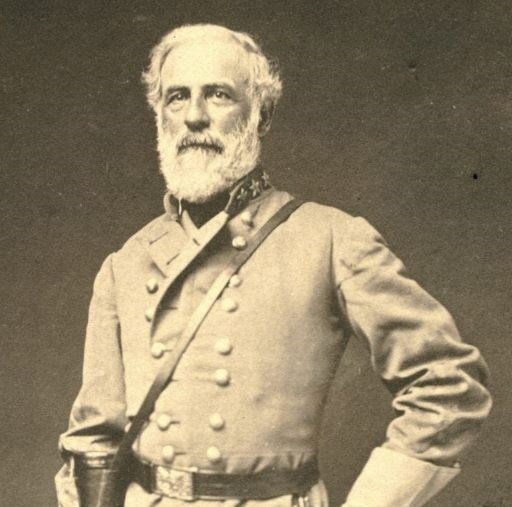
If there is one consistent image that has come out of the Civil War, it has been of Robert E. Lee, the calm, brilliant strategist who fought for the Confederacy out of a sense of loyalty to his state of Virginia; a soft spoken man, opposed to slavery but believing more in State’s Rights and the honor of the South.

Many of these myths are exploded in this book as Nolan quotes from Lee’s pre-war letters regarding the institution of slavery; how the slaves were well looked after, how they were better off in their present condition than when they were in Africa as they had the opportunity, at some undisclosed date, to become better than they were (although they could not be as good as whites).  Yes, Lee admitted that there were abuses, but they were few and sometimes necessary to keep the blacks in check until that golden day in the future where they could move up the human food chain. 

Nolan also criticizes Lee as a general in that he failed to fully understand until too late the overwhelmingly destructive firepower of “modern” rifles and artillery.  A prime example of this could be seen at Gettysburg where Lee ignored the strategy put forth by General Longstreet to hit the U.S. army on its flanks.  Instead, Lee threw the fresh troops of Pickett into an assault on the center of the Union line with no reserves at hand so that even if Pickett’s troops had been successful, they would have been swamped by Meade bringing up reserves from both of his wings.  Lee believed in the power to the spirit and was certainly not the last General to fall prey to the idea; the French army in the beginning of World War I was another force that failed to comprehend the full implications of “modern” technology. 

After the Civil War, Lee held an honored place in the minds of most Southerners, even though he admitted that he realized after Gettysburg that the South could not win the conflict.  He fought on and kept his troop together in a cause that was lost against a foe that was more ruthless than he could be in the conduct of the war.  The hundreds of thousands who died after his realization must be in part, laid at his feet but the myth of Lee will not be laid to rest until sometime in the future.

A good book for the reader who is unfamiliar with revisionist history, but a revisionist history that has much merit.

Share:
Reading time: 2 min
Book Reviews, Government, Society

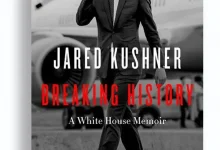
Breaking History by Jared Kushner

January 9, 2023 by Barry J. Klazura No Comments

I must admit that prior to reading this book, I had mixed thoughts about Mr. Kushner.  Was he a case of nepotism, what was his background, did he have any thoughts of his own or was he merely a puppet of the President who was his father-in-law, did he marry into the Trump family in a bid for easy wealth, and so on.  By the end of the book, admitting that it may be at times self-serving (how unusual for a political memoir), my attitude toward him turned to admiration. 

Here was an individual from outside the belt way who took on tasks which were not easy, fought against individuals with their own agendas and who did not necessarily supporting the goals of the man they worked for, the President, entered into the very real dark and self-perpetuating deep state and came out with his love of country intact, his family intact and could realize that he helped to accomplish successes where “insiders” had failed for decades. 

How was he able to accomplish anything being an outsider in the Capital.  For one, he brought a level of expertise that was missing in the Capital and the hallways of power, for rather than trying to merge into the bureaucracy and traditional power games, he brought his business sense to the table.  This means that as every businessman knows, you cannot move ahead if you do not offer a good product and work at every level to provide that product to the market.  His approach was very often one of being willing to listen.  An example is the dogma given by John Kerry that “There will be no separate peach with the Arab world without the Palestinian process and Palestinian peace.  Everybody needs to understand that.  That is a hard reality.”  Kushner realized that the same old programs with ill-defined promises had been the bedrock of Middle East discussions for decades with the same result, failure.  Instead of doing the “same old, same old”, why not do something different. It was Henry Kissinger who advised him that the foreign policy of the nation had to be run by the White House as opposed to the State Department where ideas seem to go to die. 

While Trump may have been mocked by the Germans and others when he cautioned them about relying on cheap energy from Russia, in the Middle East he was respected for his openness and willingness to be bold and speak openly.  His image played well in the area as opposed to the apology tour concept and he was willing to listen to what Arab leaders had to say in very frank discussions, including when he told them that a deal could be made but that they had to handle the terrorists in their own countries who go out and murder Israelis. No action, no deals.  The Arab leaders also liked that Kushner was the President’s son-in-law which gave creditability to his voice.  Finally, he found by listening that a major stumbling block to Middle East movement was not necessarily the Palestinians who were getting to be a burden, but rather guaranteed and safe access to the al Aqsa Mosque which was under the control of Israel.  By finding the one thing that all the Arab leaders could agree on, it enabled him, by working hard and creating a strong team, to develop and close the Abraham Accords, an action that has led to greater trade and development in the area.

The book notes some of the personalities in the administration including Tillison, Kelly, Fauci, Bolton and others in a way that allows one to read between the lines and understand his opinion without being insulting.  In each encounter, Kusher seems to better realize the difference between the government game and that of business, but he absorbs each and uses the experience to better his results.

One of the finest sections is in the episode regarding the successful strike against Soleimani.  The Iranian general had been responsible for the deaths and wounding of thousands of U.S. military personnel and Trump felt that a message needed to be sent that there was no safe ground for those who attacked Americans. The killing of Soleimani sent a strong message to the Iranian leadership and despite the threats made by that leadership, their reaction was one that was feeble at best.

Other chapters cover Operation Warp Speed, the bi-partisan passage of the First Step Act, and of course, the wasted energy over the Russian collusion investigation. 

In the end, I believe most readers will put the book down and believe that Jared Kushner, a religious and strong family man, put his best efforts into projects during that four year period.  He is proud of his accomplishments and the service he provided to the country and at the same time, it is easy to understand why he has openly stated that he would not wish to go back to such service again.  Somehow, we need to create a system where good and honest individuals can enter government service, and not face the possibility of huge legal bills created by political gamesmanship, where new ideas can be put forth after decades of failed policies.  This is one of the best post-Administration memoirs I can remember and it does provide hope for the future.

Share:
Reading time: 4 min
Book Reviews

Lenin by Victor Sebestyen

November 18, 2022 by Barry J. Klazura No Comments

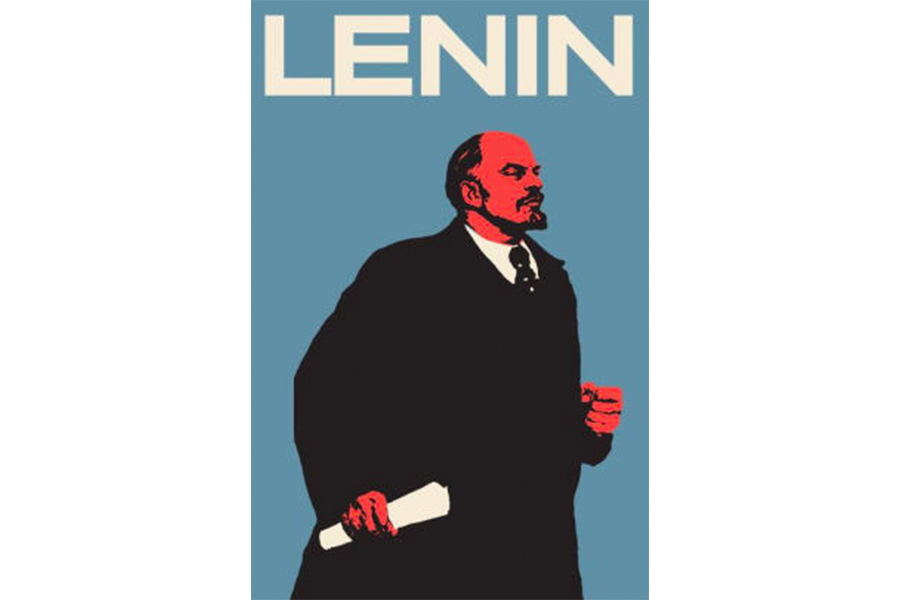
Lenin, the great icon of Communism, was raised and lived the life of a bourgeois. Cared for and pampered by his mother and family, then by his wife Nadya Krupskaya, he could not live on his meager earnings and so continually received money from his mother and from the donations of wealthy liberal capitalists who did not understand his total hatred of them. He lived a life dedicated to revolution, but never raised a fist in anger, never stood on the barricades and was known to flee at the first sign of violence. Yet, when power came to him, he easily ordered the deaths of real and supposed enemies, including those who had opposed him philosophically.

In several reviews, this book was praised for exposing the real Lenin, for breaking the shell which had been carefully crafted creating an image of benign intellectualism detached from the slaughter’s instituted by Stalin. Yet the book, if read without a knowledge of the seizure of power, the Civil War and the creation of the Soviet state would not in and of itself destroy the myth of the peaceable Lenin. There are only a couple of examples of his willingness to shed blood, as when the elevator in the Kremlin was not working for a few days and Lenin demanded that the maintenance man be shot, or more seriously, when there was famine in the countryside. At that time, Lenin was approached with an appeal to ease up on the countryside food seizures, but his response was that it was an ideal time to begin the liquidation of the priests and churches as people’s attention would be diverted. In reality, Lenin was a driving force behind the formation and actions of the Cheka, ‘the sword and shield’ of the Communist Party. Like Stalin after him, Lenis read the list of those executed as well as personally signing the lists of those awaiting execution.

Aside from not exposing the ruthlessness of Lenin, the rest of the book does reflect Lenin’s ability to bring others to his way of thinking and his excellent sense of timing, politically. Although like others, he was surprised by the overthrow of the Tsar (just as decades later everyone was surprised by the collapse of the Soviet Union), he reacted quickly to return to Russia and pick up the direction of the revolution. Although his face was not even recognized in Russia, he was able to direct and corral the energy of the times and the streets to successfully seize power. Then, thanks to his drive and the skills of men like Trotsky, Dzerzhinsky, and others, the first Communist government was able to survive war, famine, civil war and more.

This is an excellent biography of a man who has been immortalized as a brilliant thinker and leader but misunderstood. His self-centeredness, intellect, patience, and ruthlessness are all laid out for examination. For anyone seeking to have a better understanding how such a terrible system could be founded and survive with such a small base of support, read this book.

Share:
Reading time: 2 min
Page 2 of 8«1234»...Last »

Barry J. Klazura

Barry Klazura sipping grappa

With a Masters Degree in Guerrilla Warfare and Totalitarianism, Mr. Klazura was well prepped for a career in Sales and General Management, consulting on corporate startups and turnarounds as well as lecturing on history and politics.  For the past twenty years he has focused on being a financial advisor and consulting.

Delivered To Your Inbox

Sign up to get an email when a new article is published.

Topics

  • American Civil War
  • Biography
  • Book Reviews
  • Cigar Reviews
  • Coronavirus
  • Current Affairs
  • Education
  • Environment
  • Factoids
  • Government
  • Lifestyle, Cigars & More
  • Liquid Refreshments
  • Musings
  • Quips and Historical Facts
  • Society
  • Travel
  • Uncategorized
  • World War I

Subjects

book Books-Russia/Soviet Union Books 21st Century Books 1919-2000 Books Ancient to 1900 Books Asia Books Biography Books Fiction Books Germany 1919-1945 Books Pre-WWI books Viet Nam books world war I Books WW1 Books WWI Books WWII Cigar Friendly Location Amsterdam Cigar Friendly Locations-London Cigar Friendly Locations-New Orleans Cigar Friendly Locations-New York Civil War Coronavirus Environment Korean War World War I World War One

Recent Articles

At Stalin’s Side by Valentin Berezhkov

July 15, 2026
The Price of Victory by N.A.M. Rodger

The Price of Victory by N.A.M. Rodger

June 26, 2026
Frontsoldaten: The German Soldier in World War II by Stephen G. Fritz

Frontsoldaten: The German Soldier in World War II by Stephen G. Fritz

June 5, 2026
Organizer of Victory, 1943-1945, George C. Marshall by Forrest C. Pogue

Organizer of Victory, 1943-1945, George C. Marshall by Forrest C. Pogue

May 26, 2026
Illegals Released & Our Leaders

Illegals Released & Our Leaders

May 10, 2026

Inquiries and Comments

For general inquiries and comments, email AOTOHcomments@gmail.com.

Facebook
© 2020 And On The Other Hand. All rights reserved.