

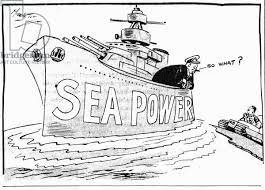
This is a well-balanced history of Churchill’s interaction with the British navy both as a Sea Lord, head of the Exchequer and war time leader. Churchill had a real love affair with the Navy and was blamed for the disaster at the Dardanelles, the budget cuts after WWI, the fiasco in Norway as well as the loss of Force Z in the Pacific. Yet despite these “errors”, he returned again and again to positions of power to lead his country during their darkest hours. And, despite his love of Empire, he knew that the price for defeating Hitler would be the loss of Empire but he was willing to do what needed to be done (taking a back seat to the rising power of the United States and being humiliated by Roosevelt to Stalin) in order to attain his goals.
Each of the disasters attributed to Churchill are carefully examined and other historians’ arguments are discussed in trying to reach a meaningful conclusion. For example, even though Churchill was looking for a different strategy from that of frontal attacks during WWI, he was initially against the Dardanelles attack but was brought around to supporting it and when he supported something, Churchill pulled out all the stops! In the end, the timidity of the British Admirals and the poor choice of landing beaches caused in large part by poor intelligence lead to disaster and it was hung on Churchill. Bell goes through each of the other scenarios and one comes away with a much more balanced picture of Churchill and his decision making process.
Was Churchill a genius or a meddling fool; these seem to be the two extremes offered by most historians. In reality, he was a leader who did not shirk the responsibilities of his office and who had to make hard and difficult decisions which ran risks but had to be balanced against the enemies and limitations he faced.
A well written book not for the novice, but for the naval historian a very valuable addition to your library.






Leave a Comment