

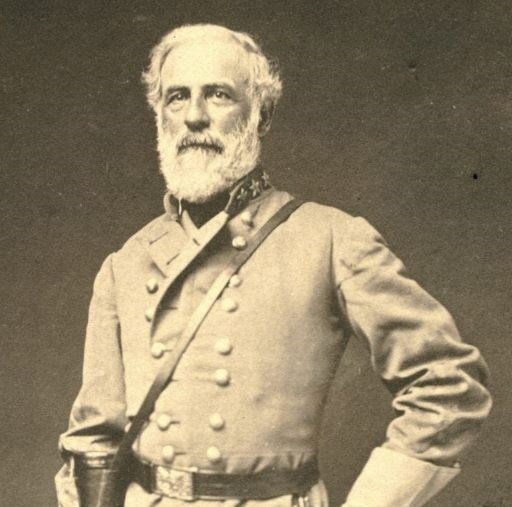
If there is one consistent image that has come out of the Civil War, it has been of Robert E. Lee, the calm, brilliant strategist who fought for the Confederacy out of a sense of loyalty to his state of Virginia; a soft spoken man, opposed to slavery but believing more in State’s Rights and the honor of the South.
Many of these myths are exploded in this book as Nolan quotes from Lee’s pre-war letters regarding the institution of slavery; how the slaves were well looked after, how they were better off in their present condition than when they were in Africa as they had the opportunity, at some undisclosed date, to become better than they were (although they could not be as good as whites). Yes, Lee admitted that there were abuses, but they were few and sometimes necessary to keep the blacks in check until that golden day in the future where they could move up the human food chain.
Nolan also criticizes Lee as a general in that he failed to fully understand until too late the overwhelmingly destructive firepower of “modern” rifles and artillery. A prime example of this could be seen at Gettysburg where Lee ignored the strategy put forth by General Longstreet to hit the U.S. army on its flanks. Instead, Lee threw the fresh troops of Pickett into an assault on the center of the Union line with no reserves at hand so that even if Pickett’s troops had been successful, they would have been swamped by Meade bringing up reserves from both of his wings. Lee believed in the power to the spirit and was certainly not the last General to fall prey to the idea; the French army in the beginning of World War I was another force that failed to comprehend the full implications of “modern” technology.
After the Civil War, Lee held an honored place in the minds of most Southerners, even though he admitted that he realized after Gettysburg that the South could not win the conflict. He fought on and kept his troop together in a cause that was lost against a foe that was more ruthless than he could be in the conduct of the war. The hundreds of thousands who died after his realization must be in part, laid at his feet but the myth of Lee will not be laid to rest until sometime in the future.
A good book for the reader who is unfamiliar with revisionist history, but a revisionist history that has much merit.





Leave a Comment