
On The Other Hand -
Book Reviews
Lifestyle, Cigars & More
Musings
About
On The Other Hand -
  • Book Reviews
  • Lifestyle, Cigars & More
  • Musings
  • About
Book Reviews

:  With Napoleon in Russia (1935 edition) by General de Caulaincourt, Duke of Vicenza

February 5, 2026 by Barry J. Klazura No Comments

The general (of a military and diplomatic career) provides an excellent intimate look at the thinking and logic of Napoleon at that critical time of the Empire.  Having served extensively at the court of the Tsar, de Caulaincourt was able to provide Napoleon with extensive information on the thinking of the Tsar, the country, etc.  The information provided however, was not to Napoleon’s liking and therefore was largely ignored, much to the agony of the Grand Army.  Yet Napoleon kept de Caulaincourt close to him (he was willing to keep those who provided excellent service close to him even if they provided information not to his liking) to the point where on the retreat from Moscow, and especially when Napoleon left the Grand Army, de Caulaincourt escorted him on that long and cold ride through Prussia, into Warsaw, and onto Paris.

 After the fall of Napoleon, he retired from public life and died of cancer in 1827.

This book is a must read for students of Napoleon as it gives an excellent view of his thinking, logic, prejudices, etc.  His views on the restoration of Poland, misreading of the Tsar, etc. are clear and fascinating. 

Share:
Reading time: 1 min
Book Reviews

Fortress Cholm by Oskars Berro

February 2, 2026 by Barry J. Klazura No Comments

The war in Russia, from 1941-45 witnessed numerous major battles, such as Stalingrad, Kursk, Operation Bagration, etc. and even more interesting smaller battles such as the Soviet siege of German troops at Demyansk and the subject of this book, Cholm.  The author, a Latvian who fought at Cholm recounts how for 105 days (February 23 to May 5, 1942), 5500 mostly German troops were surrounded and besieged by numerous Soviet divisions.

Outnumbered, out gunned, having only 10 anti-tank guns, the garrison consisted of a mixed bag of units including non-combat units which were given guns to man the lines.  The one advantage the Germans had was that they were able to maintain contact with artillery units outside of their lines.  When the Soviets attacked, they besieged were able to call in accurate artillery fire with precision to help blunt the human wave tactics employed by the attackers.  Yet supplies were short as winter storms and fog often grounded relief supplies parachuted in by the Luftwaffe.  Ad hoc defenses were created, and the town was destroyed during the months of siege.

In the end, between (depending on the source), between 3500-4500 of the besieged were casualties (2200 were killed) while the Soviets lost an estimated 20,000 troops.

This is a short book, easy to read and will give the average reader a good idea of the battle from the level of the men on the ground.  It does not dwell on the real agonies of the battle, such as the dirt and lice, the thousands of wounded crammed into the buildings which were specifically targeted by Soviet artillery, nor the sufferings of the Soviet troops who had little if any shelter as they attacked again and again over the same ground, so well registered by the German artillery.  This battle, insignificant in the history of that campaign will fade from memory, will be a footnote in its history in another 50 years, and yet it was a time of terror, death and bravery for thousands who will forever be nameless.

Share:
Reading time: 1 min
Book Reviews, Society

The Sailor Who Fell From Grace With the Sea by Yukio Mishima

January 25, 2026 by Barry J. Klazura No Comments

I first read this novel over forty years ago and although I did not recall the exact plot, I remembered that as I finished it, I put it aside vowing to never read another of Mishima’s’ works. My fear was that having read one more, I might have to devour his extensive list of works, a bit like an old friend who refused to purchase on Judy Collins record (that shows how long ago that was), as then he would have to purchase them all.

A very good friend presented me with a copy of this work for my birthday, and it was with a mixture of excitement and trepidation that I began to read it. The story itself seems to be simple; it centers around a widow, a sailor she meets, her young teenage son and the circle of his friends.  Filled with a subtle sensuality (as you would expect when you consider the author), it tells a story of how the son, and his friends reflect a form of nihilism that Mishima believed was part of the Japanese post-war character. The “tribe” of boys looked down on society, the family and anyone who was not in their “enlightened” circle. They were superior, above all the bourgeois values and norms and were determined to create their own world. Mashima also rejected Japan’s new materialism, democracy and flirtation with communism.

The book traces the young son’s disillusionment with the sailor who is courting his mother and the betrayal by the sailor when he decides to give up his life at sea and marry the boys’ mother. That action is a betrayal of the boys (not the sailors) sense of superiority, and the group of boys believe they must “punish” the sailor, or they will not be true to their sense of themselves.

As I finished the short novel, I felt the same sense of amazement at the power of Mishima’s writing. I slowly closed the book, put if my lap and let the last two paragraphs sink into my mind. The power that the book projected so many years ago was still there, as strong as ever. It is a book that dares to look at the dark side of disillusioned youth.

Mashima was one of Japan’s premier authors during the 1960’s. His novels were nominated five times for the Nobel Prize for literature, but he is probably best remembered for his dramatic action at Japan’s West Point in Tokyo in 1970. There, with some of his personal self-defense force, he seized a main building, captured the commandant and harangued the gathering cadets to throw off the new Japanese values of materialism, democracy, etc. and to recapture Japan’s sense of “national essence” including  Emperor worship or all of Japan would end up as a “rootless people”.  Failing to rally the cadets, he committed seppuku and had his second cut off his head as prescribed in the ceremony. He was forty-five years old.

What place did he hold in the minds of the Japanese youth of that time? In my previous lifetime I worked at Panasonics headquarters in Secaucus New Jersey.  One of the photos I kept displayed was of Mishima haranguing the cadets on that day in 1970. None of the older Japanese commented on the photo in my office, but the younger generation were more open in their comments, and I found it interesting that a simple photo could pierce the normal Japanese self-containment and lead to an openness that was so rewarding.

Read this book at your own peri or sense of excitement. The term you use after the reading may tell you something of yourself.

Share:
Reading time: 3 min
Book Reviews

Masters of the Air: American Bomber Boys Who Fought the Air War Against Nazi Germany by Donald L. Miller

January 11, 2026 by Barry J. Klazura No Comments

I must admit that I failed (twice) to “get into” the series “Masters of the Air,” in fact I only watched two or three episodes before turning it off. The main problem was that compared to “Band of Brothers” and “The Pacific,” the characters seemed shallow and there was too much time spend on the drinking and almost childish actions between missions. After reading this book, I shall make it a point to watch the television series through to the end.

The book, “Masters of the Air” is a brilliant, gripping history of the American air effort against the Luftwaffe from 1942 though to final victory in 1945. The author takes us on a step by step path as the American air effort is slowly built up, as theories of air warfare are tested and as the initial aircrews in the struggle are sacrificed time and time again on raids that often serve no tactical or strategic purpose.

Prior to the arrival of the Americans, the British had gone through a long and painful campaign of attempting to bomb key targets in German occupied Europe. The Brits had suffered serious losses during the initial campaign against the German invasion of France and wanted to strike back at Germany as the Luftwaffe began their bombing of British cities. The Germans and the British both learned that daylight bombing was too expensive. Despite the pre-war theory of Italian air commander General Giulio Douhet that the bomber will always get through, the cost of such a policy was too heavy, and the results were too meager. The British thus moved to night bombing which produced its’ own problems, one being faulty navigation. Originally the British bombers tried to follow the lights from rail lines and highways which only got them to the British coast, then after that many bombers were fortunate to find the European continent let alone their primary military objective. Thanks to a technological breakthrough, the British were finally able to at least get to the vicinity of their target but under the direction of Arthur Harris the concept of area bombing was developed. Under this theory, Harris hoped to “un-house” German workers and civilians and break the back of German morale. Why the Germans should break when the British civilian morale did not must not have been asked.

The Americans with their heavily gunned B-17s and B-24 bombers and their precision Norden bombsight set out to confirm Douhets’ theory while at the same time destroy the key German war industries. Thus, began around the clock bombing, the British by night, the Americans by day. The only problem was that while the ten-thousand dollar bombsite worked in perfect conditions, in reality with clear days over much of the continent limited to one day out of three, flak jarring the planes, and German fighters closing on the bombers at a combined speed of five-hundred-miles-per-hour, only one bomb in ten landed within five-hundred feet of the target. Added to this was the severe loss rate of raids in which ten, twenty, even forty percent of the bombers were destroy or badly damaged.

Through trial and error for over a year the Americans took heavy casualties, and Miller provides a fascinating section on how the medial teams approached battle fatigue, shell shock and morale problems which threatened to destroy the American effort. One great problem was that with the hostile elements, the randomness of the flak and the determination of the German defenders, many crews felt an extreme sense of helplessness regarding their lives. Rest homes, special meals, more breaks in the early days helped to keep the bombing effort on track despite the dispersal of bombing effort. Miller does a wonderful job of making the reader understand the strain of flying a mission; hours in the air where the temperature can be -60 degrees, where taking off a glove for even a minute can lead to first bite, the jarring of the plane as it flies through hundreds of miles of flak, each shell capable of destroying a bomber, of being wounded during the flight and the slim chance of survival in the terrible cold and then the return to the base which so many empty beds stare at the survivors, knowing that the next day the same drama will be presented to the survivors.  In fact, during the early days until the back of the Luftwaffe was broken, the chance of surviving twenty-five missions (at which point a crew member would be rotated back to the U.S.), stood at 1 in 4. As late as the three months leading up to D-Day, the Eighth Air Force lost fifty percent of their bombers, as the Germans had concentrated over 13,000 heavy anti-aircraft guns along the bombing routes. While it took about 8,500 rounds from the newest German guns to bring down a bomber, flak still accounted to over 40 percent of the wounds suffered during the air campaign and flak took down more planes than the Luftwaffe.

The book is filled with descriptions of bravery of young men, often twenty-one years old, who stepped into manhood by feats of bravery equal to the brave young men in the infantry, armor, navy, etc. There was no glory in this war; it was a battle of attrition between two industrial powers who fed machines and bodies into its’ maw until one or the other bled to death. Fortunately for us, it was the German’s who bled faster.

Despite its’ size (over 500 pages before footnotes), it is a fast read; beautifully written and providing insight into the questions the intelligent reader will be mentally asking.  Well done and I look forward to giving another chance for the series; I hope it lives up to this excellent work.

Share:
Reading time: 4 min
Book Reviews

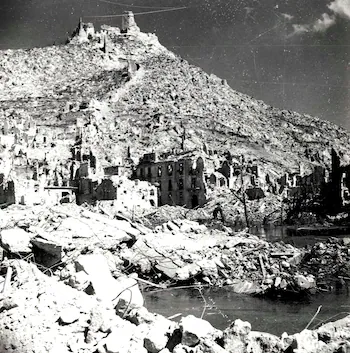
Cassino’44: Five Months of Hell in Italy by James Holland

December 12, 2025 by Barry J. Klazura No Comments

Not as well known in the U.S. as in the U.K., James Holland only became interested in World War II in 1995 when he saw a Spitfire for the first time. Since then, he has written over a dozen books about World War II (mostly about the western European Theater) as well as a good dozen fictional books. I recently saw him give a talk on one of his works and his enthusiasm for the subject was amazing, but not as amazing as his discussions with actual veterans, their diaries and letters and their families that he interviewed for his books. It is clear that he absorbs his firsthand resources and pours them into his books, making each little story an integral part of the whole.

This is the first of Mr. Holland’s books that I have read, and it is a very heavy book; heavy in the sense that the detail is dense and this can be a challenge for the deletant or novice reader. I do believe, however, that it is worth the effort as one comes to understanding the tactical and strategic side of war, not to mention the other forces that drive the commanders and those at the sharp end of the bayonet. Politics, ego, self-satisfaction revenge, anger and fear, are all found in the many personalities noted in this volume. Generals are disappointed and sacked, enlisted men suffer from lack of food, medical care, proper equipment and munitions and sorrow as they are amazed to survive when they see their best friends vaporized by artillery while just a step away. This excellent treatment of a theater of the war which is often neglected gives those who fought their moment of appreciation.

There were several armies that fought in the campaign: American, British, French, Polish and German. Each faced their own challenges, each had their own advantages. The overwhelming material strength of the Allies determined the outcome of the battles as repeatedly the Germans were a battalion short at a key place or were decimated by the Allied air superiority. As usual, the Germans managed to scrape together ad hoc battle groups made up of survivors of multiple divisions or regiments. Those ad hoc groups punched far beyond their class, and they were a tribute to the methods of the Wehrmacht, but in the end, it was the citizen soldier, the men who came from the farms, factories, small shops, etc. who won the day. Not for glory, but because the job had to be done.

One thing that the author does that puts a real seal of approval on this book for me, is his excellent Postscript. In that section, he provides a scholarly and professional analysis of some of the key commanders, pointing out key errors, assumptions, fears, and egos that impacted the battle. An excellent example is his comments on Field Marshal Albert Kesselring who managed to exit the war with a reputation that glossed over his command participation of various war crimes. Often presented as a Luftwaffe officer who managed to successfully transition to a Wehrmacht combat commander. Holland points out numerous tactical errors committed by Kesselring, his deadly adherence to Hitler’s orders to fight for every meter of ground, wrongful obsession with Allied strategic strategy and failure of any strategic strategy. His arguments are convincing and he offers similar comments on Generals Lucas, Clark, and others.

Warning! If you do enjoy this volume, you may be hooked on moving forward with some of this other dozen or so campaign books, but that is an addiction that anyone interested in good history reading will enjoy!
Share:
Reading time: 3 min
Book Reviews

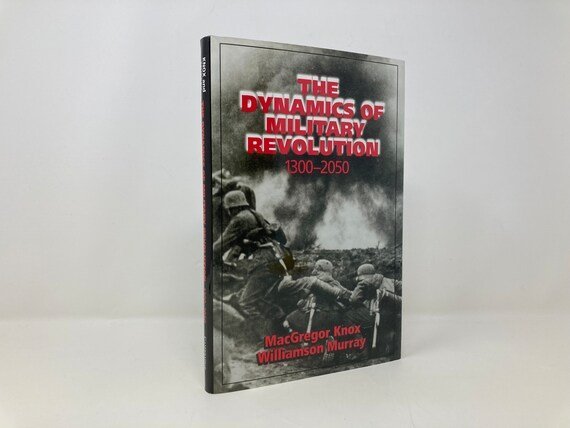
The Dynamics of Military Revolution, 1300-2050 edited by Macgregor Knox (The London School of Economics and Political Science) and Williamson Murray (Institute for Defense Analyses)

November 30, 2025 by Barry J. Klazura No Comments

One of the pleasant things about New Orleans is that you can spend hours in used bookstores, shifting through volumes which reflect the mind set of the locals. I have found a number of gems over the years, and this last trip enabled me to find this excellent volume on RMA (revolutions in military affairs). I have to admit that I had never heard of the book (originally published in 2001 while the volume I found was from its seventh printing in 2008. The last printing was in 2015), but it is a find that I shall keep close. The contributors range from professors of history to the Director of Royal Artillery, British Army. This is short (less than two-hundred pages) but serious book.

According to their thesis, there have been five military revolutions in Western history:

  1. The creation of the modern nation state which brought about the discipline of military power.
  2. The French Revolution which “merged mass politics and warfare.”
  3. The Industrial Revolution which made the nation states to pay, feed, cloth, and arm masses of manpower.
  4. The First World War which merged numbers 2 and 3 while “set(ting) the pattern for twentieth-century war, and
  5. The Cold War which was cold in the “decisive European and northeast Asian theaters.”

These five RMAs are more important than any momentary tactical advantage (such as the superior use by the Germans of tanks vs. the French use in May 1940). They are more important as they completely change how war is fought across all theaters involved.

Moving into the book, there are separate studies regarding the Western army in seventeenth-century France, the impact of the French Revolution with it dramatic introduction of the mass army, the U.S. Civil war, the Prusso-German RMA of 1840-1871, the Battlefleet revolution of 1885-1914 under the direction of First Sea Lord Jackie Fisher, and of course the First and Second World War.

One might be tempted to ask about the current war in Ukraine and the impact of drones on the battlefield. I believe the authors would not say that drones are a real RMA as they would fall into the category of say, the introduction of the tank in World War I. Yes, they do make an impact, but the initial monopoly by one side was quickly lost and, in many ways, it mirrors the technological battle that was fought during the Battle of the Atlantic.

The writing is decidedly not academic: each section is sharp and well argued with a minimum of excess verbiage. The writing is tight and the average armchair military historian could easily grasp the ideas put forth in each section.

Share:
Reading time: 2 min
Book Reviews

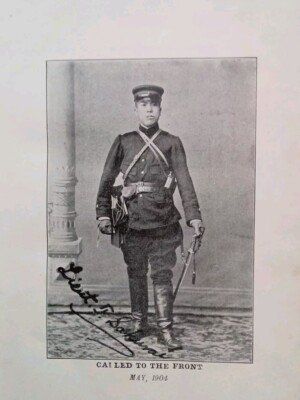
Human Bullets: A Soldier’s Story of Port Arthur by Tadayoshi Sakurai

November 18, 2025 by Barry J. Klazura No Comments

On my posting of September 29, 2025, I reviewed an excellent history of the Russian-Japanese war of 1904-1905. References were made to a tip of the bayonet history by a Japanese Lieutenant who served in that war. Originally published right after the war, it has been out of print for decades, and I have never been able to find a copy. I mentioned that I was interested in that history to a friend of mine and amazingly, he managed to find an excellent facsimile copy of that book reprinted in 2018. Thank you Christian!

The history gives a wonderful insight into the mindset of early Imperial Japan., during the Meiji era (1868-1912). Filled with pride and ego’s that could be easily bruised, Japan had made magnificent advances into a world that prior to 1868, they could little comprehend. Their advances in education, industrialization, the military, not to mention the coming together of a nation that was ruled by power Samurai clans, each having a history to warfare and political intrigue stretching back hundreds of years was amazing.

Like all industrialized nations of that time, they sought to borrow the phrase from Wilhelmian Germany, their “Place in the Sun.”  This was done via military actions in Korea and China where the Japanese military showed exactly how far they had progressed as they were easily victorious against much less Westernized nations. Yet they were also humiliated by the demands of the Western powers (Russian, Great Britain and Germany), who at the peace table, reversed most of Japan’s gains. In fact, the success of Japan caught the attention of Great Britain who suddenly found a new and dangerous player in an area where they were dominant.

Japan was forced to give back some of their gains but was to a degree mollified as a chief protagonist, Imperial Russia also agreed to honor a pull back on their part. Unfortunately, the Czar, not being the brightest of men, decided that it was important that he push the boundaries of the agreements. The Russian leasing of Port Arthur and fortification of the Liaodong Peninsula (which Japan had been forced to give up in the peace treaty), made the Japanese feel betrayed. Russia was also seeking to gain influence Korea which was seen as a direct threat to Japan. In the end, Japan felt betrayed and shown little respect and Japan declared war on Russia. And thus starts the history of this book.

Anyone who has studied history, especially the Second World War in the Pacific, understands that the Japanese soldier was a tough, brutal opponent. Drafted, trained, often abused, and indoctrinated to honor the emperor who was a god on earth, they were lead by an officer corps that had no regard for the Geneva Convention which attempted to temper the worse horrors of war. The Japanese military had an almost medieval mind set but twentieth-century weapons. Take that mind set and amplify it and you will start to realize the mindset of the author who was a field grade officer.

The pages of the book are riddled with proclamations before every action that he, or his commanding officer or his men that they will die in battle in order to fulfill the commands of the emperor. If the individual returns from battle, many have an intense sense of shame, as if their death would have made the battle even more glorious. While the Japanese military machine had progressed far, it was still a young force backed by a nation with limited resources. In spite of their limited resources, especially their manpower (as opposed to the ever-increasing manpower of the Russians), the infantry commanders including the commanding General in charge of operations, used Russian human wave tactics in their attacks. In one attack, the Japanese suffered over 6,000 casualties (which would be like the U.S. losing 45,000 in one battle). Such losses are the basis for the title of the book. Many infantry battles were fought at night, when the Russians used search lights to expose and blind the attacking Japanese who were mercilessly cut down by machine gun fire.

Mentally, each battle or probing attacked was viewed as an individual’s final attack; individuals would expose themselves to fire as they hurled insults at the Russians (who no doubt could not understand a single word) and were instantly cut down. Yet the author, was either a fanatical believer or painted a (to the Japanese of that time) picture of a glorious warrior, the modern-day image of the samurai. In fact, the patriotism, the belief in the beauty of death in battle is so loud, that it is like something a child would think of what war is like. Either a child’s mentality or that of a jihadist.

It is a fascinating book, and there are small glimpses of humanity (a shared water bottle with a dying man who has not only been shot, but run over by horse and iron wheels of their own artillery), but on whole, it is a book from a different age, one which fortunately is largely disparaged today.

Share:
Reading time: 4 min
Book Reviews

India at War: the Subcontinent and the Second World War by Yasmin Khan

November 14, 2025 by Barry J. Klazura No Comments

A very interesting book that does not focus on the actions of the Indians who served in either the British or Free India movement of Subhas Chandra Bose, but rather on how the war impacted much of India as it was drafted into the struggle first against Germany, then against Japan.  It traces the initial reaction of both the Brits in India who managed for quite a while to maintain their colonial stature and the men from India who “volunteered” for service (some for historical reasons as they were from traditional “warrior” cultures while others enlisted for better food or to protect their families businesses from special war taxes).  As the war progressed and as more of India was mobilized for the effort and especially with the advance of Japanese forces into Burma, food shortages began to appear for a myriad of reasons and a huge migration began as individuals both on a voluntary and on an enforced basis were moved from potential invasion locations.

The book also has an excellent discussion on how the traditional leaders of Indian independence were marginalized after they were arrested and jailed by the British.  While the British thought such an action would calm India, the exact opposite occurred as the younger generation, not policed by the traditional leaders, began a campaign of strikes, marches and violence against the British.

I would have liked to have had move of the movement by Bose covered, but overall this is an excellent book for anyone unfamiliar with the subject and will provide a good basis for future reading.  A major fault lies in the lack of maps as for most people, reading about various Indian provinces and towns will be as confusing as reading about the same in the Ukraine.

Share:
Reading time: 1 min
Book Reviews, Current Affairs, Government, Society

Listening to the Law: Reflection on the Court and Constitution by Justice Amy Coney Barrett

November 12, 2025 by Barry J. Klazura No Comments

Since the 1970’s, Justices for the Supreme Court have for the most part come from Ivy-League, East Coast law schools.  Justice Barrett breaks that trend ( being a native of New Orleans) and as a result, her clear writing, legal and teaching experience provides us with a clear and clean understanding of some of the key factors used in her decision making process. Her book is written in a manner that goes against the grain of the ivy league schools in that it is concise, takes on real issues and discusses the procedure, forces and philosophies which guide the decision-making process of the Court. While she provides personal background information on her life, unlike some Justices, she makes the reader understand that her rationale to reach a conclusion is not based or tainted by her personal views, but rather by understanding what the words of the Constitution mean.

It is refreshing to read her book as she clearly discusses the pros and cons of a number of issues, not only legal issues before the Court, but also the political questions facing the Court, such as the concept of Court packing, lifetime tenure, etc.  We see the actors behind the scenes such as the law clerks, the traditions of the Court that have evolved over the years, which are designed to maintain a balance of civility and professionalism even among the Justices.  Her discussions on areas such as textualism and originalism include their history and forces behind each so that everyone can understand the dynamics of each concept.

The Justice is obviously a serious scholar of the law but one which can clarify a subject in a few words where others will need much more room or confuse the issue by inserting their personal views and bias. Her love for the law and the Constitution is clear. 

During her confirmation, she withstood the slings and arrows of several Senators who attacked her over their concerns regarding health care, abortion rights, her religion and her judicial philosophy (Originalist). She withstood the fire, never once reaching or referring to any notes. The fact that she is an Originalist and would therefore not let her personal feelings impact her duties seemed to both some Senators who seem to favor an more “progressive)” attitude toward law.

 Give this read a try, especially if you wish to gain a higher regard for the Court and the Justices.

Share:
Reading time: 2 min
Book Reviews, Current Affairs, Government

Where Health Care Went to Die

November 5, 2025 by Barry J. Klazura No Comments

In his new book, My Fight for Canadian Health Care: A Thirty-Year Battle to Put Patients First by Dr. Brian Day, we can see the weaknesses and misdirection of a Socialized health care system that is touted as being “free.”  Of course, no rational person believes that anything that the government is involved in is “free,” especially when you realize that the average Canadian earns less than his or her counterpart in Louisiana and pays more in taxes.

Like so many other ideas, a single payer health care system sounds great in theory, but it rapidly falls apart when reality hits. Today, unless you are one of the chosen special groups (Canadian Armed Forces, RCMP, federal employees police officers and yes, prisoners), you are doomed to extended waiting periods if you need health care.

There are numerous reasons for the delays that the average Canadian faces, and here are a few as dictated by the CHA (Canadian Health Act) of 1984:

  • Hospitals cannot exceed their government-stipulated budgets.
  • As a result, between 1981 and 1995, surgeons at the UBC Hospital in Vancouver saw their surgical hours cut from twenty-five hours a week to five; any surgeon who exceeded those hours risked various threats including losing their “surgical privileges.”
  • Medical schools have dropped admissions between 11 and 30% as it was believed that a “surplus” of doctors would increase wait times due to more individuals seeking help.

The average Canadian faced a median wait for care from a specialist of 30 weeks, and that was on top of waiting to see their primary doctor which was necessary in order to authorize seeing a specialist. In Dr. Day’s specialty, the median wait time was 57 weeks. In 2024, Canadians were on the waiting list for a total of 1.5 million procedures.

Obamacare was sold on the basis of several major lies and has warped our health care system. There is no doubt that it needs to be amended, improved, etc. but if any politician even dares to mention a single care system as an alternative, they must be tied to a chair and this book read to them at least twice.

https://claremontreviewofbooks.com/where-health-care-went-to-die

Share:
Reading time: 1 min
Page 2 of 29«1234»1020...Last »

Barry J. Klazura

Barry Klazura sipping grappa

With a Masters Degree in Guerrilla Warfare and Totalitarianism, Mr. Klazura was well prepped for a career in Sales and General Management, consulting on corporate startups and turnarounds as well as lecturing on history and politics.  For the past twenty years he has focused on being a financial advisor and consulting.

Delivered To Your Inbox

Sign up to get an email when a new article is published.

Topics

  • American Civil War
  • Biography
  • Book Reviews
  • Cigar Reviews
  • Coronavirus
  • Current Affairs
  • Education
  • Environment
  • Factoids
  • Government
  • Lifestyle, Cigars & More
  • Liquid Refreshments
  • Musings
  • Quips and Historical Facts
  • Society
  • Travel
  • Uncategorized
  • World War I

Subjects

book Books-Russia/Soviet Union Books 21st Century Books 1919-2000 Books Ancient to 1900 Books Asia Books Biography Books Fiction Books Germany 1919-1945 Books Pre-WWI books Viet Nam books world war I Books WW1 Books WWI Books WWII Cigar Friendly Location Amsterdam Cigar Friendly Locations-London Cigar Friendly Locations-New Orleans Cigar Friendly Locations-New York Civil War Coronavirus Environment Korean War World War I World War One

Recent Articles

At Stalin’s Side by Valentin Berezhkov

July 15, 2026
The Price of Victory by N.A.M. Rodger

The Price of Victory by N.A.M. Rodger

June 26, 2026
Frontsoldaten: The German Soldier in World War II by Stephen G. Fritz

Frontsoldaten: The German Soldier in World War II by Stephen G. Fritz

June 5, 2026
Organizer of Victory, 1943-1945, George C. Marshall by Forrest C. Pogue

Organizer of Victory, 1943-1945, George C. Marshall by Forrest C. Pogue

May 26, 2026
Illegals Released & Our Leaders

Illegals Released & Our Leaders

May 10, 2026

Inquiries and Comments

For general inquiries and comments, email AOTOHcomments@gmail.com.

Facebook
© 2020 And On The Other Hand. All rights reserved.