
On The Other Hand -
Book Reviews
Lifestyle, Cigars & More
Musings
About
On The Other Hand -
  • Book Reviews
  • Lifestyle, Cigars & More
  • Musings
  • About
Book Reviews

Stalinism as a Way of Life by Lewis Siegelbaum and Andrei Sololov

August 19, 2023 by Barry J. Klazura No Comments

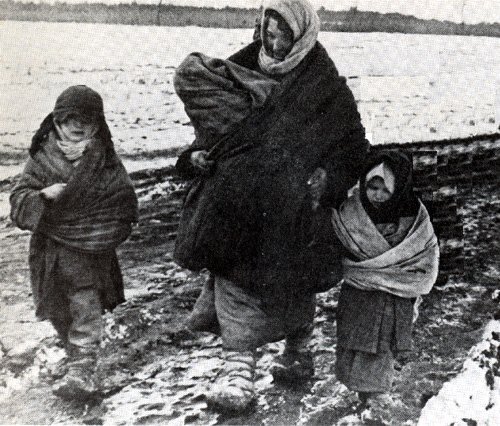
After the fall of the Soviet Union, many archives were temporarily opened, and historians and researchers were given access to files which had been locked away for decades.  The authors chose to focus on the average Soviet citizen and how they dealt with the system that was evolving as the country and economy was undergoing huge changes.  How would an almost illiterate peasant react to the collectivization of his farm?  To whom would he write and what would he request?  Or, a young girl whose father, divorced from her mother, was arrested as an enemy of the people and thus she was not allowed to enter the University and pursue her goal of becoming a doctor.  Who could help her or even attempt to make her understand her great genetic sin as passed to her through her father?  With over 157 documents, we reach back in time to feel the pain, the anguish, the confusion and in some cases, the hopes of people lost in the dustbin of history.

Many of the letters were written to Stalin himself.  Why not?  Stalin was portrayed as the “best friend of all children”, as being “wise and just”, “farsighted” and the best of “Leninists”.  He was concerned about the people, for hadn’t he written his famous article, “Dizzy with Success” that temporarily halted some of the worse aspects of collectivization?  He wrote it as soon as he heard that some had gone beyond sound judgement and he wanted to correct the wrongs done.  So, individuals wrote to Stalin, because if Stalin knew of that individuals’ problems, they were sure he would correct the error.  When nothing was done, it was because those around Stalin kept the truth from him and of course, the proof was in the confessions during the show trials of those closest to him.  The letters were received by the Kremlin, or the local administrator and filed for safe keeping in case the writer was ever accused of anti-Soviet behavior.

There where also those who wrote to praise the hard work of the local Soviets, but they were mostly the letters of the young who had been raised within the system that was systemically murdering millions of its own citizens.  For the youth believed in the opportunity before them and only asked for more opportunity to prove they were worthy of the great Revolution.

In many ways, this is a sad book, filled with the hopes, dreams and questions of individuals who could not and did not understand the system they inhabited.  So much was so illogical, so set against the known norms of Western man, that there had to be an answer somewhere, some beam of knowledge that could come to the writers to help them cope with their lives and dreams.  But the letters only gathered dust as the individuals would have gradually lost hope and accepted their broken dreams and lives.

Share:
Reading time: 2 min
Book Reviews

The Honored Society by Norman Lewis

August 10, 2023 by Barry J. Klazura No Comments

Prior to the invasion of Sicily during WWII, the United States government released the notorious Lucky Luciano on the belief that he would help the Allied cause prior to the actual invasion and with the administration of the island after it’s conquest.  The result of that action was a rejuvenation of the Mafia which had suffered but not been eliminated under the rule of Mussolini.

Lewis who had been stationed in Sicily and had access to court files about the Mafia, certainly strips away any glamour of the organization and show it to be medieval in its rule and pillaging of Sicily.  The local “Dons” hold complete power of life and death over the peasants and the central government of Italy is merely a milk cow to be used to feed the power of the Mafia.  During one of the conferences between the Dons, one suggested that the peasants not be allowed to have any metal plows, that they should use the same type of farm implements as was used in ancient Roman times; they did not need pants and shirts as they could wear simple smocks of the most primitive type and be fed on a diet of gruel just as the Roman legionnaires had been two thousand years ago.

Added to the exploitation of the peasants were the murderous vendettas which in the village of Corleone (yes, there is such a place), 153 Mafia murders took place between 1944-48.  Many of the murdered simply disappeared into the deep gullies around the island while others were left as a warning to others. 

With the end of the war, thanks to the American army and Luciano, the Mafia was given prime administrative jobs as since they were the enemy of Mussolini they could not be all bad.  The result was a rapid filling of the Mafia’s coffers from construction projects in the middle of nowhere, land grabs and massive building reconstruction in the major cities.  Poor workmanship and siting did not matter as any legit business was quickly silenced.  All this while the Dons dreamed of getting U.S. statehood for Sicily!

In the end, over 10% of the population left the island, many to the U.S., many to South America and many to Northern Italy where, freed from the Mafia, they joined the Communist party and fueled the Italian political unrest which still simmers today.

An excellent book which shows the brutality and venality of an organization which only cared for their own to the cost of everyone else.  No saving grace, only corruption. It also shows the short sightedness of government agencies who somehow manage to operate in ignorance of those they use for short-term goals.

Share:
Reading time: 2 min
Book Reviews

The Man in the Red Coat by Julian Barnes

July 27, 2023 by Barry J. Klazura No Comments

It is the time of the Belle Epoque in France and during the summer of 1885, Samuel Pozzi, the Comte De Montesquiou and Edmond de Polignac decided to visit London for a few days of intellectual shopping.  These three men represent the best and the worse of that time in France; they moved in the same circles; they were very friends but not rivals.

Of the three, Pozzi, Dr. Samuel Pozzi is the lead character in this book and is the man in the red coat.  In that famous painting by John Singer Sargent, he captures the mindset and Pozzi’s vision of his place in the world.  Pozzi unlike the other two individuals central to the book was a “productive” man, known for being a society doctor, a man of science, the doctor who brought French medicine into the nineteenth century. Brilliant, handsome, and cultured, he moved effortlessly through French and English society.  Married but a lover of women who found him all but irresistible, he was welcomed at the finest houses. Pozzi introduced modern gynecology to France and was feted in England for his break throughs in medical hygiene and surgery which led to shorter and higher recovery rates.  When he took over the Lourcine-Pascal Hospital in 1883, it was almost entirely occupied by those infected with venereal disease which was very common in the poor population.  He restructured the hospital, added wings, and went on to create the first gynecological clinic and chair at a university in France.

As we move through the book, we are brought into the society and world of the upper class, mostly in France, somewhat in England.  If one is broke but with a great name, such as Montesquiou and Polignac, one will move smoothly though the houses of the rich and those who play the part.  The parties, affairs, marriages made for financial and name considerations allow men and women to live a life far beyond the lives of the average.  Snobbery is taken to be a fine art, and it continues until the Great War of 1914.

I believe the author enjoyed writing this book as he has felt free to insert his own witticisms and caustic remarks from time to time; they help to keep the reader engaged and draw attention to a detail that might have otherwise been overlooked.  Although not for everyone, the book gives an excellent glance into a world that is long gone, taking its abuses, but also unfortunately, its finest moments with it. It was a time when a man (or woman) could make their mark in the world by combining their talents and interests to create their own unique image.

Share:
Reading time: 2 min
Book Reviews, Government, Society

Cataclysm 90 B.C., the Forgotten War by Philip Matyszak

July 24, 2023 by Barry J. Klazura No Comments

A short book, well written that breaks into three parts: 1) how the people of Rome managed to conqueror and incorporate many of the separate peoples of the Italian peninsula prior to 90 BC, 2) why those people rose in revolt against Rome and Rome’s triumph and 3) the war between Generals Marius and Sulla.  Woven into the history is a tale of governmental corruption on a vast scale by the Senators and Equity class which led to the revolt, the civil war, and the destruction of the Republic. The masses were bought off with entertainment and lost their old virtues.

Marius is painted in a most unflattering light, and to be fair, more should have been said of this General who won so many battles for Rome. The description of Sulla is excellent; pleasure loving but bound to duty, a harsh rule who never forgave a slight and who perfected proscriptions in Rome. The author unfortunately does not mention Sulla’s inscription above his tomb: “I have never had a friend or an enemy I have not repaid in full.”

In the end, it is a book about how a great Republic turned to dictatorship and later, rule by Emperors and finally by bribery.  At the heart of the degeneration is the decline of the populace which ceased to take an interest in their military and who succumbed to lives of entertainment and the public dole.  It is a lesson that should be taught to every child of every nation who wishes to survive.

Share:
Reading time: 1 min
Book Reviews

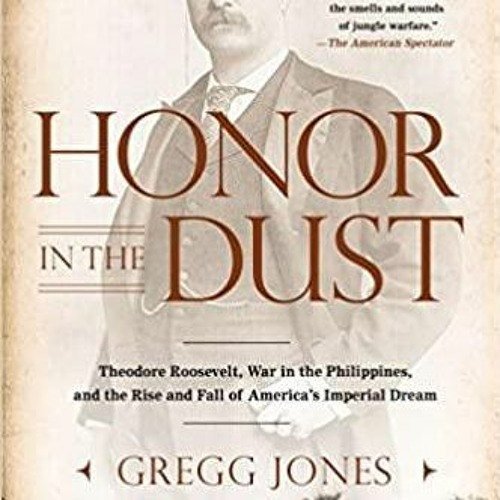
Honor in the Dust by Gregg Jones

July 18, 2023 by Barry J. Klazura No Comments

After conquering most of North America, the United States was filled with success and energy.  The expansion of the economic power of the United States was viewed with awe by the Europeans and dynamic politicians, such as Theodore Roosevelt, Henry Cabot Lodge believed that it was the destiny of the United States to carry on into what is now called the “third world” to bring Christianity, modernity and progress to the inhabitants of those regions.  Our soul was pure (unlike the Europeans who only sought to exploit those foreign lands) and we were sure that we would be welcomed with open arms as saviors.

The destruction of the battleship Maine in the harbor of Havana provided the opportunity to Under Secretary of the Navy Roosevelt whose immediate supervisor left the day to day running of the Navy to Roosevelt.  Seizing the opportunity, Roosevelt and his fellow expansionists put in motion a war with Spain which led to not only Roosevelt’s famous charge in Canada but also the destruction of the outdated Spanish fleet in the Philippines.  With the end of the war, the United States paid Spain between $15 to $20 million dollars and in return we ended up with the Philippines.  Simple, except that the local “intelligencia” within the Philippines had their heart set on their setting up and governing an independent Philippines.

In the end, both parties were fooling themselves; the local Philippine leaders had neither the expertise, financing, military strength or history to create a nation, while the U.S. was not prepared for the “dirty” war that it would find itself caught up in as many of the locals responded to the call of local leaders. 

As time went on, and the U.S. responded with great brutality to the guerillas (using the same techniques they learned from the guerillas), the image of a local primitive people welcoming the heroic Americans began to crumble.  The U.S. was in the end able to win the war but it suffered a blow to its self-image thanks to the stories printed in the press which turned against the war as it went on.

Jones has presented story which shows the U.S. to be an aggressor and seems to gloss over the hundreds of schools, medical facilities, etc. which the U.S. constructed.  He also totally ignores how it was that after such a brutal war, the people of the Philippines came to look upon the U.S. with fondness as we promised and moved towards Philippine independence (which was temporarily held up by World War II).  This is a good basic book in helping one to understand the politics of the war and can be a starting point for future reading if one is so inclined.
Share:
Reading time: 2 min
Book Reviews

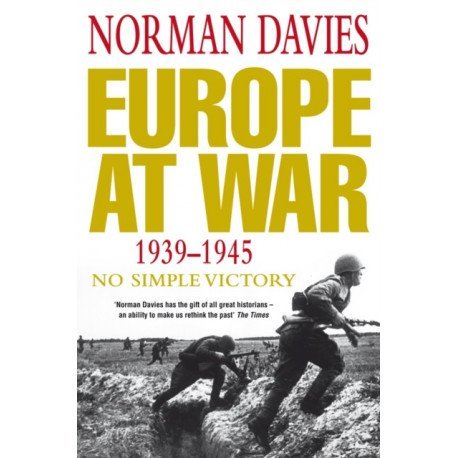
No Simple Victory by Norman Davies

July 5, 2023 by Barry J. Klazura No Comments

Davies is in my opinion, the foremost living historian on Eastern Europe; his books on the Warsaw uprising of 1944, the histories of Central Europe (those countries comprising of Poland, Hungary, the Baltic states, etc.), are outstanding examples of, in my opinion, objective history.  This book is a bit different from his others in topic as it covers the war in Europe from 1939-1945, on several levels such as military action, politics (before, during and after), soldiers, civilians, and portrayals (in movies, literature and history). 

Those separate sections give both the novice and serious historian excellent reference points as they give an overview of those areas which I have found are often forgotten by other similar histories.  As an example, the section on soldiers covers such sub-topics as identity, enlistment, training, officers, discipline, generals, a brief section on each of the sub sections such as artillery, engineers, etc.  This approach allows the reader to go beyond the typical history to better understand the complexity of the subject and plan out further reading.  And, as these sections cover both the Allies and Axis powers, an excellent comparison can be found in numerous areas.

It does not matter if you are a novice to World War II or a self-proclaimed expert, this is one book which will provide an excellent overview of the European war, not from the overall strategic side or individual battles, but rather from the perspective of logistics, human needs, and military management.  I would recommend No Simple Victory.  Interesting, concise, inclusive it provides an excellent touch stone and one which will allow the reader to easily go back to review some facts which were of special interest.

Share:
Reading time: 1 min
Book Reviews

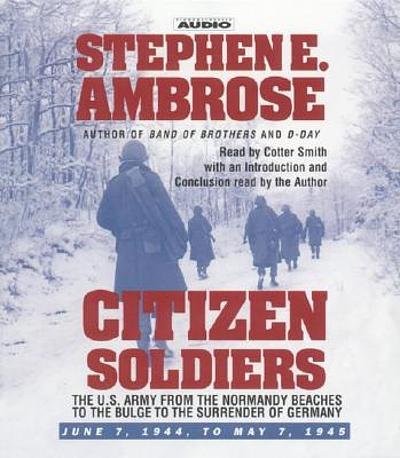
Citizen Soldiers: the U.S. Army from the Normandy Beaches to the Bulge to the Surrender of Germany by Stephen E. Ambrose

July 2, 2023 by Barry J. Klazura No Comments

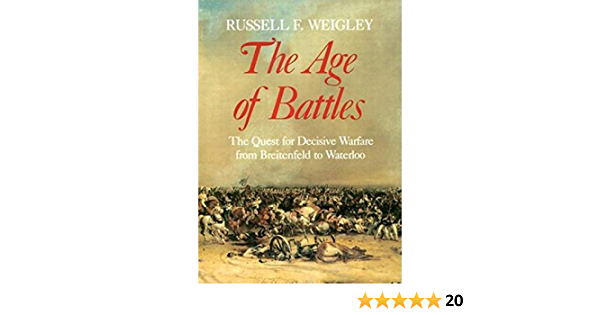
This is Stephen Ambrose at his best; after conducting interviews with over 1000 veterans, on both sides of the line, and reviewing outstanding studies by Russell Weigley, Paul Fussell and other excellent historians, some of who fought in the theater, Ambrose has created a fast-moving history from the ground level.  The cold, the thrill of the chase, the shock of retreat, the realization that the war is almost over and the fear of being the last man to die are brought home in a book that is difficult to put down.

Numerous other books have cast doubts on the fighting skills of the average U.S. soldier, especially in the infantry arm, especially in relation to his counterpart on the other side.  While Ambrose does not dispute that debate, he does not acknowledge it, instead focusing on the amazing ability of eighteen-year-old teenagers who served as privates and even officers to learn quickly how to survive during the terrible winter of 1944-45.  There is no doubt that thousands died due to poor training and an inability to master their weapons (young men trained as infantrymen were suddenly given a two-hour course on how to drive and use a tank with the result that in many instances, they did not last a day against the more professional German army).  Yet enough did to stop the German’s time and again and create the conditions for victory.

Ambrose does focus on the infantry as they are the sharp end of the bayonet, yet he also has chapters on the medics and nurses who provided the difference between life and death for literally tens of thousands of G.I.s who were wounded and rescued from the battle field and cared for by over worked nurses at the aid stations.  The relationship between the G.Is and those who treated them was one of mutual respect and admiration.

There are dark scenes and he discusses the execution of prisoners by Americans.  Some killings are done in the heat of battle, some are done coolie as a soldier is detailed to take prisoners back to battalion but somehow the prisoners never make it back.  How much killing of prisoners went on?  It is difficult to say, as only one veteran admitted to killing a prisoner, but hundreds “heard” of such actions.  Did the veterans condemn such actions?  Not to any great degree and the general impression from the book that such actions happen in war and that is that.

Continue reading
Share:
Reading time: 3 min
Book Reviews

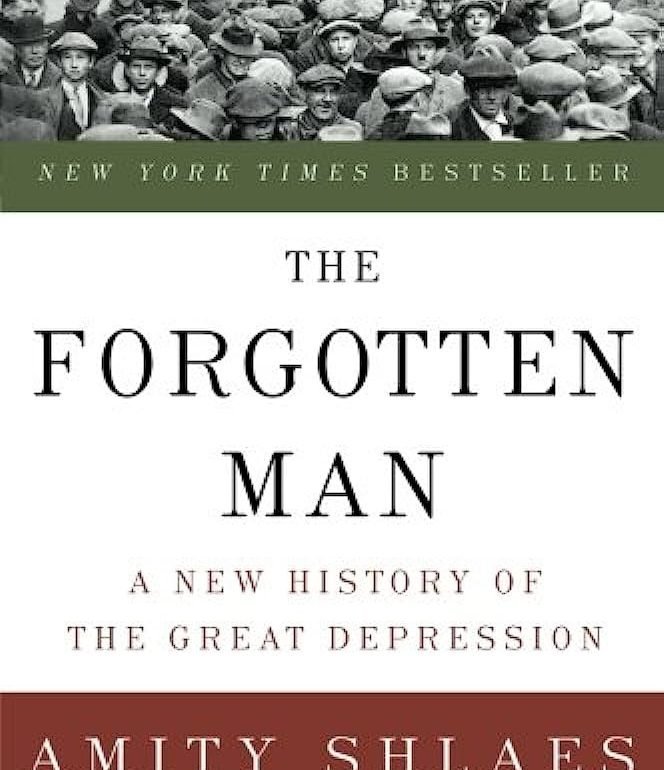
The Forgotten Man: A New History of the Great Depression by Amity Shlaes

June 23, 2023 by Barry J. Klazura No Comments

“As soon as A observes something which seems to him to be wrong, from which X is suffering, A talks it over with B, and A and B then propose to get a law passed to remedy the evil and help X.  Their law always proposes to determine what C shall do for X, or in the better case, what A, B and C shall do for X…What I want to do is to look up C.  I want to show you what manner of man he is.  I call him the Forgotten Man.  Perhaps the appellation is not strictly correct.  The is the man who never is thought of… He works, he votes, generally he pays-but he always pays…  William Graham Sumner, Yale University, 1883

Shales excellent book covers the period of the late Coolidge Presidency, through that of Hoover into the Roosevelt terms up to his defeat of Wilke.  We see these personalities but also many others who attempted to find solutions to the Great Depression while receiving conflicting messages and directives from President  Roosevelt.  Roosevelt was a crafty politician who kept everyone guessing as to which direction to go and which was the best policy to achieve his unclear goals.  This led to duplication of effort and mixed signals to those with whom he was attempting to achieve an agreement.  It was not unusual for Roosevelt to sent out two sets of negotiators with conflicting instructions and then even if an agreement were reached, he might reject it as it did not agree with some new idea of his.  This led, in the real world, to a hesitancy on the part of business to commit to long term planning as they were unsure of the next set of taxes, regulations, etc. and how they would impact them. This of course, let to reduced hiring and an extension of the Depression. Internationally, it led to a mistrust of U.S. policy.

The book provides an excellent overview of the battle the President had with the Supreme Court and they with his various new laws and governmental agencies.  To put those agencies and the growth of the Federal government in context and why the SC was viewed by FDR as obstructionist, within a few months of FDR’s first term, his new agencies had written more regulations than the entire U.S. government had written since the founding of the Republic.  The SC, struck down many of his rules and agencies. At his second inauguration, FDR stated that his goal was “unimagined power” which set him on a collision course with the SC.  FDR suffered a major defeat when he attempted to “pack” the SC in a political effort to control it (as we hear today from various politicians) yet in the end, due to retirements (the “four old men” on the Court were in their mid-seventies) and FDR was able to place Justices more in line with his political thinking.

FDR is remembered as a great President I believe for a couple of reasons;

  1. His “We have nothing to fear, but fear itself” speech when he gave the American public hope for the future
  2. His constant activity which made it appear that something constructive was being done for the American people (even though for example, he and his advisors realized that programs such as Social Security were unsustainable and would saddle future Presidents with a huge burden)
Share:
Reading time: 2 min
Book Reviews

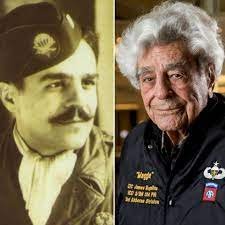
All the Way to Berlin by James Megellas

June 9, 2023 by Barry J. Klazura No Comments

James Megellas was the most decorated officer in the 82nd Airborne division in World War II.  He fought in Italy including at Anzio, took place in the invasion of Normandy, parachuted into Holland as part of the disaster of Market Garden and following the Battle of the Bulge took the long road through Germany all the way to Berlin.

Using letters, he had written during the war, interviews with former comrades, and excerpts from memoirs of men he served with from the ranks through to Generals he takes us on almost a day-by-day description of hundreds of days of combat.  He gives credit to those who served with him, writing of how being on the front lines for sixty days and longer, through all different types of weather, never bathing or shaving, the average American soldier fought and won against a long serving German army.

The citation for his Distinguished Service Cross (one step below the Congressional Medal of Honor) is as follows:

“First Lieutenant Megellas led his platoon on a combat patrol to secure information and prisoners.  Arriving at the enemy observation pose, he crawled forward alone and killed two outpost guards and the crew of a machine gun nest. He brought forward his patrol, attacked the mail enemy defenses and singlehandedly secured three prisoners and killed two more.  Two blockhouses were then attached and destroyed.  The aggressiveness of this patrol action thoroughly demoralized the enemy in the sector.  His mission completed, first Lieutenant Megellas withdrew his platoon through the enemy lines and under mortar fire.  He personally carried a wounded man while firing his Thompson submachine gun with one hand.  The extraordinary heroism and brilliant leadership displayed by First Lieutenant Megellas enabled his patrol to inflict disproportionate causalities on the enemy, secure vital information and force the Germans to abandon their planned offensive in the area.  His conduct was an inspiration to his men and a credit to the United States Airborne Forces.”

Aside from the DSC, he won two Silver Stars, two Bronze Stars with “V” and 2 Purple Hearts.  Forty years later a bill was introduced to upgrade one of his Silver Stars to the Congressional Medal of Honor based on the recommendation of his commanding officer, but the bill died in Congress. 

One of the highlights of the book is his description of the crossing of the Waal River during Operation Market Garden.  This dramatic and heroic assault against and entrenched and numerically superior enemy was one of the major battle scenes in the television series Band of Brothers.  Reading his description, one will feel as if they are not only in the assault boats, but you will also catch the feelings of the men before the assault.

I had a phone conversation with Mr. Megellas in 2006 (he died in 2020) after I read his book the first time.  His matter-of-fact descriptions reminded me of some of the writings of Ernst Junger in his classic Storm of Steel.  Unlike Junger, and despite his well-earned pride in his actions during the war, he did not see or feel a higher mystic feeling in the war.  As he said, “We realized the more Germans we killed, the faster we would get home.”

Share:
Reading time: 2 min
Book Reviews

Why Air Forces Fail, edited by Robin Higham and Stephen J. Harris

May 31, 2023 by Barry J. Klazura No Comments

An excellent little book which reviews why various military air forces have failed since WWI. They cover the Imperial German and Russian air forces, the Polish air force of 1939, the French of 1933-40, Luftwaffe, Arab air forces, etc. Broken into short easy to read chapters, the common failures center around the following key factors:

  • Lack of strategic vision
  • Lack of logistics
  • Inability to meet changing challenges
  • Lack of governmental support in key areas

Some air forces started strong (Luftwaffe), some were the victims of national degeneracy (France), some the result of inability to deal with reality (Italy), but all went through a cycle of attempting to deal with forces beyond their control. Most of those forces were civilian, some were political, and most examples attempted to fulfill missions that were clearly beyond their means from any objective standpoint. While the pilots and mechanics did their best, the politicians simply failed to understand the weapon that they had at their disposal.

This little book is a quick informative read for anyone who wishes to understand the importance of logistics, strategy, tactics and will as they seek to come together to create a successful weapon.  The interesting thing that comes out is that no matter what has happened in the realm of military science, many are slow to recognize and learn from history. This book goes to prove a point that those who do not learn from history are doomed to repeat it.

Share:
Reading time: 1 min
Page 10 of 29« First...«9101112»20...Last »

Barry J. Klazura

Barry Klazura sipping grappa

With a Masters Degree in Guerrilla Warfare and Totalitarianism, Mr. Klazura was well prepped for a career in Sales and General Management, consulting on corporate startups and turnarounds as well as lecturing on history and politics.  For the past twenty years he has focused on being a financial advisor and consulting.

Delivered To Your Inbox

Sign up to get an email when a new article is published.

Topics

  • American Civil War
  • Biography
  • Book Reviews
  • Cigar Reviews
  • Coronavirus
  • Current Affairs
  • Education
  • Environment
  • Factoids
  • Government
  • Lifestyle, Cigars & More
  • Liquid Refreshments
  • Musings
  • Quips and Historical Facts
  • Society
  • Travel
  • Uncategorized
  • World War I

Subjects

book Books-Russia/Soviet Union Books 21st Century Books 1919-2000 Books Ancient to 1900 Books Asia Books Biography Books Fiction Books Germany 1919-1945 Books Pre-WWI books Viet Nam books world war I Books WW1 Books WWI Books WWII Cigar Friendly Location Amsterdam Cigar Friendly Locations-London Cigar Friendly Locations-New Orleans Cigar Friendly Locations-New York Civil War Coronavirus Environment Korean War World War I World War One

Recent Articles

At Stalin’s Side by Valentin Berezhkov

July 15, 2026
The Price of Victory by N.A.M. Rodger

The Price of Victory by N.A.M. Rodger

June 26, 2026
Frontsoldaten: The German Soldier in World War II by Stephen G. Fritz

Frontsoldaten: The German Soldier in World War II by Stephen G. Fritz

June 5, 2026
Organizer of Victory, 1943-1945, George C. Marshall by Forrest C. Pogue

Organizer of Victory, 1943-1945, George C. Marshall by Forrest C. Pogue

May 26, 2026
Illegals Released & Our Leaders

Illegals Released & Our Leaders

May 10, 2026

Inquiries and Comments

For general inquiries and comments, email AOTOHcomments@gmail.com.

Facebook
© 2020 And On The Other Hand. All rights reserved.