
On The Other Hand -
Book Reviews
Lifestyle, Cigars & More
Musings
About
On The Other Hand -
  • Book Reviews
  • Lifestyle, Cigars & More
  • Musings
  • About
Book Reviews

The Winter War: Russia’s Invasion of Finland, 1939-40 by Robert Edwards

November 16, 2023 by Barry J. Klazura No Comments

For 105 days, the small and ill-equipped Finnish army held off the full might of the Soviet Union.  Outnumbered in men, tanks, artillery and aircraft, the Finns were able to cut off, surround and literally slaughter several Soviet offensive thrusts in the northern part of their country.  Striking silently on their skis, the Soviets who were confined to the few roads had little opportunity to bring their superior firepower to bear.  In the end, entire columns of Soviets along with their trucks and tanks, were found literally frozen to death.  With each new defeat however, new masses of men and materials were thrown into the fight.

It was an amazing fight for a country that had gained its own freedom from the Czar only some twenty years before, especially as the nation had fought a civil war between the Whites and the Reds which left the nation divided.  Suddenly, the nation had to fully unite or simply be overrun.  Fortunately, they found a strong if controversial leader in Baron Carl Gustav Mannerheim.  Mannerheim had been instrumental in defeating the Finnish red forces but was an experienced soldier.  He wisely used his forces and was able to switch his forces to key points to blunt the Soviet attacks.

For the most part, Finland fought alone.  Volunteers were being raised in Sweden and Norway, despite the potential problems Sweden could have with the Soviet Union.  France made moves to put together a professional force to help and funds were raised in the U.K., but in the end, there was little real help, especially considering that only a couple of previous months, the Germans had invaded Poland and the Baltic states were swallowed by the Soviet Union. 

Numbers finally told as the Soviets concentrated their forces in the Southern part of Finland were the ports and roads were more friendly to the Soviets level of expertise.  Although the exact numbers will never be known, it appears that the Soviets lost some 400,000 killed, wounded, and permanently crippled, while Finnish losses were around 70,000.

With the end of the war, the Finns had to give up certain territories which Stalin felt was key to the protection of Leningrad as well as some ports and fortifications.  When the Germans invaded the Soviet Union in June 1941, the Finns joined the Germans but only advanced as far as their old borders.

The war showed Stalin that his military suffered poor logistics, tactics, misapplication of force and a ruined officer corps.  Of course, Stalin was the one who ruined his office corps with his purges of the military (some 40,000 officers were killed, arrested, or put into camps).  Stalin quickly tried to reorganize his army and even release numerous officers from the camps.  Those officers were more forward thinking that Stalin’s clique and many were key in successful actions later against the Germans.

Can one draw a parallel between that war and Putin’s current problems in the Ukraine?  One of the largest differences is the terrible corruption which exists in Putin’s time as opposed to Stalin’s army.  Stalin’s army was not as corrupt, it merely suffered from the paranoia of its commander, Stalin, and the commissar system of command.  Another difference is that Finland never received the level of support from other nations.  In many cases, the only way for the Finns to survive was to turn around captured Soviet tanks and artillery as opposed to the billions of dollars which has been showered on the Ukraine (although at a pace that negates some of its usefulness). In the end, it is a story as old as man; beware they who have that lean and hungry look.

Share:
Reading time: 3 min
Book Reviews

A Homeland Denied by Irena Kossakowski

November 8, 2023 by Barry J. Klazura No Comments

As we are growing up, we have a tendency to either ignore or tune out the stories and experiences of our parents.  We think their ideas are so old fashioned, or that their experiences do not impact on our lives, little realizing that their stories and memories are in reality subtle learning tools for us to lead better lives.  Later, when they are old and we have families and real lives of our own, we sometimes ask them about some memory or story they mentioned years ago, but with failing memories or sadness caused by those stories, they may be reluctant to dredge them up.  We then are sad and realize that experiences in their lives will be lost forever and that someday, we shall be like them, trying to remember the good and trying to keep their sorrows and mistakes buried.

This book was written by a woman whose father (Waclaw=Walter) was 19 when Poland was invaded by the Nazis and Communists.  Barely two weeks into cadet school, he was captured by the Soviets and like 3,000,000 other Poles, was shipped off to a gulag camp in Siberia.  Along the way, tens of thousands died from malnutrition, disease, beatings or simply giving up.  But he was lucky, for unlike tens of thousands of Polish officers, he was executed in the forests of Katyn, hands tied by a bullet to the back of the head and thrown into mass graves (over 10,000 were executed by two executioners!).

When Germany invaded the Soviet Union, the Soviets offered to release some of the Poles so they could fight for Stalin against the invaders.  Another young man, standing next to Irena’s father, after surviving years of cold, hard labor and beatings said that he would not fight for Stalin and was immediately executed with a shot to the head, splattering brains and blood on everyone around.

Finding his way to Iran over several months (no money or food was provided to the men on their journey), he was nursed back to health by the British army and enlisted in the Polish Corps which was to fight in Italy.  He fought in the battles at Monte Cassino, Ancona and Bologna and at the wars end managed to emigrate to England as going back to Poland would have been a sure way to be executed as a spy.

He was not able until about 1966, and still at risk, to go back to Poland for a visit, to see his mother (his father had died), the girl he had dreamed of throughout the war, to see the farm on which he had grown up on, etc.  All the while, despite the continued nightmares of the gulag experiences, he never really spoke of his earlier life and it was only when Irena was a grown woman did you begin to gradually pull the story of his life from him, bit by bit.

This little book is a sobering look at the mostly unknown brutality that millions endured at the hands of the Soviet Union as they attempted to destroy the will of a nation instill a system of government in which the individuals only purpose was to serve the all powerful state.  The idealism of the early 1920’s had been long crushed by the slaughter of the kulaks, the collectivization of the farms and the bloody purges of the Party and military.  Poland, like the other countries of Eastern Europe were given to the Soviets by Churchill and Roosevelt (one did it from practicality, one from personal indifference).

If nothing else, after reading this book, you may sit down with your parents and gently listen to some of the stories and lessons their offered when they went in one ear and out the other during your youth.

Share:
Reading time: 3 min
Book Reviews

Operation Paperclip: The Secret Intelligence Program that Brought Nazi Scientist to America by Anne Jacobsen

October 26, 2023 by Barry J. Klazura No Comments

French President Charles de Gaulle once said, “The State is a harsh mistress”.  He may have said that thinking about the French members of the long-range recon groups who were left behind to wither and die as France left Viet Nam.  Living with the locals, fighting without resupply against the Viet Minh who were relentless in hunting them down, they pleas and curses asking for support finally tapered off as the last were killed in unknown and unremembered hills and valleys.

So, it was after the Allied victory of World War II.  Former enemies, including known war criminals were suddenly provided shelter, jobs, and safety in many of the victorious nations.  The United States, Canada, France, the Soviet Union all began to recruit German scientists as the new lines of the Cold War were being drawn.  Much of the recruiting was done secretly in the United States by military officers who were concerned that the new missile technology and secrets of biological warfare could not be left to the Soviets who, aside from plundering a conquered Germany, was abducting every scientist they could find. 

In Operation Paperclip, Jacobsen provides a detailed history of the various forces who struggled with the physical and moral choices which had to be faced.  There were those who believed that having defeated the Nazi war machine, that enlisting the scientists who worked on missiles, nerve/poison gasses and who had in fact committed war crimes was beyond the pale for the U.S.  Others viewed the victorious Soviet Union as the next great enemy, once which had shown that the difference between them and Nazi Germany was at best, minimal.  It was a time of moral questioning and a time of future planning.

Infighting between the CIA, the Joint Intelligence Objectives Agency, the Joint Chiefs of Staff, State Department, and the FBI continued for years with the CIA showing its ability to operate outside of normal channels and continue to pursue its own policies. Some of the arguments against the use of German scientist were moral, as is today arguments of using medical results from the doctors at the concentration camps.  Some were political as a growing Germany resented their best scientist being employed by other nations.  In the end, thanks to the space race, reality won the day as the competition between the U.S. and the Soviet Union became hardened.

This is not only a history, but also a morality play, one which could have been used when ethics classes were not so political.  It is well written, and it would be easy to understand how the reader could have a difficult time balancing the morality of the program vs. the fears and beliefs of those years.  Indeed, the State is a harsh mistress.

Share:
Reading time: 2 min
Book Reviews, World War I

August 1914 by Alexander Solzhenitsyn

October 26, 2023 by Barry J. Klazura No Comments

In August 1914, the Imperial German Army won a total victory over the Imperial Russian Army which had invaded East Prussia.  Total losses for the Russians were about 250,000 (78,000 killed and wounded) while the Germans suffered only about 15,000.  For the Germans, it was a revenge for their defeat 500 years before at the Battle of Grunwald at the hands of the Poles and Lithuanians (a Slav is a Slav) and gave the homeland something to cheer about after the losses in France, while for the Russians, it showed the failure of the reforms within the Russian Army that had been in process for decades.  When the French Ambassador to the Tsar offered his condolences for the Russian losses, the Tsar is reported to have said that he was glad to have fulfilled his obligation to this French allies.

Solzhenitsyn provides an interesting look at the battle from the standpoint of several characters including a staff officer who is privy to various headquarters.  As such, he sees the inability of the Russian Army to have a united strategy (there were two Russian armies whose generals had not met to create a strategy and whose commander represented the worse stereotype of Russian commander who owed his rank to his favor at the Russian Court).  Moving from one HQ to another, we see the lack of maps, poor logistics, almost lack of communications and general stupidity among the officer corps (especially above the field level), condemn the mass of Russian peasant soldiers to futile attacks and brave defensive actions which only led to further confusion and the eventual defeat of the Russian armies.

As with all novels with Russian characters, the names can be confusing and the book is not an easy read, but it does provide the reader with a good feel for the fog of battle.  It offers a good overview if the reader is not familiar with the battle and will leave the reader with a feeling of wonder at how the Russian army was able to survive the First World War for so many years.

Share:
Reading time: 1 min
Book Reviews

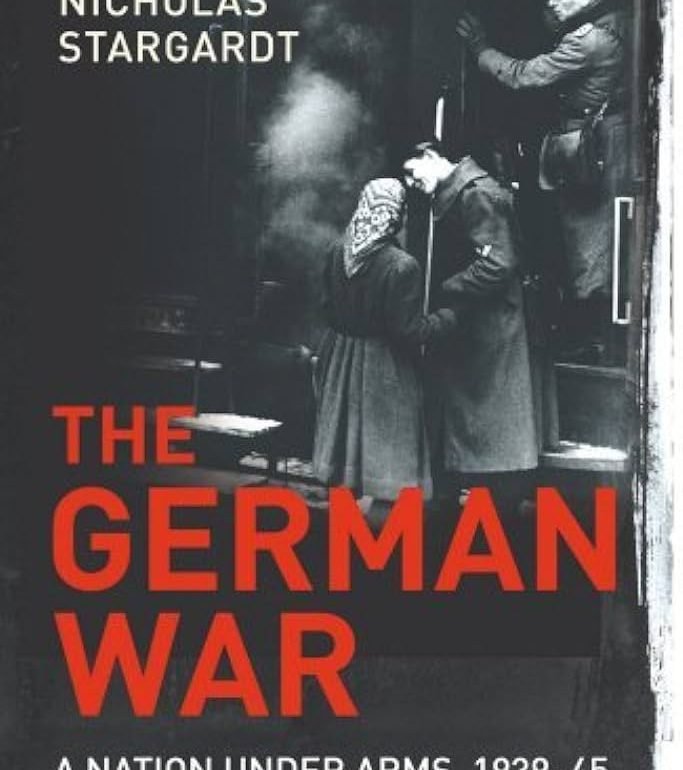
The German War by Nicholas Stargardt

October 8, 2023 by Barry J. Klazura No Comments

 I seldom read any books on WWII any longer (as my library is chuck full of WWII histories and little that is new is published except for information provided by the opening of the Soviet archives in the early 1990’s), but this book caught my attention as it was reviewed as facing the question of the average German’s knowledge of the mass killings in the East.

From the Nuremburg Trials to the last 1980’s, Reitlinger’s The SS; Alibi of a Nation, shifted the blame and knowledge of mass murder to the SS, both front line and those SS in the concentration camps.  It did not matter that many SS were drafted from the navy or army or even the air force late in the war, those veterans were all branded as the ones to blame for all the crimes of Hitler’s Germany.

In the late 1980s, a new generation of academics and historians came out with important books such as Omer Bartov’s Hitler’s Army, Riess’s The Good Old Days, Ordinary Men  by Christopher Browning and even The Nazi Conscience by Claudia Koonz, in which the participation and knowledge of the murders became more widespread among the wider German nation during the period of 1939-45. 

Stargardt’s book, while not revolutionary (to anyone with basic knowledge of the period and subject), is interesting in that he lays out the argument that the combination of soldier’s letters home, amateur films taken by the troops at the locations where mass executions were taking place and soldiers stories while on home leave gave ample knowledge of the murders to the civilians on the home front. Further proof is offered as civilians, under increasing Allied bombing, stated that it was a reprisal for all that had been done to the Jews, while even as the Jews were expelled from Germany, Nazi propaganda blamed the Jewish worldwide conspiracy for the bombings and went on to exclaim that the war would only end up with the extermination of the Jews.

Near the end of the book (and the war), one can feel the desperation and hopelessness of the Germans as their illusions of miracle weapons evaporate and the realization that the war is lost; the sacrifice and work was for naught and the German’s came to see themselves as victims not only of the Allied bombing, but of a failed Nazi leadership (but they still retained faith in Hitler until he betrayed them by committing suicide).

A good book, well documented, a good read and I would recommend it to anyone interested in a concise history of the period.
Share:
Reading time: 2 min
Book Reviews

Independent People by Halldor Laxness

September 28, 2023 by Barry J. Klazura No Comments

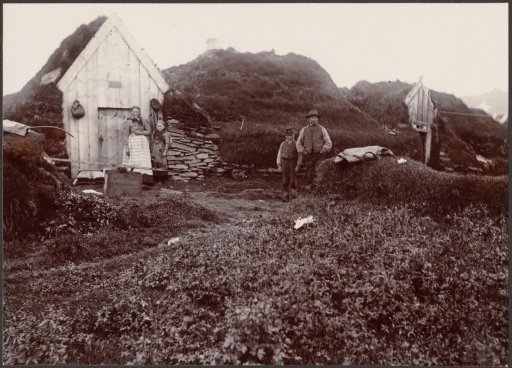
After visiting Iceland, I was eager to read this book which won the Nobel Prize in Literature in 1955.  It is an interesting novel, based on an individual farmer who is determined to create and maintain his independence.  Having been a bonded man for eighteen years, he then spent twelve years paying off a piece of land which is remote and considered a poor prospect for a successful sheep farm.

The main character is an ignorant, dull man who knows little of the world and whose entire existence is centered around raising his sheep.  He is callous towards the women and children in his life, his life is brutish and dependent upon factors over which he has no control, such as the weather, markets, etc.  For several hundred pages we follow this man, hoping that at some point his struggle for independence will allow him to interact with others in a positive manner.  Good luck!  He stumbles through life, nobly facing adversity but seemingly unable to learn from his errors and life.

Reading this book, I fulfilled my yearly venture into Nordic literature and although this book is considered an “Icelandic epic”, it is in fact another of those dark, brooding Nordic stories which reflect the geography and history of the people.  Reviewers note the main character’s “flinty determination to achieve independence” when in reality he is a slave to his lack of rational thought.  There is something dark and brooding in Nordic/Scandinavian literature which one can feel when visiting the area.  Perhaps it is the long dark winters or the lack of grand purpose to their lives, perhaps it is the realization that their time has long passed and so they attempt to assume an air of moral superiority when they realize they are but bit players in the world, but this novel captures the isolation and distance of that land.  Caution! You do not want to read this novel while listening to Leonard Cohen.

Share:
Reading time: 1 min
Book Reviews, Government, Society

The Tragedy of Liberation: A History of the Chinese Revolution, 1945-1957 by Frank Dikotter

September 24, 2023 by Barry J. Klazura No Comments

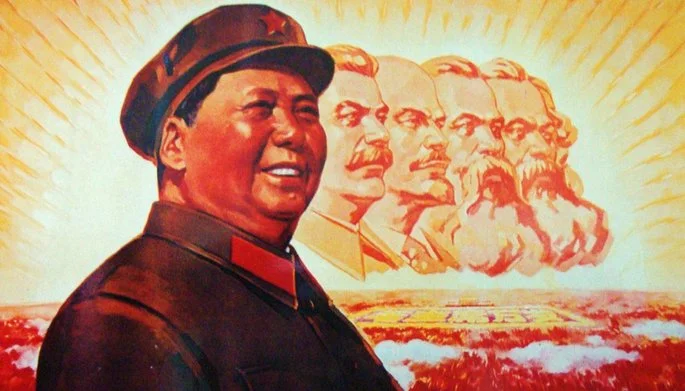
Following on the publication of the prize-winning history, Mao’s Great Famine, Dr. Dikotter’s history of the first twelve years of the seizure of China by the Communist Party under the leadership of Mao Zedong is the tale of brutality, cruelty, starvation, beatings, executions not of thousands, not of hundreds of thousands, but of millions.  The dream with the ending of WWII for the average Chinese, be they in the cities or as most lived, in the countryside of some sort of return to normality was not to be, and that average Chinese was the one who paid the price for the failure of that dream.

There can be no doubt that the regime of the Nationalist under Generalissimo Chiang Kai-shek and the various warlords was vicious, cruel, and corrupt.  Young men were dragooned, chained together, and marched off to fill the armies of both the government and the warlords.  Taxes were high and corruption existed at every level.  The occupation and war forced on China by the Empire of Japan extended and multiplied the suffering of the Chinese people.  The promises and strict discipline of the Communist forces under Mao created an image of stability and hope for the masses. Once in power however, the Communist regime exhibited every fault and cruelty that each Communist regime, be it the Soviet Union, Cuba, Albania, etc., has practiced since 1917.

Once in power, Mao mirrored the same tactics of the Soviet seizure of power; one by one, the landlords, the richer peasants, the small shop owners, the larger company owners and directors, the intellectuals, the students, and so forth were targeted for separation from the mainstream of society and persecuted.  Who did the persecuting?  Each of the other targeted groups who hoped that by joining the mob punishing the targeted group de jour that they would not be the next target, or if they were, that their willingness to show their zeal in supporting the purges would somehow buy them either a period of grace or a lesser punishment.  They found however, that there would be no mercy coming from Mao and his circle as they moved to create a “new man” in their idealized image.

Famines, floods, plagues and more were forced upon China not by nature, but by the ignorance and grandiose schemes of the ruling elite, all of whom were controlled by Mao.  Although Mao faced an awkward period after Khrushchev’s four hour “secret” speech against Stalin, he managed to maneuver himself and fool his potential rivals into giving him more power so that he could launch the infamous Let a Hundred Flowers Bloom campaign which led once again to a purge and murderous slaughter of those Mao felt could be against him.

A read of this book can be exhausting due to the excellent scholarship and information provided by Dr. Dikotter.  It seems somehow that the history of the CCP has not received the same type of public exposure as that of Hitler’s regime or the more murderous Soviet Union.  This excellent volume is a real contribution to a realistic public airing of the price that will be paid again and again if the lessons of history are ignored.  I know the old argument, “this time it will be different”.  Only a fool mouths those words.  Mao once declared that experience “has taught us to lean to one side”; every time I hear words like those, such as “lean in”, I fear that history has not been learned.

Share:
Reading time: 2 min
Book Reviews

The Forsaken Army by Heinrich Gerlach

September 18, 2023 by Barry J. Klazura No Comments

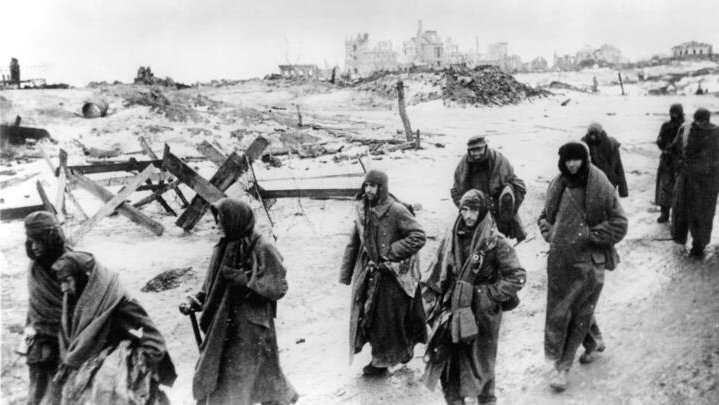
One of the great battles of World War II, Stalingrad consumed the lives of an estimated 1,000,000 men on both sides.  The stories of human suffering, and bravery, of lost illusions and shattered idealism are legion and yet we seldom really can understand the pain of the men involved in epic battles.

When you think of it, the concept of men fighting in sub-zero temperatures, with little or no shelter, for months on end with little food, who are shelled, outgunned and faced by a foe who is both vengeful and afraid is unknowable to we who read about the battles.  But Gerlach, who fought at Stalingrad and was one of the few (5000 out of 91,000 captured), did manage to survive and create a story woven from the experiences of other Germans who were captured. 

What few people realize is that the fighting was to a large extent, carried on by the few frontline troops who had to face the guns, tanks and cold alone on a windswept steppe.  Tens of thousands of other Germans were the support troops who lived in the ruins of the city in basements, shattered rooms and dug outs which provided them with a level of protection and comfort that was unknown to the frontline soldiers.  These support troops stayed behind the lines until late in the battle when some of them were placed into special “assault” battalions; untrained in combat, they were simple cannon fodder, thrown into the breach and accomplished little other than to die for the Fuehrer.

The unsung heroes of the battle were the doctors and orderlies who tried to perform miracles for the wounded.  Tired and overworked, lacking pain killers, clean bandages, even a warm room from which to work, they spent long hours cutting, stitching and battling to save lives.  And yet, even if they were successful in their operations, the wounded most likely faced little food, no heat and unsanitary conditions as they were lined up by the hundreds in basements or even outside to suffer and freeze.  The images of wagon loads of wounded men, slowly freezing to death because there was simply no more room for them in the pathetic shelters will make any reader realize how terrible and pitiless war is to the participants.

Gerlach has created an excellent history of a battle, seen from men at the point of danger.  No sweeping scenes of mass movements of men, no brave words to stir one’s heart, this novel brings war down to its lowest level; the men in the trenches whose only knowledge of the war and battle is as far as they can see.

Share:
Reading time: 2 min
Book Reviews, Government

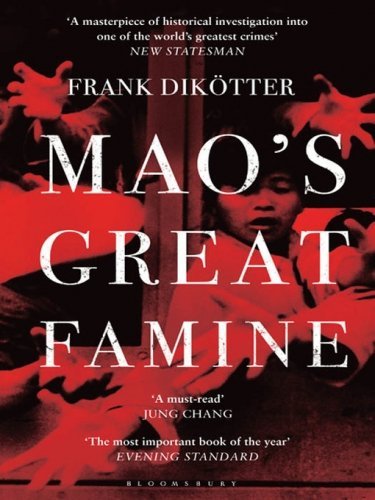
Mao’s Great Famine: The History of China’s Most Devastating Catastrophe, 1958-1962 by Frank Dikotter

September 5, 2023 by Barry J. Klazura No Comments

What is the correct number?  Thirty-Two million?  Thirty-Seven million?  Forty million? The correct number of those who died during the period of 1958-1962 as Mao and the Communist Party of China instituted a command economy will never be known.  The exact number will never be known because so many people were dying, primarily of starvation but also because of beatings, executions, and torture that records could not be kept.  The millions did not die because they were some foreign enemies or, as is the case with the Holocaust because of some racial theory; they died because of government incompetence, bureaucratic lying and ignorance of the basic laws of nature.

What exactly is a “command economy”?  The “phrase comes from the German Befehlswirtschaft. It was originally applied to the Nazi economy but was later used to describe the Soviet Union.  Instead of allowing dispersed buyers and sellers to determine their own economic activities according to the laws of supply and demand, a higher authority would issue commands determining the overall direction of the economy following a master plan.  The command principle entailed that all economic decisions were centralized for the greater good, as the state determined what should be produced, how much should be produced, who produced what and where, how resources should be allocated and what prices should be charged for material, goods, and services.  A central plan replaced the market. (Mao’s Great Famine, pp 127).

A “command economy”  then is a top-down system by which the leaders provide objectives and quotas for the amount of grain to be produced, how many tons of steel will be produced, what type and how many shoes, socks, shoelaces, etc. will be produced in what time period, etc.  Operating in a totalitarian system like Communism, each layer below that top simply takes the quota they are given and adds a little more to please the powers that be.  By the time the quotas reach those who produce any given item, the numbers are so large that they are totally unrealistic.  Rather than argue against the numbers (and labeled a right-wing reactionary), the producers “fudge” the numbers to meet the quota.  And an example is the production of rice, a staple of the economy.  If the actual quota is not met, the rice crop is soaked in water to increase the weight as the rice absorbs the water.  Amazing, the quota is met!  The problem with that technique however is that the rice quickly rots and as the price of rice goes up (inflation), the consumers literally have to sell the clothes off their backs to pay for rotting rice.

Continue reading
Share:
Reading time: 4 min
American Civil War, Book Reviews

Shrouds of Glory: From Atlanta to Nashville by Winston Groom

August 30, 2023 by Barry J. Klazura No Comments

Winston Groom is best known for his book (and the hugely successful movie), Forrest Gump.  He is the author of six books as well as the co-author of the 1984 Pulitzer Prize nominee, Conversations with the Enemy.  In this excellent book, he focuses on the Confederate General John Bell Hood and his invasion of Tennessee late in the Civil War.

During that campaign, he attempted to distract Union General William Tecumseh Sherman from his famous campaign which burned out the very heart of the Confederacy during his march from Atlanta to the sea.  Hood was unsuccessful in deterring Sherman and managed at the same time to destroy his army in futile attacks against Union forces.

His failure was not preordained, for his record prior to the Battle of Atlanta had been one of a brave and ferocious fighter.  Although not the brightest of the Confederate generals (he graduated 44th out of a class of 52), he had served well in several campaigns and was until the Battle of Atlanta, considered a dashing and rising Confederate star.

Although Hood was criticized for his failure to hold Atlanta, one must remember that he entered the campaign late in the game as his predecessor General Joseph E. Johnston had failed to stop Sherman as he advanced on Atlanta.  Yet, despite Hood’s experiences with the power of defensive firepower, Hood threw his army at Sherman in an effort to sweep him from the field.  The attack resulted in thousands of Confederate casualties at a point in the war where they could not be easily replaced.  Hood had to leave Atlanta and some of his glory was lost.

The invasion of Tennessee was a prime example of “what might have been”, as within a short span of forty-eight hours, Hood lost not one, not two, but six opportunities to destroy the Union army that would later turn and destroy his army.  The battle of Franklin decided the campaign but there would be one more defeat at Nashville and with it, the fate of the South was sealed.

Groom provides excellent cameo descriptions of many Union and Confederate leaders throughout the book and his descriptions of the battles will keep the reader going back to read passages for their excitement and detail.  He also goes into the politics and schemes of various senior officers as they attempt to enhance their reputations and positions through a variety of nasty and dubious tricks.

I have often wondered why, aside from an attempt to sooth Southern feelings, a major military based was named after a General who after years of war, did not understand the days of massed Napoleonic charges were over.  He, like General Lee, seemed to have a blind spot to the realities of not having a numeric advantage and the deadliness of “modern” weapons.  Perhaps it is well that the name of Fort Hood has been changed.  Hopefully it is to the name of a more realistic General.

Share:
Reading time: 2 min
Page 9 of 29« First...«891011»20...Last »

Barry J. Klazura

Barry Klazura sipping grappa

With a Masters Degree in Guerrilla Warfare and Totalitarianism, Mr. Klazura was well prepped for a career in Sales and General Management, consulting on corporate startups and turnarounds as well as lecturing on history and politics.  For the past twenty years he has focused on being a financial advisor and consulting.

Delivered To Your Inbox

Sign up to get an email when a new article is published.

Topics

  • American Civil War
  • Biography
  • Book Reviews
  • Cigar Reviews
  • Coronavirus
  • Current Affairs
  • Education
  • Environment
  • Factoids
  • Government
  • Lifestyle, Cigars & More
  • Liquid Refreshments
  • Musings
  • Quips and Historical Facts
  • Society
  • Travel
  • Uncategorized
  • World War I

Subjects

book Books-Russia/Soviet Union Books 21st Century Books 1919-2000 Books Ancient to 1900 Books Asia Books Biography Books Fiction Books Germany 1919-1945 Books Pre-WWI books Viet Nam books world war I Books WW1 Books WWI Books WWII Cigar Friendly Location Amsterdam Cigar Friendly Locations-London Cigar Friendly Locations-New Orleans Cigar Friendly Locations-New York Civil War Coronavirus Environment Korean War World War I World War One

Recent Articles

At Stalin’s Side by Valentin Berezhkov

July 15, 2026
The Price of Victory by N.A.M. Rodger

The Price of Victory by N.A.M. Rodger

June 26, 2026
Frontsoldaten: The German Soldier in World War II by Stephen G. Fritz

Frontsoldaten: The German Soldier in World War II by Stephen G. Fritz

June 5, 2026
Organizer of Victory, 1943-1945, George C. Marshall by Forrest C. Pogue

Organizer of Victory, 1943-1945, George C. Marshall by Forrest C. Pogue

May 26, 2026
Illegals Released & Our Leaders

Illegals Released & Our Leaders

May 10, 2026

Inquiries and Comments

For general inquiries and comments, email AOTOHcomments@gmail.com.

Facebook
© 2020 And On The Other Hand. All rights reserved.