
On The Other Hand -
Book Reviews
Lifestyle, Cigars & More
Musings
About
On The Other Hand -
  • Book Reviews
  • Lifestyle, Cigars & More
  • Musings
  • About
Book Reviews

Churchill and the Dardalnelles

May 23, 2023 by Barry J. Klazura No Comments

On a recent voyage, I had a discussion with some Brits about their history history.  The subject of Churchill came up and one elderly lady mentioned what a terrible job he had done with the Dardanelles during the First World War. I was surprised she held that view given the research, commissions, etc. that have been held since the war.  She must have gone through the school system or perhaps her parents belonged to the party which opposed Churchill for her view to be held so long after the fact.  I mentioned some counter information and she was genuinely surprised to hear the information I provided.  History is not dead, and it continues to shape our view of our world.

This brings us to this review of Churchill and the Dardanelles by Christopher M. Bell.  I was familiar with Bell as I had previously read his excellent book, Churchill and Sea Power and this book only goes to increase his reputation as an historian of note.

After the failure of the Dardanelles, there was much finger pointing as to would shoulder the blame for both the naval and army failures.  Was the campaign supported by the major players?  Did the Navy consult with the Army regarding joint action? Did the Navy go into the campaign with a full understanding of the Turkish defenses?  Who oversaw each operation?   The questions went on and on, but the initial blame landed on the desk of Churchill.  As a result, with all the politicians and military leaders running for cover, Churchill who was viewed as head-strong and much too pushy was left alone by most of his political allies.  He lost his position and was all but cast into a political wilderness.  Although the Prime Minister realized that Churchill was being sacrificed and that his skills would be helpful to the war effort, he was simply beyond the pale until tempers cooled down and a more objective analysis of the failures could be found.

Churchill immediately began to build his case for his political resurrection.  He gathered documents, spoke with is political allies and when a commission was formed to review the entire campaign, he labored hard and long for the ability to be actively involved not only to be in the commission but to also examine witnesses who were called.  Although he felt betrayed by Jackie Fisher who he had brought back to the naval board, they realized that they needed one another, and a temporary truce was called.  Numerous witnesses were called and after lengthy hearings, it was decided that Churchill came out with a much-improved position.

Churchill, however, was not one to rest and he took the entire episode to heart, becoming less naïve and careful to work to create his own image.  He used his political allies including the press to reconstruct and improve his image and the publication of his monumental work, The World Crisis in which he managed to paint his actions in the Dardanelles in a positive light while at the same time not burning any political bridges all but secured his resurrected reputation.

Although he would make political errors in the future (re: the Royal abdication, self-rule for India, etc.), he had learned that careful control of the press and public opinion could save him from his own errors.  Lord Birkenhead once commented, “When Winston is right, he is unique. When he is wrong-Oh My God!”.  Churchill knew that history would treat him well because he was determined to write it and write it, he did.  Yes, he made errors and could drive those around him to distraction, but in the end, his legend which he wrote was not that far off the mark.

Share:
Reading time: 3 min
Book Reviews

The Age of Battles by Russell Weigley

May 14, 2023 by Barry J. Klazura No Comments

Victor Davis Hanson in his The Father of Us All; War & History, Ancient & Modern gives due credit to The Age of Battles as one of the finest examples of military history as indeed it is. Since it was first published in 1991, Weigley gives a continual history of warfare, mostly in Western Europe, from Breitenfeld to Waterloo. Starting with the revolutionary tactics of Gustavus Adolphus and ending with the defeat of Napoleon, the author traces the continual quest for the “decisive battle” as a short cut to victory.

After the terrible bloodbath of the Thirty Years War, which left Germany devastated with millions of dead, it seemed as if Europe had made a conscious decision that warfare had to be restructured. One of the key steps to this process was Hugonis Grotius, the historical rules for the limitation of war were formalized. These rules were loosely going back to the rules of chivalry (which were never terribly effective) covered dealing with civilians, plunder, and more. Many rulers in Europe recognized that while war was not going to disappear, they could at least try to limit the overall damage. It was amazing that with the rise of nation states and greater concentration of power and wealth, those who ruled suddenly realized that they had a personal stake in limiting wars which could be dangerous to their position and existence.

The military revolution went hand in hand with the greater solidification of centralized power. Gustavus Adolphus the leader of a small and poor European state (Sweden) realized that he had to take his disadvantage and turn it into a positive. The result was a small, highly trained, well disciplined, well fed and amazingly for the time, one that was paid on time. The result was an outstanding force of cavalry (changed and trained on Sweden’s wartime experiences in Poland) backed by a solid infantry trained on shock tactics. For example, the traditional cavalry tactic with the introduction of pistols was for the cavalry to charge the enemy, then stop and fire a volley and retreat. The effect as normally poor, as attempting to accurately wield a primitive pistol which was not only inaccurate but of small penetrating power hardly seemed worth the effort. Adolphus remembering the shock impact of the heavy Polish cavalry trained his cavalry to smash into the enemy formations, break then and then allow the infantry to finish the battle. For a while, he was the terror of Europe, but he ran into problems which he had not foreseen, such as the rise of the centralized state (or other kingdoms) which were larger and wealthier.

Therein lay the rub; how could a general win a war by scoring a decisive battle when the enemy was able how to tap into its own military advantages, such as manpower and wealth. Famously, Louis XIV restructured his system of taxation, developed a competent bureaucracy, and hired some of the best officers in Europe. The result was a dramatic increase in the size of the French military and in the professionalism of the military. Standard uniforms, drills, command structures, etc. all went to create a military that began to move like a machine instead of a mob. In particular, the French army the innovations in artillery made many of the old defensive infantry tactics an invitation to slaughter. Finally, instead of an army numbering ten or fifteen thousand, the French army expanded to number hundreds of thousands. How was a small state like Sweden to compete with power like that?

Unlike many military historians, the author manages to blend the personalities, goals and most importantly, innovations which led to each leader or generals’ temporary success on the battlefield. He also shows how the development of a professional military sped up the development of the industries necessary for it’s being.

He ends the book with the battle of Waterloo, where Napoleon, short of cavalry, surrounded by generals who were past their prime (as was he), head of an army from a nation which had already suffered a million dead from his reign was defeated by an polyglot army made up of, for the most part, traditionally second rate infantry but held together by Wellington who had nothing but distain for the average soldier. Although future generals and admirals would dream of a “decisive battle,” the time for any chance of such a battle has long passed. The modern state is too diverse with too many resources to disappear due to one loss, no matter how great. We have seen during the twentieth century how far the state will go and how much of its population it will sacrifice to survive.

This is the third time I have read the book and each time I have found the book stimulating and a reminder of the skills needed by successful leaders not only in the military, but in business or any endeavor where much is at stake. The ability to adapt and innovate is the one constant lesson to be learned from this work.

Share:
Reading time: 4 min
Book Reviews

A Sniper on the Eastern Front: The Memoirs of Sepp Allerberger by Albrecht Wacker

April 29, 2023 by Barry J. Klazura No Comments

From July 1942 until the end of the war, Sepp Allerberger was a sniper fighting against the Soviet Union.  During that time, his official tally of 257 confirmed kills, made him the second most deadly sniper in the German Army (the record of 345 kills was held by Mathias Hetzenauer).  It is important to note that a sniper “kill” had to meet certain requirements, such as it had to be done during an actual sniper assignment (ordinary defensive or offensive kills are not counted) and must be confirmed by either an officer or an NCO.  Allerberger states only that his individual kills, taking unconfirmed sniper kills was much higher. 

Allerberger did not come from a military family; his home was a small village on the Austrian side of the Bavarian Alps near Salzburg.  He was drafted at the age of eighteen and trained as a machine gunner.  After his first battle, he realized that he was a marked man for machine gunners were prime targets of the enemy.  He decided to try for a safer job and accidently found out that he was an excellent shot.  As the German Army was behind the Soviet in the development and training of snipers, it was a “learn as you go” decision.  He quickly learned the trade and was highly valued at the front where many assignments were to kill his Soviet counterpart who was causing losses in his vicinity.  Sniper to sniper battles pit individual skill, patience, and determination at the personal level and yet Allerberger does not exhibit any emotion other than pride for his victories.

As noted, all kills had to be confirmed and that could be a problem as many in the German Army felt that being a sniper was a “dirty” job.  Hiding, sneaking up on the enemy, killing when ever possible, including when a soldier is going to the bathroom carried a bad odor.  This view extended to the artillery officers who somehow believed throwing a high explosive shell miles at an unseen and unsuspecting enemy was more “honest”.  For the infantry, enemy snipers were hated thought to fight dirty, but their own snipers were well liked and protected.  War has its own value system.

Given that many snipers were killed after 15-20 shots, his score is amazing.  He seemed to lead a charmed life, receiving no major wounds, and suffered only minor scratches.  His detailed descriptions of many encounters are excellent, and one clearly see the barbarity of warfare on the Eastern Front. 

His story brings to light the mentality of an army in retreat. Months of constant retreat and serious losses in manpower and equipment left the average soldier demoralized, dirty, hungry and constantly looking over their shoulders at the Russians who seemed to have unlimited resources. During the retreats, seriously wounded men were left behind even though everyone knew that the oncoming Russians would at best, quickly kill them or more likely, torture them before killing them. One has to remember that the Russians were not only out for victory, but also for revenge for the deeds of the Germans on their homes and loved ones. It was a war with little or more mercy. Often, the Russians had more to fear from their own officers who subjected them to beatings, penal battalions and early on in the war, cases of cannibalism.

This is only the third book I have read by a veteran which reflects a certain mindset.  Ernst Junger’s Storm of Steel is one example, another is by an American, James Megellas’s All the Way to Berlin. Reading their stories, one sees an individual who calmly picks up a weapon, kills will great proficiency and then afterwards, go on to lead a normal life. They offer a fascinating view of war by very uncommon men.

Share:
Reading time: 3 min
Book Reviews

The House of the Dead; Siberian Exile Under the Tsars by Daniel Beer

April 21, 2023 by Barry J. Klazura No Comments

Siberia after it was conquered by the Russian Empire, was consider a land of huge wealth, from the priceless furs (a single Ermine pelt was enough to buy a good farm in Russia) to timber and gold, it was also known as the world’s largest prison without a roof.  A land where landless free peasants to go to in order to escape the tyranny of the Tsars and to build a new life, it also served as a great dumping ground for all manner of criminals, both political and non-political (one could be sent to Siberia for life long exile for being a vagrant).  As the population of Russia grew, and the central government could not provide the services for the population, Siberia became a way for lazy local officials to get rid of those they considered problematic.

The journey to Siberia until the advent of the Trans-Siberian railway was most on foot.  Imagine walking, 6 days out of 7, week in, week out, in the Siberian summer and winter for one to two years just to reach your place of exile.  And, your term of punishment did not begin until you completed that journey.  During that journey you were, unless supported by your family who could provide you funds, at the mercy and budget of the prison system which provided a minimum of food and clothing both during the trek and at your place of exile.  The system was so terrible, that some male prisoners would often write their wives telling them to sell everything and come to Siberia where the government was providing each prisoner with land, a cow, horse, house and funds.  In reality, nothing was provided and when the wife arrived with children in hand, their husbands would sell them all into prostitution in order to get enough money to live.

After the term of punishment was completed, as the theory went, the ex-prisoners who had been taught discipline and hard work, would stay in Siberia and begin new farms which would colonize the vast land.  In reality, the prisoners had been so brutalized by the guards, other prisoners and hard labor, that they turned to the only things they had really learned in exile; stealing, forgery, murder, etc.  The large numbers of former prisoners would often wander in bands, laying siege to individual farms and even smaller villages and towns.

Continue reading
Share:
Reading time: 3 min
Book Reviews

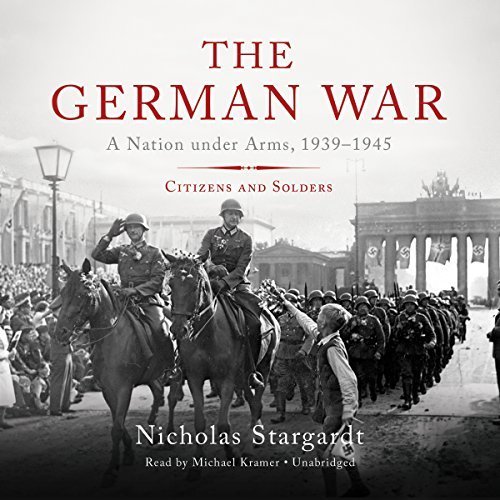
The German War: A Nation Under Arms, 1939-1945 by Nicholas Stargardt

April 15, 2023 by Barry J. Klazura No Comments

There certainly is no shortage of World War II histories, most of which cover the various campaigns around the world.  There are also some excellent histories which cover the logistics of the war, arguing first one way then the other about when the window of opportunity for Germany closed and the tide turned forever against the Axis powers.

While the military side of the war is covered in this book, the main emphasis is rather on the average German and their shifting outlook during the war.  This includes the treatment of Jews and how much the average German knew about the treatment of the Jews in the East, the camps, etc. If they were willing to listen the Sicherheitsdienst (SD) or SS Security Service which was formed in the early 1930s but organized and given new powers when commanded by Reinhard Heydrich provided accurate information on the state of mind of the German people.  That information advised Nazi leaders such as Goebbels when attack the Jews and when to throttle back those attacks and instead focus on some other aspect of the war.  The SD noted the reaction to Goebbels call for Total War which ignited the crowd where he spoke but which was thought to be staged by many listeners.

Throughout the book, the average Germans views on the treatment of the Jews (and other “lesser” peoples), is viewed through the millions of letters, photographs and camera footage shot by the common German soldier and sent home.  The idea that the home front did not have any idea of the mass executions in the East is difficult to sustain given the volume of the information which was provided by the soldiers and freely provided to their families.  Although some letters attempted to shield the civilian (normally a wife or other loved one) from the brutality of the killing by saying that the writer does not want to shock the reader too much, it is clear that mass killings were witnessed. 

No history of the time would not be complete without information on the bombing of the German cities.  Germany, unlike Italy, had a complex and well organized system to maintain production and provide for those who were bombed out of their homes.  In order to maintain morale during the bombing, over fifty-thousand anti-aircraft guns were deployed and those guns devoured about a third of all artillery production at a time when the troops in the field were heavily outgunned.  For those who lost their houses, furniture, clothing, and other household basics were provided by the loot taken from the German Jews. This did lead to instances where the new German owners complained that the loot was either too big, of poor quality or not maintained correctly. As the bombing campaign continued to build, it was not unusual to hear that it is a Jewish payback for how the German Jews had been treated.

One strong aspect of this volume is the use of correspondence between the soldiers and those at home.  They bring an excellent personal touch to the book and when the correspondence from the front stops (such as one correspondence where the writer is at Stalingrad), it brings the pity of war that much closer.

This is an excellent book for anyone to see both sides (campaign and home front) in a single well-written and researched history.
Share:
Reading time: 2 min
American Civil War, Book Reviews

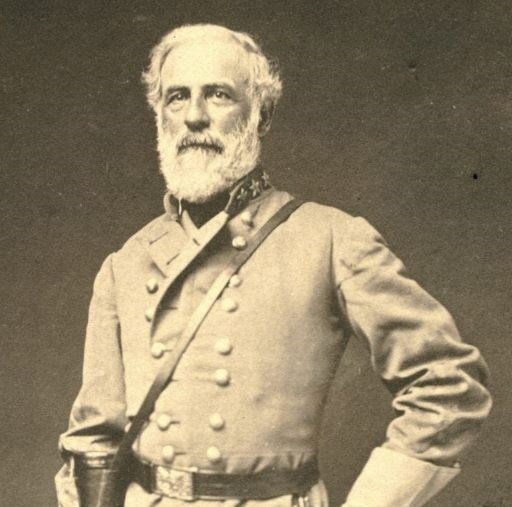
Lee Considered: General Robert E. Lee and Civil War History by Alan T. Nolan

April 11, 2023 by Barry J. Klazura No Comments

If there is one consistent image that has come out of the Civil War, it has been of Robert E. Lee, the calm, brilliant strategist who fought for the Confederacy out of a sense of loyalty to his state of Virginia; a soft spoken man, opposed to slavery but believing more in State’s Rights and the honor of the South.

Many of these myths are exploded in this book as Nolan quotes from Lee’s pre-war letters regarding the institution of slavery; how the slaves were well looked after, how they were better off in their present condition than when they were in Africa as they had the opportunity, at some undisclosed date, to become better than they were (although they could not be as good as whites).  Yes, Lee admitted that there were abuses, but they were few and sometimes necessary to keep the blacks in check until that golden day in the future where they could move up the human food chain. 

Nolan also criticizes Lee as a general in that he failed to fully understand until too late the overwhelmingly destructive firepower of “modern” rifles and artillery.  A prime example of this could be seen at Gettysburg where Lee ignored the strategy put forth by General Longstreet to hit the U.S. army on its flanks.  Instead, Lee threw the fresh troops of Pickett into an assault on the center of the Union line with no reserves at hand so that even if Pickett’s troops had been successful, they would have been swamped by Meade bringing up reserves from both of his wings.  Lee believed in the power to the spirit and was certainly not the last General to fall prey to the idea; the French army in the beginning of World War I was another force that failed to comprehend the full implications of “modern” technology. 

After the Civil War, Lee held an honored place in the minds of most Southerners, even though he admitted that he realized after Gettysburg that the South could not win the conflict.  He fought on and kept his troop together in a cause that was lost against a foe that was more ruthless than he could be in the conduct of the war.  The hundreds of thousands who died after his realization must be in part, laid at his feet but the myth of Lee will not be laid to rest until sometime in the future.

A good book for the reader who is unfamiliar with revisionist history, but a revisionist history that has much merit.

Share:
Reading time: 2 min
Book Reviews, Government

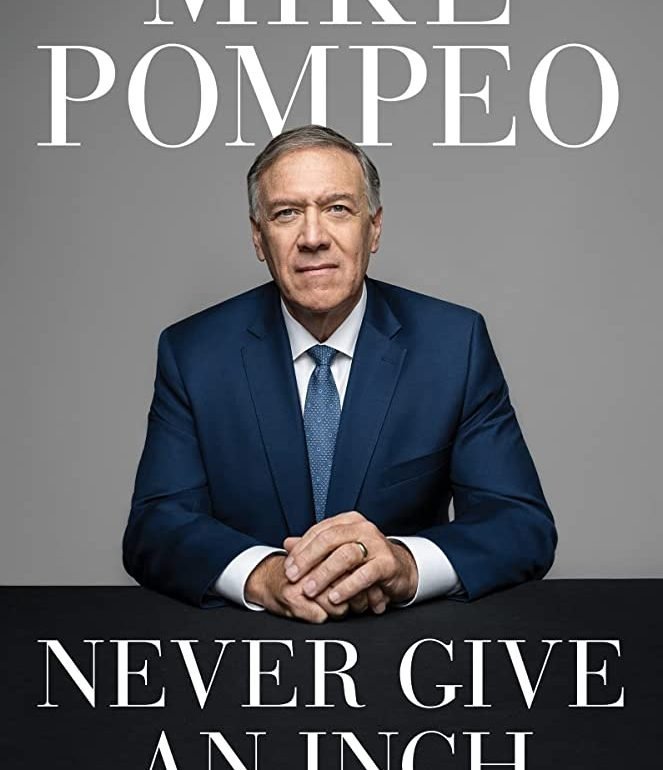
Never Give an Inch, Fighting for the America I Love by Mike Pompeo

March 27, 2023 by Barry J. Klazura No Comments

I will say this for Mike Pompeo; he does not give an inch.  His book primarily deals with his time as head of the CIA and then Secretary of State during the Trump administration is probably the most direct political memoir I have read.  He states his positions very clearly and makes note of his successes and failures for all to see.  There is no doubt where he stands and what he stood for while holding those two positions. I can see that if he had been in different administrations, he would not have achieved what he did and certainly would not have lasted as long as he did.

A staunch believer in his country, he is not ashamed to admit that he gathers much of his strength from his family, especially his wife and their strong religious beliefs.  He will quote scripture to show how the Bible has helped him achieve his successes and in more than one situation, his knowledge of scripture won him high marks in the international field.

To a greater extent than normal, his freely gives credit to those who work for him praising their dedication, knowledge and patriotism.  The list is long and is referenced throughout the book; here is a man who has built businesses and has signed paychecks and who knows that a successful manager is one who surrounds himself with the best people possible.  On the other hand, he names names and gives examples of D.C. professionals who are shallow, seek to feather their own nests and are certainly not beholding or supportive of any particular occupant of the White House. Unlike other Trump officials, he always remembered that he signed onto the Trump administration and that while he may have disagreed with the President on certain matters, he was free to voice his opinion and then his job was to soldier on, as long as the job did not cross the line of his own conscience.

Continue reading
Share:
Reading time: 5 min
Book Reviews

Former People, the Final Days of the Russian Aristocracy by Douglas Smith

March 13, 2023 by Barry J. Klazura No Comments

This is a book of survival, of innocence, foolishness and bravery as a class of people finds itself suddenly outcasts from those that they had exploited for hundreds of years.  In the chaos of the Russian revolution, even before the seizure of power by Lenin, the very ground beneath a once powerful class was shifting and no one had any idea what the outcome of those movements would be.

For powerful aristocratic families (some who had owned up to 500,000 serfs) and for the poorest of the aristocrats, their world with it’s table of titles and addresses, it’s position above the law and its belief in the Czar would all be lost, almost without a whimper.   They would suddenly find themselves thrown out of their houses and palaces, their valuables seized by the State and thrown onto resources that most of them had never dreamed they possessed.  Despised as useless exploiters, they were often hunted down and shot or hung (if they were fortunate in their manner of death), while they tried to keep their families together often during a time when they were fleeing from town to town to stay ahead of the Red Terror.  Throw into this mix the chaos caused by the Russian Civil War and it is easy to see how literally hundreds of thousands of “aristocrats” (a term used for the highest to the poorest of the species) were destroyed. 

Some aristocrats decided to join the White armies, others believing that Russia needed to be purged, joined the Reds.  If they had joined the Reds, it was no ticket to survival for they were always viewed as a danger to the new Soviet state.  With the coming of the purges under Stalin, they were singled out after having led quiet lives for years, often in the service of the State; suddenly once again they were denounced and hunted, shipped to Siberia or executed.   Even their children were targeted as the stain of the exploiters was believed to be passed on from mother and father to son and daughter.

In the end, ancient families who had served the Czarist state for better or worse were exterminated.  Some were fortunate to flee to the West, ending up often as door men or waiters in the exile’s haunts. Even there, in France and other countries they could be murdered to sooth the paranoid images of the rulers in Moscow.

One reads this book and may question why the hatred of that class was so strong; everything they possessed or stood for was either destroyed or mocked and held up as an example of that classes uselessness.  We must remember that for hundreds of years the aristocrats had exploited millions, bought and sold them like so many lumps of coat while living a life of unimagined luxury.  Some aristocrats tried and did contribute to society, but they were a small handful against a tide of greed and cruelty.  And so, they died, hunted and hated and because of their past sins, and millions more would have to pay a price as a bold new world was created which was more corrupt and crueler than what they had destroyed. 

Share:
Reading time: 2 min
Book Reviews

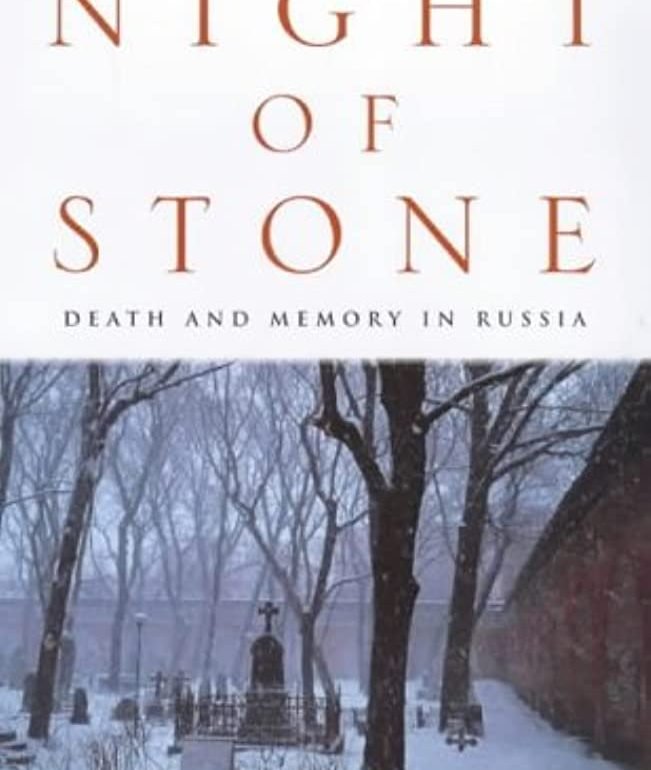
Night of Stone; Death and Memory in Twentieth-Century Russia by Catherine Merridale

March 6, 2023 by Barry J. Klazura No Comments

During the twentieth-century, Russia has suffered through two World Wars, a civil war, and numerous famines (both natural and manmade).  The result was a population that suffered upwards of 70-100,000,000 million dead.  This on top of a long history filled with carnage, tyranny and cruelty.  The dead when they could be buried faced a bureaucracy which required numerous forms, not enough cemeteries (in the cities) and waiting times that could often lead to the literal rotting of the dead.  During the siege of Leningrad, the dead were warehoused during the winter as the ground was too frozen to dig and their grave diggers were all dead. Now, in the midst of another war, many of the dead, the Russian soldiers are not buried, they are merely cremated in an effort to hide the true casualities.

How does death on such a scale affect the mind of the average Russian?  Illnesses such as PTSD were denied in the Soviet Union (and later) as a capitalist plot and the average Russian was deemed “too tough” to fall for such capitalist tricks.

The author spent years roaming Russia talking with survivors of the purging of kulaks, victims of the forced collectivization and its famine, survivors of the German invasion, of the purges by Stalin, etc.  How did they cope with seeing starved bodies piled up in the streets, or watch everyone in their village slowly die of starvation? How were they able to lead seemingly “normal” lives and how were they able to keep buried their emotions. What impact does that have on the development of the survivors, their children and the society?

What comes out of the book are stories of great human strength, of tragedy and the realization that the average Russian who lived through those terrible times and experienced the strange world of Communism had a very different mindset so they could survive.  Memories passed on as history die hard and the question that remains is how long will it take for the average Russian to move beyond those memories, that history to a world where they truly believe they have some control over their own destinies. Unfortunately, they appear to being no closer to “normalcy” under the current regime, one in which censorship and strict guidelines for behavior are not that far from those under the old Soviet system.

Share:
Reading time: 1 min
Book Reviews

The Yamato Dynasty: The Secret History of Japan’s Imperial Family by Sterling and Peggy Seagrave

March 1, 2023 by Barry J. Klazura No Comments

Much of the history of Japan lives withing a cloud of myth and legend along with a masterful manipulation of reality. This is especially true since the Meiji restoration whn the emperor was taken as the new central figure in Japan.  Suddenly the Emperor, who had traditionally had no power and was controlled by the Shogun was presented figuratively to the population as divine and the central focus of Japanese life.  Yet, the Emperor himself lived in a closed world or court etiquette and political intrigue.

This excellent history tells the story of who was the power behind the throne and of the vast scale of looting conducted by the Japanese during World War II.  Within Imperial Japan, there was a cadre of powerful families, former samurai war lords who controlled the military and the zaibatsu and thus the economy.  By controlling the military and the economy, they were able to work hand in hand with each other to gather enormous riches and unquestioned power, all while creating a cult around a compliant Emperor.

Continue reading
Share:
Reading time: 3 min
Page 11 of 29« First...«10111213»20...Last »

Barry J. Klazura

Barry Klazura sipping grappa

With a Masters Degree in Guerrilla Warfare and Totalitarianism, Mr. Klazura was well prepped for a career in Sales and General Management, consulting on corporate startups and turnarounds as well as lecturing on history and politics.  For the past twenty years he has focused on being a financial advisor and consulting.

Delivered To Your Inbox

Sign up to get an email when a new article is published.

Topics

  • American Civil War
  • Biography
  • Book Reviews
  • Cigar Reviews
  • Coronavirus
  • Current Affairs
  • Education
  • Environment
  • Factoids
  • Government
  • Lifestyle, Cigars & More
  • Liquid Refreshments
  • Musings
  • Quips and Historical Facts
  • Society
  • Travel
  • Uncategorized
  • World War I

Subjects

book Books-Russia/Soviet Union Books 21st Century Books 1919-2000 Books Ancient to 1900 Books Asia Books Biography Books Fiction Books Germany 1919-1945 Books Pre-WWI books Viet Nam books world war I Books WW1 Books WWI Books WWII Cigar Friendly Location Amsterdam Cigar Friendly Locations-London Cigar Friendly Locations-New Orleans Cigar Friendly Locations-New York Civil War Coronavirus Environment Korean War World War I World War One

Recent Articles

At Stalin’s Side by Valentin Berezhkov

July 15, 2026
The Price of Victory by N.A.M. Rodger

The Price of Victory by N.A.M. Rodger

June 26, 2026
Frontsoldaten: The German Soldier in World War II by Stephen G. Fritz

Frontsoldaten: The German Soldier in World War II by Stephen G. Fritz

June 5, 2026
Organizer of Victory, 1943-1945, George C. Marshall by Forrest C. Pogue

Organizer of Victory, 1943-1945, George C. Marshall by Forrest C. Pogue

May 26, 2026
Illegals Released & Our Leaders

Illegals Released & Our Leaders

May 10, 2026

Inquiries and Comments

For general inquiries and comments, email AOTOHcomments@gmail.com.

Facebook
© 2020 And On The Other Hand. All rights reserved.