On The Other Hand -
Book Reviews
Lifestyle, Cigars & More
Musings
About
On The Other Hand -
  • Book Reviews
  • Lifestyle, Cigars & More
  • Musings
  • About
Book Reviews

The Origins of the War of 1914 by Luigi Albertini

February 16, 2023 by Barry J. Klazura 1 Comment

During World War II, an Italian Senator who was forced to resign his post by Mussolini. This was the man who in 1925 published his three-volume work on the causes of the First World War.  At 2280 pages, Senator Albertini provides the serious student of history with a detailed, inside glimpse at European power politics reaching back into the mid 19th century.  In these volumes he exposes to the light of day the most minute diplomatic dispatches as well as his own personal discussions with many of the diplomats who had key roles in the lead up to the First World War. 

Reading diplomatic dispatches, letters and notes is never fascinating in the best of times, and with the distance of time, it is often difficult to remember or place correctly the individual players.  German Foreign Ministers of the Kaiser come and go; diplomats of the Czar long forgotten are suddenly brought back to light and the internal wrangling of the Austro-Hungarian Empire between the pro-German factions and the landed Magyars who are at direct logger heads with the Austrian Foreign office can be mind numbing. Added to the pile of information are the even more obscure Italian officials who want so badly to be taken seriously by the “great” European powers and are generally scorned, mistrusted and pushed aside and you have a web of intrigue that is difficult to follow without copious notes or a mind trained to a unusually high level of boredom.

            Yet the volumes can also at times read like a great mystery tale, but one in which you know the outcome and which, at times, you want at times to reach back in time to throttle, berate and besiege the players so that the terrible bloody outcome can somehow be avoided. At times you begin to see the engine of history moving forward, picking up speed and moving in what seems to be an unstoppable manner to the conclusion which chewed up the lives, future, and fortune of so many tens of millions of individuals.  At times you must put the book down as you shake your head with the knowledge of future events which seem so clear nearly a hundred years later, but which were so shrouded at the time.  The book can be infuriating and at times you hope there is a God with a sense of Justice, with a capital “J”.  You hope there truly is a day of reckoning for so many individuals, such as:

Continue reading
Share:
Reading time: 6 min
Book Reviews

The Good War: An Oral History of World War II by Studs Terkel

February 12, 2023 by Barry J. Klazura No Comments

Studs Turkel was a legend in Chicago for decades. Known for his sharp wit and clear writing, he had a successful career as a bit actor, sport commentator, TV MC, writer, and social commentator.  This book, one of many, won the Pulitzer Prize for General Non-Fiction in 1985.  In it, he interviewed veterans from across the U.S., as well as civilians who worked in factories, hospitals, research labs and even some who were involved with the development of the atomic bomb.  He offered a street eye view (which was his specialty) of how men and women felt about the war; the excitement, fear, hopes for the future and life played out for some and their views on the government and the Viet Nam war as their children went to fight their own war.

Despite the acclaim of this book, and the huge sales, I was disappointed; the interviews seemed to be divided between veterans, most of whom expressed their fears and excitement, the remembrance of the close bonds they felt for their comrades, some of whom became life long friends, and the non-combatants, many of them intellectuals and well paid factory workers who often seemed to be disgruntled by their experiences. Being a child of that generation, I saw this sharp divide.  For example, when my parents went to their 50th high school reunion, each attendee was asked to write a short biography.  I was amazed that every single male, except for my father, started his bio stating what he did in World War II (my father started his stating how long he and my mother had been married).  That reflected the importance of the war to a generation of men who endured the poverty of the Depression and for whom, the military was the first time they had enough to eat. 

Continue reading
Share:
Reading time: 3 min
Book Reviews, Government, Society

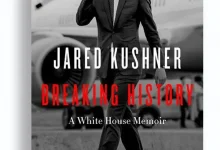
Breaking History by Jared Kushner

January 9, 2023 by Barry J. Klazura No Comments

I must admit that prior to reading this book, I had mixed thoughts about Mr. Kushner.  Was he a case of nepotism, what was his background, did he have any thoughts of his own or was he merely a puppet of the President who was his father-in-law, did he marry into the Trump family in a bid for easy wealth, and so on.  By the end of the book, admitting that it may be at times self-serving (how unusual for a political memoir), my attitude toward him turned to admiration. 

Here was an individual from outside the belt way who took on tasks which were not easy, fought against individuals with their own agendas and who did not necessarily supporting the goals of the man they worked for, the President, entered into the very real dark and self-perpetuating deep state and came out with his love of country intact, his family intact and could realize that he helped to accomplish successes where “insiders” had failed for decades. 

How was he able to accomplish anything being an outsider in the Capital.  For one, he brought a level of expertise that was missing in the Capital and the hallways of power, for rather than trying to merge into the bureaucracy and traditional power games, he brought his business sense to the table.  This means that as every businessman knows, you cannot move ahead if you do not offer a good product and work at every level to provide that product to the market.  His approach was very often one of being willing to listen.  An example is the dogma given by John Kerry that “There will be no separate peach with the Arab world without the Palestinian process and Palestinian peace.  Everybody needs to understand that.  That is a hard reality.”  Kushner realized that the same old programs with ill-defined promises had been the bedrock of Middle East discussions for decades with the same result, failure.  Instead of doing the “same old, same old”, why not do something different. It was Henry Kissinger who advised him that the foreign policy of the nation had to be run by the White House as opposed to the State Department where ideas seem to go to die. 

While Trump may have been mocked by the Germans and others when he cautioned them about relying on cheap energy from Russia, in the Middle East he was respected for his openness and willingness to be bold and speak openly.  His image played well in the area as opposed to the apology tour concept and he was willing to listen to what Arab leaders had to say in very frank discussions, including when he told them that a deal could be made but that they had to handle the terrorists in their own countries who go out and murder Israelis. No action, no deals.  The Arab leaders also liked that Kushner was the President’s son-in-law which gave creditability to his voice.  Finally, he found by listening that a major stumbling block to Middle East movement was not necessarily the Palestinians who were getting to be a burden, but rather guaranteed and safe access to the al Aqsa Mosque which was under the control of Israel.  By finding the one thing that all the Arab leaders could agree on, it enabled him, by working hard and creating a strong team, to develop and close the Abraham Accords, an action that has led to greater trade and development in the area.

The book notes some of the personalities in the administration including Tillison, Kelly, Fauci, Bolton and others in a way that allows one to read between the lines and understand his opinion without being insulting.  In each encounter, Kusher seems to better realize the difference between the government game and that of business, but he absorbs each and uses the experience to better his results.

One of the finest sections is in the episode regarding the successful strike against Soleimani.  The Iranian general had been responsible for the deaths and wounding of thousands of U.S. military personnel and Trump felt that a message needed to be sent that there was no safe ground for those who attacked Americans. The killing of Soleimani sent a strong message to the Iranian leadership and despite the threats made by that leadership, their reaction was one that was feeble at best.

Other chapters cover Operation Warp Speed, the bi-partisan passage of the First Step Act, and of course, the wasted energy over the Russian collusion investigation. 

In the end, I believe most readers will put the book down and believe that Jared Kushner, a religious and strong family man, put his best efforts into projects during that four year period.  He is proud of his accomplishments and the service he provided to the country and at the same time, it is easy to understand why he has openly stated that he would not wish to go back to such service again.  Somehow, we need to create a system where good and honest individuals can enter government service, and not face the possibility of huge legal bills created by political gamesmanship, where new ideas can be put forth after decades of failed policies.  This is one of the best post-Administration memoirs I can remember and it does provide hope for the future.

Share:
Reading time: 4 min
Book Reviews

Fiasco, the American Adventure in Iraq by Thomas E. Ricks

December 19, 2022 by Barry J. Klazura No Comments

Several years ago, I read Luigi Albertini’s massive, three volume, 1800-page work, The Origins of the War of 1914. It was a heartbreaking work as it laid out a chain of events beginning about thirty years prior to the outbreak of the war which seen from today, clearly pointed to the start of that terrible war.  Misunderstood actions, political snubs and fumbles, conflicting personalities, etc., seem to drive the Western powers toward a cliff from which none could turn.

In a sense, this book gives one the same feeling, only you reach the conclusion by about page 80; you want to put the book down and wonder how so many poor decisions could be made by so many policy makers and leaders. Anybody with even a rudimentary knowledge of asymmetrical warfare, can see the fundamental errors which turned a solid opportunity into a fiasco.

What is amazing is that many of the military leaders who had fought in Viet Nam and who had vowed never to make a mistake like that again, went along with political leaders and committed basic errors during and after the initial invasion; inadequate troop strength, ignorance of the culture, disruption of the economy which led to many military Iraqis joining the insurgents simply to put bread on the table, poor training of the infantry, disregard of the lessons of local control learned in Viet Nam, etc. managed to alienate the populace and actually feed the insurgency.

Ricks blames most of the problems on Donald Rumsfeld, Paul Wolfowitz, and L. Paul Bremer III as they ignored advice which did not agree with their preconceived ideas and amazingly enough, they had no plan for what to do with Iraq after the military victory.  There seemed to be some sort of mystical belief that our occupation would be short lived and that some sort of civilian leadership would arise that could span the Sunni-Shite-Kurdish canyon and run a government which had been an authoritarian state under a suddenly outlawed political party. Bremer managed to put out of work the entire Iraqi army, the key bureaucrats and destroy any hope for central power to run the country.  For this, he eventually was awarded the Presidential Medal of Freedom, along with George Tenet and General Tommy Franks, both of whom managed in their own way (intelligence and military) to mislead or misdirect the war and occupation. Professionally written and documented, the weakness of this book is that it ends in 2006 and the author, entirely misses the options from that point forward.  He could not see the rise of ISIS of course, but his discussion on the political options read as if he were in a hurry to finish the book.  This should be a must read at West Point and for at least the top ten percent of the “leaders” in Congress and the bureaucracy.  Just be prepared to put the book down every few pages and shake you head in wonder at the foolishness, stupidity, and ineptitude of those who wield such power.

Share:
Reading time: 2 min
Book Reviews

Purge by Sofi Oksanen

December 11, 2022 by Barry J. Klazura No Comments

Imagine that your native land is invaded not once, but several times by opponents who are much more powerful and ruthless.  In the first invasion, tens of thousands of your nations finest minds are deported to camps thousands of miles away.  The next invasion is by another opponent who to win your favor, executes tens of thousands of your fellow citizens who made the mistake of being born into a different religion.  To complete the job of cleansing your land, many of your neighbors to worked with the first invader are also executed.  A couple of years later, the first invader returns and again, executes or deports your fellow citizens who co-operated with the second invader.  Fast forward two generations and the first invader is finally expelled but during that time, everyone who has lived under the expelled regime has lived, worked or in some manner supported the hated invader.

Whom do you trust?  Who was a spy or informer for the invader?  Who was married to someone who profited from working with the invader?  Will the invader return?  Is the new system honest or will it be staffed by those who worked for the invader?

Sofi Oksanen, a Finnish- Estonian playwright and novelist is now published in twenty-nine countries and has written a novel that looks at those questions and others.  An elderly woman is taunted by young boys who throw rocks at her house on her old dying farm.  Why?  Did she collaborate with the hated invaders?  Was she an informer?  What is her secret?  Then, a young woman in fancy city clothes appears in her yard and for the rest of the book, each mentally dances with the other, prying and gradually learning the truth that binds the two.

The story will make the reader question how does a nation which, like the nations in Europe formerly occupied by the Soviet Union, begin the healing process and acceptance of the challenges generated by the past.  Who, having lived for decades under a repressive police state is free from guilt and is there an acceptable line beyond one should not have crossed?  At the same time, there is a valid call for Justice and who will be the ones to carry out such measures as are set? These questions and others are not often discussed by those who have studied totalitarian states or even whose which have not gone to that extreme.  The amazing thing is that it appears that overall, those nations which have suffered have found a way to deal with the past and have arrived at a way of moving forward without using the fearsome methods that were used on them.     

Share:
Reading time: 2 min
Book Reviews

Kolyma, the Artic Death Camps by Robert Conquest

December 9, 2022 by Barry J. Klazura No Comments

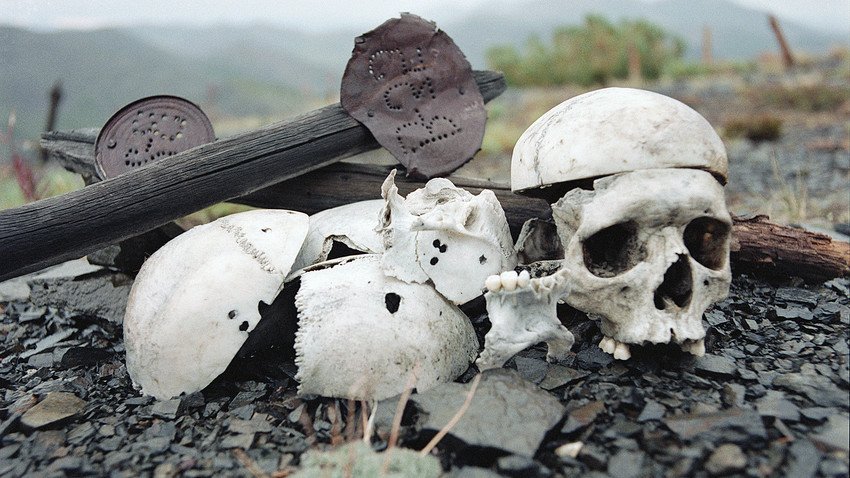
The Magadan area of Siberia is known for its harsh climate, where the weather is sub-zero for up to six months a year.  Now picture that you are in that climate, working in a lead or gold mine (which tend to kill its workers in about six months) in a thin cotton jacket and wooden clogs.  You want to get a better job, but you have nothing to trade to the criminals who run the camp with the approval of the military guards.  Your diet consists of a cup of hot water for breakfast, perhaps a slice of bread for lunch and if you make it back to the barracks in time, a cup of hot water with perhaps a fish head or a bit of turnip.  Then after lights out, you wait for the criminals to rob you of your blanket or gang rape your bunk mate.  If you do manage to get out of the mines, you get a better job such as cutting trees for 12 hours a day.  You do not know what has happened to your family (as you are held without the right of correspondence) and you realize that that routine will go on for the length of your sentence, which is probably fifteen to twenty years.

When you do come out of the camp, you may not receive a permit to return to the town where your family lived and there are few ways to contact them.  In fact, everyone who encounters you shuns you as being seen with a former “political” may be reason enough for them to be arrested.  There is a good chance that your children were put in State orphanages and had their names changed so there is little possibility of ever finding them.  In fact, you have only a small chance of ever leading a “normal” life.

This then was the story of this early work by one of the premier historians on the Soviet Union.  Conquest lays out a story of brutality that is an important part of the Gulag system of the Soviet Union.  And, as terrible as the above description is of life in the camps, it was worse for the women who were sentenced to the Gulag.  From mass rape on the transportation to the camps, to forced lesbian relationships in order to gain a bit more to eat, women were the lowest of the low in the system.

It is often said that the camps were not the fault of the ideology, but rather the fault of the leaders.  But what type of system would allow the leaders to develop a system staffed by hundreds of thousands of brutal individuals who could live and work in a system like the Gulags.  What type of system would allow to be created a system of laws and regulations where people are arrested and convicted based on nothing more than a quota for arrests and, in some cases, being picked out at random from a telephone book.

Each time I read something on the Gulag system, I thank my lucky stars for the life I lead, in the country where I live which is a true anomaly in the history of mankind.   There but for the grace of God, or the decision of my grandparents could have gone I.

Share:
Reading time: 2 min
Book Reviews

The Terror

November 24, 2022 by Barry J. Klazura No Comments

The British and German empires had the wonderful ability to turn futility and defeat into a glorious adventure. For the Germans, and outstanding example was the legend of the Langemarck when youthful German infantry rushed against the French lines, singing their national anthem, and capturing thousands of French regulars. The reality was quite different in that while a thousand French reservists were captured, the young Germans suffered about ten thousand killed and wounded in an unimportant battle. Years later, the myth would be used by the Nazi regime to fire the imagination of those in the Hitler Youth.

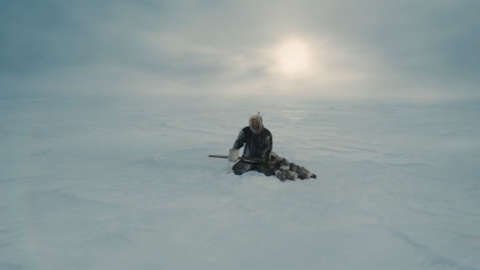
The British, because of their far-flung empire had more glorious defeats which they could use to inspire British boys. It must have worked as generations of youth ventured forth to pacify, tame and Christianize the colonies of the Empire. One of those defeats was the Artic expedition of Captain Sir John Franklin in 1845-48. He had at his disposal two specially designed ships with food and fuel enough for three years and a desire to find the fabled Northwest Passage. He failed and all the men of his ships died of scurvy, TB, various other illnesses and eventually resorted to cannibalism in a vain attempt to reach rescue.

Continue reading
Share:
Reading time: 2 min
Book Reviews

Lenin by Victor Sebestyen

November 18, 2022 by Barry J. Klazura No Comments

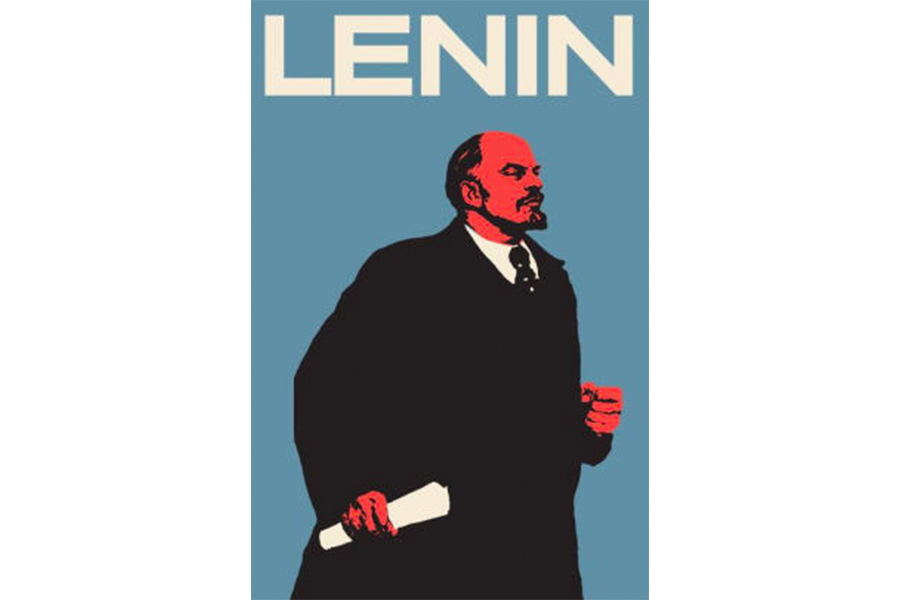
Lenin, the great icon of Communism, was raised and lived the life of a bourgeois. Cared for and pampered by his mother and family, then by his wife Nadya Krupskaya, he could not live on his meager earnings and so continually received money from his mother and from the donations of wealthy liberal capitalists who did not understand his total hatred of them. He lived a life dedicated to revolution, but never raised a fist in anger, never stood on the barricades and was known to flee at the first sign of violence. Yet, when power came to him, he easily ordered the deaths of real and supposed enemies, including those who had opposed him philosophically.

In several reviews, this book was praised for exposing the real Lenin, for breaking the shell which had been carefully crafted creating an image of benign intellectualism detached from the slaughter’s instituted by Stalin. Yet the book, if read without a knowledge of the seizure of power, the Civil War and the creation of the Soviet state would not in and of itself destroy the myth of the peaceable Lenin. There are only a couple of examples of his willingness to shed blood, as when the elevator in the Kremlin was not working for a few days and Lenin demanded that the maintenance man be shot, or more seriously, when there was famine in the countryside. At that time, Lenin was approached with an appeal to ease up on the countryside food seizures, but his response was that it was an ideal time to begin the liquidation of the priests and churches as people’s attention would be diverted. In reality, Lenin was a driving force behind the formation and actions of the Cheka, ‘the sword and shield’ of the Communist Party. Like Stalin after him, Lenis read the list of those executed as well as personally signing the lists of those awaiting execution.

Aside from not exposing the ruthlessness of Lenin, the rest of the book does reflect Lenin’s ability to bring others to his way of thinking and his excellent sense of timing, politically. Although like others, he was surprised by the overthrow of the Tsar (just as decades later everyone was surprised by the collapse of the Soviet Union), he reacted quickly to return to Russia and pick up the direction of the revolution. Although his face was not even recognized in Russia, he was able to direct and corral the energy of the times and the streets to successfully seize power. Then, thanks to his drive and the skills of men like Trotsky, Dzerzhinsky, and others, the first Communist government was able to survive war, famine, civil war and more.

This is an excellent biography of a man who has been immortalized as a brilliant thinker and leader but misunderstood. His self-centeredness, intellect, patience, and ruthlessness are all laid out for examination. For anyone seeking to have a better understanding how such a terrible system could be founded and survive with such a small base of support, read this book.

Share:
Reading time: 2 min
Book Reviews

Diary, 1937-1943 by Galeazzo Ciano

November 9, 2022 by Barry J. Klazura No Comments

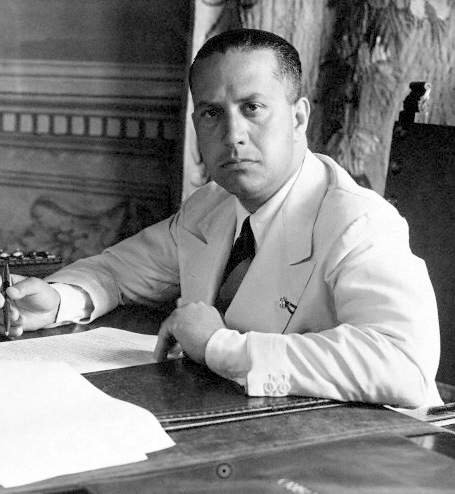
Born into the family of a WWI hero and early support of the Fascist movement in Italy, Ciano was not only Mussolini’s son on law, but also his Foreign Minister from late 1936-1943. Later he voted, in the Supreme Fascist Council, to oust Mussolini from power and at that time was also purged from all political life.

His diary is honest; it deals with many of the personalities of the time, the pressures, issues, and his attempts to steer Mussolini from war and close collaboration with Hitler and the Nazis. A combat flyer himself, he took part in multiple combat missions to show the population that the leadership could lead by example. Although Mussolini was in power for many years, Ciano as head of the Foreign Office was as surprised as Mussolini at the poor state of the Italian military at the start of the war. Recognizing that the country was bankrupt and suffering from severe food shortages, Ciano tried to convince Il Duce to not enter the war, but Mussolini saw himself as a great wartime leader, believing in his own press clippings that he himself wrote.

It is clear from the Diary that Mussolini had a poor grasp on the economics of his country, was totally taken in by Hitler and had dreams of empire far beyond the abilities of the Fascist state. Should Italy move against Yugoslavia? How about Greece? Perhaps France! Turning first one direction and then the other, Mussolini ignored the basics of governance and had an utter distain for the Italian people (whom he called “sheep,” “weak,” etc. and the Catholic Church. In a country where the Church still held enormous influence (even though the people seldom went to mass), he failed to heed the lesson of the old Roman Empire that the one area government left alone was the religion of the people.

Foiled in numerous attempts to stop Mussolini from going to war, Ciano gradually lost power as the influence of the Nazis grew in Italy. His descriptions of leaders, such as Ribbentrop, Himmler, Pavelic as well as the hatred of the Hungarians and Romanians as they struggled to attain their illusions of importance often leave one shaking one’s head at the foolishness and ignorance of the many players in Europe. When Japan went to war, they believed that at best they could attain a compromise peace with the United States, but Mussolini refused to believe in nothing less than victory, even as he lost armies in North Africa, Greece, and Russia. Like Napoleon, he played with lives with utter disregard for the misery he was creating.

In January 1944, Ciano was tried by the rump Mussolini government in Verona and executed. His diary has been published in pieces, but this edition is the complete manuscript.

Share:
Reading time: 2 min
Book Reviews

Russia, Revolution and Civil War, 1917-1921 by Antony Beevor

November 7, 2022 by Barry J. Klazura No Comments

A revolution is a terrible time of death and destruction. Some revolutions are justified, some are not; some are begun with the highest of intentions, some are started with the most common of intentions. If followed by a civil war, the misery and destruction to lives, property, morals, industry, and traditions is even greater. Finally, add an ignorant and easily led mass of humanity that has suffered under a form of government which has only used those masses for its own enrichment, and you will begin to understand the revolution and civil war in what was known as Russia from 1917-1921. Millions of people, most of them innocent and caught between forces they neither supported nor understood were tortured, raped, robbed, and murdered often by methods that only the most insane and hate filled savages could have devised.

Anthony Beevor, an excellent military historian has tried to put together in one place a comprehensive history of the Russian revolution and civil war. It was a huge task as the period is filled with countless political, military and outlaw factions that ranged across a land that covers one-seventh of the globe. Each faction is filled with personalities guided by, for the most part, the basest of emotions, greed, illusions of grandeur, ignorance, hatred, etc. Few of those factions have any real program except survival and a hope that they can eliminate some other faction that is in the neighboring town or province. They are used and discarded by allies and often just as quickly ally themselves with yesterday’s foe.

All do except the Communist faction. Driven by a vision that was simple for the most ignorant to grasp, and enforced by a single-minded discipline, the Communists were, from a central position able to fight and defeat their poorly disciplined enemies. In a time when entire villages were destroyed for providing horses or food to one faction, normally at the point of a gun, the “Reds” as the Communists were called, were able to our terrorize the masses and their foes, the “Whites”, a loose group of armies over-officered, reactionary and possessing no simple program to offer anyone in the middle.

Continue reading
Share:
Reading time: 3 min
Page 12 of 29« First...10«11121314»20...Last »

Barry J. Klazura

Barry Klazura sipping grappa

With a Masters Degree in Guerrilla Warfare and Totalitarianism, Mr. Klazura was well prepped for a career in Sales and General Management, consulting on corporate startups and turnarounds as well as lecturing on history and politics.  For the past twenty years he has focused on being a financial advisor and consulting.

Delivered To Your Inbox

Sign up to get an email when a new article is published.

Topics

  • American Civil War
  • Biography
  • Book Reviews
  • Cigar Reviews
  • Coronavirus
  • Current Affairs
  • Education
  • Environment
  • Factoids
  • Government
  • Lifestyle, Cigars & More
  • Liquid Refreshments
  • Musings
  • Quips and Historical Facts
  • Society
  • Travel
  • Uncategorized
  • World War I

Subjects

book Books-Russia/Soviet Union Books 21st Century Books 1919-2000 Books Ancient to 1900 Books Asia Books Biography Books Fiction Books Germany 1919-1945 Books Pre-WWI books Viet Nam books world war I Books WW1 Books WWI Books WWII Cigar Friendly Location Amsterdam Cigar Friendly Locations-London Cigar Friendly Locations-New Orleans Cigar Friendly Locations-New York Civil War Coronavirus Environment Korean War World War I World War One

Recent Articles

At Stalin’s Side by Valentin Berezhkov

July 15, 2026
The Price of Victory by N.A.M. Rodger

The Price of Victory by N.A.M. Rodger

June 26, 2026
Frontsoldaten: The German Soldier in World War II by Stephen G. Fritz

Frontsoldaten: The German Soldier in World War II by Stephen G. Fritz

June 5, 2026
Organizer of Victory, 1943-1945, George C. Marshall by Forrest C. Pogue

Organizer of Victory, 1943-1945, George C. Marshall by Forrest C. Pogue

May 26, 2026
Illegals Released & Our Leaders

Illegals Released & Our Leaders

May 10, 2026

Inquiries and Comments

For general inquiries and comments, email AOTOHcomments@gmail.com.

Facebook
© 2020 And On The Other Hand. All rights reserved.