

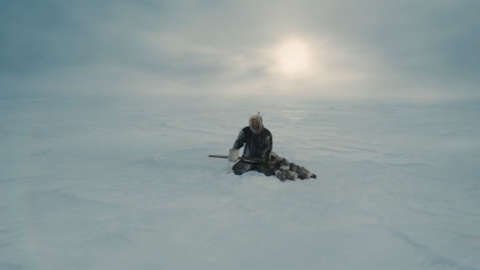
The British and German empires had the wonderful ability to turn futility and defeat into a glorious adventure. For the Germans, and outstanding example was the legend of the Langemarck when youthful German infantry rushed against the French lines, singing their national anthem, and capturing thousands of French regulars. The reality was quite different in that while a thousand French reservists were captured, the young Germans suffered about ten thousand killed and wounded in an unimportant battle. Years later, the myth would be used by the Nazi regime to fire the imagination of those in the Hitler Youth.
The British, because of their far-flung empire had more glorious defeats which they could use to inspire British boys. It must have worked as generations of youth ventured forth to pacify, tame and Christianize the colonies of the Empire. One of those defeats was the Artic expedition of Captain Sir John Franklin in 1845-48. He had at his disposal two specially designed ships with food and fuel enough for three years and a desire to find the fabled Northwest Passage. He failed and all the men of his ships died of scurvy, TB, various other illnesses and eventually resorted to cannibalism in a vain attempt to reach rescue.
The story of that expedition was the subject of a best-selling book, “The Terror” by Dan Simmons. The book is a fictionalized history of the expedition and was later used as the basis for an AMC series (still available). The author creates an excellent fictional story, based on rumors, top research on the personalities and conditions and a vivid insight into how the men of the ships must have behaved as their food supplies became contaminated, their fuel supplies dwindled, and they began an eight hundred trek across a cold and unforgiving frozen landscape. It is an excellent read.
After reading the novel, I watched the AMC series and while it was highly rated at the time, it fell short of the novel in several areas. There seems to be a strange desire by producers to take a history that is vivid and compelling and try to improve on reality. Isn’t a story of the struggle of men wearing eight layers of wool clothing against the savage cold, enduring several months a year with no sunlight, realizing that as they are beginning to die of scurvy that they must pull sleds weighing hundreds of pounds across over ice flows that can reach sixty feet in height adventure enough? Apparently not as they disregard a particularly good story with superb characters and end up with a film version that would impress a child of ten.
In the end, all the crew perishes, and their story is lost. But the legend continued, and Captain Sir John Franklin joined the ranks of those who failed, such as Scott of the Antarctic and the massacre of the British army in Afghanistan in 1842. Their failure and the myths created around them inspired thousands of young Brits to venture forth across the Empire which in turn created the truthful legends such as the incorruptible British civil servants of India, a literal handful of men who ruled a yet to be formed nation of several hundred million.
This novel is an excellent read, one which is suspenseful, filled with interesting facts and in my personal case, reinforces my belief that I would never want to be an explorer opening new lands.






Leave a Comment