
On The Other Hand -
Book Reviews
Lifestyle, Cigars & More
Musings
About
On The Other Hand -
  • Book Reviews
  • Lifestyle, Cigars & More
  • Musings
  • About
Book Reviews

War, Logistics and Cannibalism

July 25, 2022 by Barry J. Klazura No Comments

When Japan decided to go to war with the United States in 1941, it went with the realization that it could not win in a war of attrition. The average Japanese soldier (marine, aviator, etc.) had about four pounds of logistical support behind him (weapons, fuel, munitions, food, shipping, etc.) while the same fighter for the U.S. had over four thousand pounds. Admiral Yamamoto was correct when he said that Japan had awoken a sleeping giant.

The results of this disparity were shown early in the war, when after suffering a naval setback, Japan left over 150,000 troops stranded in New Guinea with the advice to live off the land. Unfortunately, New Guinea was not Western Europe or the Ukraine; instead, it is a hard land with little farmable land, but many high mountains, extreme heat, and humidity, covered in thick jungle with few roads. The result was that only about 10,000 Japanese military personnel survived the campaign. The stranded troops were left, as were so many other Japanese on dozens of isolated islands, to fend for themselves. The result was widespread examples of cannibalism.

James Badley in his book, Fly Boys, details the lives, capture and execution of several American flyers who were shot down over the island of Chichi Jima, a small island some 240 km. north of Iwo Jima. The aviators were all executed by the Japanese either by beheading or bayoneting and sections of their bodies were cut off and served, knowingly to Japanese officers in keeping with a belief that such action would strengthen the fighting spirits of the diners. For several decades after the war, the exact details of those actions were kept secret even though several of the Japanese officers were tried and either executed or imprisoned for their actions. The author, spend years and conducted many interviews with survivors, including Japanese veterans and surviving relatives of the executed Americans to build out the story.

Continue reading
Share:
Reading time: 3 min
Book Reviews

The Age of Battles: the Quest for Decisive Warfare from Breitenfeld to Waterloo by Russell F. Weigley

July 15, 2022 by Barry J. Klazura No Comments

Victor Davis Hanson in his The Father of Us All; War & History, Ancient & Modern gives due credit to The Age of Battles as one of the finest examples of military history as indeed it is. Since it was first published in 1991, Weigley gives a continual history of warfare, mostly in Western Europe, from Breitenfeld to Waterloo. Starting with the revolutionary tactics of Gustavus Adolphus and ending with the defeat of Napoleon, the author traces the continual quest for the “decisive battle” as a short cut to victory.

After the terrible bloodbath of the Thirty Years War, which left Germany devastated with millions of dead, it seemed as if Europe had made a conscious decision that warfare had to be restructured. One of the key steps to this process was Hugonis Grotius, the historical rules for the limitation of war were formalized. These rules were loosely going back to the rules of chivalry (which were never terribly effective) covered dealing with civilians, plunder, and more. Many rulers in Europe recognized that while war was not going to disappear, they could at least try to limit the overall damage. It was amazing that with the rise of nation states and greater concentration of power and wealth, those who ruled suddenly realized that they had a personal stake in limiting wars which could be dangerous to their position and existence.

Continue reading
Share:
Reading time: 4 min
Book Reviews

Destined for War: Can America and China Escape Thucydide’s Trap? by Graham Allison

July 12, 2022 by Barry J. Klazura No Comments

The Thucydides’s Trap is when a rising poser threatens to displace an existing one.  This phenomenon began during the Peloponnesian War which lasted for decades and lead to the victory of a weakened Sparta over the devastated Athens.

Since that time, there have been sixteen cases of the same type since then and in twelve cases the result has been war. Some of the cases are easy to recognize, such as Japan vs. the U.S. in the Pacific, or the rise of Germany vs. the U.K. after 1900, while others are more distant such as the Dutch Republic vs. Great Britain during the mid- to late 17th century.  The three most recent cases when no war was the result was between the U.K./France vs. Germany for political influence in Europe, the Cold War and surprisingly, the rise of the U.S. and the perceived threat to the U.K. during the early 20th Century.

The first third of the book is a devastating review of the rise of modern China; it’s huge growth in GDP, the strength of its economy, the expansion of its military, etc. as compared to the sluggish performance of the U.S.  Despite the “pivot” in American foreign policy under President Obama, little of concrete value has been achieved; the North Koreans have more arms, the Chinese have claim more of the sea and built numerous “island” which contrary to their promise, they have militarized, and our “allies” have been forced to bend to Chinese demands through the use of their great economic power in the region. 

Continue reading
Share:
Reading time: 3 min
Book Reviews

The House of Government by Yuri Slezkine

June 24, 2022 by Barry J. Klazura No Comments

Martin Amis wrote, “The chief demerit of the Marxist program was its point-by-point defiance of human nature”. Yuri Slezkine creates a solid argument that Marxism was a change of faith and that it was a cult, filled with dogmas that defied logic and human history.  Could a parallel be drawn between Marxism and the early Church?  Both were fueled by dogmas, their gospel was spread by zealous “preachers” who devoted their lives to their new religion; they both had martyrs, a hierarchy of disciples and believed that they were able to create a new and better world.  Marxism went one step further in that it’s view of human nature was entirely against the course of history, but their dogma answered “history” in that the nature of man had been corrupted by all societies throughout history.  Thus, while claiming to be founded on “science”, the dogma of Marxism discounted all known evidence.  With that dogma, they unlike the Church, claimed that they were able to create a “new man”, freed from the chains of the past, of the “artificial” realities of the world, able to create a world filled with happy, satisfied, productive individuals.

Of course, no one believed that true Marxism could be achieved overnight, and so there had to be a period of the dictatorship of the proletariat.  During that time, priests, aristocrats, kulaks, capitalist, the majority of academics and others needed to be purged. The bourgeois institution of marriage was also to be amended so that women would not be oppressed.  The failure of the Soviet experiment of easy divorce quickly created a problem so the need for the family was recognized (at least until the children could be raised almost entirely by the State).  And, this helped to eventually be a major problem for the longevity of Communism, for parental influence could not be entirely countered.

Continue reading
Share:
Reading time: 4 min
Book Reviews

The Splendid and the File by Erik Larson

June 15, 2022 by Barry J. Klazura No Comments

History can be the best of subjects or the worse depending on your individual mindset, for any event in history can be a huge puzzle that can and does cause debate years and years after any given event. History is not as bad as the saying about economics (ask four economist a question as to what will happen and you will receive five opinions), for at least with history there are certain proven facts, records, confessions, etc.

In this historical novel, the author pulls on diaries, interviews, memoirs, and other sources to provide the reader with an excellent overview of numerous personalities (Churchill, Halifax, Goebbels, Goring, Beaverbrook, and others), their strategies, fears, personalities, and so on and how by interacting with one another, they created the saga of the Battle of Britain. How close to defeat was England at that time and how great the burden on the shoulders of men like Churchill, Beaverbrook, and others as they had to hold together and create a national will against not only the forces of Hitler, but also against those within their own country and even cabinet who wished to take a different course. How easy it would have been to simply make some sort of deal with Hitler in the vain hope that he, who had broken every agreement, could be trusted.

Continue reading
Share:
Reading time: 2 min
Book Reviews

Rampage: MacArthur, Yamashita and the Battle of Manila

June 13, 2022 by Barry J. Klazura No Comments

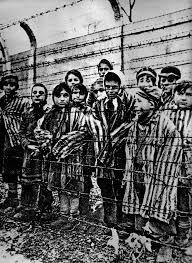
Over the decades, I have read many books, transcripts, interviews, done personal interviews, etc. regarding the killing squads and death camps of the Nazi regime. “How” I wondered, “could a cultured nation like Germany march so easily into the brutal murder of millions of individuals who the deemed as sub-human?”  This is certainly not a new question as it has been debated for decades, by those who like Hannah Arendt’s “banality of evil” theory to those who felt that there was some sort of missing component to the German soul. Perhaps there were two types of killers, especially in the SS; the bureaucrats such as Eichman and the officers who stood at the receiving dock at Auschwitz, and those who murdered by executing men, women, and children in the killing pits of Ukraine, Poland, and the rest of Europe. Could they have been indoctrinated by their SS training to believe that they were doing good, freeing the world of vermin to create a better world? But, what about the Police battalions? They were made up of ordinary police officers, men trained up uphold the law, yet they were able to overcome their training and became killers as deadly as the SS Eizengruppen. There were also sadists such as the hardened criminals and perverts of the Kaminski Brigade and the 36th SS division under the command of Oskar Dirlewanger, but even they were viewed with distain by the regular SS divisions. It was a question that is still debated today by historians, psychologists, and others; was it due to their training, beliefs, or a mass psychosis. Somehow another group of men, who were under strict military control managed to become even worse that the groups I have mentioned; that group is the officers and enlisted men of the Imperial Japanese Army and Navy

Continue reading
Share:
Reading time: 6 min
Book Reviews

The Crimean War by Orlando Figes

May 30, 2022 by Barry J. Klazura No Comments

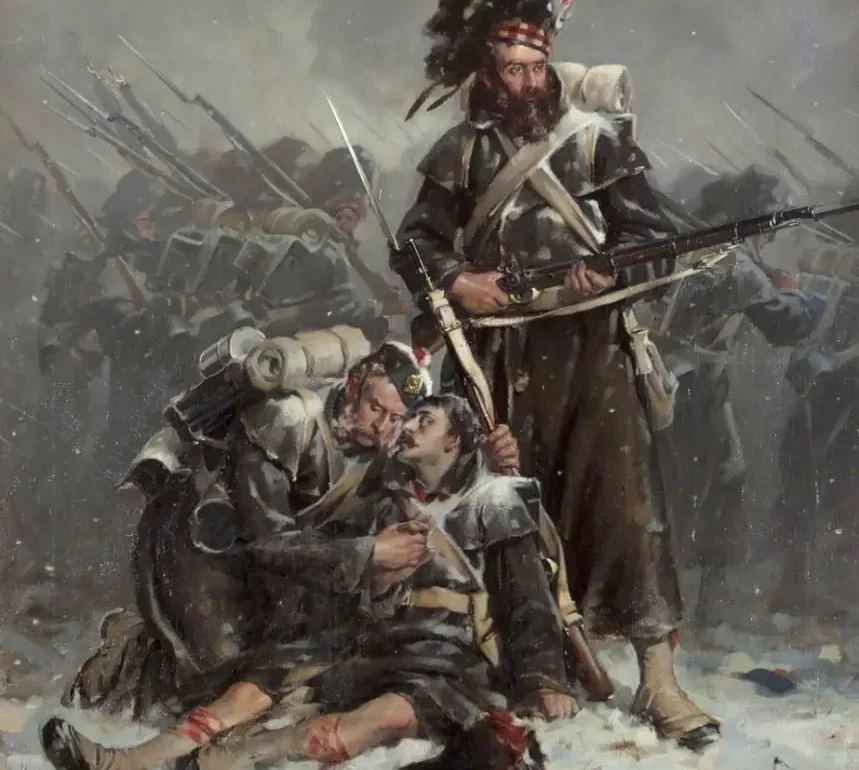
One of the pleasant things about histories by Figes is that they are so readable. Like two of other histories of his I have read, (“The Whisperers” and “A People’s Tragedy”), Figes has the ability to bring the past alive and make you feel as if you are part of the action. He does not concentrate on battle scenes (although battles are covered), but he centers on the lives of the ordinary soldiers. In this book he gives short shift to Florence Nightingale but points out the breakthrough of a Russian surgeon, Dr. Nikolai Pirogov who used an early form of triage as well as anesthesia.

Despite the common view of the war, it was the French who supplied most of the troops, not the British and it was the French, not the British who better supplied their men with everything, from tents to food to warm coats for the cold Crimea winter, etc. Among the allied armies, approximately eighty percent of the deaths were due to disease, frostbite, etc.

It is also interesting to note that there were very real plans for a coalition whose goals was the breakup of the Russian Empire, including invasions of Russia from the Baltic, uprisings in Poland and an invasion from the Crimea into the area of Kiev. But as the causalities began to mount, the enthusiasm for such great plans began to wane and in the end a settlement was made.

For all the loss of blood and lives, Russia was able to regain her position within 25 years and continue to create problems in the Balkans. Her meddling and ambitions led to World War I thanks to a system that refused to believe that the world was changing and was all too often in the hands of a single man who could be unbelievably foolish.

A big book (about five hundred pages) but an interesting one which never goes off into tangents that do not serve to tell the main story. This is my third reading of these excellent history and each time I pick up some interesting tidbit in which historians (even amateurs such as myself) delight.
Share:
Reading time: 1 min
Book Reviews

The Twilight Years: the Paradox of Britain Between the Wars by Richard Overy

May 17, 2022 by Barry J. Klazura No Comments

What makes a civilization decline?  Is a decline caused by economic or moral faults or do they simply grow old and cannot face the challenges of younger, stronger forces which challenge them?  For Britain after World War I, this topic was discussed at various levels of society.  Having entered the first world war as a great Empire, within four years the average Brit could see the Anglo colonies of Canada, Australia, New Zealand and South Africa clamor for more independence while the crown of the jewel, India, began to make small steps towards independence.  What were the causes and could such a decline in power be stopped?

Richard Overy, whose outstanding analysis of World War II, Why the Allied Won has once again created a history that is overwhelming in detail and argument.  Beginning shortly after the end of World War I, numerous books, pamphlets and debates centered on the decline of Western civilization.  These debates were not shallow exercises, but serious discussions as to causes and possible remedies.  Going back to Nietzsche who felt that history was cyclical, was civilization, “merely the current expression of man’s futile efforts to fight the reality of decay with the weapons of illusory order.”?  If progress was illusional, then the certainties of the 19th century were null and void.  Civilizations, according to Nietzsche come and go, rise and fall, are born and die so there was not a great moral lesson to be learned from the decline of the West.  Nietzsche’s thesis became the starting point for Oswald Spengler’s The Decline of the West which was hugely popular especially in Germany after the war.  Unlike Hegel who saw a progression of history, Spengler’s saw civilizations almost like plants, which rise and fall as part of a great cycle.  Spengler listed eight ‘ripe’ cultures, “…from the Chinese through the Indian, antique, Arabian and Western” and that each had a cycle of about 1000 years from birth to death.

Continue reading
Share:
Reading time: 3 min
Book Reviews

The Radetzky March by Joseph Roth

May 5, 2022 by Barry J. Klazura No Comments

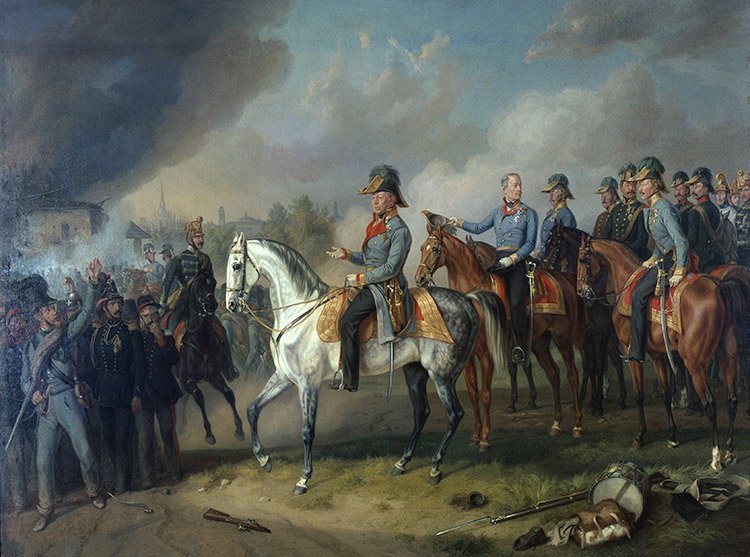
Originally published in 1932, this excellent little novel is still in print, thus testifying to its excellence.  A story set in the waning days of the Austro-Hungarian Empire, the main characters, three individual men, spanning 3 generations face first their sudden leap into the nobility by the grandfather as a young man, then the solid life of a district bureaucrat of his son and finally the life of the grandson who is cut out for either the military or the bureaucracy.

Continue reading
Share:
Reading time: 1 min
Book Reviews

Black Earth, The Holocaust as History and Warning by Timothy Snyder

March 31, 2022 by Barry J. Klazura No Comments

Bloodlands, Timothy Snyder’s monumental work has been complimented by Black Earth, The Holocaust as History and Warning. I must admit that I was initially put from this book due to numerous reviews which seemed to focus on one small portion of this work, that of trying to link the lessons of the Holocaust to climate change.  Such a premise held no interest to me as the horrors documented in Bloodlands was the result of conscious decisions by political systems which denied the basic humanity of mankind, whereas the arguments re: climate change are open to sloppy science at the worse as well as subject to hyperbole (we only have twelve years left) which undercut the actual science.

Given the reviews, rather than purchase the book as I would do with any Snyder book, I found it during a cruise in the ship’s library. I was wonderfully surprised that ninety-eight percent of the book was an excellent historical work which consolidated and exposed many forgotten historical facts as well as providing a key analysis between the goals and policies of Hitler’s Germany, Poland and the Soviet Union not only leading up to the Holocaust but also the misconceptions of those three powers and how they impacted the course of history.

For years, Hitler’s Germany attempted to woo Poland into an alliance which would result in a joint German-Polish invasion of the Soviet Union; the goal was the fulfillment of Hitler’s dream of Lebensraum but also (as the Poles realized) making Poland a client state of Germany.  For Stalin, the eliminate of Poland was key, in large part due to the Soviet’s defeat by the Poles in 1921 and Stalin’s part in the defeat, and to create a bigger buffer against Germany.  For the Poles, caught between two more powerful neighbors, the key was to play one off against the other by having non-aggression pacts with both Germany and the Soviet Union.

Continue reading
Share:
Reading time: 4 min
Page 14 of 29« First...10«13141516»20...Last »

Barry J. Klazura

Barry Klazura sipping grappa

With a Masters Degree in Guerrilla Warfare and Totalitarianism, Mr. Klazura was well prepped for a career in Sales and General Management, consulting on corporate startups and turnarounds as well as lecturing on history and politics.  For the past twenty years he has focused on being a financial advisor and consulting.

Delivered To Your Inbox

Sign up to get an email when a new article is published.

Topics

  • American Civil War
  • Biography
  • Book Reviews
  • Cigar Reviews
  • Coronavirus
  • Current Affairs
  • Education
  • Environment
  • Factoids
  • Government
  • Lifestyle, Cigars & More
  • Liquid Refreshments
  • Musings
  • Quips and Historical Facts
  • Society
  • Travel
  • Uncategorized
  • World War I

Subjects

book Books-Russia/Soviet Union Books 21st Century Books 1919-2000 Books Ancient to 1900 Books Asia Books Biography Books Fiction Books Germany 1919-1945 Books Pre-WWI books Viet Nam books world war I Books WW1 Books WWI Books WWII Cigar Friendly Location Amsterdam Cigar Friendly Locations-London Cigar Friendly Locations-New Orleans Cigar Friendly Locations-New York Civil War Coronavirus Environment Korean War World War I World War One

Recent Articles

At Stalin’s Side by Valentin Berezhkov

July 15, 2026
The Price of Victory by N.A.M. Rodger

The Price of Victory by N.A.M. Rodger

June 26, 2026
Frontsoldaten: The German Soldier in World War II by Stephen G. Fritz

Frontsoldaten: The German Soldier in World War II by Stephen G. Fritz

June 5, 2026
Organizer of Victory, 1943-1945, George C. Marshall by Forrest C. Pogue

Organizer of Victory, 1943-1945, George C. Marshall by Forrest C. Pogue

May 26, 2026
Illegals Released & Our Leaders

Illegals Released & Our Leaders

May 10, 2026

Inquiries and Comments

For general inquiries and comments, email AOTOHcomments@gmail.com.

Facebook
© 2020 And On The Other Hand. All rights reserved.