On The Other Hand -
Book Reviews
Lifestyle, Cigars & More
Musings
About
On The Other Hand -
  • Book Reviews
  • Lifestyle, Cigars & More
  • Musings
  • About
Book Reviews

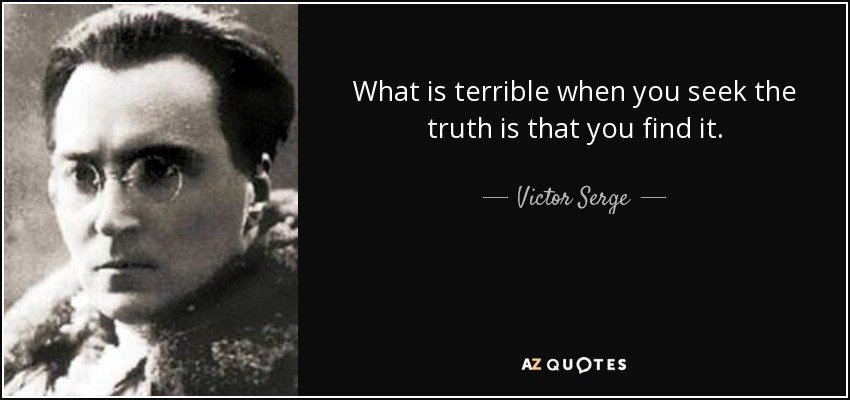
Memoirs of a Revolutionary by Victor Serge

January 28, 2022 by Barry J. Klazura No Comments

Victor Serge (1890-1947) was born Victor Lvovich Kibalchich to Russian anti-Tsarist exiles and grew up in Brussels where he mingled with socialist, anarchist, unionists, etc.  Leaving home while in his teens, he lived in a French mining village and then in Paris.  He became an anarchist and editor of a like-minded paper and after refusing to testify against comrades who participated in an anarchist action, was sentenced to five-years in prison.

When released in 1917, he traveled in 1919 to Russia then in the midst of a civil war.  From this point on, his description of the Civil War, bloody elimination of factions opposed to the Communists, the excesses of the Cheka, the Kronstadt Rebellion is one of the best descriptions of that period on record.  Still an anarchist, he is allowed to edit several papers (until the Communist close them down) and can participate in governmental conferences until the Communists begin to turn on their own.  Intra-party fighting pits Left Opportunists against Right Opportunist, Left and Right Deviationist against each other and of course, the anarchists against all the above.  Unlike John Reed’s classic (but dry and pro-Party book), Serge gives us a real feeling of the ever-changing forces and factions as the Communists attempt to solidify their hold on the world’s largest country.

Continue reading
Share:
Reading time: 2 min
American Civil War, Book Reviews

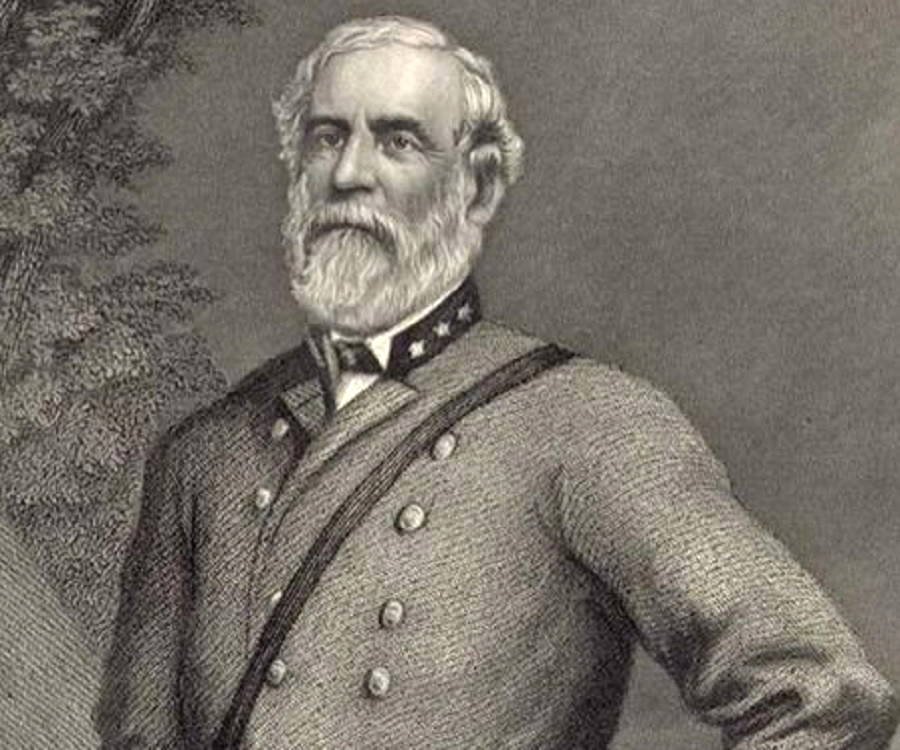
Robert E. Lee, a Life by Allen C. Guelzo

January 25, 2022 by Barry J. Klazura No Comments

At the end of last November, I posted a review by Victor David Hanson of the new biography by Allen C. Guelzo. I purchased the book although I thought I was familiar with Lee’s life, but I was very pleasantly surprised by this book. Although the author considers Lee a traitor, he is very even handed and treat Lee as a man full of doubts, cares, and desires so that you feel a connection with Lee.

Lee had his own devils, including adoring his father, Henry Lee, a hero of the Revolutionary War, also known as “Light Horse Henry,” for his daring wartime actions. A failed land speculator, Henry left his son early to escape creditors and each time Lee looked at a business venture, he always saw the image of his failed father over his shoulders. Those land failures were also at the base of Lees’ constant concern about money and attempts to safeguard his families’ small holdings in Virginia. In turn, those concerns were part of his reason to side with the Confederacy during the war. He was devastated when Arlington, his father-in-laws property (todays Arlington Cemetery) was seized by Federal troops, and he realized after the war that the property would never be his in anything except a dream and a memory.

Although we tend to think of Lee as a military man, he had never commanded troops in battle until the outbreak of the war and he was at heart, an engineer. Several times he thought of leaving the military with its low pay, slow promotion, and postings which he disliked (including Superintendent of West Point Academy). Each time, he pulled back due to the security of the army and its steady paycheck.

Continue reading
Share:
Reading time: 3 min
Book Reviews

The Yacoubian Building by Alaa Al Aswany

January 19, 2022 by Barry J. Klazura No Comments

This is a fine novel, filled with interesting characters, well developed and all connected through their living in the Yacoubian building, a large, multi-family building that has seen better days in Cairo. From the street level to the roof where many families make their home, we trace the daily struggles, small victories, and disappointments which we could fine in any large city today. That is part of the beauty of this novel, for we sometimes forget that it does not matter if we look at Cairo, Paris, Tokyo, that the human condition is in the end, the same. And, it has not changed that much throughout history.

We find an idealistic young man whose dreams of become a police officer are crushed due to the fact that his father is a common man; in response, he becomes radicalized. There is an aging playboy who is rolled by his latest “sweetheart,” demonized by his sister and faces an uncertain future. A Christian shirtmaker who dreams of making the finest shirts in Cairo and the wealthy businessman who reaches too high. The female characters work and dream of the same things as in the West and face the same hurdles with a bravery that equals that of any individual around the world who faces poverty and few opportunities.

If you have never been to Egypt (visit, it is a fantastic nation filled with wonderful people), this little novel will open the country to you and make you feel at home.

The author has published other successful books, but he makes his living as a dentist in Cairo. The stories are based on the location and characters that he has known through his life and perhaps that is why you will feel so close to them; he writes about them with a feeling of respect and love.

If you are looking for a bit of escape, invest some time in this little gem.

Share:
Reading time: 1 min
Book Reviews

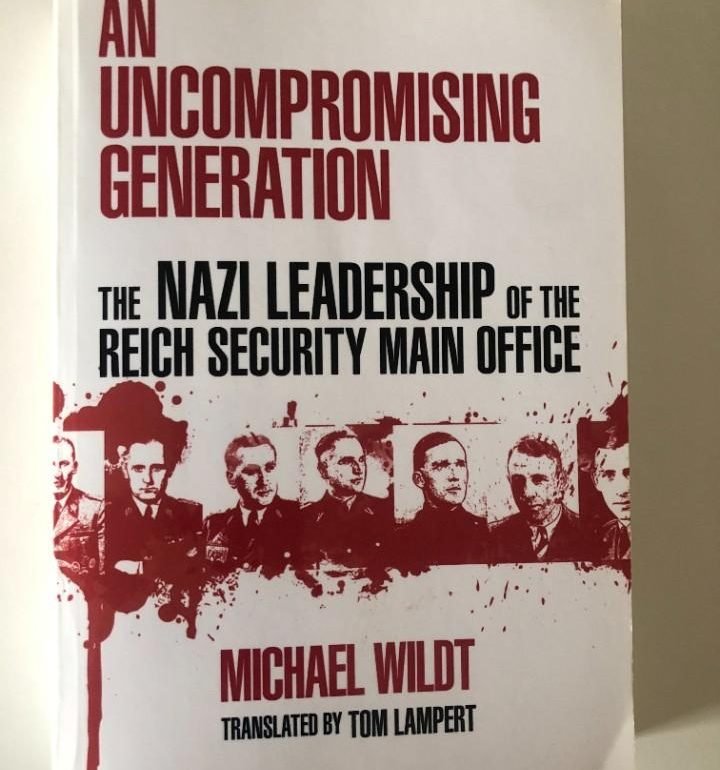
An Uncompromising Generation: The Nazi Leadership of the Reich Security Main Office by Michael Wildt and Tom Lampert (translator)

January 10, 2022 by Barry J. Klazura No Comments

When the Cold War ended, many felt that it signified the end of totalitarianism and dictatorship. The world would move forward into a new age where individuals and societies would be freer to determine their futures. As we have seen however, there are those societies and individuals who seem to have chosen to continue along the path which limits the freedom of the individual and seeks to continue what is the main course of human history, that of strong leaders who believe they have found the true path to a better world as outlined by their own vision, paranoia and sense of victimhood.

Are the visions of the leaders of Russia, China, Turkey, North Korea, and others simply anomalies or do they reflect a natural inclination of mankind? How is it that leaders can be supported as they move to limit freedoms, begin to imprison opponents, and even move toward genocide, often of their own citizens? This book allows us to learn from the past and see how it is often those who are considered the “best and the brightest” to begin to move down the path of tyranny and destruction.

From my reading of the subject, this is the best history of the RSHA which incorporated the SD, Gestapo, and the Criminal Police and provided the leadership for the killing squads that roamed through Europe from the invasion of Poland in September 1939 until late in the war.

     Unlike the popular image of the SA, the street enforcers of the Nazis especially prior to the “revolution” when Hitler rode into power, much of the leadership of the RSHA came out of the university student unions which gained such power after WWI. Today, at many of our universities, we see leftist demonstrations aimed at seizing administrative power at all levels, blocking dissenting views, demanding the ouster of “unenlightened” professors, etc. But in the 1930’s it was the right wing at the universities which interrupted lectures, led massive demonstrations and frequently started violent conflicts with those who dared to challenge them. Although most of the students had little contact with Jews, by 1930 only a couple of fraternities accepted Jews as members and the anti-Semitism was directed not only at students but also professors and administrators.

     With the Nazi seizure of power, leading students joined first the SA, then moved into the SS and were transferred to the RSHA. Many had received their doctorates in law and were perfectly trained to administer the ever-expanding realm of the RSHA.

     Totalitarian states such as Nazi Germany and the Soviet Union operate on several levels. You have the official state apparatus which is called the “Normative State” and then you have the “Prerogative State” which exists and operates outside the normal boundaries of the State and Society. The “Prerogative State” consists of paramilitary militias, the secret police, informers, etc. Both Nazi Germany and the Soviet Union relied on the police to maintain control and not the army (which was co-opted, infiltrated, etc.). The real rule of the secret police, according to Hanna Arendt, begins when domestic opposition (traditional political foes) ends (usually through extermination) and then the search for “objective” foes begins.

    This is an excellent book for those who are genuinely interested in this subject. It traces numerous individuals, often from their university days through their movement within the RSHA. With no indication of previous thoughts or actions, top university students move from studies to anti-Semitism to active participation in the shooting of hundreds, then thousands, then tens of thousands of men, women, and children. And in the end, after the war, the overwhelming majority went back to Germany and led ordinary lives. Some became government officials in post-war Germany while others became police officials and even members of the bar. How those men who had ordered and participated in the slaughter of thousands could escape any form of retribution is due in part to the post-war fear of the Soviet Union, the efforts of the average Germans to deny any knowledge of crimes and blame it all on the highly visible SS, the ignorance of the victors about the organization of the Nazi state and smart politicians such as Konrad Adenauer who managed to play East against West in his effort to resurrect the new German state.

Thousands of youthful, idealistic minds were bent to oppressing others all in the name of a greater good. It should serve as a lesson to responsible adults that youth throughout history are more easily led by demigods and that indulging them in their folly without adult guidance can lead to terrible, even deadly consequences.

     This is not an easy book to read as it is extremely detailed, and the novice will quickly be lost in the details. But for anyone interested in this fascinating subject, it is well worth the effort.


Share:
Reading time: 4 min
Book Reviews

Between Remembrance and Denial: The Fate of the Jews in the Wars of the Polish Commonwealth During the Mid-Seventeenth Century As Shown in Contemporary Writings and Historical Research

December 1, 2021 by Barry J. Klazura No Comments

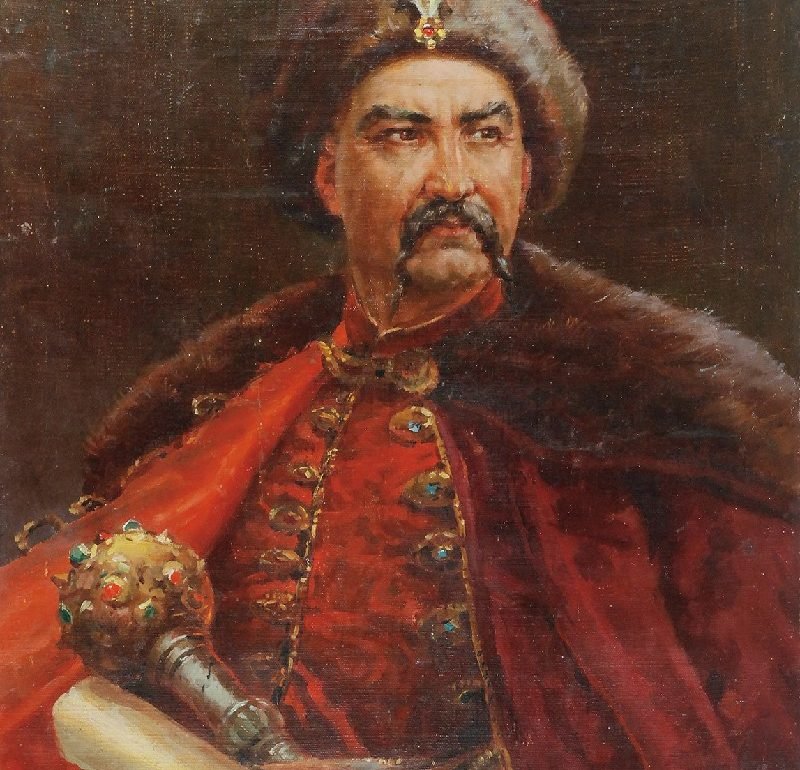
In the mid-seventeenth century in the Polish Commonwealth (at that time the largest nation in Europe), a terrible war broke out between the Cossacks let by Bohdan Chmielnicki (a national hero of the Ukraine) and the Poles. The Cossacks, long time allies of the Poles in battles against the forces of Islam had become alienated from the Poles due in part to the actions of the great Polish magnates, the differences in religion (Catholics vs. Orthodox), the Cossacks and Ukrainian view of being exploited by the Jews brought in by the magnates and a lack of opportunity for plunder by the peace between the Commonwealth and Islam.

The ensuing war lasted about nine years during which much of the Ukraine, parts of Poland and Lithuania were laid to waste as hundreds of thousands were killed in battles, sieges, and local slaughter. Invited into the Ukraine by the Cossacks, both Tartars and Turks rampaged across the land and took so many prisoners that the slave prices in the Crimea and Constantinople were drastically lowered.

Continue reading
Share:
Reading time: 3 min
American Civil War, Book Reviews

On and Off the Pedestal, a New Biography of Robert E. Lee

November 29, 2021 by Barry J. Klazura No Comments

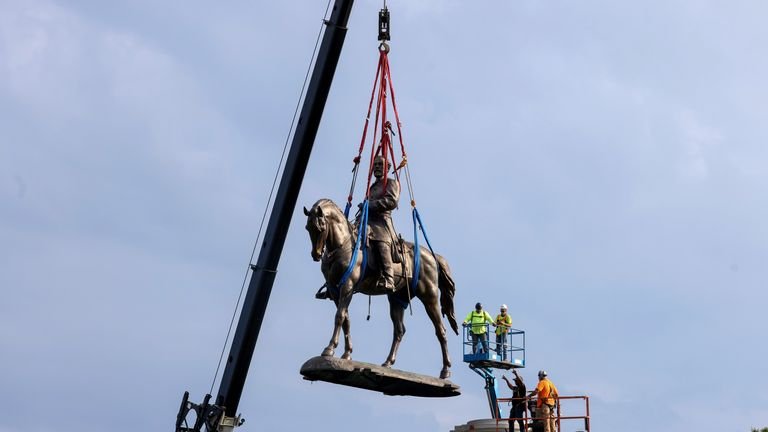
Victor David Hanson has published an excellent review of Robert E. Lee: A Life by Allen C. Guelzo. After the destruction of so many statues by the Woke Left, this seems to be a balanced scholarly examination of Lee who was considered as an icon for many in the South, the military and Civil War Historians.

I have always been skeptical of the leadership of Lee, as he was slow to learn the destructive fire power of state-of-the-art military hardware. General Longstreet understood the brutality of the weapons of the time before Lee as was proven by his reluctance to commit General Pickett to the suicidal charge at Gettysburg. Somehow, Lee failed to understand that the war had turned into a war of men against machines and that the South was doomed if Lee practiced a type of warfare that belonged to the previous century (this mistake would be repeated fifty years later by both the French and Germans during the opening phases of World War I). Amazingly enough, he failed to realize that even if the charge were successful, he had no reserves to consolidate any gains while his opponent who outnumbered him, could quickly move in reinforcements to swamp the tattered remains of his divisions.

Continue reading
Share:
Reading time: 1 min
Book Reviews

Wellington, the Path to Victory, 1769-1814 by Rory Muir

November 12, 2021 by Barry J. Klazura No Comments

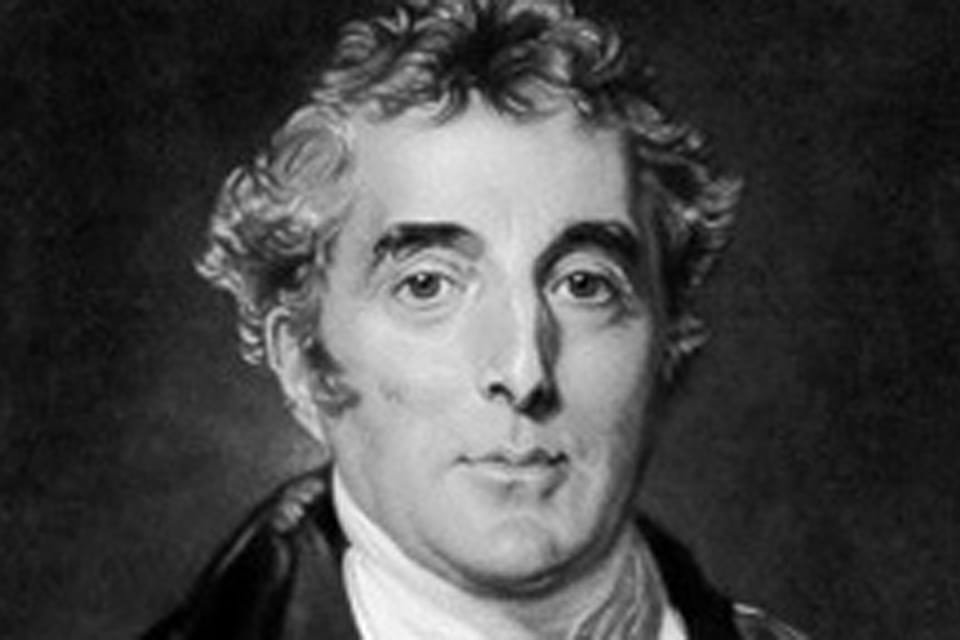
A massive biography which covers the first half of Wellington’s life. Not being the first son, he was relegated to joining the military (under British custom, the first son inherited the title, the second went to the military and the third son entered the Church of England).

As was common at the time, Wellington had an unhappy childhood and like many men of that time, he made his mark and fortune in India. His military victories and diplomatic skill in India allowed him to assume command in the Peninsula during the Napoleonic wars where he reorganized the army of Portugal and created the famous defensive lines which the French under a number of Napoleon’s generals refused to attack. In a series of brilliant maneuvers, he out generaled every force sent against him as he slowly pushed the French out of the entire peninsula. That does not mean that he had an easy time as Napoleon poured men and material into the fight, but his real struggle was with various politicians and powers in London who were jealous of his successes and who kept Wellington’s forces on a strict leash.

Continue reading
Share:
Reading time: 1 min
Book Reviews

The Deluge by Henryk Sienkiewicz

November 5, 2021 by Barry J. Klazura No Comments

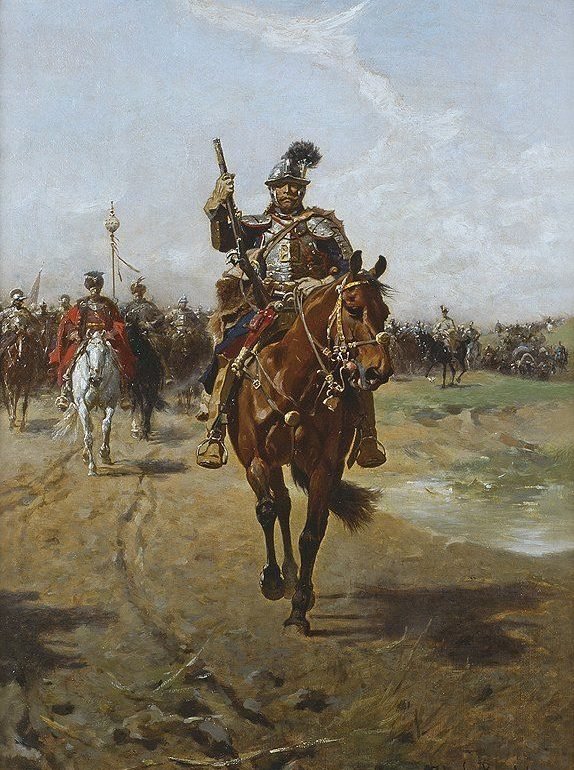
Imagine that it is about 1850 in the United States and the British, who have the finest army in the world, invade the U.S. through the East Coast. The citizens of the area who have not been threatened by any enemies since the war of 1812 are more interested in trade and welcome the invaders who promise more states rights and low taxes. Additionally, the great slave holder families of the South provide monetary and physical support to the British invaders. Meanwhile, in the West, the small U.S. army faces an uprising of all the Indian tribes but this time they are united and number two hundred thousand. Additionally, the Mexican army joins the Indians and begin a campaign of pillage and murder across the southwest U.S. Only small groups of soldiers remain faithful to the central government, but they form the basis for a national renewal that eventually drives the British out and pushes back and punishes the Indian and Mexican forces. Large parts of the nation are desolated with farms destroyed and hundreds of towns and villages burned to the ground. Now switch this scenario to the Polish Commonwealth in the mid-eighteenth century.

Instead of the British invading, you have the Swedish army, the finest in Europe and victors during the terrible Thirty Years War. Instead of the Indians, you have the Cossacks, and the Mexicans are really the Tartars who are invited in by the Cossacks. Tens of thousands are killed as Ukrainian peasants join the Cossacks, attack the Poles, and slaughter the Jews who are seen as oppressive minions of the Polish overlords (in fact, until the Holocaust of 1939-45, this time was remembered in Jewish history as the greatest Jewish tragedy since Biblical times). Meanwhile, the Tartars capture a hundred thousand Ukrainian peasants and march them off to the Crimea where they were sold as slaves in the vast slave markets. To make matters worse, the most powerful Lithuanian prince helps the Swedes while the Russians stand on the border, ready to invade when the Poles are finally defeated.

Continue reading
Share:
Reading time: 3 min
Book Reviews

Brothers, Rivals, Victors by Jonathan W. Jordan

November 1, 2021 by Barry J. Klazura No Comments

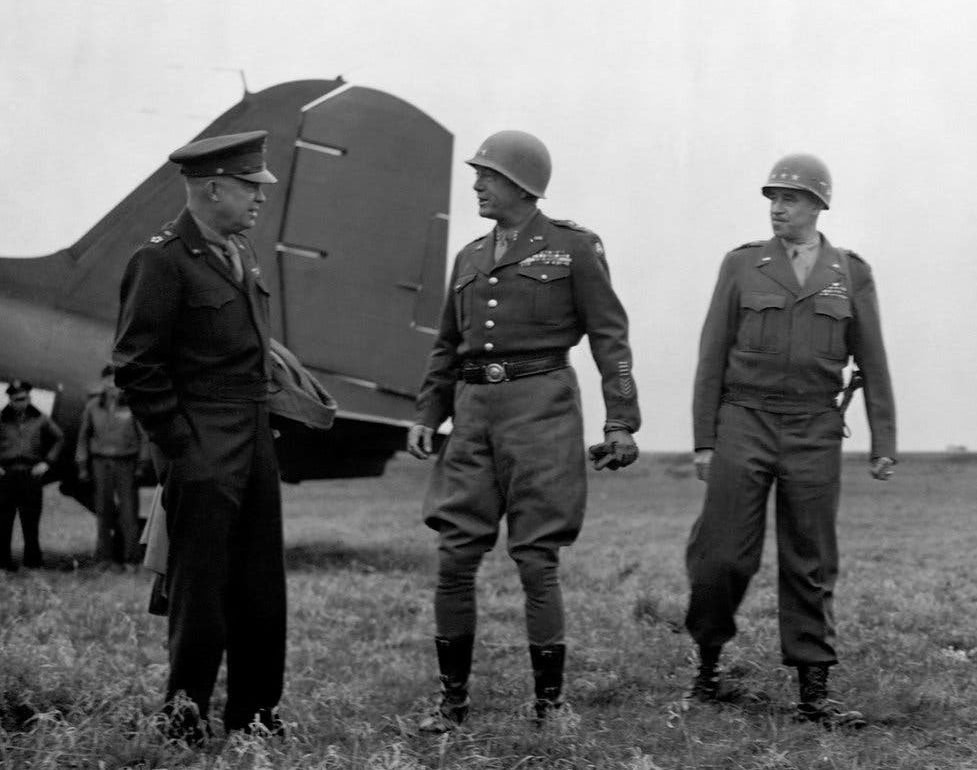
Eisenhower, Bradley, and Patton are names which will stand for the Allied victory in Western Europe during World War II.  But who were these men, what were their backgrounds, how were they picked to hold their commands and finally, how secure were they in those commands.  Mr. Jordan does an excellent job in answering these and other questions in a concise and excellent manner.  These men did not suddenly appear with stars on their shoulders with full knowledge of their craft; they served decades in backwater posts, seemingly forgotten, grinding out their lives (and the lives of their families) believing that they might never practice what they were learning.

Then came World War II, but more importantly, a man by the name of Marshall, George C. Marshall.  He was charged with creating from a puny, ill equipped army a force that could fight around the world, something that no one and no country had ever done.  Breaking the careers of several hundred generals, Marshall had the ability to reach into corners of the military and find individuals who had spent up to twenty years in obscure posts due to tight budgets, their thinking outside of the military “box”, etc.

Continue reading
Share:
Reading time: 3 min
Book Reviews

With Fire and Sword by Henryk Sienkiewicz

October 19, 2021 by Barry J. Klazura No Comments

When I was a little boy, my Grandmother will tell me stories of when she was a young woman in Warsaw Poland; how the young girls would flirt with the Russian soldiers who occupied the city, how she hesitated to go out at night as the Cossacks made it a habit to ride down the street, striking anyone with their nagaikas unless they were really drunk in which case they used their swords on anyone in their way, etc.  One thing she especially remembered, was that a chapter of Sienkiewicz’s epic novel, With Fire and Sword was serialized in the Warsaw newspapers and there was always a rush to purchase a copy; it was the Netflix of its day.

Sienkiewicz would win the Nobel Prize for literature in 1905 for his novel which took place in seventeenth century Poland, when Poland was the largest country in Europe. Sweeping across the steppes, it is an adventure story centered on the Cossack revolt which was led by Bohdan Hmyelnitzki (also spelled Khmelnytsky). The Cossacks aligned themselves with the Tartars and Great Khan of the Crimea and the revolt which lasted off and on for several years, was only one of numerous wars fought in what is today the Ukraine, Byelorussia, and what was prior to World War II, eastern Poland. It was the bloodiest of the revolts and was responsible for the largest number of Jewish deaths until the Holocaust. The Cossacks encouraged the native Ukrainian population to join the revolt and Poles and Jews alike were hunted down and killed in their tens of thousands. While the Ukrainians were used as cannon fodder by the Cossacks, who looked down on the Ukrainians, the Tartars were given free rein to capture as many Ukrainians as possible who were then forced to walk to the slave markets in the Crimea and beyond.

Continue reading
Share:
Reading time: 3 min
Page 15 of 28« First...10«14151617»20...Last »

Barry J. Klazura

Barry Klazura sipping grappa

With a Masters Degree in Guerrilla Warfare and Totalitarianism, Mr. Klazura was well prepped for a career in Sales and General Management, consulting on corporate startups and turnarounds as well as lecturing on history and politics.  For the past twenty years he has focused on being a financial advisor and consulting.

Delivered To Your Inbox

Sign up to get an email when a new article is published.

Topics

  • American Civil War
  • Biography
  • Book Reviews
  • Cigar Reviews
  • Coronavirus
  • Current Affairs
  • Education
  • Environment
  • Factoids
  • Government
  • Lifestyle, Cigars & More
  • Liquid Refreshments
  • Musings
  • Quips and Historical Facts
  • Society
  • Travel
  • Uncategorized
  • World War I

Subjects

book Books-Russia/Soviet Union Books 21st Century Books 1919-2000 Books Ancient to 1900 Books Asia Books Biography Books Fiction Books Germany 1919-1945 Books Pre-WWI books Viet Nam books world war I Books WW1 Books WWI Books WWII Cigar Friendly Location Amsterdam Cigar Friendly Locations-London Cigar Friendly Locations-New Orleans Cigar Friendly Locations-New York Civil War Coronavirus Environment Korean War World War I World War One

Recent Articles

The Party: the Secret World of China’s Communist Rulers by Richard McGregor

The Party: the Secret World of China’s Communist Rulers by Richard McGregor

August 20, 2026
Europe’s Military Failure

Europe’s Military Failure

Breaking History by Jared Kushner

Breaking History by Jared Kushner

August 10, 2026
As Alice would say: “Yes Toto, DOGE is alive and well.”

As Alice would say: “Yes Toto, DOGE is alive and well.”

March 23, 2026
To the Gate of Hell by Armin Bottger

To the Gate of Hell by Armin Bottger

March 19, 2026

Inquiries and Comments

For general inquiries and comments, email AOTOHcomments@gmail.com.

Facebook
© 2020 And On The Other Hand. All rights reserved.