On The Other Hand -
Book Reviews
Lifestyle, Cigars & More
Musings
About
On The Other Hand -
  • Book Reviews
  • Lifestyle, Cigars & More
  • Musings
  • About
Book Reviews

Between Remembrance and Denial: The Fate of the Jews in the Wars of the Polish Commonwealth During the Mid-Seventeenth Century As Shown in Contemporary Writings and Historical Research

December 1, 2021 by Barry J. Klazura No Comments

In the mid-seventeenth century in the Polish Commonwealth (at that time the largest nation in Europe), a terrible war broke out between the Cossacks let by Bohdan Chmielnicki (a national hero of the Ukraine) and the Poles. The Cossacks, long time allies of the Poles in battles against the forces of Islam had become alienated from the Poles due in part to the actions of the great Polish magnates, the differences in religion (Catholics vs. Orthodox), the Cossacks and Ukrainian view of being exploited by the Jews brought in by the magnates and a lack of opportunity for plunder by the peace between the Commonwealth and Islam.

The ensuing war lasted about nine years during which much of the Ukraine, parts of Poland and Lithuania were laid to waste as hundreds of thousands were killed in battles, sieges, and local slaughter. Invited into the Ukraine by the Cossacks, both Tartars and Turks rampaged across the land and took so many prisoners that the slave prices in the Crimea and Constantinople were drastically lowered.

Continue reading
Share:
Reading time: 3 min
American Civil War, Book Reviews

On and Off the Pedestal, a New Biography of Robert E. Lee

November 29, 2021 by Barry J. Klazura No Comments

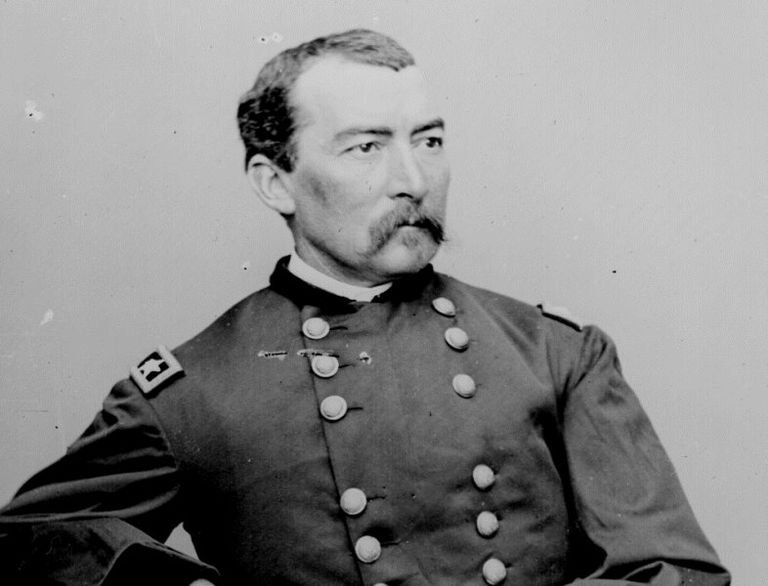
Victor David Hanson has published an excellent review of Robert E. Lee: A Life by Allen C. Guelzo. After the destruction of so many statues by the Woke Left, this seems to be a balanced scholarly examination of Lee who was considered as an icon for many in the South, the military and Civil War Historians.

I have always been skeptical of the leadership of Lee, as he was slow to learn the destructive fire power of state-of-the-art military hardware. General Longstreet understood the brutality of the weapons of the time before Lee as was proven by his reluctance to commit General Pickett to the suicidal charge at Gettysburg. Somehow, Lee failed to understand that the war had turned into a war of men against machines and that the South was doomed if Lee practiced a type of warfare that belonged to the previous century (this mistake would be repeated fifty years later by both the French and Germans during the opening phases of World War I). Amazingly enough, he failed to realize that even if the charge were successful, he had no reserves to consolidate any gains while his opponent who outnumbered him, could quickly move in reinforcements to swamp the tattered remains of his divisions.

Continue reading
Share:
Reading time: 1 min
Book Reviews

Wellington, the Path to Victory, 1769-1814 by Rory Muir

November 12, 2021 by Barry J. Klazura No Comments

A massive biography which covers the first half of Wellington’s life. Not being the first son, he was relegated to joining the military (under British custom, the first son inherited the title, the second went to the military and the third son entered the Church of England).

As was common at the time, Wellington had an unhappy childhood and like many men of that time, he made his mark and fortune in India. His military victories and diplomatic skill in India allowed him to assume command in the Peninsula during the Napoleonic wars where he reorganized the army of Portugal and created the famous defensive lines which the French under a number of Napoleon’s generals refused to attack. In a series of brilliant maneuvers, he out generaled every force sent against him as he slowly pushed the French out of the entire peninsula. That does not mean that he had an easy time as Napoleon poured men and material into the fight, but his real struggle was with various politicians and powers in London who were jealous of his successes and who kept Wellington’s forces on a strict leash.

Continue reading
Share:
Reading time: 1 min
Book Reviews

The Deluge by Henryk Sienkiewicz

November 5, 2021 by Barry J. Klazura No Comments

Imagine that it is about 1850 in the United States and the British, who have the finest army in the world, invade the U.S. through the East Coast. The citizens of the area who have not been threatened by any enemies since the war of 1812 are more interested in trade and welcome the invaders who promise more states rights and low taxes. Additionally, the great slave holder families of the South provide monetary and physical support to the British invaders. Meanwhile, in the West, the small U.S. army faces an uprising of all the Indian tribes but this time they are united and number two hundred thousand. Additionally, the Mexican army joins the Indians and begin a campaign of pillage and murder across the southwest U.S. Only small groups of soldiers remain faithful to the central government, but they form the basis for a national renewal that eventually drives the British out and pushes back and punishes the Indian and Mexican forces. Large parts of the nation are desolated with farms destroyed and hundreds of towns and villages burned to the ground. Now switch this scenario to the Polish Commonwealth in the mid-eighteenth century.

Instead of the British invading, you have the Swedish army, the finest in Europe and victors during the terrible Thirty Years War. Instead of the Indians, you have the Cossacks, and the Mexicans are really the Tartars who are invited in by the Cossacks. Tens of thousands are killed as Ukrainian peasants join the Cossacks, attack the Poles, and slaughter the Jews who are seen as oppressive minions of the Polish overlords (in fact, until the Holocaust of 1939-45, this time was remembered in Jewish history as the greatest Jewish tragedy since Biblical times). Meanwhile, the Tartars capture a hundred thousand Ukrainian peasants and march them off to the Crimea where they were sold as slaves in the vast slave markets. To make matters worse, the most powerful Lithuanian prince helps the Swedes while the Russians stand on the border, ready to invade when the Poles are finally defeated.

Continue reading
Share:
Reading time: 3 min
Book Reviews

Brothers, Rivals, Victors by Jonathan W. Jordan

November 1, 2021 by Barry J. Klazura No Comments

Eisenhower, Bradley, and Patton are names which will stand for the Allied victory in Western Europe during World War II.  But who were these men, what were their backgrounds, how were they picked to hold their commands and finally, how secure were they in those commands.  Mr. Jordan does an excellent job in answering these and other questions in a concise and excellent manner.  These men did not suddenly appear with stars on their shoulders with full knowledge of their craft; they served decades in backwater posts, seemingly forgotten, grinding out their lives (and the lives of their families) believing that they might never practice what they were learning.

Then came World War II, but more importantly, a man by the name of Marshall, George C. Marshall.  He was charged with creating from a puny, ill equipped army a force that could fight around the world, something that no one and no country had ever done.  Breaking the careers of several hundred generals, Marshall had the ability to reach into corners of the military and find individuals who had spent up to twenty years in obscure posts due to tight budgets, their thinking outside of the military “box”, etc.

Continue reading
Share:
Reading time: 3 min
Book Reviews

With Fire and Sword by Henryk Sienkiewicz

October 19, 2021 by Barry J. Klazura No Comments

When I was a little boy, my Grandmother will tell me stories of when she was a young woman in Warsaw Poland; how the young girls would flirt with the Russian soldiers who occupied the city, how she hesitated to go out at night as the Cossacks made it a habit to ride down the street, striking anyone with their nagaikas unless they were really drunk in which case they used their swords on anyone in their way, etc.  One thing she especially remembered, was that a chapter of Sienkiewicz’s epic novel, With Fire and Sword was serialized in the Warsaw newspapers and there was always a rush to purchase a copy; it was the Netflix of its day.

Sienkiewicz would win the Nobel Prize for literature in 1905 for his novel which took place in seventeenth century Poland, when Poland was the largest country in Europe. Sweeping across the steppes, it is an adventure story centered on the Cossack revolt which was led by Bohdan Hmyelnitzki (also spelled Khmelnytsky). The Cossacks aligned themselves with the Tartars and Great Khan of the Crimea and the revolt which lasted off and on for several years, was only one of numerous wars fought in what is today the Ukraine, Byelorussia, and what was prior to World War II, eastern Poland. It was the bloodiest of the revolts and was responsible for the largest number of Jewish deaths until the Holocaust. The Cossacks encouraged the native Ukrainian population to join the revolt and Poles and Jews alike were hunted down and killed in their tens of thousands. While the Ukrainians were used as cannon fodder by the Cossacks, who looked down on the Ukrainians, the Tartars were given free rein to capture as many Ukrainians as possible who were then forced to walk to the slave markets in the Crimea and beyond.

Continue reading
Share:
Reading time: 3 min
Book Reviews

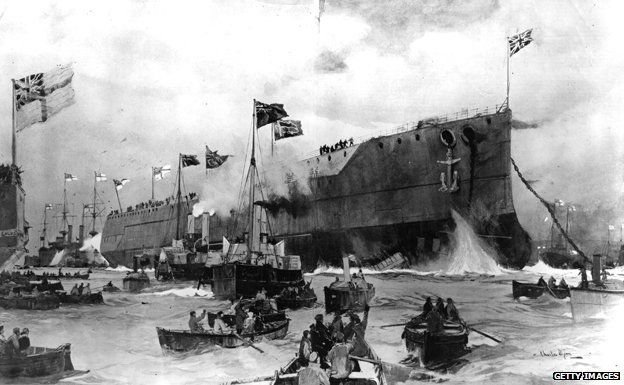
Castles of Steel and Dreadnought by Robert K. Massie

October 14, 2021 by Barry J. Klazura No Comments
Continue reading
Share:
Reading time: 3 min
Book Reviews

Allianz and the German Insurance Business, 1933-1945

October 8, 2021 by Barry J. Klazura No Comments

Not exactly the most exciting title for a book, I am sure it would have sold better if it were “The Company Who Insured the Concentration Camps.”  But despite its droll title, the book can be interesting in realizing that even in a totalitarian regime such as Hitler’s, the reality of business must go on.

Dr. Feldman commissioned in 1997 by the Board of Management of Allianz (the world’s largest insurance company) to author the story of Allianz during the war.  He states that he the company was fully co-operative and given his intellectual credentials, I take the book to be accurate and balanced. Allianz, along with a number of other European insurance companies was being charged in a number of class action lawsuits regarding how they discharged their duties to Jewish policy holders. Additionally, there were newspaper stories regarding how Allianz insured various SS-owned factories in concentration camps. Questions were being raised in several quarters regarding how closely Allianz worked with the Nazi regime and how Kurt Schmitt who the general director of Allianz between was 1921-33 became Hitler’s second Reich Economics Minister between 1933-34.

Before accepting the commission, Dr. Feldman (a distinguished professor at Berkeley) insisted that he have access to all records, individuals, etc., and Allianz to its credit provided free access to any materials which had survived the war. But the task was huge as man companies which did business with the Nazi regime tried to paint themselves as victims of the regime and as being held hostage to the rules and polices of that time. Indeed, the same questions which were asked of individuals who lived under such a regime (the degree of collaboration or resistance too) were being asked of companies throughout occupied Europe.

Finally, the life and times of an insurance company is not the most exciting topic for the average historian, even one interested in economic history. Yet, Dr. Feldman does an admirable job of taking the reader through Board meetings, national conferences with the major Nazi players, the fights for business, how claims for Kristallnacht Nacht were handled (the Party did not want the Jews compensated and wanted to seize the funds which would have been compensation, the insurance companies were reluctant to pay claims as the action was “political” and thus outside of the policies borders,  the economists were upset that replacing the broken glass which largely came from Belgium put a drain on foreign currency reserves which impacted the build-up of the military), etc. Meetings between the insurance companies, Goring, Goebbels, etc. were lengthy and often heated until a compromise was hammered out.

We also see the problem of the Jewish employees of Allianz; the regime put increased pressure on Allianz to fire Jewish salesmen, clerks, etc. Then when Allianz continued to pay the fired agents for the commissions on their business, the regime began to take aim at Allianz for not in effect, boycotting Jewish business. Again, lengthy meetings at several governmental levels with numerous agencies.

As the war went on and new territories were occupied, Allianz and other German insurance firms raced to buy up the insurance firms in Poland, France, etc. Indeed, as late as April 1945, just one month from the collapse of Nazi Germany, some insurance companies were trying to expand in territories about to be occupied by the Soviets! As many of the employees of Allianz were military age, most were called up to serve in the armed services. Should drafted salesmen continue to be paid their commissions when someone else must service their accounts? How were clerical personnel to be replaced and trained when most of the replacements were retired or disabled and not up to the physical demands of the job (the company continued to operate from its various offices throughout the bombing raids).

In the end, the book is an interesting business book as the demands of a war and regime that was not exactly business savvy gives us a glimpse into the everyday problems of a company like Allianz. The reading can be harder as there are so many individuals of whom the reader will never again run across so who reports to who in which department can be difficult.

So, the question is: did Allianz co-operate with the Nazi regime during that period and did they in fact insure various facilities at the concentration camps. Yes, and yes with caveats; they co-operated to continue as did hundreds of other companies and millions of individuals. There is no indication that. y financed the Party (unlike Krupp and others) nor did the management participate in the racial or other political goals of the time. They did employ for as long as possible Jewish employees, paid them their commissions, etc., and tried to continue their pre-war drive to create an Allianz set of corporate-employee values.

An interesting book if you have the patience and a score card to keep track of the players.

Share:
Reading time: 4 min
Book Reviews

A Classic Russian Trilogy by Anatoli Rybakov

October 4, 2021 by Barry J. Klazura No Comments

About once every decade I treat myself to Anatoli Rybakov’s wonderful trilogy (Children of the Arbat, Fear and Dust and Ashes). Rybakov himself, like his main character, Sasha, was arrested in 1933 and sent to Siberia for three years. That was before the main Stalinist terror and purges which only a couple of short years later would have merited a term of ten or twenty years. After his release, he was barred from most major cities as his internal passport showed that he had been convicted of a crime against the state. Working odd jobs, he was called up into the army after the German invasion of 1941and was twice decorated. After the war, he continued to write but it was not until Gorbachev and glasnost that the first of his trilogy was published at which time, he won international fame. He continued to write until his death in December 1999 at the age of eighty-seven.

The trilogy traces some of the idealistic youth of the early 1930s in the Soviet Union, as they hoped for a better future. Most were members of the Soviet youth movement, the Komsomol which served as a propaganda arm of the Party, aimed at molding strong Soviet citizens. The book traces the lives of various members, such as Sasha who was convicted of anti-Soviet propaganda when his poster at school was deemed to mock various Party members at his school. Some students keep their belief in the Party, one becomes a member of the NKVD and manages to survive the great purge of the secret police while another is thrown into poverty when her high Party ranking father is arrested in the middle of the night.

Continue reading
Share:
Reading time: 3 min
Book Reviews

Where the Jews Aren’t by Marsha Gessen

September 24, 2021 by Barry J. Klazura No Comments

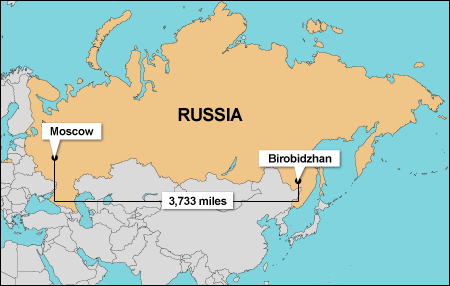
In 1929, the Soviet government decided to create a Soviet homeland for Jews.  The Jews who had been forced under the Tsars to live “beyond the Pale” could finally have their own homeland, free from oppression, pogroms, etc., and create a wonderful Soviet paradise.  The only problem was, that the area afforded the Jews, Birodidzhan, an area of 14,800 squa miles (Israel encompasses 9,800 square miles) made current day pre-Israel land look like a garden of paradise.  With little water, forested mountains, swamps, many bugs and wild animals, few roads and no natural resources, it offered little to Jews who migrated there, mostly from the cities of the Soviet Union.  Ill prepared for frontier life (many settlers were artists, poets, etc.), many gave up when they realized that there were no paved roads, few buildings (most “settlers” lived in tents) and little if any help from the central government.

Continue reading
Share:
Reading time: 1 min
Page 16 of 29« First...10«15161718»20...Last »

Barry J. Klazura

Barry Klazura sipping grappa

With a Masters Degree in Guerrilla Warfare and Totalitarianism, Mr. Klazura was well prepped for a career in Sales and General Management, consulting on corporate startups and turnarounds as well as lecturing on history and politics.  For the past twenty years he has focused on being a financial advisor and consulting.

Delivered To Your Inbox

Sign up to get an email when a new article is published.

Topics

  • American Civil War
  • Biography
  • Book Reviews
  • Cigar Reviews
  • Coronavirus
  • Current Affairs
  • Education
  • Environment
  • Factoids
  • Government
  • Lifestyle, Cigars & More
  • Liquid Refreshments
  • Musings
  • Quips and Historical Facts
  • Society
  • Travel
  • Uncategorized
  • World War I

Subjects

book Books-Russia/Soviet Union Books 21st Century Books 1919-2000 Books Ancient to 1900 Books Asia Books Biography Books Fiction Books Germany 1919-1945 Books Pre-WWI books Viet Nam books world war I Books WW1 Books WWI Books WWII Cigar Friendly Location Amsterdam Cigar Friendly Locations-London Cigar Friendly Locations-New Orleans Cigar Friendly Locations-New York Civil War Coronavirus Environment Korean War World War I World War One

Recent Articles

At Stalin’s Side by Valentin Berezhkov

July 15, 2026
The Price of Victory by N.A.M. Rodger

The Price of Victory by N.A.M. Rodger

June 26, 2026
Frontsoldaten: The German Soldier in World War II by Stephen G. Fritz

Frontsoldaten: The German Soldier in World War II by Stephen G. Fritz

June 5, 2026
Organizer of Victory, 1943-1945, George C. Marshall by Forrest C. Pogue

Organizer of Victory, 1943-1945, George C. Marshall by Forrest C. Pogue

May 26, 2026
Illegals Released & Our Leaders

Illegals Released & Our Leaders

May 10, 2026

Inquiries and Comments

For general inquiries and comments, email AOTOHcomments@gmail.com.

Facebook
© 2020 And On The Other Hand. All rights reserved.