

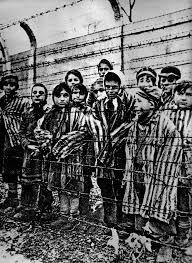
Bloodlands, Timothy Snyder’s monumental work has been complimented by Black Earth, The Holocaust as History and Warning. I must admit that I was initially put from this book due to numerous reviews which seemed to focus on one small portion of this work, that of trying to link the lessons of the Holocaust to climate change. Such a premise held no interest to me as the horrors documented in Bloodlands was the result of conscious decisions by political systems which denied the basic humanity of mankind, whereas the arguments re: climate change are open to sloppy science at the worse as well as subject to hyperbole (we only have twelve years left) which undercut the actual science.
Given the reviews, rather than purchase the book as I would do with any Snyder book, I found it during a cruise in the ship’s library. I was wonderfully surprised that ninety-eight percent of the book was an excellent historical work which consolidated and exposed many forgotten historical facts as well as providing a key analysis between the goals and policies of Hitler’s Germany, Poland and the Soviet Union not only leading up to the Holocaust but also the misconceptions of those three powers and how they impacted the course of history.
For years, Hitler’s Germany attempted to woo Poland into an alliance which would result in a joint German-Polish invasion of the Soviet Union; the goal was the fulfillment of Hitler’s dream of Lebensraum but also (as the Poles realized) making Poland a client state of Germany. For Stalin, the eliminate of Poland was key, in large part due to the Soviet’s defeat by the Poles in 1921 and Stalin’s part in the defeat, and to create a bigger buffer against Germany. For the Poles, caught between two more powerful neighbors, the key was to play one off against the other by having non-aggression pacts with both Germany and the Soviet Union.
While we tend to think of that period as ancient history, the seeds of policies from that time grew into the leaders and policies of much more recent history. One example is on part of the Promethean projects of the Polish government. One part was working with the Ukrainian resistance to free the Ukraine from Soviet domination which was discarded after the death of the Polish strongman Pilsudski, but the second part which dealt with the immigration of Poland’s Jews continued.
Many of the founders of Zionism were Polish citizens. Their goal was immigration to Palestine which was occupied by Arabs and ruled under mandate by the British. Centuries of exploitation and abuse by the Czar’s had certainly in itself provided fuel for such a dream. But while Jews in the Eastern rural districts of Poland were poor, those in the cities were much more assimilated. Up to seventy percent of professions in Warsaw for example, were chaired by Jews who viewed themselves as Poles. After Pilsudski’s death in 1935, the right-wing government of Poland instituted a two-pronged policy regarding the Jews; on one hand, a series of restrictions on new Jewish businesses in favor of Poles-a form of affirmative action, while working with Zionist leaders regarding movement to Palestine.
The policies included talking with the British to increase legal immigration to Palestine. It also included the arming and training of Jewish groups by Polish army officers so that either an armed invasion of Palestine could occur, or, if legal immigration were opened, the new Jewish settlers would be able to defend themselves. This program continued for years and developed both the Betar and Irgun organizations which became the miliary core of the new Israeli state as well as providing the political leaders of Israel. The proof of this is that Benjamin Netanyahu was the first Israeli PM who was not a graduate of the Polish trained Betar and Irgun camps (Menachem Begin, Yitzhak Shamir, Avraham Stern and many others were all graduates of the Polish Army camps).The close co-operation between the two was shown in Betar leader’s writings-which were in Polish, as well as the last flags flying during the uprising of the Warsaw ghetto were both the Jewish and Polish flags.
Another key point that Snyder brings to the discussion is the protection of individuals by the State. In Western Europe, Hitler kept the structure of the State while Stalin was careful to maintain-even if renamed, the basic structure of the occupied States. In the East however, Hitler did away with the structure of the state and with hit, every occupant became stateless. Stateless individuals do not have whatever protection citizens enjoy and thus have no legal recourse. This leads to seamless slave labor, murder by the occupying power, etc. Jews, Poles, Russians, Ukrainians, etc., all were left in a legal wasteland with no recourse and no voice. Snyder’s writing on this area is excellent and gripping; only the State can provide the basic protections to the individual (justice can easily be a different matter).
Snyder has once again created an outstanding historical work and in conjunction of Bloodlands are two books which if I were asked, “what should I read to have a basic understanding of the Holocaust” would be the first on the list. Black Earth is an informative and memorable work.






Leave a Comment