
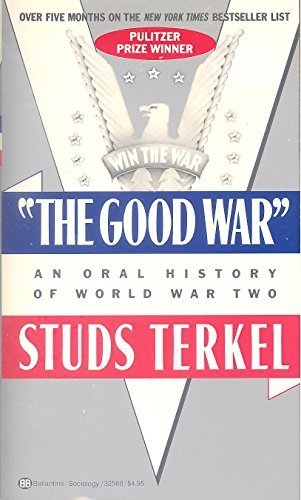
Studs Turkel was a legend in Chicago for decades. Known for his sharp wit and clear writing, he had a successful career as a bit actor, sport commentator, TV MC, writer, and social commentator. This book, one of many, won the Pulitzer Prize for General Non-Fiction in 1985. In it, he interviewed veterans from across the U.S., as well as civilians who worked in factories, hospitals, research labs and even some who were involved with the development of the atomic bomb. He offered a street eye view (which was his specialty) of how men and women felt about the war; the excitement, fear, hopes for the future and life played out for some and their views on the government and the Viet Nam war as their children went to fight their own war.
Despite the acclaim of this book, and the huge sales, I was disappointed; the interviews seemed to be divided between veterans, most of whom expressed their fears and excitement, the remembrance of the close bonds they felt for their comrades, some of whom became life long friends, and the non-combatants, many of them intellectuals and well paid factory workers who often seemed to be disgruntled by their experiences. Being a child of that generation, I saw this sharp divide. For example, when my parents went to their 50th high school reunion, each attendee was asked to write a short biography. I was amazed that every single male, except for my father, started his bio stating what he did in World War II (my father started his stating how long he and my mother had been married). That reflected the importance of the war to a generation of men who endured the poverty of the Depression and for whom, the military was the first time they had enough to eat.