
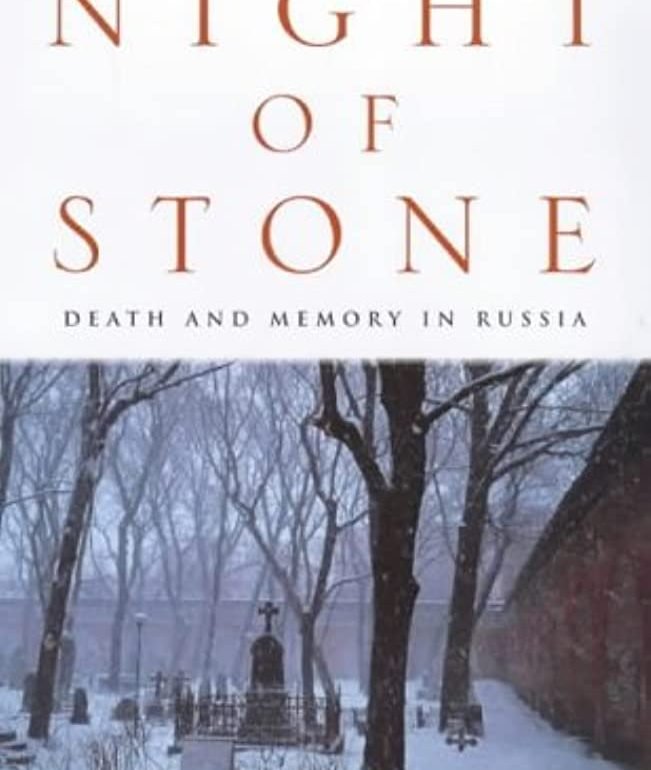
During the twentieth-century, Russia has suffered through two World Wars, a civil war, and numerous famines (both natural and manmade). The result was a population that suffered upwards of 70-100,000,000 million dead. This on top of a long history filled with carnage, tyranny and cruelty. The dead when they could be buried faced a bureaucracy which required numerous forms, not enough cemeteries (in the cities) and waiting times that could often lead to the literal rotting of the dead. During the siege of Leningrad, the dead were warehoused during the winter as the ground was too frozen to dig and their grave diggers were all dead. Now, in the midst of another war, many of the dead, the Russian soldiers are not buried, they are merely cremated in an effort to hide the true casualities.
How does death on such a scale affect the mind of the average Russian? Illnesses such as PTSD were denied in the Soviet Union (and later) as a capitalist plot and the average Russian was deemed “too tough” to fall for such capitalist tricks.
The author spent years roaming Russia talking with survivors of the purging of kulaks, victims of the forced collectivization and its famine, survivors of the German invasion, of the purges by Stalin, etc. How did they cope with seeing starved bodies piled up in the streets, or watch everyone in their village slowly die of starvation? How were they able to lead seemingly “normal” lives and how were they able to keep buried their emotions. What impact does that have on the development of the survivors, their children and the society?
What comes out of the book are stories of great human strength, of tragedy and the realization that the average Russian who lived through those terrible times and experienced the strange world of Communism had a very different mindset so they could survive. Memories passed on as history die hard and the question that remains is how long will it take for the average Russian to move beyond those memories, that history to a world where they truly believe they have some control over their own destinies. Unfortunately, they appear to being no closer to “normalcy” under the current regime, one in which censorship and strict guidelines for behavior are not that far from those under the old Soviet system.