
After the fall of the Soviet Union, many archives were temporarily opened, and historians and researchers were given access to files which had been locked away for decades. The authors chose to focus on the average Soviet citizen and how they dealt with the system that was evolving as the country and economy was undergoing huge changes. How would an almost illiterate peasant react to the collectivization of his farm? To whom would he write and what would he request? Or, a young girl whose father, divorced from her mother, was arrested as an enemy of the people and thus she was not allowed to enter the University and pursue her goal of becoming a doctor. Who could help her or even attempt to make her understand her great genetic sin as passed to her through her father? With over 157 documents, we reach back in time to feel the pain, the anguish, the confusion and in some cases, the hopes of people lost in the dustbin of history.
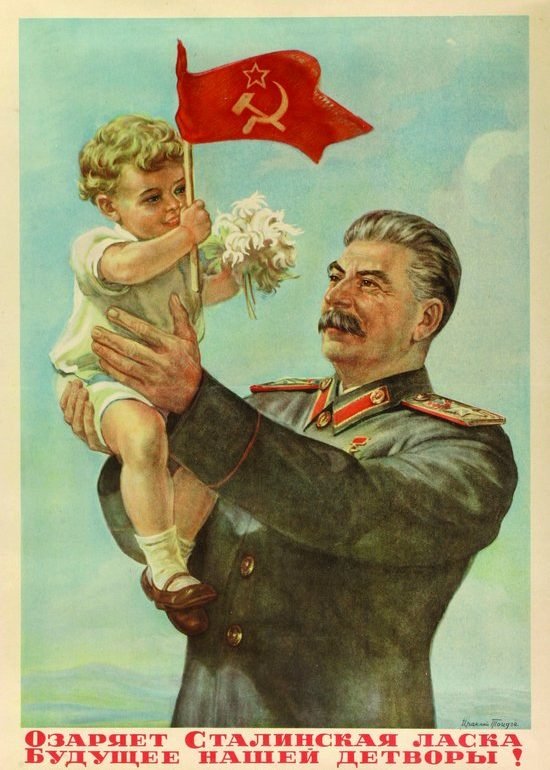
Many of the letters were written to Stalin himself. Why not? Stalin was portrayed as the “best friend of all children”, as being “wise and just”, “farsighted” and the best of “Leninists”. He was concerned about the people, for hadn’t he written his famous article, “Dizzy with Success” that temporarily halted some of the worse aspects of collectivization? He wrote it as soon as he heard that some had gone beyond sound judgement and he wanted to correct the wrongs done. So, individuals wrote to Stalin, because if Stalin knew of that individuals’ problems, they were sure he would correct the error. When nothing was done, it was because those around Stalin kept the truth from him and of course, the proof was in the confessions during the show trials of those closest to him. The letters were received by the Kremlin, or the local administrator and filed for safe keeping in case the writer was ever accused of anti-Soviet behavior.
There where also those who wrote to praise the hard work of the local Soviets, but they were mostly the letters of the young who had been raised within the system that was systemically murdering millions of its own citizens. For the youth believed in the opportunity before them and only asked for more opportunity to prove they were worthy of the great Revolution.
In many ways, this is a sad book, filled with the hopes, dreams and questions of individuals who could not and did not understand the system they inhabited. So much was so illogical, so set against the known norms of Western man, that there had to be an answer somewhere, some beam of knowledge that could come to the writers to help them cope with their lives and dreams. But the letters only gathered dust as the individuals would have gradually lost hope and accepted their broken dreams and lives.