
On The Other Hand -
Book Reviews
Lifestyle, Cigars & More
Musings
About
On The Other Hand -
  • Book Reviews
  • Lifestyle, Cigars & More
  • Musings
  • About
Book Reviews

The Civilization of Europe in the Renaissance by John Hale

February 20, 2024 by Barry J. Klazura No Comments

Covering the period between 1450-1620, Hale brings into play all the forces around which everyday life evolved in Europe.  He traces the slow development of the roads, art, economics, religion, how the old warrior class took on new leadership roles and the slow gradual realization of national identities.  The concept of national identities could not have been achieved without the constant warfare of the age so while the time was often bloody for a small percentage of the overall population, the development of industries necessary for the wars themselves create economic opportunities and the build up of wider areas of cross trade.

Aside from the usual topics one would expect in a book like this, he also spends time looking at the daily lives of ordinary people and how they lived.   How did they dress, where did they shop, how were rules of civility created and enforced? What and how did a common language develop in any geographical area and how did that common language unite the people in becoming what we know as France or Germany, etc.  How were the average people able to live during the upheavals in Christianity which were driven not only by religious differences, but also by the various local rulers who saw the time as an opportunity to enrich themselves by pillaging monasteries, churches, etc. 

The book is not an especially easy read; not because it is not well written, for it is, but the amount of information available is extraordinary.  This is due not only to the usual method of using a wide brush, but also because he delves into the ordinary and discusses how movements, ideas, etc. could impact the people of Europe down to the poorest peasant.  It falls into the category of books that if one were ever asked to read one book on a subject, would the one recommended. 

Share:
Reading time: 1 min
Book Reviews

Engines of War by Christian Wolmar

February 18, 2024 by Barry J. Klazura No Comments

The logistics of war is a science often neglected.  A prime example of this was when Japan attacked the US, their soldiers went to war with 2 pounds of logistical support (supplies, shipping, etc.) while the US soldier had 4000 pounds to support him.  The result was a forgone conclusion and not even Japan’s best-case scenario (a negotiated truce where they could keep some of their gains) was possible.

     The advent of trains added new dimensions to war; suddenly campaigns could be supplied further from the homeland and war did not have to take a break during the winter when traditionally armies were broken up and dispersed widely in order to not totally plunder the land.  More men, more supplies could be moved to threatened points of conflict and the result was longer, bloodier wars.

     This book is a bit of a disappointment in that it does not fully portray the full scope of the impact of railroads.  There is an interesting discussion of A.J.P. Taylor’s thesis that railroad tables led to wars, but it is counter balanced by the strategic goals (in this case of Russia and France against Germany).  Other volumes have pointed out the huge logistical undertaking of war; while it is interesting to try to grasp that 11,000 trains were re-directed in a campaign, that number does not tell you of the freight involved.  How many meals, guns, coats, boots, etc. were moved and delivered to the right units at the right time?  Or, there is no real discussion of how the lack to railroads going in the right direction led to French armies being beaten during mobilization by the more strategically designed Prussian railway system.

     This is a good book for the novice, for someone who wants to get a very basic grasp of the impact of railways on war, but it will lead one to look for follow up volumes on the subject.

Share:
Reading time: 1 min
Book Reviews

The Good Old Days; the Holocaust as Seen by Its Perpetrators and Bystanders: Drnet Klee, Willi Dressen and Volker Riess, editors

February 5, 2024 by Barry J. Klazura No Comments

Hannah Arendt, the noted political theorist and philosopher was on the receiving end of her fellow Jewish intellectual’s fury when she coined the phrase,” banality of evil” to describe Adolf Eichman. The question was asked, “How could she use such a phrase to describe those who had been responsible for the murder of six-million Jews? Surely those men were monsters, outside the norm of humanity.”  Yet she did not make that statement in a vacuum, but rather after covering the trial of Adolf Eichmann for The New Yorker magazine. Friends and compatriots turned on her as she even dared to suggest that some Jews made the work of the Nazi’s easier by co-operating with the Nazis.

In The Good Old Days, we investigate the letters home, photo albus, confidential reports and diaries of those involved in mass murders. The title is drawn from a caption in a photo album belonging to the last commander of Treblinka. During its operation, it was visited by a professor of medicine who “was appalled” by what he saw, yet in his diary he notes the excellent food and “first-rate vanilla ice cream.”  This was only one of many references from the letters and diaries of others including ordinary policy battalions (there were about one hundred fifty such battalions). The police battalions contained ordinary police officers which were formed to “police” the rear areas of Eastern Front. Shipped to the East with no special training, they were  instructed to proceed with the murder of mostly Jews in the occupied territories. On the site they were instructed as to the types and depth of the trenches where the victims were led, the order of execution, and so forth. As time went on, the men became more proficient and were able to conduct the executions much more quickly.

How did the men of the police battalions react to their commanding officers’ instructions for their first mass killing? Most of the men went along with and followed the instructions although the commanders made it truly clear that if any individual felt they could not comply, there would be no serious repercussions. A few, very few accepted the offer and were normally given kitchen duties or placed in charge of the latrines. Those few might be subject to comments from the rest of the battalion and a few of the dissenters would eventually relent and join their comrades in the killing.

Throughout the book, one is aware of the banality of the men. They complained about their sore feet, wrote home about “items” they picked up while doing their duty, noted especially tasty food, and longed for the day when they could return to their police duties back home. Some felt that they were doing a great service to mankind, but few would qualify as sadistic in the sense that they took pride in taking clean shots in order to minimize the suffering of the killed. At the same time, the drivers of the gas vans were responsible for cleaning the vans of blood, feces, hair, etc. and seemed to have seen it as another necessary if dirty job.

If one is looking for some special glimpse into the psyche of mass murderers, one will be disappointed by this book. In fact, it goes a long way to confirm Hannah Arendt’s phrase and observation. After the war, out of the one hundred and fifty battalions (up to 75,000 men), only a handful were convicted of war crimes. Most members when back to their old jobs, to their old towns and lived ordinary lives. Reunions were well attended and in their own way, celebrated the good old days.

Share:
Reading time: 3 min
Book Reviews

Churchill and Sea Power by Christopher M. Bell

January 28, 2024 by Barry J. Klazura No Comments

This is a well-balanced history of Churchill’s interaction with the British navy both as a Sea Lord, head of the Exchequer and war time leader.  Churchill had a real love affair with the Navy and was blamed for the disaster at the Dardanelles, the budget cuts after WWI, the fiasco in Norway as well as the loss of Force Z in the Pacific.  Yet despite these “errors”, he returned again and again to positions of power to lead his country during their darkest hours.  And, despite his love of Empire, he knew that the price for defeating Hitler would be the loss of Empire but he was willing to do what needed to be done (taking a back seat to the rising power of the United States and being humiliated by Roosevelt to Stalin) in order to attain his goals.

Each of the disasters attributed to Churchill are carefully examined and other historians’ arguments are discussed in trying to reach a meaningful conclusion.  For example, even though Churchill was looking for a different strategy from that of frontal attacks during WWI, he was initially against the Dardanelles attack but was brought around to supporting it and when he supported something, Churchill pulled out all the stops!  In the end, the timidity of the British Admirals and the poor choice of landing beaches caused in large part by poor intelligence lead to disaster and it was hung on Churchill.  Bell goes through each of the other scenarios and one comes away with a much more balanced picture of Churchill and his decision making process.

Was Churchill a genius or a meddling fool; these seem to be the two extremes offered by most historians.  In reality, he was a leader who did not shirk the responsibilities of his office and who had to make hard and difficult decisions which ran risks but had to be balanced against the enemies and limitations he faced.

A well written book not for the novice, but for the naval historian a very valuable addition to your library.

Share:
Reading time: 1 min
Book Reviews

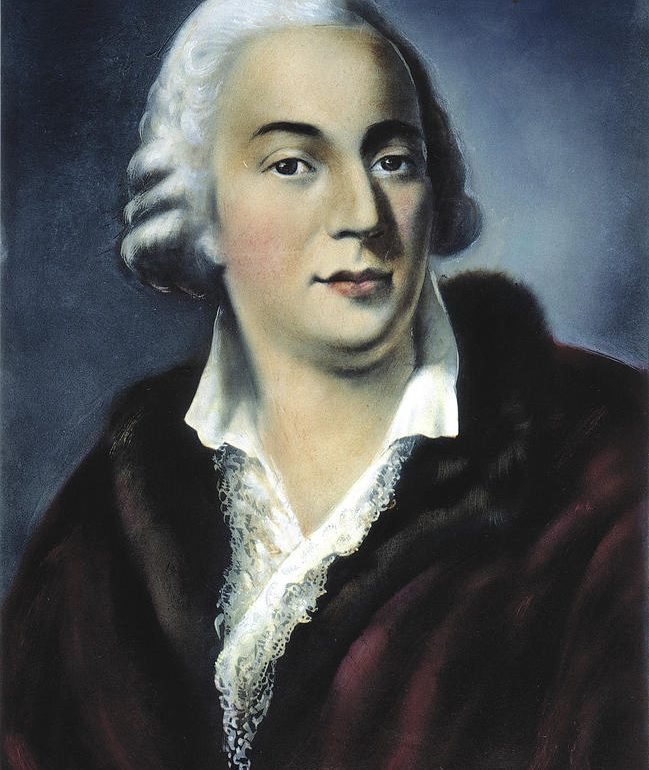
Casanova, the World of a Seductive Genius by Laurence Bergreen

January 22, 2024 by Barry J. Klazura No Comments

As depicted by Hollywood and popular culture, Casanova was a noted womanizer who had no conscience, made a habit of fleeing from irate husbands through second story bedroom windows and was always one step from receiving his just desserts.  Casanova was a major womanizer (although the number of his “conquests” pale in comparison with today’s rock, sport and Hollywood celebrities) but he was also much more, having successfully lived in the courts of Spain, France and even Russia; he conversed with Voltaire and assisted Mozart and his librettist Lorenzo Da Ponte on the composition of Don Giovanni.  Moving from country to country (he had been exiled from his native Venice), he lived by his wits, by gambling and late in life, by his writing. 

Some of his most amazing adventures (with and without women) occurred in Venice before his exile.  Venice at the time was still ruled by a clique of powerful families who were slowly dying out.  They controlled the morals, politics and fortunes of the city and despite their lessening physical strength, kept the Republic under a tight control by means of spies and strict moral guidelines.  The nobility, both men and women, when in public wore rigid white masks (often too in private) and Venetian laws specified severe punishments for those who violated the code.  Women’s masks were held in place with a button held between the front teeth (it was therefore called the “silent mask”).  In order to protect the “honor” of the younger women, they were placed in convents, but the girls found ways to slip away from the convents and cavort with their lovers such as Casanova even in the city.  They were able to do this as the guild which controlled the gondolas insured that all members were sworn to secrecy; that secrecy provided them a sure stream of passengers who had their trysts in the enclosed areas of the gondolas.  In fact, according to a French visitor, the “nuns (in the convents) are the most attractive among all the women in Venice…(and) their costume enhanced their good looks”.

Viewing the French Revolution, he realized that his world was being destroyed and in the last few years of his life he worked for eighteen hours a day on his biography which consisted of millions of words.  He wanted to be remembered but he provided an outstanding view of his world and the circles in which he moved.  While living on the good graces of the Prince de Ligne, he died in 1798.  Yet his biography and writings lived on, first being published in 1822 in German, then in 1826 in French although those were poor versions.  In 1943 his manuscript survived a direct bomb hit by an Allied bomb and in 1945 was saved by Allied forces.  In 2010, the Bibliotheque national de France purchased the manuscript for over $9,000,000, the institution’s most expensive acquisition to date.  In death, Casanova gained the fame and honor he sought all his life.
Share:
Reading time: 2 min
Book Reviews

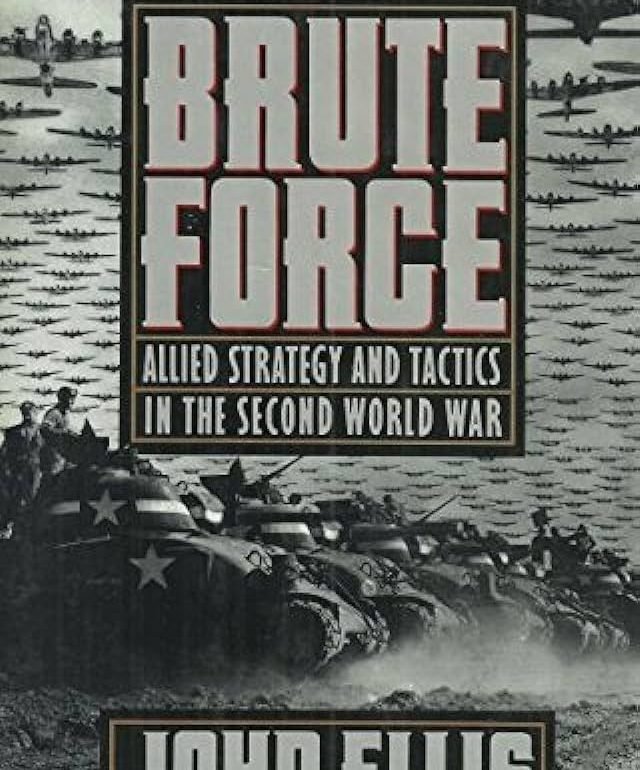
Brute Force: Allied Strategy and Tactics in the Second World War by John Ellis

December 28, 2023 by Barry J. Klazura 2 Comments

There is a scene in the movie “Patton” where he is standing as a mass of tanks, trucks and men roll past him toward battle.  As that might fleet of metal giants roll past, he says to himself, “God forgive me, but I love this”.  By this, he means the feeling of power, the sheer force of the military as it goes to meet the enemy.  But how did that mass of steel come to be?  How did all those men manage to be housed, trained, fed, clothed and armed.  This book tells part of the story; it is a story of the might of the United States, a country late to the war and how it mobilizes its resources to provide the materials for victory.

In a mass of charts, graphs and columns of numbers, as well as an excellent overview of campaigns from the steppes of the Soviet Union, to the Atlantic Ocean, to the vastness of the Pacific, Ellis overwhelms the reader with the productivity of the American system.  The materials which overwhelmed the Germans and Japanese did not spring from the earth overnight and the strategies which finally provided victory were not designed to end a world war quickly.  Unlike the Germans, where centralization and local power struggles stifled production, the U.S. managed to harness the individuality of the average American in a patriotic and profitable way to go to war.  The Germans thought they could win, the Japanese hoped for a stalemate, but the Americans knew they could win based on their individual contribution to the war. 

In the end, logistics won out.  While the average Japanese soldier or sailor went to war with four pounds of logistics to back him up, the American went to war with four thousand pounds of logistical support.  While Hitler laughed when FDR said the U.S. could produce 50,000 airplanes a year, in 1944 the U.S. produced over 91,000 aircraft. But it was not enough to produce those planes, not enough to produce nine times the trucks that the Germans could produce, not enough to produce two to 10 times as many tanks or artillery pieces as the enemy; no, you had to keep they maintained.  While the Japanese were able to put into the air 150 planes, the U.S. was able to put up over 1500.  The Japanese had a total throughout the war of some 35,000 flying personnel (not all pilots) while the U.S. by 1944 had graduate 226,000 pilots alone and nearly 1,000,000 mechanics for all the armed forces.  In the end, the Axis powers were swamped beneath a flood of men and material that they could not hope to match.

The one weak point of the book is that it does not explain how a nation which entered the war with an army about the same size as that of Belgium (the United States), was able to produce all those tanks, planes, ships, etc., when the lead time is normally eighteen months to switch production. This is especially true today with our leaders tell us that orders for munitions from our allies, such as Taiwan will take two to three years to fulfill. How is it that we do not have the ability to equal the effort of the Second World War? Has our manufacturing base been so degraded? Do we lack the techincal or financial expertise? If so, given the means available to those who oppose us, are we unable or unwilling to shift priorities to provide the protection to our homeland in these dire times?  That story, exciting is told in Freedoms Forge; it is the story of capitalists like Henry Ford, Henry Kaiser and Bill Knudsen.  Taken together these two books create the story of the might of the American system even during the time of the Great Depression.  If you are prepared to be astounded by the force of Ellis’ numbers, Brute Force is an outstanding read.  Even if you are not, it is inspiriting as it shows what is possible in a free society when there is strong and united leadership.

Share:
Reading time: 3 min
Book Reviews

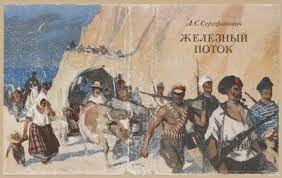
The Iron Flood by A. Serafimovich

December 6, 2023 by Barry J. Klazura No Comments

The author (1863-19490) was born on the Don and his father was paymaster in a Cossack regiment of the Czar.  In University (St. Petersburg), he was a close associate of Lenin’s brother who was executed for his part in the attempt to kill Czar Alexander III in 1887.  Shortly after this, the author was expelled from the University for a proclamation concerning the Czar.  Exiled, he graduated from a second, “Marxist University” while in the far north.  He then continued to write and be involved in revolutionary activities; this book was written in 1921-23.

Although a short book, it is considered a classic of early Soviet literature and was required reading by students until the fall of the Soviet Union.  It is a typical novel of the time, reflecting “Soviet heroic realism” as it tells the story of, in 1918, the march of thousands of Red soldiers with their families across the Caucasian mountains.  Poorly equipped, often barefoot and hungry, they overcome every obstacle in their march, fighting through various White detachments until they reach their own lines.  Initially they are poorly organized, but under the leadership of a steely leader (who naturally rises from their own ranks), they find increasing cohesion and they strike fear into the hearts of their enemies.

I would recommend this little book for anyone interested in seeking to find how the Soviets viewed themselves and of course, their enemies.  The Soviets are simple, salt of the earth individuals who band together to defeat the shallow, cowardly oppressors.  One reads the book and tends to roll one’s eyes, but it reflects the times and the need for heroics in a time of defeat, starvation and lack of order. 

Share:
Reading time: 1 min
Book Reviews

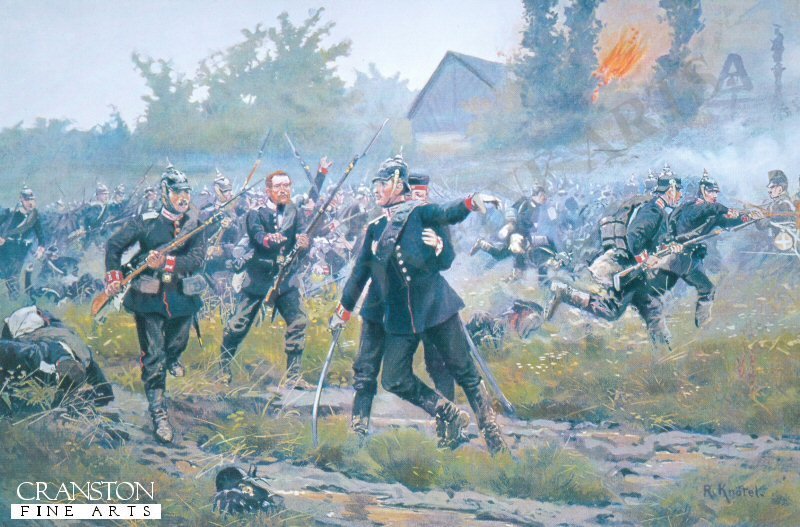
Bismark’s War: The Franco-Prussian War and the Making of Modern Europe

December 3, 2023 by Barry J. Klazura No Comments

A few years ago, my wife and I spent a month in France, starting at the Normandy battlefields and driving eastward towards Verdun.  It was an amazing trip as we covered several different wine making areas and ran across many monuments to battles and wars.  It was clear to us that France was a nation that had suffered from hundreds of years of war.  One special find was just outside of the hedgerows of Normandy on a quiet side country road.  A marker had been placed which outlined a skirmish between a U.S. infantry patrol and a German platoon backed up by an armored vehicle.  A small accidental meeting of two groups of men in which the outnumbered and outgunned Americans were pushed back by the Germans.  Some locals had decided to memorialize the long-forgotten clash so that later generations might realize that that lovely, quiet piece of land was not ruled by a hated enemy as it had been liberated at the cost American liberators.

Later during the month, further east, we ran across a beautiful museum which was dedicated to the battle of Gravelotte, during the Franco-Prussian war of 1870.  It is still vivid in my mind as it featured beautiful paintings of the battle which was the costliest of that war.  The displays were so dignified and in keeping with the spirit of the current time and gave equal time and coverage to both the French and the Prussians. What a gem of a museum!

I bring those instances up because it was with great delight that I read a very positive review of Rachel Chrastil’s new book, Bismark’s War, The Franco-Prussian War and The Making of Modern Europe.  While I was familiar with the war, it was primarily due to two biographies of Bismark, one by Alan Palmer and the other by Jonathan Steinberg, plus earlier books detailing the war.  I was therefore surprised at the direction of this book, and I could not recommend this history to anyone who does not have some background of the war. Why?  A few reasons:

  1. There is little attempt to put the war in context: Most histories would provide the basics of what led up to the war, which in this case could include Bismark’s two previous wars, the downward spiral of Napoleon III government, the tensions between the southern German states and Prussia, etc. The infamous Ems telegram is mentioned but not discussed.  Given this lack of context, an uninformed reader would wonder why the title when it could have been Napoleon’s War.
  2. Military equipment: Why was the Prussian Guards unit so decimated by the French Chassepot rifle and the mitrailleuse and why did the Prussians use the needle gun?  What made the Chassepot such a powerful weapon? Why was the Prussian artillery so superior to the French? How did the confusion at the start of the war on the part of the French impact their strategy? Etc.
  3. Personalities: While the major players are named, the reader is expected to know the experience/personality of each, such as von Moltke, von Roon, Crown Prince Wilhelm, etc.  A bit of background would help the average reader understand the strategy and restraints on these individuals.
  4. Strategy: Early on there is a brief discussion of how military strategy had been changing, based in part on the foreign observers in the American Civil War.  Unfortunately, that discussion was rather short so one is left to wonder why the lessons of that war were not more fully learned by some of the combatants. What was it about the European mind set that allowed it to ignore the terrible impact of modern weapons with their increase in range and rate of fire?  Did the Europeans view the American experience as not applicable to Europe since the Americans were amateurs whereas the Europeans were the masters of war?
  5. Personal detail: Since the war was fought on French soil, it is natural that any discussion on the civilian population would be more French based but there is little discussion regarding the impact on the German population.  How supportive was the average Southern German to the war and did the mobilization of so many men negatively impact those economies?  Nearly all the personal detail was based on the French experience and given the higher literacy rate in Germany, one would expect to find more detail on the attitude of the German civilians from memoirs, news reports, etc.
  6. Lastly, how was Bismark able to string together the German coalition give the general dislike and mistrust of the Prussian power, the religious differences between the northern and southern Germans and the natural inclination of many German states to surrender their sovereignty over international affairs.  That story is amazing and shows the brilliance of Bismark, but you will not find out about it here.

The author has done good research in several areas but seems to assume a general knowledge of the average reader.  I believe that being the case that most readers who possess a modem of curiosity will walk away with more questions than answers. I would like to recommend another book for the first time reader of this war: The Franco-Prussian War by Geoffrey Wawro.

Share:
Reading time: 4 min
Book Reviews

Life and Fate by Vasily Grossman

November 22, 2023 by Barry J. Klazura No Comments

 When the manuscript for this book was first reviewed by the Soviet censor, he told Grossman that the book could be published, in about two hundred years.  Grossman, a Jew who reported on the Great Patriotic War directly from the front lines while in Stalingrad, at the battle of Kursk and all the way through to the battle of Berlin, was rapidly falling out of favor with his Soviet masters.  His book broke so many Soviet taboos; it did not portray the soldiers with Stalin’s name on their lips as they fought, he specifically mentioned the murder of Jews by the German invaders (officially, the Jews were not to be singled out as special victims of the war), a Soviet scientist is self-centered and has a huge ego, etc..  Other writers, such as Babel (executed in 1949) and Ehrenburg (who worked on the Black Book with Grossman) felt the sting of Stalin’s wrath but fortunately for Grossman, Stalin died before the final reckoning.

The novel traces the usual myriad of Russian characters through their lives during World War II.  They like millions of others are caught in the struggle between two totalitarian states who have little if any regard for the “average” man.  Unlike War and Peace, there are not dramatic battle scenes (surprising since Grossman did spend so much time at the front), and in the first reading I could not grasp the general direction of the story.  Except for the egotistical scientist, many of the characters seem to move along in a rather haphazard manner. I would suggest that one keep a pad of paper handy to make notes as there are many individual characters and the names can be confusing.

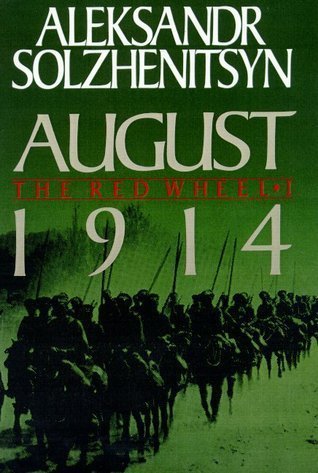
I certainly do not pretend to be an expert of Russian literature, but I have found these “great” Russian novels to be overly long and missing a clear-cut story (with the exception of the three-book trilogy by Anatoli Rybakov).  Is it indictive of the Russian or Soviet mind set where subterfuge was a means of survival or is it merely a great desire to write another War and Peace? Or, perhaps it is just to my American mind set that I seek writing that is more direct and to the point. I must admit however, that I did find this novel more direct than other Russian novels, such as Solzhenitsyn’s March 1917. 


Share:
Reading time: 1 min
Book Reviews

What If?

November 20, 2023 by Barry J. Klazura No Comments

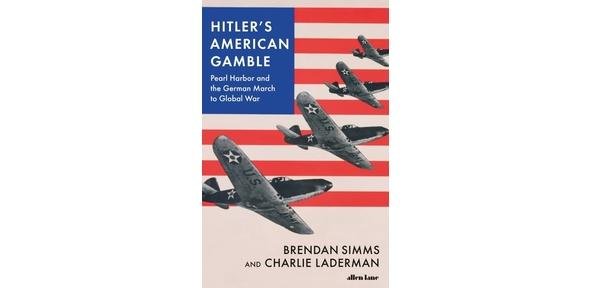
History is full of “what ifs”, “near things”, and “almost”.  In Hitler’s American Gamble by Brendan Simms and Charlie Laderman, the authors discuss the various scenarios had Hitler not declared war on the United States after the Japanese attack on Pearl Harbor.

What makes this book more interesting than one would expect is that the authors follow the fears, thoughts, actions and discussions of the Roosevelt, Hitler, Stalin, Mussolini, Churchill, and various Japanese officials on a day-to-day basis from December 7th until the German declaration of war on December 11th.  They point out that serious questions were raised during that four-day period and that contrary to popular history, it was an agonizing time for Churchill.  While he may have been buoyant to those around him, he had numerous concerns about the actions the Americans might take and how it would impact the British.

For four days, Axis, Soviet and British leaders held their breath and pondered the American course.  Concerns included:

  1. Would the U.S. begin to scale back Lend Lease support to the U.K. and the Soviets to rearm themselves against the Japanese?
  2. If they did, by how much and would that help the Germans at a time when the U.K. especially were just handing on in the Battle of the Atlantic, North Africa, etc.?
  3. As Roosevelt only called for a declaration of war against Japan, and with a seriously damaged U.S. navy, would support in the Battle of the Atlantic be scaled back?
  4. For the Japanese, their concern was whether Hitler would honor his pledge to declare war on the U.S. and thus force the U.S. to divert some of its immense industrial strength away from Japan and towards Germany.
  5. With the sinking of the British warships Repulse and Prince of Wales, not only Singapore but also Australia was in grave danger and the British were fearful of a Japanese thrust into the Indian Ocean towards India.
  6. Roosevelt believed Germany to be the greater threat but how to enter the war against Germany when most Americans were either isolationist or calling for revenge against Japan?
  7. Aware of the industrial might of the U.S., Hitler knew that sooner or later Germany and the U.S. would fight one another directly, so was it better to declare war now when Japan could divert some of the U.S. strength or stay out of the war and force Roosevelt to zero in on Japan?
  8. For the Soviets, who had a non-aggression pact with Japan, would the U.S. cut back on the munitions, supplies, trucks, food, etc., that was vital to keeping the Soviets in the war and would Japan break its pact with the Soviets and attack, creating a two-front war for Stalin?
  9. Churchill knew that without increased U.S. aid, he would have to cut back military aid to Stalin to stay in the battle with Germany.  If the U.S. did not declare war on Germany, the future for the Empire was bleak at best.

Fortunately for the world, on December 11th, Hitler honored his pact and declared war on the United States.  Now Churchill fully believed that the war was won as the U.S. was fully committed to a world war.  Hitler still believed that he had the time build from his European conquests the industrial might to counter the eventual direct struggle with the U.S. and that it was better to begin the fight now rather than wait until the fully industrial might of the U.S. could be brought to bare on Germany.  For Japan, who managed to seriously underestimate the potential might of the U.S., they believed that they could create the defensive zones and exploit the areas they had so easily conquered. And, for Stalin, he had proof that Japan would focus on the U.S. and the danger of a second front was avoided.

In some ways, this book reads like a novel in that the day-to-day questions, routines, discussions, etc. of various leaders takes the reader into the mindset of leaders on a day-to-day basis.  It is an excellent history both for someone who seeks to capture the days and for more advanced amateur historians as a fine reference point. 

Share:
Reading time: 3 min
Page 8 of 29« First...«78910»20...Last »

Barry J. Klazura

Barry Klazura sipping grappa

With a Masters Degree in Guerrilla Warfare and Totalitarianism, Mr. Klazura was well prepped for a career in Sales and General Management, consulting on corporate startups and turnarounds as well as lecturing on history and politics.  For the past twenty years he has focused on being a financial advisor and consulting.

Delivered To Your Inbox

Sign up to get an email when a new article is published.

Topics

  • American Civil War
  • Biography
  • Book Reviews
  • Cigar Reviews
  • Coronavirus
  • Current Affairs
  • Education
  • Environment
  • Factoids
  • Government
  • Lifestyle, Cigars & More
  • Liquid Refreshments
  • Musings
  • Quips and Historical Facts
  • Society
  • Travel
  • Uncategorized
  • World War I

Subjects

book Books-Russia/Soviet Union Books 21st Century Books 1919-2000 Books Ancient to 1900 Books Asia Books Biography Books Fiction Books Germany 1919-1945 Books Pre-WWI books Viet Nam books world war I Books WW1 Books WWI Books WWII Cigar Friendly Location Amsterdam Cigar Friendly Locations-London Cigar Friendly Locations-New Orleans Cigar Friendly Locations-New York Civil War Coronavirus Environment Korean War World War I World War One

Recent Articles

At Stalin’s Side by Valentin Berezhkov

July 15, 2026
The Price of Victory by N.A.M. Rodger

The Price of Victory by N.A.M. Rodger

June 26, 2026
Frontsoldaten: The German Soldier in World War II by Stephen G. Fritz

Frontsoldaten: The German Soldier in World War II by Stephen G. Fritz

June 5, 2026
Organizer of Victory, 1943-1945, George C. Marshall by Forrest C. Pogue

Organizer of Victory, 1943-1945, George C. Marshall by Forrest C. Pogue

May 26, 2026
Illegals Released & Our Leaders

Illegals Released & Our Leaders

May 10, 2026

Inquiries and Comments

For general inquiries and comments, email AOTOHcomments@gmail.com.

Facebook
© 2020 And On The Other Hand. All rights reserved.