
On The Other Hand -
Book Reviews
Lifestyle, Cigars & More
Musings
About
On The Other Hand -
  • Book Reviews
  • Lifestyle, Cigars & More
  • Musings
  • About
Book Reviews

Stalin and the Scientists: A History of Triumph and Tragedy, 1905-1953 by Simon Ings

June 24, 2024 by Barry J. Klazura No Comments

According to Marxist “scientific thought”, man is shaped by his environment; change the environment and you can create a “New Man”.  The same belief applies to plants and animals.  Thus, it was that while the Soviet Union spent more on scientific research than any other nation, they also managed to produce some of the worse examples of what we would call “junk science”. 

Part of the problem was that it was believed that the masses which were held down by the forces of reaction, exploitation, etc., contained within them the seeds of greatness.  Thus, it was possible for a poorly educated individual like Trofim Denisovich Lysenko and others of his ilk to make fantastic claims of break throughs in agriculture and dominate the Soviet scientific community.  With the right backing (Stalin), Lysenko, who denied the existence of genes, kept many of the older, traditionally educated scientists in a scientific limbo.  They were forced to work secretly in small poorly equipped labs while millions of rubles and huge tracks of land were given over to dubious experiments and the results doctored to fit “Marxist scientific” thought.  Attempts were made to grow lemon trees above the artic circle, millions of trees were planted in arid waste lands in an attempt to change the environment (the trees all died from lack of water, brutal winters or scorching summers), etc.  Foreign species were introduced into areas where the wolves had been killed off with the result that those populations greatly expanded by they passed along their diseases to the local domestic cattle which caused a great death toll and thus shortage of beef in the country.  There was even a theory that apes could be used to inseminate women to create a new race.

During World War II, in the face of national disaster, the strict guidelines of adhering to Marxist theory was relaxed with the result that a newly educated generation of scientists were allowed more freedom.  The results were staggering as break throughs not only in weapon development, but also in agriculture and genetic research helped to save the State.  After the war however, many scientists were forced to adhere more closely to the pre-war scientific theories.  This included theory related to such fields as psychoanalysis, social psychology or individual psychology (Pavlov had not ventured into these areas, so research was not considered necessary).  The only psychologic theory that seemed to hold any sway was that anyone who did not adhere to Soviet thought must be schizophrenic.

While there was hope for greater freedom after Stalin’s death, the agricultural experiments and failures under Khrushchev were examples of the continuation of the continued life of the theories of Lysenko.  To this day, Russian agriculture continues to suffer for the errors of previous times.  The amazing thing is that even under the warped science theories of the time, there were positive break throughs which have been beneficial to the scientific and non-scientific worlds. 

This book is one great story of political correctness in the scientific world at that time and should serve as a warning to all of us, both scientist and non-scientist of the dangers of the concept of “settled science”, a frightening term if ever one existed.

Share:
Reading time: 2 min
Book Reviews

Nazi Billionaires: The Dark History of Germany’s Weathiest Dynasties by David De Jong

June 12, 2024 by Barry J. Klazura No Comments

Who were the financiers who provided the manufacturing and technical expertise which allowing Hitler and the Nazis to overrun so much of Europe and commit the Holocaust?  And, after the war, what actions if any were taken against them not only for their material support of Hitler, but also for the use of slave labor on a scale not seen since the Roman Empire?

Mr. De Jong spent four years researching this book focusing on four major German families; the Quandts, the Flicks, the von Fincks and the Porsche-Piechs.  How is it that the Krupps are so well known and yet these families contributed in so many ways to the Nazi war machine, producing tanks, guns of every caliber, ammunition, drugs, medicines and almost every other item that a nation needs for war.

Some of the named above were successful industrialists before Hitler’s rise to power, such as the Quandts while other took advantage of the “Aryanization” of Jewish businesses.  “Aryanization” was the concept that with the introduction of the Nuremberg Laws, Jews were forbidden to own factories and businesses.  In order to comply with the law, Jewish businesses were “bought out” by Germans for pennies on the dollar and then those few pennies were determined to be the cost of an exit visa from Germany as many of the Jews fled to other countries. Such theft was in itself a crime that these and other families committed but add to the list the inhuman treatment of the slave laborers and the wheels of justice should have centered on these families.  Why weren’t these families the targets of justice?

Continue reading
Share:
Reading time: 4 min
Book Reviews

Last Days of Glory; the Death of Queen Victoria by Tony Rennell

June 5, 2024 by Barry J. Klazura No Comments

In January 1901. Queen Victoria died at the age of 81 after being Queen for 64 years.  Her reign experienced the revolutions of 1848, the formation of the Second French Empire, Crimea War, and the unification of Germany.  A small woman, she hid herself from the public and to a certain extent, politics for decades after the death of her husband, Prince Albert.  The unintended result was a diminution of power of the Crown as strong Prime Ministers stepped into the role she abdicated. 

When she died, most citizens knew no other monarch and although her health had been slipping, many of her closest advisors were unaware of the seriousness of her illness.  This meant that her death came as a shock to the nation and the private secretaries, etc. scrambled to find the proper procedure for her internment. Fortunately, Captain (later Sir) Frederick Ponsonby took charge, often stepping on bureaucratic toes to make the arrangements.  Fate seemed to work against a smooth ceremony as the funeral cortege was too long for the route march, the casket almost fell off the caisson, the casket (there were several, each within the others), was so heavy that the troops carrying it had to be relieved after taking it off the caisson, and finally the traces broke and the caisson with the casket had to be pulled by the troops (in fact it was considered a great honor and a rival troop demanded the honor of pulling everything during the next stage).

The United States suffered shocks to its system by the death of FDR and the assassination of JFK but imagine if either of them had governed for over 60 years.  And, given the level of communications at the time, her death must have come like a bolt from the blue.  It seemed to be taken for granted that her reign would never end.  Her children ruled or were married to rulers of most of the European states which was thought to assure stability for the future but in the end, her death signaled the beginning days of the end for the old world which would be smashed in World War I.

If you are not familiar with this area, this book gives a glimpse into a simpler time, one filled with hope and dreams for a future.  A time when Europe still believed in itself and looked positively to scientific and economic advances which would benefit humanity.     

Share:
Reading time: 2 min
Book Reviews

Poland 1939 by Roger Moorhouse

May 12, 2024 by Barry J. Klazura No Comments

Through the mists of time, the campaign against Poland in September 1939 has seemed to have almost disappeared.  Memoirs and campaign histories of other actions of World War II have stuffed libraries around the world to overflowing and even today new volumes are produced which seldom contribute something new to our understanding of these events.  Aside from an occasional article in a history magazine, about the most complete history of the campaign that I found was by Major Robert M. Kennedy as published by the Department of the U.S. Army (1956).  Roger Moorhouse’s new book promised to bring some new facts to bare, especially around personal narrative from the Polish defenders.  To some extent, this has been achieved.

I say to some extent as there are some actions where the thoughts and activities of the defenders are noted, but not as many as I personally would have enjoyed.  The strength of this book is in putting the lead up to the war in good context, especially in the alliance between the U.K., France, and Poland.  To be brutally truthful, Poland was betrayed by its allies, who promised aid and an offensive against the Germans but had no intention or desire; instead the “allies” of Poland were depending on bluff to stop the Germans. Just two days before the invasion, when the German army was deployed on three sides of Poland, the French Minister of War assured his Polish counter parts that France was fully committed to invading Germany with the full might of its military if war were to begin.  Of course, the French “offensive” thrust a few kilometers into Germany and then quickly pulled back, while the British did not begin a bombing offensive as “private property” might be damaged.

The Polish defense of Westerplatte is covered well, but other actions such as those on the Hel peninsula and at the fortress of Modlin are barely touched.  The famous cavalry actions of Poland’s Uhlans are put into proper perspective and the Soviet invasion of Eastern Poland are also covered adequately.  Other weaknesses include not discussing the escaped of over 100,000 Polish troops through Romania and their contribution to the allied victory (as well as their betrayal in England where they were not allowed to participate in the victory parade for fear of offending Stalin and the domestic Labor Party), and a summation of German losses during the campaign.  It is known that the war costs the Germans over fifty-thousand casualties and approximately twenty percent of their tanks.

From the very start of the war, the Germans embarked on a reign of terror, executing both Polish “intellectuals” including policemen, lawyers, doctors, priests, and teachers.  In the beginning theses individuals were primarily Polish but Jews were also targeted.  The key was to break the will of the Poles to resist, the view being that the Jews had no where to go and could be handled on a larger scale in time.

In the end, the nation which was the first to stand up to Nazi Germany and who stood by the Allies in spite of bad faith, was a loser in the Second World War. There were no victory parades, no awarding of honors but there was forty-four years more years of terror under the rule of Communism. Perhaps that is why Poland realizes the danger of Russia so much more clearly than the Western Europeans.  

This work is a good introduction to the campaign and basic reference book for anyone who wishes to understand the importance of the politics on both sides and a bird’s eye view of the battles. Moorhouse follows in the footsteps of his mentor, Norman Davies so we should see additional fine histories in the future.

Share:
Reading time: 3 min
Book Reviews

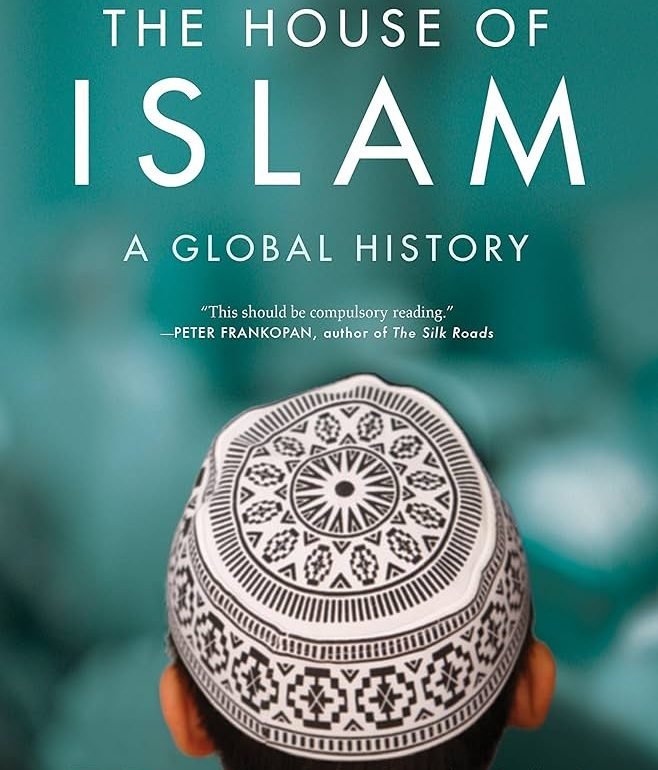
The House of Islam, a Global History by Ed Husain

May 2, 2024 by Barry J. Klazura No Comments

Many years ago, just out of University my parents and I travelled to Spain.  We took a side trip to Morocco and joined a group which was sheparded around by a local Muslim guide, complete with robe and soft slippers that curled upward at the toes.  As we progressed, the guide pointed out mosques, libraries, beautiful plazas, etc. always noting that when they were built during the tenth or eleventh century, Europe was in a Dark Age.  After several such episodes, my father, always the diplomat raised his hand and asked the guide if the Muslims had done anything in the last thousand years.  There was much laughter and the guide stopped making references to Europe’s Dark Age.

My story about my father’s comment strikes at the very heart of the problem around Islam today; massive hurt feelings that a once proud and conquering force is today among the most backward in the world.  Many Muslims in the Middle East resent the failures of their leaders and governments since Islam was turned back in 1683 at the gates of Vienna.  A society which, when the first printing press was introduced into Ottoman territories in 1450 banned it as a tool of the devil, simply failed to move with the world as created by the Europeans.  Piece by piece, the Islamic world was picked apart and subjugated by the West and the feeling of anger and frustration grew until it was believed by even some of the educated that radicalism and terrorism was the only answer.  Instead of looking forward, the radicals looked backwards trying to lead the Muslim world bravely backward into the 8th century.

Ed Husain, a former radical Islamist who has rejected extremism and is now a noted fellow at several excellent Western think tanks.  He has an excellent understanding not only of Islamic history, but also a solid foundation in the beliefs of the various factions that exist within Islam today.  He carefully outlines the Sunni-Shi’a schism, what is Sharia, who is a Sufi, the foundations of Wahhabism as well as in depth discussions on the various views on women, sex, education, Jews, etc.  Overall, you can feel him objective about the factions within Islam and this book is an excellent primer on Islam.

As a former radical, he knows and understands the rationale of the radicals in their view of where Islam has gone wrong and what they believe justifies their actions.  His discussion on the difference between the Quran and supposed comments and guidelines from Mohammed is very interesting.  As Muslims believe that the Quran is sacred as created by Mohammed, they are a perfect way to live life.  The supposed saying and guidelines from Mohammed are open to interpretation; were they in fact made by Mohammed or by others many years after his life.  Are these saying supported by the Quran or in violation of the Quran?  According to Husain, such injunctions as the veiling of women, not allowing women to be highly educated, and the rules by the likes of ISIS come from these supposed comments and have no basis in the Quran.  Due however, to the low level of education of many Imams, arguments against the likes of ISIS are weak or not capable of convincing Muslims to move away from such practices.

The author loves Islam, but he also has a rather distorted history of Islam.  According to his view, the warriors of Islam spared women and children as they swept across the land, but if they did, it was only to save them for the slave market.  Or, he mentions that the natives of India converted to Islam because they loved Islamic poetry and not because literally tens of millions were slaughtered by various Islamic rulers.  Yet, aside from these examples of glossing over of history (there are others), the book remains an excellent one that Westerners would do well to read.  Unlike other books on Islam, he does offer concrete suggestions on what can be done to reverse the trend towards radicalism and to move Islam forward in the real world.  He pushes hard for the Islamic world to accept Israel and to see what can be done with education, unity and hard work.  Would the Islamic world be willing to learn from Israel?  Can the Arab countries put aside their tribalism and move against (especially in Saudi Arabia) against Wahhabism?  Would the West be willing to create a Marshall Plan for the Islamic world in conjunction with the oil rich Arab world who would contribute to the development of lands outside of their own?  If not, then the path away from radicalism will be longer and harder than necessary.
Share:
Reading time: 4 min
Book Reviews, Society

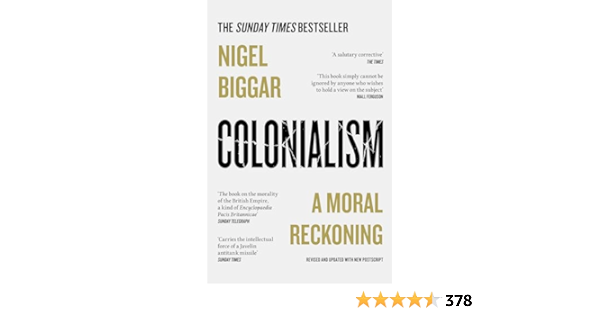
Colonialism: A Moral Reckoning by Nigel Biggar

April 2, 2024 by Barry J. Klazura No Comments

We seem to be living in a time when a goodly portion of humanity, the white portion, should be, according to many on the Left, walking around with ashes on our heads while we practice self-flagellation for the sins which our race has done to most of humanity. This is especially true of the ignorant and those who seek to make a name-and money, from this narrative. Unfortunately for them, there are those who question if these ignorant and self-righteous have any idea about what they are talking about. One such person is Nigel Biggar, the Regius Professor Emeritus of Moral and Pastoral Theology at the University of Oxford. His excellent book, Colonialism: A Moral Reckoning looks openly and honestly at the charges of those who claim that colonialism, specifically that practiced by the British Empire have a grounding in fact. He looks at various questions such as, what was the driving force behind the Empire? Was it greed? Was the Empire basically racist? Was the Empire violent in that it imposed terrible conditions on its colonial subjects?

Although not a professional historian-he holds a BA in Modern History from Oxford while his Ph.Ds. are in Christian Theology and Ethics in Christian Theology and Ethics from the University of Chicago, his knowledge and research is excellent and he brings a balanced view of history as he includes the ethical component which in this case adds more depth to the book.

He initially raises the question of the concept of colonialism in that colonialism is as old as humanity. The empires of the Assyrians over four thousand years ago practiced colonialism. They were followed by the Egyptians, Babylonians, and Persians. The Athenians, Romans, Muslims, Asantes, etc. all were colonial powers. Some brought value with their overlordship, some only brought suffering, so how and where did the British Empire stand in relationship to all those who had gone before them? How did they stand against their contemporaries, such as the French, Russians, Dutch, Moguls, etc.? The problem and challenge are to not only read those who attack colonialism, but to look at their research to see if their writings are based on facts.

One such example is a famous quote which is attributed to Cecil Rhodes, when he is reported to have said, “I prefer land to the n—ers..the natives are like children. They are just emerging from barbarism…one should kill as many n—ers as possible.”  A terrible statement, often quoted by eminent historians as an example of the mindset of the British Empire. There is a problem however, for there is no evidence that Rhodes ever made that statement. Much of the statement was written by a former Rhodes scholar who is a director of a major Pan-African university in Johannesburg while more of it was “made up from three different elements drawn from three different sources” including a novel. Hardly scholastic proof. In fact, Rhodes supported the franchise in the Cape Colony that gave blacks the vote on the same term as whites, he funded a black newspaper, and his scholarship was color-blind from the first. Such minor details escape those who use Rhodes as an example of the British mindset.

His book is chapter after chapter of not whitewash, but a review of the times, norms, attitudes, and actions of both the British and the people’s they ruled. He discusses the abuses of colonialism as well as the benefits which provided the locals to better their lives and futures. The Empire stopped abuses such as the burning of widows, instituted a legal system where for the first time, the poorest of the poor could confront those who had previously exercised power as they wished. More rail mileage was built in India than existed in Great Britain with the result that freedom of movement, increased trade and food was more readily available than before their arrival.

And yes, there were abuses. Most abuses came at the local level, by the soldiers, local traders, etc. rather than from the governors, magistrates, and administrators. He quotes the proclamation of governors and provides details on their actual achievements. Those governors who exercised a great deal of freedom in their area seldom abused the great power they had and there are instances quoted when the locals feared a return to the old days where power was used arbitrarily when the governors were withdrawn. There was racism in many instances, especially in India after the Sepoy Rebellion when old loyalties and trusts were torn apart.

Because the author has a background in ethics, he broaches the question of compensation, one which is heard as a drumbeat. On one hand, were the natives justly compensated for their goods and land? Did they suffer to a greater or lesser extent from racism? How many locals were killed when they demanded independence or during times of famine? On the other hand, what was the value of immunization against disease which saved millions of lives? What was the value of freedom from slavery as practiced by local rulers? What was the value of instituting an educational system and the values of that system which allowed the locals to be able to step into power once independence was achieved?

This book may not convince the rabid anti-colonialist that the British empire experience had any positive worth. The author did however achieve one of his goals in that any reader who approaches the subject with even an inkling of an open mind will realize that the pros and cons, the costs vs. benefits, of colonialism as practiced by the British require a serious weighing on the scales of if not justice, at least intellect.

Share:
Reading time: 4 min
Book Reviews

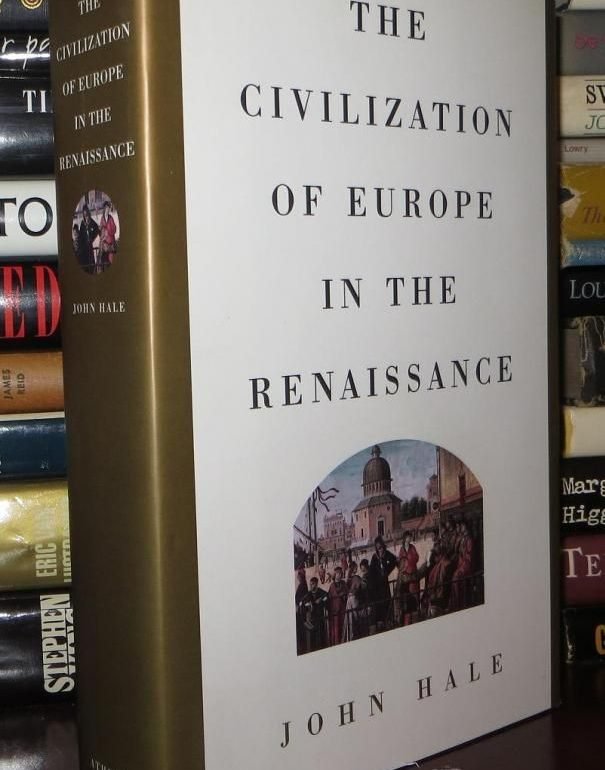
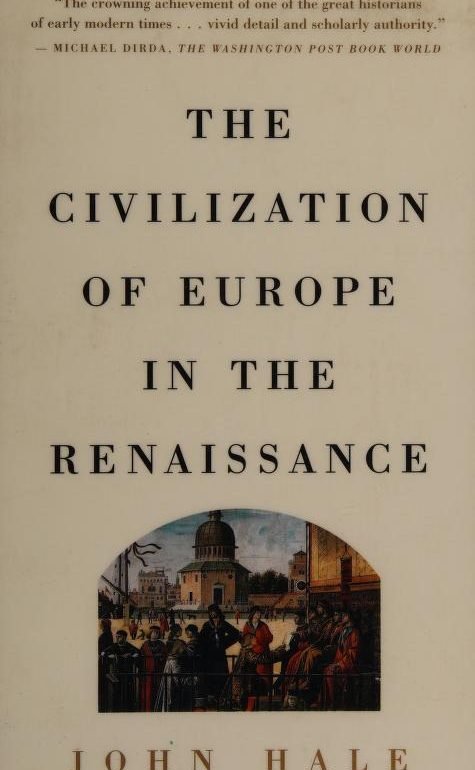
The Civilization of Europe in the Renaissance by John Hale

March 14, 2024 by Barry J. Klazura No Comments

Covering the period between 1450-1620, Hale brings into play all the forces around which everyday life evolved in Europe.  He traces the slow development of the roads, art, economics, religion, how the old warrior class took on new leadership roles and the slow gradual realization of national identities.  The concept of national identities could not have been achieved without the constant warfare of the age so while the time was often bloody for a small percentage of the overall population, the development of industries necessary for the wars themselves create economic opportunities and the build up of wider areas of cross trade.

Aside from the usual topics one would expect in a book like this, he also spends time looking at the daily lives of ordinary people and how they lived.   How did they dress, where did they shop, how were rules of civility created and enforced? What and how did a common language develop in any geographical area and how did that common language unite the people in becoming what we know as France or Germany, etc.  How were the average people able to live during the upheavals in Christianity which were driven not only by religious differences, but also by the various local rulers who saw the time as an opportunity to enrich themselves by pillaging monasteries, churches, etc. 

The book is not an especially easy read; not because it is not well written, for it is, but the amount of information available is extraordinary.  This is due not only to the usual method of using a wide brush, but also because he delves into the ordinary and discusses how movements, ideas, etc. could impact the people of Europe down to the poorest peasant.  It falls into the category of books that if one were ever asked to read one book on a subject, would the one recommended. 

Share:
Reading time: 1 min
Book Reviews

Considerations on the Causes of the Greatness of the Romans and their Decline by Montesquieu

March 4, 2024 by Barry J. Klazura No Comments

Charles Louis de Secondat, Baron de La Brede et de Montesquieu was from the middle of the 18th century through the founding of the United States, widely considered to be the preeminent political thinker of his time. His categorization of what constitutes a tyranny, an empire and a republic influenced our Founding Fathers in their debates and in the writing of the Federalist Papers. He was the principal architect of the theory of separation of powers and his main work, The Spirit of Law (1748) was well received throughout Europe and the thirteen colonies.

This work is considered a minor work, but I would like to suggest that no politician be allowed to take office until they have read and passed a test based on what he writes in this gem of a book.

Rome, like any organism or organization, had a period of growth followed by a decline. What were the causes of its growth? That is often asked as is, what caused its decline? Historians and others will argue those points for as long as Rome is remembered and everyone who attempts to answer those questions will be both correct and wrong. There were numerous causes but that in the end, as with other empires, the entire system simply imploded from lack of will, moral degeneracy and outside pressures that were simply more than could be managed given the resources available. Over time, the ideals and energy which helped the successful growth were lost and there were not enough good and strong men and women to hold the center together.

 Rome started as a small community, cut off from the sea, surrounded by numerous enemies, many of them larger. It had little natural wealth, barely any art and the citizens realized that the only way to enrich themselves was through pillage. Montesquieu believed that Rome’s power came from several factors, among them a constant drive for war, an unwillingness to accept defeat, an equal sharing of the plunder and a government which only allowed recognition and advancement through military success. Because Rome was always at war and because they adopted the best military practices of their individual neighbors, they simply excelled at war. They easily adopted the best skills of their military foes, such as cavalry, the Spanish short sword, etc. and use each in a way that helped to insure their victories. They developed a mindset which directed all activities of the State to be in the successful furtherance of war. Defeat was simply unacceptable and as was demonstrated during the war against Hannibal, no matter how often Roe’s field armies were defeated, they simply kept going after their nemesis until they achieved final victory. Such a mindset is not possible today as the technology of war simply makes war too expensive both in treasure and lives. So, what can we learn from the Romans? We can learn from them the reasons for their decline.

Continue reading
Share:
Reading time: 4 min
Book Reviews

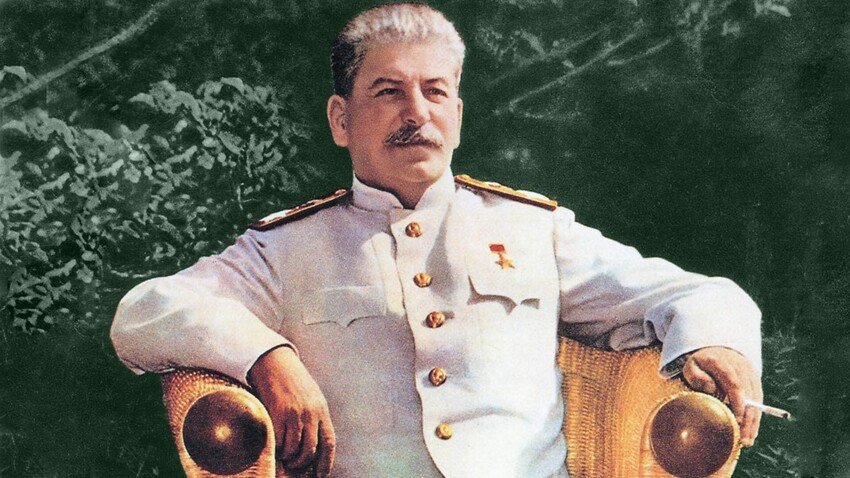
Stalin: Breaker of Nations by Robert Conquest

February 27, 2024 by Barry J. Klazura No Comments

There is certainly no shortages of histories and biographies of Stalin, one of the greatest mass murderers in history. His crimes, his murders were taken unlike his contemporary, Hitler, against for the most part, his own people. He did not have a policy of racial superiority or any underlying moral rationale for his crimes; his sole purpose was to achieve and maintain his power and in this, he is unique among the “big three” of mass murderers: Mao, Hitler, and Stalin.

Robert Conquest, perhaps the top historian of the Soviet Union has in this short book (just over three hundred pages), an excellent overview of Stalin’s drive, achievement, and maintenance of power. Although not as detailed as his other excellent histories which go deeper into the Stalin regime (The Harvest of Sorrow, The Great Terror: A Reassessment, Inside Stalin’s Secret Police: NKVD Politics 1936-39, etc.), Conquest along with Robert C. Tucker and Orlando Figes has provided a comprehensive analysis of the man and his times.

Conquest as always, manages to provide a certain analytical approach that can bring the reader up short: in this case, it is his comparison of the followers of Nazism and Communism. He quotes Hugh Seton-Watson’s comments that:

“Hitler’s Nazis were ‘fanatics with an ersatz religion,’ who rejected not only Christianity but also traditional morality as such. Nazism’s central feature was ‘moral nihilism’…. (it) is not only the central feature of National Socialism, but also the common factor between it and Bolshevism.” 

This statement is backed up by a review of leading Nazis, including Hitler, Goebbels, Mussolini, the dreaded Gauleiter of the Ukraine, Koch, and others who all started out as Socialist and ended up as either Fascists or Nazis. And it was not unusual after the war for die hard Nazi’s to reverse their coat and be taken into the Soviet camp. On one hand, the Nazis use race, the Communist used social origin as the determining factor for life or death; both were (are) based on “moral nihilism.”

Conquest is an outstanding historian, but for the amateur historian, his writing may be a bit too intellectual. He has a firm grounding in the Russian mindset and his analysis of Stalin’s legacy on modern day Russians is excellent. His works not only encompass history, as he has had published a collection of poetry, verse translation, fiction, and criticism so to read Conquest is to be exposed to a man of great intellect. A faster read but no less excellent Soviet historian is Orlando Figes brings a more human touch to his histories.

As one learns Conquest’s style, one is drawn increasingly to it and like a favorite composer, one eagerly looks forward to the next work of his that one shall read.

Share:
Reading time: 2 min
Book Reviews

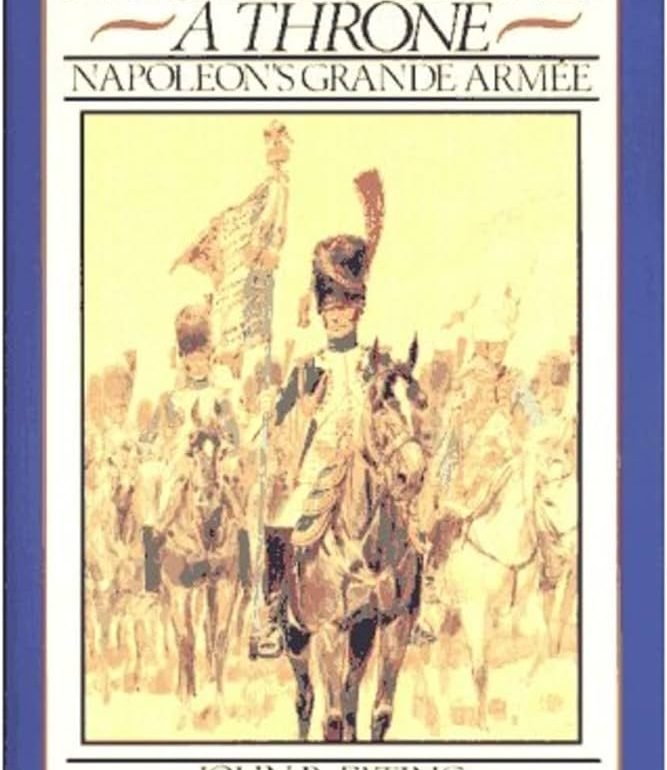
Swords Around A Throne by John R. Elting

February 26, 2024 by Barry J. Klazura No Comments

Elting, a noted historian and lecturer at West Point has put it all together in this 700+ page book.  He starts with a discussion of the decline of the French Army after King Louis XV and its destruction during the French Revolution.  He then proceeds to discuss every aspect of the Army, from the equipment, feeding, transportation, etc. of each branch of the Army, from the infantry to artillery, etc. 

An outstanding one volume history which ends with the new regime of King Louis XVIII, his mistrust of the Imperial army, his lack of skilled advisors, etc., and of course, the Hundred Days of Napoleon.  I would recommend that if you are going to read this book, that you keep handy “Napoleon’s Marshals” which was edited by David Chandler. This book discusses (each Marshal is covered by a different historian) the records of all of Napoleon’s Marshals (25 French, one Polish) including their skills, greed, loyalty (or lack thereof), etc. 

Another wonderful reference book to settle or at least provide fodder for any discussion of the subject (Napoleon’s campaigns, his personal skills, etc.).  The two books total about 1200 pages so don’t think you will finish them in a sitting, but they are well worth the effort.  If nothing else, as with so much of history, you learn a great deal about human nature and management.

Share:
Reading time: 1 min
Page 7 of 29« First...«6789»1020...Last »

Barry J. Klazura

Barry Klazura sipping grappa

With a Masters Degree in Guerrilla Warfare and Totalitarianism, Mr. Klazura was well prepped for a career in Sales and General Management, consulting on corporate startups and turnarounds as well as lecturing on history and politics.  For the past twenty years he has focused on being a financial advisor and consulting.

Delivered To Your Inbox

Sign up to get an email when a new article is published.

Topics

  • American Civil War
  • Biography
  • Book Reviews
  • Cigar Reviews
  • Coronavirus
  • Current Affairs
  • Education
  • Environment
  • Factoids
  • Government
  • Lifestyle, Cigars & More
  • Liquid Refreshments
  • Musings
  • Quips and Historical Facts
  • Society
  • Travel
  • Uncategorized
  • World War I

Subjects

book Books-Russia/Soviet Union Books 21st Century Books 1919-2000 Books Ancient to 1900 Books Asia Books Biography Books Fiction Books Germany 1919-1945 Books Pre-WWI books Viet Nam books world war I Books WW1 Books WWI Books WWII Cigar Friendly Location Amsterdam Cigar Friendly Locations-London Cigar Friendly Locations-New Orleans Cigar Friendly Locations-New York Civil War Coronavirus Environment Korean War World War I World War One

Recent Articles

At Stalin’s Side by Valentin Berezhkov

July 15, 2026
The Price of Victory by N.A.M. Rodger

The Price of Victory by N.A.M. Rodger

June 26, 2026
Frontsoldaten: The German Soldier in World War II by Stephen G. Fritz

Frontsoldaten: The German Soldier in World War II by Stephen G. Fritz

June 5, 2026
Organizer of Victory, 1943-1945, George C. Marshall by Forrest C. Pogue

Organizer of Victory, 1943-1945, George C. Marshall by Forrest C. Pogue

May 26, 2026
Illegals Released & Our Leaders

Illegals Released & Our Leaders

May 10, 2026

Inquiries and Comments

For general inquiries and comments, email AOTOHcomments@gmail.com.

Facebook
© 2020 And On The Other Hand. All rights reserved.