
On The Other Hand -
Book Reviews
Lifestyle, Cigars & More
Musings
About
On The Other Hand -
  • Book Reviews
  • Lifestyle, Cigars & More
  • Musings
  • About
Book Reviews

The Coldest Winter: America and the Korean War by David Halberstam

October 31, 2024 by Barry J. Klazura No Comments

Before his death in a car accident in 2007, David Halberstam wrote over twenty excellent histories. His attention to detail and accuracy were hallmarks of his work and this enabled the reader to become immersed in his telling of history. I first was introduced to him by reading The Reckoning which traced the decline of the American auto industry under the assault of the carmakers of Japan. He is perhaps best known for his analysis of the origins of the Viet Nam war in The Best and the Brightest where he reviews the actions of the “Whiz Kids” of the Kennedy and Johnson administrations.


The book he was most proud of is The Coldest Winter. In it he not only discusses the failures of the U.S. military, the arrogance of Douglas McArthur and the weakness of the Truman administration in the face of the legend of McArthur, but provides the perspective of those on the sharp end of the bayonet; the common infantryman, squad leaders and others who fought a wily and driven enemy.
Having just a few short years before beaten the Nazi and Imperial Japanese war machines, one asks how such a vaunted military could perform so poorly against an enemy inferior in every measure of military strength except manpower. The answer lay in arrogance, upper echelon officers who kowtowed to McArthur and inflexibility in meeting not an enemy on the level ground of Europe, but one who fought in the hills and mountains of Asia.


There are few officers who come off well in this book. One of the few is Major General O.P. Smith, the commander of the First Marines during the battles near the Chosin Reservoir. Resisting orders to scatter his forces in a vain attempt to constantly push forward as directed by Tokyo (McArthur’s headquarters), Smith instead kept a firm hand on his excellent troops to make sure they knew they were acting as a team and were not cut up into weak and exposed positions.


Another leader who stands out is Matthew Ridgeway who was a rising star at the end of World War II. Ridgeway managed on infuse morale into an all but defeated American army through his personal style of leadership. He was seen everywhere; at the front lines, at the chow lines and others, always talking to the troops, listening to them and making them feel that he had their personal wellbeing in mind. At the same time, he demanded much of them, but unlike McArthur, he could be seen, his presence felt and his insistence of getting the troops off the roads and into the hills where the enemy hid and hit from, brought out the best in the troops.


Finally, there is the question of why President Truman put up with the disrespect and insubordination of McArthur for so long. Truman had to put up not only with McArthur, but also with powerful D.C. politicians who saw McArthur as a replacement for Truman and this meant a divided national will. With the successful turn around provided by Ridgeway, Truman was finally able to take decisive action and relieved McArthur.


The finest part of this history however, is page after page of personal experiences by American troops. You will feel drawn into their lives as they fought, often wearing summer uniforms in sub-zero temperatures and suffering from bad logistical support against human wave attacks, day after day, with seemingly little regard for the enemies’ losses. At the same time, given the vivid descriptions provided by Halberstam, one can only image the miserable conditions of the North Korean and Chinese “volunteers” who were driven forward by Communist commissars. Those troops, often barefooted and having even worse support, were simply cannon fodder used by a system that could always count-on hundreds of thousands of poorly trained but docile replacements.


If you read only one book on the Korean war, make it this one.

Share:
Reading time: 3 min
Book Reviews, Current Affairs, Education, Government, Musings

Over Ruled: The Human Toll of Too Much Law by Neil Gorsuch and Janie Nitze

October 23, 2024 by Barry J. Klazura No Comments

“The worse the society, the more law there will be. In Hell there will be nothing but law”
Grant Gilmore


Recently the governor of California signed nine hundred new laws into being. Each law will carry various civil and/or criminal penalties and will be further clarified by various rules as determined by the various agencies which will enforce the new laws and rules. Do you know how these new laws will impact you, your life, your family, or business? How many of them will make your life better or easier? Yet, you will be expected to abide by these laws; ignorance of the law is no longer a defense.
In this excellent book, Justice Gorsuch gives numerous examples of how federal laws and rules can be abused by the authorities and how naked we stand before the power of the State. An example is the fisherman who was charged with violating the Sarbanes-Osley Act (instituted after the housing crash of 2007 and aimed at financial institutions) when two federal officials miscounted how many fish he had caught with the result that he lost his business, home, and retirement savings. In the end, the Supreme Court found that he was innocent, but he lived a twenty-year nightmare and received no restitution.
That ex-fisherman was fortunate for he had the nerve and outside help to fight the system, while others often charged with multiple “crimes” from multiple agencies simply plead down their “crimes” in order to try to get on with their lives. And what chance does the average person have when you take the example of new laws in California, multiply it by fifty states and then add on and average of fifty-six new federal crimes every year. In reality, no one knows exactly how many federal laws and regulations carry a criminal punishment, but it is at least three-hundred thousand and growing.


How did this type of system develop? The Founding Fathers were very fearful of a powerful centralized state for they knew from their life experiences the helplessness of the individual. Thus, they created a system of checks and balances in order to limit the power of the central government. They believed that if laws were made, it would be better to have them created at the state level where there was a better opportunity for the average citizen to see, understand and give voice to their concerns.
The system began to change under the administration of President Woodrow Wilson who believed that what was needed was a “science of administration” where “experts” could “straighten the paths of government.” What this meant was that far too much time was spent thinking about the relationship between government and the constitution, and not enough time spent looking for government “efficiency.” And what better model than the Prussian bureaucracy? The Constitution stood in the way of “efficient” government with all of those annoying checks and balances. Better to let expert bureaucrats take the reins of government so that a living, breathing constitution could be created. Despite the failure of “expert” government from the times of Plato and Aristotle, Wilson believed that this time it would be different.


The result is a system where Americans spend 9.78 billion hours to complete federal (not counting state and local) paperwork. To put it another way, “Suppose that we assembled every resident of Chicago and insisted that for the entirety of 2019, each one must work forty house a week engaged in just one task; fill out federal forms. By the end of 2019, the 2.7 million citizens of Chicago will not have come within four billion houses of the annual paperwork burden placed on Americans.”
How do we change a system where the average citizen is lost in a maze of laws and rules drawn up by bureaucrats who are not judged on their service, but rather who have a vested interest in creating new rules in order to expand the bureaucracy? The answer is not simple and must come in large measure from the average American. Justice Gorsuch points out the woefully inadequate amount of time and money spent in educating children on civics. In fact, while the federal government spends about $.54/student on education for STEM, it only spends about $0.05 on civics. The result is that only about thirty-two percent of millennials believe that it is “absolutely essential” that “civil rights protect people’s liberty.”


A more encouraging step is Proposition 315 in Arizona. Under that law, any new rule from the bureaucracy which would cost $500,000 over a five-year period would have to be examined and agreed to by the state assembly. In other words, the law makers would have to realize the impact of their laws (which unfortunately Congress gave up years ago). This proposition is strongly opposed by the League of Women Voters as it would give lawmakers a tool to block rules with which they do not agree!


In the end, we face a lopsided battle; the bureaucracy which cannot be fired nor held to account vs. the average citizen who has no idea what laws and rules they face every day. We can only thank those few strong individuals and those who support them for showing us with their struggles the leviathan we face every day.

Share:
Reading time: 4 min
Book Reviews

The Twenty-Five Year Century by Lam Quang Thi

October 7, 2024 by Barry J. Klazura No Comments

Unfortunately, too few histories, written by Vietnamese of the First and Second Indo-China wars have been available in English.  The author, a former General in the South Vietnamese Army provides an excellent history especially of what is commonly called the Vietnam War (2nd Indo-China war).

A very good read, he covers his family history and education under the French system and then his service in the military.  He is very honest in discussing the friction in the South between the military officers who came South after the expulsion of the French, and the Southerners in the military.  The infighting and politics of the military led to waste and corruption, not to mention a lack of overall strategy.  He also is honest about the corruption of the politicians and their inability to offer the average citizen a truly viable alternative to the Communists.  Finally, he destroys the myth held by some of the benign policies of the VC; he discusses their tactics such as beheading, slaughter of families who supported the government of the South and their reign of terror to enforce their will.

He takes pride in his professionalism and gives long overdue credit to many of those in the South who fought with skill and dedication to hold back the invasion from the North. He writes about numerous battles where the troops of the South we able to defeat the VC and even the better supplied (near the end) North Vietnamese.  After Tet and the decreased American support, we see a slow downturn of the ability of the South to hold back the open invasion by the North which was lavishly supplied by the Soviet Union and China.  As time progressed the Democrats in the U.S. Congress reneged on aid; trucks and tanks were short of parts, tires, etc. while the North could move South via thousands of Soviet trucks.

The end was tragic for all parties.  A million dead, bravery squandered, families torn apart and more. 

An excellent book I can recommend to anyone interested in that long war.

Share:
Reading time: 1 min
Book Reviews

The Battle of the River Plate by Dudley Pope

September 25, 2024 by Barry J. Klazura No Comments

When we think of war, we tend to think of great campaigns, great Generals, and the struggle between nations. The countless small battle actions done by the millions of people who make up the battles are often overlooked. We know no individual combat action by any of those millions will be decisive in the war, but taken together, they create the victory or defeat in war.

The battle of the River Plate, off the coast of Montevideo in mid-December 1939 was a single action that was not a major factor in the loss by Nazi Germany. It was a battle that was more symbolic for the British and a lesson learned by the German Navy. On the surface it was a battle between a German “pocket battleship” and the British navy; one ship against a professional navy that could call on aircraft carriers, battleships, heavy cruisers, and other ships by the dozen. Logically, there was no doubt of the outcome of the battle, yet it had to be fought for war is not a gentleman’s game.

The German ship was the Graf Spee, a lone ship whose main purpose was to seek out and destroy Allied merchant ships in both the Atlantic and even the Indian oceans. The presence of such a ship, armed with six-eleven-inch guns put every merchant ship, destroyer, and light cruiser in harm’s way. If the Graf Spee could not sink any ships, her existence and presence would disrupt the passage of merchant ships and with every ship valuable to the survival of England, she had to be hunted and destroyed.

The author does and excellent job of outlining and following how the British reacted to the realization that the Graf Spee was lose in the Atlantic. They immediately reached out to their major ports to gather ships capable of destroying the German raider and created several hunting groups. From the North Atlantic to the Med to the southern tip of Africa, heavy units of the British navy all joined the hunt for the Graf Spee.

For anyone not familiar with navy ships, the book does leave something to be desired regarding the match up between the Graf Spee and the British; speed, armor, firepower are briefly covered by the assumption seems to be that the reader at least has a glancing knowledge of these topics. Also missing are the stories of the individual sailors for both sides. Anyone who has read the excellent Last Stand of the Tin Can Sailors by James D. Hornfischer will be disappointed at the lack of personal depth in this book.

In the end, the British sank the German raider, the war moved on to the Battle of the Atlantic and one episode in a great war ended. Yet today, it is a tradition when sailing off Montevideo to sail over the graveyard of the Graf Spee and think even if only briefly, of those men who fought and died some eighty-five years ago.

Share:
Reading time: 2 min
Book Reviews

Siberia and the Exile System by George Kennan

September 11, 2024 by Barry J. Klazura No Comments

George Kennan (not to be confused with George F. Kennan, remembered for his famous “Long Telegram”) was a journalist and explorer. He wrote a number of books, including Tent Life in Siberia where he wrote about living with a number of Siberian tribes such as the Koraks, Yakoots, Gakouts and others. It was this experience that opened the door for him to return to Czarist Russia to author a book about the exile system in Siberia.

He initially was positive about the exile system as he felt it was a positive way to bring settlers to Siberia who would be able to repay society for their various crimes. Because he authored several positive articles on that system, he was granted almost unlimited access to the camps and officials despite the skepticism of various Czarist officials. 

Daniel Beer’s book, The House of the Dead: Siberian Exile Under the Czars reviewed here on 4/21/2023) wrote of an earlier version of the system and although he did not have firsthand experience, it outlines a terrible blot on the face of Czarism. Kennan’s book goes further as he spent months travelling across Siberia, visiting way stations, camps, and work sites as well as speaking to many Czarist officials himself.

Kennan very quickly changes his mind about the system as he immediately comes across suspicious officials who only put up with him due to his letters of introduction and directives signed by high officials from the capital. He describes the towns and villages of Siberia, mostly small, dirty, and rudimentary with only a thin veil of civilization and little culture. The European Russian inhabitants attempt to build some sort of livable community life, but they are the end of an exceptionally long and thin line, far from the capital and of no significant importance to the national concerns.

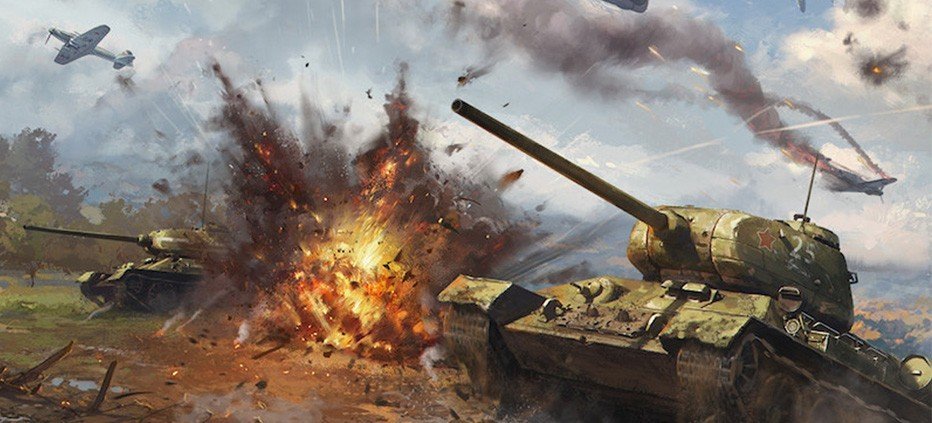
In visiting the actual camps themselves, he does find some dedicated officials (normally having served a shorter time in the system) as the system is simply overwhelmed by the sheer numbers of prisoners. There are more prisoners than camp buildings so the weaker prisoners sleep outside which is not that bad during the milder months as the interiors of the camp buildings are dark, poorly ventilated, and filthy due to the lack of proper sanitation. He writes that at times he is choaking from the stench of the buildings. Some officials show him stacks of letters they sent to their superiors asking for additional funds to construct new facilities, for more manpower to manage the prisoners, all to no avail. Most letters are never even acknowledged.

Continue reading
Share:
Reading time: 3 min
Book Reviews

Retribution: The Soviet Reconquest of Centrol Ukrain, 1943 by Prit Buttar

August 30, 2024 by Barry J. Klazura No Comments

Bloodlands, his 2010 history of Eastern Europe, Timothy Snyder presented a graphic picture of the continual wars, revolutions and famines which has plagued Ukraine and surrounding lands. We have seen for over two years with the Russian invasion of Ukraine more heartless killing and terror. In Prit Buttar’s Retribution we witness a merciless war of attrition between the Soviet Union and Nazi Germany as the Soviets drive to recapture an area which was overrun in 1941 and which suffered under the Nazi regime.

This is a detailed military book of that campaign which totally ignores the suffering of the local population. Caught between two gigantic military forces, we can only image the terrible cost that the locals faced when thousands of tanks, airplanes and hundreds of thousands of men on both sides fought in a no mercy military campaign driven and directed by military and political commanders who gave little if any thought to their own troops, let alone the civilians.

In a book of nearly five hundred pages, there are numerous eyewitness accounts by soldiers and field grade officers (most of them from the German side) which can very well lead the reader to exhaustion after only a few pages. The fighting was so brutal and unrelenting that it makes the battles of attrition of World War One almost seem to be less horrific than they were. Why? Because which World War One introduced the war between machines which replaced the wars between men, the leap in technology and lethality of the means of killing had exploded exponentially. Although the German army still had a slight professional edge, the Soviets had learned well from the Germans and had increased their ability to adapt and foresee the German defensive moves. Yes, the Soviets still used on many occasions the blunt force of superior numbers in both men and material, but the constant drain of experienced German officers, NCOs and material, though endless battles deprived the average German soldier of any hope of relief let alone victory.

The individual German tank crews were still, tank for tank and man for man, superior to the average Soviet tank crew, but as would be the case in Western Europe in the next year, the Soviets like the Americans were willing to lost three or four tanks in order to kill one German tank.  The Soviets outproduced German production by a ratio of two, three and even four to one, and while the Soviets could concentrate their efforts in one continuous theater, the Germans had to spread their production and manpower over several theaters.

Was the reconquest of Central Ukraine a forgone conclusion? Nothing is ever guaranteed in war, but nothing short of a miracle could stop the Soviets. The mistakes of the Germans earlier in the war such as not knocking out England, or their defeat in North Africa, even the German declaration of war on the United States all came home to be paid in this campaign. The Germans decided to fight the world knowing that time was not on their side. When they committed serious errors which upset their timetable, they faced the reality they created.

The shame of it all is that we see another war of attrition in the same area today. Once again, the average person will pay the price for a tyrant’s illusions.

Share:
Reading time: 2 min
Book Reviews

The Stronghold by Dino Buzzati

August 12, 2024 by Barry J. Klazura No Comments

The review of this book from the back cover states that, “Buzzati is one of the great Italian writers of the twentieth century, renowned for his fantastical imagination and for a touch that is as lyrical as it is light. The Stronghold, previously translated as The Tartar Steppe, is his most celebrated work, a book that has been seen as a veiled attack on Mussolini’s militarism, a prophetic allegory of the Cold War and an existentialist fable.” Considering it was originally published in 1940, claiming it is an “allegory of the Cold War” is quite a claim, but I digress.

I personally was not impressed with this novel; I found it slow moving, dull and pointless. It tells the story of a young Lieutenant who is transferred to the remote fortress of Bastiani, there to stand guard along with an aging garrison against an anticipated invasion by some terrible enemy. Aside from the normal duties of manning a garrison in a remote area, there is little to do and despite the best attempts to fulfill his duties, the Lieutenant like all the other officers and enlisted men gradually fall into a lethargic existence. Then the enemy appears, and life suddenly has meaning! On the various mountain tops two or three of the enemy are spotted so action must take place! Then a message appears, and that brief flame of action is destroyed as the “higher ups” state that the newly seen opponents are in fact on a peaceful mission and garrison life returns to normal.

That is about it. Fini! Oh, there is more as we watch our Lieutenant live out the rest of his life and those who he holds dear die or disappear. Nothing more.

Now I admit, I may expect more from a novel, I may be a bit too shallow (one reviewer wrote that the Lieutenant confronting, “the desperate need to affirm oneself as an autonomous entity against the forces of solitude and persecution”) to understand such depth. On the other hand, some reviewers may have gotten into a bit of group-think and must enjoy a bit of mental, shall I politely say, exercise. Unfortunately, this novel reminds me of Hunger by Knut Hamsum (see my review, 3/14/2020), a western European attempt at authoring a short Russian novel; one which allows a willing reader to find much more than there actually is.

Share:
Reading time: 1 min
Book Reviews

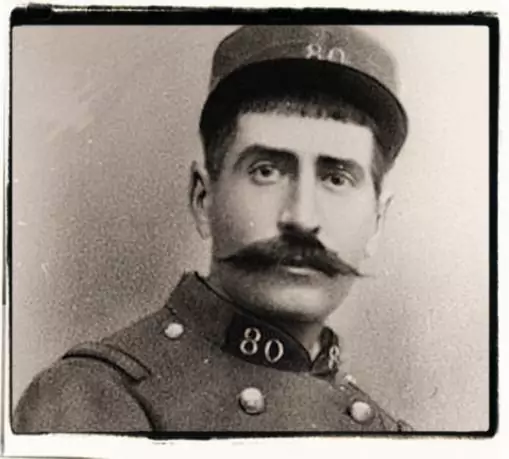
Poilu: The World War One Notebooks of Corporal Louis Barthas, Barrel Maker, 1914-1918

July 25, 2024 by Barry J. Klazura No Comments

During the first world war, Corporal Barthas kept a diary, totaling some nineteen notebooks; in those books, he recorded his thoughts and actions while serving in the French Army.  A simple but educated man, he hailed from what is known as the Midi, which is Southern France, bordered by the Atlantic and the Mediterranean.  He was a barrel maker, a respected craftsman, a socialist and anti-militarist, none the less, he was called up in his late 30’s to serve in what was a reserve unit.  As the war went on, that reserve unit was called on to enter the front lines on a continual basis and he served in the battles for Artois, Flanders, Verdun, the Somme and the Argonne.  Fortunately for him, his unit was not involved in the bloody offensives but managed to serve in the “quieter” sectors of those famous and terrible battles. He thus managed to escape the murderous infantry attacks against barbed wire and machine guns but was still subjected to the daily filth of the trenches with its rats, bodies in shallow graves and being covered from head to toe in mud for weeks on end. After the war, Barthas set out to complete the notebooks by corresponding with surviving companions via letters and postcards, and re-writing them in new notebooks as the older ones were covered in mud, chewed by rates and subject to all of the indignities of any ordinary soldier. Having achieved that, the manuscript lay untouched until it was finally published in 1978, sixty years after the end of the war and twenty-six years after his death.

His diary is highly unusual for the great classics we have from the first world war were by and large written by officers, such as Siegfried Sassoon, Ernst Junger, Robert Graves and others.  This is one reason why this book is so important; it tells the story of the war from the sharpest end of the bayonet, from the perspective of the average infantryman.  Barthas did manage to attain the rank of corporal (although it was temporarily lost) and it is clear that there was even a noticeable distinction between a corporal and a sergeant let alone the gap with the officers. It is also important as having read literally hundreds of military books covering many nations, I personally have never read a book in which the attitude towards the lowly infantryman was so great as existed in the French army at that time.  If the locations were different, I would have assumed I was reading about the army of the Czar at the time so brutal and calloused was the mindset of the officer corps. 

The lack of care and general attitude that is shown in the pages of the diary are exhibited in so many ways; a lack of leave, poor food, cowardly and inadequate medical care, failure to plan and provide shelter and basic sanitation for troops as they rotate out of the front line, the list goes on and on.  Coupled with the sheer willingness to sacrifice troops in a war of attrition (as General Joffe would say, “nibble at the enemy until there are no more”), there is no wonder that the French army had a mutiny which, had the Germans realized it’s existence, they could have all but walked through entire sections of the French line.  Barthas does not cover the mutiny in any detail, also in his section some soldiers’ councils were set up and he was offered to be elected as the President of his.  Fortunately for him, he refused the “honor” and thus avoided the punishment when the council was dissolved (for more information, read Dare Call it Treason by Richard M. Watt).  It is a miracle that the troops did not turn their guns on their officers.

Barthas makes it clear that the soldiers fought not for glory, honor or the fatherland, but rather for their comrades, the man next to you in the firing line, your mate who would carry your pack as your feet are blistered and you cannot go on, the man who would share the precious parcels that he received from home.  Perhaps after the war, after the pain begins to go away, some of the men will remember what passed as good times, the small victories be they in a fight or in the scramble for a good place to sleep, but Barthas makes a strong argument that at least for the French, the first world war held little to look back on with anything except distain and disgust.

An outstanding book which will make every individual who has not been in the military and especially in a war, look with new respect on those who have given that precious piece of their life for others.  Barthas is in the end no flag waving patriot and he had a different vision of the future; he was against war and we shall never know if he ever came to realize that the human cycle contains that terrible seed that must bloom in order to keep safe the life all man want.

Share:
Reading time: 4 min
Book Reviews

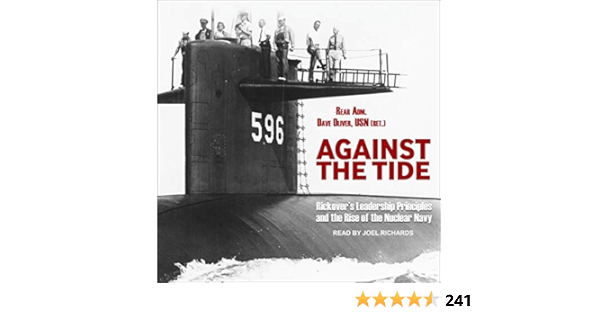
Against the Tide: Rickover’s Leadership Principles and the Rise of the Nuclear Navy by Read Admiral Dave Oliver, USN (Ret)

July 15, 2024 by Barry J. Klazura No Comments

Prior to World War II, the established bureaucracy within the U.S. navy felt that battleships would decide victory or defeat in any ocean-based war. During the war, it was realized that it was not battleships which were the deciding factor, but the aircraft carriers and hence, a new bureaucracy displaced the old.  There was another weapon which created its own set of followers and that was the submarine.  It was the submarine in the Pacific that accomplished what the U-boats could not achieve in the Atlantic; the destruction of the Japanese to transport the basic materials they needed to conduct a war.  The U.S. submarine fleet destroyed the Japanese merchant fleet which carried the oil, wood, coal, foodstuffs and all the other ingredients upon which Japan depended.

The submarine officers were a different breed apart from the officers on carriers and other surface vessels.  They were so different in fact, that officers who served in submarines knew they did not have a chance to access the highest ranks in the navy.  They were considered mavericks, risk takers and prone to striking out on their own.  They readily admitted these characteristics but then their service was entirely different from the rest of the navy.  A surface vessel can have engine problems and get towed, but if a submarine has major engine problems, it sinks.

Against this backdrop of two entrenched bureaucracies, each attempting to snare more dollars in the military budget, comes Hyman Rickover, a man of Jewish background, born in Russian occupied Poland in 1900 who has chosen to make engineering as his course in the Navy.  Talk about handicapping! As with sub officers, an engineering officer realized that getting a shot at Admiral status was small.  Not only those black marks, but he also becomes the driving force behind creating a force of nuclear submarines while disdaining the sub captains who came out of WWII with honors and medals.  Yet somehow, despite all odds, he manages to defeat much of the naval bureaucracy, convince powerful Congressional leaders and several President’s to create a nuclear submarine force that although smaller than the Soviet fleet, was technologically far ahead of the Soviets.

Continue reading
Share:
Reading time: 4 min
Book Reviews

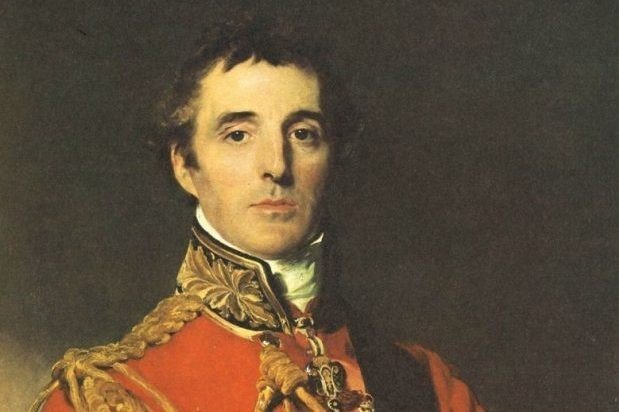
Wellington, the Path to Victory, 1769-1814 by Rory Muir

July 3, 2024 by Barry J. Klazura No Comments

A massive biography which covers the first half of Wellington’s life. Not being the first son, he was relegated to joining the military (under British custom, the first son inherited the title, the second went to the military and the third son entered the Church of England).

As was common at the time, Wellington had an unhappy childhood and like many men of that time, he made his mark and fortune in India. His military victories and diplomatic skill in India allowed him to assume command in the Peninsula during the Napoleonic wars where he reorganized the army of Portugal and created the famous defensive lines which the French under a number of Napoleon’s generals refused to attack. In a series of brilliant maneuvers, he out generaled every force sent against him as he slowly pushed the French out of the entire peninsula. That does not mean that he had an easy time as Napoleon poured men and material into the fight, but his real struggle was with various politicians and powers in London who were jealous of his successes and who kept Wellington’s forces on a strict leash.

Unlike other Wellington biographies, Muir provides excellent insight into Wellington’s excellent political skills not only in India, but also in Europe where he moved with ease. He was recognized as skillful, even tempered, and able to bring various factions together after the defeat of Napoleon.

He was a man of his age but also a man of a different age. Unlike most commanders of that time, he took great care for his men, ensuring that they had adequate food and logistical support. He may have been arrogant and superior in his manner to his men, but unlike Napoleon, he was careful with their lives and tried to avoid the typical frontal attacks which so wasted his opponent’s armies.

This is a long read, incredibly detailed, but for a serious scholar, an excellent biography on a complex individual.

Share:
Reading time: 1 min
Page 6 of 29« First...«5678»1020...Last »

Barry J. Klazura

Barry Klazura sipping grappa

With a Masters Degree in Guerrilla Warfare and Totalitarianism, Mr. Klazura was well prepped for a career in Sales and General Management, consulting on corporate startups and turnarounds as well as lecturing on history and politics.  For the past twenty years he has focused on being a financial advisor and consulting.

Delivered To Your Inbox

Sign up to get an email when a new article is published.

Topics

  • American Civil War
  • Biography
  • Book Reviews
  • Cigar Reviews
  • Coronavirus
  • Current Affairs
  • Education
  • Environment
  • Factoids
  • Government
  • Lifestyle, Cigars & More
  • Liquid Refreshments
  • Musings
  • Quips and Historical Facts
  • Society
  • Travel
  • Uncategorized
  • World War I

Subjects

book Books-Russia/Soviet Union Books 21st Century Books 1919-2000 Books Ancient to 1900 Books Asia Books Biography Books Fiction Books Germany 1919-1945 Books Pre-WWI books Viet Nam books world war I Books WW1 Books WWI Books WWII Cigar Friendly Location Amsterdam Cigar Friendly Locations-London Cigar Friendly Locations-New Orleans Cigar Friendly Locations-New York Civil War Coronavirus Environment Korean War World War I World War One

Recent Articles

At Stalin’s Side by Valentin Berezhkov

July 15, 2026
The Price of Victory by N.A.M. Rodger

The Price of Victory by N.A.M. Rodger

June 26, 2026
Frontsoldaten: The German Soldier in World War II by Stephen G. Fritz

Frontsoldaten: The German Soldier in World War II by Stephen G. Fritz

June 5, 2026
Organizer of Victory, 1943-1945, George C. Marshall by Forrest C. Pogue

Organizer of Victory, 1943-1945, George C. Marshall by Forrest C. Pogue

May 26, 2026
Illegals Released & Our Leaders

Illegals Released & Our Leaders

May 10, 2026

Inquiries and Comments

For general inquiries and comments, email AOTOHcomments@gmail.com.

Facebook
© 2020 And On The Other Hand. All rights reserved.