
Through the mists of time, the campaign against Poland in September 1939 has seemed to have almost disappeared. Memoirs and campaign histories of other actions of World War II have stuffed libraries around the world to overflowing and even today new volumes are produced which seldom contribute something new to our understanding of these events. Aside from an occasional article in a history magazine, about the most complete history of the campaign that I found was by Major Robert M. Kennedy as published by the Department of the U.S. Army (1956). Roger Moorhouse’s new book promised to bring some new facts to bare, especially around personal narrative from the Polish defenders. To some extent, this has been achieved.
I say to some extent as there are some actions where the thoughts and activities of the defenders are noted, but not as many as I personally would have enjoyed. The strength of this book is in putting the lead up to the war in good context, especially in the alliance between the U.K., France, and Poland. To be brutally truthful, Poland was betrayed by its allies, who promised aid and an offensive against the Germans but had no intention or desire; instead the “allies” of Poland were depending on bluff to stop the Germans. Just two days before the invasion, when the German army was deployed on three sides of Poland, the French Minister of War assured his Polish counter parts that France was fully committed to invading Germany with the full might of its military if war were to begin. Of course, the French “offensive” thrust a few kilometers into Germany and then quickly pulled back, while the British did not begin a bombing offensive as “private property” might be damaged.
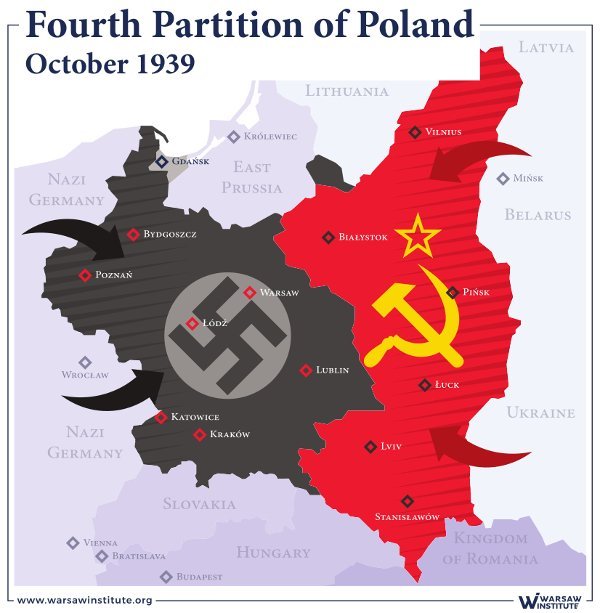
The Polish defense of Westerplatte is covered well, but other actions such as those on the Hel peninsula and at the fortress of Modlin are barely touched. The famous cavalry actions of Poland’s Uhlans are put into proper perspective and the Soviet invasion of Eastern Poland are also covered adequately. Other weaknesses include not discussing the escaped of over 100,000 Polish troops through Romania and their contribution to the allied victory (as well as their betrayal in England where they were not allowed to participate in the victory parade for fear of offending Stalin and the domestic Labor Party), and a summation of German losses during the campaign. It is known that the war costs the Germans over fifty-thousand casualties and approximately twenty percent of their tanks.
From the very start of the war, the Germans embarked on a reign of terror, executing both Polish “intellectuals” including policemen, lawyers, doctors, priests, and teachers. In the beginning theses individuals were primarily Polish but Jews were also targeted. The key was to break the will of the Poles to resist, the view being that the Jews had no where to go and could be handled on a larger scale in time.
In the end, the nation which was the first to stand up to Nazi Germany and who stood by the Allies in spite of bad faith, was a loser in the Second World War. There were no victory parades, no awarding of honors but there was forty-four years more years of terror under the rule of Communism. Perhaps that is why Poland realizes the danger of Russia so much more clearly than the Western Europeans.
This work is a good introduction to the campaign and basic reference book for anyone who wishes to understand the importance of the politics on both sides and a bird’s eye view of the battles. Moorhouse follows in the footsteps of his mentor, Norman Davies so we should see additional fine histories in the future.