
On The Other Hand -
Book Reviews
Lifestyle, Cigars & More
Musings
About
On The Other Hand -
  • Book Reviews
  • Lifestyle, Cigars & More
  • Musings
  • About
Book Reviews

The Transylvanian Trilogy by Miklos Banffy

March 20, 2025 by Barry J. Klazura No Comments

This is a massive novel (about 1600 pages) written in three sections: They Were Counted. They Were Found Wanting and They Were Divided. There are a number of sub-plots, some romantic, others centering on the morals and norms of the aristocratic Hungarian society prior to World War I and quite a bit on the politics of Hungary and its relations with the Austrian part of the Austro-Hungarian Empire. Originally published in 1934 and 1940 but was banned by the Communist government until a new edition was published after the fall of Communism in 1990.


The author was an active liberal member of the Hungarian pre-war parliament and after his retirement, wrote several plays, short story books and this novel. Vainly attempting to save his properties after the end of World War II, he could not leave Transylvania and was separated from his wife until shortly before he died when we was allowed to leave Romania and live in Budapest.


There are numerous plots and mini stories within this massive work which center on the norms of the pre-war Hungarian aristocratic society. There are love stories, tales of falling from grace, political foolishness in a time of national danger and more. Since the author was an actual politician at the time of the novel, the second and third sections give the reader an insight into the actual politics of the day. In fact, if someone were interested in Hungarian politics of that time, they would enjoy large sections the novel as the political squabbles of the time is presented in a lively, interesting manner.

There is one unique opportunity in reading this book as the author, who was an active politician at the time of the story, is able to provide an insight into the actual government debates and problems leading up to World War I. Those sections would be an excellent addition to Luigi Albertini’s three-volume history of European events which led to the First World War. The petty bickering over what colors should the ribbons be on the officer’s swords while the army is starved of money shows the inability of the Hungarian politicians to confront reality due to their own self-centered ideology and prejudices. It makes for fascinating reading.


Let me say there are two drawbacks to the book. The first is that I was hoping for more of the plot to center on Transylvania and its relationship with its Hungarian overlords. While the main character of the novel has extensive land holdings in Transylvania, aside from a minor sub-plot about agrarian/forest reforms, there is little that really occurs in that area. Yes, one reads that the local residents who were mostly Romanian, were abused by the petty officials and money lenders who were Hungarian. Unfortunately, the true extent of how the Romanians were abused is not covered.


Another weakness in the first section is that there are too many pages which go over the romantic sub-plot of the main character and the woman he pursues. That section is beautifully written, but it seems to go on and on for scores of pages.


The strength of this novel is its ability to take us into a society and world that disappeared in 1918. The norms, standards and misdirection of the Hungarian kingdom are laid out and from the advantage of hindsight, we can see where the errors of that society and it political structure must lead. Being the length that it is, it is another of those novels that one would pick up to re-read once every ten years or so (in fact, I first read it in 2013).

Share:
Reading time: 2 min
Book Reviews, Current Affairs

The Eurasian Century: Hot Wars, Cold Wars, and the Making of the Modern World by Hal Brands

March 17, 2025 by Barry J. Klazura No Comments


A friend of mine recently lent this book to me and it brought to mind various debates I had during graduate school many moons ago regarding the premise of the book; whomever controls the Eurasian continent controls the world.


This theory was originally formulated in 1904 by Halford MacKinder, a British geographer. It shortly followed the work by Captain Alfred Thayer Mahan’s extremely influential book, The Influence of Sea Power upon History, 1660-1783. In that book Mahan put forth the theory that as the oceans are the fastest routes for trade, control of the oceans will decide which powers will succeed and which will die. MacKinder put forth the idea because of the population, central position, and mineral wealth of the Eurasian land mass, that it will determine which nations live and die. Going further, Karl Haushofer, a German geopolitician continued MacKinder’s theory and he was influential to the Nazi view of the world as MacKinder was influential with Kaiser Wilhelm prior to the first World War.


Britain and the United States are both sea faring nations, outside of the Eurasian sphere, yet both have played vital parrs in controlling and shaping the Eurasian sphere. Brands goes through several examples of how the United States has dealt with the area, including World Wars I and II, the creation of NATO, our actions in the Middle East and so forth. In one way, this is a weakness in the book as the involvement of the U.S. was not due to an acceptance of MacKinder’s theory, but rather at least until the Cold War, a natural case of self-defense. The U.S. actions in the Middle East, plus Afghanistan are more suspect in that they went far beyond actions that were previously acceptable to the average American.


The last part of his book looks at the current players who seek to control if not all, at least sizable chunks of the Eurasian land mass, namely China. China with it ever increasing military power and sizable economic power, is the greatest player. It pushes until seriously pushed back as the nations such as Viet Nam, the Philippines, and others are finding out today. Their Belt and Road programs has reached even into Europe and has been successful in spreading China’s influence through most of Africa. Can China, with help from Russia, seize control of the Eurasian area thus locking out England and the United States out of such a vital area.? Can anyone accomplish that goal?


That has always been the key question to me, for the land mass is so great, the populations so diverse and in so many levels of development that how could any power do anything but bleed to death attempting to gain a level of control that would be worth such a great effort. In the early twentieth century, thinkers like MacKinder and Haushofer might have believed it was possible, even though there were already small struggles for independence in India and parts of Asia and Africa. Today, we must add in the religious extremism of the Middle East (and parts of Indonesia) and the task would become even harder. Finally, we have seen failures in the Belt and Road project which show the Chinese model may have feet of clay.


I would recommend this book as it is objective (I only found a couple of examples of personal political bias) and provides an excellent overview of various nations causes for action. If one or more nations cannot control the Eurasian area, is it possible to be done by a group of nations? It is doubtful, for if we think of the problems in Europe which has tried to tamper down the differences between the various members of the E.U., we find that despite hundreds of years of cross border trade and wars, the differences in languages, customs, views of history, even food make for a challenge on so many fronts.
The Eurasian area is huge and the hundreds of millions of people who live there share little in common beyond a desire to live, have enough food and at best, provide for a better life for their children. Help yes, control and direction, no.

Share:
Reading time: 3 min
Book Reviews

Her Privates We by Frederic Manning

March 5, 2025 by Barry J. Klazura No Comments

The Middle Parts of Fortune: Somme and Ancre, 1916

I found a list of the greatest military novels of all time, which offered a great opportunity although I question any such lists as the rankings can be impacted by a herd mentality. It did have one strong thing in its favor and that was a quote by Erest Hemingway that this book was, “The finest and noblest book of men in war.”. Who am I to quibble with Mr. Hemingway?
The novel takes place shortly after the disastrous battle of the Somme in 1916, the darkest day in the annals of the British Army when they managed to suffer over fifty-seven thousand casualties (nearly nineteen thousand dead and thirty-eight thousand wounded) on the first day of the joint British-French offensive. Designed to give a quick victory to the Allies, the battle turned into a four-and-a-half-month slugfest that cost a total of about one million casualties. The main outcome of the battle (aside from the slaughter) was that the German army finally realized that they were fighting a material war with human material.
There are no descriptions of the battle and how men were able to survive the battle; the entire novel centers on a small group of men who are pulled out of the line for refitting. They talk occasionally about lost comrades, pull guard duty, skip off to the local town to find a drink and are annoyed at officers who try to impose some of the discipline that was overlooked in the trenches.
The main character is known as Bourne, a bit of a loner who tries to get along with everyone. Earlier in the war he was recommended as officer material and with the huge losses in the war, the powers that be approach him on becoming an officer. The experience of war has put the shine off such prospect for Bourne but the natural forces of the military put him on a course that he accepts as he knows the force of the military. There are pages of dialog between him and men of his section, plans are made for drinking parties, and there are the usual complaints and grousing that is found in any similar situation.
I shall not provide the ending of the book or any moral if there is one, but I was disappointed that the ending was clear to see halfway through the book. Of course, in any novel about war the types of endings are rather limited, but it is so clear in this instance that it took the joy out of the reading. Why our friend Mr. Hemingway would make such a recommendation for the book is beyond me, but it proves that one can take recommendations with a grain of salt.

Share:
Reading time: 2 min
Book Reviews

Autumn in the Heavenly Kingdom: China, the West and the Epic Story of the Taiping Civil War by Stephen R. Platt

February 26, 2025 by Barry J. Klazura No Comments


Reading Chinese history can be difficult for a Westerner due to the names, locations, time frames, etc. Dr. Platt has done an excellent job of bringing to the reader an important segment of China’s more recent history (1850s) when somewhere between 20-50,000,000 (that is million) people lost their lives in a civil war. Consider that our Civil War cost about 750,000 lives and you will get an idea of the scope of the war and the misery it caused in China.


The Taiping leadership took many Christian dogmas as their rules and felt that the Western powers would help them in their struggle to overthrow the hated Ming dynasty. The Western powers (mostly Great Britain) did not understand the politics of China however as well as they thought so they decided to back the Ming dynasty with whom they knew they were able to get valuable trading concessions and who were weak and corrupt.


The book is an excellent read and will give the reader a bit of an insight into the history that continues to shape China today. A definite well done to the author.

Share:
Reading time: 1 min
Book Reviews

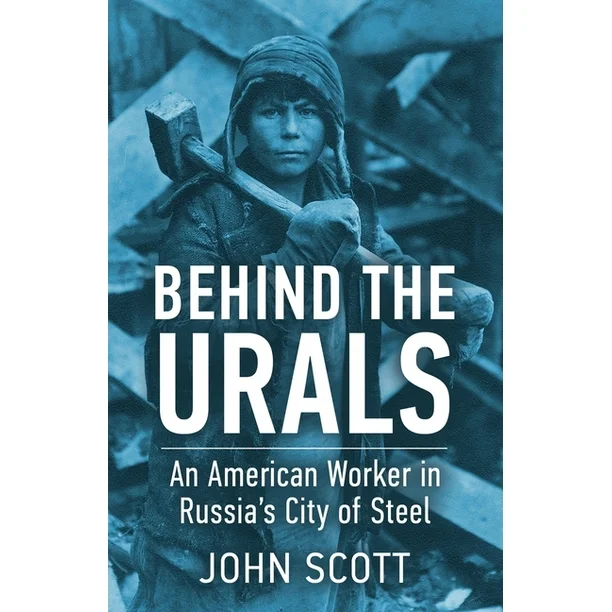
Behind the Urals: An American Worker in Russia’s City of Steel by John Scott

January 30, 2025 by Barry J. Klazura No Comments

During the Great Depression, thousands of Americans went to work in the Soviet Union which seemed to hold the answer to the failed policies of Capitalism. Stalin’s demand that electrification be brought to every corner of the Soviet Union meant that dams, railroads, in fact, all the basics of a modern industrial state be built in record time. In order to do this, Stalin made agreements with major U.S. firms, such as Ford, G.E., etc for entire factories including their key workers. U.S. citizens were promised good working conditions, housing, etc. on multi-year contracts to provide the managerial and technical expertise to complete and help manage those projects. Other thousands of Americans signed contracts to work in the Soviet Union on various projects. The history of this migration is told in an excellent book by Tim Tzovliadis, The Forsaken. In his book, he describes how they had to surrender their U.S. passports and for thousands, it meant they could not leave the Soviet Union. As Stalin’s projects were completed, or his paranoia increased, many were arrested and sent to various prisons and gulags.

Scott’s book gives us a ground level view of the living and working conditions at the steel city of Magnitogorsk. That city, built literally in the middle of nowhere, was sited there due to the proximity of the raw materials needed for the production of steel. Unpaved streets, lack of sewers, communal living with poor food, extremes in weather, lack of proper clothing, tools and no safety procedures give us an image of a wild west town which fought against nature and man’s stupidity rather than against rampaging Indians. Yet, people flocked to the area for work and because they believed they could be instrumental in building a better, freer, more equal world. Their idealism is wonderful to see, but also sad as what they are doing is helping to build a totalitarian state which would slaughter millions of their co-citizens.

This is an excellent book which gives the reader a look at history from the trenches.
Share:
Reading time: 1 min
Book Reviews

Retribution: The Battle for Japan, 1944-45 by Max Hastings

January 9, 2025 by Barry J. Klazura No Comments


One of the advantages of building a library is the luxury of being able to go back and re-read the books which are worthy of being in your library. There are certain books in my library that I have read several times over the years; why? Some are wonderful novels (such as the trilogy by Sienkiewicz) or the dissent novels by Rybakov. Others are histories filled with a myriad of facts or insights (think of Richard Evans, Richard Overy or William Manchester). I love that they can clutter my brain with obscure facts that I can pull out during a conversation or discussion on a related topic. Those books are special and fall into a special category of those which can be re-read every five years or so and be as fresh and entertaining as the first time they are opened.
Retribution by Max Hastings is one of those rare military books that falls into that special category. It has all the prerequisites of a great history book. It provides a broad overview of events, then focuses down to the strategies and tactics involved in those events. Another key element is that it is loaded with obscure facts which I find so interesting and even useful (in the right company at the right time), an example of the obscure is when he writes about the development an problems with the largest single expenditure of the war (even more costly than the Manhattan Project). Did you know that “The construction of a B-29 required 27,000 pounds of aluminum, over a thousand pounds of copper, 600,000 rivets, nine and a half miles of wiring, two miles of tubing.”. Do you care? But it is that type of detail that when you realize the U.S. produced thousands of those planes that you begin to realize the enormity of the war. Or that with the defeat of Nazi Germany, Canada announced that only those citizens who did not wish to stay in the war to defeat Germany could cease war activities.
His narrative is especially excellent when he goes down to the basic level; that of those doing the actual fighters. Some are British troops fighting in Burma, one of the worse areas of combat in the war and the least reported and celebrated. The humidity, rains, foot paths which turned into thick, boot sucking mud, poor food and an enemy who fought with determination even though many died of hunger. What about the survivors of the kamikazes? How could they survive, how many volunteered, how many were drafted into the ranks and how did it feel for those who taught the new pilots to see their poorly trained students take off knowing that they were doomed. Every nation which fought in the Pacific is highlighted as brave and pathetic stories are woven through the book.
This was my third reading of this history, and it will occupy a special place in the library; a place where timeless quality of writing and research is noted and I confess, I shall read it again in a few years and enjoy it just as much.

Share:
Reading time: 2 min
Book Reviews

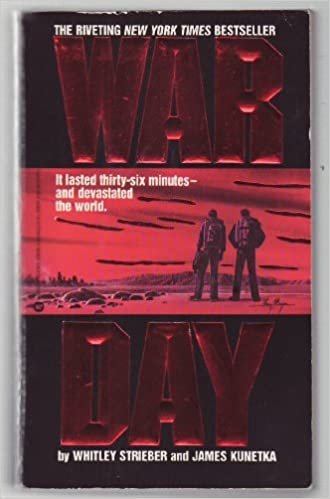
War Day by Whitley Strieber and James Kunetka

December 27, 2024 by Barry J. Klazura No Comments


What would happen if the United States was hit by a limited nuclear attack; an attack that because of the electromagnetic pulse given off by atomic weapons, all auto engines, computers, telephones, refrigerators, in fact, anything build after the mid-1970’s that ran on electricity was simply fried, incapable of working? That is the premise of this novel and no, it the attack was not carried out by terrorists but by the Soviet Union (the book was originally published in 1984. Yet, because of our concern over the possibility of terrorists getting a nuclear weapon, this book has suddenly had a second resurrection.

Aside from the obvious problems of tens of millions of Americans suddenly being forced to live as their great-great-great-great grandparents did, suddenly learning to farm, seldom being able to travel more than a few miles from their homes unless they had a horse, there could be the problems of parts of the United States going off on their own as the Federal government is either destroyed in the attack, or unable to impose its will beyond a short radius from their offices. Suddenly California, the Golden State creates heavily policed border crossings, not to keep out Hispanics, but to keep out millions of Americans who do not want to face typical winters and food shortages because coal is not available to heat their houses. Perhaps the old border between Mexico and Texas will become a no man’s land as local war lords fight both the Texas and Mexico governments as they try to create their own country. For those lucky enough to have cars or refrigerators build before they relied on computers, where will the fuel come from and how long will electricity be provided each day.

Finally, will countries like Japan, China and the Europeans see the natural resources of the United States as easy pickings to be plundered as the price paid from medicines and basic technologies will be provided on a rationed basis to the United States? Which of those countries would have a vested interest in having the U.S. become strong again when we could be kept weak and provide a willing work force.

Think it cannot happen? Think we could bounce back quickly? Then let me ask you this; if we had that type of catastrophe, if suddenly your car, your computer, your phone could not work, how long could you survive in such a brave new world?

Well written, thought provoking. Worth a read.

Share:
Reading time: 2 min
Book Reviews

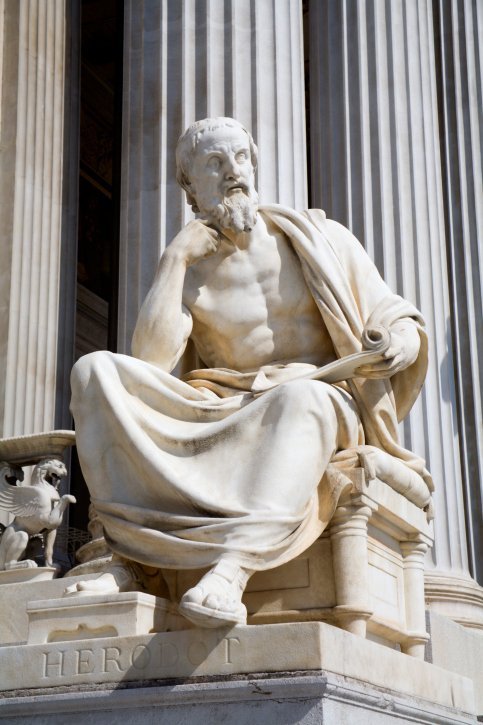
The Histories by Herodotus

November 27, 2024 by Barry J. Klazura No Comments


Herodotus according to Cicero is the Father of History. Does that mean that before Herodotus no Greek or Persian did not write history? Hardly, but Herodotus brought discipline to the subject by going out and speaking with locals, comparing their stories, examining the area of which he was writing and then drawing a conclusion as to the validity of any given narrative. This may not sound terribly new or exciting, but remember that he was writing history of the Greek and Persian wars around 460 B.C.
The book itself can be a hard read; imagine reading a novel by Alexander Solzhenitsyn, only instead of Russian names you have ancient Greek names (with no modern equivalent) and the story is in an area of the world where the locations have entirely different names than the areas are called today. Added to that, there are numerous “tribes” and “nations” that are long gone and that you have never heard of before in your life. Yet, in this translation (by Tom Holland), there are traces of wit and even sarcasm sprinkled throughout the six hundred plus pages. One learns from practices and a view of the world that sound strange and often silly, yet they are no sillier than the fears that the sailors of Christopher Columbus’ time had as they embarked on those voyages.


To be sure, historians after Herodotus have taken him to task. An example is provided by the German military historian, Hans Delbruck when he questions if Xeres could really field and army of 4,200,000 men. In volume one of his History of the Art of War, Delbruck points out that a German army corps of 30,000 men covers about fourteen miles even without its supply train. Given that modern fact, Xeres army would have a column of march of about two thousand miles! Additionally, Delbruck uses other historical records to shoe that certainly the numbers on the Greek side could not be realistic due to the known population of various cities at that time. Further, Delbruck questions the battle tactics as described by Herodotus, especially on the Greek side given the distances and the weight of their armor. Yet even with his numbers and logic, the detailed description of the Persian and Greek forces is excellent and believable.


To his credit, Herodotus presents an entirely different picture of the Persian king, Xeres. Contrary to popular history, Xeres is presented to be a brave, loyal and wise ruler, willing to take counsel and suggestions from those trusted individuals around him. He certainly must have been an interesting individual in an age of petty lords and tyrants.


I found that the best way to read this enjoyable history was to take it in small doses; a few pages so that the names and locations do not overwhelm the enjoyable writing. There are age old lessons to be learned from this book; nations and peoples come and go as other peoples move due to famine, drought, or pressure from other peoples; bravery in battle is honored as is loyalty and honesty, and war is and shall always be with us. This is the perfect book to read while one has a good cigar, a fine beverage, a comfortable seat, and the time to savor what one learns.

Share:
Reading time: 2 min
Book Reviews

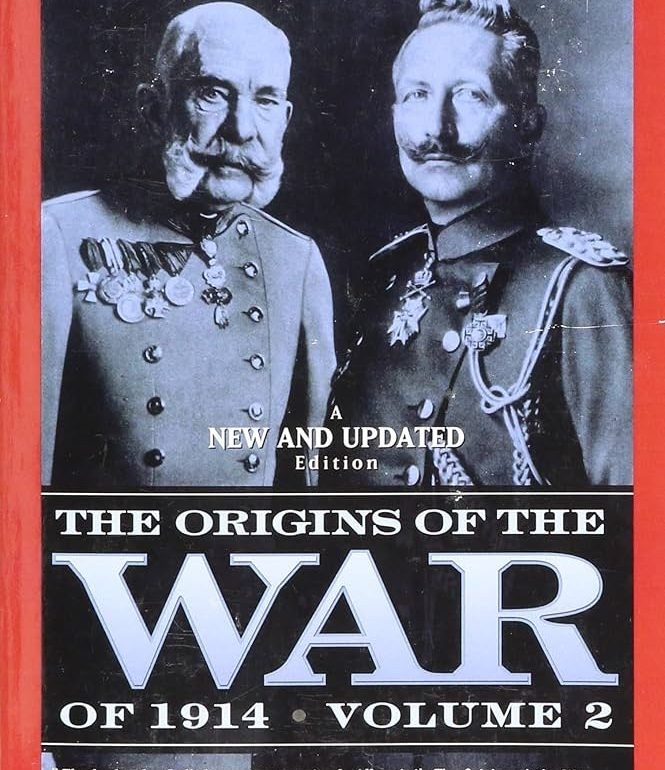
The Origins of the War of 1914 by Luigi Albertini

November 25, 2024 by Barry J. Klazura No Comments

First published in 1942 in Italy, Luigi Albertini’s The Origins of the War of 1914 (three volumes, about 2200 pages) traces the political, diplomatic, and military causes of the war, going as far back to the compromise between Austria and Hungary in 1867 and its impact which would ripple through Europe for decades. He takes the reader step by step along a path that ends in war. The way he lays out the events in Europe, one can see with the advantage of hindsight how so many European decisions naturally led to war.
The work itself is recognized as one of the two or three most important books on the subject and Albertini provides the reader military and diplomatic dispatches, notes on policy meetings held by France, Germany, Russia, and other nations. We are exposed to the lies, corruption, political back biting and conflicting interests of the leaders of nations and those who serve them. Just as today we face what is known as the “deep state,” in nineteenth and early twentieth century nations, generals, bureaucrats, industrialist, and others followed their individual interests, often at the expense of their own nations.
Humanity with all of its weaknesses and faults parades before the reader who is left shaking his or her head at the sheer number of foolish decisions. There is little nobility to be seen as:
• We see the stupidity of the Russian Czar who did not realize that he could not mobilize only a portion of his forces and the generals who lied to him.
• We see the Italian leaders who dreamt of expansion in the Balkans with the result that they sold their nation to the highest bidders.
• We see the German Kaiser, known for his bluff and bluster who pales as he realizes what is about to be unleashed thanks to his overweening ego.
• There is the Kaiser Franz Joseph, an old, tired man used by his Chief of the General Staff into issuing an ultimatum which no nation could accept.
• The assassin, Gavrilo Princip never regrets unleashing a war that would lead to millions of deaths and would open the door to a second war with tens of millions of dead, all in the name of a “Greater Serbia.”
• Britian’s Secretary of State for Foreign Affairs, Sir Edward Grey did not realize the danger Europe faced even though his nation had been in a naval race with the strongest land power in Europe.
• France fueled the rearmament of Russia in order to encircle Germany in a war of revenge using tactics that had cost them the last war with Germany.
There is no end to the players who each did their part to bring on the war. The list of long forgotten European foreign ministers, generals and officials can be daunting to keep straight precisely because none of them acted in a responsible manner, one which would slow down the slide to war.
Nations and their leaders have long memories. A quick decision by one nation can lead to a grievance of another that will last for decades. Yesterday’s allies are tomorrow’s foe for as Charles de Gaulle said decides later, “Treaties are like roses and young girls. They last while they last.” Unfortunately for Europe, the treaties of both sides were honored and paid for with the blood of millions.

Share:
Reading time: 2 min
Book Reviews

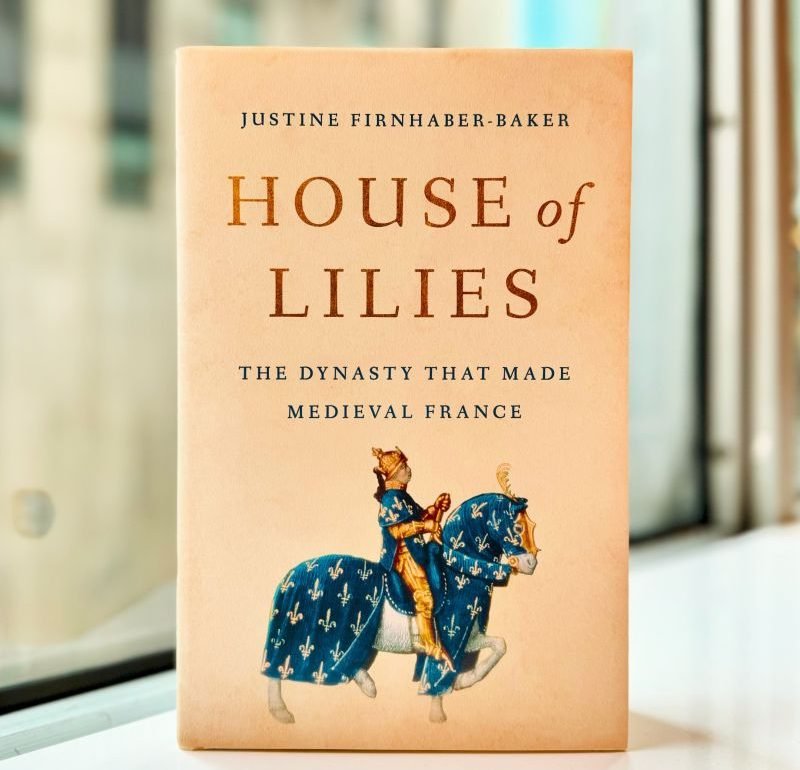
House of Lilies: The Dynasty That Made Medieval France by Justine Firnhaber-Baker

November 5, 2024 by Barry J. Klazura No Comments


It used to be that you could look to the future and see a never-ending landscape of progress for humanity. Medical care will be better, technology will make our lives better, famine and warfare will gradually disappear as increased wealth will eliminate the need for people to struggle. This history is about the building of the nation we know as France, a nation facing fundamental questions and challenges. As I was reading this history, I was struck by an almost mirror image of the building of France and the decline of modern-day France.
The area we know as France in the late tenth century was a patchwork of little more than warlords, robber barons and petty “nobility,” each vying for advantage over each other. Alliances were made and broken, religious persecution was widespread, and government was a concept that could only be viewed as an idea. It was a time, as Hobbs would say, when life was, “solitary, poor nasty, brutish and short.” Yes, there was the concept of the Holy Roman Empire, but true government in most of Europe was a dream for philosophers.
Out of this time however, through a series of wars and marriages, one family, the Capetians, became the most powerful monarch in Europe for nearly three-hundred and fifty years. From an area centered around Paris but dwarfed by more powerful lords in Burgundy, Aquitaine and several others, the Capetians managed to not only survive but came to master those other lords and create a more centralized, feudal state. It was no easy task as with each success came not only more power and responsibility, but also more demands. The Pope wants a crusade, a powerful baron has ambitions of his own, the cost of a state requires enormous amounts of money on a consistent basis, and more. Those demands must be met but there was no blueprint on how to manage those demands and thus there were times when the growing Capetian kingdom was close to failure time and time again. Yet the men and powerful women who headed the growing kingdom managed to keep forging ahead.
This book brings together a number of figures from the past that helps to give us an image of the times. Edward I of England, also known as “Longshanks” and the “Hammer of the Scots” (think of the movie “Brave Heart”), Eleanor of Aquitaine (the movie “The Lion in Winter”) and others. They all lived, fought, created, and ruled during a common time of political and economic consolidation. Yet despite such a prolonged period of power and the ability to deal with the challenges of time, the Capetians fell from power. They were not defeated by a stronger military challenger, but rather by the great weakness of a dynastic power; they died out. While there were still individuals who could lay claim to the Capetian throne, the one direct descendent of a Capetian king was fathered by a Valois which was the next dynasty to claim the throne.
The period involved in this history is not exactly a topic for everyday conversation, so the numerous and overlapping names may be a bit confusing for the average reader. But the book is well written, full of interesting historical tidbits and humor. Not exactly a “I can’t put it down” but a history that will bring you back simply to see how it all ends up.

Share:
Reading time: 2 min
Page 5 of 29« First...«4567»1020...Last »

Barry J. Klazura

Barry Klazura sipping grappa

With a Masters Degree in Guerrilla Warfare and Totalitarianism, Mr. Klazura was well prepped for a career in Sales and General Management, consulting on corporate startups and turnarounds as well as lecturing on history and politics.  For the past twenty years he has focused on being a financial advisor and consulting.

Delivered To Your Inbox

Sign up to get an email when a new article is published.

Topics

  • American Civil War
  • Biography
  • Book Reviews
  • Cigar Reviews
  • Coronavirus
  • Current Affairs
  • Education
  • Environment
  • Factoids
  • Government
  • Lifestyle, Cigars & More
  • Liquid Refreshments
  • Musings
  • Quips and Historical Facts
  • Society
  • Travel
  • Uncategorized
  • World War I

Subjects

book Books-Russia/Soviet Union Books 21st Century Books 1919-2000 Books Ancient to 1900 Books Asia Books Biography Books Fiction Books Germany 1919-1945 Books Pre-WWI books Viet Nam books world war I Books WW1 Books WWI Books WWII Cigar Friendly Location Amsterdam Cigar Friendly Locations-London Cigar Friendly Locations-New Orleans Cigar Friendly Locations-New York Civil War Coronavirus Environment Korean War World War I World War One

Recent Articles

At Stalin’s Side by Valentin Berezhkov

July 15, 2026
The Price of Victory by N.A.M. Rodger

The Price of Victory by N.A.M. Rodger

June 26, 2026
Frontsoldaten: The German Soldier in World War II by Stephen G. Fritz

Frontsoldaten: The German Soldier in World War II by Stephen G. Fritz

June 5, 2026
Organizer of Victory, 1943-1945, George C. Marshall by Forrest C. Pogue

Organizer of Victory, 1943-1945, George C. Marshall by Forrest C. Pogue

May 26, 2026
Illegals Released & Our Leaders

Illegals Released & Our Leaders

May 10, 2026

Inquiries and Comments

For general inquiries and comments, email AOTOHcomments@gmail.com.

Facebook
© 2020 And On The Other Hand. All rights reserved.