

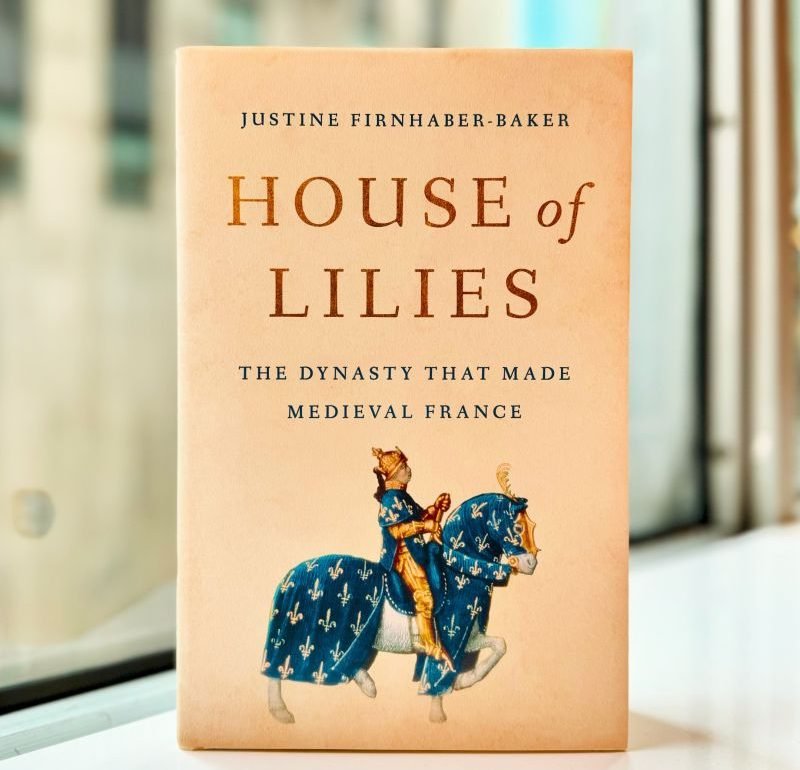
It used to be that you could look to the future and see a never-ending landscape of progress for humanity. Medical care will be better, technology will make our lives better, famine and warfare will gradually disappear as increased wealth will eliminate the need for people to struggle. This history is about the building of the nation we know as France, a nation facing fundamental questions and challenges. As I was reading this history, I was struck by an almost mirror image of the building of France and the decline of modern-day France.
The area we know as France in the late tenth century was a patchwork of little more than warlords, robber barons and petty “nobility,” each vying for advantage over each other. Alliances were made and broken, religious persecution was widespread, and government was a concept that could only be viewed as an idea. It was a time, as Hobbs would say, when life was, “solitary, poor nasty, brutish and short.” Yes, there was the concept of the Holy Roman Empire, but true government in most of Europe was a dream for philosophers.
Out of this time however, through a series of wars and marriages, one family, the Capetians, became the most powerful monarch in Europe for nearly three-hundred and fifty years. From an area centered around Paris but dwarfed by more powerful lords in Burgundy, Aquitaine and several others, the Capetians managed to not only survive but came to master those other lords and create a more centralized, feudal state. It was no easy task as with each success came not only more power and responsibility, but also more demands. The Pope wants a crusade, a powerful baron has ambitions of his own, the cost of a state requires enormous amounts of money on a consistent basis, and more. Those demands must be met but there was no blueprint on how to manage those demands and thus there were times when the growing Capetian kingdom was close to failure time and time again. Yet the men and powerful women who headed the growing kingdom managed to keep forging ahead.
This book brings together a number of figures from the past that helps to give us an image of the times. Edward I of England, also known as “Longshanks” and the “Hammer of the Scots” (think of the movie “Brave Heart”), Eleanor of Aquitaine (the movie “The Lion in Winter”) and others. They all lived, fought, created, and ruled during a common time of political and economic consolidation. Yet despite such a prolonged period of power and the ability to deal with the challenges of time, the Capetians fell from power. They were not defeated by a stronger military challenger, but rather by the great weakness of a dynastic power; they died out. While there were still individuals who could lay claim to the Capetian throne, the one direct descendent of a Capetian king was fathered by a Valois which was the next dynasty to claim the throne.
The period involved in this history is not exactly a topic for everyday conversation, so the numerous and overlapping names may be a bit confusing for the average reader. But the book is well written, full of interesting historical tidbits and humor. Not exactly a “I can’t put it down” but a history that will bring you back simply to see how it all ends up.
Barry J. Klazura

With a Masters Degree in Guerrilla Warfare and Totalitarianism, Mr. Klazura was well prepped for a career in Sales and General Management, consulting on corporate startups and turnarounds as well as lecturing on history and politics. For the past twenty years he has focused on being a financial advisor and consulting.