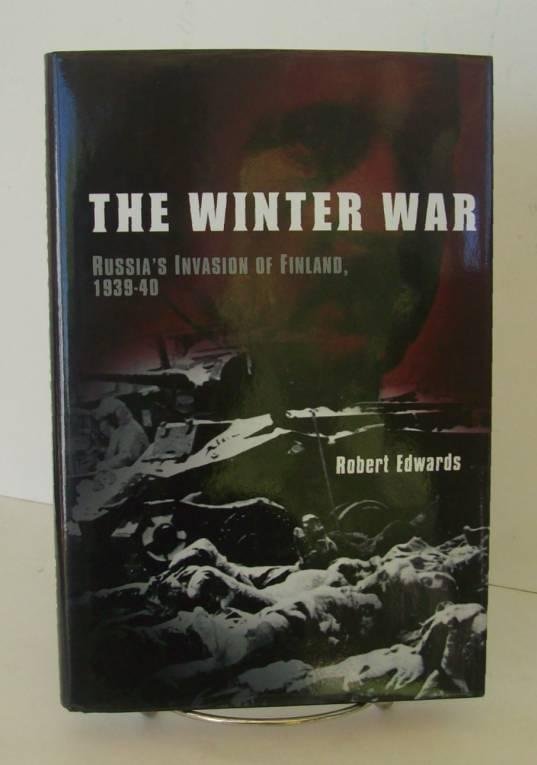
For 105 days, the small and ill-equipped Finnish army held off the full might of the Soviet Union. Outnumbered in men, tanks, artillery and aircraft, the Finns were able to cut off, surround and literally slaughter several Soviet offensive thrusts in the northern part of their country. Striking silently on their skis, the Soviets who were confined to the few roads had little opportunity to bring their superior firepower to bear. In the end, entire columns of Soviets along with their trucks and tanks, were found literally frozen to death. With each new defeat however, new masses of men and materials were thrown into the fight.
It was an amazing fight for a country that had gained its own freedom from the Czar only some twenty years before, especially as the nation had fought a civil war between the Whites and the Reds which left the nation divided. Suddenly, the nation had to fully unite or simply be overrun. Fortunately, they found a strong if controversial leader in Baron Carl Gustav Mannerheim. Mannerheim had been instrumental in defeating the Finnish red forces but was an experienced soldier. He wisely used his forces and was able to switch his forces to key points to blunt the Soviet attacks.
For the most part, Finland fought alone. Volunteers were being raised in Sweden and Norway, despite the potential problems Sweden could have with the Soviet Union. France made moves to put together a professional force to help and funds were raised in the U.K., but in the end, there was little real help, especially considering that only a couple of previous months, the Germans had invaded Poland and the Baltic states were swallowed by the Soviet Union.
Numbers finally told as the Soviets concentrated their forces in the Southern part of Finland were the ports and roads were more friendly to the Soviets level of expertise. Although the exact numbers will never be known, it appears that the Soviets lost some 400,000 killed, wounded, and permanently crippled, while Finnish losses were around 70,000.
With the end of the war, the Finns had to give up certain territories which Stalin felt was key to the protection of Leningrad as well as some ports and fortifications. When the Germans invaded the Soviet Union in June 1941, the Finns joined the Germans but only advanced as far as their old borders.
The war showed Stalin that his military suffered poor logistics, tactics, misapplication of force and a ruined officer corps. Of course, Stalin was the one who ruined his office corps with his purges of the military (some 40,000 officers were killed, arrested, or put into camps). Stalin quickly tried to reorganize his army and even release numerous officers from the camps. Those officers were more forward thinking that Stalin’s clique and many were key in successful actions later against the Germans.
Can one draw a parallel between that war and Putin’s current problems in the Ukraine? One of the largest differences is the terrible corruption which exists in Putin’s time as opposed to Stalin’s army. Stalin’s army was not as corrupt, it merely suffered from the paranoia of its commander, Stalin, and the commissar system of command. Another difference is that Finland never received the level of support from other nations. In many cases, the only way for the Finns to survive was to turn around captured Soviet tanks and artillery as opposed to the billions of dollars which has been showered on the Ukraine (although at a pace that negates some of its usefulness). In the end, it is a story as old as man; beware they who have that lean and hungry look.



Leave a Comment