

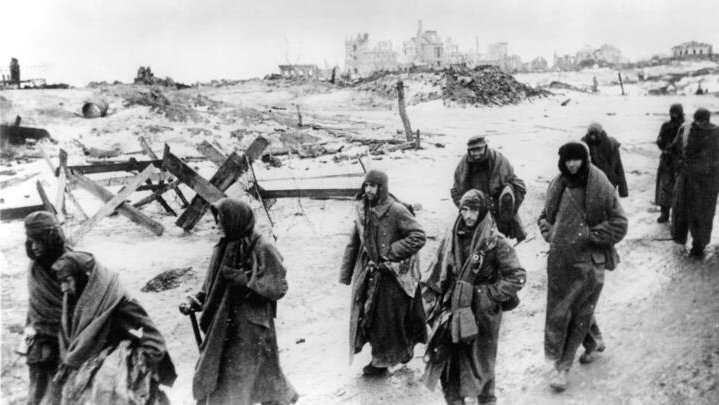
One of the great battles of World War II, Stalingrad consumed the lives of an estimated 1,000,000 men on both sides. The stories of human suffering, and bravery, of lost illusions and shattered idealism are legion and yet we seldom really can understand the pain of the men involved in epic battles.
When you think of it, the concept of men fighting in sub-zero temperatures, with little or no shelter, for months on end with little food, who are shelled, outgunned and faced by a foe who is both vengeful and afraid is unknowable to we who read about the battles. But Gerlach, who fought at Stalingrad and was one of the few (5000 out of 91,000 captured), did manage to survive and create a story woven from the experiences of other Germans who were captured.
What few people realize is that the fighting was to a large extent, carried on by the few frontline troops who had to face the guns, tanks and cold alone on a windswept steppe. Tens of thousands of other Germans were the support troops who lived in the ruins of the city in basements, shattered rooms and dug outs which provided them with a level of protection and comfort that was unknown to the frontline soldiers. These support troops stayed behind the lines until late in the battle when some of them were placed into special “assault” battalions; untrained in combat, they were simple cannon fodder, thrown into the breach and accomplished little other than to die for the Fuehrer.
The unsung heroes of the battle were the doctors and orderlies who tried to perform miracles for the wounded. Tired and overworked, lacking pain killers, clean bandages, even a warm room from which to work, they spent long hours cutting, stitching and battling to save lives. And yet, even if they were successful in their operations, the wounded most likely faced little food, no heat and unsanitary conditions as they were lined up by the hundreds in basements or even outside to suffer and freeze. The images of wagon loads of wounded men, slowly freezing to death because there was simply no more room for them in the pathetic shelters will make any reader realize how terrible and pitiless war is to the participants.
Gerlach has created an excellent history of a battle, seen from men at the point of danger. No sweeping scenes of mass movements of men, no brave words to stir one’s heart, this novel brings war down to its lowest level; the men in the trenches whose only knowledge of the war and battle is as far as they can see.





Leave a Comment