

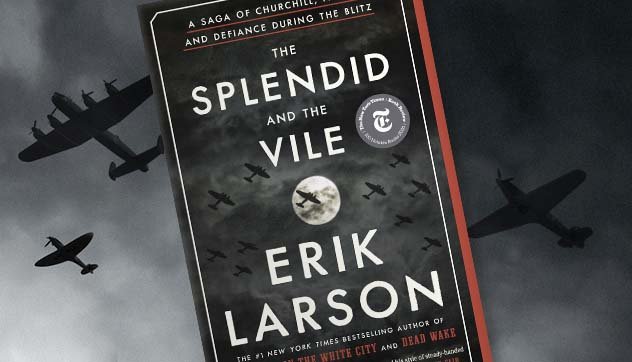
History can be the best of subjects or the worse depending on your individual mindset, for any event in history can be a huge puzzle that can and does cause debate years and years after any given event. History is not as bad as the saying about economics (ask four economist a question as to what will happen and you will receive five opinions), for at least with history there are certain proven facts, records, confessions, etc.
In this historical novel, the author pulls on diaries, interviews, memoirs, and other sources to provide the reader with an excellent overview of numerous personalities (Churchill, Halifax, Goebbels, Goring, Beaverbrook, and others), their strategies, fears, personalities, and so on and how by interacting with one another, they created the saga of the Battle of Britain. How close to defeat was England at that time and how great the burden on the shoulders of men like Churchill, Beaverbrook, and others as they had to hold together and create a national will against not only the forces of Hitler, but also against those within their own country and even cabinet who wished to take a different course. How easy it would have been to simply make some sort of deal with Hitler in the vain hope that he, who had broken every agreement, could be trusted.
If one had no idea of the drama that was the Battle of Britain, one would be forced to read numerous historical works, for example Churchill’s Their Finest Hour, transcripts from the Nuremberg Trials, Colville’s The Fringes of Power, memoirs by Field Marshall Kesselring, Lord Ismay, Averell Harriman, Adolf Galland, etc. etc. Or one could read this novel which brings all the players together day by day so one can see the great chess game that was being played with the lives and futures of millions. The dry characters of history are brought to life with their fears and prejudices, goals, and strategies; they become living beings and we come to realize like everyone before and after, they are ordinary individuals. Some are more intelligent, some more driven, some weaker but they are after all, only human. In the end, one sees the interplay of each person so that a vast mosaic is spread before the reader. From there, it is up to the reader to delve further to increase their knowledge, to challenge the mosaic or to simple walk away with a basic but satisfactory understanding of one the key events of the twentieth century.
It might not be a bad idea for there to be a series of excellent historical novels like this to serve as an introduction to history. The scope, drama and easily recognized human faults and strengths might open the world of history to more individuals, and from that opening, more people would not be so gullible as they go through life. Some might even learn that it has all been done before and there is something to be learned from history.


Leave a Comment