

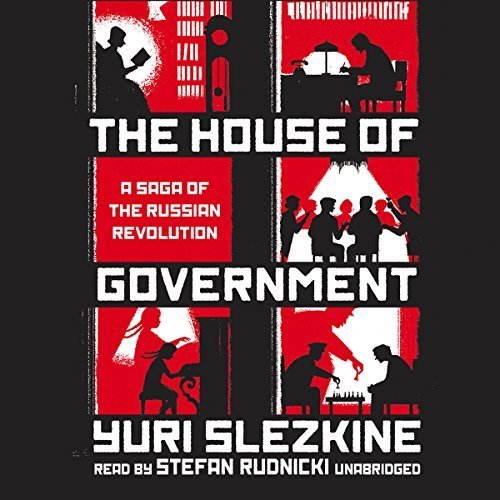
Martin Amis wrote, “The chief demerit of the Marxist program was its point-by-point defiance of human nature”. Yuri Slezkine creates a solid argument that Marxism was a change of faith and that it was a cult, filled with dogmas that defied logic and human history. Could a parallel be drawn between Marxism and the early Church? Both were fueled by dogmas, their gospel was spread by zealous “preachers” who devoted their lives to their new religion; they both had martyrs, a hierarchy of disciples and believed that they were able to create a new and better world. Marxism went one step further in that it’s view of human nature was entirely against the course of history, but their dogma answered “history” in that the nature of man had been corrupted by all societies throughout history. Thus, while claiming to be founded on “science”, the dogma of Marxism discounted all known evidence. With that dogma, they unlike the Church, claimed that they were able to create a “new man”, freed from the chains of the past, of the “artificial” realities of the world, able to create a world filled with happy, satisfied, productive individuals.
Of course, no one believed that true Marxism could be achieved overnight, and so there had to be a period of the dictatorship of the proletariat. During that time, priests, aristocrats, kulaks, capitalist, the majority of academics and others needed to be purged. The bourgeois institution of marriage was also to be amended so that women would not be oppressed. The failure of the Soviet experiment of easy divorce quickly created a problem so the need for the family was recognized (at least until the children could be raised almost entirely by the State). And, this helped to eventually be a major problem for the longevity of Communism, for parental influence could not be entirely countered.
We move then to what was the actual house of government. Given the nature of the Soviet state, a huge bureaucracy needed to be created and once created, cared for in order to survive. Across from the Kremlin was a swampy area and upon this land, a large series of buildings were created to house the families of the top bureaucrats. Modern apartments with running water, separate kitchens, comfortable furniture, etc. were necessary for the followers of the “cult” of Marxism (Communism) so in fact, the Soviet state institutionalized the exact system which was a major road block to fully realizing the dream of Marx and Lenin. Within this complex were the most elite of the Soviet system, the managers, engineers and directors who were to bring about the fulfillment of the dream.
There is no doubt that those who lived in this huge complex (over 500 apartments, theaters, stores with goods not available to the non-elite, etc.) were true believers. Their pedigrees reflected years of revolutionary struggle and sacrifice and so it was only right and just that they be rewarded for their devotion. The problem was that the idea could not do away with jealousy and paranoia, especially when it came from the very apex of the society, from an individual like Stalin who surrounded himself with cadres of devotees. And so, the purges began.
As with elsewhere in the country, there were the visits during the night from the secret police who began to take away the residents one by one. With each new visit, an apartment would be vacated, and a new resident installed. For those who remained, many slept with a suitcase packed for the night when they would be visited and taken away. And, with each visit, the dream began to fade.
Normally it would be the husband or father who would be the first to be taken (for all the propaganda of women’s liberation, few of the residents were female managers of industry). Then the wives would have to be moved along with the children who here to fore had led golden lives. When the wives of the men were then visited during the night, the children were deposited in state orphanages as few relatives would be willing to take a child whose parents were enemies of the people.
The Second World War brought some respite and a hope for a better world after victory, but those dreams were smashed by Stalin who saw a need for further actions against those who had been contaminated by contact with the West. All the while, the children of the “enemies” existed in orphanages of various quality, but they were often exposed to bourgeois literature from writers such as Dickens, Wells, Anatole France, Voltaire, etc. all of whom opened a world that was unknown and officially forbidden.
In the end, after Stalin, some of the survivors came back from the camps. Old, broken in health, they could not connect with their now grown children and their children had fallen away from the cult of their parents. Although an ideocracy to the end, the Soviet system imploded from its inability to adjust to the reality of the world. Along its dismal path lay millions of dead and millions of broken individuals, including those who had believed in a dogma that chose to ignore human nature, human needs, human desires.






Leave a Comment