

When Japan decided to go to war with the United States in 1941, it went with the realization that it could not win in a war of attrition. The average Japanese soldier (marine, aviator, etc.) had about four pounds of logistical support behind him (weapons, fuel, munitions, food, shipping, etc.) while the same fighter for the U.S. had over four thousand pounds. Admiral Yamamoto was correct when he said that Japan had awoken a sleeping giant.
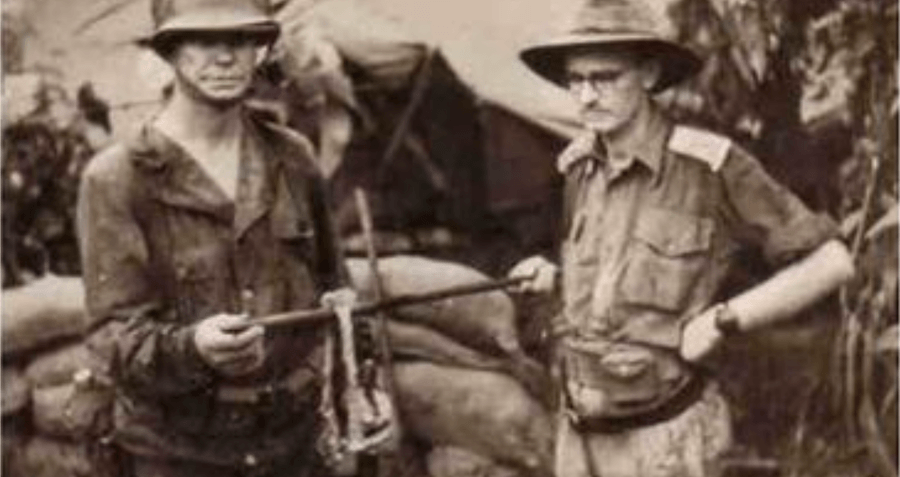
The results of this disparity were shown early in the war, when after suffering a naval setback, Japan left over 150,000 troops stranded in New Guinea with the advice to live off the land. Unfortunately, New Guinea was not Western Europe or the Ukraine; instead, it is a hard land with little farmable land, but many high mountains, extreme heat, and humidity, covered in thick jungle with few roads. The result was that only about 10,000 Japanese military personnel survived the campaign. The stranded troops were left, as were so many other Japanese on dozens of isolated islands, to fend for themselves. The result was widespread examples of cannibalism.
James Badley in his book, Fly Boys, details the lives, capture and execution of several American flyers who were shot down over the island of Chichi Jima, a small island some 240 km. north of Iwo Jima. The aviators were all executed by the Japanese either by beheading or bayoneting and sections of their bodies were cut off and served, knowingly to Japanese officers in keeping with a belief that such action would strengthen the fighting spirits of the diners. For several decades after the war, the exact details of those actions were kept secret even though several of the Japanese officers were tried and either executed or imprisoned for their actions. The author, spend years and conducted many interviews with survivors, including Japanese veterans and surviving relatives of the executed Americans to build out the story.
It is clear from the book, from interviews with Japanese veterans, that their training was brutal. Enlisted men were normally slapped, kicked, and beaten to toughen them to the demands of their officers. Refusal of any order was grounds for immediate execution, and they were taught that being Japanese, they were far above the Chinese and other Asians who were viewed as subhuman. Their training and belief in the sacredness of the emperor allowed them to rape, murder, and plunder at will. Given their inability to provided sufficient logistical support, they were expected to live off the land and this drove many to cannibalism. Several stories of individual soldiers raping and then eating portions of their victims are provided.
The author also goes beyond the normal narrative regarding the emperors’ involvement in the actual management of the war. While the standard history states that the emperor was merely a tool in the hands of the militarists, Bradley works to destroy the myth by providing examples of the emperor’s direct involvement in numerous military decisions and directives.
So much of World War II history focuses on the Holocaust in Europe and the huge numbers of Soviet dead, but slowly more information is coming out of the terrible costs to civilians in the war in the Pacific including China, Burma, etc. The sheer brutality exhibited by the Japanese military towards the innocent in every land they occupied, coupled with the disregard by the Japanese leaders for their own military personnel is slowly opening a new chapter in the analysis of WWII. This information will show that decisions were made by Japanese leaders which led directly to more cruelties including cannibalism not only of civilians but by one’s own comrades toward each other.
How terrible were the crimes of leaders who knowingly committed millions to a war which they believed could be won purely through acts of will.




Leave a Comment