
On The Other Hand -
Book Reviews
Lifestyle, Cigars & More
Musings
About
On The Other Hand -
  • Book Reviews
  • Lifestyle, Cigars & More
  • Musings
  • About
Book Reviews

Kolyma, the Artic Death Camps by Robert Conquest

December 9, 2022 by Barry J. Klazura No Comments

The Magadan area of Siberia is known for its harsh climate, where the weather is sub-zero for up to six months a year.  Now picture that you are in that climate, working in a lead or gold mine (which tend to kill its workers in about six months) in a thin cotton jacket and wooden clogs.  You want to get a better job, but you have nothing to trade to the criminals who run the camp with the approval of the military guards.  Your diet consists of a cup of hot water for breakfast, perhaps a slice of bread for lunch and if you make it back to the barracks in time, a cup of hot water with perhaps a fish head or a bit of turnip.  Then after lights out, you wait for the criminals to rob you of your blanket or gang rape your bunk mate.  If you do manage to get out of the mines, you get a better job such as cutting trees for 12 hours a day.  You do not know what has happened to your family (as you are held without the right of correspondence) and you realize that that routine will go on for the length of your sentence, which is probably fifteen to twenty years.

When you do come out of the camp, you may not receive a permit to return to the town where your family lived and there are few ways to contact them.  In fact, everyone who encounters you shuns you as being seen with a former “political” may be reason enough for them to be arrested.  There is a good chance that your children were put in State orphanages and had their names changed so there is little possibility of ever finding them.  In fact, you have only a small chance of ever leading a “normal” life.

This then was the story of this early work by one of the premier historians on the Soviet Union.  Conquest lays out a story of brutality that is an important part of the Gulag system of the Soviet Union.  And, as terrible as the above description is of life in the camps, it was worse for the women who were sentenced to the Gulag.  From mass rape on the transportation to the camps, to forced lesbian relationships in order to gain a bit more to eat, women were the lowest of the low in the system.

It is often said that the camps were not the fault of the ideology, but rather the fault of the leaders.  But what type of system would allow the leaders to develop a system staffed by hundreds of thousands of brutal individuals who could live and work in a system like the Gulags.  What type of system would allow to be created a system of laws and regulations where people are arrested and convicted based on nothing more than a quota for arrests and, in some cases, being picked out at random from a telephone book.

Each time I read something on the Gulag system, I thank my lucky stars for the life I lead, in the country where I live which is a true anomaly in the history of mankind.   There but for the grace of God, or the decision of my grandparents could have gone I.

Share:
Reading time: 2 min
Book Reviews

Diary, 1937-1943 by Galeazzo Ciano

November 9, 2022 by Barry J. Klazura No Comments

Born into the family of a WWI hero and early support of the Fascist movement in Italy, Ciano was not only Mussolini’s son on law, but also his Foreign Minister from late 1936-1943. Later he voted, in the Supreme Fascist Council, to oust Mussolini from power and at that time was also purged from all political life.

His diary is honest; it deals with many of the personalities of the time, the pressures, issues, and his attempts to steer Mussolini from war and close collaboration with Hitler and the Nazis. A combat flyer himself, he took part in multiple combat missions to show the population that the leadership could lead by example. Although Mussolini was in power for many years, Ciano as head of the Foreign Office was as surprised as Mussolini at the poor state of the Italian military at the start of the war. Recognizing that the country was bankrupt and suffering from severe food shortages, Ciano tried to convince Il Duce to not enter the war, but Mussolini saw himself as a great wartime leader, believing in his own press clippings that he himself wrote.

It is clear from the Diary that Mussolini had a poor grasp on the economics of his country, was totally taken in by Hitler and had dreams of empire far beyond the abilities of the Fascist state. Should Italy move against Yugoslavia? How about Greece? Perhaps France! Turning first one direction and then the other, Mussolini ignored the basics of governance and had an utter distain for the Italian people (whom he called “sheep,” “weak,” etc. and the Catholic Church. In a country where the Church still held enormous influence (even though the people seldom went to mass), he failed to heed the lesson of the old Roman Empire that the one area government left alone was the religion of the people.

Foiled in numerous attempts to stop Mussolini from going to war, Ciano gradually lost power as the influence of the Nazis grew in Italy. His descriptions of leaders, such as Ribbentrop, Himmler, Pavelic as well as the hatred of the Hungarians and Romanians as they struggled to attain their illusions of importance often leave one shaking one’s head at the foolishness and ignorance of the many players in Europe. When Japan went to war, they believed that at best they could attain a compromise peace with the United States, but Mussolini refused to believe in nothing less than victory, even as he lost armies in North Africa, Greece, and Russia. Like Napoleon, he played with lives with utter disregard for the misery he was creating.

In January 1944, Ciano was tried by the rump Mussolini government in Verona and executed. His diary has been published in pieces, but this edition is the complete manuscript.

Share:
Reading time: 2 min
Book Reviews

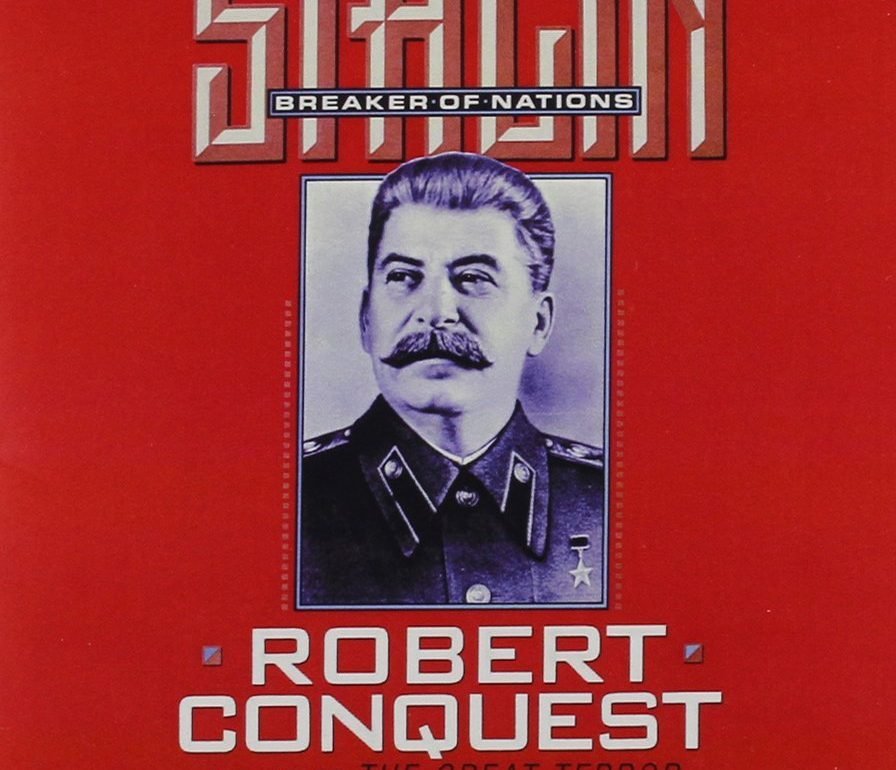
Stalin: Breaker of Nations by Robert Conquest

September 6, 2022 by Barry J. Klazura No Comments

There is certainly no shortages of histories and biographies of Stalin, one of the greatest mass murderers in history. His crimes, his murders were taken unlike his contemporary, Hitler, against for the most part, his own people. He did not have a policy of racial superiority or any underlying moral rationale for his crimes; his sole purpose was to achieve and maintain his power and in this, he is unique among the “big three” of mass murderers: Mao, Hitler, and Stalin.

Robert Conquest, perhaps the top historian of the Soviet Union has in this short book (just over three hundred pages), an excellent overview of Stalin’s drive, achievement, and maintenance of power. Although not as detailed as his other excellent histories which go deeper into the Stalin regime (The Harvest of Sorrow, The Great Terror: A Reassessment, Inside Stalin’s Secret Police: NKVD Politics 1936-39, etc.), Conquest along with Robert C. Tucker and Orlando Figes (and others) has provided a comprehensive analysis of the man and his times.

Conquest as always, manages to provide a certain analytical approach that can bring the reader up short: in this case, it is his comparison of the followers of Nazism and Communism. He quotes Hugh Seton-Watson’s comments that:

“Hitler’s Nazis were ‘fanatics with an ersatz religion,’ who rejected not only Christianity but also traditional morality as such. Nazism’s central feature was ‘moral nihilism’…. (it) is not only the central feature of National Socialism, but also the common factor between it and Bolshevism.” 

This statement is backed up by a review of leading Nazis, including Hitler, Goebbels, Mussolini, the dreaded Gauleiter of the Ukraine, Koch, and others who all started out as Socialist and ended up as either Fascists or Nazis. And it was not unusual after the war for die hard Nazi’s to reverse their coat and be taken into the Soviet camp. On one hand, the Nazis use race, the Communist used social origin as the determining factor for life or death; both were (are) based on “moral nihilism.”

Conquest is an outstanding historian, but for the amateur historian, his writing may be a bit too intellectual. He has a firm grounding in the Russian mindset and his analysis of Stalin’s legacy on modern day Russians is excellent. His works not only encompass history, as he has had published a collection of poetry, verse translation, fiction, and criticism so to read Conquest is to be exposed to a man of great intellect. A faster read but no less excellent Soviet historian is Orlando Figes brings a more human touch to his histories.

As one learns Conquest’s style, one is drawn increasingly to it and like a favorite composer, one eagerly looks forward to the next work of his that one shall read.
Share:
Reading time: 2 min
Book Reviews, Government

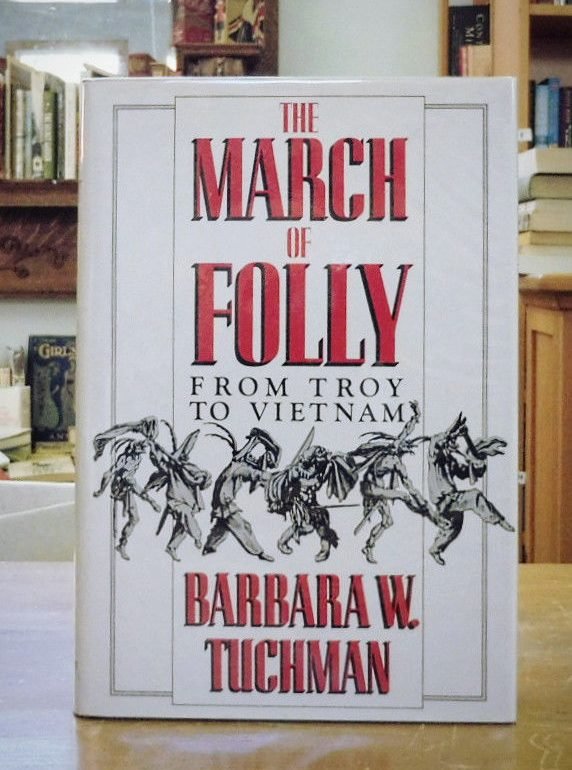
The March of Folly from Troy to Viet Nam by Barbara H. Tuchman

August 16, 2022 by Barry J. Klazura No Comments

Re-reading Barbara Tuchman’s The March of Folly from Troy to Vietnam (originally published in 1984) and reviewing the foolish foreign policy decisions around the world since then, seems to give proof to the statement by John Adams that government, “is little better practiced now than three or four thousand years ago.”  Policy makers seem to delight in flying in the face of common sense, logic, and facts in pursuit of their policies. A wiser man than most, Jordan Peterson once said that when he makes a major decision, he does not look at the best possible outcome, but the downside cost if he is wrong. Too bad that statement is not hammered onto the desktop of every government policy wonk as a warning against their hopes and dreams.

In her book, Tuchman studies the times, forces and choices made by the Greeks who were given a horse, the Renaissance Popes, the British lost of the colonies and American leaders regarding our experience in Viet Nam. Of course, trying to separate fact from fable in the story of Troy is the most difficult, in part because the very ideas that a hollow wooden horse filled with one’s enemies willingly being brought into the city of Troy defies logic. Yet Tuchman does an excellent job of examining the tales from several sides and trying to understand how the leaders of Troy ignored legends, omens, and warnings. The result is well known and should serve as a warning against acting on the basis on ego and hubris.

Continue reading
Share:
Reading time: 3 min
Book Reviews

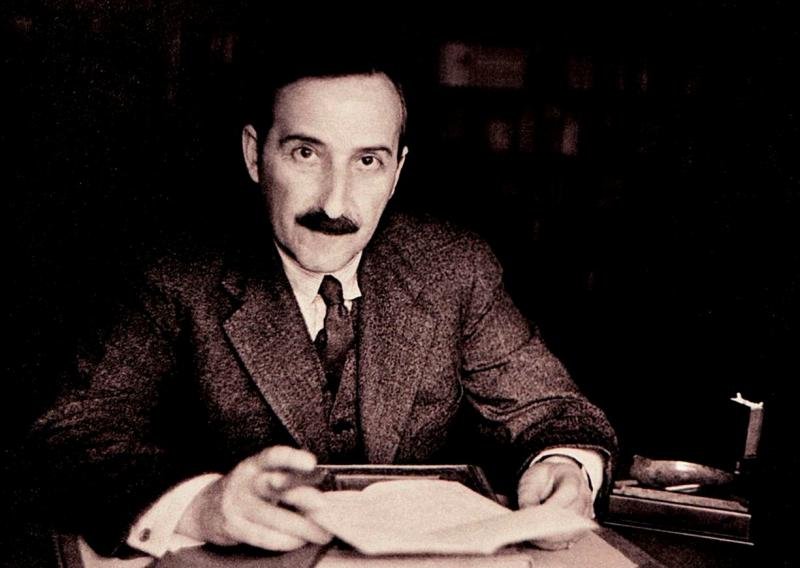
The World of Yesterday by Stefan Zweig

August 5, 2022 by Barry J. Klazura No Comments

In the period from just before the First World War until the early 1940s, Stefan Zweig, an Austrian born in the Hapsburg Empire, was one of Europe’s leading authors. His books cover biographies, poems set to music, novels, hundreds of articles, reviews, and more. Yet, in 1942 he and his wife committed suicide in South America over their distress of the state of the world and their view of the future.

Zweig believed that each generation would experience one trying movement, be it war, plague, inflation, or social disruption. But he believed that his generation which was raised in the structured, secure world of the late Hapsburg Empire was doomed to experience each of those trials, one after another which put it to a test seldom seen in history. That does not mean that he viewed all change as negative, for he saw the emancipation of women from their corsets and their entry into politics as positive; so too was the easy mingling of the sexes in sports, social events without chaperones, and the greater freedom of people to choose the direction of their lives. Yet he did not see or connect that that same freedom blended with youthful idealism and ignorance of the world could lead to dangerous movements such as Communism, Fascism and Nazism.

Continue reading
Share:
Reading time: 2 min
Book Reviews

War, Logistics and Cannibalism

July 25, 2022 by Barry J. Klazura No Comments

When Japan decided to go to war with the United States in 1941, it went with the realization that it could not win in a war of attrition. The average Japanese soldier (marine, aviator, etc.) had about four pounds of logistical support behind him (weapons, fuel, munitions, food, shipping, etc.) while the same fighter for the U.S. had over four thousand pounds. Admiral Yamamoto was correct when he said that Japan had awoken a sleeping giant.

The results of this disparity were shown early in the war, when after suffering a naval setback, Japan left over 150,000 troops stranded in New Guinea with the advice to live off the land. Unfortunately, New Guinea was not Western Europe or the Ukraine; instead, it is a hard land with little farmable land, but many high mountains, extreme heat, and humidity, covered in thick jungle with few roads. The result was that only about 10,000 Japanese military personnel survived the campaign. The stranded troops were left, as were so many other Japanese on dozens of isolated islands, to fend for themselves. The result was widespread examples of cannibalism.

James Badley in his book, Fly Boys, details the lives, capture and execution of several American flyers who were shot down over the island of Chichi Jima, a small island some 240 km. north of Iwo Jima. The aviators were all executed by the Japanese either by beheading or bayoneting and sections of their bodies were cut off and served, knowingly to Japanese officers in keeping with a belief that such action would strengthen the fighting spirits of the diners. For several decades after the war, the exact details of those actions were kept secret even though several of the Japanese officers were tried and either executed or imprisoned for their actions. The author, spend years and conducted many interviews with survivors, including Japanese veterans and surviving relatives of the executed Americans to build out the story.

Continue reading
Share:
Reading time: 3 min
Book Reviews

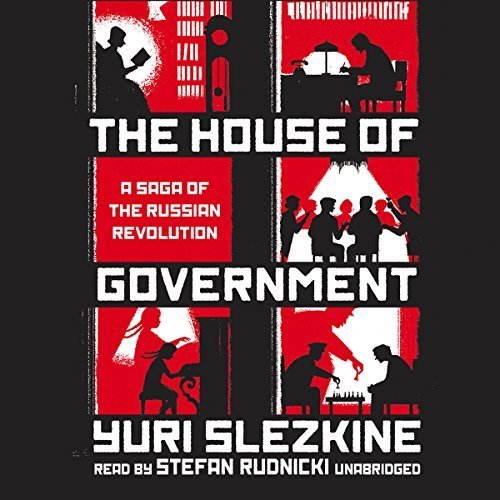
The House of Government by Yuri Slezkine

June 24, 2022 by Barry J. Klazura No Comments

Martin Amis wrote, “The chief demerit of the Marxist program was its point-by-point defiance of human nature”. Yuri Slezkine creates a solid argument that Marxism was a change of faith and that it was a cult, filled with dogmas that defied logic and human history.  Could a parallel be drawn between Marxism and the early Church?  Both were fueled by dogmas, their gospel was spread by zealous “preachers” who devoted their lives to their new religion; they both had martyrs, a hierarchy of disciples and believed that they were able to create a new and better world.  Marxism went one step further in that it’s view of human nature was entirely against the course of history, but their dogma answered “history” in that the nature of man had been corrupted by all societies throughout history.  Thus, while claiming to be founded on “science”, the dogma of Marxism discounted all known evidence.  With that dogma, they unlike the Church, claimed that they were able to create a “new man”, freed from the chains of the past, of the “artificial” realities of the world, able to create a world filled with happy, satisfied, productive individuals.

Of course, no one believed that true Marxism could be achieved overnight, and so there had to be a period of the dictatorship of the proletariat.  During that time, priests, aristocrats, kulaks, capitalist, the majority of academics and others needed to be purged. The bourgeois institution of marriage was also to be amended so that women would not be oppressed.  The failure of the Soviet experiment of easy divorce quickly created a problem so the need for the family was recognized (at least until the children could be raised almost entirely by the State).  And, this helped to eventually be a major problem for the longevity of Communism, for parental influence could not be entirely countered.

Continue reading
Share:
Reading time: 4 min
Book Reviews

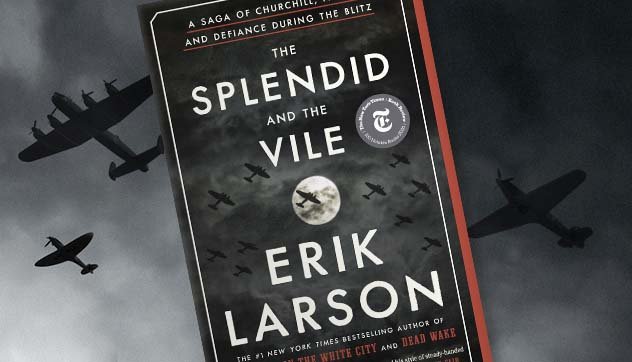
The Splendid and the File by Erik Larson

June 15, 2022 by Barry J. Klazura No Comments

History can be the best of subjects or the worse depending on your individual mindset, for any event in history can be a huge puzzle that can and does cause debate years and years after any given event. History is not as bad as the saying about economics (ask four economist a question as to what will happen and you will receive five opinions), for at least with history there are certain proven facts, records, confessions, etc.

In this historical novel, the author pulls on diaries, interviews, memoirs, and other sources to provide the reader with an excellent overview of numerous personalities (Churchill, Halifax, Goebbels, Goring, Beaverbrook, and others), their strategies, fears, personalities, and so on and how by interacting with one another, they created the saga of the Battle of Britain. How close to defeat was England at that time and how great the burden on the shoulders of men like Churchill, Beaverbrook, and others as they had to hold together and create a national will against not only the forces of Hitler, but also against those within their own country and even cabinet who wished to take a different course. How easy it would have been to simply make some sort of deal with Hitler in the vain hope that he, who had broken every agreement, could be trusted.

Continue reading
Share:
Reading time: 2 min
Book Reviews

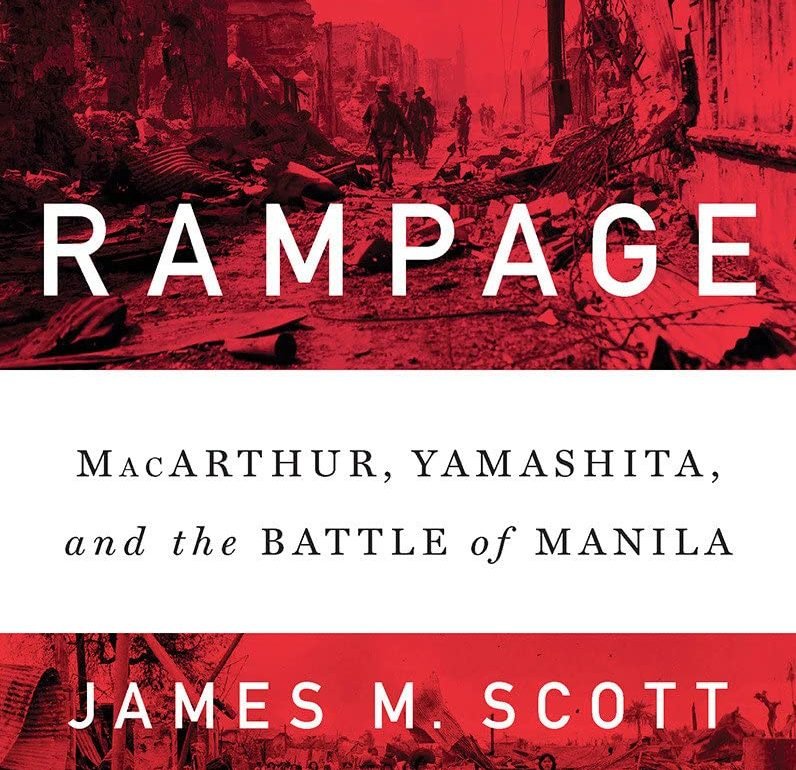
Rampage: MacArthur, Yamashita and the Battle of Manila

June 13, 2022 by Barry J. Klazura No Comments

Over the decades, I have read many books, transcripts, interviews, done personal interviews, etc. regarding the killing squads and death camps of the Nazi regime. “How” I wondered, “could a cultured nation like Germany march so easily into the brutal murder of millions of individuals who the deemed as sub-human?”  This is certainly not a new question as it has been debated for decades, by those who like Hannah Arendt’s “banality of evil” theory to those who felt that there was some sort of missing component to the German soul. Perhaps there were two types of killers, especially in the SS; the bureaucrats such as Eichman and the officers who stood at the receiving dock at Auschwitz, and those who murdered by executing men, women, and children in the killing pits of Ukraine, Poland, and the rest of Europe. Could they have been indoctrinated by their SS training to believe that they were doing good, freeing the world of vermin to create a better world? But, what about the Police battalions? They were made up of ordinary police officers, men trained up uphold the law, yet they were able to overcome their training and became killers as deadly as the SS Eizengruppen. There were also sadists such as the hardened criminals and perverts of the Kaminski Brigade and the 36th SS division under the command of Oskar Dirlewanger, but even they were viewed with distain by the regular SS divisions. It was a question that is still debated today by historians, psychologists, and others; was it due to their training, beliefs, or a mass psychosis. Somehow another group of men, who were under strict military control managed to become even worse that the groups I have mentioned; that group is the officers and enlisted men of the Imperial Japanese Army and Navy

Continue reading
Share:
Reading time: 6 min
Book Reviews

The Twilight Years: the Paradox of Britain Between the Wars by Richard Overy

May 17, 2022 by Barry J. Klazura No Comments

What makes a civilization decline?  Is a decline caused by economic or moral faults or do they simply grow old and cannot face the challenges of younger, stronger forces which challenge them?  For Britain after World War I, this topic was discussed at various levels of society.  Having entered the first world war as a great Empire, within four years the average Brit could see the Anglo colonies of Canada, Australia, New Zealand and South Africa clamor for more independence while the crown of the jewel, India, began to make small steps towards independence.  What were the causes and could such a decline in power be stopped?

Richard Overy, whose outstanding analysis of World War II, Why the Allied Won has once again created a history that is overwhelming in detail and argument.  Beginning shortly after the end of World War I, numerous books, pamphlets and debates centered on the decline of Western civilization.  These debates were not shallow exercises, but serious discussions as to causes and possible remedies.  Going back to Nietzsche who felt that history was cyclical, was civilization, “merely the current expression of man’s futile efforts to fight the reality of decay with the weapons of illusory order.”?  If progress was illusional, then the certainties of the 19th century were null and void.  Civilizations, according to Nietzsche come and go, rise and fall, are born and die so there was not a great moral lesson to be learned from the decline of the West.  Nietzsche’s thesis became the starting point for Oswald Spengler’s The Decline of the West which was hugely popular especially in Germany after the war.  Unlike Hegel who saw a progression of history, Spengler’s saw civilizations almost like plants, which rise and fall as part of a great cycle.  Spengler listed eight ‘ripe’ cultures, “…from the Chinese through the Indian, antique, Arabian and Western” and that each had a cycle of about 1000 years from birth to death.

Continue reading
Share:
Reading time: 3 min
Page 6 of 13« First...«5678»10...Last »

Barry J. Klazura

Barry Klazura sipping grappa

With a Masters Degree in Guerrilla Warfare and Totalitarianism, Mr. Klazura was well prepped for a career in Sales and General Management, consulting on corporate startups and turnarounds as well as lecturing on history and politics.  For the past twenty years he has focused on being a financial advisor and consulting.

Delivered To Your Inbox

Sign up to get an email when a new article is published.

Topics

  • American Civil War
  • Biography
  • Book Reviews
  • Cigar Reviews
  • Coronavirus
  • Current Affairs
  • Education
  • Environment
  • Factoids
  • Government
  • Lifestyle, Cigars & More
  • Liquid Refreshments
  • Musings
  • Quips and Historical Facts
  • Society
  • Travel
  • Uncategorized
  • World War I

Subjects

book Books-Russia/Soviet Union Books 21st Century Books 1919-2000 Books Ancient to 1900 Books Asia Books Biography Books Fiction Books Germany 1919-1945 Books Pre-WWI books Viet Nam books world war I Books WW1 Books WWI Books WWII Cigar Friendly Location Amsterdam Cigar Friendly Locations-London Cigar Friendly Locations-New Orleans Cigar Friendly Locations-New York Civil War Coronavirus Environment Korean War World War I World War One

Recent Articles

At Stalin’s Side by Valentin Berezhkov

July 15, 2026
The Price of Victory by N.A.M. Rodger

The Price of Victory by N.A.M. Rodger

June 26, 2026
Frontsoldaten: The German Soldier in World War II by Stephen G. Fritz

Frontsoldaten: The German Soldier in World War II by Stephen G. Fritz

June 5, 2026
Organizer of Victory, 1943-1945, George C. Marshall by Forrest C. Pogue

Organizer of Victory, 1943-1945, George C. Marshall by Forrest C. Pogue

May 26, 2026
Illegals Released & Our Leaders

Illegals Released & Our Leaders

May 10, 2026

Inquiries and Comments

For general inquiries and comments, email AOTOHcomments@gmail.com.

Facebook
© 2020 And On The Other Hand. All rights reserved.