On The Other Hand -
Book Reviews
Lifestyle, Cigars & More
Musings
About
On The Other Hand -
  • Book Reviews
  • Lifestyle, Cigars & More
  • Musings
  • About
Book Reviews

Black Earth, The Holocaust as History and Warning by Timothy Snyder

March 31, 2022 by Barry J. Klazura No Comments

Bloodlands, Timothy Snyder’s monumental work has been complimented by Black Earth, The Holocaust as History and Warning. I must admit that I was initially put from this book due to numerous reviews which seemed to focus on one small portion of this work, that of trying to link the lessons of the Holocaust to climate change.  Such a premise held no interest to me as the horrors documented in Bloodlands was the result of conscious decisions by political systems which denied the basic humanity of mankind, whereas the arguments re: climate change are open to sloppy science at the worse as well as subject to hyperbole (we only have twelve years left) which undercut the actual science.

Given the reviews, rather than purchase the book as I would do with any Snyder book, I found it during a cruise in the ship’s library. I was wonderfully surprised that ninety-eight percent of the book was an excellent historical work which consolidated and exposed many forgotten historical facts as well as providing a key analysis between the goals and policies of Hitler’s Germany, Poland and the Soviet Union not only leading up to the Holocaust but also the misconceptions of those three powers and how they impacted the course of history.

For years, Hitler’s Germany attempted to woo Poland into an alliance which would result in a joint German-Polish invasion of the Soviet Union; the goal was the fulfillment of Hitler’s dream of Lebensraum but also (as the Poles realized) making Poland a client state of Germany.  For Stalin, the eliminate of Poland was key, in large part due to the Soviet’s defeat by the Poles in 1921 and Stalin’s part in the defeat, and to create a bigger buffer against Germany.  For the Poles, caught between two more powerful neighbors, the key was to play one off against the other by having non-aggression pacts with both Germany and the Soviet Union.

Continue reading
Share:
Reading time: 4 min
Book Reviews

My Silent War: the Autobiography of a Spy by Kim Philby

March 4, 2022 by Barry J. Klazura No Comments

For nearly twenty year, Kim Philby was the premier Soviet spy, rising through the ranks of the British Secret Service, acting as the head of Soviet counterintelligence for the British (he was charged to chase himself), and worked closely with both the CIA and the FBI (under Hoover).  This book starts out with an excellent introduction by Phillip Knightley who studied Philby for thirty years, and an exciting foreword by Graham Greene who not only knew Philby, but even visited him in Moscow after Philby fled the U.K.  From there however, the book fails to meet the promise.

Philby, in his position, was able to pass literally mountains of secrets to the Soviets and was responsible for the deaths of hundreds of anti-Soviet agents across Europe.  He was a true believer; he did not betray his country for money, but he did believe in the goal of Communism.  Even though he knew the true scope of Stalin’s crimes against his own people, he kept the faith based on a belief (as modern-day apologists proclaim) that it was not the “system”, but it was rather the wrong person at the top.  Yet he like today’s apologists never face the question of what kind of system is it that allows a murderer like Stalin to take control and exist for so long.

Continue reading
Share:
Reading time: 2 min
Book Reviews

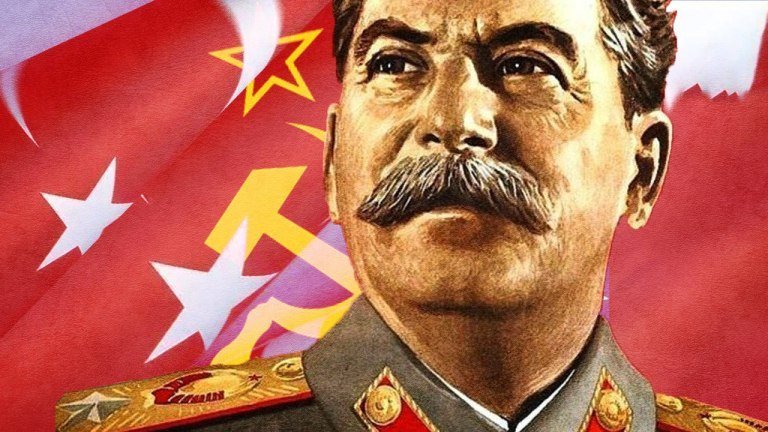
Stalin: The Court of the Red Tsar by Simon Sebag Montefiore

February 23, 2022 by Barry J. Klazura No Comments

Given the situation in the Ukraine, I thought a brief reminder of the system that shaped Putin might be timely. Putin wishes to reconstitute the Soviet Union and those who would appease him and not treat him like the outlaw he is, need to be reminded of his system and those he admires.

I have no doubt that the title for the most biographies written about any politician would belong to Winston Churchill, but his life compared to Stalin’s was an open book.  For Stalin, the ideal time to write a biography with new information is past as his contemporizes die off and the archives are once again closed.  Montefiore was the right biographer at the right time at the right place.  He has written a biography that is well paced, filled with colorful antidotes and supported by excellent research. Considering his topic, the greatest mass murderer until Mao, this book brings home the ruthlessness of Stalin without exhausting the reader by an impression of overwhelming despair.

Continue reading
Share:
Reading time: 2 min
Book Reviews

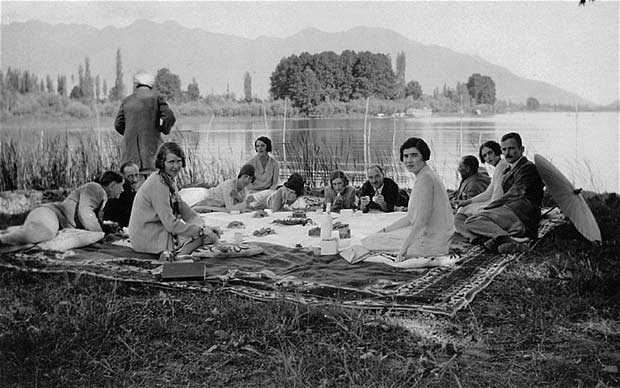
The Fishing Fleet: Husband-Hunting in the Raj by Anne De Courcy

February 9, 2022 by Barry J. Klazura No Comments

From 1671 until the fall of the Raj and the independence of India, many thousands of English women would make a long and often dangerous journey to the Raj to find a husband. The voyage was known as “The Fishing Fleet” and those women who failed in their quest went back to England on a voyage called “The Empties.”  Most of the women were away from home for the first time and as the running of the Raj was a male endeavor, the women who landed at Madras, Calcutta and Bombay were outnumbered by English males who substituted sports for sex while they paid their dues in an attempt to create a successful career. Thrown into a whirlwind of parties, balls, and sightseeing, they were the center of attraction and could receive numerous proposals after speaking to a man for only a few minutes.

The process started while the English presence in India was the domain of the East India Company who would pay for the passage and a stipend for eligible women to make the long voyage. After the Mutiny, this type of arrangement fell off, but given that there was a surplus of eligible women in the U.K. (approximately 750,000 a year), well, what was a girl to do?

Continue reading
Share:
Reading time: 3 min
Book Reviews

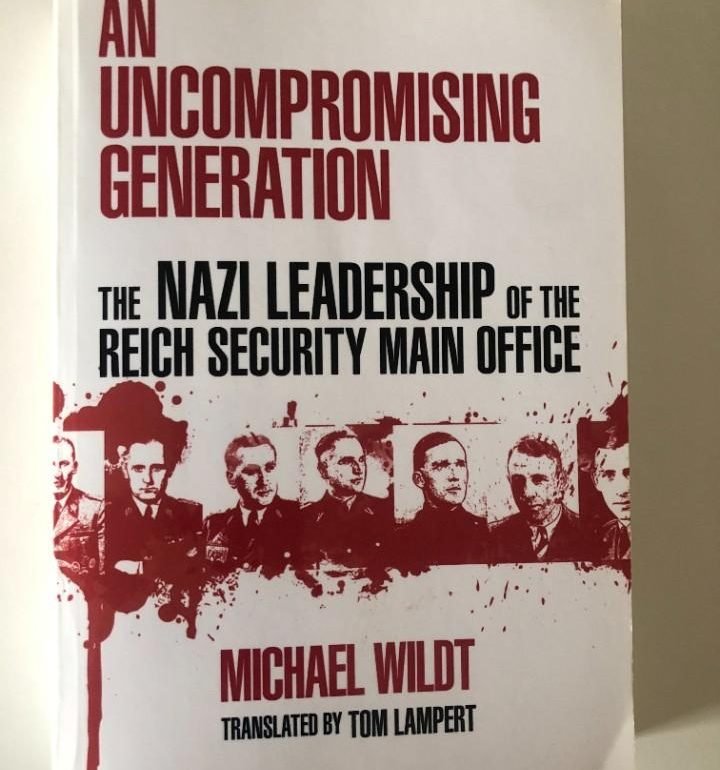
An Uncompromising Generation: The Nazi Leadership of the Reich Security Main Office by Michael Wildt and Tom Lampert (translator)

January 10, 2022 by Barry J. Klazura No Comments

When the Cold War ended, many felt that it signified the end of totalitarianism and dictatorship. The world would move forward into a new age where individuals and societies would be freer to determine their futures. As we have seen however, there are those societies and individuals who seem to have chosen to continue along the path which limits the freedom of the individual and seeks to continue what is the main course of human history, that of strong leaders who believe they have found the true path to a better world as outlined by their own vision, paranoia and sense of victimhood.

Are the visions of the leaders of Russia, China, Turkey, North Korea, and others simply anomalies or do they reflect a natural inclination of mankind? How is it that leaders can be supported as they move to limit freedoms, begin to imprison opponents, and even move toward genocide, often of their own citizens? This book allows us to learn from the past and see how it is often those who are considered the “best and the brightest” to begin to move down the path of tyranny and destruction.

From my reading of the subject, this is the best history of the RSHA which incorporated the SD, Gestapo, and the Criminal Police and provided the leadership for the killing squads that roamed through Europe from the invasion of Poland in September 1939 until late in the war.

     Unlike the popular image of the SA, the street enforcers of the Nazis especially prior to the “revolution” when Hitler rode into power, much of the leadership of the RSHA came out of the university student unions which gained such power after WWI. Today, at many of our universities, we see leftist demonstrations aimed at seizing administrative power at all levels, blocking dissenting views, demanding the ouster of “unenlightened” professors, etc. But in the 1930’s it was the right wing at the universities which interrupted lectures, led massive demonstrations and frequently started violent conflicts with those who dared to challenge them. Although most of the students had little contact with Jews, by 1930 only a couple of fraternities accepted Jews as members and the anti-Semitism was directed not only at students but also professors and administrators.

     With the Nazi seizure of power, leading students joined first the SA, then moved into the SS and were transferred to the RSHA. Many had received their doctorates in law and were perfectly trained to administer the ever-expanding realm of the RSHA.

     Totalitarian states such as Nazi Germany and the Soviet Union operate on several levels. You have the official state apparatus which is called the “Normative State” and then you have the “Prerogative State” which exists and operates outside the normal boundaries of the State and Society. The “Prerogative State” consists of paramilitary militias, the secret police, informers, etc. Both Nazi Germany and the Soviet Union relied on the police to maintain control and not the army (which was co-opted, infiltrated, etc.). The real rule of the secret police, according to Hanna Arendt, begins when domestic opposition (traditional political foes) ends (usually through extermination) and then the search for “objective” foes begins.

    This is an excellent book for those who are genuinely interested in this subject. It traces numerous individuals, often from their university days through their movement within the RSHA. With no indication of previous thoughts or actions, top university students move from studies to anti-Semitism to active participation in the shooting of hundreds, then thousands, then tens of thousands of men, women, and children. And in the end, after the war, the overwhelming majority went back to Germany and led ordinary lives. Some became government officials in post-war Germany while others became police officials and even members of the bar. How those men who had ordered and participated in the slaughter of thousands could escape any form of retribution is due in part to the post-war fear of the Soviet Union, the efforts of the average Germans to deny any knowledge of crimes and blame it all on the highly visible SS, the ignorance of the victors about the organization of the Nazi state and smart politicians such as Konrad Adenauer who managed to play East against West in his effort to resurrect the new German state.

Thousands of youthful, idealistic minds were bent to oppressing others all in the name of a greater good. It should serve as a lesson to responsible adults that youth throughout history are more easily led by demigods and that indulging them in their folly without adult guidance can lead to terrible, even deadly consequences.

     This is not an easy book to read as it is extremely detailed, and the novice will quickly be lost in the details. But for anyone interested in this fascinating subject, it is well worth the effort.


Share:
Reading time: 4 min
Book Reviews

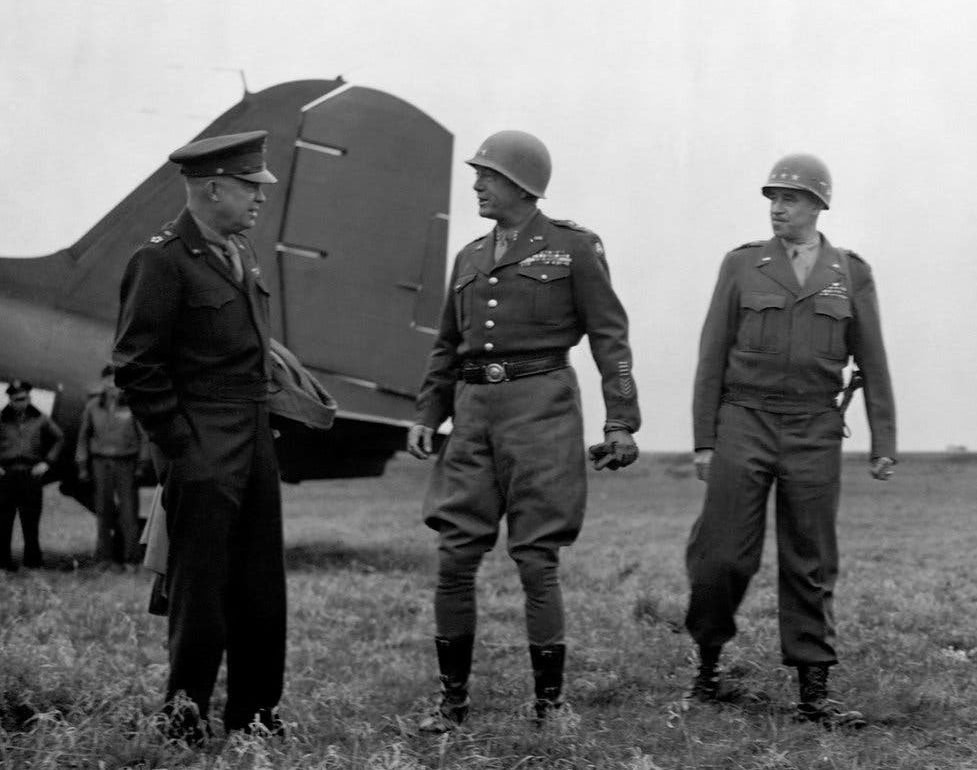
Brothers, Rivals, Victors by Jonathan W. Jordan

November 1, 2021 by Barry J. Klazura No Comments

Eisenhower, Bradley, and Patton are names which will stand for the Allied victory in Western Europe during World War II.  But who were these men, what were their backgrounds, how were they picked to hold their commands and finally, how secure were they in those commands.  Mr. Jordan does an excellent job in answering these and other questions in a concise and excellent manner.  These men did not suddenly appear with stars on their shoulders with full knowledge of their craft; they served decades in backwater posts, seemingly forgotten, grinding out their lives (and the lives of their families) believing that they might never practice what they were learning.

Then came World War II, but more importantly, a man by the name of Marshall, George C. Marshall.  He was charged with creating from a puny, ill equipped army a force that could fight around the world, something that no one and no country had ever done.  Breaking the careers of several hundred generals, Marshall had the ability to reach into corners of the military and find individuals who had spent up to twenty years in obscure posts due to tight budgets, their thinking outside of the military “box”, etc.

Continue reading
Share:
Reading time: 3 min
Book Reviews

Allianz and the German Insurance Business, 1933-1945

October 8, 2021 by Barry J. Klazura No Comments

Not exactly the most exciting title for a book, I am sure it would have sold better if it were “The Company Who Insured the Concentration Camps.”  But despite its droll title, the book can be interesting in realizing that even in a totalitarian regime such as Hitler’s, the reality of business must go on.

Dr. Feldman commissioned in 1997 by the Board of Management of Allianz (the world’s largest insurance company) to author the story of Allianz during the war.  He states that he the company was fully co-operative and given his intellectual credentials, I take the book to be accurate and balanced. Allianz, along with a number of other European insurance companies was being charged in a number of class action lawsuits regarding how they discharged their duties to Jewish policy holders. Additionally, there were newspaper stories regarding how Allianz insured various SS-owned factories in concentration camps. Questions were being raised in several quarters regarding how closely Allianz worked with the Nazi regime and how Kurt Schmitt who the general director of Allianz between was 1921-33 became Hitler’s second Reich Economics Minister between 1933-34.

Before accepting the commission, Dr. Feldman (a distinguished professor at Berkeley) insisted that he have access to all records, individuals, etc., and Allianz to its credit provided free access to any materials which had survived the war. But the task was huge as man companies which did business with the Nazi regime tried to paint themselves as victims of the regime and as being held hostage to the rules and polices of that time. Indeed, the same questions which were asked of individuals who lived under such a regime (the degree of collaboration or resistance too) were being asked of companies throughout occupied Europe.

Finally, the life and times of an insurance company is not the most exciting topic for the average historian, even one interested in economic history. Yet, Dr. Feldman does an admirable job of taking the reader through Board meetings, national conferences with the major Nazi players, the fights for business, how claims for Kristallnacht Nacht were handled (the Party did not want the Jews compensated and wanted to seize the funds which would have been compensation, the insurance companies were reluctant to pay claims as the action was “political” and thus outside of the policies borders,  the economists were upset that replacing the broken glass which largely came from Belgium put a drain on foreign currency reserves which impacted the build-up of the military), etc. Meetings between the insurance companies, Goring, Goebbels, etc. were lengthy and often heated until a compromise was hammered out.

We also see the problem of the Jewish employees of Allianz; the regime put increased pressure on Allianz to fire Jewish salesmen, clerks, etc. Then when Allianz continued to pay the fired agents for the commissions on their business, the regime began to take aim at Allianz for not in effect, boycotting Jewish business. Again, lengthy meetings at several governmental levels with numerous agencies.

As the war went on and new territories were occupied, Allianz and other German insurance firms raced to buy up the insurance firms in Poland, France, etc. Indeed, as late as April 1945, just one month from the collapse of Nazi Germany, some insurance companies were trying to expand in territories about to be occupied by the Soviets! As many of the employees of Allianz were military age, most were called up to serve in the armed services. Should drafted salesmen continue to be paid their commissions when someone else must service their accounts? How were clerical personnel to be replaced and trained when most of the replacements were retired or disabled and not up to the physical demands of the job (the company continued to operate from its various offices throughout the bombing raids).

In the end, the book is an interesting business book as the demands of a war and regime that was not exactly business savvy gives us a glimpse into the everyday problems of a company like Allianz. The reading can be harder as there are so many individuals of whom the reader will never again run across so who reports to who in which department can be difficult.

So, the question is: did Allianz co-operate with the Nazi regime during that period and did they in fact insure various facilities at the concentration camps. Yes, and yes with caveats; they co-operated to continue as did hundreds of other companies and millions of individuals. There is no indication that. y financed the Party (unlike Krupp and others) nor did the management participate in the racial or other political goals of the time. They did employ for as long as possible Jewish employees, paid them their commissions, etc., and tried to continue their pre-war drive to create an Allianz set of corporate-employee values.

An interesting book if you have the patience and a score card to keep track of the players.

Share:
Reading time: 4 min
Book Reviews

A Classic Russian Trilogy by Anatoli Rybakov

October 4, 2021 by Barry J. Klazura No Comments

About once every decade I treat myself to Anatoli Rybakov’s wonderful trilogy (Children of the Arbat, Fear and Dust and Ashes). Rybakov himself, like his main character, Sasha, was arrested in 1933 and sent to Siberia for three years. That was before the main Stalinist terror and purges which only a couple of short years later would have merited a term of ten or twenty years. After his release, he was barred from most major cities as his internal passport showed that he had been convicted of a crime against the state. Working odd jobs, he was called up into the army after the German invasion of 1941and was twice decorated. After the war, he continued to write but it was not until Gorbachev and glasnost that the first of his trilogy was published at which time, he won international fame. He continued to write until his death in December 1999 at the age of eighty-seven.

The trilogy traces some of the idealistic youth of the early 1930s in the Soviet Union, as they hoped for a better future. Most were members of the Soviet youth movement, the Komsomol which served as a propaganda arm of the Party, aimed at molding strong Soviet citizens. The book traces the lives of various members, such as Sasha who was convicted of anti-Soviet propaganda when his poster at school was deemed to mock various Party members at his school. Some students keep their belief in the Party, one becomes a member of the NKVD and manages to survive the great purge of the secret police while another is thrown into poverty when her high Party ranking father is arrested in the middle of the night.

Continue reading
Share:
Reading time: 3 min
Book Reviews

Where the Jews Aren’t by Marsha Gessen

September 24, 2021 by Barry J. Klazura No Comments

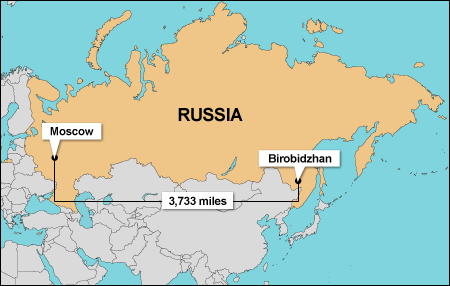
In 1929, the Soviet government decided to create a Soviet homeland for Jews.  The Jews who had been forced under the Tsars to live “beyond the Pale” could finally have their own homeland, free from oppression, pogroms, etc., and create a wonderful Soviet paradise.  The only problem was, that the area afforded the Jews, Birodidzhan, an area of 14,800 squa miles (Israel encompasses 9,800 square miles) made current day pre-Israel land look like a garden of paradise.  With little water, forested mountains, swamps, many bugs and wild animals, few roads and no natural resources, it offered little to Jews who migrated there, mostly from the cities of the Soviet Union.  Ill prepared for frontier life (many settlers were artists, poets, etc.), many gave up when they realized that there were no paved roads, few buildings (most “settlers” lived in tents) and little if any help from the central government.

Continue reading
Share:
Reading time: 1 min
Book Reviews

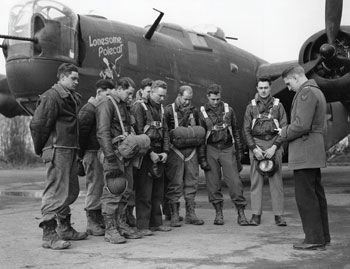
The Bombers and the Bombed: Allied Air War Over Europe, 1940-45 by Richard Overy

July 30, 2021 by Barry J. Klazura No Comments

During the Second World War, Allied bombing was responsible for over 500,000 deaths in Europe. The bombing was one part of a war to defeat Nazi Germany and is little appreciated for its impact on the course of the war.  Stalin constantly wanted a second front to help his war, and little understood how the air war contributed to his ability to defeat the Nazi war machine.  As usual, Richard Overy has provided us with the one book we would recommend for anyone to understand the Allied air war.

Continue reading
Share:
Reading time: 2 min
Page 7 of 13« First...«6789»10...Last »

Barry J. Klazura

Barry Klazura sipping grappa

With a Masters Degree in Guerrilla Warfare and Totalitarianism, Mr. Klazura was well prepped for a career in Sales and General Management, consulting on corporate startups and turnarounds as well as lecturing on history and politics.  For the past twenty years he has focused on being a financial advisor and consulting.

Delivered To Your Inbox

Sign up to get an email when a new article is published.

Topics

  • American Civil War
  • Biography
  • Book Reviews
  • Cigar Reviews
  • Coronavirus
  • Current Affairs
  • Education
  • Environment
  • Factoids
  • Government
  • Lifestyle, Cigars & More
  • Liquid Refreshments
  • Musings
  • Quips and Historical Facts
  • Society
  • Travel
  • Uncategorized
  • World War I

Subjects

book Books-Russia/Soviet Union Books 21st Century Books 1919-2000 Books Ancient to 1900 Books Asia Books Biography Books Fiction Books Germany 1919-1945 Books Pre-WWI books Viet Nam books world war I Books WW1 Books WWI Books WWII Cigar Friendly Location Amsterdam Cigar Friendly Locations-London Cigar Friendly Locations-New Orleans Cigar Friendly Locations-New York Civil War Coronavirus Environment Korean War World War I World War One

Recent Articles

At Stalin’s Side by Valentin Berezhkov

July 15, 2026
The Price of Victory by N.A.M. Rodger

The Price of Victory by N.A.M. Rodger

June 26, 2026
Frontsoldaten: The German Soldier in World War II by Stephen G. Fritz

Frontsoldaten: The German Soldier in World War II by Stephen G. Fritz

June 5, 2026
Organizer of Victory, 1943-1945, George C. Marshall by Forrest C. Pogue

Organizer of Victory, 1943-1945, George C. Marshall by Forrest C. Pogue

May 26, 2026
Illegals Released & Our Leaders

Illegals Released & Our Leaders

May 10, 2026

Inquiries and Comments

For general inquiries and comments, email AOTOHcomments@gmail.com.

Facebook
© 2020 And On The Other Hand. All rights reserved.