

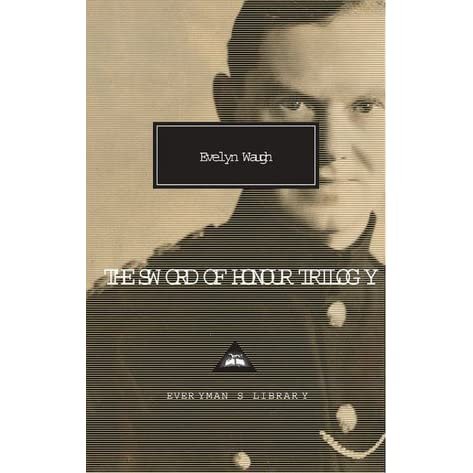
For anyone who has read books which deal with how men react in wartime, this novel is often referred to as a realistic description of military life. In a sense, it could in certain parts, be an English version of Joseph Hellers novel, Catch-22 with better character development and a darker form of humor. Evelyn Waugh is best known for his novel, Brideshead Revisited, but this novel is a semi-biographical account of his war time experiences as well as his relationship with his Catholicism (he converted to Catholicism in 1930 after the failure of his first marriage).
This is not an action filled description of his wartime experiences, but reflects the experiences of most men who have served in the military; a tale of boredom, bureaucracy, mistakes, missed opportunities, etc. In it, Guy Crouchback, at the age of thirty-five, enlists in the military with the belief that he will participate in a noble crusade against tyranny. Being older than most around him, his nickname is “Uncle.” Like Waugh in real life, he is given command of a company but soon loses it (as did Waugh, who lost command as he could not bond with his men and was considered too haughty and autocratic). From there, Guy seems to drift from one posting to another, spending years in back water positions, far from the action (due in part to faulty military intelligence which labels him a security risk). Along the way, Guy wrestles with his Catholicism, his ex-wife, and fellow officers who are promoted ahead of him. In the end, disillusioned, Guy survives the war and settles into a non-descript life as is the case of most humanity.
This book is so often mentioned by others, I believe, because it does reflect very real experiences faced when dealing with a bureaucracy; a bureaucracy that is suddenly expanded due to war and suddenly staffed with individuals who may be ill-equipped, self-important, or seeking to feather their own nests. Somehow, the war is won, but it is often won by the side which makes the fewest errors. The characters in this novel reflect the spectrum of the human condition and they are blended into a story that is easily recognized by many veterans.
I would recommend this novel to a serious reader of military history, one who appreciates that behind all the great captains of war is a huge machine which captures the lives of ordinary people for years at a time and has them watch their life marking time. It should also be of interest to anyone interested in a solid novel with interesting characters who are easy to identify in today’s world.


Leave a Comment