
On The Other Hand -
Book Reviews
Lifestyle, Cigars & More
Musings
About
On The Other Hand -
  • Book Reviews
  • Lifestyle, Cigars & More
  • Musings
  • About
Book Reviews

Citizen Soldiers: the U.S. Army from the Normandy Beaches to the Bulge to the Surrender of Germany by Stephen E. Ambrose

July 2, 2023 by Barry J. Klazura No Comments

This is Stephen Ambrose at his best; after conducting interviews with over 1000 veterans, on both sides of the line, and reviewing outstanding studies by Russell Weigley, Paul Fussell and other excellent historians, some of who fought in the theater, Ambrose has created a fast-moving history from the ground level.  The cold, the thrill of the chase, the shock of retreat, the realization that the war is almost over and the fear of being the last man to die are brought home in a book that is difficult to put down.

Numerous other books have cast doubts on the fighting skills of the average U.S. soldier, especially in the infantry arm, especially in relation to his counterpart on the other side.  While Ambrose does not dispute that debate, he does not acknowledge it, instead focusing on the amazing ability of eighteen-year-old teenagers who served as privates and even officers to learn quickly how to survive during the terrible winter of 1944-45.  There is no doubt that thousands died due to poor training and an inability to master their weapons (young men trained as infantrymen were suddenly given a two-hour course on how to drive and use a tank with the result that in many instances, they did not last a day against the more professional German army).  Yet enough did to stop the German’s time and again and create the conditions for victory.

Ambrose does focus on the infantry as they are the sharp end of the bayonet, yet he also has chapters on the medics and nurses who provided the difference between life and death for literally tens of thousands of G.I.s who were wounded and rescued from the battle field and cared for by over worked nurses at the aid stations.  The relationship between the G.Is and those who treated them was one of mutual respect and admiration.

There are dark scenes and he discusses the execution of prisoners by Americans.  Some killings are done in the heat of battle, some are done coolie as a soldier is detailed to take prisoners back to battalion but somehow the prisoners never make it back.  How much killing of prisoners went on?  It is difficult to say, as only one veteran admitted to killing a prisoner, but hundreds “heard” of such actions.  Did the veterans condemn such actions?  Not to any great degree and the general impression from the book that such actions happen in war and that is that.

Continue reading
Share:
Reading time: 3 min
Book Reviews

The Forgotten Man: A New History of the Great Depression by Amity Shlaes

June 23, 2023 by Barry J. Klazura No Comments

“As soon as A observes something which seems to him to be wrong, from which X is suffering, A talks it over with B, and A and B then propose to get a law passed to remedy the evil and help X.  Their law always proposes to determine what C shall do for X, or in the better case, what A, B and C shall do for X…What I want to do is to look up C.  I want to show you what manner of man he is.  I call him the Forgotten Man.  Perhaps the appellation is not strictly correct.  The is the man who never is thought of… He works, he votes, generally he pays-but he always pays…  William Graham Sumner, Yale University, 1883

Shales excellent book covers the period of the late Coolidge Presidency, through that of Hoover into the Roosevelt terms up to his defeat of Wilke.  We see these personalities but also many others who attempted to find solutions to the Great Depression while receiving conflicting messages and directives from President  Roosevelt.  Roosevelt was a crafty politician who kept everyone guessing as to which direction to go and which was the best policy to achieve his unclear goals.  This led to duplication of effort and mixed signals to those with whom he was attempting to achieve an agreement.  It was not unusual for Roosevelt to sent out two sets of negotiators with conflicting instructions and then even if an agreement were reached, he might reject it as it did not agree with some new idea of his.  This led, in the real world, to a hesitancy on the part of business to commit to long term planning as they were unsure of the next set of taxes, regulations, etc. and how they would impact them. This of course, let to reduced hiring and an extension of the Depression. Internationally, it led to a mistrust of U.S. policy.

The book provides an excellent overview of the battle the President had with the Supreme Court and they with his various new laws and governmental agencies.  To put those agencies and the growth of the Federal government in context and why the SC was viewed by FDR as obstructionist, within a few months of FDR’s first term, his new agencies had written more regulations than the entire U.S. government had written since the founding of the Republic.  The SC, struck down many of his rules and agencies. At his second inauguration, FDR stated that his goal was “unimagined power” which set him on a collision course with the SC.  FDR suffered a major defeat when he attempted to “pack” the SC in a political effort to control it (as we hear today from various politicians) yet in the end, due to retirements (the “four old men” on the Court were in their mid-seventies) and FDR was able to place Justices more in line with his political thinking.

FDR is remembered as a great President I believe for a couple of reasons;

  1. His “We have nothing to fear, but fear itself” speech when he gave the American public hope for the future
  2. His constant activity which made it appear that something constructive was being done for the American people (even though for example, he and his advisors realized that programs such as Social Security were unsustainable and would saddle future Presidents with a huge burden)
Share:
Reading time: 2 min
Book Reviews

All the Way to Berlin by James Megellas

June 9, 2023 by Barry J. Klazura No Comments

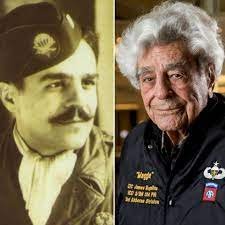
James Megellas was the most decorated officer in the 82nd Airborne division in World War II.  He fought in Italy including at Anzio, took place in the invasion of Normandy, parachuted into Holland as part of the disaster of Market Garden and following the Battle of the Bulge took the long road through Germany all the way to Berlin.

Using letters, he had written during the war, interviews with former comrades, and excerpts from memoirs of men he served with from the ranks through to Generals he takes us on almost a day-by-day description of hundreds of days of combat.  He gives credit to those who served with him, writing of how being on the front lines for sixty days and longer, through all different types of weather, never bathing or shaving, the average American soldier fought and won against a long serving German army.

The citation for his Distinguished Service Cross (one step below the Congressional Medal of Honor) is as follows:

“First Lieutenant Megellas led his platoon on a combat patrol to secure information and prisoners.  Arriving at the enemy observation pose, he crawled forward alone and killed two outpost guards and the crew of a machine gun nest. He brought forward his patrol, attacked the mail enemy defenses and singlehandedly secured three prisoners and killed two more.  Two blockhouses were then attached and destroyed.  The aggressiveness of this patrol action thoroughly demoralized the enemy in the sector.  His mission completed, first Lieutenant Megellas withdrew his platoon through the enemy lines and under mortar fire.  He personally carried a wounded man while firing his Thompson submachine gun with one hand.  The extraordinary heroism and brilliant leadership displayed by First Lieutenant Megellas enabled his patrol to inflict disproportionate causalities on the enemy, secure vital information and force the Germans to abandon their planned offensive in the area.  His conduct was an inspiration to his men and a credit to the United States Airborne Forces.”

Aside from the DSC, he won two Silver Stars, two Bronze Stars with “V” and 2 Purple Hearts.  Forty years later a bill was introduced to upgrade one of his Silver Stars to the Congressional Medal of Honor based on the recommendation of his commanding officer, but the bill died in Congress. 

One of the highlights of the book is his description of the crossing of the Waal River during Operation Market Garden.  This dramatic and heroic assault against and entrenched and numerically superior enemy was one of the major battle scenes in the television series Band of Brothers.  Reading his description, one will feel as if they are not only in the assault boats, but you will also catch the feelings of the men before the assault.

I had a phone conversation with Mr. Megellas in 2006 (he died in 2020) after I read his book the first time.  His matter-of-fact descriptions reminded me of some of the writings of Ernst Junger in his classic Storm of Steel.  Unlike Junger, and despite his well-earned pride in his actions during the war, he did not see or feel a higher mystic feeling in the war.  As he said, “We realized the more Germans we killed, the faster we would get home.”

Share:
Reading time: 2 min
Book Reviews

Why Air Forces Fail, edited by Robin Higham and Stephen J. Harris

May 31, 2023 by Barry J. Klazura No Comments

An excellent little book which reviews why various military air forces have failed since WWI. They cover the Imperial German and Russian air forces, the Polish air force of 1939, the French of 1933-40, Luftwaffe, Arab air forces, etc. Broken into short easy to read chapters, the common failures center around the following key factors:

  • Lack of strategic vision
  • Lack of logistics
  • Inability to meet changing challenges
  • Lack of governmental support in key areas

Some air forces started strong (Luftwaffe), some were the victims of national degeneracy (France), some the result of inability to deal with reality (Italy), but all went through a cycle of attempting to deal with forces beyond their control. Most of those forces were civilian, some were political, and most examples attempted to fulfill missions that were clearly beyond their means from any objective standpoint. While the pilots and mechanics did their best, the politicians simply failed to understand the weapon that they had at their disposal.

This little book is a quick informative read for anyone who wishes to understand the importance of logistics, strategy, tactics and will as they seek to come together to create a successful weapon.  The interesting thing that comes out is that no matter what has happened in the realm of military science, many are slow to recognize and learn from history. This book goes to prove a point that those who do not learn from history are doomed to repeat it.

Share:
Reading time: 1 min
Book Reviews

Churchill and the Dardalnelles

May 23, 2023 by Barry J. Klazura No Comments

On a recent voyage, I had a discussion with some Brits about their history history.  The subject of Churchill came up and one elderly lady mentioned what a terrible job he had done with the Dardanelles during the First World War. I was surprised she held that view given the research, commissions, etc. that have been held since the war.  She must have gone through the school system or perhaps her parents belonged to the party which opposed Churchill for her view to be held so long after the fact.  I mentioned some counter information and she was genuinely surprised to hear the information I provided.  History is not dead, and it continues to shape our view of our world.

This brings us to this review of Churchill and the Dardanelles by Christopher M. Bell.  I was familiar with Bell as I had previously read his excellent book, Churchill and Sea Power and this book only goes to increase his reputation as an historian of note.

After the failure of the Dardanelles, there was much finger pointing as to would shoulder the blame for both the naval and army failures.  Was the campaign supported by the major players?  Did the Navy consult with the Army regarding joint action? Did the Navy go into the campaign with a full understanding of the Turkish defenses?  Who oversaw each operation?   The questions went on and on, but the initial blame landed on the desk of Churchill.  As a result, with all the politicians and military leaders running for cover, Churchill who was viewed as head-strong and much too pushy was left alone by most of his political allies.  He lost his position and was all but cast into a political wilderness.  Although the Prime Minister realized that Churchill was being sacrificed and that his skills would be helpful to the war effort, he was simply beyond the pale until tempers cooled down and a more objective analysis of the failures could be found.

Churchill immediately began to build his case for his political resurrection.  He gathered documents, spoke with is political allies and when a commission was formed to review the entire campaign, he labored hard and long for the ability to be actively involved not only to be in the commission but to also examine witnesses who were called.  Although he felt betrayed by Jackie Fisher who he had brought back to the naval board, they realized that they needed one another, and a temporary truce was called.  Numerous witnesses were called and after lengthy hearings, it was decided that Churchill came out with a much-improved position.

Churchill, however, was not one to rest and he took the entire episode to heart, becoming less naïve and careful to work to create his own image.  He used his political allies including the press to reconstruct and improve his image and the publication of his monumental work, The World Crisis in which he managed to paint his actions in the Dardanelles in a positive light while at the same time not burning any political bridges all but secured his resurrected reputation.

Although he would make political errors in the future (re: the Royal abdication, self-rule for India, etc.), he had learned that careful control of the press and public opinion could save him from his own errors.  Lord Birkenhead once commented, “When Winston is right, he is unique. When he is wrong-Oh My God!”.  Churchill knew that history would treat him well because he was determined to write it and write it, he did.  Yes, he made errors and could drive those around him to distraction, but in the end, his legend which he wrote was not that far off the mark.

Share:
Reading time: 3 min
Book Reviews

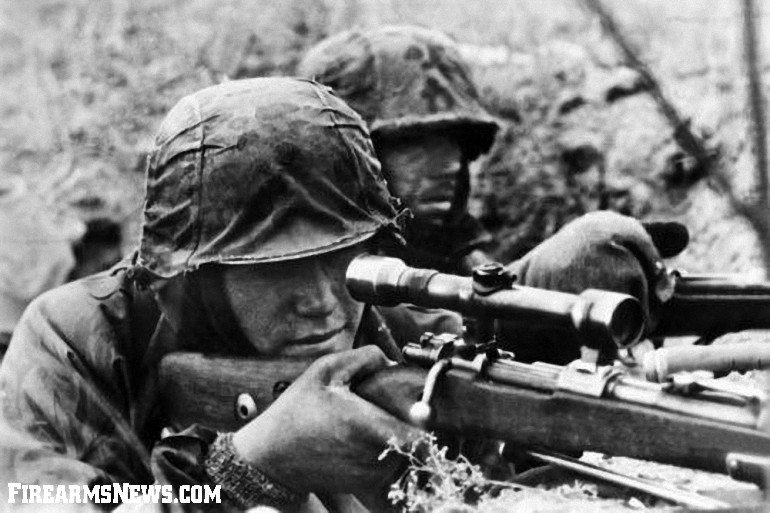
A Sniper on the Eastern Front: The Memoirs of Sepp Allerberger by Albrecht Wacker

April 29, 2023 by Barry J. Klazura No Comments

From July 1942 until the end of the war, Sepp Allerberger was a sniper fighting against the Soviet Union.  During that time, his official tally of 257 confirmed kills, made him the second most deadly sniper in the German Army (the record of 345 kills was held by Mathias Hetzenauer).  It is important to note that a sniper “kill” had to meet certain requirements, such as it had to be done during an actual sniper assignment (ordinary defensive or offensive kills are not counted) and must be confirmed by either an officer or an NCO.  Allerberger states only that his individual kills, taking unconfirmed sniper kills was much higher. 

Allerberger did not come from a military family; his home was a small village on the Austrian side of the Bavarian Alps near Salzburg.  He was drafted at the age of eighteen and trained as a machine gunner.  After his first battle, he realized that he was a marked man for machine gunners were prime targets of the enemy.  He decided to try for a safer job and accidently found out that he was an excellent shot.  As the German Army was behind the Soviet in the development and training of snipers, it was a “learn as you go” decision.  He quickly learned the trade and was highly valued at the front where many assignments were to kill his Soviet counterpart who was causing losses in his vicinity.  Sniper to sniper battles pit individual skill, patience, and determination at the personal level and yet Allerberger does not exhibit any emotion other than pride for his victories.

As noted, all kills had to be confirmed and that could be a problem as many in the German Army felt that being a sniper was a “dirty” job.  Hiding, sneaking up on the enemy, killing when ever possible, including when a soldier is going to the bathroom carried a bad odor.  This view extended to the artillery officers who somehow believed throwing a high explosive shell miles at an unseen and unsuspecting enemy was more “honest”.  For the infantry, enemy snipers were hated thought to fight dirty, but their own snipers were well liked and protected.  War has its own value system.

Given that many snipers were killed after 15-20 shots, his score is amazing.  He seemed to lead a charmed life, receiving no major wounds, and suffered only minor scratches.  His detailed descriptions of many encounters are excellent, and one clearly see the barbarity of warfare on the Eastern Front. 

His story brings to light the mentality of an army in retreat. Months of constant retreat and serious losses in manpower and equipment left the average soldier demoralized, dirty, hungry and constantly looking over their shoulders at the Russians who seemed to have unlimited resources. During the retreats, seriously wounded men were left behind even though everyone knew that the oncoming Russians would at best, quickly kill them or more likely, torture them before killing them. One has to remember that the Russians were not only out for victory, but also for revenge for the deeds of the Germans on their homes and loved ones. It was a war with little or more mercy. Often, the Russians had more to fear from their own officers who subjected them to beatings, penal battalions and early on in the war, cases of cannibalism.

This is only the third book I have read by a veteran which reflects a certain mindset.  Ernst Junger’s Storm of Steel is one example, another is by an American, James Megellas’s All the Way to Berlin. Reading their stories, one sees an individual who calmly picks up a weapon, kills will great proficiency and then afterwards, go on to lead a normal life. They offer a fascinating view of war by very uncommon men.

Share:
Reading time: 3 min
Book Reviews

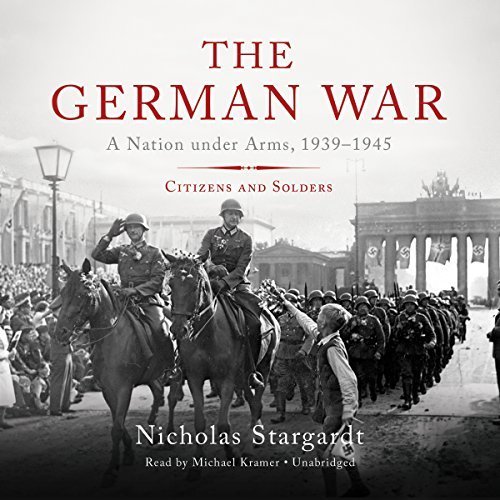
The German War: A Nation Under Arms, 1939-1945 by Nicholas Stargardt

April 15, 2023 by Barry J. Klazura No Comments

There certainly is no shortage of World War II histories, most of which cover the various campaigns around the world.  There are also some excellent histories which cover the logistics of the war, arguing first one way then the other about when the window of opportunity for Germany closed and the tide turned forever against the Axis powers.

While the military side of the war is covered in this book, the main emphasis is rather on the average German and their shifting outlook during the war.  This includes the treatment of Jews and how much the average German knew about the treatment of the Jews in the East, the camps, etc. If they were willing to listen the Sicherheitsdienst (SD) or SS Security Service which was formed in the early 1930s but organized and given new powers when commanded by Reinhard Heydrich provided accurate information on the state of mind of the German people.  That information advised Nazi leaders such as Goebbels when attack the Jews and when to throttle back those attacks and instead focus on some other aspect of the war.  The SD noted the reaction to Goebbels call for Total War which ignited the crowd where he spoke but which was thought to be staged by many listeners.

Throughout the book, the average Germans views on the treatment of the Jews (and other “lesser” peoples), is viewed through the millions of letters, photographs and camera footage shot by the common German soldier and sent home.  The idea that the home front did not have any idea of the mass executions in the East is difficult to sustain given the volume of the information which was provided by the soldiers and freely provided to their families.  Although some letters attempted to shield the civilian (normally a wife or other loved one) from the brutality of the killing by saying that the writer does not want to shock the reader too much, it is clear that mass killings were witnessed. 

No history of the time would not be complete without information on the bombing of the German cities.  Germany, unlike Italy, had a complex and well organized system to maintain production and provide for those who were bombed out of their homes.  In order to maintain morale during the bombing, over fifty-thousand anti-aircraft guns were deployed and those guns devoured about a third of all artillery production at a time when the troops in the field were heavily outgunned.  For those who lost their houses, furniture, clothing, and other household basics were provided by the loot taken from the German Jews. This did lead to instances where the new German owners complained that the loot was either too big, of poor quality or not maintained correctly. As the bombing campaign continued to build, it was not unusual to hear that it is a Jewish payback for how the German Jews had been treated.

One strong aspect of this volume is the use of correspondence between the soldiers and those at home.  They bring an excellent personal touch to the book and when the correspondence from the front stops (such as one correspondence where the writer is at Stalingrad), it brings the pity of war that much closer.

This is an excellent book for anyone to see both sides (campaign and home front) in a single well-written and researched history.

Share:
Reading time: 2 min
Book Reviews

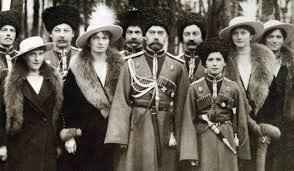
Former People, the Final Days of the Russian Aristocracy by Douglas Smith

March 13, 2023 by Barry J. Klazura No Comments

This is a book of survival, of innocence, foolishness and bravery as a class of people finds itself suddenly outcasts from those that they had exploited for hundreds of years.  In the chaos of the Russian revolution, even before the seizure of power by Lenin, the very ground beneath a once powerful class was shifting and no one had any idea what the outcome of those movements would be.

For powerful aristocratic families (some who had owned up to 500,000 serfs) and for the poorest of the aristocrats, their world with it’s table of titles and addresses, it’s position above the law and its belief in the Czar would all be lost, almost without a whimper.   They would suddenly find themselves thrown out of their houses and palaces, their valuables seized by the State and thrown onto resources that most of them had never dreamed they possessed.  Despised as useless exploiters, they were often hunted down and shot or hung (if they were fortunate in their manner of death), while they tried to keep their families together often during a time when they were fleeing from town to town to stay ahead of the Red Terror.  Throw into this mix the chaos caused by the Russian Civil War and it is easy to see how literally hundreds of thousands of “aristocrats” (a term used for the highest to the poorest of the species) were destroyed. 

Some aristocrats decided to join the White armies, others believing that Russia needed to be purged, joined the Reds.  If they had joined the Reds, it was no ticket to survival for they were always viewed as a danger to the new Soviet state.  With the coming of the purges under Stalin, they were singled out after having led quiet lives for years, often in the service of the State; suddenly once again they were denounced and hunted, shipped to Siberia or executed.   Even their children were targeted as the stain of the exploiters was believed to be passed on from mother and father to son and daughter.

In the end, ancient families who had served the Czarist state for better or worse were exterminated.  Some were fortunate to flee to the West, ending up often as door men or waiters in the exile’s haunts. Even there, in France and other countries they could be murdered to sooth the paranoid images of the rulers in Moscow.

One reads this book and may question why the hatred of that class was so strong; everything they possessed or stood for was either destroyed or mocked and held up as an example of that classes uselessness.  We must remember that for hundreds of years the aristocrats had exploited millions, bought and sold them like so many lumps of coat while living a life of unimagined luxury.  Some aristocrats tried and did contribute to society, but they were a small handful against a tide of greed and cruelty.  And so, they died, hunted and hated and because of their past sins, and millions more would have to pay a price as a bold new world was created which was more corrupt and crueler than what they had destroyed. 

Share:
Reading time: 2 min
Book Reviews

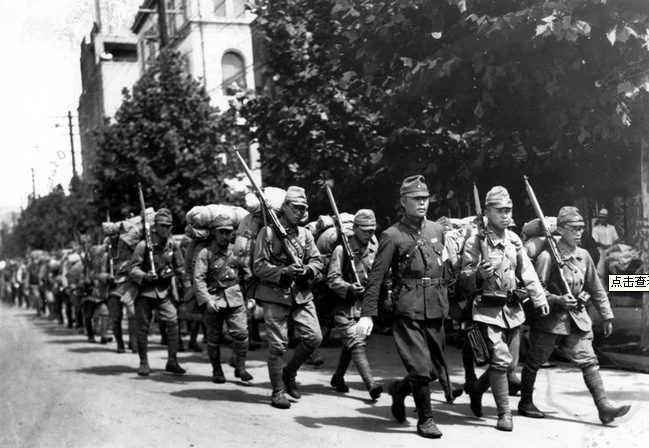
The Yamato Dynasty: The Secret History of Japan’s Imperial Family by Sterling and Peggy Seagrave

March 1, 2023 by Barry J. Klazura No Comments

Much of the history of Japan lives withing a cloud of myth and legend along with a masterful manipulation of reality. This is especially true since the Meiji restoration whn the emperor was taken as the new central figure in Japan.  Suddenly the Emperor, who had traditionally had no power and was controlled by the Shogun was presented figuratively to the population as divine and the central focus of Japanese life.  Yet, the Emperor himself lived in a closed world or court etiquette and political intrigue.

This excellent history tells the story of who was the power behind the throne and of the vast scale of looting conducted by the Japanese during World War II.  Within Imperial Japan, there was a cadre of powerful families, former samurai war lords who controlled the military and the zaibatsu and thus the economy.  By controlling the military and the economy, they were able to work hand in hand with each other to gather enormous riches and unquestioned power, all while creating a cult around a compliant Emperor.

Continue reading
Share:
Reading time: 3 min
Book Reviews

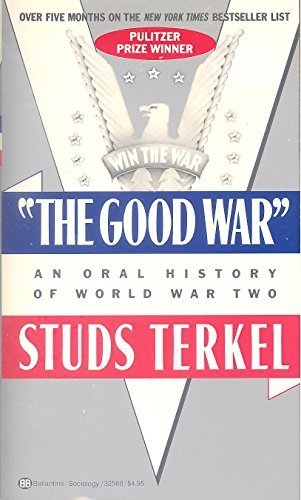
The Good War: An Oral History of World War II by Studs Terkel

February 12, 2023 by Barry J. Klazura No Comments

Studs Turkel was a legend in Chicago for decades. Known for his sharp wit and clear writing, he had a successful career as a bit actor, sport commentator, TV MC, writer, and social commentator.  This book, one of many, won the Pulitzer Prize for General Non-Fiction in 1985.  In it, he interviewed veterans from across the U.S., as well as civilians who worked in factories, hospitals, research labs and even some who were involved with the development of the atomic bomb.  He offered a street eye view (which was his specialty) of how men and women felt about the war; the excitement, fear, hopes for the future and life played out for some and their views on the government and the Viet Nam war as their children went to fight their own war.

Despite the acclaim of this book, and the huge sales, I was disappointed; the interviews seemed to be divided between veterans, most of whom expressed their fears and excitement, the remembrance of the close bonds they felt for their comrades, some of whom became life long friends, and the non-combatants, many of them intellectuals and well paid factory workers who often seemed to be disgruntled by their experiences. Being a child of that generation, I saw this sharp divide.  For example, when my parents went to their 50th high school reunion, each attendee was asked to write a short biography.  I was amazed that every single male, except for my father, started his bio stating what he did in World War II (my father started his stating how long he and my mother had been married).  That reflected the importance of the war to a generation of men who endured the poverty of the Depression and for whom, the military was the first time they had enough to eat. 

Continue reading
Share:
Reading time: 3 min
Page 5 of 13« First...«4567»10...Last »

Barry J. Klazura

Barry Klazura sipping grappa

With a Masters Degree in Guerrilla Warfare and Totalitarianism, Mr. Klazura was well prepped for a career in Sales and General Management, consulting on corporate startups and turnarounds as well as lecturing on history and politics.  For the past twenty years he has focused on being a financial advisor and consulting.

Delivered To Your Inbox

Sign up to get an email when a new article is published.

Topics

  • American Civil War
  • Biography
  • Book Reviews
  • Cigar Reviews
  • Coronavirus
  • Current Affairs
  • Education
  • Environment
  • Factoids
  • Government
  • Lifestyle, Cigars & More
  • Liquid Refreshments
  • Musings
  • Quips and Historical Facts
  • Society
  • Travel
  • Uncategorized
  • World War I

Subjects

book Books-Russia/Soviet Union Books 21st Century Books 1919-2000 Books Ancient to 1900 Books Asia Books Biography Books Fiction Books Germany 1919-1945 Books Pre-WWI books Viet Nam books world war I Books WW1 Books WWI Books WWII Cigar Friendly Location Amsterdam Cigar Friendly Locations-London Cigar Friendly Locations-New Orleans Cigar Friendly Locations-New York Civil War Coronavirus Environment Korean War World War I World War One

Recent Articles

At Stalin’s Side by Valentin Berezhkov

July 15, 2026
The Price of Victory by N.A.M. Rodger

The Price of Victory by N.A.M. Rodger

June 26, 2026
Frontsoldaten: The German Soldier in World War II by Stephen G. Fritz

Frontsoldaten: The German Soldier in World War II by Stephen G. Fritz

June 5, 2026
Organizer of Victory, 1943-1945, George C. Marshall by Forrest C. Pogue

Organizer of Victory, 1943-1945, George C. Marshall by Forrest C. Pogue

May 26, 2026
Illegals Released & Our Leaders

Illegals Released & Our Leaders

May 10, 2026

Inquiries and Comments

For general inquiries and comments, email AOTOHcomments@gmail.com.

Facebook
© 2020 And On The Other Hand. All rights reserved.